The
overbalanced cylinder
A cylinder
containing a fluid with two or more weighted rods passing through
stuffing boxes in the shell. To the middle of each of these rods is
fixed a ball of cork which is expected to rise to the upper side of the
cylinder whenever the revolution thereof brings it a little below the
axis of the cylinder.
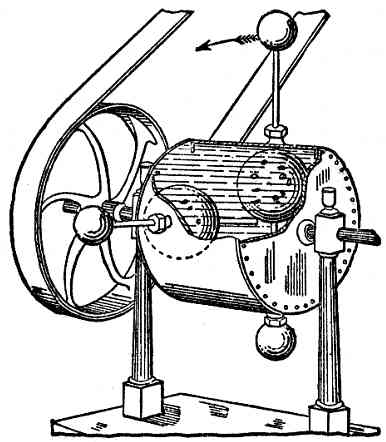
In thus rising,
it will carry the upper weight away from the center and
bring the lower end toward the center so that it is thought the center
of gravity of cylinder arms, corks, and metallic balls will be kept
constantly on one side of a geometrical center, and constant
revolution will result. The fact is, however, that the center of
gravity will remain always in a perpendicular drawn through the axis,
and, consequently, the expectations of the inventor were never
realized.
(Subsection 959, from p.385)
From: Gardner D. Hiscox, M.E., Mechanical Appliances and Novelties of Construction (1927), Norman W. Henley Publ. Co.







