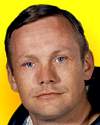
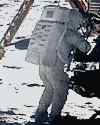
American astronaut who was the first man to walk on the moon (20 Jul 1969, Apollo 11). He served as a Navy pilot during the Korean War, then joined the National Advisory Committee for Aeronautics (which became NASA), as a civilian test pilot. In 1962, he was the first civilian to enter the astronaut-training program. He gained experience as command pilot of the Gemini 8 mission, which accomplished the first physical joining of two orbiting spacecraft. Later he was commander of the Apollo 11 lunar mission. From 1971, he worked as professor of aerospace engineering at the University of Cincinnati. He was a member of the commission that investigated the 1986 Challenger space shuttle disaster.«
First Man: The Life of Neil A. Armstrong, by James R. Hansen. - book suggestion.
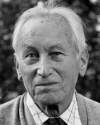
Born 5 Aug 1904; died 15 Jan 1997 at age 92.
English-American plant physiologist, who pioneered in the field of plant physiology, especially hormones that control the development of plants. In particular, he identified auxin, a growth hormone, and revealed its chemical structure (very important to agriculture and horticulture industries). He also researched the biosynthesis of pigments responsible for the colors of flowers and fruits, and the action of various zones of the light spectrum on photosynthesis. Later he studied the factors controlling the mechanisms of plant senescence, especially the aging of leaves.
English-American plant physiologist, who pioneered in the field of plant physiology, especially hormones that control the development of plants. In particular, he identified auxin, a growth hormone, and revealed its chemical structure (very important to agriculture and horticulture industries). He also researched the biosynthesis of pigments responsible for the colors of flowers and fruits, and the action of various zones of the light spectrum on photosynthesis. Later he studied the factors controlling the mechanisms of plant senescence, especially the aging of leaves.
Born 5 Aug 1866; died 3 Nov 1923 at age 57. quotes
German chemist and industrialist who was one of the leading scientists in the elastomer field at the turn of the 20th century. He developed the ozonolysis process (Harries reaction) to determine the structure of natural rubber (polyisoprene). Breaking down the natural rubber substance by the action of ozone, Harries determined its molecular structure is made up from long chains containing many hundreds of isoprene molecules bonded together. That insight was followed up by Fritz Hofmann, who accomplished polymerization of pure isoprene to form synthetic rubber (Aug 1909). On 12 Sep 1909, his process was the granted the world's first patent (German No. 250690) on a “Method for producing synthetic rubber.”
German chemist and industrialist who was one of the leading scientists in the elastomer field at the turn of the 20th century. He developed the ozonolysis process (Harries reaction) to determine the structure of natural rubber (polyisoprene). Breaking down the natural rubber substance by the action of ozone, Harries determined its molecular structure is made up from long chains containing many hundreds of isoprene molecules bonded together. That insight was followed up by Fritz Hofmann, who accomplished polymerization of pure isoprene to form synthetic rubber (Aug 1909). On 12 Sep 1909, his process was the granted the world's first patent (German No. 250690) on a “Method for producing synthetic rubber.”
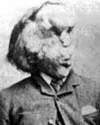
Born 5 Aug 1862; died 11 Apr 1890 at age 27.
Joseph Carey Merrick (the Elephant Man) was an English patient (erroneously referred to as John Merrick) was a disfigured person. Born in Leicester, England, in 1862, Merrick began to develop tumours on his face before his second birthday. His condition quickly worsened as bulbous, cauliflower-like growths grew from his head and body, and his right hand and forearm became a useless club. After a brief career as a professional “freak,” dubbed the “Elephant Man” because of a tusklike growth on his face, he became the best-known resident patient of London Hospital from 1886 until his death. The modern diagnosis (1979) is the very rare disorder, Proteus Syndrome. more
Joseph Carey Merrick (the Elephant Man) was an English patient (erroneously referred to as John Merrick) was a disfigured person. Born in Leicester, England, in 1862, Merrick began to develop tumours on his face before his second birthday. His condition quickly worsened as bulbous, cauliflower-like growths grew from his head and body, and his right hand and forearm became a useless club. After a brief career as a professional “freak,” dubbed the “Elephant Man” because of a tusklike growth on his face, he became the best-known resident patient of London Hospital from 1886 until his death. The modern diagnosis (1979) is the very rare disorder, Proteus Syndrome. more
The True History of the Elephant Man, by Michael Howells. - book suggestion.
Born 5 Aug 1859; died 29 Jan 1929 at age 69.
American biochemist who made major contributions to understanding the chemistry of vegetable proteins. He and his collaborator Lafayette Mendel showed that tryptophan and lysine are essentials in diet for healthy growth. They discovered another essential, a fat-soluble substance, in butter (now known as vitamin A). Similar work revealing that substance, published three weeks earlier was done by Elmer Verner McCollum and Marguerite Davis, who also found it in egg yolks (1912).
American biochemist who made major contributions to understanding the chemistry of vegetable proteins. He and his collaborator Lafayette Mendel showed that tryptophan and lysine are essentials in diet for healthy growth. They discovered another essential, a fat-soluble substance, in butter (now known as vitamin A). Similar work revealing that substance, published three weeks earlier was done by Elmer Verner McCollum and Marguerite Davis, who also found it in egg yolks (1912).
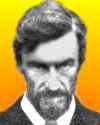
Born 5 Aug 1855; died 24 Dec 1927 at age 72.
William Henry Dines was an English meterologist (like his father) and inventor of related measurement instruments such as the Dines pressure tube anemometer (the first instrument to measure both the velocity and direction of wind, 1901), a very lightweight meteorograph, and a radiometer (1920). He joined the Royal Meteorological Society study of the cause of the disastrous Tay Bridge collapse of 1879. His measurements of upper air conditions, first with kites and later by balloon ascents (1907), brought an understanding of cyclones from dynamic processes in the lower stratosphere rather than thermal effects nearer to the ground.
William Henry Dines was an English meterologist (like his father) and inventor of related measurement instruments such as the Dines pressure tube anemometer (the first instrument to measure both the velocity and direction of wind, 1901), a very lightweight meteorograph, and a radiometer (1920). He joined the Royal Meteorological Society study of the cause of the disastrous Tay Bridge collapse of 1879. His measurements of upper air conditions, first with kites and later by balloon ascents (1907), brought an understanding of cyclones from dynamic processes in the lower stratosphere rather than thermal effects nearer to the ground.
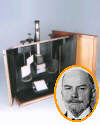
Born 5 Aug 1834; died 26 Jan 1918 at age 83.
Karl Ewald Konstantin Hering was a German physiologist and psychologist whose chief work concerned the physiology of colour perception. He taught at several universities. Hering challenged the colour-vision theory of Hermann von Helmholtz. Visual sensations, according to Hering's view, were due to three colour receptors responding in an “opponent” fashion in colour-pairs (white/black, yellow/blue, and red/green) to take account of the after-images of colours. Helmholtz had advocated the three fibre, three color theory (red, green and blue). Hering also is known for a classic optical illusion.[Image: Hering (inset) with his colour-blindness apparatus]
Karl Ewald Konstantin Hering was a German physiologist and psychologist whose chief work concerned the physiology of colour perception. He taught at several universities. Hering challenged the colour-vision theory of Hermann von Helmholtz. Visual sensations, according to Hering's view, were due to three colour receptors responding in an “opponent” fashion in colour-pairs (white/black, yellow/blue, and red/green) to take account of the after-images of colours. Helmholtz had advocated the three fibre, three color theory (red, green and blue). Hering also is known for a classic optical illusion.[Image: Hering (inset) with his colour-blindness apparatus]
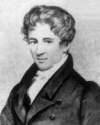
Born 5 Aug 1802; died 6 Apr 1829 at age 26. quotes
Norwegian mathematician who developed several branches of modern mathematics. After a slow start in school, he began to show mathematical genius by the age of 15. In 1823 proved that there was no algebraic formula for the solution of a general polynomial equation of the fifth degree. He developed the concept of elliptic functions independently of Carl Gustav Jacobi, and the theory of Abelian integrals and functions became a central theme of later 19th-century analysis. He had difficulty finding an academic position and was troubled by poverty. He died in poverty at age 26, just two days before his talent was recognized and he was to be offered a professorship in Berlin.
Norwegian mathematician who developed several branches of modern mathematics. After a slow start in school, he began to show mathematical genius by the age of 15. In 1823 proved that there was no algebraic formula for the solution of a general polynomial equation of the fifth degree. He developed the concept of elliptic functions independently of Carl Gustav Jacobi, and the theory of Abelian integrals and functions became a central theme of later 19th-century analysis. He had difficulty finding an academic position and was troubled by poverty. He died in poverty at age 26, just two days before his talent was recognized and he was to be offered a professorship in Berlin.
Niels Henrik Abel and his Times, by Arild Stubhaug and Richard R. Daly. - book suggestion.
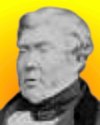
Born 5 Aug 1798; died 27 Oct 1867 at age 69.
John Wrottesley, 2nd Baron Wrottesley, was an English astronomer, who published Catalogue Of The RA Of 1318 Stars. He was a founder member of the Royal Astronomical Society. From his first Observatory in Blackheath, London, he recorded over 12,000 observations. After he inherited the title and the Staffordshire family estate at Wrottesley in 1841, he built an observatory there. In 1855, the city of Wolverhampton nearby decreed that if any ... furnace chimney ...was built ... within three miles of the observatory, it shall be constructed on the best and approved principles “for consuming the smoke arising ... therefrom.” This of course was so that observations from the observatory would not be hampered by smoke pollution.
John Wrottesley, 2nd Baron Wrottesley, was an English astronomer, who published Catalogue Of The RA Of 1318 Stars. He was a founder member of the Royal Astronomical Society. From his first Observatory in Blackheath, London, he recorded over 12,000 observations. After he inherited the title and the Staffordshire family estate at Wrottesley in 1841, he built an observatory there. In 1855, the city of Wolverhampton nearby decreed that if any ... furnace chimney ...was built ... within three miles of the observatory, it shall be constructed on the best and approved principles “for consuming the smoke arising ... therefrom.” This of course was so that observations from the observatory would not be hampered by smoke pollution.
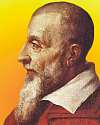
Born 5 Aug 1540; died 21 Jan 1609 at age 68.
French scholar who was one of the founders of the science of chrolonology. Like Roger de Losinga, Bishop of Hereford, centuries before, Scaliger recognized that combining the three cycles of the 28-year solar cycle (S), the 19-year cycle of Golden Numbers (G) and the 15-year indiction cycle (I) produced one greater cycle of 7980 years (28×9×15). Scalinger applied this fact, called a Julian cycle, in his attempt to resolve a patchwork of historical eras and he used notation (S, G, I) to characterize years. The year of Christ's birth had been determined by Dionysius Exigus to be the number 9 on the solar cycle, by Golden Number 1, and by 3 of the indiction cycle, thus (9, 1, 3), which was 4713 of his chronological era. Hence, the year (1, 1, 1) was 4713 B.C. (later adopted as the initial epoch for the Julian day numbers).«
French scholar who was one of the founders of the science of chrolonology. Like Roger de Losinga, Bishop of Hereford, centuries before, Scaliger recognized that combining the three cycles of the 28-year solar cycle (S), the 19-year cycle of Golden Numbers (G) and the 15-year indiction cycle (I) produced one greater cycle of 7980 years (28×9×15). Scalinger applied this fact, called a Julian cycle, in his attempt to resolve a patchwork of historical eras and he used notation (S, G, I) to characterize years. The year of Christ's birth had been determined by Dionysius Exigus to be the number 9 on the solar cycle, by Golden Number 1, and by 3 of the indiction cycle, thus (9, 1, 3), which was 4713 of his chronological era. Hence, the year (1, 1, 1) was 4713 B.C. (later adopted as the initial epoch for the Julian day numbers).«

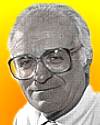
Died 5 Aug 2018 at age 90 (born 7 Jun 1928).
Bernard Flood Burke was an American astronomer who co-discovered that the giant planet Jupiter emits radio waves (1955). Burke and Kenneth L. Franklin, astronomers at the Carnegie Institution in Washington, were scanning the sky for radio waves from galaxies. By chance, they found a radio signal that resembled short bursts of static, similar to interference by lightning on home radios. After weeks of study, finding the signals were periodic, four minutes earlier each day, they pin-pointed Jupiter as the source. Never before had radio sounds from a planet in our solar system been detected. Later study showed the radio waves were circularly polarized, so a magnetic field was involved. They announced the discovery on 6 Apr 1955.«
Bernard Flood Burke was an American astronomer who co-discovered that the giant planet Jupiter emits radio waves (1955). Burke and Kenneth L. Franklin, astronomers at the Carnegie Institution in Washington, were scanning the sky for radio waves from galaxies. By chance, they found a radio signal that resembled short bursts of static, similar to interference by lightning on home radios. After weeks of study, finding the signals were periodic, four minutes earlier each day, they pin-pointed Jupiter as the source. Never before had radio sounds from a planet in our solar system been detected. Later study showed the radio waves were circularly polarized, so a magnetic field was involved. They announced the discovery on 6 Apr 1955.«
An Introduction to Radio Astronomy, by Bernard F. Burke and Francis Graham-Smith. - book suggestion.
Died 5 Aug 2008 at age 75 (born 15 Sep 1932).
English-American chemist who formed the first compound with a noble gas element, xenon platinofluoride, XePtF6 (23 Mar 1962), a yellow-orange crystalline solid, stable at room temperature by immersing platinum fluoride in xenon gas. For a half-century since Ramsay discovered xenon, it had, with the other elements in its group on the Periodic Table, been known as an inert gas. After Bartlett's discovery, a new field of investigation was opened, and other chemists found further compounds of not only xenon, but the noble gas elements radon and krypton. The heaviest elements of the noble gases, as the least inert, were susceptible to combination with a highly reactive element. Pauling had proposed this in theoretical calculations made thirty years before Bartlett's experimental success.«
English-American chemist who formed the first compound with a noble gas element, xenon platinofluoride, XePtF6 (23 Mar 1962), a yellow-orange crystalline solid, stable at room temperature by immersing platinum fluoride in xenon gas. For a half-century since Ramsay discovered xenon, it had, with the other elements in its group on the Periodic Table, been known as an inert gas. After Bartlett's discovery, a new field of investigation was opened, and other chemists found further compounds of not only xenon, but the noble gas elements radon and krypton. The heaviest elements of the noble gases, as the least inert, were susceptible to combination with a highly reactive element. Pauling had proposed this in theoretical calculations made thirty years before Bartlett's experimental success.«
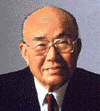
Died 5 Aug 1991 at age 84 (born 17 Nov 1906).
Soichiro Honda was the Japanese engineer, race car driver and industrialist who founded the Honda Motor Company, motor cycle and car manufacturer. Born in Iwata Gun, Japan, his career began as a garage apprentice (1922) which led to opened his own garage in 1928. He began manufacturing with a piston-ring factory (1934) expanding to motor cycles in 1948, followed by the release of a sports car and light truck in 1963. Soichiro Honda retired in 1973, and was appointed a “supreme adviser.”
Soichiro Honda was the Japanese engineer, race car driver and industrialist who founded the Honda Motor Company, motor cycle and car manufacturer. Born in Iwata Gun, Japan, his career began as a garage apprentice (1922) which led to opened his own garage in 1928. He began manufacturing with a piston-ring factory (1934) expanding to motor cycles in 1948, followed by the release of a sports car and light truck in 1963. Soichiro Honda retired in 1973, and was appointed a “supreme adviser.”
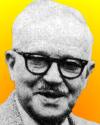
Died 5 Aug 1981 at age 87 (born 16 Apr 1894).
Russian-American mathematician who was one of the principal architects of modern theoretical statistics. His papers on hypothesis testing (1928-33) helped establish the subject. During 1934-38, he gave a theory of confidence intervals (important in the analysis of data); extended statistical theory to contagious distributions, (for interpretation of biological data); wrote on sampling stratified populations (which led to such applications as the Gallup Poll); and developed the model for randomised experiments (widely relevant across the fields of science, including agriculture, biology, medicine, and physical sciences). His later research applied statistics to meteorology and medicine. In 1968 he was awarded the prestigious National Medal of Science.«
Russian-American mathematician who was one of the principal architects of modern theoretical statistics. His papers on hypothesis testing (1928-33) helped establish the subject. During 1934-38, he gave a theory of confidence intervals (important in the analysis of data); extended statistical theory to contagious distributions, (for interpretation of biological data); wrote on sampling stratified populations (which led to such applications as the Gallup Poll); and developed the model for randomised experiments (widely relevant across the fields of science, including agriculture, biology, medicine, and physical sciences). His later research applied statistics to meteorology and medicine. In 1968 he was awarded the prestigious National Medal of Science.«
Died 5 Aug 1957 at age 80 (born 4 Jun 1877).
German chemist, winner of the 1927 Nobel Prize for Chemistry for his studies of steroid chemistry in which he determined the molecular structure of bile acids. He is also noted for studying the conversion of food into energy. In 1912, he began work on bile acids, secretions of the liver known for the best part of a century to consist of a large number of substances. He studied three of them: cholic acid, deoxycholic acid, and lithocholic acid, finding that they were all steroids, very similar to each other, and all convertible into cholanic acid. After 1921, he studied some curious alkaloids including toxiferin (curare's active ingredient), bufotalin (in venom from toads), and phalloidine and amatine (poisonous ingredients in the deadly amanita mushroom).
German chemist, winner of the 1927 Nobel Prize for Chemistry for his studies of steroid chemistry in which he determined the molecular structure of bile acids. He is also noted for studying the conversion of food into energy. In 1912, he began work on bile acids, secretions of the liver known for the best part of a century to consist of a large number of substances. He studied three of them: cholic acid, deoxycholic acid, and lithocholic acid, finding that they were all steroids, very similar to each other, and all convertible into cholanic acid. After 1921, he studied some curious alkaloids including toxiferin (curare's active ingredient), bufotalin (in venom from toads), and phalloidine and amatine (poisonous ingredients in the deadly amanita mushroom).
Died 5 Aug 1916 at age 79 (born 15 Aug 1836).
Robert John Lechmere was an English civil engineer, geologist, conchologist and paleontologist whose name was given to the guppy fish, a small livebearer. After discovering the fish in Trinidad, he sent specimens to the British Museum, where the curator assigned it a species name of guppii. The common name of the fish continues to be used even though the scientific name for the fish was changed (in part, because another naturalist made an earlier discovery of a similar fish in Venezuela). Guppy moved to Trinidad in 1839 where he pursued a career in public service. His efforts led to the introduction to the island of telegraph service (1868) and a railway (1876). After this, he was mayor of San Fernando for several years.
Robert John Lechmere was an English civil engineer, geologist, conchologist and paleontologist whose name was given to the guppy fish, a small livebearer. After discovering the fish in Trinidad, he sent specimens to the British Museum, where the curator assigned it a species name of guppii. The common name of the fish continues to be used even though the scientific name for the fish was changed (in part, because another naturalist made an earlier discovery of a similar fish in Venezuela). Guppy moved to Trinidad in 1839 where he pursued a career in public service. His efforts led to the introduction to the island of telegraph service (1868) and a railway (1876). After this, he was mayor of San Fernando for several years.
Died 5 Aug 1880 at age 63 (born 7 Sep 1816).
Austrian physician who founded the New Vienna School of Dermatology, which became a basis for modern dermatology. He attributed most diseases of skin to local irritation. He rejected the prevailing belief in skin conditions being an effect caused by a general metabolic upset of blood poisoning. Before Hebra's specialized efforts, dermatology had been a highly neglected field in general hospitals. He wrote one of the most influential books on dermatology, Atlas der Hautkrankheiten (1856-76). Among the many diseases of the skin he described and named are lupus, pityriasis, rubra and tinea cruris, and he was the first to describe dermatitis herpetiformes. He classified skin diseases in accordance with pathological anatomy (1845).«
Austrian physician who founded the New Vienna School of Dermatology, which became a basis for modern dermatology. He attributed most diseases of skin to local irritation. He rejected the prevailing belief in skin conditions being an effect caused by a general metabolic upset of blood poisoning. Before Hebra's specialized efforts, dermatology had been a highly neglected field in general hospitals. He wrote one of the most influential books on dermatology, Atlas der Hautkrankheiten (1856-76). Among the many diseases of the skin he described and named are lupus, pityriasis, rubra and tinea cruris, and he was the first to describe dermatitis herpetiformes. He classified skin diseases in accordance with pathological anatomy (1845).«
Died 5 Aug 1872 at age 56 (born 9 Apr 1816).
French mathematician and astronomer whose theory of lunar motion advanced the development of planetary-motion theories. After 20 years of work, he published two volumes on lunar theory, La Théorie du mouvement de la lune (1860,1867). This is an important case of the three body problem. Delaunay found the longitude, latitude and parallax of the Moon as infinite series. These gave results correct to 1 second of arc but were not too practical as the series converged slowly. However this work was important in the beginnings of functional analysis. Delaunay succeeded Le Verrier as director of the Paris Observatory in 1870 but two years later he and three companions drowned in a boating accident.
French mathematician and astronomer whose theory of lunar motion advanced the development of planetary-motion theories. After 20 years of work, he published two volumes on lunar theory, La Théorie du mouvement de la lune (1860,1867). This is an important case of the three body problem. Delaunay found the longitude, latitude and parallax of the Moon as infinite series. These gave results correct to 1 second of arc but were not too practical as the series converged slowly. However this work was important in the beginnings of functional analysis. Delaunay succeeded Le Verrier as director of the Paris Observatory in 1870 but two years later he and three companions drowned in a boating accident.
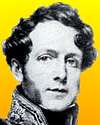
1831
Died 5 Aug 1868 at age 79 (born 10 Sep 1788).
Jacques Boucher de Crèvecœur de Perthes was a French archaeologist who was the first to establish that Europe had been populated by early man. Further, his discovery (about 1846) of whole handaxes, tools and fragments embedded in and scattered about the fossilized bones of prehistoric mammals in the high banks of the Somme River showed that man existed at least as early as the ancient creature. This disproved the prevailing theologically-based idea that 4004 BC was the year of the creation of man. He recorded his findings in a three volume work, Antiquitis celtiques et antediluviennes (1846). Acceptance was slow, but his ideas gained support when the evidence was validated by Prestwich, William Falconer and Charles Lyell.«
Jacques Boucher de Crèvecœur de Perthes was a French archaeologist who was the first to establish that Europe had been populated by early man. Further, his discovery (about 1846) of whole handaxes, tools and fragments embedded in and scattered about the fossilized bones of prehistoric mammals in the high banks of the Somme River showed that man existed at least as early as the ancient creature. This disproved the prevailing theologically-based idea that 4004 BC was the year of the creation of man. He recorded his findings in a three volume work, Antiquitis celtiques et antediluviennes (1846). Acceptance was slow, but his ideas gained support when the evidence was validated by Prestwich, William Falconer and Charles Lyell.«
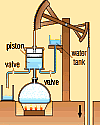
Died 5 Aug 1729 at age 66 (born 24 Feb 1663). quotes
English engineer and inventor of the the world's first successful atmospheric steam engine. His invention of c.1711 came into use by 1725 to pump water out of coal mines or raise water to power water-wheels. On each stroke, steam filled a cylinder closed by a piston, then a spray of water chilled and condensed the steam in the cylinder creating a vacuum, then atmospheric pressure pushed the piston down. A crossbeam transferred the motion of the piston to operating the pump. This was wasteful of fuel needed to reheat the cylinder for the next stroke. Despite being slow and inefficient, Newcomen's engine was relied on for the first 60 years of the new steam age it began, perhaps the single most important invention of the Industrial Revolution. more
English engineer and inventor of the the world's first successful atmospheric steam engine. His invention of c.1711 came into use by 1725 to pump water out of coal mines or raise water to power water-wheels. On each stroke, steam filled a cylinder closed by a piston, then a spray of water chilled and condensed the steam in the cylinder creating a vacuum, then atmospheric pressure pushed the piston down. A crossbeam transferred the motion of the piston to operating the pump. This was wasteful of fuel needed to reheat the cylinder for the next stroke. Despite being slow and inefficient, Newcomen's engine was relied on for the first 60 years of the new steam age it began, perhaps the single most important invention of the Industrial Revolution. more
The Steam Engine of Thomas Newcomen, by L.T.C. Rolt. - book suggestion.
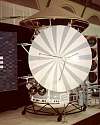
In 1973, the USSR launched Mars 6, on a Proton SL-12/D-1-e booster. It was one of several Soviet Mars probes - 4, 5, 6, and 7 - launched in Jul-Aug 1973. The Mars 6 craft included a flyby bus and a descent module. Upon reaching Mars, the descent module detached for its mission to study the Mars atmosphere and surface. After 224 seconds of data were relayed by the bus - the first data returned from the atmosphere of Mars - contact with the descent module was lost before its planned surface landing. Sadly, much of this data was unreadable due to a flawed computer chip. Pressure, temperature and water vapour information was reported. The flyby module continued to send its own instruments' measurements.«
The Scientific Exploration of Mars, by Fredric W. Taylor. - book suggestion.

In 1969, Mariner 7 flew past Mars. It had been launched 27 Mar 1969, and was now 3430-km above the Martian surface. Its 7.7 square meter area of photocell solar panels provided 800 W of power. The probe took 22 near-encounter images across 20% of the planet's surface. They showed the Martian and Moon surfaces were very different, and also varied from the earlier Mariner 4 images. These added to the far-encounter sequence of 93 images taken since 2 Aug 1969 during the approach. Other instruments took atmospheric measurements, and revealed that the south polar ice cap composition was mostly frozen carbon dioxide. Radio telemetry provided improved estimates of the planet’s size, shape and mass.«
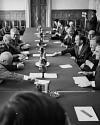
In 1963, Britain, America and Russia signed a Limited Nuclear Test Ban Treaty at Moscow to prohibit nuclear weapons tests "or any other nuclear explosion" in the atmosphere, in outer space, and under water. Underground nuclear explosions must not cause "radioactive debris to be present outside the territorial limits" their own country. The nuclear powers thus demonstrated a common goal to "an end to the contamination of man's environment by radioactive substances." The treaty was the result of over eight years of negotiations resolving issues of verification and deep-seated differences in attitudes to arms control and security. A total of 108 countries had signed before the LNTB Treaty entered into force 10 Oct 1963.«
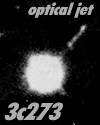
In 1962, a lunar occultation enabled Australian radio astronomers to more precisely fix the location of the previously known radio source 3C 273, in Virgo. In 1963 this became the first member of a new class of object eventually to be called quasars or “quasi-stellar radio sources.” Maarten Schmidt, using the Hale optical telescope, saw it as a faint star-like object with a visible jet. Its spectrum featured unusual emission lines, which he identified as ordinary hydrogen lines shifted toward longer wavelengths (redshifted) by 16%. If the shift is due to velocity, it is moving away at one-sixth the speed of light and one of the most distant objects visible. Quasars radiate as much energy per second as a hundred or more galaxies. 3C273 is the brightest quasar known.

In 1914, a lighting ceremony was held for the first electric traffic lights used to control flow of different streams of traffic at the intersection of Euclid Ave. and E. 105th St. in Cleveland, Ohio. The traffic signals were red and green lights on street-corner poles, wired to a manually operated switch housed inside a control booth beside the road. The switch design prevented conflicting signals. A bell warned the drivers of colour changes. The installation by the American Traffic Signal Co. was modelled after a system patented by James Hoge (U.S. No. 1,251,666). The first traffic control light used a gas-lit lantern, in London, England (10 Dec 1868).«
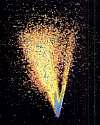
In 1864, Giovanni Batista Donati (1827-73) made the first spectroscopic observations of a comet tail (from the small comet, Tempel, 1864 II). At a distance from the Sun the spectrum of a comet is identical to that of the Sun, and its visibility is due only to reflected sunlight. Donati showed that comet tail formed close to the Sun contains luminous gas. In the spectrum of light from the comet tail, Donati saw three absorption lines bands superimposed on a continuous spectrum, which he named alpha, beta and gamma, and are now known as the Swan bands. These bands were also seen in a comet tail viewed by Pietro Secchi in 1866. Sir William Huggins (1868) identified that these were due to the presence of carbon (molecular carbon, C2).[Image: Comet tail of Comet West 1976 VI, computer generated false colour image.]
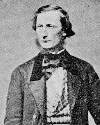
In 1858, the laying of the west end of the first transatlantic cable was completed when the ship Niagra anchored at the Newfoundland coast having laid 1,016 miles of cable. It was one of two ships laying cable from the midpoint in opposite directions. Just days later the other end of the cable was successfully landed in Ireland. Cyrus W. Field had completed the Atlantic cable, establishing telegraphic communication between the U.S. and England. On 16 Aug 1858, the first official message to cross the Atlantic was sent from Queen Victoria to President Buchanan. Unfortunately for the company, the new cable worked fine for about four weeks, then the line went dead. On 27 Jul 1866, an improved cable was laid.«
In 1695, the Scottish Parliament established a General Post Office.




