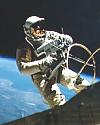
Born 14 Nov 1930; died 27 Jan 1967 at age 36.
First U.S. astronaut to walk in space. With James A. McDivitt he manned the four-day orbital flight of Gemini 4, launched on 3 Jun 1965. During the third orbit White emerged from the spacecraft, floated in space for about 20 minutes, and became the first person to propel himself in space with a maneuvering unit. Two years later, White was one of the three-man crew of Apollo 1 who in 1967 were the first casualties of the U.S. space program, killed during a flight simulation (the others were Virgil I. Grissom and Roger B. Chaffee).
First U.S. astronaut to walk in space. With James A. McDivitt he manned the four-day orbital flight of Gemini 4, launched on 3 Jun 1965. During the third orbit White emerged from the spacecraft, floated in space for about 20 minutes, and became the first person to propel himself in space with a maneuvering unit. Two years later, White was one of the three-man crew of Apollo 1 who in 1967 were the first casualties of the U.S. space program, killed during a flight simulation (the others were Virgil I. Grissom and Roger B. Chaffee).
Born 14 Nov 1925. quotes
Zhores Aleksandrovich Medvedev is a Soviet biologist and historian who exposed the nuclear disaster which occurred in the Urals in the 1950s. For his dissident activities in his homeland, he became one of the earliest to be detained in a mental institution as the way Soviet officials attempted to stifle opposition. After he accepted a one-year invitation from the National Institute for Medical Research to work in London, in 1973, within six months of his arrival, he was forced into exile by the Soviet Union which revoked his passport. He became a senior research scientist for the NIMR . His books include The Rise and Fall of T.D. Lysenko (1969), The Medvedev Papers (1971), and Soviet Science (1978).
Zhores Aleksandrovich Medvedev is a Soviet biologist and historian who exposed the nuclear disaster which occurred in the Urals in the 1950s. For his dissident activities in his homeland, he became one of the earliest to be detained in a mental institution as the way Soviet officials attempted to stifle opposition. After he accepted a one-year invitation from the National Institute for Medical Research to work in London, in 1973, within six months of his arrival, he was forced into exile by the Soviet Union which revoked his passport. He became a senior research scientist for the NIMR . His books include The Rise and Fall of T.D. Lysenko (1969), The Medvedev Papers (1971), and Soviet Science (1978).
Nuclear Disaster in the Urals, by Zhores A. Medvedev. - book suggestion.
Born 14 Nov 1914; died 25 May 2001 at age 86.
Malcom Purcell McLean was an American businessman and inventor who from 1956 developed the metal shipping container which is now used to transport goods on ships, trains and motor freight. The standardized containers are strong enough to stack several layers deep on ships, and greatly simplify handling of cargo by cranes, with great cost savings over the labour of loading and unloading goods in larger numbers of smaller units of crates and bags. From driving a single truck hauling materials in his early years, he founded the McLean Trucking Co., which became the second-largest in the U.S. When he realized that a truck and its cargo body could be separated, he expanded into secure handling of containers that could be stacked for bulk transport.«
Malcom Purcell McLean was an American businessman and inventor who from 1956 developed the metal shipping container which is now used to transport goods on ships, trains and motor freight. The standardized containers are strong enough to stack several layers deep on ships, and greatly simplify handling of cargo by cranes, with great cost savings over the labour of loading and unloading goods in larger numbers of smaller units of crates and bags. From driving a single truck hauling materials in his early years, he founded the McLean Trucking Co., which became the second-largest in the U.S. When he realized that a truck and its cargo body could be separated, he expanded into secure handling of containers that could be stacked for bulk transport.«
The Box: How the Shipping Container Made the World Smaller and the World Economy Bigger, by Marc Levinson. - book suggestion.
Born 14 Nov 1891; died 21 Feb 1941 at age 49. quotes
Canadian physiologist and physician who, assisted by Charles H. Best, was the first to extract (1921) the hormone insulin from the pancreas. Injections of insulin proved to be the first effective treatment for diabetes, a disease in which glucose accumulates in abnormally high quantities in the blood. Banting was awarded a share of the 1923 Nobel Prize for Physiology or Medicine for this achievement.
Canadian physiologist and physician who, assisted by Charles H. Best, was the first to extract (1921) the hormone insulin from the pancreas. Injections of insulin proved to be the first effective treatment for diabetes, a disease in which glucose accumulates in abnormally high quantities in the blood. Banting was awarded a share of the 1923 Nobel Prize for Physiology or Medicine for this achievement.
Banting: A Biography, by Michael Bliss. - book suggestion.
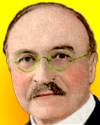
Born 14 Nov 1863; died 23 Feb 1944 at age 80. quotes
Leo Henricus Arthur Baekeland was a Belgian-American industrial chemist who invented the first thermosetting plastic, Bakelite, that did not soften when heated. His first successful invention was Velox (in the 1890s), a photographic paper that could be used with artificial light rather than sunlight, which he sold in 1899 to George Eastman for $1 million. He then experimented to find a synthetic substitute for shellac, a useful insulator of wires in electric coils. Eventually, he was able to control heat and pressure for a formaldehyde-phenol reaction. By 1909, he displayed the world’s first fully synthetic plastic, which could be used not only for insulators, but moulded into buttons, knobs and countless other items. With this patented product, he helped found the modern plastics industry.«
Leo Henricus Arthur Baekeland was a Belgian-American industrial chemist who invented the first thermosetting plastic, Bakelite, that did not soften when heated. His first successful invention was Velox (in the 1890s), a photographic paper that could be used with artificial light rather than sunlight, which he sold in 1899 to George Eastman for $1 million. He then experimented to find a synthetic substitute for shellac, a useful insulator of wires in electric coils. Eventually, he was able to control heat and pressure for a formaldehyde-phenol reaction. By 1909, he displayed the world’s first fully synthetic plastic, which could be used not only for insulators, but moulded into buttons, knobs and countless other items. With this patented product, he helped found the modern plastics industry.«
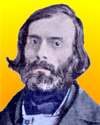
Born 14 Nov 1807; died 23 Apr 1853 at age 45. quotes
French chemist who developed organic chemistry as a distinct science. For a while, he assisted Jean Dumas, and extended his work, understanding organic compounds as derivatives of hydrocarbon molecules. In crystallography he was influenced by René-Just Haüy. Laurent recognised that carbon atoms formed bonds based on a pyramid structure. Furthermore, against the opinion of many peers, he rejected the idea held by Jöns Berzelius that even organic molecules were formed from positively and negatively charged entities. Laurent showed (1836) that a supposedly positive-charge hydrogen atom could be replaced by a supposedly negative-charge chlorine atom. He recognised families of organic compounds with characteristic groups. He died in middle age from tuberculosis.«
French chemist who developed organic chemistry as a distinct science. For a while, he assisted Jean Dumas, and extended his work, understanding organic compounds as derivatives of hydrocarbon molecules. In crystallography he was influenced by René-Just Haüy. Laurent recognised that carbon atoms formed bonds based on a pyramid structure. Furthermore, against the opinion of many peers, he rejected the idea held by Jöns Berzelius that even organic molecules were formed from positively and negatively charged entities. Laurent showed (1836) that a supposedly positive-charge hydrogen atom could be replaced by a supposedly negative-charge chlorine atom. He recognised families of organic compounds with characteristic groups. He died in middle age from tuberculosis.«
Auguste Laurent and the Prehistory of Valence, by Mary Eunice Novitski. - book suggestion.
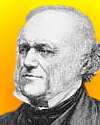
Born 14 Nov 1797; died 22 Feb 1875 at age 77. quotes
Charles Lyell (Baronet) was a Scottish geologist who promoted a theory of gradualism, by which all features of the Earth's surface are produced by physical, chemical, and biological processes through long periods of geological time. This extended the ideas of uniformitarianism as earlier stated by James Hutton. Lyell rejected the idea of Abraham Werner that a single great historic deluge had been responsible for producing the Earth's present surface topology. The concept of uniformitarianism also opposed the theory of catastrophism whereby zoologists such as Georges Cuvier believed it was by dramatic changes that flora and fauna appeared in their present form. Instead, Lyell maintained that changes were gradual, shaped by forces over unlimited time, in a similar way throughout, and were still operating in the present time.«
Charles Lyell (Baronet) was a Scottish geologist who promoted a theory of gradualism, by which all features of the Earth's surface are produced by physical, chemical, and biological processes through long periods of geological time. This extended the ideas of uniformitarianism as earlier stated by James Hutton. Lyell rejected the idea of Abraham Werner that a single great historic deluge had been responsible for producing the Earth's present surface topology. The concept of uniformitarianism also opposed the theory of catastrophism whereby zoologists such as Georges Cuvier believed it was by dramatic changes that flora and fauna appeared in their present form. Instead, Lyell maintained that changes were gradual, shaped by forces over unlimited time, in a similar way throughout, and were still operating in the present time.«
Principles of Geology, by Charles Lyell. - book suggestion.
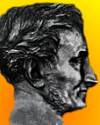
Born 14 Nov 1776; died 4 Feb 1847 at age 70.
Rene-Joachim-Henri Dutrochet was a French physiologist who discovered and coined the name for (1863) osmosis, the process in which a solvent passes through a semipermeable membrane into a region of greater solute concentration, thus equalizing concentrations on either side of the membrane. He also studied development of eggs of birds. He was the first to recognize that the take-up of carbon dioxide by plant cells depends on their green pigment. The light sensitivity, and geotropism of plants also drew his interest. He was one of the most successful champions, in animal as well as vegetable physiology, of the modern ideas which displaced the old vitalistic school of thought after 1820.«
Rene-Joachim-Henri Dutrochet was a French physiologist who discovered and coined the name for (1863) osmosis, the process in which a solvent passes through a semipermeable membrane into a region of greater solute concentration, thus equalizing concentrations on either side of the membrane. He also studied development of eggs of birds. He was the first to recognize that the take-up of carbon dioxide by plant cells depends on their green pigment. The light sensitivity, and geotropism of plants also drew his interest. He was one of the most successful champions, in animal as well as vegetable physiology, of the modern ideas which displaced the old vitalistic school of thought after 1820.«
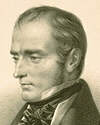
Born 14 Nov 1771; died 22 Jul 1802 at age 30. quotes
Marie François Xavier Bichat was a French physician who was the first to investigate the body's organs as a complex of simpler structures. He made hundreds of post-mortem examinations, with an unaided eye, noting the effect of disease on the organs. Even before knowledge of the cell as the functional unit of living things, he was among the first to visualize the organs of the body as being formed through the differentiation of simple, functional units. For these, typically thin layers that make up the organs, he coined the term "tissues" and identified 21 types in his book General Anatomy (1800). He died young, at age 30, after fainting and falling down the steps in his laboratory.«
Marie François Xavier Bichat was a French physician who was the first to investigate the body's organs as a complex of simpler structures. He made hundreds of post-mortem examinations, with an unaided eye, noting the effect of disease on the organs. Even before knowledge of the cell as the functional unit of living things, he was among the first to visualize the organs of the body as being formed through the differentiation of simple, functional units. For these, typically thin layers that make up the organs, he coined the term "tissues" and identified 21 types in his book General Anatomy (1800). He died young, at age 30, after fainting and falling down the steps in his laboratory.«
Xavier Bichat and the Medical Theory of the Eighteenth Century, by Elizabeth Haigh. - book suggestion.
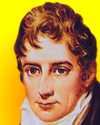
Born 14 Nov 1765; died 24 Feb 1815 at age 49. quotes
American inventor, engineer and artist who brought steamboating from the experimental stage to commercial success. He did not invent the steamboat, which had been built in the early 1700s, but rather applied his engineering skills to their design. He changed the proportions, arrangements, and velocities of already proposed ideas. In 1807, work was completed on the Clermont, the first steamboat that was truly successful, and the culmination of many years of work. Its maiden voyage was on 17 Aug from New York City to Albany, a distance of 150 miles completed in 32 hours. A mechanical genius with many talents, he also designed a system of inland waterways, a submarine (Nautilus, 1801), and a steam warship. more
American inventor, engineer and artist who brought steamboating from the experimental stage to commercial success. He did not invent the steamboat, which had been built in the early 1700s, but rather applied his engineering skills to their design. He changed the proportions, arrangements, and velocities of already proposed ideas. In 1807, work was completed on the Clermont, the first steamboat that was truly successful, and the culmination of many years of work. Its maiden voyage was on 17 Aug from New York City to Albany, a distance of 150 miles completed in 32 hours. A mechanical genius with many talents, he also designed a system of inland waterways, a submarine (Nautilus, 1801), and a steam warship. more
The Fire of His Genius: Robert Fulton and the American Dream, by Kirkpatrick Sale. - book suggestion.
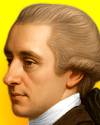
Born 14 Nov 1739; died 1 May 1774 at age 34. quotes
British anatomist and physiologist, often called the “father of hematology.” A student of William Hunterand collaborator of Benjamin Franklin, Hewson made pioneering discoveries about the composition of blood. He identified the protein fibrin as the clotting agent (which he called coagulable lymph). Further, he described the red and white corpuscles, clarifying their structure and role in circulation. His research on the lymphatic system revealed the presence of lymphatic glands and their function in fluid transport and immunity. Elected to the Royal Society in 1770, Hewson’s meticulous experimental methods and quantitative approach helped establish the foundations of modern blood physiology before his untimely death from infection at age 34.«
British anatomist and physiologist, often called the “father of hematology.” A student of William Hunterand collaborator of Benjamin Franklin, Hewson made pioneering discoveries about the composition of blood. He identified the protein fibrin as the clotting agent (which he called coagulable lymph). Further, he described the red and white corpuscles, clarifying their structure and role in circulation. His research on the lymphatic system revealed the presence of lymphatic glands and their function in fluid transport and immunity. Elected to the Royal Society in 1770, Hewson’s meticulous experimental methods and quantitative approach helped establish the foundations of modern blood physiology before his untimely death from infection at age 34.«
The Works Of William Hewson (1846), by William Hewson & George Gulliver (ed.). - book suggestion.

Died 14 Nov 1996 at age 81 (born 18 May 1915).
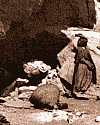
American anthropological theorist and formulator of the nomenclature now in standard use to categorize primitive societies as bands, tribes, chiefdoms, and states. Although widely accepted, the system was abandoned by Service himself because his subsequent research made him question the accuracy of the terminology. Service did fieldwork among the Havasupai of the Grand Canyon and in Paraguay and Mexico. His principal theoretical interests were in kinship, cultural evolution, theories of culture and the evolution of political institutions. His principal ethnographic contribution was Tobati: Paraguayan Town (1954), written with his wife Helen.[Image: Havasupai Cliff Dwelling]
American anthropological theorist and formulator of the nomenclature now in standard use to categorize primitive societies as bands, tribes, chiefdoms, and states. Although widely accepted, the system was abandoned by Service himself because his subsequent research made him question the accuracy of the terminology. Service did fieldwork among the Havasupai of the Grand Canyon and in Paraguay and Mexico. His principal theoretical interests were in kinship, cultural evolution, theories of culture and the evolution of political institutions. His principal ethnographic contribution was Tobati: Paraguayan Town (1954), written with his wife Helen.[Image: Havasupai Cliff Dwelling]
Died 14 Nov 1938 at age 85 (born 13 Sep 1853).
Danish pharmacologist and pathologist, who invented the Gram stain, the best known and most widely used bacteriological staining method that is almost always the first test performed for the identification of bacteria..
Danish pharmacologist and pathologist, who invented the Gram stain, the best known and most widely used bacteriological staining method that is almost always the first test performed for the identification of bacteria..
Died 14 Nov 1919 at age 80 (born 18 Sep 1839).
Scottish physicist and meteorologist who is known for his studies on atmospheric dust, the formation of dew, cyclones and evaporation. He invented the koniscope to detect and study atmospheric dust particles. He determined that condensation of atmospheric water vapor from clouds and fogs begins on the surface of microscopic particles (now known as Aitken nuclei) as a crucial step in the formation of rain and dew. Combustion produces a profusion of such particles. Suffering from ill health, he worked from a laboratory in his Falkirk home. Much of his work was published in the journals of the Royal Society of Edinburgh.«
Scottish physicist and meteorologist who is known for his studies on atmospheric dust, the formation of dew, cyclones and evaporation. He invented the koniscope to detect and study atmospheric dust particles. He determined that condensation of atmospheric water vapor from clouds and fogs begins on the surface of microscopic particles (now known as Aitken nuclei) as a crucial step in the formation of rain and dew. Combustion produces a profusion of such particles. Suffering from ill health, he worked from a laboratory in his Falkirk home. Much of his work was published in the journals of the Royal Society of Edinburgh.«

English engineer who invented the modern torpedo. He was the first to produce an effective, sub-surface, self-propelled torpedo. It much improved on the spar torpedo used during the American Civil War, which used a charge triggered by a long pole and floated to its target on a small boat. Whitehead’s first torpedo lacked speed and range. However, by 1870 he had increased its speed to 7 knots, able to hit a target 2100-ft away. The following year the British Navy purchased Whitehead’s invention.Whitehead’s torpedo was propelled by a compressed-air engine, and carried 18-lbs. of dynamite. Its most important feature was a self-regulating device which kept the torpedo at a constant preset depth. Edison made a movie of a Whitehead torpedo launch (12 May 1900). more
The Devil’s Device: The Story of Robert Whitehead, by Edwyn Gray. - book suggestion.
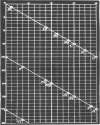
Died 14 Nov 1886 at age 66 (born 20 Jan 1820).
French geologist who was the first to arrange the chemical elements in order of atomic weights (1862). De Chancourtois plotted the atomic weights on the surface of a cylinder with a circumference of 16 units, the approximate atomic weight of oxygen. The resulting helical curve which he called the telluric helix brought closely related elements onto corresponding points above or below one another on the cylinder. Thus, he suggested that "the properties of the elements are the properties of numbers." Although his publication was significant, it was ignored by chemists as it was written in the language of geology, and the editors omitted a crucial explanatory table. It was Dmitry Mendeleyev's table published in 1869 that became most recognized.
French geologist who was the first to arrange the chemical elements in order of atomic weights (1862). De Chancourtois plotted the atomic weights on the surface of a cylinder with a circumference of 16 units, the approximate atomic weight of oxygen. The resulting helical curve which he called the telluric helix brought closely related elements onto corresponding points above or below one another on the cylinder. Thus, he suggested that "the properties of the elements are the properties of numbers." Although his publication was significant, it was ignored by chemists as it was written in the language of geology, and the editors omitted a crucial explanatory table. It was Dmitry Mendeleyev's table published in 1869 that became most recognized.
Died 14 Nov 1829 at age 66 (born 16 May 1763).
French chemist who discovered the elements chromium (1797) and beryllium (1798).
French chemist who discovered the elements chromium (1797) and beryllium (1798).
Died 14 Nov 1794 (born Sep 1717).
English watchmaker who invented the lever escapement (about 1757). He made one for Queen Charlotte, but few others. It eventually came to displace all other types of watch escapements, and remains the only type of escapement being presently manufactured for watches. It consists of an escape wheel, the "lever" itself and a balance wheel. The lever, when acted on by the balance wheel, locks and unlocks the escape wheel, allowing power to flow through the gear train in a uniform motion. He was the first to use stones for pallets and impulse pins. From 1771, he worked on the development of the chronometer. He sent one for its first trial in 1774, for which he was eventually was awarded £3,000 by the House of Commons.
English watchmaker who invented the lever escapement (about 1757). He made one for Queen Charlotte, but few others. It eventually came to displace all other types of watch escapements, and remains the only type of escapement being presently manufactured for watches. It consists of an escape wheel, the "lever" itself and a balance wheel. The lever, when acted on by the balance wheel, locks and unlocks the escape wheel, allowing power to flow through the gear train in a uniform motion. He was the first to use stones for pallets and impulse pins. From 1771, he worked on the development of the chronometer. He sent one for its first trial in 1774, for which he was eventually was awarded £3,000 by the House of Commons.
Died 14 Nov 1716 at age 70 (born 1 Jul 1646). quotes
German philosopher, mathematician and political adviser, important both as a metaphysician and as a logician, and also distinguished for his independent invention of the differential and integral calculus. Through meeting with such scholars as Christiaan Huygens in Paris and with members of the Royal Society, including Robert Boyle, during two trips to London in 1673 and 1676, Leibniz was introduced to the outstanding problems challenging the mathematicians and physicists of Europe. Leibniz's independently discovered differential and integral calculus (published 1684), but became involved in a bitter priority dispute with Isaac Newton, whose ideas on the calculus were developed earlier (1665), but published later (1687).
German philosopher, mathematician and political adviser, important both as a metaphysician and as a logician, and also distinguished for his independent invention of the differential and integral calculus. Through meeting with such scholars as Christiaan Huygens in Paris and with members of the Royal Society, including Robert Boyle, during two trips to London in 1673 and 1676, Leibniz was introduced to the outstanding problems challenging the mathematicians and physicists of Europe. Leibniz's independently discovered differential and integral calculus (published 1684), but became involved in a bitter priority dispute with Isaac Newton, whose ideas on the calculus were developed earlier (1665), but published later (1687).
The Early Mathematical Manuscripts Of Leibniz, by Gottfried Wilhelm Leibniz. - book suggestion.

In 1991, the World Diabetes Day was created by the International Diabetes Federation (ISF) and the World Health Organization to increase awareness of the health threat caused by diabetes. On 20 Dec 2006, the World Diabetes Day was designated as an official United Nations Day by UN Resolution 61/225. The day coincides with the birthday of Sir Frederick Banting, a co-discover of insulin as the life-saving treatment for diabetes. The blue circle logo is symbolic of the global response to the treatment of the disease. Each year, a theme is chosen to promote the event that runs for one or more years. In 2017 the theme was Women and Diabetes. For 2018-19, Family and Diabetes.«
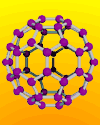
C60
In 1985, the first discovery of a fullerene was published in the journal Nature. In Sep 1985, the American chemists Robert F. Curl, Jr. and Richard E. Smalley, colleagues at Rice met with Sir Harold W. Kroto of the University of Sussex, England. In 11 days of research, they discovered the first fullerene, C60, a spherical cluster of carbon atoms. The discovery of this new structure, dubbed buckminsterfullerene or buckyball, opened a new branch of chemistry, and all three men were awarded the 1996 Nobel Prize for Chemistry for their work.
In 1967, a U.S. patent for "Ruby Laser Systems" was issued to Theodore Maiman (No. 3,353,115), for which he had applied on 13 Apr 1961. He had first operated a laser based on a ruby crystal on 16 May 1960, at Hughes Research Laboratories in Malibu, California.

In 1922, the BBC began daily domestic radio service broadcasting with the 6:00pm news read by Arthur Burrows from 2LO, Marconi House, London. Next day, Manchester (2ZY) and Birmingham stations (5IT) were brought into service. The first trial broadcast of station 2LO in London had been made from a 100W transmitter on the top floor on 11 May 1922. A week later, talks began to form a UK broadcasting syndicate, which led to the formation of the British Broadcasting Company. A Broadcasting Licence Fee of 10 shillings (then worth £18 in today's money) was introduced on 1 Nov 1922. The original 2LO transmitter was presented by the BBC to the Science Museum on 3 Nov 2002.«[Image: 2LO antenna, on roof of Marconi House.]
In 1910, the first airplane flight from a ship was made by Eugene Ely from the bow of the scout cruiser Birmingham, anchored at the Hampton Roads Yatch Clubhouse at Willoughby Spit. His runway was 83 feet long, with a five degree slope, but because the plane itself was 57 feet long, the available runway for takeoff was only 26 feet. He then flew through fog and rain to Hampton Rpads, Va. For his effort, he won a $5,000 prize offereed by John Barry Ryan. Ely was a civilian pilot for the Curtiss Aviation Company. The following year, 18 Jan 1911, Ely made another first in history when he landed on the battleship USS Pennsylvania in San Francisco Bay.
more
In 1896, the Locomotives on Highways Act 1896 took effect in Britain. It raised the country speed limit to 14 mph (12 mph in some towns) for horseless carriages under 3 tons unladen weight. An “emancipation run” of cars began with over thirty motorists driving London to Brighton, to celebrate the removal of the restrictions of The Locomotive Act 1865, the so-called “Red Flag Act.” Section 3 of the superceded 1865 Act had required “at least three persons shall be employed to drive or conduct such a locomotive... one of such persons... shall precede such locomotives on foot by not less than sixty yards and shall carry a red flag constantly displayed and shall warn drivers and riders of horses of such locomotives.” Also, the former Act, had reduced the country speed limit to only 4 mph and 2 mph in towns.«*
In 1888, the Pasteur Institute was inaugurated in Paris, France. It was founded on 4 Jun 1887.

In 1832, the first street car to be used in the U.S. took its initial trip with municipal officals in New York City. It was named the John Mason, after the prominent New York banker who founded the service, who had it built by John Stephenson's company. The carriage was horse-drawn and rode on iron wheels along iron rails laid in the middle of the road. The track ran along Fourth Avenue from Prince Street to 14th Street. The carriage had three non-connecting compartments, each able to carry ten passengers. Public transportation began on 26 Nov 1832 for a fare of 12-1/2 cents. Although horses had previously been used to haul trains on railroad tracks, this was the first horse-drawn street-car.[Image: Front compartment (of three) on John Mason street car.] more
In 1825, the first ship made in the U.S. with sheet iron was tested on the Susquehanna River. Named the Codorus, the vessel was built by Quaker John Elgar at York, Pa. using sheet iron fastened with iron rivets. The ship weighted five tons, of which two tons was for the coal- and wood- fueled boiler which provided power for an 8 h.p. engine. With a keel length of 60-ft and a 9-ft beam, the ship drew about seven inches of water. The next spring, the steamboat performed according to design by completing an upriver trip to Binghamton, N.Y. - the only steamboat to do so. The difficult three-month voyage proved that upstream navigation on the shallow, rock-filled Susquehanna was impractical.
In 1666, the English diarist, Samuel Pepys, made a record in his diary describing a blood transfusion. “Dr. Croone told me … there was a pretty experiment of the blood of one dogg let out, till he died, into the body of another on one side, while all his own run out on the other side. The first died upon the place, and the other very well and likely to do well. This did give occasion to many pretty wishes, as of the blood of a Quaker to be let into an Archbishop and such like; but, as Dr. Croone says, may, if it takes, be of mighty use to man's health, for the amending of bad blood by borrowing from a better body.” Two days later, 16 Nov, Pepys noted meeting with Robert Hooke and hearing the dog was “very well, and like to be so as ever, and doubts not its being found of great use to men.”
Blood: An Epic History of Medicine and Commerce, by Douglas Starr. - book suggestion.





