
Born 29 Jun 1924; died 27 Apr 2004 at age 79.
Roy Lee Wolford, Jr. was an American pathologist and gerontologist who pioneered, and wrote books on, the idea of restricting food intake to extend life span. He practiced the concept rigorously personally with a diet limited to 1,600 calories per day, hoping to reach age 120. During his research in the 1960's at the University of California, he found that mice fed on a regimen restricting their caloric intake by about 40 percent resulted in nearly doubling their life span. He is also known as one of the eight people that lived from 1991 in Biosphere 2, in an experiment to see if humans could live for two years in the sealed, self-contained environment. He died at age 79 of complications from Lou Gehrig's disease, perhaps a result of low oxygen, high nitrous oxide levels in the Biosphere, causing loss of brain cells.«
Roy Lee Wolford, Jr. was an American pathologist and gerontologist who pioneered, and wrote books on, the idea of restricting food intake to extend life span. He practiced the concept rigorously personally with a diet limited to 1,600 calories per day, hoping to reach age 120. During his research in the 1960's at the University of California, he found that mice fed on a regimen restricting their caloric intake by about 40 percent resulted in nearly doubling their life span. He is also known as one of the eight people that lived from 1991 in Biosphere 2, in an experiment to see if humans could live for two years in the sealed, self-contained environment. He died at age 79 of complications from Lou Gehrig's disease, perhaps a result of low oxygen, high nitrous oxide levels in the Biosphere, causing loss of brain cells.«
Beyond the 120 Year Diet: How to Double Your Vital Years, by Roy L. Walford. - book suggestion.
Born 29 Jun 1914; died 22 May 2007 at age 92. quotes
Swedish endocrinologist who coined the term mitochondrial medicine. He was a productive researcher in that field (1950s-1990s). Notably, he identified (1988) the cause of a number of certain diseases, including diabetes, was imbalances of the oxidation process. Luft disease was the first biochemically defined mitochondrial disease. He was the first to demonstrate the diabetes control was aggravated by stress hormones and inheritance played a role in the cells' production of insulin. He was an important leader in advancing the care of diabetes patients including providing nurses in diabetes wards with specialized training.«
Swedish endocrinologist who coined the term mitochondrial medicine. He was a productive researcher in that field (1950s-1990s). Notably, he identified (1988) the cause of a number of certain diseases, including diabetes, was imbalances of the oxidation process. Luft disease was the first biochemically defined mitochondrial disease. He was the first to demonstrate the diabetes control was aggravated by stress hormones and inheritance played a role in the cells' production of insulin. He was an important leader in advancing the care of diabetes patients including providing nurses in diabetes wards with specialized training.«
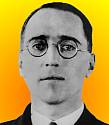
Born 29 Jun 1903; died 6 Jun 1942 at age 38.
British electronics engineer whose 128 patents contributed greatly in a wide field of electronics, including mono and stereo sound reproduction and sound recording, as well as high-definition radar, telephony and electrical measurements. His profuse creativity was achieved within just 18 years, because he died at age only 38 (while flight-testing a radar project during WW II). He began working in 1924 for International Western Electric Co., and by 1929 was with Columbia Gramophone Co. which became EMI (1931) where he invented the stereophonic recording system. Although a few stereo recordings were made in the 1930's, EMI did not extensively develop the technology until the 1950's, when it built on Blumlein's work.«
British electronics engineer whose 128 patents contributed greatly in a wide field of electronics, including mono and stereo sound reproduction and sound recording, as well as high-definition radar, telephony and electrical measurements. His profuse creativity was achieved within just 18 years, because he died at age only 38 (while flight-testing a radar project during WW II). He began working in 1924 for International Western Electric Co., and by 1929 was with Columbia Gramophone Co. which became EMI (1931) where he invented the stereophonic recording system. Although a few stereo recordings were made in the 1930's, EMI did not extensively develop the technology until the 1950's, when it built on Blumlein's work.«
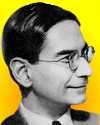
Born 29 Jun 1893; died 28 Jun 1972 at age 78. quotes
Prasanta Chandra Mahalanobis was an Indian statistician who set up large-scale surveys, applied statistical theory and created institutions to carry out such work. He studied physics and mathematics at the University of Cambridge, and became interested in statistics. He returned to India in 1915. Although he began a teaching career in physics, he turned to statistics in applications of anthropology, meteorology and biology. He established the Indian Statistical Institute in Calcutta (17 Dec 1931). The Mahalanobis distance was his innovation in statistics to compare two data sets. He also devised fractile graphical analysis to study socioeconomic conditions. He applied statistics to issues of crop yields and planning for flood control.«
Prasanta Chandra Mahalanobis was an Indian statistician who set up large-scale surveys, applied statistical theory and created institutions to carry out such work. He studied physics and mathematics at the University of Cambridge, and became interested in statistics. He returned to India in 1915. Although he began a teaching career in physics, he turned to statistics in applications of anthropology, meteorology and biology. He established the Indian Statistical Institute in Calcutta (17 Dec 1931). The Mahalanobis distance was his innovation in statistics to compare two data sets. He also devised fractile graphical analysis to study socioeconomic conditions. He applied statistics to issues of crop yields and planning for flood control.«
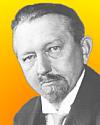
Born 29 Jun 1873; died 9 Aug 1938 at age 65.
Leo (Viktor) Frobenius was a German explorer, archaeologist and ethnologist who proposed a theory that culture evolves through stages of youth, maturity, and age. He helped to spread knowledge of West African art and culture throughout Europe. Between 1904-35, he made a series of twelve major expeditions throughout Africa, gathering knowledge of art and culture, travelling across the deserts, savannahs and rain forests of Africa and South Africa, the River Nile and the shores of the Red Sea. He enthusiastically reported his finding in numerous books and essays. Frobenius also explored centres of prehistoric art in the Alps, Norway, Spain, and Africa. He founded the Institute of Culture Morphology (1925).«
Leo (Viktor) Frobenius was a German explorer, archaeologist and ethnologist who proposed a theory that culture evolves through stages of youth, maturity, and age. He helped to spread knowledge of West African art and culture throughout Europe. Between 1904-35, he made a series of twelve major expeditions throughout Africa, gathering knowledge of art and culture, travelling across the deserts, savannahs and rain forests of Africa and South Africa, the River Nile and the shores of the Red Sea. He enthusiastically reported his finding in numerous books and essays. Frobenius also explored centres of prehistoric art in the Alps, Norway, Spain, and Africa. He founded the Institute of Culture Morphology (1925).«
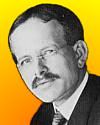
Born 29 Jun 1868; died 21 Feb 1938 at age 69. quotes
American astronomer known for his development of important astronomical instruments. To expand solar observations and promote astrophysical studies he founded Mt. Wilson Observatory (Dec 1904). He discovered that sunspots were regions of relatively low temperatures and high magnetic fields. Hale hired Harlow Shapley and Edwin Hubble as soon as they finished their doctorates, and he encouraged research in galactic and extragalactic astronomy as well as solar and stellar astrophysics. Hale planned and tirelessly raised funds for the 200-inch reflecting telescope at the Palomar Mountain Observatory completed in 1948, after his death, and named for him—the Hale telescope.
American astronomer known for his development of important astronomical instruments. To expand solar observations and promote astrophysical studies he founded Mt. Wilson Observatory (Dec 1904). He discovered that sunspots were regions of relatively low temperatures and high magnetic fields. Hale hired Harlow Shapley and Edwin Hubble as soon as they finished their doctorates, and he encouraged research in galactic and extragalactic astronomy as well as solar and stellar astrophysics. Hale planned and tirelessly raised funds for the 200-inch reflecting telescope at the Palomar Mountain Observatory completed in 1948, after his death, and named for him—the Hale telescope.
Explorer of the Universe: A Biography of George Ellery Hale, by Helen Wright. - book suggestion.
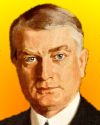
Born 29 Jun 1861; died 28 Jul 1939 at age 78. quotes
American surgeon who came from a family of surgeons. He practiced with his father, Dr. William Worrell Mayo, and brother, Dr. Charles Mayo. They specialized in surgery, pioneering the concept of group practice, and were renowned for adopting new techniques. Based in Rochester, Minn., their practice subsequently developed into the Mayo Clinic, which opened its own building in 1914.
American surgeon who came from a family of surgeons. He practiced with his father, Dr. William Worrell Mayo, and brother, Dr. Charles Mayo. They specialized in surgery, pioneering the concept of group practice, and were renowned for adopting new techniques. Based in Rochester, Minn., their practice subsequently developed into the Mayo Clinic, which opened its own building in 1914.
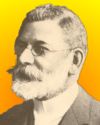
Born 29 Jun 1852; died 13 Jul 1924 at age 72.
English paleobotanist who contributed greatly to our knowledge of Devonian plants He is noted for his discoveries and descriptions of plant fossils from the Devonian period (408 to 360 million years ago). An outstanding and respected scholar, he cataloged Paleozoic plants for many world-class institutions, including the British Museum. His work included excavating at Rhynie, Aberdeenshire, Scotland (from 1917) in the most famous plant fossil assemblage representing an early terrestrial ecosystem, preserved in the so-called Rhynie chert of early Devonian age. The chert is a silicified matrix of a swampy peat bed that contains plant remains and other organisms such as arthropods and fungi as a fossilized subterranean ecosystem.
English paleobotanist who contributed greatly to our knowledge of Devonian plants He is noted for his discoveries and descriptions of plant fossils from the Devonian period (408 to 360 million years ago). An outstanding and respected scholar, he cataloged Paleozoic plants for many world-class institutions, including the British Museum. His work included excavating at Rhynie, Aberdeenshire, Scotland (from 1917) in the most famous plant fossil assemblage representing an early terrestrial ecosystem, preserved in the so-called Rhynie chert of early Devonian age. The chert is a silicified matrix of a swampy peat bed that contains plant remains and other organisms such as arthropods and fungi as a fossilized subterranean ecosystem.
Born 29 Jun 1833; died 13 Jan 1900 at age 66.
Norwegian chemist who, with his brother-in-law Cato Guldberg published the mass action law in 1864. The law states that the rate of a chemical change depends on the concentrations of the reactants. Thus for a reaction: A + B —> C the rate of reaction is proportional to [A][B], where [A] and [B] are concentrations. They also investigated the effects of temperature. Their work did not gain full credit at the time, partly due to their first publishing the law in Norwegian. Even when published in French (1867) the law received little attention. Waage later turned to practical problems relating to nutrition and public health, and he also engaged in social and religious work. (The law was rediscovered by William Esson and Vernon Harcourt.)
Norwegian chemist who, with his brother-in-law Cato Guldberg published the mass action law in 1864. The law states that the rate of a chemical change depends on the concentrations of the reactants. Thus for a reaction: A + B —> C the rate of reaction is proportional to [A][B], where [A] and [B] are concentrations. They also investigated the effects of temperature. Their work did not gain full credit at the time, partly due to their first publishing the law in Norwegian. Even when published in French (1867) the law received little attention. Waage later turned to practical problems relating to nutrition and public health, and he also engaged in social and religious work. (The law was rediscovered by William Esson and Vernon Harcourt.)
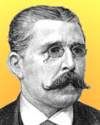
Born 29 Jun 1832; died 21 Nov 1904 at age 72.
Italian-born American Army officer, archaeologist, and museum director who amassed one of the largest collections of antiquities from Cyprus. In 1865, having been naturalized, he was appointed U.S. consul to Cyprus, where he remained 11 years, gathering some 35,000 objects from nearly 70,000 tombs. The bulk of his collection was acquired by the Metropolitan Museum of Art, New York City (1872), of which he was director from 1879 to 1904. The accuracy of the records that he made of objects from his collection was repeatedly challenged, but modern research has tended to vindicate him. His published works include Cyprus: Its Ancient Cities, Tombs, and Temples (1877).
Italian-born American Army officer, archaeologist, and museum director who amassed one of the largest collections of antiquities from Cyprus. In 1865, having been naturalized, he was appointed U.S. consul to Cyprus, where he remained 11 years, gathering some 35,000 objects from nearly 70,000 tombs. The bulk of his collection was acquired by the Metropolitan Museum of Art, New York City (1872), of which he was director from 1879 to 1904. The accuracy of the records that he made of objects from his collection was repeatedly challenged, but modern research has tended to vindicate him. His published works include Cyprus: Its Ancient Cities, Tombs, and Temples (1877).
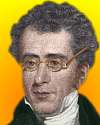
Baptized 29 Jun 1773; died 6 Aug 1846 at age 73.
English physician and chemist who in his early career trained in medicine (as his father had before him), earned an M.D. in 1798, and practiced in Liverpool until moving to London (1817). He there turned to lecturing on chemistry at Guy's Hospital, and pursued some interest also in geology. On 16 Mar 1819, he read the first paper describing hay fever. He was the first to detect a reciprocal relationship between the amount of urea in urine dropping as it increased in the blood. In tandem, the albumin in the blood decreased as that in the urine rose. In 1818, he published An Account of the History and Present State of Galvanisum. His chief medical work was System of Physiology (1824). On the Purification of Thames Water (1826) was his only geological work. He died of cholera, caught while in Paris.«
English physician and chemist who in his early career trained in medicine (as his father had before him), earned an M.D. in 1798, and practiced in Liverpool until moving to London (1817). He there turned to lecturing on chemistry at Guy's Hospital, and pursued some interest also in geology. On 16 Mar 1819, he read the first paper describing hay fever. He was the first to detect a reciprocal relationship between the amount of urea in urine dropping as it increased in the blood. In tandem, the albumin in the blood decreased as that in the urine rose. In 1818, he published An Account of the History and Present State of Galvanisum. His chief medical work was System of Physiology (1824). On the Purification of Thames Water (1826) was his only geological work. He died of cholera, caught while in Paris.«
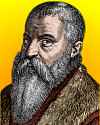
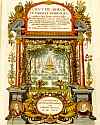
Cruydt boek
Rembert Dodoens (Dodonaeus) was a Flemish physician and botanist whose Stirpium historiae pemptades sex sive libri XXX (1583) is considered one of the foremost botanical works of the late 16th century. In this work, he divided plants into 26 groups and introduced many new families, adding a wealth of illustration. He was the first Belgian botanist of world-wide renown. He studied at Louvain and visited medical schools in France, Italy and Germany and finally became doctor and court physician to Maximillian II (1574). His Cruydt boek (1554) is beautifully illustrated. The text is in ancient Flemish, which was later translated into French, English, and Latin. Cruydt is a Flemish word meaning “spices” and other herbs used for cooking and conserving food; by extension, it also means medicinal herbs.[EB gives birth year as 1516/17.]

Died 29 Jun 2013 at age 91 (born 12 Jun 1922).
Italian astrophysicist and activist who was one of the most important in her field in Italy, and contributed to the spectral identification of many stars. She longed to discover more about the big bang and dark matter. Hack was the first woman to head the observatory at Trieste (1964-87). She had an early insight into using space satellites as a platform for astronomical observations. To the public she was a clear communicator of science in the Italian media. Hack was well-known for being vocal and influential in various high-profile civic causes, civil rights and equality. Hack battled the strictures of the Vatican as a committed atheist. She was succesful speaking against the construction of nuclear power plants in Italy. Asteroid 8558 Hack, discovered in 1995, is named after her.«
Italian astrophysicist and activist who was one of the most important in her field in Italy, and contributed to the spectral identification of many stars. She longed to discover more about the big bang and dark matter. Hack was the first woman to head the observatory at Trieste (1964-87). She had an early insight into using space satellites as a platform for astronomical observations. To the public she was a clear communicator of science in the Italian media. Hack was well-known for being vocal and influential in various high-profile civic causes, civil rights and equality. Hack battled the strictures of the Vatican as a committed atheist. She was succesful speaking against the construction of nuclear power plants in Italy. Asteroid 8558 Hack, discovered in 1995, is named after her.«
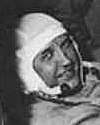
Died 29 Jun 1971 at age 38 (born 19 Jun 1933).
Viktor Ivanovich Patsayev was a Soviet cosmonaut, whoservedas design engineer onSoyuz 11, with commanderGeorgy Dobrovolskyand flight engineerVladislav Volkov. They remained in orbit for 24 days, a record, and became the first crew to transform an unmanned satellite into a manned orbital scientific station by dockingSoyuz 11withSalyut 1, launched two months earlier. Automatic control broughtSoyuz 11to within 100 m, then the docking was guided manually. In Salyut 1they used a telescope, spectrometer, electrophotometer, and television equipment, tested new onboard systems under varying conditions, and made medico-biological studies. Theydiedduring their return trip,due to rapid cabin depressurization.«[In error, prior to 23 Sep 2025, a thumbnail of Dobrovolsky was shown.]
Viktor Ivanovich Patsayev was a Soviet cosmonaut, whoservedas design engineer onSoyuz 11, with commanderGeorgy Dobrovolskyand flight engineerVladislav Volkov. They remained in orbit for 24 days, a record, and became the first crew to transform an unmanned satellite into a manned orbital scientific station by dockingSoyuz 11withSalyut 1, launched two months earlier. Automatic control broughtSoyuz 11to within 100 m, then the docking was guided manually. In Salyut 1they used a telescope, spectrometer, electrophotometer, and television equipment, tested new onboard systems under varying conditions, and made medico-biological studies. Theydiedduring their return trip,due to rapid cabin depressurization.«[In error, prior to 23 Sep 2025, a thumbnail of Dobrovolsky was shown.]
Salyut - The First Space Station: Triumph and Tragedy, by Grujica S. Ivanovich. - book suggestion.

Died 29 Jun 1971 at age 35 (born 23 Nov 1935).
Soviet cosmonaut who was flight engineer on the Soyuz 7 (1969) and the Soyuz 11 (1971) missions. The Soyuz 11 had accomplished the first space station flight, two years before the American Skylab, and docked with the Salyut 1 scientific station. Equipment aboard Salyut 1 included a telescope, spectrometer, electrophotometer, and television. On a record 24-day stay, the three-man crew checked spacecraft systems and conducted medico- biological research. The planned 30-day stay was aborted due to a small fire and difficult working conditions. Volkov died during re-entry, when a premature cabin decompression caused the death of all the crew, who had no space suits. The Soyuz was thereafter redesigned to accomodate only two crew, but in spacesuits.
Soviet cosmonaut who was flight engineer on the Soyuz 7 (1969) and the Soyuz 11 (1971) missions. The Soyuz 11 had accomplished the first space station flight, two years before the American Skylab, and docked with the Salyut 1 scientific station. Equipment aboard Salyut 1 included a telescope, spectrometer, electrophotometer, and television. On a record 24-day stay, the three-man crew checked spacecraft systems and conducted medico- biological research. The planned 30-day stay was aborted due to a small fire and difficult working conditions. Volkov died during re-entry, when a premature cabin decompression caused the death of all the crew, who had no space suits. The Soyuz was thereafter redesigned to accomodate only two crew, but in spacesuits.
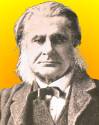
Died 29 Jun 1895 at age 70 (born 4 May 1825). quotes
English biologist who made his reputation as a marine biologist while a ship's surgeon. Later he turned to the study of fossils, especially of fishes and reptiles He is best known as the main advocate of Charles Darwin's theory of evolution. In 1860, one year after The Origin of Species was published, Huxley debated with the bishop of Oxford, Samuel Wilberforce, at the British Association for the Advancement of Science. During the discussion Wilberforce asked whether he traced his ancestry to the apes. Huxley's withering reply was that given the choice of a miserable ape and a man who could make such a remark at a serious scientific gathering, he would select the ape. Huxley coined the word agnostic to describe his own beliefs. more
English biologist who made his reputation as a marine biologist while a ship's surgeon. Later he turned to the study of fossils, especially of fishes and reptiles He is best known as the main advocate of Charles Darwin's theory of evolution. In 1860, one year after The Origin of Species was published, Huxley debated with the bishop of Oxford, Samuel Wilberforce, at the British Association for the Advancement of Science. During the discussion Wilberforce asked whether he traced his ancestry to the apes. Huxley's withering reply was that given the choice of a miserable ape and a man who could make such a remark at a serious scientific gathering, he would select the ape. Huxley coined the word agnostic to describe his own beliefs. more
Thomas Henry Huxley: The Evolution of a Scientist, by Sherrie L. Lyons. - book suggestion.
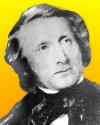
Died 29 Jun 1890 at age 76 (born 29 Dec 1813).
British industrial chemist who invented many processes. Parkes was an expert in electroplating, able to silver-plate such diverse objects as a spider web and flowers. He patented a method of rubber coating fabrics to waterproof them (1841), an electroplating process (1843), and a method of extracting silver from lead ore by adding zinc (1850). He produced the first plastic (1855), which he called Parkesine, by dissolving cellulose nitrate in alcohol and camphor containing ether. The hard solid result could be molded when heated, but he could find no market for the material. (This was rediscovered in the 1860s by John Wesley Hyatt, an American chemist, who named it celluloid and successfully marketed it as a replacement for ivory.«
British industrial chemist who invented many processes. Parkes was an expert in electroplating, able to silver-plate such diverse objects as a spider web and flowers. He patented a method of rubber coating fabrics to waterproof them (1841), an electroplating process (1843), and a method of extracting silver from lead ore by adding zinc (1850). He produced the first plastic (1855), which he called Parkesine, by dissolving cellulose nitrate in alcohol and camphor containing ether. The hard solid result could be molded when heated, but he could find no market for the material. (This was rediscovered in the 1860s by John Wesley Hyatt, an American chemist, who named it celluloid and successfully marketed it as a replacement for ivory.«
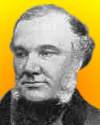
Died 29 Jun 1860 (born Apr 1793).
English physician who was the first person to correctly connect the symptoms of what is now called Addison’s disease to a functional deficiency of the adrenal glands (1855). He also described pernicious (Addison’s) anaemia and made a study of poisons. Distinguished for his zeal in the investigation of disease, Addison had a great reputation as a clinical teacher, and Guy’s Hospital in London attained fame as a school of medicine during the time of his connection with it. His numerous clinical studies include works on the clinical studies of a fatty liver (1836), appendicitis (1839), pneumonia (1843), phthisis (1845), and xanthoma (1851).
English physician who was the first person to correctly connect the symptoms of what is now called Addison’s disease to a functional deficiency of the adrenal glands (1855). He also described pernicious (Addison’s) anaemia and made a study of poisons. Distinguished for his zeal in the investigation of disease, Addison had a great reputation as a clinical teacher, and Guy’s Hospital in London attained fame as a school of medicine during the time of his connection with it. His numerous clinical studies include works on the clinical studies of a fatty liver (1836), appendicitis (1839), pneumonia (1843), phthisis (1845), and xanthoma (1851).
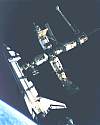
In 1995, the space shuttle Atlantis docked with the Russian space station Mir for a mission which lasted until 4 Jul 1995 that included the exchange of Russian crew members. The docking tested a special module similar to one that was to be used to link shuttles with the international station when it was completed. For these five days, the space vehicles formed the largest man-made satellite ever to orbit the Earth. During this mission astronauts answered questions from school students over amateur radio, and performed life science experiments aboard the SpaceLab. The SpaceLab experiments were designed to understand how the Russian Space program combats the effects on the human body of the long-durations in space.[Image: photograph was taken by Nikolai Budarin from a Russian Soyuz spacecraft on 4 Jul 1995]
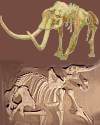
(: top, bottom)
In 1994, the first near-complete fossil of a pygmy mammoth skeleton was found in rapidly eroding sea cliffs on Santa Rosa Island, one of the Channel Islands of California. This is the only full sized skeleton of the species anywhere in the world, and the first to be dated. Scientists estimate the age by radiocarbon dating at 12,840 years old. The specimen stood 5-1/2 feet tall, and weighed about a ton. The pony-sized species, Mammuthus exilis, a distant relative of the modern elephant, is believed to have lived only on San Miguel, Santa Rosa, and Santa Cruz islands. Partial pygmy mammoth remains had been documented in previous decades. Paleontologists continue to discover more sites with the remains of these Pleistocene-era animals.
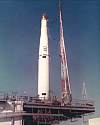
In 1961, the first U.S. rocket to launch three satellites was launched from Cape Canaveral, Florida. The Thor-Able-Star rocket Omicron 1 carried 3 payloads, The first, Transit 4A weighed 1,175-pounds with an atomic radio-isotope powered battery of the Snap series. The battery (4.7-lb; about 5"x5") was placed at the top of the drum-shaped craft to provide 2.7 watts of electricity for 5-yrs. Injun (40-lb to gather data on the radiation belts); and Greb 3 (55-lb to gather data on X-ray radiation from the sun.) The previous year, a similar rocket launched a payload of 2 satellites on 22 Jun 1960. A launch of 8 satellites on one rocket took place 9 Mar 1965.

In 1956, the Act that made possible the modern interstate highway system in the U.S. was signed by President Dwight D. Eisenhower. Eisenhower had seen the speed and efficiency in moving troops and equipment on the four-lane autobahns in Germany during WW II. The idea of federal support of interstate limited-access routes in the U.S. had begun with a study under the Federal-Aid Highway Act of 1938. Little progress was made on building these roads while federal funding was low. When the Federal-Aid Highway Act of 1956 committed federal funds to the States for 90% of the cost, construction began in earnest for the System of Interstate and Defense Highways having at least four lanes with no at-grade railroad crossings.« more
more
more The Roads That Built America: The Incredible Story of the U.S. Interstate System, by Dan McNichol. - book suggestion.
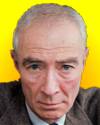
In 1954, the Atomic Energy Commission, by a vote of 4 to 1 decided against reinstating Dr. J. Robert Oppenheimer’s access to classified information. The Atomic Energy Act of 1946 required consideration of “the character, associations, and loyalty” of the individuals engaged in the work of the Commission. Substantial defects of character and imprudent and dangerous associations, particularly with known subversives who place the interests of foreign powers above those of the United States, were considered reasons for disqualification. The Commission regarded his associations with persons known to him to be Communists exceeded tolerable limits of prudence and self-restraint, and lasted too long to be justified as merely the intermittent and accidental revival of earlier friendships.
American Prometheus: The Triumph and Tragedy of J. Robert Oppenheimer, by Kai Bird, Martin J. Sherwin. - book suggestion.
In 1929, the first high-speed jet wind tunnel was completed at Langley Field, California, the field laboratory of the National Advisory Committee for Aeronautics. Preliminary design work was begun 14 Nov 1928. A wind speed of about 600-mph was attained, permitting the testing of aerofoils at this speed. The tunnel has since been deactivated.
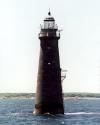
In 1860, the last stone was laid for the new Minot's Ledge lighthouse, five years minus one day after workmen first landed at the ledge. The final cost of about $300,000 made it one of the most expensive lighthouses in U.S. history. It replaced the first iron-pile lighthouse in the U.S. at the same site, built 1847-50, lighted 1 Jan 1850 but destroyed in a storm in Apr 1851. It stood off Boston's south shore, just outside Boston Harbour to warn ships of rocks that had claimed many vessels. The first granite block was laid for the new lighthouse on 9 Jul 1857. The lantern room and second order Fresnel lens were put into place and illuminated on 22 Aug 1860. This structure has withstood all storms since, and stands to this day.
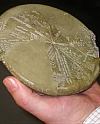
In 3123 BC, a Sumerian astronomer saw a devastating asteroid, perhaps a half-mile wide, according to an interpretation of a clay tablet, made by researchers from Bristol University, reported in The Times on 31 Mar 2008. The ancient date was indicated by a computer recreation of the night sky using symbols on the tablet recording the positions of constellations The Planiform tablet found by Henry Layard at Nineveh, likely a 700 BC copy of the astronomer's notes, described in cuneiform a "white stone bowl approaching" that "vigorously swept along." The asteroid probably crashed into the Austrian Alps, leaving a swath of cataclysmic damage such as, for example, the Genesis destruction of Sodom and Gomorrah.




