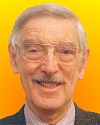
Born 16 Dec 1929. quotes
American biochemist and molecular biologist who developed the Ames test that is an indicator of the carcinogenicity (cancer-causing potential) of chemicals. It measures the rate of mutation in bacteria after the introduction of a test substance. His research led to a greater appreciation of the role of genetic mutation in cancer and facilitated the testing of suspected cancer-causing chemicals. He also developed a data base of chemicals that cause cancer in animals, listing their degree of virulence. In 1997, Ames was one of team of UC Berkeley scientists who discovered the link between low levels of folic acid, an essential nutrient, and breaks that occur in chromosomes and DNA. These breaks could lead to cancer and other diseases.
American biochemist and molecular biologist who developed the Ames test that is an indicator of the carcinogenicity (cancer-causing potential) of chemicals. It measures the rate of mutation in bacteria after the introduction of a test substance. His research led to a greater appreciation of the role of genetic mutation in cancer and facilitated the testing of suspected cancer-causing chemicals. He also developed a data base of chemicals that cause cancer in animals, listing their degree of virulence. In 1997, Ames was one of team of UC Berkeley scientists who discovered the link between low levels of folic acid, an essential nutrient, and breaks that occur in chromosomes and DNA. These breaks could lead to cancer and other diseases.
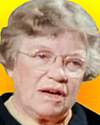
Born 16 Dec 1901; died 15 Nov 1978 at age 76. quotes
American anthropologist whose fame rests on the quality of her scientific work, outspokenness and forceful personality. Mead is best known for her studies of the indigenous people of Oceania, including the cooperation, competition and communication between them, together with the oceanic ethnology and comparative child psychology. She first began her research in the South Pacific at age 23, as a doctoral student. This led to her best-selling book,Coming of Age in Samoa (1928). Throughout her life, she traveled in other countries doing research on various cultures, including the Arapesh, Mudugumor and Tchambuli of New Guinea. Her public lecture topics ranged widely from atomic politics to feminism.«
American anthropologist whose fame rests on the quality of her scientific work, outspokenness and forceful personality. Mead is best known for her studies of the indigenous people of Oceania, including the cooperation, competition and communication between them, together with the oceanic ethnology and comparative child psychology. She first began her research in the South Pacific at age 23, as a doctoral student. This led to her best-selling book,Coming of Age in Samoa (1928). Throughout her life, she traveled in other countries doing research on various cultures, including the Arapesh, Mudugumor and Tchambuli of New Guinea. Her public lecture topics ranged widely from atomic politics to feminism.«

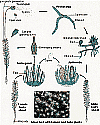
moss life cycle
American botanist who was an expert on the anatomical structure and life cycles of mosses, ferns and liverworts. He was interested in establishing the evolution of vascular plants, which he believed occurred on land from primitive mosses. He also studied the geographic distribution of plants. At a time before it was generally accepted, he thought Wegener's theory of Continental Drift (1912) was plausible. Campbell recognized that a primordial supercontinent, Gondwana, splitting into smaller land masses that drifted apart would resolve many of the puzzling facts in geographical distribution, both of animals and plants.«
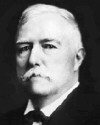
Born 16 Dec 1857; died 6 Feb 1923 at age 65.
American astronomer who pioneered in celestial photography, specializing in wide-field photography. From the time he began observing in 1881, his skill and keen eyesight combined to make him one of the greatest observers. Barnard came to prominence as an astronomer through the discovery of numerous comets. In the 1880s, a patron of astronomy in Rochester, N.Y. awarded $200 per new comet was found. Barnard discovered eight - enough to build a “comet house” for his bride. At Lick Observatory (1888-95) he made the first photographic discovery of a comet; photographed the Milky Way; and discovered the fifth moon of Jupiter. Then he joined Yerkes Observatory, making his Photographic Atlas of Selected Regions of the Milky Way. more
American astronomer who pioneered in celestial photography, specializing in wide-field photography. From the time he began observing in 1881, his skill and keen eyesight combined to make him one of the greatest observers. Barnard came to prominence as an astronomer through the discovery of numerous comets. In the 1880s, a patron of astronomy in Rochester, N.Y. awarded $200 per new comet was found. Barnard discovered eight - enough to build a “comet house” for his bride. At Lick Observatory (1888-95) he made the first photographic discovery of a comet; photographed the Milky Way; and discovered the fifth moon of Jupiter. Then he joined Yerkes Observatory, making his Photographic Atlas of Selected Regions of the Milky Way. more
The Immortal Fire Within: The Life and Work of Edward Emerson Barnard, by William Sheehan. - book suggestion.
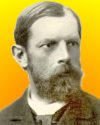
Born 16 Dec 1850; died 5 Apr 1902 at age 51.
Hans Ernst Angass Buchner was a German bacteriologist who discovered gamma globulins, natural bactericides carried in the blood, while making immunological studies in1886-90. He also devised methods of studying anaerobic bacteria. In 1891, Buchner proposed the existence of antibacterial proteins in blood serum which he called "alexines". This began a protracted debate with Metchnikoff, who championed a cellular theory of immunity. In 1893, he proposed that antitoxin formed directly from the toxin itself. With his brother, Eduard, in 1897, Hans demonstrated that completely dead yeast juice could ferment sugar, forming carbon dioxide and alcohol, exactly as the intact cells would have done. This presaged the description of enzyme activity.
Hans Ernst Angass Buchner was a German bacteriologist who discovered gamma globulins, natural bactericides carried in the blood, while making immunological studies in1886-90. He also devised methods of studying anaerobic bacteria. In 1891, Buchner proposed the existence of antibacterial proteins in blood serum which he called "alexines". This began a protracted debate with Metchnikoff, who championed a cellular theory of immunity. In 1893, he proposed that antitoxin formed directly from the toxin itself. With his brother, Eduard, in 1897, Hans demonstrated that completely dead yeast juice could ferment sugar, forming carbon dioxide and alcohol, exactly as the intact cells would have done. This presaged the description of enzyme activity.
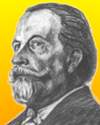
Born 16 Dec 1836; died 25 Mar 1907 at age 70.
German surgeon and author and author of a classic work on cranial surgery, Die Chirurgische Behandlung der Hirnkrankheiten (1888; “The Surgical Treatment of Brain Disorders”). In 1870, Bergmann wrote the first textbook on nervous system surgery. In addition to his contributions to surgery, Bergmann is noted for introducing steam sterilization of instruments and dressings (1886), and in 1891 he introduced aseptic methods to the practice of surgery.
German surgeon and author and author of a classic work on cranial surgery, Die Chirurgische Behandlung der Hirnkrankheiten (1888; “The Surgical Treatment of Brain Disorders”). In 1870, Bergmann wrote the first textbook on nervous system surgery. In addition to his contributions to surgery, Bergmann is noted for introducing steam sterilization of instruments and dressings (1886), and in 1891 he introduced aseptic methods to the practice of surgery.
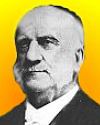
Born 16 Dec 1833; died 1 Apr 1911 at age 77.
American agriculturist who originated originated the method in which an expert demonstrates, farm by farm, new agricultural discoveries and technologies. He introduced improved methods of farming into Louisiana, spurred the development of rice culture in the Southwest, demonstrated methods for curbing the boll weevil in Texas, and inaugurated a federal program of farm demonstrations throughout the South. Knapp's legacy was to bring progressive agricultural methods to the American farmer. An agrarian reformer, to change the pattern of society for the benefit of mankind, he organized a system of county farm and home demonstration agents and boys and girls clubs from which developed the U.S. Cooperative Extension Service.
American agriculturist who originated originated the method in which an expert demonstrates, farm by farm, new agricultural discoveries and technologies. He introduced improved methods of farming into Louisiana, spurred the development of rice culture in the Southwest, demonstrated methods for curbing the boll weevil in Texas, and inaugurated a federal program of farm demonstrations throughout the South. Knapp's legacy was to bring progressive agricultural methods to the American farmer. An agrarian reformer, to change the pattern of society for the benefit of mankind, he organized a system of county farm and home demonstration agents and boys and girls clubs from which developed the U.S. Cooperative Extension Service.
Seaman A. Knapp: Schoolmaster of American Agriculture, by Joseph Cannon Bailey. - book suggestion.
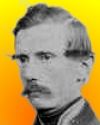
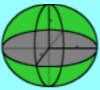
English geodesist with the Army Ordnance Survey who made calculations of the size and shape of the Earth (the Clarke ellipsoid) were the first to approximate accepted modern values with respect to both polar flattening and equatorial radius. The figures from his second determination (1866) became a standard reference for U.S. geodesy for most of the twentieth century until satellites could improve accuracy. In 1880, Clarke coined the term “Geodesy” when he published his famous book by that title. He wrote articles on mathematical geography and geodesy and also contributed “The Figure of the Earth” in the Encyclopedia Britannica. His military service with the Ordnance Survey lasted 27 years.«[Image right: Clarke ellipsoid]
Born 16 Dec 1826; died 20 Sep 1873 at age 46.
Italian astronomer who, on 5 Aug 1864, was first to observe the spectrum of a comet (Tempel 1864 II), showing not merely reflected sunlight but also spectral lines from luminous gas forming the comet tail when near the Sun. Earlier, he discovered the comet known as Donati's Comet at Florence, on 2 Jun 1858. When the comet was nearest the earth, its triple tail had an apparent length of 50°, more than half the distance from the horizon to the zenith and corresponding to the enormous linear figure of more than 72 million km (about 45 million mi). With an orbital period estimated at more than 2000 years, it will not return until about the year 4000.«
Italian astronomer who, on 5 Aug 1864, was first to observe the spectrum of a comet (Tempel 1864 II), showing not merely reflected sunlight but also spectral lines from luminous gas forming the comet tail when near the Sun. Earlier, he discovered the comet known as Donati's Comet at Florence, on 2 Jun 1858. When the comet was nearest the earth, its triple tail had an apparent length of 50°, more than half the distance from the horizon to the zenith and corresponding to the enormous linear figure of more than 72 million km (about 45 million mi). With an orbital period estimated at more than 2000 years, it will not return until about the year 4000.«
Born 16 Dec 1805; died 10 Nov 1861 at age 55.
French zoologist who is noted for his work studying anatomical abnormalities in humans and lower animals, for which he coined the term “teratology” in 1832. Although his father, Étienne, had initiated such studies, Isidore was the first to publish an extensive study of teratology, organising all known human and animal malformations taxonomically in Histoire générale et particulière des anomalies de l'organisation chez l'homme et les animaux. This taxonomy of mutants paralleled the Linnean system of natural species: assigning to each a class, order, family, genus, and even species. Many of the principles governing abnormal development were enunciated for the first time in this work. Many of hundreds of names for specific malformations are still in use.
French zoologist who is noted for his work studying anatomical abnormalities in humans and lower animals, for which he coined the term “teratology” in 1832. Although his father, Étienne, had initiated such studies, Isidore was the first to publish an extensive study of teratology, organising all known human and animal malformations taxonomically in Histoire générale et particulière des anomalies de l'organisation chez l'homme et les animaux. This taxonomy of mutants paralleled the Linnean system of natural species: assigning to each a class, order, family, genus, and even species. Many of the principles governing abnormal development were enunciated for the first time in this work. Many of hundreds of names for specific malformations are still in use.
Born 16 Dec 1776; died 23 Jan 1810 at age 33.
German physicist who discovered the ultraviolet region of the spectrum (1801) and thus helped broaden man's view beyond the narrow region of visible light to encompass the entire electromagnetic spectrum from the shortest gamma rays to the longest radio waves. After studying Herschel's discovery of infrared radiation, he observed the effects of solar radiation on silver salts and deduced the existence of radiation outside the visible spectrum. He also made contributions to spectroscopy and the study of electricity.
German physicist who discovered the ultraviolet region of the spectrum (1801) and thus helped broaden man's view beyond the narrow region of visible light to encompass the entire electromagnetic spectrum from the shortest gamma rays to the longest radio waves. After studying Herschel's discovery of infrared radiation, he observed the effects of solar radiation on silver salts and deduced the existence of radiation outside the visible spectrum. He also made contributions to spectroscopy and the study of electricity.

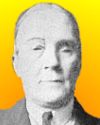
Died 16 Dec 1956 at age 86 (born 5 Sep 1870).
British chemist, born in Ceylon, whose research contributed to the development of colloid chemistry. He is remembered for his investigation of the Donnan Effect (1911) which advanced the understanding of the living cell. This is the effect of a semi-permeable membrane between two electrolytes and the electrical potential thereby produced. In other work with soap solutions, he related the efficiency of hydroxyl ions in the emulsification of oils to the formation of soaps on the surface of the drops. In wartime, he worked on the industrial-scale synthesis of ammonia and nitric acid. He was blind in one eye.«
British chemist, born in Ceylon, whose research contributed to the development of colloid chemistry. He is remembered for his investigation of the Donnan Effect (1911) which advanced the understanding of the living cell. This is the effect of a semi-permeable membrane between two electrolytes and the electrical potential thereby produced. In other work with soap solutions, he related the efficiency of hydroxyl ions in the emulsification of oils to the formation of soaps on the surface of the drops. In wartime, he worked on the industrial-scale synthesis of ammonia and nitric acid. He was blind in one eye.«
Died 16 Dec 1945 at age 79 (born 13 Aug 1866).
Italian automobile manufacturer who founded the Fiat (Fabbrica Italiana Automobili Torino) automobile company. During the first half of the 20th century, he was one of Italy's foremost industrialists.
Italian automobile manufacturer who founded the Fiat (Fabbrica Italiana Automobili Torino) automobile company. During the first half of the 20th century, he was one of Italy's foremost industrialists.
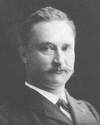
Died 16 Dec 1940 at age 82 (born 28 Jan 1858). quotes
Dutch anatomist and geologist who discovered the remains of Java man, the first known fossil of Homo erectus. Dubois was the first person to ever deliberately search for fossils of human ancestors. Only a handful of fossil humans had already been discovered, and those were by chance. Dubois joined the Dutch Army as a medical officer, and used spare time from his medical duties to search for fossils, first in Sumatra and then in Java. He searched on the banks of the Solo River, with two assigned engineers and a crew of convict labourers to help him. After lesser finds, in Oct 1891 he found an intact skullcap, the fossil which would be known as Java Man, and in Aug 1892, an almost complete left thigh bone, was found about 10m away.
Dutch anatomist and geologist who discovered the remains of Java man, the first known fossil of Homo erectus. Dubois was the first person to ever deliberately search for fossils of human ancestors. Only a handful of fossil humans had already been discovered, and those were by chance. Dubois joined the Dutch Army as a medical officer, and used spare time from his medical duties to search for fossils, first in Sumatra and then in Java. He searched on the banks of the Solo River, with two assigned engineers and a crew of convict labourers to help him. After lesser finds, in Oct 1891 he found an intact skullcap, the fossil which would be known as Java Man, and in Aug 1892, an almost complete left thigh bone, was found about 10m away.
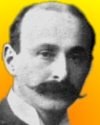
Died 16 Dec 1937 at age 75 (born 5 Jul 1862).
American-born British biologist and physician who contributed substantially to many branches of biology and founded the Molteno Institute of Biology and Parasitology (1921) at the University of Cambridge. He was interested in parasitology and the role of insects and other disease vectors, making studies of immunity reactions and the bacteriology of diptheria. He carried out investigations of the distribution of Anopheline mosquitoes in England in relation to the previous prevalence of malaria there in addition to working on blood precipition reactions.
American-born British biologist and physician who contributed substantially to many branches of biology and founded the Molteno Institute of Biology and Parasitology (1921) at the University of Cambridge. He was interested in parasitology and the role of insects and other disease vectors, making studies of immunity reactions and the bacteriology of diptheria. He carried out investigations of the distribution of Anopheline mosquitoes in England in relation to the previous prevalence of malaria there in addition to working on blood precipition reactions.
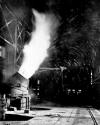
Died 16 Dec 1935 at age 83 (born 27 Dec 1851).
Percy Carlyle Gilchrist was an English metallurgist who is known for the Thomas-Gilchrist process (1876-77) he developed while assistant to his cousin, Sidney Gilchrist Thomas. This process manufactured low-phosphorus steel known as Thomas steel, in Bessemer converters and was adopted throughout Europe where iron ore has phosphorus impurities. The key feature of this process is the use of lime (calcined dolomite) to line the converter instead of acidic silica. The lime is a base and it captures acidic phosphorus oxides produced when air is blown through the molten iron. The phosphorous content, which otherwise makes steel brittle, was reduced to about 0.04%. Additionally, the cinder waste product of the steelmaking could be used as valuable artificial fertilizer.«
Percy Carlyle Gilchrist was an English metallurgist who is known for the Thomas-Gilchrist process (1876-77) he developed while assistant to his cousin, Sidney Gilchrist Thomas. This process manufactured low-phosphorus steel known as Thomas steel, in Bessemer converters and was adopted throughout Europe where iron ore has phosphorus impurities. The key feature of this process is the use of lime (calcined dolomite) to line the converter instead of acidic silica. The lime is a base and it captures acidic phosphorus oxides produced when air is blown through the molten iron. The phosphorous content, which otherwise makes steel brittle, was reduced to about 0.04%. Additionally, the cinder waste product of the steelmaking could be used as valuable artificial fertilizer.«
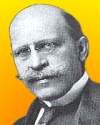
Died 16 Dec 1916 at age 53 (born 1 Jun 1863).
German-American psychologist and philosopher who was interested in the applications of psychology to law, business, industry, medicine, teaching, and sociology. He was a forerunner in the field of behaviorism: in theoretical psychology, his “action theory” defined attention in terms of the openness of the nerve paths to the muscles of adjustment. His work in industrial/organizational (I/O) psychology was extremely experimentally based. He looked at problems with monotony, attention and fatigue, physical and social influences on the working power, the effects of advertising, and the future development of economic psychology. He also looked at the reliability of eye witness testimonies.
German-American psychologist and philosopher who was interested in the applications of psychology to law, business, industry, medicine, teaching, and sociology. He was a forerunner in the field of behaviorism: in theoretical psychology, his “action theory” defined attention in terms of the openness of the nerve paths to the muscles of adjustment. His work in industrial/organizational (I/O) psychology was extremely experimentally based. He looked at problems with monotony, attention and fatigue, physical and social influences on the working power, the effects of advertising, and the future development of economic psychology. He also looked at the reliability of eye witness testimonies.
Psychology and Industrial Efficiency, by Hugo Münsterberg. - book suggestion.
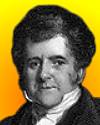
Died 16 Dec 1858 at age 69 (born 28 Sep 1789).
English physician, sometimes called the “Father of Nephrology,” who was the first to describe the clinical manifestations of the kidney disorder known as Bright's disease, or nephritis. Richard Bright's research interests included not only renal disease, but also pulmonary diseases, various fevers, abdominal tumors, heart disease, liver, pancreas, and duodenum. He and Thomas Addison lectured at Guy's on the “Theory and Practice of Medicine” for twenty years, and in 1839 published the first volume of Elements of the Practice of Medicine.
English physician, sometimes called the “Father of Nephrology,” who was the first to describe the clinical manifestations of the kidney disorder known as Bright's disease, or nephritis. Richard Bright's research interests included not only renal disease, but also pulmonary diseases, various fevers, abdominal tumors, heart disease, liver, pancreas, and duodenum. He and Thomas Addison lectured at Guy's on the “Theory and Practice of Medicine” for twenty years, and in 1839 published the first volume of Elements of the Practice of Medicine.
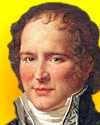
Died 16 Dec 1809 at age 54 (born 15 Jun 1755). quotes
French chemist who contributed to a major revision of chemical nomenclature. He collaborated with Antoine Lavoisier, Guyton de Morveau, and Claude Berthollet to publish Méthode de nomenclature chimique (1787). His education had included medicine, to which he applied chemistry in the study of various fluids and solids the bodies of humans and animals. Fourcroy showed that there was a greater proportion of nitrogen in muscle fiber than in any other part of the body, which was true for either carnivores or herbivores. By 1789, he had found nitrogen in many vegetables, indicating the presence of nitrogen in all animals came from food, rather than air. With Vauquelin, he investigated urine, and characterized urea (1799), which name they coined.«
French chemist who contributed to a major revision of chemical nomenclature. He collaborated with Antoine Lavoisier, Guyton de Morveau, and Claude Berthollet to publish Méthode de nomenclature chimique (1787). His education had included medicine, to which he applied chemistry in the study of various fluids and solids the bodies of humans and animals. Fourcroy showed that there was a greater proportion of nitrogen in muscle fiber than in any other part of the body, which was true for either carnivores or herbivores. By 1789, he had found nitrogen in many vegetables, indicating the presence of nitrogen in all animals came from food, rather than air. With Vauquelin, he investigated urine, and characterized urea (1799), which name they coined.«
Fourcroy: Chemist and Revolutionary, 1755-1809, by W.A. Smeaton. - book suggestion.
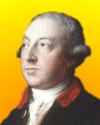
Died 16 Dec 1798 at age 72 (born 14 Jun 1726).
Welsh naturalist and traveller, one of the leading zoologists of his time. His extensive travels took him through Europe, mostly on horseback, where he observed and recorded not only the flora and fauna, but also the local people and antiquities. He was a prolific author of natural history and topographical works. Pennant wrote about these is an exceptionally readable style. His first book was the 1766 folio, British Zoology, which generated new interest in animal research, especially birds. He published more works of natural history on the following years including the Synopsis of Quadrupeds, Arctic Zoology, Genera of Birds, and Indian Zoology. Pennant believed in meticulous research and preparation and in the importance of high quality illustrations. Thus, he popularized and promoted the study of natural history, though on the whole he was not a propounder of new theories. Pennant is best known for his travels and extensive writings about touring in Wales, her language, people, history and landscape.
Welsh naturalist and traveller, one of the leading zoologists of his time. His extensive travels took him through Europe, mostly on horseback, where he observed and recorded not only the flora and fauna, but also the local people and antiquities. He was a prolific author of natural history and topographical works. Pennant wrote about these is an exceptionally readable style. His first book was the 1766 folio, British Zoology, which generated new interest in animal research, especially birds. He published more works of natural history on the following years including the Synopsis of Quadrupeds, Arctic Zoology, Genera of Birds, and Indian Zoology. Pennant believed in meticulous research and preparation and in the importance of high quality illustrations. Thus, he popularized and promoted the study of natural history, though on the whole he was not a propounder of new theories. Pennant is best known for his travels and extensive writings about touring in Wales, her language, people, history and landscape.
Died 16 Dec 1796 at age 67 (born 2 Jan 1729).
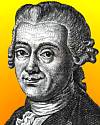
Prussian astronomer, physicist, and biologist whose formula (1766) expressing the distances between the planets and the Sun was confirmed by J.E. Bode in 1772, when it was called Bode's Law. Titius suggested that the mean distances of the planets from the sun very nearly fit a simple relationship of A=4+(3x2n) giving the series 4, 7, 10, 16, 28*, 52, 100, corresponding to the relative distance of the six known planets, up to Saturn, and an unassigned value (*) between Mars and Jupiter. Olbers searched for a planetary object at this empty position, thus discovering the asteroid belt. However, since the discovery of Neptune, which did not fit the pattern, the "law" is regarded as a coincidence with no scientific significance.[DSB gives date of death 16 Dec 1796. EB gives 11 Dec 1796.]
Prussian astronomer, physicist, and biologist whose formula (1766) expressing the distances between the planets and the Sun was confirmed by J.E. Bode in 1772, when it was called Bode's Law. Titius suggested that the mean distances of the planets from the sun very nearly fit a simple relationship of A=4+(3x2n) giving the series 4, 7, 10, 16, 28*, 52, 100, corresponding to the relative distance of the six known planets, up to Saturn, and an unassigned value (*) between Mars and Jupiter. Olbers searched for a planetary object at this empty position, thus discovering the asteroid belt. However, since the discovery of Neptune, which did not fit the pattern, the "law" is regarded as a coincidence with no scientific significance.[DSB gives date of death 16 Dec 1796. EB gives 11 Dec 1796.]
Died 16 Dec 1474
Ali Qushji, Qushju-zada Abu al-Qasim 'Ala al-Din 'Ali b. Muhammad was a Turkish philosopher, theologian, mathematician, and astronomer who played a prominent intellectual role in the court of the Ulugh Beg in Samarqand (his birthplace) and was after the assassination of his patron invited to Istanbul by Ottoman Sultan Mehmed the Conqueror. Qushji traveled through Iran and Anatolia and eventually assumed a chair in the sciences at the college (madrasa) of Fatih, and later Aya Sofia. His main goal was to free sciences from Aristotelian physical and metaphysical principles. He also entertained the possibility of the Earth's rotation.
Ali Qushji, Qushju-zada Abu al-Qasim 'Ala al-Din 'Ali b. Muhammad was a Turkish philosopher, theologian, mathematician, and astronomer who played a prominent intellectual role in the court of the Ulugh Beg in Samarqand (his birthplace) and was after the assassination of his patron invited to Istanbul by Ottoman Sultan Mehmed the Conqueror. Qushji traveled through Iran and Anatolia and eventually assumed a chair in the sciences at the college (madrasa) of Fatih, and later Aya Sofia. His main goal was to free sciences from Aristotelian physical and metaphysical principles. He also entertained the possibility of the Earth's rotation.
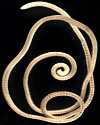
In 2021, a paper was published online in Scientific Reports, by Paul E. Marek, et al., reporting the discovery of the first millipede species that lived up to its name. Although called millipedes, meaning 1000 legs, never before had a species been found with truly that many legs. The new species, Eumillipes persephone, in fact has 1306 legs. This diminutive animal has a greatly elongated, thread-like body (0.95 mm wide, 95.7 mm long) with 330 segments, a cone-shaped head with enormous antennae, and a beak for feeding. It was found 60 m below ground in a drill hole created for mineral exploration in Western Australia. Living as a troglobite, it lacks eyes and pigmentation.«[Greek: eu- (true); Latin mille (thousand), pes (foot); persephone (Greek goddess of the underworld).]
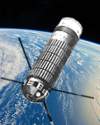
In 1962, Explorer 16, the second in the series of micrometeoroid investigation satellites, was launched on a NASA Scout rocket from Wallops Island, Virginia. Its purpose was to obtain data on the near-earth meteoroid environment—size, number, distribution, and momentum of dust particles—to better select material thickness needed to resist meteoroid penetration of a near-earth spacecraft structure. Explorer 16 was cylindrical (61 cm diam.×192 cm long). It was equipped with stainless steel pressurized-cell penetration detectors, impact detectors, capacitor detectors, and cadmium sulfide cell detectors. The spacecraft successfully accomplished all mission objectives during its 7-month operational life.«
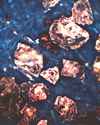
In 1954, the first U.S.-made synthetic diamonds were created by Prof. H. Tracy Hall, at G.E. Research Laboratories. They were as small as sand grains, the size needed as industrial abrasives on masonry saws, mining drill bits, polishing machinery, and cutting tools. The process was the world’s first for being reproducible. The Super Pressure Project research team had worked since 1951 to design a special pressure vessel to subject carbon compounds to pressures of up to 1,500,000 lb/sq.in. at temperatures of up to 5,000°F. A Swedish scientist had been the world’s first to create diamonds on 16 Feb 1953, in an experiment, not repeated, and held secret prior to GE's announcement (15 Feb 1955).«[Image shows sand grain-sized synthetic diamonds, photographed magnified, under water.]

In 1935, the use of eye prints - the pattern of capillaries in the retina - was described in an article in Time magazine as a new scientific method for identification because an individual's eye pattern is as unique as fingerprints. It was promoted by Dr. Carleton Simon, a psychiatrist and criminologist, upon the suggestion of Dr. Isadore Goldstein, an ophthalmologist at Mount Sinai Hospital. The retina of the eye could be photographed straight through the pupil with a Zeiss retinal camera. Dr. Simon had been a New York City deputy police commissioner (1920-26). Simon and Goldstein published a paper on the method in the New York State Journal of Medicine, Sep 1935, Vol. 35, No. 18, pp 901-6.«
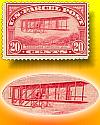
In 1912, the world's first stamp to depict an airplane (a biplane) was issued in the U.S., to be available at Post Offices on 1 Jan 1913. (This came six years prior to the first U.S. airmail stamps.) It was a 20-cent Parcel Post stamp, with carmine rose red ink, titled “Aeroplane Carrying Mail,” part of a series of twelve stamps designated for parcel post. On 24 Aug 1912, Congress had authorized the U.S. Post Office to enter the parcel post business to improve service for rural areas poorly served by private delivery companies. Four stamps in the series showed workers (including 3c. "Railway Postal Clerk," 4c. "Rural Carrier" in a horse-drawn wagon). Four more had transportation methods (including a 5c. "Mail Train," 10c. "Steamship and Mail Tender," 15c."Automobile Service"), and others showed industries.«
In 1907, the first U.S. radio broadcast of a singer featured Eugenia H. Farrar. Her voice was transmitted by Lee De Forest from Brooklyn Naval Yard, Brooklyn, N.Y. on the occasion of the departure of Admiral Robley Dunglison Evans ("Fighting Bob Evans") on a cruise with the fleet.
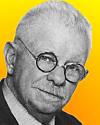
Lake
In 1897, the first U.S. submarine with an internal combustion engine (30-hp gasoline), the Argonaut, was demonstrated on the Patapsco River. Twenty-two newspaper representatives made descents of up to 4-hrs. It was built in 1897 at the Columbian Iron Works and Dry Dock Company of Baltimore, Maryland for the inventor, Simon Lake. He had built a 14-ft (4-m) working model in 1894; his new craft was 36-ft (11-m) long, 9-ft (2.7-m) diam. Lake was issued patents for the submarine vessel on 7 Apr 1896 (No. 557,835) and on 20 Apr 1897 (No. 581,213). It had wheels to travel on the sea bed, and a divers' lock chamber. The Argonaut was the first submarine to salvage sunken objects of value. It sailed 2,000 miles.«
Argonaut: The Submarine Legacy of Simon Lake, by John J. Poluhowich. - book suggestion.
In 1884, the first U.S. patent was issued for an automatic liquid vending machine to William H. Fruen of Minneapolis, Minn. (No. 309,219). When a coin was inserted in a slot, a measured quantity of liquid was released from a reservoir.
In 1851, the first U.S. patent for brass spinning was issued to H.W. Hayden in Waterbury, Connecticut (No. 8589). His invention was for machinery that could make kettles and similar articles from discs of metal. A disc was mounted in a chuck that rotated at a uniform speed. A tool then pressed against the metal and shaped it to a die.
In 1811, the first earthquake struck of a series, known as the New Madrid earthquakes, until 7 Feb 1812, with many aftershocks. A second earthquake followed six hours later. Both had an epicenter in northeastern Arkansas, were about magnitude 7 - 7.5, and were felt hundreds of miles away. They remain among the most powerful earthquakes in the United States. Within three months there were two more equally strong earthquakes. On 23 Jan 1812, the epicenter was in the far southeast corner of Missouri, and another on 7 Feb 1812 occurred with an epicenter further north, near New Madrid, Missouri. Contemporary accounts tell of houses damaged, chimneys toppled, and remarkable geological phenomena and landscapes changed. The New Madrid fault reamins a concern.«
When the Mississippi Ran Backwards: Empire, Intrigue, Murder, and the New Madrid Earthquakes, by Jay Feldman. - book suggestion.




