
(1953)
Born 30 Nov 1927; died 8 Aug 2003 at age 75.
Martha Cowles Chase (a.k.a.Epstein after marriage) was an American geneticist best known for the 1952 Hershey–Chase experiment, a landmark study demonstrating that DNA, not protein, is the genetic material of life. Working with Alfred Hershey (1952) at Cold Spring Harbor, she used isotope-labeled bacteriophage and a high-speed blender to show that viral DNA enters bacteria and directs phage reproduction. This finding helped establish molecular genetics. Chase later studied gene–protein relationships with Seymour Benzer and contributed to early work on bacterial and viral genetics, though she left research in the 1960s.«
Martha Cowles Chase (a.k.a.Epstein after marriage) was an American geneticist best known for the 1952 Hershey–Chase experiment, a landmark study demonstrating that DNA, not protein, is the genetic material of life. Working with Alfred Hershey (1952) at Cold Spring Harbor, she used isotope-labeled bacteriophage and a high-speed blender to show that viral DNA enters bacteria and directs phage reproduction. This finding helped establish molecular genetics. Chase later studied gene–protein relationships with Seymour Benzer and contributed to early work on bacterial and viral genetics, though she left research in the 1960s.«
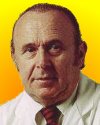
Born 30 Nov 1926.
Andrew Victor Schally is a Polish-American biochemist and endocrinologist who shared (with Roger Guillemin and Rosalyn Yalow) the 1977 Nobel Prize for Physiology or Medicine. Schally fled Poland with his family in 1939. Schally became a U.S. citizen in 1962. He became senior medical investigator with the Veterans Administration in 1973. He was noted for isolating and synthesizing three hormones that are produced by the region of the brain known as the hypothalamus; these hormones control the activities of other hormone- producing glands. These accomplishments were the synthesis of TRH (thyrotropin-releasing hormone), the isolation and synthesis of LH-RH (luteinizing hormone-releasing hormone), and studies of the action of somatostatin.
Andrew Victor Schally is a Polish-American biochemist and endocrinologist who shared (with Roger Guillemin and Rosalyn Yalow) the 1977 Nobel Prize for Physiology or Medicine. Schally fled Poland with his family in 1939. Schally became a U.S. citizen in 1962. He became senior medical investigator with the Veterans Administration in 1973. He was noted for isolating and synthesizing three hormones that are produced by the region of the brain known as the hypothalamus; these hormones control the activities of other hormone- producing glands. These accomplishments were the synthesis of TRH (thyrotropin-releasing hormone), the isolation and synthesis of LH-RH (luteinizing hormone-releasing hormone), and studies of the action of somatostatin.
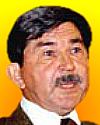
1983
Born 30 Nov 1915; died 16 Nov 2005 at age 89. quotes
Canadian-born American chemist who in 1983 won the Nobel Prize for Chemistry for his extensive research into the properties and reactions of dissolved inorganic substances, particularly oxidation-reduction processes involving the ions of metallic elements. Metals often form complexes, in which other atoms cluster around the metal atom, transfering and sharing electrons among themselves to bind together. Taube discovered that during a reaction, a temporary “bridge” of atoms often forms between metal atoms. He studied the electron transfer across this bridge, speeding up reactions that would otherwise happen only slowly or not at all. His ideas are relevant beyond his own field of study, for example, in biochemical processes such as respiration.
Canadian-born American chemist who in 1983 won the Nobel Prize for Chemistry for his extensive research into the properties and reactions of dissolved inorganic substances, particularly oxidation-reduction processes involving the ions of metallic elements. Metals often form complexes, in which other atoms cluster around the metal atom, transfering and sharing electrons among themselves to bind together. Taube discovered that during a reaction, a temporary “bridge” of atoms often forms between metal atoms. He studied the electron transfer across this bridge, speeding up reactions that would otherwise happen only slowly or not at all. His ideas are relevant beyond his own field of study, for example, in biochemical processes such as respiration.

Born 30 Nov 1899; died 17 Feb 1959 at age 59.
Andrew Jackson Moyer was an American microbiologist who invented a method for mass-producing the antibiotic penicillin. While working for the US Agriculture Department laboratory (1940-57), he discovered a technique for antibiotic fermentation using continuous shaking of a culture broth of corn steep liquor (a by-product of the corn starch manufacturing process) and lactose. His method improved on prior methods producing 2 to 8 Oxford units/ml of broth, to in excess of 200 Oxford units/ml. By making possible the large-scale production of penicillin, the process is credited with saving thousands of lives during World War II. Corn steep liquor was adopted for other commercial fermentation processes making many other antibiotics, and the method is still in use today.«
Andrew Jackson Moyer was an American microbiologist who invented a method for mass-producing the antibiotic penicillin. While working for the US Agriculture Department laboratory (1940-57), he discovered a technique for antibiotic fermentation using continuous shaking of a culture broth of corn steep liquor (a by-product of the corn starch manufacturing process) and lactose. His method improved on prior methods producing 2 to 8 Oxford units/ml of broth, to in excess of 200 Oxford units/ml. By making possible the large-scale production of penicillin, the process is credited with saving thousands of lives during World War II. Corn steep liquor was adopted for other commercial fermentation processes making many other antibiotics, and the method is still in use today.«
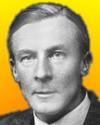
Born 30 Nov 1889; died 4 Aug 1977 at age 87. quotes
English electrophysiologist who is one of the founders of modern neurophysiology. He shared (with Sir Charles Sherrington) the Nobel Prize for Physiology or Medicine in 1932 for “for their discoveries regarding the functions of neurons.” While a student under Keith Lucas at Cambridge, Adrian discovered the “all-or-none” phenomenon (the relation between stimulus intensity and muscle-fibre contraction) in muscle-nerve preparations. During a career at Cambridge he developed the capillary electrometer to measure minute signals from nerve fibres and discovered the nature of coding of the motor and sensory impulses in afferent and efferent fibres. In the early 1930s, he advanced concepts of electro-encephalography, research on electrical brain waves.
English electrophysiologist who is one of the founders of modern neurophysiology. He shared (with Sir Charles Sherrington) the Nobel Prize for Physiology or Medicine in 1932 for “for their discoveries regarding the functions of neurons.” While a student under Keith Lucas at Cambridge, Adrian discovered the “all-or-none” phenomenon (the relation between stimulus intensity and muscle-fibre contraction) in muscle-nerve preparations. During a career at Cambridge he developed the capillary electrometer to measure minute signals from nerve fibres and discovered the nature of coding of the motor and sensory impulses in afferent and efferent fibres. In the early 1930s, he advanced concepts of electro-encephalography, research on electrical brain waves.
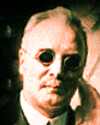
Born 30 Nov 1869; died 9 Dec 1937 at age 68.
Swedish engineer who won the Nobel Prize for Physics in 1912 for his invention of the automatic sun valve, or Solventil, which regulates a gaslight source by the action of sunlight, turning it off at dawn and on at dusk or at other periods of darkness. It rapidly came into worldwide use for buoys and unmanned lighthouses. While recovering from an accident, convalescing at home, he noticed how much time his wife spent caring for their wood-burning stove. He decided to invent a more efficient and cost-effective stove. In 1922, Dalen's Amalgamated Gas Accumulator Co. patented his design and put the first AGA stoves into production. These stoves produced a radiant heat that kept the kitchen warm. The AGA remains popular today.
Swedish engineer who won the Nobel Prize for Physics in 1912 for his invention of the automatic sun valve, or Solventil, which regulates a gaslight source by the action of sunlight, turning it off at dawn and on at dusk or at other periods of darkness. It rapidly came into worldwide use for buoys and unmanned lighthouses. While recovering from an accident, convalescing at home, he noticed how much time his wife spent caring for their wood-burning stove. He decided to invent a more efficient and cost-effective stove. In 1922, Dalen's Amalgamated Gas Accumulator Co. patented his design and put the first AGA stoves into production. These stoves produced a radiant heat that kept the kitchen warm. The AGA remains popular today.
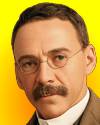
Born 30 Nov 1866; died 6 Apr 1951 at age 84. quotes
Scottish-South African paleontologist, the world’s chief authority on South African palaeontology. His skill in associating embryology with paleontology made him foremost in his time for interpreting the origins of mammals, whether from reptiles or amphibians. Broom wrote three books on human evolution. In particular, from remains he found, he gathered information on Australopithecus. He described a vast number of fossils, and from his research clarified the taxonomic relationships of the extinct reptiles. By studying skull structure, he interpreted the evolution from reptiles to mammals. He did important comparative research on his almost unequaled private collection of South African Permian reptiles and the American Museum’s large Permian collections from North America.«
Scottish-South African paleontologist, the world’s chief authority on South African palaeontology. His skill in associating embryology with paleontology made him foremost in his time for interpreting the origins of mammals, whether from reptiles or amphibians. Broom wrote three books on human evolution. In particular, from remains he found, he gathered information on Australopithecus. He described a vast number of fossils, and from his research clarified the taxonomic relationships of the extinct reptiles. By studying skull structure, he interpreted the evolution from reptiles to mammals. He did important comparative research on his almost unequaled private collection of South African Permian reptiles and the American Museum’s large Permian collections from North America.«
Finding the Missing Link: An Account of Recent Discoveries Throwing New Light on the Origin of Man, by Robert Broom. - book suggestion.
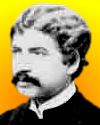
Born 30 Nov 1858; died 23 Nov 1937 at age 78. quotes
Indian physicist and plant physiologist who investigated the properties of very short radio waves, wireless telegraphy, and radiation-induced fatigue in inorganic materials. His physiological work involved comparative measurements of the responses of plants exposed to stress. His invention of highly sensitive instruments for the detection of minute responses by living organisms to external stimuli enabled him to anticipate the parallelism between animal and plant tissues noted by later biophysicists.[a.k.a. Jagadis]
Indian physicist and plant physiologist who investigated the properties of very short radio waves, wireless telegraphy, and radiation-induced fatigue in inorganic materials. His physiological work involved comparative measurements of the responses of plants exposed to stress. His invention of highly sensitive instruments for the detection of minute responses by living organisms to external stimuli enabled him to anticipate the parallelism between animal and plant tissues noted by later biophysicists.[a.k.a. Jagadis]
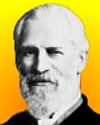
Born 30 Nov 1831; died 1 Jul 1899 at age 67. quotes
British zoologist who made significant contributions to comparative anatomy and clarification of the classification of mammals, including carnivores (1869), rhinocerosces (1875), and edentates (1882). He was superintendent, and subsequently followed Sir Richard Owen as director of Natural History Departments of the British Museum of Natural History (1884-98). Flower's innovations in museum displays greatly improved their educational value to the public. His main research interest dealt with marsupials, primates and especially whales, through which he was the first to demonstrate that lemurs are primates. Further, in thorough anthropological studies, he recorded detailed measurements of over 1,300 human skulls.«
British zoologist who made significant contributions to comparative anatomy and clarification of the classification of mammals, including carnivores (1869), rhinocerosces (1875), and edentates (1882). He was superintendent, and subsequently followed Sir Richard Owen as director of Natural History Departments of the British Museum of Natural History (1884-98). Flower's innovations in museum displays greatly improved their educational value to the public. His main research interest dealt with marsupials, primates and especially whales, through which he was the first to demonstrate that lemurs are primates. Further, in thorough anthropological studies, he recorded detailed measurements of over 1,300 human skulls.«
Essays on Museums and Other Subjects Connected with Natural History, by William Henry Flower (reprint). - book suggestion.
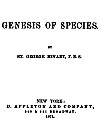
Born 30 Nov 1827; died 1 Apr 1900 at age 72.
English biologist who was a leading critic of Charles Darwin's theory of natural selection. Although called to the Bar in 1851, he instead pursued his interests in natural history and comparative anatomy, studying the insectivores and carnivores. He held that variation was predetermined by a higher intelligence, and that evolution proceeded in a step-wise fashion, and not an accumulation of small variations. In Jan 1871 he published Genesis of Species, opposing Darwin's interpretation of evolution. Mivart's liberal position even seemed to conflict with his Roman Catholic religion, for which he was excommunicated by Cardinal Vaughan in Jan 1900, a few months before he died.«
English biologist who was a leading critic of Charles Darwin's theory of natural selection. Although called to the Bar in 1851, he instead pursued his interests in natural history and comparative anatomy, studying the insectivores and carnivores. He held that variation was predetermined by a higher intelligence, and that evolution proceeded in a step-wise fashion, and not an accumulation of small variations. In Jan 1871 he published Genesis of Species, opposing Darwin's interpretation of evolution. Mivart's liberal position even seemed to conflict with his Roman Catholic religion, for which he was excommunicated by Cardinal Vaughan in Jan 1900, a few months before he died.«
A Conscience in Conflict: The Life of St. George Jackson Mivart, by Jacob W. Gruber. - book suggestion.

algae
Born 30 Nov 1823; died 6 Oct 1894 at age 70.
German botanist who was one of the founders of the science of algology (study of algae). He made important discoveries in the morphology and physiology of plants, especially in the fields of reproduction and evolution. Pringsheim's observation of the formation of plant cells provided support for the belief, opposed by the German botanist Matthias Jakob Schleiden, that cells arise only by division of pre-existing cells. In 1868 Pringsheim and Julius von Sachs were the first to describe the specialized bodies in the cell cytoplasm called plastids. Pringsheim also was the first to demonstrate a case of apospory, (production of a sexual generation from an asexual generation without the intervention of spores), in the Thallophyta (e.g., algae, fungi).
German botanist who was one of the founders of the science of algology (study of algae). He made important discoveries in the morphology and physiology of plants, especially in the fields of reproduction and evolution. Pringsheim's observation of the formation of plant cells provided support for the belief, opposed by the German botanist Matthias Jakob Schleiden, that cells arise only by division of pre-existing cells. In 1868 Pringsheim and Julius von Sachs were the first to describe the specialized bodies in the cell cytoplasm called plastids. Pringsheim also was the first to demonstrate a case of apospory, (production of a sexual generation from an asexual generation without the intervention of spores), in the Thallophyta (e.g., algae, fungi).
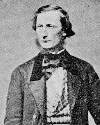
Born 30 Nov 1819; died 12 Jul 1892 at age 72.
American entrepreneur who promoted the first transatlantic telephone cable. In 1856, he helped establish the Atlantic Telegraph Company. He obtained charters from the British and American governments, and arranged financial backers in New York and London. For technical services he enlisted British engineer Charles Tilston Bright and William Thomson (later Lord Kelvin). Laying the first cable was completed 5 Aug 1858, but shortly failed. Field persisted, and on 27 Jul 1866, an improved cable was laid. Field had built his personal fortune of $250,000 from a paper business (1841-53). Later, he invested in the New York Elevated Railroad Co. (1877-80), and the Wabash Railroad. By late in life, he had lost much of his fortune.«
American entrepreneur who promoted the first transatlantic telephone cable. In 1856, he helped establish the Atlantic Telegraph Company. He obtained charters from the British and American governments, and arranged financial backers in New York and London. For technical services he enlisted British engineer Charles Tilston Bright and William Thomson (later Lord Kelvin). Laying the first cable was completed 5 Aug 1858, but shortly failed. Field persisted, and on 27 Jul 1866, an improved cable was laid. Field had built his personal fortune of $250,000 from a paper business (1841-53). Later, he invested in the New York Elevated Railroad Co. (1877-80), and the Wabash Railroad. By late in life, he had lost much of his fortune.«
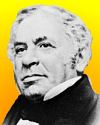
1860
Born 30 Nov 1793; died 23 Jan 1864 at age 70.
German physician whose attempts to establish medicine as a natural science helped create modern methods for the teaching and practice of clinical medicine. Schönlein was the first to use the microscope in conjunction with urine and blood analyses to diagnose disease. He coined the term hemophilia (1828), was the first to describe purpura rheumatica (1837, hence called Schönlein's disease) and discovered fungus causing favus (1839).
German physician whose attempts to establish medicine as a natural science helped create modern methods for the teaching and practice of clinical medicine. Schönlein was the first to use the microscope in conjunction with urine and blood analyses to diagnose disease. He coined the term hemophilia (1828), was the first to describe purpura rheumatica (1837, hence called Schönlein's disease) and discovered fungus causing favus (1839).
Born 30 Nov 1761; died 22 Feb 1815 at age 53.
English chemist.
English chemist.
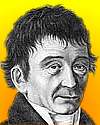
Born 30 Nov 1756; died 3 Apr 1827 at age 70.
German physicist who is known as the “father of acoustics” for his mathematical investigations of sound waves. Chladni figures, seen when thin plates covered in sand at set in vibration, are complex patterns of vibration with nodal lines that remain stationary and retain sand. He demonstrated these to an audience of scientists in Paris in 1809. He measured the speed of sound in various gases by determining the pitch of the note of an organ pipe filled with different gases. To determine the speed of sound in solids, Chladni used analysis of the nodal pattern in standing-wave vibrations in long rods. He performed on the euphonium, an instrument he invented, made of glass and steel bars vibrated by rubbing with a moistened finger. He also investigated meteorites.
German physicist who is known as the “father of acoustics” for his mathematical investigations of sound waves. Chladni figures, seen when thin plates covered in sand at set in vibration, are complex patterns of vibration with nodal lines that remain stationary and retain sand. He demonstrated these to an audience of scientists in Paris in 1809. He measured the speed of sound in various gases by determining the pitch of the note of an organ pipe filled with different gases. To determine the speed of sound in solids, Chladni used analysis of the nodal pattern in standing-wave vibrations in long rods. He performed on the euphonium, an instrument he invented, made of glass and steel bars vibrated by rubbing with a moistened finger. He also investigated meteorites.
Born 30 Nov 1711; died 4 Jul 1778 at age 66.
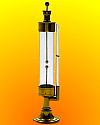
English-born American experimenter and inventor who investigated electricity. In 1748 Kinnersley demonstrated that the electric fluid actually passed through water, using a 10-ft long trough of water. In 1751, as one of the earliest popularizers of science, he began delivering lectures on "The Newly Discovered Electrical Fire." His experiments discovered the difference between the electricity that was produced by the glass and sulphur globes, which he communicated to Benjamin Franklin at Philadelphia, since they showed beyond a doubt that the positive and negative theory was correct. He also sought ways to protect buildings from lightning, invented an electric thermometer (c. 1755), and demonstrated that electricity can produce heat.«[Image: simplified version of Kinnersley's electrical air thermometer in which colored water in the airtight cylinder pushed water up the capillary tube when sparking between electrodes heated and expanded the air.]
English-born American experimenter and inventor who investigated electricity. In 1748 Kinnersley demonstrated that the electric fluid actually passed through water, using a 10-ft long trough of water. In 1751, as one of the earliest popularizers of science, he began delivering lectures on "The Newly Discovered Electrical Fire." His experiments discovered the difference between the electricity that was produced by the glass and sulphur globes, which he communicated to Benjamin Franklin at Philadelphia, since they showed beyond a doubt that the positive and negative theory was correct. He also sought ways to protect buildings from lightning, invented an electric thermometer (c. 1755), and demonstrated that electricity can produce heat.«[Image: simplified version of Kinnersley's electrical air thermometer in which colored water in the airtight cylinder pushed water up the capillary tube when sparking between electrodes heated and expanded the air.]
Ebenezer Kinnersley - Franklin's Friend, by J. A. Leo Lemay. - book suggestion.

Died 30 Nov 2019 at age 98 (born 29 Jan 1921). quotes
Anderson Hunter Dupree was an American science historian and writer who followed his B.A. in History with wartime Navy service, including as a watch officer in the Combat Information Center of the USS Tennessee. That experience of electronic computers and radar systems, swayed his intellectual development as a historian toward science and technology. His Harvard doctoral thesis was on the life and work of Asa Gray, a leading 19th-century American botanist. In 1957, Dupree published a landmark report on “Science in the Federal Government: a History of Policies and Activities to 1940.” He also wrote the seminal biography, Asa Gray, 1810-1888 (1959). The graves of Gray and Dupree are a few steps apart in a Cambridge cemetery.«
Anderson Hunter Dupree was an American science historian and writer who followed his B.A. in History with wartime Navy service, including as a watch officer in the Combat Information Center of the USS Tennessee. That experience of electronic computers and radar systems, swayed his intellectual development as a historian toward science and technology. His Harvard doctoral thesis was on the life and work of Asa Gray, a leading 19th-century American botanist. In 1957, Dupree published a landmark report on “Science in the Federal Government: a History of Policies and Activities to 1940.” He also wrote the seminal biography, Asa Gray, 1810-1888 (1959). The graves of Gray and Dupree are a few steps apart in a Cambridge cemetery.«
Asa Gray: American Botanist, Friend of Darwin, by A. Hunter Dupree. - book suggestion.
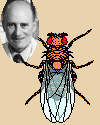
Died 30 Nov 2007 at age 86 (born 15 Oct 1921). quotes
American molecular biologist who developed (1955) a method for determining the detailed structure of viral genes. He coined the term cistron (1957) to denote functional subunits of genes. He also did much to elucidate the nature of genetic anomalies, called nonsense mutations, in terms of the nucleotide sequence of DNA, deoxyribonucleic acid. In the 1 Nov 1997 issue of Current Biology, Benzer and Kyung-Tai Min described two mutant types of fruitfly with signs of brain degeneration that might be useful for studying Creutzfeld-Jacob (CJ) disease or other human brain degenerative disorders. The “spongecake” mutant has holes that appear in the brain as degeneration sets in, holes similar to spongiform encephalopathies, like CJ or mad cow disease.
American molecular biologist who developed (1955) a method for determining the detailed structure of viral genes. He coined the term cistron (1957) to denote functional subunits of genes. He also did much to elucidate the nature of genetic anomalies, called nonsense mutations, in terms of the nucleotide sequence of DNA, deoxyribonucleic acid. In the 1 Nov 1997 issue of Current Biology, Benzer and Kyung-Tai Min described two mutant types of fruitfly with signs of brain degeneration that might be useful for studying Creutzfeld-Jacob (CJ) disease or other human brain degenerative disorders. The “spongecake” mutant has holes that appear in the brain as degeneration sets in, holes similar to spongiform encephalopathies, like CJ or mad cow disease.
Time, Love, Memory: A Great Biologist and His Quest for the Origins of Behavior, by Jonathan Weiner. - book suggestion.
Died 30 Nov 1999 at age 52 (born 29 Nov 1947).
American chemist who, at age 29, cofounded Genentech, Inc. (1976), a research-based company that pioneered the biotechnology industry. His cofounder, distinguished biochemist, Herbert Boyer, had developed one of the key techniques that opened up the possibility of the transfer of genes from one organism to another. Boyer was a pioneer using restriction enzymes to snip segments of DNA out of cells. In 1977, Genentech began mass- producing their first human protein by splicing a gene into bacteria. In 1978, Genentech created the first drug produced by genetic engineering, human-type insulin. It was also the first biotechnology company to sell its own drug, human growth hormone. Swanson died after a long battle against brain cancer.
American chemist who, at age 29, cofounded Genentech, Inc. (1976), a research-based company that pioneered the biotechnology industry. His cofounder, distinguished biochemist, Herbert Boyer, had developed one of the key techniques that opened up the possibility of the transfer of genes from one organism to another. Boyer was a pioneer using restriction enzymes to snip segments of DNA out of cells. In 1977, Genentech began mass- producing their first human protein by splicing a gene into bacteria. In 1978, Genentech created the first drug produced by genetic engineering, human-type insulin. It was also the first biotechnology company to sell its own drug, human growth hormone. Swanson died after a long battle against brain cancer.
Died 30 Nov 1982 at age 88 (born 16 Jul 1894). quotes
Italian biogeographer and botanist who wrote a critique of Darwinism. Rather than addressing the problem of form, as considered by other ctitics, Croizat took a unique and fascinating position. He believed in the problem of space, an aspect of biogeography, because it is through space and in time that the forms of organisms change. Croizat acknowledges Darwin knew the importance of the spatial aspect, but failed to expand beyond a passing mention. Croizat developed a track method of investigation to study the geographic distributions of organisms and map them into what he called “dispersal patterns.”«
Italian biogeographer and botanist who wrote a critique of Darwinism. Rather than addressing the problem of form, as considered by other ctitics, Croizat took a unique and fascinating position. He believed in the problem of space, an aspect of biogeography, because it is through space and in time that the forms of organisms change. Croizat acknowledges Darwin knew the importance of the spatial aspect, but failed to expand beyond a passing mention. Croizat developed a track method of investigation to study the geographic distributions of organisms and map them into what he called “dispersal patterns.”«
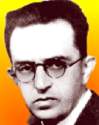
Died 30 Nov 1970 at age 74 (born 1 Feb 1896).
Mexican archaeologist and government official who explored the early Oaxacan cultures and is best remembered for his excavation of Tomb Seven at Monte Albán, the earliest-known North American necropolis. His first book, El mapa de Teozacoalco, (1949), is a key to Mixtec history. For 40 years, he studied prehispanic writing, striving to decipher the forgotten inscriptions. His most famous work, Kings and Kingdoms of the Mixteca, was finished only a few days before he died in 1970.
Mexican archaeologist and government official who explored the early Oaxacan cultures and is best remembered for his excavation of Tomb Seven at Monte Albán, the earliest-known North American necropolis. His first book, El mapa de Teozacoalco, (1949), is a key to Mixtec history. For 40 years, he studied prehispanic writing, striving to decipher the forgotten inscriptions. His most famous work, Kings and Kingdoms of the Mixteca, was finished only a few days before he died in 1970.
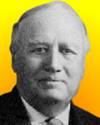
Died 30 Nov 1929 at age 69 (born 25 May 1860).
Daniel Moreau Barringer was an American mining engineer and geologist who identified the Great Barringer Meteor Crater, Arizona, U.S.A., to be the result of a meteorite strike, and not as until then assumed, an extinct volcano. The crater is nearly round, almost a mile in diameter and about 600-ft deep. He interpreted the geological evidence at the site, but his theory (1905) was at first resisted by the scientists of the time. Continued studies all prove he was correct. There's no other signs of recent volcanic activity in the vicinity, but much meteoritic material has been found there. The crater also demonstrates that the moon's cratered surface is likely to be the result of meteoric bombardment, as would also have happened to the earth. However, the earth's atmosphere shields it from all but the largest strikes. Surface changes over time and erosion by weather have further obscured many of those.«
Daniel Moreau Barringer was an American mining engineer and geologist who identified the Great Barringer Meteor Crater, Arizona, U.S.A., to be the result of a meteorite strike, and not as until then assumed, an extinct volcano. The crater is nearly round, almost a mile in diameter and about 600-ft deep. He interpreted the geological evidence at the site, but his theory (1905) was at first resisted by the scientists of the time. Continued studies all prove he was correct. There's no other signs of recent volcanic activity in the vicinity, but much meteoritic material has been found there. The crater also demonstrates that the moon's cratered surface is likely to be the result of meteoric bombardment, as would also have happened to the earth. However, the earth's atmosphere shields it from all but the largest strikes. Surface changes over time and erosion by weather have further obscured many of those.«
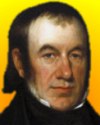
Died 30 Nov 1866 at age 75 (born 21 Feb 1791).
English chemist and industrialist who invented the mercerisation process for treating cotton which is still in use today and was a pioneer in colour photography. From age 16, and throughout his life, he investigated and developed chemical textile dyes. Late in his life, in 1844, he found that when cotton is treated with caustic chemicals, it became thicker and shorter - thereby stronger and shrink-resistant. Further, the cotton was more easily dyed, needed 30% less dye, more absorbant, and could be given an attractive silk-like lustre. He called his process mercerisation and patented it in 1850. Mercerisation was applied to many other materials, such as parchment and woolen fabric, and remains an important part of the cotton finishing process today.
English chemist and industrialist who invented the mercerisation process for treating cotton which is still in use today and was a pioneer in colour photography. From age 16, and throughout his life, he investigated and developed chemical textile dyes. Late in his life, in 1844, he found that when cotton is treated with caustic chemicals, it became thicker and shorter - thereby stronger and shrink-resistant. Further, the cotton was more easily dyed, needed 30% less dye, more absorbant, and could be given an attractive silk-like lustre. He called his process mercerisation and patented it in 1850. Mercerisation was applied to many other materials, such as parchment and woolen fabric, and remains an important part of the cotton finishing process today.

Died 30 Nov 1845 at age 58 (born 2 Jun 1787).
Swedish chemist who discovered the element vanadium. He examined iron ore after a mine manager had pointed out an interesting test. He was told, if a batch of was treated with hydrochloric acid and a black powder appeared, then the iron would be brittle. By further study he found this was not always true, for sometimes a black powder appeared from iron that was not brittle (1831). By analysis of the powder, although similar to chromium or uranium, he determined it was a new element. Sefström named it vanadium after a Norse goddess. An earlier, but tentative, discovery had been made in 1801 by Andrés Manuel del Río, a Spanish mineralogist who lacked confidence in his discovery of a new element that he named erythronium. This was later found to be the same as vanadium.
Swedish chemist who discovered the element vanadium. He examined iron ore after a mine manager had pointed out an interesting test. He was told, if a batch of was treated with hydrochloric acid and a black powder appeared, then the iron would be brittle. By further study he found this was not always true, for sometimes a black powder appeared from iron that was not brittle (1831). By analysis of the powder, although similar to chromium or uranium, he determined it was a new element. Sefström named it vanadium after a Norse goddess. An earlier, but tentative, discovery had been made in 1801 by Andrés Manuel del Río, a Spanish mineralogist who lacked confidence in his discovery of a new element that he named erythronium. This was later found to be the same as vanadium.
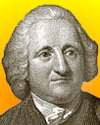
Died 30 Nov 1761 at age 55 (born 10 Jun 1706).
English optical instrument maker of optical and astronomical instruments who developed (1758) and patented an achromatic (non- colour- distorting) refracting telescope and a practical heliometer, a telescope used to measure the Sun's diameter and the angles between celestial bodies. In the 1730's, Chester More Hall, an attorney with an interest in telescopes, first discovered that flint glass appeared to have a greater color dispersion than crown glass did at the same magnifications. Hall reasoned that if he cemented the concave face of a flint glass lens to the convex face of a crown glass lens, he could remove the dispersion properties (and thus, chromatic aberration) from both lenses simultaneously. Dollond learned of the technique in the 1750's and developed it.
English optical instrument maker of optical and astronomical instruments who developed (1758) and patented an achromatic (non- colour- distorting) refracting telescope and a practical heliometer, a telescope used to measure the Sun's diameter and the angles between celestial bodies. In the 1730's, Chester More Hall, an attorney with an interest in telescopes, first discovered that flint glass appeared to have a greater color dispersion than crown glass did at the same magnifications. Hall reasoned that if he cemented the concave face of a flint glass lens to the convex face of a crown glass lens, he could remove the dispersion properties (and thus, chromatic aberration) from both lenses simultaneously. Dollond learned of the technique in the 1750's and developed it.
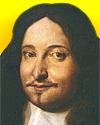
Died 30 Nov 1694 at age 66 (born 10 Mar 1628). quotes
Italian physician and biologist who, in developing experimental methods to study living things, founded the science of microscopic anatomy. After Malpighi's researches, microscopic anatomy became a prerequisite for advances in the fields of physiology, embryology, and practical medicine. Drawing on the work of William Harvey, he studied the circulatory and respiratory systems of all living things and arranged them in a hierarchical system, beginning with plants, above which were insects, then fishes, then the mammals, then man. He was one of the first scientists to study such anatomical structures as the lungs, kidneys, spleen, brain, tongue, and skin at the microscopic level.
Italian physician and biologist who, in developing experimental methods to study living things, founded the science of microscopic anatomy. After Malpighi's researches, microscopic anatomy became a prerequisite for advances in the fields of physiology, embryology, and practical medicine. Drawing on the work of William Harvey, he studied the circulatory and respiratory systems of all living things and arranged them in a hierarchical system, beginning with plants, above which were insects, then fishes, then the mammals, then man. He was one of the first scientists to study such anatomical structures as the lungs, kidneys, spleen, brain, tongue, and skin at the microscopic level.
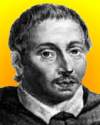
Died 30 Nov 1647 (born 1598). quotes
Italian mathematician who made developments in geometry that were precursors to integral calculus. Cavalieri's theory of indivisibles, presented in his Geometria indivisibilis continuorum nova (1635) was a development of Archimedes' method of exhaustion incorporating Johannes Kepler's theory of infinitesimally small geometric quantities. The area and volume of various geometric figures can easily be found with this method. He was largely responsible for introducing logarithms as a computational tool in Italy through his book Directorium Generale Uranometricum, including logarithms of trigonometric functions for astronomers. He also wrote on optics and astronomy. Galileo thought highly of his writing, and corresponded with him.
Italian mathematician who made developments in geometry that were precursors to integral calculus. Cavalieri's theory of indivisibles, presented in his Geometria indivisibilis continuorum nova (1635) was a development of Archimedes' method of exhaustion incorporating Johannes Kepler's theory of infinitesimally small geometric quantities. The area and volume of various geometric figures can easily be found with this method. He was largely responsible for introducing logarithms as a computational tool in Italy through his book Directorium Generale Uranometricum, including logarithms of trigonometric functions for astronomers. He also wrote on optics and astronomy. Galileo thought highly of his writing, and corresponded with him.
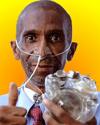
In 2001, Robert Tools, 59, the first person in the world to receive a fully self-contained artificial heart, died in Louisville, Ky. Five months earlier, on 2 Jul 2001, doctors at Jewish Hospital in Louisville had implanted the AbioCor heart replacement. He died of internal bleeding and organ failure after living with the device whirring in his chest for 151 days. Doctors said the death was not caused by problems with the AbioCor heart device. They blamed the severe abdominal bleeding on long-standing health problems. Unlike earlier artificial hearts (such as the Jarvik-7) the AbioCor has no wires or tubes that stick out of the chest and connect to a big compressor. The battery-powered, plastic-and-titanium device is the size of a softball.
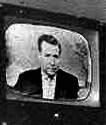
In 1956, CBS became the first-ever network to broadcast from videotape. It was a rebroadcast to the West Coast of the 15-minute Douglas Edwards and the News program. It was recorded earlier on 2-inch tape with an Ampex Mark IV machine. NBC made the first nationally televised videotaped broadcast on 21 Jan 1957, promptly replaying President Dwight D. Eisenhower's oath of office for his second term inauguration. The videotape recorder invented by Ray Dolby was ready in Feb 1956 when Ampex had a successful in-house demonstration. After it was introduced at the annual CBS affiliates meeting in Chicago on 14 Apr 1956, taped programming quickly became the normal method in broadcasting«
Video Revolutions: On the History of a Medium, by Michael Z. Newman. - book suggestion.
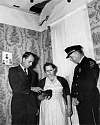
In 1954, in Sylacauga, Alabama, USA, Ann Hodges, 32, was bruised on the arm and hip by a meteorite that fell through the roof of her house into her living room. It smashed the case of her wooden radio and struck her as she lay resting on her sofa. The 9-lb (4-kg), 6 in (15 cm) diameter fragment came from a larger, likely more than 150-lb, chondrite meteorite that exploded over central Alabama about 2 pm, according to reports from people in several states that saw a bright flash across the sky. This remains (2006) the only recorded instance of a person being hit by a meteorite. She donated it in 1956 to the Alabama Museum of Natural History, and it is known by her name as the Hodges Meteorite.«[Image: Under the hole broken through the ceiling by the falling meteorite, Ann Hodges poses with the Sylacauga mayor and Police Chief ]
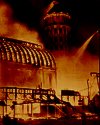
In 1936, London's famed Crystal Palace, constructed for the International Exhibition of 1851, was destroyed in the most spectacular fire seen in Britain for many years. It started about 8 pm and spread with such amazing rapidity that within half an hour the great building was ablaze from end to end. Flames rose 300-ft despite the efforts of 90 engines and 500 firemen. Only the two towers escaped destruction. When built, constructed mainly of glass and iron, it was nicknamed "The Crystal Palace" by Punch magazine. Within the Crystal Palace was a large concert hall which could accommodate audiences of at least 4000 people, and had its own resident orchestra, The Crystal Palace Orchestral Society. Regular concerts were held there, until the palace was destroyed by fire.
In 1924, the first photographs sent by radio across the Atlantic as a public demonstration were received in New York. and published next day in the New York Herald Tribune. Pictures of officials were accompanied by a photo of the Oxford team winning in a relay race at Cambridge, a steamship aground on the banks of the Thames, and an image of the written proverb, "One picture is worth a thousand words." (A relay was made on 6 Jul 1924 when a picture of Charles E Hughes, Secretary of State, was transmitted on a circuit beginning at the RCA Laboratories, by wire to New Brunswick, N.J., then radio to Brentwood, England and wire to London. By further wire and radio links, the signal was recorded back at the origin.)
In 1899, aluminium was first used commercially in the U.S.as an electrical transmission conductor. The Hartford Electric Light Company of Hartford, Connecticut for a transmission to Hartford, Conn. from its waterpower plant at Tariffville, Conn., on Farmington River, at Spoonville, just before Case's Island. The company'a 250-foot concrete dam created a 29 foot head of water which was used to power their hydroelectric plant. The dam powered 2 pairs of 1300-hp water wheels, each connected to a 750-kilowatt generator in a brick powerhouse. The plant opened on Thanksgiving day in 1899 providing electricity from there to Hartford. It was washed away in the flood of 1955.
(USPTO)
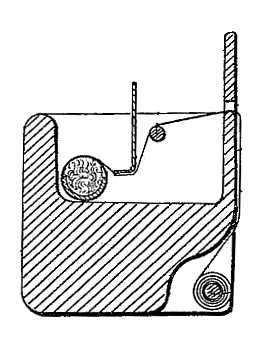
In 1897, a U.S. patent for a "Device for Rolling Cigarettes" was issued to black American inventor J.A. Sweeting (No. 594,501). A concave mantrel would carry tobacco while cigarette paper from a contained roll was turned around the contents, thus producing a perfectly and conveniently formed cigarette. By wetting a strip of the paper along the line of the roller with a finger, further turning of the mantrel would apply tension and separate the paper in a straight line. The wetted portion in contact with the formed cigarette wrapper would adhere to it and prevent unwinding of the wrapper.
The Inventive Spirit of African Americans: Patented Ingenuity, by Patricia Carter Sluby. - book suggestion.
1884
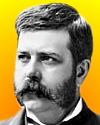
In 1886, the first commercially successful U.S. alternating current power plant was opened at Buffalo, N.Y. by George Westinghouse. Compared to Thomas Edison's direct currect ventures, AC transmission distance could be increased by miles using transformers at the source for transmission at much higher voltage, which also decreased energy losses. (Earlier in the year, on 6 Mar 1886, he operated an experimental facility, the first AC power plant in the U.S., at Great Barrington, Mass. where he demonstrated transmission at 500 volts for 4000 feet, stepped down to 100-volt for lights in stores. It began generating commercial power two weeks later, but it was shortly abandoned when it became damaged by an accident.) «
A Life of George Westinghouse, by Henry G. Prout. - book suggestion.
(USPTO)
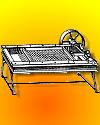
In 1875, the first U.S. patent for an oat-crushing machine was issued to Asmus.J. Ehrrichson, of Akron, Ohio (No. 170,536). The patent description gave that previously this had been done "by crushing the grain between rollers, or grinding with burrs or millstones, and subsequently screening ... into different grades." This, it said, resulted in inferior quality due to excessive amounts of flour that was too fine. The invention instead used a series of horizontal knives fixed in a frame through which oats fall from a hopper with a perforated metal bottom. Lateral motion of the hopper causes grain moving through the holes to be sheared against the knives thus producing a desirable coarse grain meal.«
(USPTO)
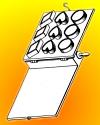
In 1875, a U.S. patent was issued for a "Biscuit Cutter" was issued to black American inventor Alexander P. Ashbourne (No. 170,460). The device consisted of a number of metal cutters, which could have various plain or fancy shapes, mounted on a hinged plate attached to a molding board on which dough for cake or biscuits would be rolled out. The plate was then closed over the dough, allowing the cutters to cut through the dough, forming many shapes simultaneously. When the hinged plate was lifted, to simplify removal of the cut shapes, each cutter contained a spring-loaded plate of similar shape to eject the cut dough. Provision was made to store the rolling pin in a concave cross-bar along the back of the hinges.«
The Inventive Spirit of African Americans: Patented Ingenuity, by Patricia Carter Sluby. - book suggestion.
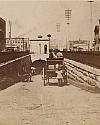
In 1866, work began on the first traffic tunnel under a U.S. river, the Washington Street Tunnel in Chicago, Illinois, under the Chicago River. It was built to alleviate traffic congestion at the river's swing bridges and opened 1 Jan 1869. It had a total length of 1,605-ft including approaches. It had a double arch with two roadways 13-ft wide by 11-ft high, and a separate footway on one side 10-ft wide by 10-ft high, reached by stairs. Cable car companies used the tunnel from the 1880s to 1906. To give a deeper draft to the river, it was replaced with a deeper tunnel in 1900, through which electric streetcar service began in 1911-12. The tunnel was closed in 1953. The world's first tunnel under a waterway was the Thames Tunnel, London, opened on 25 Mar 1843.«[Image: Washington Street Tunnel from an undated stereo viewer card.] more
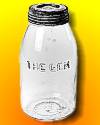
In 1858, John Landis Mason received a U.S. patent for his invention known by his name - the Mason jar (No. 22,186). Although hundreds of men and women obtained patents for fruit jars, probably the most well known in the industry has been the Mason jar. It has become a common term for the preserved food jar. Mason developed and patented a shoulder-seal jar with a zinc screw cap. The "Mason jar" had a threaded neck which fit with the threads in a metal cap to screw down to the shoulder of the jar and in this way form a seal. In 1869, a top seal above the threads and under a glass lid was introduced to the jar, thus effecting an excellent seal.[Image: The Gem mason jar, made by Hero Glass Works, Philadelphia, Pennsylvania, circa 1869] more
In 1820, Humphry Davy assumed the presidency of the Royal Society.
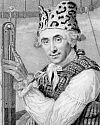
In 1784, John Jeffries, an American physician and scientist, recorded the first scientific data for free air, to a height of 9,309-ft, during a balloon flight in London, England, including twelve observations of temperature, pressure, and humidity. Jeffries' values agree closely with modern determinations. Jeffries had provided himself with thermometer, barometer, electrometer, hygrometer and timepiece. He also took air samples at different elevations for Cavendish, who subsequently made a chemical analysis of the air. This was the first of two balloon flights Jeffries financed. He flew with Frenchman Jean Pierre Blanchard, who had experience in balloon flight. On 7 Jan 1785, they made the first balloon crossing of the English Channel.Image: Jeffries posed as if in balloon, holding barometer.
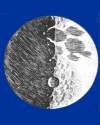
In 1609, the modern face of the moon first emerged when Galileo Galilei in Padua turned his telescope toward the moon, noted the irregularities of the crescent face, and made a drawing to record his discoveries. He made at least five more drawings of the moon over the next eighteen days, prepared careful watercolor sketches from these drawings, and then selected four of these to be engraved for his revolutionary Starry Messenger, which appeared the following March. Galileo's treatise announced to an astonished public that the moon was a cratered chunk of elements - a world - and not some globe of quintessential perfection. It was a new land, to be explored, charted, and named.Image: engraving, the second in the series, based on a sketch made on 3 Dec 1609.
Galileo: A Life, by James Reston. - book suggestion.





