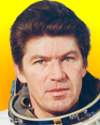
Born 16 Aug 1939; died 6 Jun 2022 at age 82. quotes
Valery Victorovich Ryumin was a Russian cosmonaut who flew on several Soyuz space station missions (1977-80) as Flight Engineer, and on STS-91 Discovery (1998). His career total was 365 days in space, including his second and third space flights of record-breaking duration: 175 days (1977) and 185 days (1980). From 1992, Ryumin was Director of the Russian portion of the Shuttle-Mir and NASA-Mir program. He was selected by NASA as a crew member of STS-91, the final Shuttle docking mission with the Mir space station, which was the last phase of the joint U.S.-Russian Phase 1 space program (to be superseded by the International Space Station).«
Valery Victorovich Ryumin was a Russian cosmonaut who flew on several Soyuz space station missions (1977-80) as Flight Engineer, and on STS-91 Discovery (1998). His career total was 365 days in space, including his second and third space flights of record-breaking duration: 175 days (1977) and 185 days (1980). From 1992, Ryumin was Director of the Russian portion of the Shuttle-Mir and NASA-Mir program. He was selected by NASA as a crew member of STS-91, the final Shuttle docking mission with the Mir space station, which was the last phase of the joint U.S.-Russian Phase 1 space program (to be superseded by the International Space Station).«
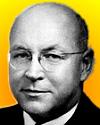
Born 16 Aug 1904; died 15 Jun 1971 at age 66. quotes
American biochemist who in 1946 received (with John Northrop and James Sumner) the Nobel Prize for Chemistry for his work in the purification and crystallization of viruses, thus demonstrating their molecular structure. Impressed by John Northrop's success in crystallizing proteins, Stanley applied those techniques to his extracts of the tobacco mosaic virus (TMV). By 1935, he had obtained thin rodlike crystals of the virus and demonstrated that TMV still retained its infectivity after crystallization, the first such purification of a virus. At first, some scientists were skeptical - thinking that viruses, being similar to conventional living organisms could not exist in crystalline form. Stanley then believed, incorrectly, that protein was the active agent of the virus. During WW II, he worked on isolating the influenza virus and prepared a vaccine against it. By 1936 he isolated nucleic acids from the tobacco mosaic virus, which were later found (1955) to cause the viral activity.
American biochemist who in 1946 received (with John Northrop and James Sumner) the Nobel Prize for Chemistry for his work in the purification and crystallization of viruses, thus demonstrating their molecular structure. Impressed by John Northrop's success in crystallizing proteins, Stanley applied those techniques to his extracts of the tobacco mosaic virus (TMV). By 1935, he had obtained thin rodlike crystals of the virus and demonstrated that TMV still retained its infectivity after crystallization, the first such purification of a virus. At first, some scientists were skeptical - thinking that viruses, being similar to conventional living organisms could not exist in crystalline form. Stanley then believed, incorrectly, that protein was the active agent of the virus. During WW II, he worked on isolating the influenza virus and prepared a vaccine against it. By 1936 he isolated nucleic acids from the tobacco mosaic virus, which were later found (1955) to cause the viral activity.
The Life of a Virus: Tobacco Mosaic Virus as an Experimental Model, by Angela N. H. Creager. - book suggestion.
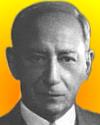
Born 16 Aug 1884; died 19 Aug 1967 at age 83. quotes
American inventor (80 patents) and publisher who was largely responsible for the establishment of science fiction as an independent literary form. Hugo founded radio station WRNY, was involved in the first television broadcasts and is considered a pioneer in amateur radio. In 1926, as owner of a magazine, Modern Electrics, he filled a blank spot in his publication by dashing off the first chapter of a series called "Ralph 124C 41+." "Ralph" was an amazing success. The 12-part story was filled with all kinds of wild inventions unheard of in 1926, including television (he is credited with introducing this word), fluorescent lighting, juke boxes, solar energy, television, microfilm, vending machines, and a device we now call radar.«
American inventor (80 patents) and publisher who was largely responsible for the establishment of science fiction as an independent literary form. Hugo founded radio station WRNY, was involved in the first television broadcasts and is considered a pioneer in amateur radio. In 1926, as owner of a magazine, Modern Electrics, he filled a blank spot in his publication by dashing off the first chapter of a series called "Ralph 124C 41+." "Ralph" was an amazing success. The 12-part story was filled with all kinds of wild inventions unheard of in 1926, including television (he is credited with introducing this word), fluorescent lighting, juke boxes, solar energy, television, microfilm, vending machines, and a device we now call radar.«
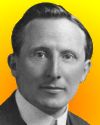
Born 16 Aug 1867; died 14 May 1920 at age 52.
English archaeologist who in 1895-96 conducted excavations in southwestern Greece at Pylos and the adjacent island of Sphacteria, revealing remains of Spartan fortifications. These confirmed the battle of 425 BC in the Peloponnesian War recorded by the ancient Athenian historian Thucydides. Burrows was by nature a classicist, whose primary purpose in seeking tangible evidence from the past was to verify ancient texts. At Rhitsona, in Boeotia (1905, 1907), his original goal was to find the temple of Delium, but without success. Instead he found and catalogued artifacts from Boeotian graves dating from the 7th and 6th century B.C. at the necropolis of Mykalessos, near Tanagra. In 1907, he published Recent Discoveries in Crete.«
English archaeologist who in 1895-96 conducted excavations in southwestern Greece at Pylos and the adjacent island of Sphacteria, revealing remains of Spartan fortifications. These confirmed the battle of 425 BC in the Peloponnesian War recorded by the ancient Athenian historian Thucydides. Burrows was by nature a classicist, whose primary purpose in seeking tangible evidence from the past was to verify ancient texts. At Rhitsona, in Boeotia (1905, 1907), his original goal was to find the temple of Delium, but without success. Instead he found and catalogued artifacts from Boeotian graves dating from the 7th and 6th century B.C. at the necropolis of Mykalessos, near Tanagra. In 1907, he published Recent Discoveries in Crete.«
Born 16 Aug 1863; died 1 May 1949 at age 85.
British chemist who pioneered in the chemistry of silicones, organic derivatives of silicon.
British chemist who pioneered in the chemistry of silicones, organic derivatives of silicon.
Born 16 Aug 1849; died 18 Jul 1900 at age 50.
who originated the Kjeldahl method for the laboratory determination of the nitrogen content in organic compounds. This was of great value for applications in agriculture, medicine and drug manufacture. It replaced the former procedure that were inexact and time-consuming, and remains in use to the present time. From 1876 until his death, he was the director of the Carlsberg laboratory (a research institution of the Carslberg brewery). He developed his method of measuring nitrogen content to investigate the amount of protein in grain, which was relevant to protein transformation during beer fermentation. The method was reported to the Chemical Society of Copenhagen on 7 Mar 1883.«
who originated the Kjeldahl method for the laboratory determination of the nitrogen content in organic compounds. This was of great value for applications in agriculture, medicine and drug manufacture. It replaced the former procedure that were inexact and time-consuming, and remains in use to the present time. From 1876 until his death, he was the director of the Carlsberg laboratory (a research institution of the Carslberg brewery). He developed his method of measuring nitrogen content to investigate the amount of protein in grain, which was relevant to protein transformation during beer fermentation. The method was reported to the Chemical Society of Copenhagen on 7 Mar 1883.«
The Kjeldahl Method for Organic Nitrogen, by R.B. Bradstreet. - book suggestion.
Born 16 Aug 1845; died 13 Jul 1921 at age 75. quotes
Gabriel Jonas Lippmann was a French physicist who was awarded the Nobel Prize for Physics in 1908 for producing the first colour photographic plate. Lippmann was a giant of his day in classical physics research, especially in optics and electricity. He worked in Berlin with the famed Hermann von Helmholtz before settling in Paris to head (in 1886) the Sorbonne's Laboratories of Physical Research until his death. His inventions include an instrument for precisely measuring minute differences in electrical power and the “coleostat” for steady, long-exposure sky photography.
Gabriel Jonas Lippmann was a French physicist who was awarded the Nobel Prize for Physics in 1908 for producing the first colour photographic plate. Lippmann was a giant of his day in classical physics research, especially in optics and electricity. He worked in Berlin with the famed Hermann von Helmholtz before settling in Paris to head (in 1886) the Sorbonne's Laboratories of Physical Research until his death. His inventions include an instrument for precisely measuring minute differences in electrical power and the “coleostat” for steady, long-exposure sky photography.
Born 16 Aug 1832; died 31 Aug 1920 at age 88. quotes
Wilhelm Max Wundt was a German psychologist and physiologist who established the first laboratory for experimental psychology (1879). He initiated lectures in scientific psychology, in which he stressed the use of experimental methods drawn from the natural sciences, which he expanded and published as Lectures on the Mind of Humans and Animals (1863). In his important work, Principles of Physiological Psychology (1874) he maintained that psychology should investigate the immediate experiences of consciousness, including sensations, feelings, volitions, apperception, and ideas. His methods are still used in modern psychophysical work, where reactions to external stimuli are measured in some way, such as reaction time, reactions and comparison with graded colors or sounds.«
Wilhelm Max Wundt was a German psychologist and physiologist who established the first laboratory for experimental psychology (1879). He initiated lectures in scientific psychology, in which he stressed the use of experimental methods drawn from the natural sciences, which he expanded and published as Lectures on the Mind of Humans and Animals (1863). In his important work, Principles of Physiological Psychology (1874) he maintained that psychology should investigate the immediate experiences of consciousness, including sensations, feelings, volitions, apperception, and ideas. His methods are still used in modern psychophysical work, where reactions to external stimuli are measured in some way, such as reaction time, reactions and comparison with graded colors or sounds.«
Wilhelm Wundt in History: The Making of a Scientific Psychology, by David K. Robinson. - book suggestion.
Born 16 Aug 1821; died 26 Jan 1895 at age 73. quotes
English mathematician who played a leading role in founding the modern British school of pure mathematics. He trained first as a lawyer, and from 1849, spent 14 years at the bar, during which time he maintained an interest in mathematics and published about 250 mathematical papers. In 1863, Cayley followed his passion and commenced a new career as professor of Pure Mathematics at Cambridge and during his tenure published 900 papers and notes covering nearly every aspect of modern mathematics. The legacy of his work in n-dimensional geometry was later applied in physics to the study of the space-time continuum. His work on matrices served as a foundation for quantum mechanics developed by Werner Heisenberg in 1925.«
English mathematician who played a leading role in founding the modern British school of pure mathematics. He trained first as a lawyer, and from 1849, spent 14 years at the bar, during which time he maintained an interest in mathematics and published about 250 mathematical papers. In 1863, Cayley followed his passion and commenced a new career as professor of Pure Mathematics at Cambridge and during his tenure published 900 papers and notes covering nearly every aspect of modern mathematics. The legacy of his work in n-dimensional geometry was later applied in physics to the study of the space-time continuum. His work on matrices served as a foundation for quantum mechanics developed by Werner Heisenberg in 1925.«
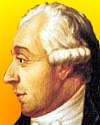
Born 16 Aug 1744; died 20 Sep 1804 at age 60.
Pierre (-François-André) Méchain was a French astronomer and hydrographer at the naval map archives in Paris recruited by Jean Delambre. He was a mathematical progidy. In 1790, they were chosen by the National Assembly to establish a decimal system of measurement based on the meter. Since this was defined to be one ten-millionth of the distance between the Earth's pole and the equator, Mechain led a survey of the meridian arc from Dunkirk, France, to Barcelona, Spain. Through his astronomical observations, Mechain discovered 11 comets and provided 26 additions to Messier's catalog. He calculated the orbits of the two comets he found in 1781. Mechain died of yellow fever while making further surveys for the meridian measurement.«
Pierre (-François-André) Méchain was a French astronomer and hydrographer at the naval map archives in Paris recruited by Jean Delambre. He was a mathematical progidy. In 1790, they were chosen by the National Assembly to establish a decimal system of measurement based on the meter. Since this was defined to be one ten-millionth of the distance between the Earth's pole and the equator, Mechain led a survey of the meridian arc from Dunkirk, France, to Barcelona, Spain. Through his astronomical observations, Mechain discovered 11 comets and provided 26 additions to Messier's catalog. He calculated the orbits of the two comets he found in 1781. Mechain died of yellow fever while making further surveys for the meridian measurement.«

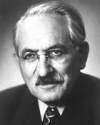
Died 16 Aug 1973 at age 85 (born 22 Jul 1888). quotes
Selman Abraham Waksman was an Ukrainian-American microbiologist and biochemist who was one of the world’s foremost authorities on soil microbiology. After the discovery of penicillin, he played a major role in initiating a calculated, systematic search for antibiotics among microbes. In 1939, Dubos, a previous student, pointed out a bacteria-killing agent in a soil microorganism. He introduced the term antibiotic, “against life.” In 1943, he isolated streptomycin from a mold he had known and studied early in his life. His consequent discovery of this antibiotic streptomycin, the first specific antibiotic effective against tuberculosis, earned him the 1952 Nobel Prize.
Selman Abraham Waksman was an Ukrainian-American microbiologist and biochemist who was one of the world’s foremost authorities on soil microbiology. After the discovery of penicillin, he played a major role in initiating a calculated, systematic search for antibiotics among microbes. In 1939, Dubos, a previous student, pointed out a bacteria-killing agent in a soil microorganism. He introduced the term antibiotic, “against life.” In 1943, he isolated streptomycin from a mold he had known and studied early in his life. His consequent discovery of this antibiotic streptomycin, the first specific antibiotic effective against tuberculosis, earned him the 1952 Nobel Prize.
The antibiotic era: A history of the antibiotics..., by Selman Abraham Waksman. - book suggestion.
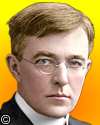
Died 16 Aug 1957 at age 76 (born 31 Jan 1881). quotes
American physical chemist whose studies of molecular films on solid and liquid surfaces opened new fields in colloid research and biochemistry and won him the Nobel Prize for Chemistry in 1932. His early work on gases led to the invention of the Langmuir condensation pump. In 1913, Langmuir found that the life of the tungsten vacuum bulbs then in use could be extended considerably if they were filled with a mixture of nitrogen and argon. He also developed an atomic-hydrogen welding torch capable of temperatures up to 3,000°C, and made first use of the term plasma. While studying atomic structure he introduced the terms covalence and electrovalence. In surface chemistry, he worked the phenomenon of adsorption and the application of this to catalysis. more
American physical chemist whose studies of molecular films on solid and liquid surfaces opened new fields in colloid research and biochemistry and won him the Nobel Prize for Chemistry in 1932. His early work on gases led to the invention of the Langmuir condensation pump. In 1913, Langmuir found that the life of the tungsten vacuum bulbs then in use could be extended considerably if they were filled with a mixture of nitrogen and argon. He also developed an atomic-hydrogen welding torch capable of temperatures up to 3,000°C, and made first use of the term plasma. While studying atomic structure he introduced the terms covalence and electrovalence. In surface chemistry, he worked the phenomenon of adsorption and the application of this to catalysis. more
The Quintessence of Irving Langmuir, by Albert Rosenfeld. - book suggestion.
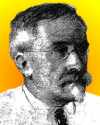
Died 16 Aug 1941 at age 73 (born 13 Oct 1867).
William Zebina Ripley was an American economist and anthropologist whose early book The Races of Europe: A Sociological Study (1899) directed the attention of American social scientists to the existence of subdivisions of geographic races. He gave broad classifications of the European Caucasians into three local races: the northern (Teutonic) and southern (Mediterranean) populations are probably of extremely ancient origin, but the central (Alpine) group has descended from more recent migrants from Asia. Ripley was trained in civil engineering, though he spent most of his career as professor of political economy. In 1920-23 he drew up for the Interstate Commerce Commission the Ripley Plan for the regional consolidation of U.S. railways.
William Zebina Ripley was an American economist and anthropologist whose early book The Races of Europe: A Sociological Study (1899) directed the attention of American social scientists to the existence of subdivisions of geographic races. He gave broad classifications of the European Caucasians into three local races: the northern (Teutonic) and southern (Mediterranean) populations are probably of extremely ancient origin, but the central (Alpine) group has descended from more recent migrants from Asia. Ripley was trained in civil engineering, though he spent most of his career as professor of political economy. In 1920-23 he drew up for the Interstate Commerce Commission the Ripley Plan for the regional consolidation of U.S. railways.
Railroads, Rates and Regulations, by William Z. Ripley. - book suggestion.
Died 16 Aug 1920 at age 84 (born 17 May 1836). quotes
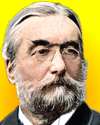
English astronomer who in 1868 discovered and named the element helium that he found in the Sun’s atmosphere before it had been detected on Earth. He also applied the name chromosphere for the sun’s outer layer. Lockyer discovered, together with Pierre J. Janssen, the prominences (red flames) that surround the solar disk. He was also interested in the classification of stellar spectra and developed the meteoric hypothesis of stellar evolution. His many books include Contributions to Solar Physics (1873), The Sun’s Place in Nature (1897) and Inorganic Evolution (1900). He founded the journal Nature in 1869.
English astronomer who in 1868 discovered and named the element helium that he found in the Sun’s atmosphere before it had been detected on Earth. He also applied the name chromosphere for the sun’s outer layer. Lockyer discovered, together with Pierre J. Janssen, the prominences (red flames) that surround the solar disk. He was also interested in the classification of stellar spectra and developed the meteoric hypothesis of stellar evolution. His many books include Contributions to Solar Physics (1873), The Sun’s Place in Nature (1897) and Inorganic Evolution (1900). He founded the journal Nature in 1869.
Science and Controversy: A Biography of Sir Norman Lockyer, by A. J. Meadows. - book suggestion.
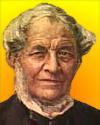
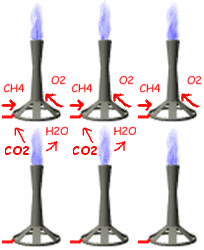
Robert Wilhelm Eberhard Bunsen was a German chemist who, working with Gustav Kirchhoff, about 1859 observed that each element emits a light of characteristic wavelength. (These studies opened the field of spectrum analysis, important in the study of the Sun and stars.) With this tool, Bunsen soon discovered two new elements: caesium and rubidium. He developed several techniques used in separating, identifying, and measuring various chemical substances. He also made a number of improvements in chemical batteries for use in isolating quantities of pure metals, (one is known as the Bunsen battery). His Bunsen burner was created for use in flame tests of various metals and salts because its nonluminous flame did not interfere with the colored flame given off by the test material.
Died 16 Aug 1893 at age 67 (born 29 Nov 1825). quotes
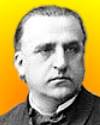
French founder (with Guillaume Duchenne) of modern neurology and one of France's greatest medical teachers and clinicians. Although he was a nineteenth century scientist, his influence carried on into the next century, especially in the work of some of his well-known students (Binet and Sigmund Freud). In 1882, he established a neurological clinic at the Salpêtrière Hospital, Paris, that was unique in Europe. He was first to describe the degeneration of ligaments and joint surfaces due to lack of use or control, now called Charcot's joint. He did research to determine the parts of the brain responsible for specific nerve functions and discovered the importance of small arteries in cerebral hemorrhage.
French founder (with Guillaume Duchenne) of modern neurology and one of France's greatest medical teachers and clinicians. Although he was a nineteenth century scientist, his influence carried on into the next century, especially in the work of some of his well-known students (Binet and Sigmund Freud). In 1882, he established a neurological clinic at the Salpêtrière Hospital, Paris, that was unique in Europe. He was first to describe the degeneration of ligaments and joint surfaces due to lack of use or control, now called Charcot's joint. He did research to determine the parts of the brain responsible for specific nerve functions and discovered the importance of small arteries in cerebral hemorrhage.
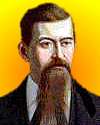
Died 16 Aug 1888 at age 57 (born 8 Jul 1831).
John Styth Pemberton was an American pharmacist, who invented Coca-Cola in 1885. At first it was a tonic, French Wine Coca. Later he modified the formula by omitting the alcohol and adding other vegetable essences. The new syrup was meant to be a sure cure for headaches. On May 29, 1886 Coca-Cola was advertised for the first time in the Atlanta Daily. Pemberton later sold the recipe, equipment and machinery to manufacture the drink to Asa G. Candler for $1200.
John Styth Pemberton was an American pharmacist, who invented Coca-Cola in 1885. At first it was a tonic, French Wine Coca. Later he modified the formula by omitting the alcohol and adding other vegetable essences. The new syrup was meant to be a sure cure for headaches. On May 29, 1886 Coca-Cola was advertised for the first time in the Atlanta Daily. Pemberton later sold the recipe, equipment and machinery to manufacture the drink to Asa G. Candler for $1200.
For God, Country, and Coca-Cola: The Definitive History of the Great American Soft Drink and the Company That Makes It, by Mark Pendergrast. - book suggestion.
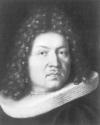
Died 16 Aug 1705 at age 50 (born 27 Dec 1654). quotes
Jacob Jacques Bernoulli was a Swiss mathematician and astronomer who was one of the first to fully utilize differential calculus and introduced the term integral in integral calculus. Jacob Bernoulli's first important contributions were a pamphlet on the parallels of logic and algebra (1685), work on probability in 1685 and geometry in 1687. His geometry result gave a construction to divide any triangle into four equal parts with two perpendicular lines. By 1689 he had published important work on infinite series and published his law of large numbers in probability theory. He published five treatises on infinite series (1682 - 1704). Jacob was intrigued by the logarithmic spiral and requested it be carved on his tombstone. He was the first of the Bernoulli family of mathematicians, and the brother of Johann Bernoulli.Name also spelled Jakob, a.k.a. Jacque I or James I. Birth date 27 Dec 1654 (Old Style) is 6 Jan 1655 [New Style).
Jacob Jacques Bernoulli was a Swiss mathematician and astronomer who was one of the first to fully utilize differential calculus and introduced the term integral in integral calculus. Jacob Bernoulli's first important contributions were a pamphlet on the parallels of logic and algebra (1685), work on probability in 1685 and geometry in 1687. His geometry result gave a construction to divide any triangle into four equal parts with two perpendicular lines. By 1689 he had published important work on infinite series and published his law of large numbers in probability theory. He published five treatises on infinite series (1682 - 1704). Jacob was intrigued by the logarithmic spiral and requested it be carved on his tombstone. He was the first of the Bernoulli family of mathematicians, and the brother of Johann Bernoulli.Name also spelled Jakob, a.k.a. Jacque I or James I. Birth date 27 Dec 1654 (Old Style) is 6 Jan 1655 [New Style).
In 2003, chemists met in Ottawa to vote and make official a proposed name for the element 110: Darmstadtium, symbol Ds. This was first identifieded in a high-energy physics laboratory in Germany (1994), where Element 110 was created for a fraction of a thousandth of a second. Scientists at the Laboratory for Heavy Ion Research, known as GSI, in Darmstadt, Germany exercised the prerogative of discoverers, and proposed its name. It commemorates the town of Darmstadt. IUPAC, the International Union of Pure and Applied Chemistry, is an organization of chemists from more than 80 countries whose duties include selecting official names, symbols and terms used in the science.
In 1988, IBM introduced software for artificial intelligence.
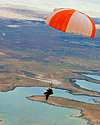
In 1960, Captain Joseph W. Kittinger made the longest delayed parachute jump on record when he bailed out of a balloon at 102,800 feet. He dropped 84,700 feet (31,330 m) or 16.04 miles (31.3 km), falling for 4 min 49 sec, before opening his main 28-foot parachute over New Mexico. Before opening his main parachute, his near free-fall was stabilized with a six-foot canopy to prevent a fatal flat spin. During the near free fall, he may have broken the sound barrier, reaching 714 mph (1149 kph) in the rarified air at high altitude. He wore a pressure suit. Layers of clothes gave protection in the sub-zero temperatures. He had proved man could survive a fall in near-space.«
In 1898, the loop-de-loop Roller Coaster having a section of vertical circular spiral track was patented by Edwin Prescott (U.S. No. 609164). He described how “due to centrifugal action, the contents of the car remains securely in place and the car follows the track.” The axles of the car’s wheels had the essential ability to pivot slightly on the car frame in both horizontal and vertical directions to closely follow the horizontal and vertical curves of the track. For safety, he provided additional wheels on the opposite side of the main rail with their own safety track to prevent the car from leaving the main track, even if the car was inverted while travelling with insufficient centrifugal force. An elevator chain moved the car from a passenger-station on the ground, up to a much higher section of track as the starting point.«
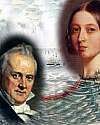
In 1858, Queen Victoria sent the first official telegraph message across the Atlantic Ocean from London to the US. (Test messages had been exchanged for 10 days). Her message to President Buchanan, in Washington DC, began transmission at 10:50am and was completed at 4:30am the next day, taking nearly 18-hrs to reach Newfoundland. With 99 words, consisting of 509 letters, it averaged about 2-min per letter. The message was forwarded across Newfoundland by an overhead wire supported on poles; across Cabot Strait by submarine cable to Aspy Bay (Dingwall), Cape Breton; and by an overhead wire across eastern Canada and Maine, via Boston to New York. This earliest Transatlantic cable went dead within a month.
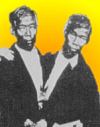
In 1829, the original Siamese twins, Chang and Eng Bunker, arrived in Boston aboard the ship Sachem to be exhibited to the Western world. They were born of Chinese parents in Siam (Thailand). Upon immigrating in to the U.S., they adopted Bunker as their surname. They were joined at the waist by a band of cartilage, about 8 in. circumference and 4 in. long. Only after their death was it found that this could have been easily separated. Robert Hunter, a British merchant, discovered them in 1829 and contracted with them to be exhibited as a curiosity in a world tour. Later, they went into business for themselves. In 1839, they settled in Wilkesboro, N.C., became US citizens and married two sisters with whom they raised 10 children.
Chang and Eng, by Darin Strauss. - book suggestion.




