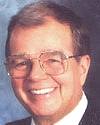
Born 27 Jul 1927; died 13 Dec 1999 at age 72.
American engineer and inventor of the "ball-in tube" or electromechanical crash sensor (EMS). He formed Breed Corp. in 1961 to develop and manufacture safety and arming devices for the military. Later, he recognized that these safety devices could be applied toward the development of crash sensors for automotive airbag systems. Breed developed his first airbag sensor design in 1968. His persistence within the automotive industry and with Congress helped bring airbags to the forefront of the US automotive market in the early 1980s. In 1984 passive restraint led to the birth of the airbag industry.
American engineer and inventor of the "ball-in tube" or electromechanical crash sensor (EMS). He formed Breed Corp. in 1961 to develop and manufacture safety and arming devices for the military. Later, he recognized that these safety devices could be applied toward the development of crash sensors for automotive airbag systems. Breed developed his first airbag sensor design in 1968. His persistence within the automotive industry and with Congress helped bring airbags to the forefront of the US automotive market in the early 1980s. In 1984 passive restraint led to the birth of the airbag industry.
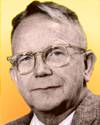
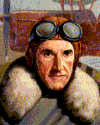
Born 27 Jul 1882; died 21 May 1965 at age 82.
English aircraft designer, manufacturer, and pioneer in long-distance jet flying. In 1909, he constructed his first machine and through trial and error and taught himself to fly. Since then De Havilland has been carried aloft by more than fifty aircraft. Notable were the DH-2 fighter of World War I, and the DH-4 light bomber. He established the new De Havilland Company at Stag Lane near London in 1920, beginning the long line of DH commercial and sport aircraft. De Havilland's triumph in World War II was the Mosquito light bomber, the fastest aircraft of its time. In 1943, he was one of the first to make jet-propelled aircraft, producing the Vampire jet fighter. De Havilland led the world in entering the era of jet passenger flight with its first turbine powered aircraft, the Comet in 1949.
English aircraft designer, manufacturer, and pioneer in long-distance jet flying. In 1909, he constructed his first machine and through trial and error and taught himself to fly. Since then De Havilland has been carried aloft by more than fifty aircraft. Notable were the DH-2 fighter of World War I, and the DH-4 light bomber. He established the new De Havilland Company at Stag Lane near London in 1920, beginning the long line of DH commercial and sport aircraft. De Havilland's triumph in World War II was the Mosquito light bomber, the fastest aircraft of its time. In 1943, he was one of the first to make jet-propelled aircraft, producing the Vampire jet fighter. De Havilland led the world in entering the era of jet passenger flight with its first turbine powered aircraft, the Comet in 1949.
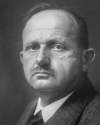
Born 27 Jul 1881; died 31 Mar 1945 at age 63.
German biochemist who was awarded the Nobel Prize for Chemistry in 1930 for research into the constitution of haemin, the red blood pigment, and chlorophyll, the green pigment in plants and especially for his synthesis of haemin (1929), non-protein part of haemoglobin that gives blood its red colour. He further showed that chlorophylls are porphyrins and that they share a similar structure with haemin, but with subtle differences. Following the destruction of his laboratory during WWII air raids, dispair led to suicide, just one month before Germany surrendered.
German biochemist who was awarded the Nobel Prize for Chemistry in 1930 for research into the constitution of haemin, the red blood pigment, and chlorophyll, the green pigment in plants and especially for his synthesis of haemin (1929), non-protein part of haemoglobin that gives blood its red colour. He further showed that chlorophylls are porphyrins and that they share a similar structure with haemin, but with subtle differences. Following the destruction of his laboratory during WWII air raids, dispair led to suicide, just one month before Germany surrendered.
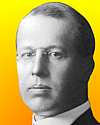
Bertram Borden Boltwood was an American chemist and physicist whose studied the radioactivity of uranium and thorium, and their resulting products, which laid a foundation for the concept of isotopes. Boltwood traced each “radioactive series” of radioactive elements in rocks as they sequentially disintegrated into other isotopes or elements. He noted (1905) that the lead, a stable element, always found in such ores, was apparently the ending product of radioactive decay. Since each step in the decay occurs with a known half-life rate, he proposed (1907) that the ratios of the original radioactive elements to their various decay products could be used for dating rocks. Thus, with these measurements of the composition of such ores in the earth's crust, the age of the planet could determined. He estimated 2.2 billion years. Overwork, stress and depression led to suicide.«[DSB gives date of death 14/15 Aug 1927. EB gives 15 Aug 1927.]


three phase
English physicist and electrical engineer who worked on the application of electricity and magnetism in devices like the dynamo and electromagnets. Hopkinson’s law (the magnetic equivalent of Ohm’s law) bears his name. In 1882, he patented his invention of the three-wire system (three phase) for electricity generation and distribution. He developed synchronous motors (1883), and improved the design and efficiency of generators. He also studied condensers and the phenomena of residual load. In his early career, he was (1872) engineering manager of Chance Brothers and Co., a glass manufacturer in Birmingham, where he studied lighthouse illumination, improving efficiency with flashing groups of lights.«
Born 27 Jul 1848; died 13 Jun 1916 at age 67.
German physicist who was prompted by Madame Curie's discoveries to make his own study of radioactivity. In 1900, he observed that radium emitted both radiation and a colourless radioactive gas. The gas was accumulating inside ampules of radium. He called it radium emanation. (William Ramsay named it niton when he investigated it in 1908. This element was named radon, in 1923, the heaviest in the noble gas group.) Dorn had demonstrated one element transmuting to another, while releasing radiation. This work was continued by Boltwood and Soddy. Radon is not totally inert, as since 1962, chemists have been able to make radon compounds. In 1899, the release of a radioactive gas was detected by Ernest Rutherford and R.B. Owens from thorium (now known to be radon-220), and by the Curies from radium (radon-222).«Radon was first detected in 1899 as a radioactive gas released from samples of thorium by Ernest Rutherford and R.B. Owens. In the same year, the Curies detected a radioactive gas coming from the radium in their experiments.
German physicist who was prompted by Madame Curie's discoveries to make his own study of radioactivity. In 1900, he observed that radium emitted both radiation and a colourless radioactive gas. The gas was accumulating inside ampules of radium. He called it radium emanation. (William Ramsay named it niton when he investigated it in 1908. This element was named radon, in 1923, the heaviest in the noble gas group.) Dorn had demonstrated one element transmuting to another, while releasing radiation. This work was continued by Boltwood and Soddy. Radon is not totally inert, as since 1962, chemists have been able to make radon compounds. In 1899, the release of a radioactive gas was detected by Ernest Rutherford and R.B. Owens from thorium (now known to be radon-220), and by the Curies from radium (radon-222).«Radon was first detected in 1899 as a radioactive gas released from samples of thorium by Ernest Rutherford and R.B. Owens. In the same year, the Curies detected a radioactive gas coming from the radium in their experiments.
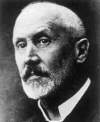
Born 27 Jul 1848; died 8 Apr 1919 at age 70.
Roland Baron von Eötvös was a Hungarian physicist who studied at Heidelberg where he was taught by Kirchhoff, Helmholtz and Bunsen. Eötvös introduced the concept of molecular surface tension and published on capillarity (1876-86). For the rest of his life he concentrated on study of the Earth's gravitational field. He developed the Eötvös torsion balance, long unsurpassed in precision, which gave experimental proof that inertial mass and gravitational mass, to a high degree of accuracy, are equivalent - which later was a major principle of Albert Einstein.
Roland Baron von Eötvös was a Hungarian physicist who studied at Heidelberg where he was taught by Kirchhoff, Helmholtz and Bunsen. Eötvös introduced the concept of molecular surface tension and published on capillarity (1876-86). For the rest of his life he concentrated on study of the Earth's gravitational field. He developed the Eötvös torsion balance, long unsurpassed in precision, which gave experimental proof that inertial mass and gravitational mass, to a high degree of accuracy, are equivalent - which later was a major principle of Albert Einstein.
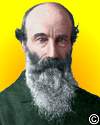
Born 27 Jul 1833; died 10 Dec 1923 at age 90. quotes
English geologist who was an early leader in British petrology, the study of the origin, small-scale structure, and composition of rocks. He pioneered the use of microscopic analysis of rock slices to interpret the physical geography of the past. In 1886, he wrote a notable paper on the subject. Bonney also demonstrated the character of serpentines, a dark green mineral consisting of hydrated magnesium silicate, sometimes mottled or spotted like a snake’s skin. He wrote several books on geology, and, as an ordained minister, also wrote a book about the architecture of the Cathedrals, Abbeys, and Churches of England and Wales.«
English geologist who was an early leader in British petrology, the study of the origin, small-scale structure, and composition of rocks. He pioneered the use of microscopic analysis of rock slices to interpret the physical geography of the past. In 1886, he wrote a notable paper on the subject. Bonney also demonstrated the character of serpentines, a dark green mineral consisting of hydrated magnesium silicate, sometimes mottled or spotted like a snake’s skin. He wrote several books on geology, and, as an ordained minister, also wrote a book about the architecture of the Cathedrals, Abbeys, and Churches of England and Wales.«
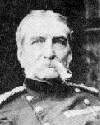
Born 27 Jul 1824; died 29 Mar 1902 at age 77.
British military engineer and politician with scientific interests, who became surveyor-general of Victoria, Australia (Mar 1853) where he planned railways, installed telegraph communication and initiated the Museum of Natural History there (1854). While governor of the Straits Settlements (1873-75), he negotiated the Pangkor Treaty (1874) providing for British political control of Perak and later the other peninsular Malay States. In Perak, he developed a communication system by which state roads were constructed between the principal mining towns. In 1885, a railway line 12.8 km long joined Taiping, the distribution centre for the Larut tin fields, to Port Weld for shipping tin back to the United Kingdom. Thus, it was with the provision of infrastructure to support tin mining, that Malaysia began its develoment.«
British military engineer and politician with scientific interests, who became surveyor-general of Victoria, Australia (Mar 1853) where he planned railways, installed telegraph communication and initiated the Museum of Natural History there (1854). While governor of the Straits Settlements (1873-75), he negotiated the Pangkor Treaty (1874) providing for British political control of Perak and later the other peninsular Malay States. In Perak, he developed a communication system by which state roads were constructed between the principal mining towns. In 1885, a railway line 12.8 km long joined Taiping, the distribution centre for the Larut tin fields, to Port Weld for shipping tin back to the United Kingdom. Thus, it was with the provision of infrastructure to support tin mining, that Malaysia began its develoment.«
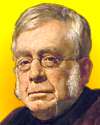
Born 27 Jul 1801; died 2 Jan 1892 at age 90. quotes
English astronomer and mathematician who became the seventh Astronomer Royal (1836-92). In his life he studied interference fringes in optics, made a mathematical study of the rainbow and computed the density of the Earth by swinging a pendulum at the top and bottom of a deep mine, determined the mass of the planet Jupiter and its period rotation, calculated the orbits of comets and cataloged stars. He designed corrective lenses for astigmatism (1825), the first that worked. His motivation was his own astigmatism. Airy had a long-standing battle with Babbage. In 1854, the conflict continued between the two during the battle of the incompatible railway gauges in England. Airy championed the railway narrow gauge and Babbage for the wide gauge. more
English astronomer and mathematician who became the seventh Astronomer Royal (1836-92). In his life he studied interference fringes in optics, made a mathematical study of the rainbow and computed the density of the Earth by swinging a pendulum at the top and bottom of a deep mine, determined the mass of the planet Jupiter and its period rotation, calculated the orbits of comets and cataloged stars. He designed corrective lenses for astigmatism (1825), the first that worked. His motivation was his own astigmatism. Airy had a long-standing battle with Babbage. In 1854, the conflict continued between the two during the battle of the incompatible railway gauges in England. Airy championed the railway narrow gauge and Babbage for the wide gauge. more
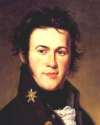
Born 27 Jul 1787; died 10 Oct 1834 at age 47.
American naturalist who was self-taught, yet often considered to be the founder of descriptive entomology in the United States. His taxonomic work was quickly recognized by European zoologists. Say was a founding member of the Academy of Natural Sciences of Philadelphia. He was chief zoologist of Major Stephen Long's exploring expedition to the tributaries of the Missouri River in 1819 and in 1823 for the expedition to the headwaters of the Mississippi. During the 1819 expedition, Say first described the coyote, swift fox, western kingbird, band-tailed pigeon, Say's phoebe, rock wren, lesser goldfinch, lark sparrow, lazuli bunting, and orange-crowned warbler. His important work, American Entomology, remains a classic. He also wrote on paleontology and conchology.[Note: EB and DAB give birth date as 27 June 1787*.]
American naturalist who was self-taught, yet often considered to be the founder of descriptive entomology in the United States. His taxonomic work was quickly recognized by European zoologists. Say was a founding member of the Academy of Natural Sciences of Philadelphia. He was chief zoologist of Major Stephen Long's exploring expedition to the tributaries of the Missouri River in 1819 and in 1823 for the expedition to the headwaters of the Mississippi. During the 1819 expedition, Say first described the coyote, swift fox, western kingbird, band-tailed pigeon, Say's phoebe, rock wren, lesser goldfinch, lark sparrow, lazuli bunting, and orange-crowned warbler. His important work, American Entomology, remains a classic. He also wrote on paleontology and conchology.[Note: EB and DAB give birth date as 27 June 1787*.]

Died 27 Jul 2015 at age 83 (born 15 Oct 1931). quotes
Indian aerospace engineer and president.
Indian aerospace engineer and president.
Wings of Fire: An Autobiography of A.P.J. Abdul Kalam, by Abdul Kalam and Arun Tiwari. - book suggestion.
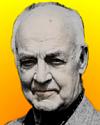
Died 27 Jul 1990 at age 87 (born 11 Dec 1902).
William John Hamilton, Jr. was an American mammalogist and environmentalist was an American mammalogist and environmentalist who stressed the vital ecological role of predators and the importance of conserving fur-bearing populations. His interest in plants and animals began in childhood, and working while a teenager for three summers for Daniel C. Beard (a naturalist, artist, and cofounder of the Boy Scouts of America). Hamilton's research dealt with mammals, birds, reptiles, amphibians, and horticulture, with a major interest was in life histories and ecology. He wrote books, including American Mammals (1939), and over 200 papers. He also made some pioneering studies of microtine life cycles.«
William John Hamilton, Jr. was an American mammalogist and environmentalist was an American mammalogist and environmentalist who stressed the vital ecological role of predators and the importance of conserving fur-bearing populations. His interest in plants and animals began in childhood, and working while a teenager for three summers for Daniel C. Beard (a naturalist, artist, and cofounder of the Boy Scouts of America). Hamilton's research dealt with mammals, birds, reptiles, amphibians, and horticulture, with a major interest was in life histories and ecology. He wrote books, including American Mammals (1939), and over 200 papers. He also made some pioneering studies of microtine life cycles.«
Died 27 Jul 1988 at age 87 (born 16 Jan 1901).
American inventor known for his invention of the Zamboni ice resurfacer used in ice skating rinks. In 1939, Zamboni was a partner in building Iceland Skating Rink in California, when maintaining the ice surface was very labor instensive and slow. At the time, a tractor dragging a scraper was used, with several workers removing shaving and manually finishing the surface. From Mar 1942, Zamboni began experimenting to find a better way. After several prototypes, by 1949, he had made improvements and had his Model A machine worthy of patenting (23 Jun 1953, U.S. No. 2,642,679). It combined the processes of scraping, removing shaving, and applying a wash water system. His idea drew requests from other rink operators. He began manufacturing, with continuing improvements in his design, and it became a familiar sight for ice hockey games.«
American inventor known for his invention of the Zamboni ice resurfacer used in ice skating rinks. In 1939, Zamboni was a partner in building Iceland Skating Rink in California, when maintaining the ice surface was very labor instensive and slow. At the time, a tractor dragging a scraper was used, with several workers removing shaving and manually finishing the surface. From Mar 1942, Zamboni began experimenting to find a better way. After several prototypes, by 1949, he had made improvements and had his Model A machine worthy of patenting (23 Jun 1953, U.S. No. 2,642,679). It combined the processes of scraping, removing shaving, and applying a wash water system. His idea drew requests from other rink operators. He began manufacturing, with continuing improvements in his design, and it became a familiar sight for ice hockey games.«
Died 27 Jul 1987 at age 90 (born 12 Nov 1896).
Indian ornithologist, the “birdman of India,” who championed conservation of India's biological diversity. His fieldwork provided scientific guidance for the Indian government's conservation efforts. His love of birds began at age 10, when he began writing his observations. Eventually, he undertook professional education in ornithology. In 1930 he began a bird survey of Hyderabad State. By 1976, he had published several popular regional field guides of Indian birds for which he is famous. These surveys were based on extensive travels throughout India and Pakistan. The title of his autobiography “The Fall of a Sparrow” (1987) recalls the first sparrow that drew his interest as a boy.«
Indian ornithologist, the “birdman of India,” who championed conservation of India's biological diversity. His fieldwork provided scientific guidance for the Indian government's conservation efforts. His love of birds began at age 10, when he began writing his observations. Eventually, he undertook professional education in ornithology. In 1930 he began a bird survey of Hyderabad State. By 1976, he had published several popular regional field guides of Indian birds for which he is famous. These surveys were based on extensive travels throughout India and Pakistan. The title of his autobiography “The Fall of a Sparrow” (1987) recalls the first sparrow that drew his interest as a boy.«
The Book of Indian Birds, by Salim Ali. - book suggestion.
Died 27 Jul 1963 at age 86 (born 4 Mar 1877).
Black-American inventor and businessman who established the Cleveland Call newspaper (1920), invented a hair straightening cream, woman's hat fastener, an automobile clutch, a safety hood breathing device (1912) which he improved as a gas mask used by some soldiers in WW I, and a traffic signal. By age 30, he had spent time working as a handyman and taught himself enough about repairing sewing machines to start a repair business. Two years later, he started a tailoring shop with 32 employees. He developed and was successful selling G.A. Morgan Hair Refining Cream to straighten hair. When he invented a traffic signal in 1922 (not the red-yellow-green lights type), several other traffic signals had already been previously patented by other inventors. He was nearly blind from 1943 due to glaucoma.«
Black-American inventor and businessman who established the Cleveland Call newspaper (1920), invented a hair straightening cream, woman's hat fastener, an automobile clutch, a safety hood breathing device (1912) which he improved as a gas mask used by some soldiers in WW I, and a traffic signal. By age 30, he had spent time working as a handyman and taught himself enough about repairing sewing machines to start a repair business. Two years later, he started a tailoring shop with 32 employees. He developed and was successful selling G.A. Morgan Hair Refining Cream to straighten hair. When he invented a traffic signal in 1922 (not the red-yellow-green lights type), several other traffic signals had already been previously patented by other inventors. He was nearly blind from 1943 due to glaucoma.«
Died 27 Jul 1962 at age 61 (born 27 May 1901).
Conrad Arnold Elvehjem was an American biochemist who identified that nicotinic acid was a vitamin which when absent from diet resulted in the disease pellegra. In 1937, working with dogs having the canine equivalent of pellegra (blacktongue), he showed that giving a dog 30 milligrams of nicotinic acid resulted in substantial improvement. Continuing doses to correct the diet deficiency led to complete recovery. It worked as well in humans. Niacin is one of the B vitamins. His later work was on the trace minerals such as zinc and cobalt which are essential to life as component parts of enzymes.
Conrad Arnold Elvehjem was an American biochemist who identified that nicotinic acid was a vitamin which when absent from diet resulted in the disease pellegra. In 1937, working with dogs having the canine equivalent of pellegra (blacktongue), he showed that giving a dog 30 milligrams of nicotinic acid resulted in substantial improvement. Continuing doses to correct the diet deficiency led to complete recovery. It worked as well in humans. Niacin is one of the B vitamins. His later work was on the trace minerals such as zinc and cobalt which are essential to life as component parts of enzymes.
Died 27 Jul 1931 at age 82 (born 1 Sep 1848).
Swiss neuroanatomist, psychiatrist, and entomologist known for his investigations of brain structure. Professor of Psychiatry at the University of Zürich and director of the world-famous Burghölzli Hospital, Forel was Adolf Meyer's teacher. Interested in ants from childhood, he became engrossed in the psychology of ants and contributed greatly to the study of their social instincts, leading to his magnum opus in 5 volumes of The Social World of the Ants (1921-23). He was the first to describe the phenomena of parabiosis and lestobiosis in ants.
Swiss neuroanatomist, psychiatrist, and entomologist known for his investigations of brain structure. Professor of Psychiatry at the University of Zürich and director of the world-famous Burghölzli Hospital, Forel was Adolf Meyer's teacher. Interested in ants from childhood, he became engrossed in the psychology of ants and contributed greatly to the study of their social instincts, leading to his magnum opus in 5 volumes of The Social World of the Ants (1921-23). He was the first to describe the phenomena of parabiosis and lestobiosis in ants.
Died 27 Jul 1929 at age 83 (born 4 Apr 1846).
Swiss chemist who was a pioneer of cryogenics. His original interest in the artificial production of ice (for refrigeration) led him to study the production of extremely low temperatures. He produced liquid oxygen, working independently of the French scientist, Louis Paul Cailletet, who is also credited with its discovery in 1877. However, Pictet used more elaborate equipment and was able to produce greater volumes of liquified gases. Pictet used a cascade method, in which he evaporated liquid sulfur dioxide to liquefy carbon dioxide, which in turn was allowed to evaporate and to cool oxygen to below its critical temperature. The oxygen could then be liquefied by pressure. This was also easier to apply to other gases.
Swiss chemist who was a pioneer of cryogenics. His original interest in the artificial production of ice (for refrigeration) led him to study the production of extremely low temperatures. He produced liquid oxygen, working independently of the French scientist, Louis Paul Cailletet, who is also credited with its discovery in 1877. However, Pictet used more elaborate equipment and was able to produce greater volumes of liquified gases. Pictet used a cascade method, in which he evaporated liquid sulfur dioxide to liquefy carbon dioxide, which in turn was allowed to evaporate and to cool oxygen to below its critical temperature. The oxygen could then be liquefied by pressure. This was also easier to apply to other gases.
Died 27 Jul 1920 at age 82 (born 23 Sep 1837).
Emile Justin Armand Gautier was a French biochemist, the son of physician Louis Gautier. As a youth, he was a chemistry lab assistant at Montpellier. After his medical degree (1862), he studied at Paris, under Adolphe Wurtz. where by 1869 he was on the Faculty of Medicine. From 1872, he directed the first French laboratory of biological chemistry. He wrote 600 papers in various sciences. Gautier discovered carbylamines (1866) and identified ptomaines, a class of cadaveric alkaloids, products of putrefaction (1872). He studied fixation of nitrogen (1888), tobacco smoke and organic arsenic compounds for arsenotherapy. He found iodine as an impurity in the air of towns. In plant physiology, he analyzed the colorant in grapes to detect fraudulant wine coloring.«
Emile Justin Armand Gautier was a French biochemist, the son of physician Louis Gautier. As a youth, he was a chemistry lab assistant at Montpellier. After his medical degree (1862), he studied at Paris, under Adolphe Wurtz. where by 1869 he was on the Faculty of Medicine. From 1872, he directed the first French laboratory of biological chemistry. He wrote 600 papers in various sciences. Gautier discovered carbylamines (1866) and identified ptomaines, a class of cadaveric alkaloids, products of putrefaction (1872). He studied fixation of nitrogen (1888), tobacco smoke and organic arsenic compounds for arsenotherapy. He found iodine as an impurity in the air of towns. In plant physiology, he analyzed the colorant in grapes to detect fraudulant wine coloring.«
Died 27 Jul 1917 at age 75 (born 25 Aug 1841).
Theodor Emil Kocher was a Swiss surgeon who did pioneering work on the physiology, pathology and surgery of the thyroid gland for which he was awarded the Nobel Prize in 1909. The gland is of great importance in the general nutrition of the adult, and especially in individuals still undergoing development. The loss of thyroid function results in serious disturbances in this nutrition. Metabolism is significantly diminished; growth ceases; the skin and the subcutaneous tissues are the site of mucous infiltration; degenerative processes occur in internal organs; serious disturbances make their appearance in the functions of the nervous system and muscles.
Theodor Emil Kocher was a Swiss surgeon who did pioneering work on the physiology, pathology and surgery of the thyroid gland for which he was awarded the Nobel Prize in 1909. The gland is of great importance in the general nutrition of the adult, and especially in individuals still undergoing development. The loss of thyroid function results in serious disturbances in this nutrition. Metabolism is significantly diminished; growth ceases; the skin and the subcutaneous tissues are the site of mucous infiltration; degenerative processes occur in internal organs; serious disturbances make their appearance in the functions of the nervous system and muscles.
Died 27 Jul 1876 at age 90 (born 15 Apr 1786).
U.S. physician and one of the founders of the Boston Lying-In Hospital (1832), brother of the clergyman William Ellery Channing; he was the first (1847) to use ether as an anesthetic in obstetrics and the first professor of obstetrics at Harvard University (1815).
U.S. physician and one of the founders of the Boston Lying-In Hospital (1832), brother of the clergyman William Ellery Channing; he was the first (1847) to use ether as an anesthetic in obstetrics and the first professor of obstetrics at Harvard University (1815).
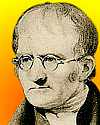
1825
Died 27 Jul 1844 (born c. 6 Sep 1766). quotes
English chemist, physicist, meteorologist and teacher who, from investigating the physical and chemical properties of matter, deduced an Atomic Theory (1803) whereby atoms of the same element are the same, but different from the atoms of any other element. In 1804, he stated his law of multiple proportions by which he related the ratios of the weights of the reactants to the proportions of elements in compounds. He set the atomic weight of hydrogen to be identically equal to one and developed a table of atomic weights for other elements. He was the first to measure the temperature change of air under compression, and in 1801 suggested that all gases could be liquified by high pressure and low temperature. Dalton recognised that the aurora borealis was an electrical phenomenon.«
English chemist, physicist, meteorologist and teacher who, from investigating the physical and chemical properties of matter, deduced an Atomic Theory (1803) whereby atoms of the same element are the same, but different from the atoms of any other element. In 1804, he stated his law of multiple proportions by which he related the ratios of the weights of the reactants to the proportions of elements in compounds. He set the atomic weight of hydrogen to be identically equal to one and developed a table of atomic weights for other elements. He was the first to measure the temperature change of air under compression, and in 1801 suggested that all gases could be liquified by high pressure and low temperature. Dalton recognised that the aurora borealis was an electrical phenomenon.«
John Dalton and the Atomic Theory: The Biography of a Natural Philosopher, by Elizabeth C. Patterson. - book suggestion.
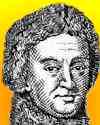
Died 27 Jul 1759 at age 60 (born 28 Sep 1698). quotes
French mathematician, biologist, and astronomer. In 1732 he introduced Newton's theory of gravitation to France. He was a member of an expedition to Lapland in 1736 which set out to measure the length of a degree along the meridian. Maupertuis' measurements both verified Newton's predictions that the Earth would be an oblate speroid, and they corrected earlier results of Cassini. Maupertuis published on many topics including mathematics, geography, astronomy and cosmology. In 1744 he first enunciated the Principle of Least Action and he published it in Essai de cosmologie in 1850. Maupertuis hoped that the principle might unify the laws of the universe and combined it with an attempted proof of the existence of God.
French mathematician, biologist, and astronomer. In 1732 he introduced Newton's theory of gravitation to France. He was a member of an expedition to Lapland in 1736 which set out to measure the length of a degree along the meridian. Maupertuis' measurements both verified Newton's predictions that the Earth would be an oblate speroid, and they corrected earlier results of Cassini. Maupertuis published on many topics including mathematics, geography, astronomy and cosmology. In 1744 he first enunciated the Principle of Least Action and he published it in Essai de cosmologie in 1850. Maupertuis hoped that the principle might unify the laws of the universe and combined it with an attempted proof of the existence of God.
In 2013, the first female Przewalski’s horse foal was born via artificial insemination. The foal was the result of seven years of preparation by scientists at the Smithsonian Conservation Biology Institute. They joined a worldwide effort to help increase reproduction and genetic variation in the species being reared in captivity to rebuild the wild herds that were believed extinct in 1969. By using artificial insemination, it would become possible to produce the result of mating without transporting geographically distant animals. This reduces the difficulty, costs and stress to the animals, while increasing diversity in the DNA of the resulting foals. This is important because the existing animals are all descended from 14 individuals surving in zoos. Successful breeding allowed some horses to be reintroduced to the wild in 2008.«

In 1949, the British De Havilland Comet, the world's first jet-propelled airliner, made its maiden flight in England. Before the time of the Comet. today's speed and comfort standards did not exist. Commercial transport used piston engines and most planes were akin to WW2 aircraft. Flying was made difficult by the bad weather of low cruising levels; the cruising speed was reduced making long trips a tough and exhausting matter. The development of jet-engines in WW2 led to a new milestone in commercial air transport. One of them was the De Havilland DH 106 Comet, a commercial aircraft designed for high cruise speed at high ceilings.
De Havilland Comet, by Kev Darling. - book suggestion.
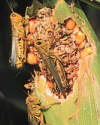
In 1931, a swarm of grasshoppers descended over Iowa, Nebraska and South Dakota, destroying thousands of acres of crops. Those who experienced it said it was not an exaggeration to say they were so thick that you could scoop them up in a scoop shovel. Motor travellers had to roll down the windshield to keep them from raining in on their feet. The grasshoppers had eaten the corn down to the ground, leaving not a stalk standing. Because egg pods are laid in the soil, but susceptible to fungal diseases of wet soil, survival of eggs is best during dry years. Outbreaks are often related to periods of drought.
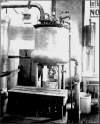
In 1921, insulin was isolated at Toronto University by Canadians Sir Frederick Banting and Charles Best. It proved an effective treatment for diabetes. While Banting had an established a surgical practise in London, Ontario, he conceived a technique which might permit isolation of the anti-diabetic component of the pancreas. He returned to the University of Toronto in 1921 to conduct experiments on the pancreas at the labs of Dr. J.J.R. MacLeod. By the time the summer had ended, he and Charles Best had isolated insulin.Image: The orginal insulin still designed by Dr. Banting and Best.
In 1918, Socony 200, the first concrete barge, was launched into Flushing Bay, N.Y. Its hull was made of steel-reinforced concrete by Fougner Concrete Shipbuilding Company and was designed to carry oil. The saving in cost of construction using concrete as a construction material offset the disadvantage of the increased structural weight of the material. The Socony name is the acronym of its owner, the Standard Oil Company of New York. The barge was 98 feet long, 31 feet wide and 9½ feet deep.«
In 1888, the first U.S. electric automobile, designed by Philip W. Pratt, was demonstrated in Boston, a tricycle powered by six Electrical Accumulator Company cells, weighing 90 pounds. Pratt held a number of patents as an inventor, the most significant being the first practical automatic fire sprinkler system (1872). His other inventions included furniture pads for chair leg tips (1878), a spring toy gun (1892), glazed target for vacuum-tipped toy arrows (1890), crutch (1901) and a bath mitten (1889). Some years earlier than Pratt's tricycle, in 1874, a three-wheeled electric vehicle had been built earlier by Sir David Salomons in Tunbridge Wells, England. It was a 1 h.p. device powered by Bunsen cells. By 1895, the first British manufacturer of electric cars was Acme & Immisch Electrical Works at Chalk Farm, London.«[Documentation on the 1888 tricycle is hard to find; only brief recent references found so far. Please contact Webmaster if you know of a primary source.]
In 1884, the first electrically propelled street-car line in the U.S. was begun in direct competition with horse-cars at Cleveland, Ohio, on the Bentley-Knight system. In the same year, the first practical system in the U.S. of conveying electricity from overhead wires to a motor on the car by a trolley, or small groved pulley on the end of a flexible pole extending above the roof of the car, was made in Kansas City, Mo. Improvements in the apparatus made by Sprague in 1888 led to the first American installation of a large scale electrically propelled street-car system at Richmond, Va. The earliest commercially successful application of electricity to the traction of street-cars was made at Lichterfelde, near Berlin, by Siemens and Halske in 1881.«*[Vol VII, p.776]
In 1880, African-American inventor A.P. Abourne was awarded a patent for refining coconut oil.
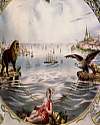
In 1866, Cyrus W. Field finally succeeded, after two failures, in laying the first underwater telegraph cable 1,686 miles long across the Atlantic Ocean between North America and Europe. Massachusetts merchant and financier Cyrus W. Field first proposed laying a 2,000-mile copper cable along the ocean bottom from Newfoundland to Ireland in 1854, but the first three attempts ended in broken cables and failure. Field's persistence finally paid off in July 1866, when the Great Eastern, the largest ship then afloat, successfully laid the cable along the level, sandy bottom of the North Atlantic.[Image: Commemorative print Eighth Wonder of the World. (compressed to thumbnail width)]
In 1823, the effect of platinum as a catalyst was investigated by Johann Wolfgang Döbereiner, who found that hydrogen combined with air in the presence of platinum powder to form water, in a reacttion so vigorous that the filter paper holding the powder was charred. (It was later that the term catalysis was coined by Berzelius, in 1835.) Within a few days, on 3 Aug 1823, he invented the Döbereiner lighter process using the effect he had observed. He ignited a thin jet of hydrogen by passing it over spongy platinum in air. He designed a jar-type lighter using this method. Within three months, news of his discovery had been reported in some dozen European science journals. His lighter design was taken up by manufacturers to replace starting a fire with flint and tinder, and was in production for several decades.«
In 1823, the Döbereiner lighter process was invented by Johann Wolfgang Döbereiner. He directed a fine jet of hydrogen over platinum powder in air. The platinum glowed white hot and ignited the hydrogen. Within two days, he incorporated this effect to make a useful lighter. Zinc and sulphuric acid in a jar generated hydrogen. A valve released a gas jet that was ignited by passing it over spongy platinum. Just a few days earlier, on 27 Jul 1823, he had observed platinum powder facilitating the reaction of hydrogen with oxygen in a static mixture that formed water. His lamp design was quickly taken up by manufacturers to replace flint and tinder for fire-starting. It remained in use for several decades, despite the invention of the safety match in 1848. Berzelius gave the term catalysis, in 1835, to the effect of the metal.«
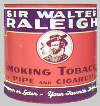
In 1586, Sir Walter Raleigh brought the first tobacco to England from Virginia.[Image: Store display 12" x 11" Sir Walter Raleigh tobacco tin.]
In 1586, potatoes were introduced to Britain by Sir Thomas Harriot, an English scientist and mathematician, according to one traditional—but doubtful—story. In fact, the origin of the potato is not definitively known, and there are other theories. It is known that Harriot was on a 1585 expedition to Virginia, where he stayed to survey and report on the resources there. That expedition returned to England, landing at Plymouth on 27 Jul 1586. Harriot may have brought back plant specimens, and the story suggests he gave a sample from Virginia to his patron, Sir Walter Raleigh, who grew it on his Irish estate. However, Harriot's report published in 1587 describes plants he observed, none named as a potato, nor that match the ordinary potato. Furthermore, the potato is not recognized as being indiginous in Virginia.«




