
Born 7 Feb 1926; died 21 Nov 2009 at age 83.
Russian cosmonaut and space engineer who, from 1955, was part of the team that would go on to design the Sputnik, Vostok, Voskhod, and Soyuz spacecraft under the leadership of Sergey Korolev. He trained as a cosmonaut, and eventually launched 12 Oct 1964 for 16 earth orbits as one of the crew of Voskhod 1 (with Vladimir M. Komarov and Boris B. Yegorov), the world's first multimanned spaceflight. Only ten people had been into orbit before the Voskhod 1 mission. When his career as a cosomonaut ended for medical reasons, he continued as a space engineer eventually becoming head of the Soviet space design bureau that designed the Salyut and Mir space stations.«
Russian cosmonaut and space engineer who, from 1955, was part of the team that would go on to design the Sputnik, Vostok, Voskhod, and Soyuz spacecraft under the leadership of Sergey Korolev. He trained as a cosmonaut, and eventually launched 12 Oct 1964 for 16 earth orbits as one of the crew of Voskhod 1 (with Vladimir M. Komarov and Boris B. Yegorov), the world's first multimanned spaceflight. Only ten people had been into orbit before the Voskhod 1 mission. When his career as a cosomonaut ended for medical reasons, he continued as a space engineer eventually becoming head of the Soviet space design bureau that designed the Salyut and Mir space stations.«
The Rocket Men: Vostok and Voskhod, by Rex Hall, David Shayler. - book suggestion.
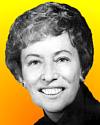
Born 7 Feb 1918; died 29 Mar 1997 at age 79.
American cellular geneticist whose research (1950's - 60's) altered the prevailing view about where genetic material was within the cell. In particular, she recognized that a second set of genes were found outside of the cell's nucleus. Even though they were nonchrosomomal, these genes also influenced inherited characteristics. Previously, only the chromosomal genes had been considered to control genetic behaviour. Her research in later life turned to the study of genetic mechanisms involved in cancer. She was among the first to study the role of mutations in suppressor genes that neutralized their restraint on cell reproduction.«
American cellular geneticist whose research (1950's - 60's) altered the prevailing view about where genetic material was within the cell. In particular, she recognized that a second set of genes were found outside of the cell's nucleus. Even though they were nonchrosomomal, these genes also influenced inherited characteristics. Previously, only the chromosomal genes had been considered to control genetic behaviour. Her research in later life turned to the study of genetic mechanisms involved in cancer. She was among the first to study the role of mutations in suppressor genes that neutralized their restraint on cell reproduction.«
Cell heredity, by Ruth Sager and Francis J. Ryan. - book suggestion.
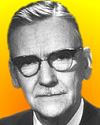
Born 7 Feb 1905; died 9 Mar 1983 at age 78.
Swedish physiologist who shared the 1970 Nobel Prize for Physiology or Medicine (with Sir Bernard Katz and Julius Axelrod) for their independent study of transmitter mechanisms of nerve cells. Since 1906, when Thomas Elliott first proposed that nerve cells communicate with each other and the muscles they control by the release of chemicals, there had been efforts to identify these substances. Euler's recognition was for his discovery (1946) of noradrenaline which serves as neurotransmitter at the nerve terminals of the sympathetic nervous system. He further showed how noradrenaline is stored in small nerve granules within the nerve fibres of this system. Euler had earlier, in 1935, discovered the substance he named prostaglandin.«
Swedish physiologist who shared the 1970 Nobel Prize for Physiology or Medicine (with Sir Bernard Katz and Julius Axelrod) for their independent study of transmitter mechanisms of nerve cells. Since 1906, when Thomas Elliott first proposed that nerve cells communicate with each other and the muscles they control by the release of chemicals, there had been efforts to identify these substances. Euler's recognition was for his discovery (1946) of noradrenaline which serves as neurotransmitter at the nerve terminals of the sympathetic nervous system. He further showed how noradrenaline is stored in small nerve granules within the nerve fibres of this system. Euler had earlier, in 1935, discovered the substance he named prostaglandin.«
Release and uptake functions in adrenergic nerve granules, by Ulf von Euler. - book suggestion.
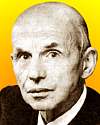
Born 7 Feb 1899; died 9 Jan 1992 at age 92.
Swiss agricultural chemist and pedologist (soil scientist) who developed numerical functions to describe soil in terms of five interacting factors in his book Factors of Soil Formation (1941). These related Climate (temperature and moisture); Organisms (those living on the soil and in the soil, vegetation and animals, fungi algae and bacteria, decay of organic matter, humus); Relief (topography, and geomorphic landscape); Parent Material (bedrock or sediment type); and Time (ranging from 100's to 1000's of years while maturity or equilibrium of soil development is attained). He moved to the U.S. in 1926. After retirement, he studied the soil relationships in the unusual ecological community of the Pygmy Forest in California, known for its stunted and twisted confers.«
Swiss agricultural chemist and pedologist (soil scientist) who developed numerical functions to describe soil in terms of five interacting factors in his book Factors of Soil Formation (1941). These related Climate (temperature and moisture); Organisms (those living on the soil and in the soil, vegetation and animals, fungi algae and bacteria, decay of organic matter, humus); Relief (topography, and geomorphic landscape); Parent Material (bedrock or sediment type); and Time (ranging from 100's to 1000's of years while maturity or equilibrium of soil development is attained). He moved to the U.S. in 1926. After retirement, he studied the soil relationships in the unusual ecological community of the Pygmy Forest in California, known for its stunted and twisted confers.«
Factors of Soil Formation: A System of Quantitative Pedology, by Hans Jenny. - book suggestion.
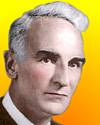
Born 7 Feb 1883; died 21 Dec 1960 at age 77. quotes
Scottish-American mathematician and writer who contributed to analytic number theory (in which he found several inportant theorems), Diophantine analysis and numerical functions. In addition to about 250 papers on mathematical research, he also wrote for the layman in Men of Mathematics (1937) and Mathematics, Queen and Servant of Science (1951) among others. Under the name of John Taine, he also wrote science fiction.«
Scottish-American mathematician and writer who contributed to analytic number theory (in which he found several inportant theorems), Diophantine analysis and numerical functions. In addition to about 250 papers on mathematical research, he also wrote for the layman in Men of Mathematics (1937) and Mathematics, Queen and Servant of Science (1951) among others. Under the name of John Taine, he also wrote science fiction.«
The Search for E.T. Bell: Also Known as John Taine, by Constance Reid, William Watkins. - book suggestion.
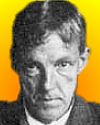
Born 7 Feb 1877; died 1 Dec 1947 at age 70. quotes
English mathematician known for his work in number theory and mathematical analysis. Hardy's interests covered many topics of pure mathematics - Diophantine analysis, summation of divergent series, Fourier series, the Riemann zeta function, and the distribution of primes. Although Hardy considered himself a pure mathematician, early in his career, he nevertheless worked in applied mathematics when he formulated a law that describes how proportions of dominant and recessive genetic traits will propagate in a large population (1908). Hardy considered it unimportant but it has proved of major importance in blood group distribution. As it was also independently discovered by Weinberg, it is known as the Hardy-Weinberg principle.«
English mathematician known for his work in number theory and mathematical analysis. Hardy's interests covered many topics of pure mathematics - Diophantine analysis, summation of divergent series, Fourier series, the Riemann zeta function, and the distribution of primes. Although Hardy considered himself a pure mathematician, early in his career, he nevertheless worked in applied mathematics when he formulated a law that describes how proportions of dominant and recessive genetic traits will propagate in a large population (1908). Hardy considered it unimportant but it has proved of major importance in blood group distribution. As it was also independently discovered by Weinberg, it is known as the Hardy-Weinberg principle.«
A Mathematician's Apology, by G. H. Hardy. - book suggestion.
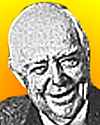
Born 7 Feb 1875; died 19 Jan 1968 at age 92.
Sir Alfred Chester Beatty was an American-British mining engineer and company director. He perfected a method of extracting copper from low grade ore, and was active in developing the copper deposits of central Africa. Beatty had a keen interest in collecting minerals as a child in the U.S. and which grew into a career as a mining engineer. He moved to England in 1911, continuing his career, and eventually owned copper mines all over the world - in Africa, the U.S. and the Soviet Union. Beatty promoted cancer research, and in 1936 he founded the Chester Beatty Research Institute, London. When he died, he donated his significant art collection to Ireland, now the Chester Beatty Library.«
Sir Alfred Chester Beatty was an American-British mining engineer and company director. He perfected a method of extracting copper from low grade ore, and was active in developing the copper deposits of central Africa. Beatty had a keen interest in collecting minerals as a child in the U.S. and which grew into a career as a mining engineer. He moved to England in 1911, continuing his career, and eventually owned copper mines all over the world - in Africa, the U.S. and the Soviet Union. Beatty promoted cancer research, and in 1936 he founded the Chester Beatty Research Institute, London. When he died, he donated his significant art collection to Ireland, now the Chester Beatty Library.«
Alfred Chester Beatty and Ireland 1950-1968: A study in cultural politics, by Brian P. Kennedy. - book suggestion.
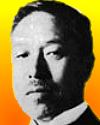
Born 7 Feb 1871; died 25 Jan 1957 at age 85.
Japanese bacteriologist who discovered (1897) the dysentery bacillus Shigella, named after him. Shigellosis is the infectious disease caused by this group of bacteria leading to diarrhea, fever, stomach cramps and possible hospitalization. He also developed dysentery antiserum (1900). After appointment (1899) and serving a short time as director of the Institute of Infectious Diseases, Tokyo, he spent until 1903 working in Germany on the chemotherapy of trypanosomiasis (sleeping sickness) with Paul Ehrlich. He returned to Japan and continued his earlier association in research with Kitasato. In 1912, he moved to work again with Ehrlich in Frankfurt, this time focussing on tuberculosis. In his later life he also investigated leprosy and beriberi.«
Japanese bacteriologist who discovered (1897) the dysentery bacillus Shigella, named after him. Shigellosis is the infectious disease caused by this group of bacteria leading to diarrhea, fever, stomach cramps and possible hospitalization. He also developed dysentery antiserum (1900). After appointment (1899) and serving a short time as director of the Institute of Infectious Diseases, Tokyo, he spent until 1903 working in Germany on the chemotherapy of trypanosomiasis (sleeping sickness) with Paul Ehrlich. He returned to Japan and continued his earlier association in research with Kitasato. In 1912, he moved to work again with Ehrlich in Frankfurt, this time focussing on tuberculosis. In his later life he also investigated leprosy and beriberi.«
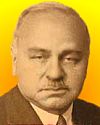
Born 7 Feb 1870; died 28 May 1937 at age 67. quotes
Austrian psychiatrist and ophthalmologist who founded the school of individual psychology. Adler began his medical career as an ophthalmologist, but later turned to mental disease and became a prominent member of the psychoanalytical group which formed around Sigmund Freud in 1900. Adler developed a theory of organic inferiority and compensation (inferiority complex). In 1911 he broke with Freud and investigated the psychology of the individual person considered to be different from others. His therapeutic methods were supportive, designed to avoid blame or a superior attitude by the practitioner, to reduce resistance and raise awareness of individual behaviour. He moved to the USA to teach in 1932.«[Image from Adler's U.S. immigration card, which gave date admitted as 24 Sep1933.]
Austrian psychiatrist and ophthalmologist who founded the school of individual psychology. Adler began his medical career as an ophthalmologist, but later turned to mental disease and became a prominent member of the psychoanalytical group which formed around Sigmund Freud in 1900. Adler developed a theory of organic inferiority and compensation (inferiority complex). In 1911 he broke with Freud and investigated the psychology of the individual person considered to be different from others. His therapeutic methods were supportive, designed to avoid blame or a superior attitude by the practitioner, to reduce resistance and raise awareness of individual behaviour. He moved to the USA to teach in 1932.«[Image from Adler's U.S. immigration card, which gave date admitted as 24 Sep1933.]
Understanding Human Nature, by Alfred Adler, Colin Brett. - book suggestion.
Born 7 Feb 1825; died 26 Apr 1908 at age 83.
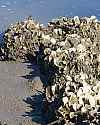
German zoologist whose work in marine biology included the formation of pearls and the anatomy of the whale. He introduced the ecosystem concept of the “life community” (“Biocönose” - life having something in common) which featured in his 1877 study of oyster culture - the order, structure and function of the oyster reef as it relates to the abiotic habitat of a river mouth and the biotic associations of plants, plankton, benthic communities and fisheries in an estuary. He cofounded the Hamburg zoo and aquarium, led expeditions in the tropics, and became director of the natural history museum in Berlin (1887-1905).«[Image: oyster reef]
German zoologist whose work in marine biology included the formation of pearls and the anatomy of the whale. He introduced the ecosystem concept of the “life community” (“Biocönose” - life having something in common) which featured in his 1877 study of oyster culture - the order, structure and function of the oyster reef as it relates to the abiotic habitat of a river mouth and the biotic associations of plants, plankton, benthic communities and fisheries in an estuary. He cofounded the Hamburg zoo and aquarium, led expeditions in the tropics, and became director of the natural history museum in Berlin (1887-1905).«[Image: oyster reef]
Born 7 Feb 1824; died 12 May 1910 at age 86. quotes
English astronomer who explored the spectra of stars, nebulae and comets to interpret their chemical composition, assisted by his wife Margaret Lindsay Murray. He was the first to demonstrate (1864) that whereas some nebulae are clusters of stars (with stellar spectral characteristics, ex. Andromeda), certain other nebulae are uniformly gaseous as shown by their pure emission spectra (ex. the great nebula in Orion). He made spectral observations of a nova (1866). He also was first to attempt to measure a star's radial velocity. He was one of the wealthy 19th century private astronomers that supported their own passion while making significant contributions. At age only 30, Huggins built his own observatory at Tulse Hill, outside London.«
English astronomer who explored the spectra of stars, nebulae and comets to interpret their chemical composition, assisted by his wife Margaret Lindsay Murray. He was the first to demonstrate (1864) that whereas some nebulae are clusters of stars (with stellar spectral characteristics, ex. Andromeda), certain other nebulae are uniformly gaseous as shown by their pure emission spectra (ex. the great nebula in Orion). He made spectral observations of a nova (1866). He also was first to attempt to measure a star's radial velocity. He was one of the wealthy 19th century private astronomers that supported their own passion while making significant contributions. At age only 30, Huggins built his own observatory at Tulse Hill, outside London.«
Born 7 Feb 1814; died 9 Aug 1898 at age 84. quotes
American lecturer who was the first to administer nitrous oxide as an anaesthetic. This followed when one of Colton's public demonstrations of the properties of nitrous oxide, was attended by a dentist. It was Horace Wells, who observed a volunteer paid no heed to any pain when he accidentally gashed leg while stumbling around under the influence of a moderate dose of the gas. Wells suggested the use of the gas as an anaesthetic, and even volunteered to have Colton administer the nitrous oxide while one of Wells' molars was extracted by his partner, dentist John Riggs (11 Dec 1844). Between 1864-97, Colton as anaesthetist administered nitrous oxide while his dental colleagues successfully extracted tens of thousands of teeth.« more
American lecturer who was the first to administer nitrous oxide as an anaesthetic. This followed when one of Colton's public demonstrations of the properties of nitrous oxide, was attended by a dentist. It was Horace Wells, who observed a volunteer paid no heed to any pain when he accidentally gashed leg while stumbling around under the influence of a moderate dose of the gas. Wells suggested the use of the gas as an anaesthetic, and even volunteered to have Colton administer the nitrous oxide while one of Wells' molars was extracted by his partner, dentist John Riggs (11 Dec 1844). Between 1864-97, Colton as anaesthetist administered nitrous oxide while his dental colleagues successfully extracted tens of thousands of teeth.« more
The History of Surgical Anesthesia, by Thomas E Keys. - book suggestion.
Born 7 Feb 1804; died 17 May 1886 at age 82.
American agricultural equipment inventor and pioneer manufacturer. As a blacksmith in a U.S. prairie town, he frequently repaired the wood and cast-iron plows of eastern U.S. design because the local soils were heavy and sticky. By 1838 he had produced three more suitable steel plows of his own new design, and more in following years, which expanded into the agricultural machine business he began upon moving to Moline, Ill. (1847). In another ten years, his annual production had increased ten-fold. Originally using imported English steel instead of cast iron, he converted to U.S. made steel when Pittsburgh steel plants could supply a suitable product. The company diversified with production of harrows, drills, cultivators and wagons.«
American agricultural equipment inventor and pioneer manufacturer. As a blacksmith in a U.S. prairie town, he frequently repaired the wood and cast-iron plows of eastern U.S. design because the local soils were heavy and sticky. By 1838 he had produced three more suitable steel plows of his own new design, and more in following years, which expanded into the agricultural machine business he began upon moving to Moline, Ill. (1847). In another ten years, his annual production had increased ten-fold. Originally using imported English steel instead of cast iron, he converted to U.S. made steel when Pittsburgh steel plants could supply a suitable product. The company diversified with production of harrows, drills, cultivators and wagons.«
Genuine Value: The John Deere Journey, by John J. Gerstner. - book suggestion.

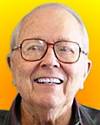
Died 7 Feb 2009 at age 88 (born 6 Apr 1920).
John Higson (Jack) Cover Jr. was an American inventor and aerospace engineer who invented the Taser stun gun weapon from an inspiration after reading of a man briefly immobilized by an electric fence. He worked in his garage and by the late 1960s had created a device resembling a flashlight that used gunpowder to fire darts able to deliver an electric shock to a target within 15 feet. He named it with the acronym Taser from the initials of the words in Thomas A. Swift Electric Rifle adapted from a favorite science fiction book from his childhood, Tom Swift and His Electric Rifle. He started the company Taser Systems Inc. in 1970. It was classified as a firearm because of its use of powder, but a revised design, offered to Cover in 1993 by Rick and Tom Smith, that used compressed gas to project the dart removed that restriction. The Los Angeles Police Department was an early adopter in 1980.«
John Higson (Jack) Cover Jr. was an American inventor and aerospace engineer who invented the Taser stun gun weapon from an inspiration after reading of a man briefly immobilized by an electric fence. He worked in his garage and by the late 1960s had created a device resembling a flashlight that used gunpowder to fire darts able to deliver an electric shock to a target within 15 feet. He named it with the acronym Taser from the initials of the words in Thomas A. Swift Electric Rifle adapted from a favorite science fiction book from his childhood, Tom Swift and His Electric Rifle. He started the company Taser Systems Inc. in 1970. It was classified as a firearm because of its use of powder, but a revised design, offered to Cover in 1993 by Rick and Tom Smith, that used compressed gas to project the dart removed that restriction. The Los Angeles Police Department was an early adopter in 1980.«
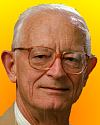
Died 7 Feb 2007 at age 79 (born 14 Apr 1927). quotes
Alan Graham MacDiarmid was a New Zealand-American chemist who shared the 2000 Nobel Prize in Chemistry (with Alan Heeger and Hideki Shirakawa) “for the discovery and development of conductive polymers.” Plastics (formed of repeated units in long-chain polymer molecules) most often do not conduct electricity, and are used for insulation. At the end of the 1970s, these scientists devised polymer materials that were semi-conductors, able to conduct electricity. Practical applications now include conductive polymers in “smart” windows able to exclude sunlight, light-emitting diodes, solar cells and displays for mobile telephones and small television screens. Research has been stimulated to attempt to produce transistors consisting of individual molecules with which to dramatically reduce the size of computers.«
Alan Graham MacDiarmid was a New Zealand-American chemist who shared the 2000 Nobel Prize in Chemistry (with Alan Heeger and Hideki Shirakawa) “for the discovery and development of conductive polymers.” Plastics (formed of repeated units in long-chain polymer molecules) most often do not conduct electricity, and are used for insulation. At the end of the 1970s, these scientists devised polymer materials that were semi-conductors, able to conduct electricity. Practical applications now include conductive polymers in “smart” windows able to exclude sunlight, light-emitting diodes, solar cells and displays for mobile telephones and small television screens. Research has been stimulated to attempt to produce transistors consisting of individual molecules with which to dramatically reduce the size of computers.«
Died 7 Feb 1990 at age 67 (born 1 Apr 1922). quotes
Alan Jay Perlis was an American computer scientist known as a pioneer in programming languages and software engineering. He was the first recipient of the Turing Award (1966) for his influential work in advancing compiler construction and for helping develop ALGOL, one of the earliest high-level programming languages that shaped modern computing. Perlis emphasized the importance of abstraction and clarity in programming, promoting the idea that software design was both a scientific and artistic pursuit. He led early research on numerical analysis, programming methodology, and education in computer science. His witty “Epigrams on Programming” captured enduring insights into the philosophy of computing.«
Alan Jay Perlis was an American computer scientist known as a pioneer in programming languages and software engineering. He was the first recipient of the Turing Award (1966) for his influential work in advancing compiler construction and for helping develop ALGOL, one of the earliest high-level programming languages that shaped modern computing. Perlis emphasized the importance of abstraction and clarity in programming, promoting the idea that software design was both a scientific and artistic pursuit. He led early research on numerical analysis, programming methodology, and education in computer science. His witty “Epigrams on Programming” captured enduring insights into the philosophy of computing.«

Died 7 Feb 1960 at age 57 (born 12 Jan 1903).
Soviet nuclear physicist who from 1932 conducted nuclear science research in the Soviet Union, during which time his team built a cyclotron, a proton accelerator and studied artificial radioactivity and neutron-proton interactions. During WW II, he was chosen as director for the development of his country's first atomic bomb, detonated 29 Aug 1949. Meanwhile, in Dec 1946, Kurchatov demonstrated a working prototype reactor, though limited to producing only a few watts and by Jun 1948, a plutonium production reactor. Within a few years, he produced the world's first practical thermonuclear bomb (1952). Before 1978, the Soviet name for element-104 was kurchatovium (Ku), though subsequently rutherfordium (Rf) became the accepted name.«
Soviet nuclear physicist who from 1932 conducted nuclear science research in the Soviet Union, during which time his team built a cyclotron, a proton accelerator and studied artificial radioactivity and neutron-proton interactions. During WW II, he was chosen as director for the development of his country's first atomic bomb, detonated 29 Aug 1949. Meanwhile, in Dec 1946, Kurchatov demonstrated a working prototype reactor, though limited to producing only a few watts and by Jun 1948, a plutonium production reactor. Within a few years, he produced the world's first practical thermonuclear bomb (1952). Before 1978, the Soviet name for element-104 was kurchatovium (Ku), though subsequently rutherfordium (Rf) became the accepted name.«
I.V. Kurchatov:: A Socialist-Realist Biography of the Soviet Nuclear Scientist, by I. N. Golovin. - book suggestion.
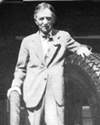
Died 7 Feb 1938 at age 69 (born 20 Dec 1868).
Harvey S(amuel) Firestone was an American industrialist who developed straight-side pneumatic tyres used on the Model T Fords. In his early career, from 1893, he had made his living selling buggies in Detroit, Michigan. Subsequently he moved to Akron, Ohio, and started the Firestone Tire and Rubber Company in 1900. His success grew when, in 1906, he teamed up with Henry Ford to provide tyres for his popular Model T cars. By the late 1930's, nearly a quarter of all tyres being used in the United States were made by Firestone. His innovations in the industry changed the design and production of pneumatic tyres, including nonskid tyre treads, low-pressure balloon tyres, and farm tractor tyres.«
Harvey S(amuel) Firestone was an American industrialist who developed straight-side pneumatic tyres used on the Model T Fords. In his early career, from 1893, he had made his living selling buggies in Detroit, Michigan. Subsequently he moved to Akron, Ohio, and started the Firestone Tire and Rubber Company in 1900. His success grew when, in 1906, he teamed up with Henry Ford to provide tyres for his popular Model T cars. By the late 1930's, nearly a quarter of all tyres being used in the United States were made by Firestone. His innovations in the industry changed the design and production of pneumatic tyres, including nonskid tyre treads, low-pressure balloon tyres, and farm tractor tyres.«
Men and Rubber: The Story of Business, by Harvey S. Firestone. - book suggestion.
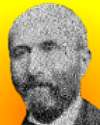
Died 7 Feb 1917 at age 88 (born 10 Jan 1829).
French hydraulic engineer who assisted the research of H.-P.-G. Darcy (1803-58) and reported in Recherches hydrauliques (1865) their results of open channel flow experiments, which he continued and completed after Darcy's death. He also studied wave propagation and fluid flow through orifices. In 1854, he improved the Canal de Bourgogne, important for French inland commercial navigation, and made it profitable. Bazin's additions to the canal included sluice enlargement, tunnel improvement, and water supply from an enhanced reservoir. In 1867, his suggestion to use pumps for dredging rivers led to the construction of the first suction dredgers. In 1886, he was appointed Inspecteur General of the Ponts et Chausses Corps.«
French hydraulic engineer who assisted the research of H.-P.-G. Darcy (1803-58) and reported in Recherches hydrauliques (1865) their results of open channel flow experiments, which he continued and completed after Darcy's death. He also studied wave propagation and fluid flow through orifices. In 1854, he improved the Canal de Bourgogne, important for French inland commercial navigation, and made it profitable. Bazin's additions to the canal included sluice enlargement, tunnel improvement, and water supply from an enhanced reservoir. In 1867, his suggestion to use pumps for dredging rivers led to the construction of the first suction dredgers. In 1886, he was appointed Inspecteur General of the Ponts et Chausses Corps.«
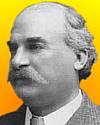
Died 7 Feb 1910 at age 64 (born 15 Feb 1845).
American manufacturer who, with his two brothers, founded the Johnson & Johnson Corporation, to make surgical dressings (1885), and was its first President. In 1876, he had been inspired by a lecture by noted English surgeon Sir Joseph Lister, the pioneer of antiseptic surgery. Johnson set out to create a ready-made, surgical dressing that could be used without risk of contamination. He worked to develop a dressing that could remain as germ-free as practical between his factories and their medical uses around the country. He further worked to improve sanitary practices in the nineteenth century. Over time, the company diversified into many more consumer products, and now sells a comprehensive range of health care products worldwide.« more
American manufacturer who, with his two brothers, founded the Johnson & Johnson Corporation, to make surgical dressings (1885), and was its first President. In 1876, he had been inspired by a lecture by noted English surgeon Sir Joseph Lister, the pioneer of antiseptic surgery. Johnson set out to create a ready-made, surgical dressing that could be used without risk of contamination. He worked to develop a dressing that could remain as germ-free as practical between his factories and their medical uses around the country. He further worked to improve sanitary practices in the nineteenth century. Over time, the company diversified into many more consumer products, and now sells a comprehensive range of health care products worldwide.« more
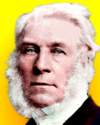
Died 7 Feb 1903 at age 93 (born 7 Apr 1809). quotes
English meteorologist and aeronaut who, between 1862-66, mostly with Henry Tracey Coxwell, made balloon ascents, many of which were arranged by a committee of the British Association. The object was to carry out scientific observations such as the variation in temperature and humidity of the atmosphere at high elevations. On 5 Sep 1862, ascending from Wolverhampton, Glaisher and his companion attained the greatest height that had then been reached by a balloon carrying passengers. The precise altitude at the highest point is unknown because Glaisher lost consciousness and was unable to read the barometer, but estimated at 7 miles high. He produced dew-point tables (1847) and wrote several scientific books including Travels in the Air .« more
English meteorologist and aeronaut who, between 1862-66, mostly with Henry Tracey Coxwell, made balloon ascents, many of which were arranged by a committee of the British Association. The object was to carry out scientific observations such as the variation in temperature and humidity of the atmosphere at high elevations. On 5 Sep 1862, ascending from Wolverhampton, Glaisher and his companion attained the greatest height that had then been reached by a balloon carrying passengers. The precise altitude at the highest point is unknown because Glaisher lost consciousness and was unable to read the barometer, but estimated at 7 miles high. He produced dew-point tables (1847) and wrote several scientific books including Travels in the Air .« more
Travels in the air, by James Glaisher. - book suggestion.
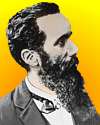
Died 7 Feb 1897 at age 49 (born 31 Oct 1847).
Italian physicist who studied optics, acoustics and several fields of electrotechnics, but his most important discovery was the rotating magnetic field. He produced the field with two electromagnets in perpendicular planes, and each supplied with a current that was 90º out of phase. This could induce a current in a incorporated copper rotor, producing a motor powered by alternating current. He produced his first induction motor (with 4 poles) in May-Jun 1885. Its principles are now applied in the majority of today's a.c. motors, yet he refused to patent his invention, and preferred to place it at the service of everyone.«
Italian physicist who studied optics, acoustics and several fields of electrotechnics, but his most important discovery was the rotating magnetic field. He produced the field with two electromagnets in perpendicular planes, and each supplied with a current that was 90º out of phase. This could induce a current in a incorporated copper rotor, producing a motor powered by alternating current. He produced his first induction motor (with 4 poles) in May-Jun 1885. Its principles are now applied in the majority of today's a.c. motors, yet he refused to patent his invention, and preferred to place it at the service of everyone.«
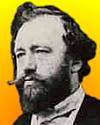
Patent drawing
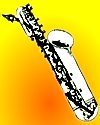
Antoine-Joseph “Adolphe” Sax was a Belgian-French musical instrument designer, who took the name Adolphe, began creating new forms of musical instruments at age 15. He invented the saxophone (mid 1840s, patent application 21 Mar 1846), saxtromba (patented 1845), and sax horn (mid to late 1830s, patented 1845). Sax created the distinctive saxophone sound by combining the clarinet’s single reed and mouthpiece with a widened oboe’s conical bore. His first saxophones were of wood. Although he soon switched to brass, they remain classified as a woodwind instrument. Sax patented various instruments, adopted by French army bands. He had no factory production, made little profit, and was ruined by ten years in court protecting his patents. By the last years of his life, Sax was living in poverty.«
Adolphe Sax, 1814-94: His Life and Legacy, by Wally Horwood. - book suggestion.
Died 7 Feb 1871 at age 73 (born 15 Feb 1797).
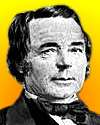
German-born American inventor of the overstrung iron-frame grand piano (1859). He began business in Germany, building his first piano in 1836. The Revolution of 1848 caused him to emigrate to America with his wife and sons where they continued innovating and building these instruments. Creating an iron frame design permitted greater string tension without the twisting and stability problems of wood, and he incorporated longer bass strings by orienting them obliquely over the others in his overstrung design. He exhibited this at the N.Y. Industrial Exhibition of 1855, taking first prize, leading to new prosperity. By 1856 he produced his first grand, and in 1862 the first upright. In 1864 he Anglicized his family to become known as Steinway.«
German-born American inventor of the overstrung iron-frame grand piano (1859). He began business in Germany, building his first piano in 1836. The Revolution of 1848 caused him to emigrate to America with his wife and sons where they continued innovating and building these instruments. Creating an iron frame design permitted greater string tension without the twisting and stability problems of wood, and he incorporated longer bass strings by orienting them obliquely over the others in his overstrung design. He exhibited this at the N.Y. Industrial Exhibition of 1855, taking first prize, leading to new prosperity. By 1856 he produced his first grand, and in 1862 the first upright. In 1864 he Anglicized his family to become known as Steinway.«
Steinway & Sons, by Richard K. Lieberman. - book suggestion.
McCandless
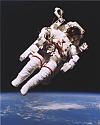
In 1984, the first untethered spacewalks were made by Challenger astronauts Bruce McCandless II and Robert L. Stewart, each using a manned maneuvering unit (MMU), during the tenth flight of a Space Shuttle, mission 41-B, in orbit 150 nautical miles above the Earth. McCandless, with his MMU, was the first to leave the cargo bay, becoming the first person to fly free, untethered in space. Stewart also flew the MMU. They checked out the equipment, maneuvered within the cargo bay, flew away from and back to the orbiter, made docking exercises, recharged the MMU nitrogen tanks, and collected engineering data. These MMU flights demonstrated capabilities needed in the planned retrieval of the Solar Max satellite on a later shuttle mission.«
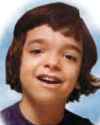
In 1984, a 12-year-old boy publicly identified only as “David,” born without immunity to disease, touched his mother for the first time after he was removed from a plastic “bubble.” He died two weeks later on 22 Feb 1984. He had lived since birth in this protective, germ-free environment since birth at Texas Children's Hospital, Houston. Born with a rare disorder called severe combined immune deficiency, or SCID, David Vetter lacked T-cells. In the 18 Feb 1999 New England Journal of Medicine, Duke University researchers reported that early treatment with bone marrow from a parent or sibling can now save most SCID patients. After a few months, the transplanted marrow stem cells - precursors to blood cells - evolve and become the patient's own T-cells.
The American Experience: The Boy in the Bubble (DVD), by PBS. - book suggestion.

Monopoly (board game), by Parker Brothers. - book suggestion.
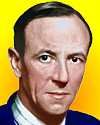
Chadwick
In 1932, the “neutron” was described in an article in the journal Nature by its discoverer, James Chadwick, who coined the name for this neutral particle he discovered present in the nucleus of atoms. He was an English physicist who studied at Cambridge, and in Berlin under Geiger, then worked at the Cavendish Laboratory with Ernest Rutherford, where he investigated the structure of the atom. He worked on the scattering of alpha particles and on nuclear disintegration. By bombarding beryllium with alpha particles, Chadwick discovered the neutron for which he received the Nobel Prize for Physics in 1935. He led the UK's work on the atomic bomb in WW II, and was knighted in 1945.«
The Neutron and the Bomb: A Biography of Sir James Chadwick, by Andrew P. Brown. - book suggestion.
In 1915, the first wireless message sent from a moving train to a station was received.
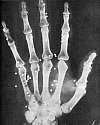
In 1896, radiology began in England when X-rays were first used to discover the location of a bullet in a 12-yr-old boy's wrist who shot himself the previous month. When the pellet could not be found on probing, surgeon Sir Robert Jones had been consulted. Jones, having heard about the recently discovered X-rays, asked Oliver Lodge, head of the physics department at Liverpool University, if he could help with the new X-rays. On this day, the boy was brought to Lodge's laboratory. The pellet was identified embedded in the third carpo-metacarpal joint. Jones and Lodge reported the case in The Lancet on 22 Feb 1896. Charles Thurstan Holland who had been in attendance subsequently pioneered in clinical radiological examinations.«[Image: X-ray from 1896 of hand with buckshot made at Columbia University, USA]
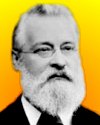
Newlands
In 1863, John Newlands, an English chemist (1837-1898), organized the known elements by listing them in order by atomic weight, according to his “Law of Octaves.” This was based on noticing that after each interval of eight elements, similar physical and chemical properties reappeared. He thus created natural families and periods. The article “On relations among the Equivalents,” appeared in Chem News, vol. 7, pp. 70-2. The English Chemical Society ridiculed the idea. So little significance was then attached to atomic weights, he was once asked why not just order elements by their initial letters. He was belatedly recognized in 1887 by the Royal Society with the award of the Davy Medal, but only after Mendeleev had more successfully introduced his table.
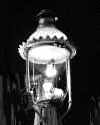
In 1817, the first public gas street light in the U.S. was lit in Baltimore, Maryland. From Jun 1816, the Gas Light Company of Baltimore had been laying pipes with the approval of the City Council in the first city ordinance of its kind in the U.S. Earlier in 1816, artist and entrepreneur Rembrandt Peale had learnt about gas lighting by travelling to England. On his return, he displayed his “Ring of Fire” gas-powered light in his Baltimore museum on the corner of Baltimore and Holiday Streets. Peale's successful demonstration of the power and value of gas led to a plan to light the streets of the city, and the first gas company in America.[Image: A lamp (from 1920-30s) kept burning on the site that Peale first constructed his in 1817.] more
In 1812, the third day of powerful earthquakes struck, this one with an epicenter near New Madrid, Missouri, part of a three-month series in the central Mississippi River valley, known as the New Madrid earthquakes that began on 16 Dec 1811. The first two had happened on that December day, six hours apart, each with an epicenter in northeastern Arkansas, and were felt hundreds of miles away. Another followed on 23 Jan 1812, with epicenter in the far southeast corner of Missouri. All were powerful, about magnitude 7-7.5, with many aftershocks. Contemporary accounts tell of houses damaged, chimneys toppled, remarkable geological phenomena and landscapes changed. They remain among the most powerful earthquakes in the United States. The New Madrid fault remains a concern.«
When the Mississippi Ran Backwards: Empire, Intrigue, Murder, and the New Madrid Earthquakes, by Jay Feldman. - book suggestion.




