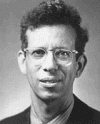
Born 10 Dec 1934; died 9 Feb 1994 at age 59. quotes
American oncologist and virologist who shared the 1975 Nobel Prize for Physiology or Medicine (with his former professor Renato Dulbecco and another of Dulbecco's students, David Baltimore), for his codiscovery of the enzyme reverse transcriptase. In 1961, Temin formed a provirus hypothesis that cancer cells affect genetic material. The protein coat of certain viruses contains an enzyme that facilitates the copying of viral genes into the deoxyribonucleic acid (DNA) of the host cell. In 1970 he and Baltimore both independently isolated the enzyme, now called reverse transcriptase. The viruses that contain the enzyme are known as retroviruses. Temin also investigated how genetic information in the provirus transforms a normal animal cell into a tumor cell.
American oncologist and virologist who shared the 1975 Nobel Prize for Physiology or Medicine (with his former professor Renato Dulbecco and another of Dulbecco's students, David Baltimore), for his codiscovery of the enzyme reverse transcriptase. In 1961, Temin formed a provirus hypothesis that cancer cells affect genetic material. The protein coat of certain viruses contains an enzyme that facilitates the copying of viral genes into the deoxyribonucleic acid (DNA) of the host cell. In 1970 he and Baltimore both independently isolated the enzyme, now called reverse transcriptase. The viruses that contain the enzyme are known as retroviruses. Temin also investigated how genetic information in the provirus transforms a normal animal cell into a tumor cell.
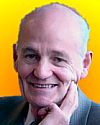
Born 10 Dec 1932; died 24 Oct 2003 at age 70.
(Robert Murray) Ross Taylor was a Scottish transplant surgeon who pioneered the technique of kidney transplantation in the U.K. and made more than 2,000 kidney transplants since 1967 when he was part of the team that completed the first kidney transplant to be undertaken in the north of England. Acknowledged worldwide as an expert in his field, he trained many of the leading practitioners. At the time of his death, five of the principal transplant centres in Britain were led by surgeons he had mentored. Taylor was active not only in the ethical and moral aspects, but also in fundraising and developing support for transplant recipients. For 15 years he was chairman of the annual Transplant Games, 3-day sports competition for transplant recipients.
(Robert Murray) Ross Taylor was a Scottish transplant surgeon who pioneered the technique of kidney transplantation in the U.K. and made more than 2,000 kidney transplants since 1967 when he was part of the team that completed the first kidney transplant to be undertaken in the north of England. Acknowledged worldwide as an expert in his field, he trained many of the leading practitioners. At the time of his death, five of the principal transplant centres in Britain were led by surgeons he had mentored. Taylor was active not only in the ethical and moral aspects, but also in fundraising and developing support for transplant recipients. For 15 years he was chairman of the annual Transplant Games, 3-day sports competition for transplant recipients.
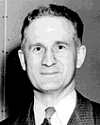
Born 10 Dec 1906; died 14 Feb 2000 at age 93.
Walter Henry Zinn was a Canadian-American nuclear physicist who contributed to the U.S. atomic bomb project during World War II and to the development of the nuclear reactor. He collaborated with Leo Szilard, investigating atomic fission. In 1939, they demonstrated that uranium underwent fission when bombarded with neutrons and that part of the mass was converted into energy (given by E = mc²). This work led him into research into the construction of the atomic bomb during WW II. After the war Zinn started the design of an atomic reactor and, in 1951, he built the first breeder reactor. In a breeder reactor, the core is surrounded by a “blanket” of uranium-238 and neutrons from the core convert this into plutonium-239, which can also be used as a fission fuel.
Walter Henry Zinn was a Canadian-American nuclear physicist who contributed to the U.S. atomic bomb project during World War II and to the development of the nuclear reactor. He collaborated with Leo Szilard, investigating atomic fission. In 1939, they demonstrated that uranium underwent fission when bombarded with neutrons and that part of the mass was converted into energy (given by E = mc²). This work led him into research into the construction of the atomic bomb during WW II. After the war Zinn started the design of an atomic reactor and, in 1951, he built the first breeder reactor. In a breeder reactor, the core is surrounded by a “blanket” of uranium-238 and neutrons from the core convert this into plutonium-239, which can also be used as a fission fuel.
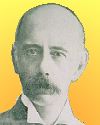
Born 10 Dec 1855; died 24 Oct 1956 at age 100.
English botanist who was largely responsible for establishing the rubber industry in the Malay Peninsula. At the turn of century (1888-1912), as the first Director of the Singapore Botanic Gardens Ridley conducted experiments with Para rubber trees (Hevea brasiliensis) that convinced him of the enormous economic potential of rubber as a plantation crop. After developing a more efficient tapping method, he began a campaign to establish a rubber industry. Despite considerable initial opposition among planters, he persisted, and by 1896 Malaya's planters were convinced, and the first rubber estates were planted using his seeds. Ridley also carried out an extensive study of plants of the Malay Peninsula, especially monocotyledons.
English botanist who was largely responsible for establishing the rubber industry in the Malay Peninsula. At the turn of century (1888-1912), as the first Director of the Singapore Botanic Gardens Ridley conducted experiments with Para rubber trees (Hevea brasiliensis) that convinced him of the enormous economic potential of rubber as a plantation crop. After developing a more efficient tapping method, he began a campaign to establish a rubber industry. Despite considerable initial opposition among planters, he persisted, and by 1896 Malaya's planters were convinced, and the first rubber estates were planted using his seeds. Ridley also carried out an extensive study of plants of the Malay Peninsula, especially monocotyledons.
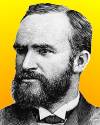
Born 10 Dec 1851; died 26 Dec 1931 at age 80.
American librarian who developed library science in the U.S., especially with his system of classification, the Dewey Decimal Classification (1876), for library cataloging. His system of classification (1876) uses numbers from 000 to 999 to cover the general fields of knowledge and designating more specific subjects by the use of decimal points. He was an activist in the spelling reform and metric system movements. Dewey invented the vertical office file, winning a gold medal at the 1893 World's Fair. It was essentially an enlarged version of a card catalogue, where paper documents hung vertically in long drawers.«
American librarian who developed library science in the U.S., especially with his system of classification, the Dewey Decimal Classification (1876), for library cataloging. His system of classification (1876) uses numbers from 000 to 999 to cover the general fields of knowledge and designating more specific subjects by the use of decimal points. He was an activist in the spelling reform and metric system movements. Dewey invented the vertical office file, winning a gold medal at the 1893 World's Fair. It was essentially an enlarged version of a card catalogue, where paper documents hung vertically in long drawers.«
Melvil Dewey: The Man and the Classification, by Stevenson and Kramer. - book suggestion.
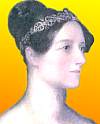
Born 10 Dec 1815; died 29 Nov 1852 at age 36. quotes
(countess of Lovelace) English mathematician, the legitimate daughter of Lord Byron, was educated privately, studying mathematics and astronomy in addition to the more traditional topics. She seems to have developed an early ambition to be a famous scientist. After she met Charles Babbage in 1833, she began to assist in the development of his analytical engine and published notes on the work. She was one of the first to recognize the potential of computers and has been called the first computer programmer. (The programming language Ada is named after her.) Her other plans, such as a Calculus of the Nervous System, failed to mature - the obstacles in her way were simply too great. As a woman, for example, she was denied access to the Royal Society Library.[Note: Although the Encyclopedia Britannica gives a date of death as 29 Nov 1852, a memorial inside St Mary Magdalene's Church, Hucknall, where she is buried in the Byron Vault below, is inscribed 27 Nov 1852. She was interred on 3 Dec 1852.]
(countess of Lovelace) English mathematician, the legitimate daughter of Lord Byron, was educated privately, studying mathematics and astronomy in addition to the more traditional topics. She seems to have developed an early ambition to be a famous scientist. After she met Charles Babbage in 1833, she began to assist in the development of his analytical engine and published notes on the work. She was one of the first to recognize the potential of computers and has been called the first computer programmer. (The programming language Ada is named after her.) Her other plans, such as a Calculus of the Nervous System, failed to mature - the obstacles in her way were simply too great. As a woman, for example, she was denied access to the Royal Society Library.[Note: Although the Encyclopedia Britannica gives a date of death as 29 Nov 1852, a memorial inside St Mary Magdalene's Church, Hucknall, where she is buried in the Byron Vault below, is inscribed 27 Nov 1852. She was interred on 3 Dec 1852.]
Born 10 Dec 1805; died 13 Jun 1881 at age 75.
Czech physician who developed diagnoses in the practice of internal medicine. After graduating, he set up a medical practice in his home town, and faced dealing with the approach of a cholera outbreak. He realized the importance of hygenic procedures for prevention that would be more effective than the routine use of medicines as treatment. He shortly moved to study at Vienna. There, about 1836, he improved the techniques of percussion and ausculation. In the days long before X-rays, he could use a better understanding of the range of sounds from those methods to diagnose diseases of the heart and other organs. Škoda made statistical analyses of the results of treatment. While in Vienna, his insight to have a fresh water supply piped in from mountain springs, a preventive measure, effectively controlled typhoid fever there.«
Czech physician who developed diagnoses in the practice of internal medicine. After graduating, he set up a medical practice in his home town, and faced dealing with the approach of a cholera outbreak. He realized the importance of hygenic procedures for prevention that would be more effective than the routine use of medicines as treatment. He shortly moved to study at Vienna. There, about 1836, he improved the techniques of percussion and ausculation. In the days long before X-rays, he could use a better understanding of the range of sounds from those methods to diagnose diseases of the heart and other organs. Škoda made statistical analyses of the results of treatment. While in Vienna, his insight to have a fresh water supply piped in from mountain springs, a preventive measure, effectively controlled typhoid fever there.«
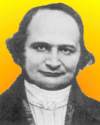
Born 10 Dec 1804; died 18 Feb 1851 at age 46. quotes
Karl Gustav Jacob Jacobi was a German mathematician who, with the independent work of Niels Henrik Abel of Norway, founded the theory of elliptic functions. He also worked on Abelian functions and discovered the hyperelliptic functions. Jacobi applied his work in elliptic functions to number theory. He also investigated mathematical analysis and geometry. Jacobi carried out important research in partial differential equations of the first order and applied them to the differential equations of dynamics. His work on determinants is important in dynamics and quantum mechanics and he studied the functional determinant now called the Jacobian.[a.k.a Carl Jacobi]
Karl Gustav Jacob Jacobi was a German mathematician who, with the independent work of Niels Henrik Abel of Norway, founded the theory of elliptic functions. He also worked on Abelian functions and discovered the hyperelliptic functions. Jacobi applied his work in elliptic functions to number theory. He also investigated mathematical analysis and geometry. Jacobi carried out important research in partial differential equations of the first order and applied them to the differential equations of dynamics. His work on determinants is important in dynamics and quantum mechanics and he studied the functional determinant now called the Jacobian.[a.k.a Carl Jacobi]
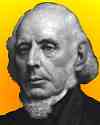
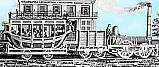
Matthias William Baldwin was an American manufacturer whose significant improvements of the steam locomotive included a steam-tight metal joint that permitted his engines to use steam at double the pressure of others. In 1819 he had established himself as a jeweller and devised a patent gold plating process. He left this trade in 1825 to become a machinist in the manufacture of engravers and book-makers tools; later expanding into hydraulic presses and forms of copper and steel rolls for the calico printing trade. In 1832, he built the locomotive Old Ironsides. He developed tight-fitting steam joints, raising steam pressure from 60 pounds per square inch to 120 psi, which meant far better performance. Baldwin's works eventually produced over 1,000 locomotives. more
The Baldwin Locomotive Works, 1831-1915: A Study in American Industrial Practice, by John K. Brown. - book suggestion.
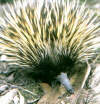

George Shaw was an English naturalist and an anatomist. In 1792, at the Royal Zoological Society in London, he received and was the first to preserve and classify an Australian echidna specimen. Spines and hair on the animal suggested a new genus of porcupine. But it was "captured in New Holland on an anthill," had a naked, elongated snout and long, cylindrical tongue. Thus, he mistakenly classified it in the taxonomic scheme as related to the South American ant bear. What had he missed? Not until 1884 was there verification (of the observations passed on from native aboriginal Australians many decades before) that this mammal laid eggs!

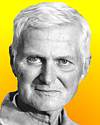
Died 10 Dec 1977 at age 76 (born 25 May 1901).
German physical chemist and metallurgist who has been called “the Father ofSolid-State Chemistry.” He pioneered in making chemical metallurgy an exact science, giving his attention to a wide ranging field, including oxidation rate theory, corrosion, catalysis, photochemistry, batteries, fuel cells, semiconductors and crystal defects. In the late 1920s, with Walter Schottky, he coauthored papers bringing order to the field of defect structures in solid-state materials. Wagner's contribution to them focussed on the result of lattice defects in the atomic structures of oxides and sulphides. He is remembered as one of the greats in physical chemistry, and remains notable for the number of new concepts he originated which subsequently expanded into significant scientific and technical disciplines.«
German physical chemist and metallurgist who has been called “the Father ofSolid-State Chemistry.” He pioneered in making chemical metallurgy an exact science, giving his attention to a wide ranging field, including oxidation rate theory, corrosion, catalysis, photochemistry, batteries, fuel cells, semiconductors and crystal defects. In the late 1920s, with Walter Schottky, he coauthored papers bringing order to the field of defect structures in solid-state materials. Wagner's contribution to them focussed on the result of lattice defects in the atomic structures of oxides and sulphides. He is remembered as one of the greats in physical chemistry, and remains notable for the number of new concepts he originated which subsequently expanded into significant scientific and technical disciplines.«
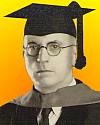
Died 10 Dec 1957 at age 80 (born 22 Dec 1876).
Swedish-American electrical engineer and metallurgist who created Permalloy (1916) and related alloys with high magnetic permeability used in communications equipment. An alloy with this property can be easily magnetized and demagnetized, especially useful for applications in electrical equipment, telephones and other communications systems. He developed the nickel-iron Permalloy in 1916, for Western Electric Company (later Bell Telephone Laboratories). Later, in 1923, Elmen found that magnetic permeability could be dramatically enhanced if Permalloy was heat treated. Its magnetic permeability exceeded that of silicon steel. His discovery made possible deep-sea telegraph cables of large message- carrying capacity.«
Swedish-American electrical engineer and metallurgist who created Permalloy (1916) and related alloys with high magnetic permeability used in communications equipment. An alloy with this property can be easily magnetized and demagnetized, especially useful for applications in electrical equipment, telephones and other communications systems. He developed the nickel-iron Permalloy in 1916, for Western Electric Company (later Bell Telephone Laboratories). Later, in 1923, Elmen found that magnetic permeability could be dramatically enhanced if Permalloy was heat treated. Its magnetic permeability exceeded that of silicon steel. His discovery made possible deep-sea telegraph cables of large message- carrying capacity.«
Died 10 Dec 1940 at age 49 (born 6 Jun 1891).
Thomas Russell Wilkins was a Canadian physicist who secured photographic recordings of cosmic rays and the disintegration of radium atoms. He moved to the U.S. in 1926. From the fall of 1929 to 1938, he was the founding director of Institute of Applied Optics at the University of Rochester. In Apr 1939 he announced the perfection of a camera that was able to record the “footprints” of invisible atoms after they collide. In October of the same year, he received a medal from the Royal Photographic Society of Great Britain recognizing his work regarding the use of photographic emulsions in the study of radium emissions. A year later, in Oct 1940, he perfected a camera that could determine the energy levels inside the nuclei of stable chemical elements. Dr. Wilkins died quite suddenly of a heart attack on his way back to his laboratory after a faculty meeting.[Image shows the star formed when primary cosmic ray particle hits a photographic plate at 95,000 feet. This is similar to, but about 1,700 feet higher than the photographs available to Wilkins, taken in 1935 from the Explorer II balloon. This undated image appeared in a 1950 magazine.]
Thomas Russell Wilkins was a Canadian physicist who secured photographic recordings of cosmic rays and the disintegration of radium atoms. He moved to the U.S. in 1926. From the fall of 1929 to 1938, he was the founding director of Institute of Applied Optics at the University of Rochester. In Apr 1939 he announced the perfection of a camera that was able to record the “footprints” of invisible atoms after they collide. In October of the same year, he received a medal from the Royal Photographic Society of Great Britain recognizing his work regarding the use of photographic emulsions in the study of radium emissions. A year later, in Oct 1940, he perfected a camera that could determine the energy levels inside the nuclei of stable chemical elements. Dr. Wilkins died quite suddenly of a heart attack on his way back to his laboratory after a faculty meeting.[Image shows the star formed when primary cosmic ray particle hits a photographic plate at 95,000 feet. This is similar to, but about 1,700 feet higher than the photographs available to Wilkins, taken in 1935 from the Explorer II balloon. This undated image appeared in a 1950 magazine.]
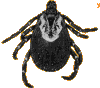
American pathologist and microbiologist, whose pioneeringachievementsrank himamonghis nation’sforemostbacteriologists. His wide-rangingcontributionsled tounderstandingparasitic organisms and how they transmit disease, yielding major health and economic benefits for both humans and domestic animals. He is best known for his studies of Texas cattle fever (1889-93, with Fred L. Kilborne), identifying the protozoan parasite carried by blood-sucking ticks—the first proof arthropods transmit infection. This inspired moreresearchersof insect-bornediseases, such as yellow fever and African sleeping sickness. In immunology, he also contributed to the development of a diphtheria vaccine.«
Died 10 Dec 1926 at age 87 (born 9 Feb 1839).
American zoologist and naturalist who, as curator of zoology at the Peabody Museum of Natural History at Yale University, developed one of the largest, most valuable zoological collections in the U.S. He trained under Louis Agassiz at Harvard University. At age 25, Verrill, became Yale University's first professor of Zoology. His lifelong devotion to taxonomic research resulted in the initial development of extensive collections at Yale in a wide variety of taxa. From 1871-87, while he was in charge of scientific explorations by the U.S. Commission of Fish and Fisheries, Verrill found and described hundreds of new marine specimens. He specialized in invertebrates, especially worms, mollusks, corals, sponges, and starfishes, and made important technical improvements in the equipment used for collecting specimens. His expeditions took him to the Atlantic and Pacific coasts of North America and to Hawaii and Central America. He published more than 350 papers and monographs, including descriptions of more than a thousand species of animals in virtually every major taxon. His breadth of interests included parasitology, mineralogy and botany.
American zoologist and naturalist who, as curator of zoology at the Peabody Museum of Natural History at Yale University, developed one of the largest, most valuable zoological collections in the U.S. He trained under Louis Agassiz at Harvard University. At age 25, Verrill, became Yale University's first professor of Zoology. His lifelong devotion to taxonomic research resulted in the initial development of extensive collections at Yale in a wide variety of taxa. From 1871-87, while he was in charge of scientific explorations by the U.S. Commission of Fish and Fisheries, Verrill found and described hundreds of new marine specimens. He specialized in invertebrates, especially worms, mollusks, corals, sponges, and starfishes, and made important technical improvements in the equipment used for collecting specimens. His expeditions took him to the Atlantic and Pacific coasts of North America and to Hawaii and Central America. He published more than 350 papers and monographs, including descriptions of more than a thousand species of animals in virtually every major taxon. His breadth of interests included parasitology, mineralogy and botany.
Died 10 Dec 1923 at age 90 (born 27 Jul 1833). quotes
English geologist who was an early leader in British petrology, the study of the origin, small-scale structure, and composition of rocks. He pioneered the use of microscopic analysis of rock slices to interpret the physical geography of the past. In 1886, he wrote a notable paper on the subject. Bonney also demonstrated the character of serpentines, a dark green mineral consisting of hydrated magnesium silicate, sometimes mottled or spotted like a snake’s skin. He wrote several books on geology, and, as an ordained minister, also wrote a book about the architecture of the Cathedrals, Abbeys, and Churches of England and Wales.«
English geologist who was an early leader in British petrology, the study of the origin, small-scale structure, and composition of rocks. He pioneered the use of microscopic analysis of rock slices to interpret the physical geography of the past. In 1886, he wrote a notable paper on the subject. Bonney also demonstrated the character of serpentines, a dark green mineral consisting of hydrated magnesium silicate, sometimes mottled or spotted like a snake’s skin. He wrote several books on geology, and, as an ordained minister, also wrote a book about the architecture of the Cathedrals, Abbeys, and Churches of England and Wales.«
Died 10 Dec 1923 at age 70 (born 6 Oct 1853).
Thomas George Shaughnessy, 1st Baron Shaughnessy (of Montreal and Ashford) was an American-Canadian railway magnate was a Canadian railway magnate. With some education in business, at age 16, he joined the Milwaukee and St Paul Railroad as a clerk. In Nov 1882, he moved to the Canadian Pacific Railway as its purchasing agent, and initiated rigid accounting and aggressive cost control. By 1885, he became assistant general manager, and assistant president in 1889. As a shrewd administrator, he was elected the railroad company's president in 1899. He extended its track from 7,000 miles to 12,993 miles by the time he resigned in 1918, with failing eyesight. Shaughnessy had also developed steamship service, tugs, barges, and ferries on the Great Lakes, Pacific coast, inland, and Atlantic steamship service. He initiated irrigation and land development for settlers, and built hotels. He was made a baron on 1 Jan 1916.«
Thomas George Shaughnessy, 1st Baron Shaughnessy (of Montreal and Ashford) was an American-Canadian railway magnate was a Canadian railway magnate. With some education in business, at age 16, he joined the Milwaukee and St Paul Railroad as a clerk. In Nov 1882, he moved to the Canadian Pacific Railway as its purchasing agent, and initiated rigid accounting and aggressive cost control. By 1885, he became assistant general manager, and assistant president in 1889. As a shrewd administrator, he was elected the railroad company's president in 1899. He extended its track from 7,000 miles to 12,993 miles by the time he resigned in 1918, with failing eyesight. Shaughnessy had also developed steamship service, tugs, barges, and ferries on the Great Lakes, Pacific coast, inland, and Atlantic steamship service. He initiated irrigation and land development for settlers, and built hotels. He was made a baron on 1 Jan 1916.«
The CPR West: The Iron Road and the Making of a Nation, by Hugh A. Dempsey. - book suggestion.
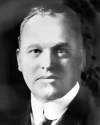
Died 10 Dec 1920 at age 52 (born 17 May 1868).
Horace Elgin Dodge was an American automobile manufacturer, with his brother John Francis Dodge, were American automobile manufacturers who invented one of the first all-steel cars in America. They built their first Dodge car in Nov 1914 in Detroit, Mich.
Horace Elgin Dodge was an American automobile manufacturer, with his brother John Francis Dodge, were American automobile manufacturers who invented one of the first all-steel cars in America. They built their first Dodge car in Nov 1914 in Detroit, Mich.
1896
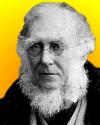
Died 10 Dec 1911 at age 94 (born 30 Jun 1817). quotes
English botanist and explorer who was assistant on Sir James Ross's Antarctic expedition and whose botanical travels to foreign lands included India, Palestine and the U.S., from which he became a leading taxonomists in his time. His Student's Flora of the British Islands became a standard text. He was a great friend of Charles Darwin, and they collaborated in research. With Charles Lyell, Hooker encouraged the publication of Darwin's theory of evolution. He served (1855-65) as assistant director to his father, Sir William Jackson Hooker, of the Royal Botanic Gardens at Kew, whom he succeeded as director for another 20 years. He was also a president of the Royal Society. At age 94, he died in his sleep and was buried at Kew.«
English botanist and explorer who was assistant on Sir James Ross's Antarctic expedition and whose botanical travels to foreign lands included India, Palestine and the U.S., from which he became a leading taxonomists in his time. His Student's Flora of the British Islands became a standard text. He was a great friend of Charles Darwin, and they collaborated in research. With Charles Lyell, Hooker encouraged the publication of Darwin's theory of evolution. He served (1855-65) as assistant director to his father, Sir William Jackson Hooker, of the Royal Botanic Gardens at Kew, whom he succeeded as director for another 20 years. He was also a president of the Royal Society. At age 94, he died in his sleep and was buried at Kew.«
Sir Joseph Dalton Hooker: Traveller and Plant Collector, by Ray Desmond. - book suggestion.
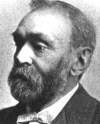
Died 10 Dec 1896 at age 63 (born 21 Oct 1833). quotes
Swedish chemist and inventor who invented dynamite and other, more powerful explosives. An explosives expert like his father, in 1866 he invented a safe and manageable form of nitroglycerin he called dynamite, and later, smokeless gunpowder and (1875) gelignite. He helped to create an industrial empire manufacturing many of his other inventions. Nobel amassed a huge fortune, much of which he left in a fund to endow the annual prizes that bear his name. First awarded in 1901, these prizes were for achievements in the areas of physics, chemistry, physiology or medicine, literature, and peace. The sixth prize, for economics, was instituted in his honour in 1969.
Swedish chemist and inventor who invented dynamite and other, more powerful explosives. An explosives expert like his father, in 1866 he invented a safe and manageable form of nitroglycerin he called dynamite, and later, smokeless gunpowder and (1875) gelignite. He helped to create an industrial empire manufacturing many of his other inventions. Nobel amassed a huge fortune, much of which he left in a fund to endow the annual prizes that bear his name. First awarded in 1901, these prizes were for achievements in the areas of physics, chemistry, physiology or medicine, literature, and peace. The sixth prize, for economics, was instituted in his honour in 1969.
Alfred Nobel: A Biography, by Kenne Fant. - book suggestion.
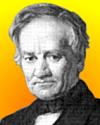
Died 10 Dec 1884 at age 90 (born 20 Nov 1794).
(Wilhelm Peter) Eduard (Simon) Rüppell was a German naturalist and explorer who made zoological and ethnographical collections in northeastern Africa. He was assisted on his first expedition (1821-27) by surgeon Michael Hey. After travelling through the Sinai desert, in 1822 they were the first European explorers to reach the Gulf of Aqaba, and the following year, they travelled up the Nile. On another African expedition, in 1830 Rüppell became the first naturalist to traverse Ethiopia. Rüppell is remembered in the names of Rüppell's Warbler and Rüppell's Vulture.«
(Wilhelm Peter) Eduard (Simon) Rüppell was a German naturalist and explorer who made zoological and ethnographical collections in northeastern Africa. He was assisted on his first expedition (1821-27) by surgeon Michael Hey. After travelling through the Sinai desert, in 1822 they were the first European explorers to reach the Gulf of Aqaba, and the following year, they travelled up the Nile. On another African expedition, in 1830 Rüppell became the first naturalist to traverse Ethiopia. Rüppell is remembered in the names of Rüppell's Warbler and Rüppell's Vulture.«
Died 10 Dec 1877 at age 84 (born 10 Nov 1793).
Jared Potter Kirtland was an American naturalist, horticulturist and physician who is credited with originating 26 varieties of cherries and 6 of pears. In 1838, Kirtland published the first list of amphibians collected in Ohio. On 13 May 1851 he made the first discovery of a migrating song bird on his farm near Cleveland, Ohio, which was named Kirtland's Warbler. This yellow-breasted, bluish-gray bird's song can be heard from a quarter of a mile away. It is also one of the rarest birds in the world. The Warbler's finicky nesting requirements also make it extremely unusual. Some still nest in the jack pines of Northern Michigan, but they are on the endangered list.
Jared Potter Kirtland was an American naturalist, horticulturist and physician who is credited with originating 26 varieties of cherries and 6 of pears. In 1838, Kirtland published the first list of amphibians collected in Ohio. On 13 May 1851 he made the first discovery of a migrating song bird on his farm near Cleveland, Ohio, which was named Kirtland's Warbler. This yellow-breasted, bluish-gray bird's song can be heard from a quarter of a mile away. It is also one of the rarest birds in the world. The Warbler's finicky nesting requirements also make it extremely unusual. Some still nest in the jack pines of Northern Michigan, but they are on the endangered list.
Died 10 Dec 1864 at age 71 (born 28 Mar 1793).
American explorer and ethnologist noted for his discovery of the source of the Mississippi River (1832) in a lake in northern Minnesota which he named Lake Itasca, from the Latin words caput (head) and veritas (true). His early interest was rocks and minerals, which led to a geological survey expedition, then employment as a map-maker and government agent on the Northwest Frontier, near Lake Superior. He became interested in Native Americans and from these studies wrote about their history, language, mythology, hieroglyphics, picture writing, maxims, characteristics and potential, religious beliefs, and influence of Christian missionaries. Further, he addressed the past and future roles of the federal government and the Indian.
American explorer and ethnologist noted for his discovery of the source of the Mississippi River (1832) in a lake in northern Minnesota which he named Lake Itasca, from the Latin words caput (head) and veritas (true). His early interest was rocks and minerals, which led to a geological survey expedition, then employment as a map-maker and government agent on the Northwest Frontier, near Lake Superior. He became interested in Native Americans and from these studies wrote about their history, language, mythology, hieroglyphics, picture writing, maxims, characteristics and potential, religious beliefs, and influence of Christian missionaries. Further, he addressed the past and future roles of the federal government and the Indian.
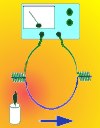
German physicist who discovered (1821) that an electric current flows between different conductive materials that are kept at different temperatures, known as the Seebeck effect. It is the basis of the thermocouple and is considered the most accurate measurement of temperature. It is also a key component of the semi-conductor, the foundation of the modern computer business. Seebeck's work was the basis of German physicist Georg Simon Ohm (1789-1854) discoveries in electricity and of French physicist Jean Charles Athanase Peltier (1785-1845), whose Peltier effect became well known as a way to use electricity to freeze water (air conditioning, refrigeration).[Image right: (source)]
1954
Died 10 Dec 1626 (born 1581).
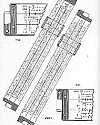
English mathematician who invented many useful measuring devices, including a forerunner of the slide rule. Gunter published seven figure tables of logarithms of sines and tangents in 1620 in Canon Triangulorum, or Table of Artificial Sines and Tangents. The words cosine and cotangent are due to him. He made a mechanical device, Gunter's scale, to multiply numbers based on the logs using a single scale and a pair of dividers. He also invented Gunter's chain which was 22 yards long with 100 links. It was used for surveying and the unit of area called an acre is ten square chains. Gunter also did important work on navigation, publishing New Projection of the Sphere in 1623. He also studied magnetic declination and was the first to observe the secular variation.
English mathematician who invented many useful measuring devices, including a forerunner of the slide rule. Gunter published seven figure tables of logarithms of sines and tangents in 1620 in Canon Triangulorum, or Table of Artificial Sines and Tangents. The words cosine and cotangent are due to him. He made a mechanical device, Gunter's scale, to multiply numbers based on the logs using a single scale and a pair of dividers. He also invented Gunter's chain which was 22 yards long with 100 links. It was used for surveying and the unit of area called an acre is ten square chains. Gunter also did important work on navigation, publishing New Projection of the Sphere in 1623. He also studied magnetic declination and was the first to observe the secular variation.
Died 10 Dec 1603 at age 59 (born 24 May 1544). quotes
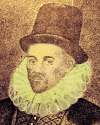
English scientist, the “father of electrical studies” and a pioneer researcher into magnetism, who spent years investigating magnetic and electrical attractions. Gilbert coined the names of electric attraction, electric force, and magnetic pole. He became the most distinguished man of science in England during the reign of Queen Elizabeth I. Noting that a compass needle not only points north and south, but also dips downward, he thought the Earth acts like a bar magnet. Like Copernicus, he believed the Earth rotates on its axis, and that the fixed stars were not all at the same distance from the earth. Gilbert thought it was a form of magnetism that held planets in their orbits.[EB gives death date as 10 Dec (Old Style 30 Nov) 1603.]
English scientist, the “father of electrical studies” and a pioneer researcher into magnetism, who spent years investigating magnetic and electrical attractions. Gilbert coined the names of electric attraction, electric force, and magnetic pole. He became the most distinguished man of science in England during the reign of Queen Elizabeth I. Noting that a compass needle not only points north and south, but also dips downward, he thought the Earth acts like a bar magnet. Like Copernicus, he believed the Earth rotates on its axis, and that the fixed stars were not all at the same distance from the earth. Gilbert thought it was a form of magnetism that held planets in their orbits.[EB gives death date as 10 Dec (Old Style 30 Nov) 1603.]
Died 10 Dec 1198 (born 1126). quotes
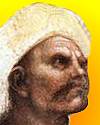
Abu-alWalid Muhammad Ibn Ahmad Ibn (known as Averroes) was a Spanish philosopher, physician and astronomer who is known for his Kulliyat fi ab tb (Generalities on Medicine) produced between 1162-69 on topics ranging from organ anatomy and hygiene to the prevention, diagnosis, and treatment of diseases. In this work, which spread widely in translations, he attempted to logically codify the existing medical knowledge. He critized adherance to tradition and instead stressed the importance of empirical evidence. In astronomy, he believed that the motion of the planets had to be around a physical centre (the Earth) and rejected Ptolemy's system of epicycles. He was the most famous of the medieval Islamic philosophers and as a principal interpreter of Aristotle, his commentaries were widely used as standard texts until the sixteenth century.«[Image: Ibn Rushd as portrayed in a detail from Raffaello Sanzio's fresco, The School of Athens (1509).]
Abu-alWalid Muhammad Ibn Ahmad Ibn (known as Averroes) was a Spanish philosopher, physician and astronomer who is known for his Kulliyat fi ab tb (Generalities on Medicine) produced between 1162-69 on topics ranging from organ anatomy and hygiene to the prevention, diagnosis, and treatment of diseases. In this work, which spread widely in translations, he attempted to logically codify the existing medical knowledge. He critized adherance to tradition and instead stressed the importance of empirical evidence. In astronomy, he believed that the motion of the planets had to be around a physical centre (the Earth) and rejected Ptolemy's system of epicycles. He was the most famous of the medieval Islamic philosophers and as a principal interpreter of Aristotle, his commentaries were widely used as standard texts until the sixteenth century.«[Image: Ibn Rushd as portrayed in a detail from Raffaello Sanzio's fresco, The School of Athens (1509).]
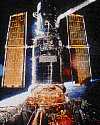
In 1993, the crew of the space shuttle "Endeavour" deployed the repaired Hubble Space Telescope into Earth orbit.
In 1984, the National Science Foundation reported the discovery of the first planet outside our solar system, orbiting a star 21 million light years from Earth.
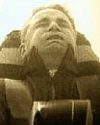
In 1954, to determine if a pilot could eject from an airplane at supersonic speed and live, Lt. Col. John Paul Stapp, a flight surgeon, rode a rocket sled to 632 mph. The Sonic Wind was the rocket powered sled that Stapp rode at Holloman Air Force Base, New Mexico. The sled's rocket motors generated 40,000 lbs. of thrust and he reached a speed of 632 mph in five seconds. At the end of the ride Stapp was stopped in 1.25 seconds which subjected him to 40 Gs. It was the equivalent of hitting a brick wall in a car traveling at 120 mph. Data from 29 increasingly harsh rocket-sled rides during the 1950s proved invaluable in the design of improved helmets, arm and leg restraints, better aircraft seats, and stronger safety harnesses.
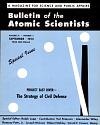
Sep 1953
In 1945, the first newsletter, Vol. 1, No. 1, was published that would become the The Bulletin of the Atomic Scientists, later noted for its Doomsday Clock on the cover. After the first Soviet hydrogen bomb test on 12 Aug 1953, to represent the urgency to avoid humanity's catastrophic destruction, the hands of the clock on the Sep 1953 cover (Vol. 9, No. 7) were advanced to two minutes to midnight—the closest to nuclear Doomsday (midnight) they have ever been. The minute hand has been moved backward and forward over the years representing lessening or increasing urgency of problems regarding world's nuclear proliferation, and, the more recent additional concerns for climate change and bioweapons.
In 1901, at the first Nobel Prize Award Ceremony, the king of Sweden distributed the first Nobel Prizes, in accordance with the will of inventor Alfred Nobel. The day was the anniversary of Nobel's death. The Royal Swedish Academy of Sciences had decided on 10 Nov 1901 to award the first Nobel Prize in Physics to Wilhelm Röntgen for his discovery of X-rays and the first Nobel Prize in Chemistry to Jacobus H. van't Hoff for his work on rates of reaction, equilibrium and osmotic pressure. The first Nobel Prize in Physiology or Medicine was given to Emil von Behring, for his work on serum therapy, particularly for its use in the treatment of diphtheria. His Nobel diploma was dated 30 Oct 1901, signed by staff at Karolinska Institutet in Stockholm.«
In 1899, George Safford Parker was issued a U.S. patent on the first fountain pen he developed after experimenting to produce a more reliable design than those previously available from other manufacturers. Two years later in Feb 1892, the Parker Pen Company was incorporated, funded with $1,000 from his partner, William Palmer, an insurance broker. Parker continued making improvements, and filed several more patents. Then, patented on 4 Dec1894, the Lucky Curve design became the foundation for the Parker Pen Company's first significant success because of its improved ink feed that avoided spillage in the cap while being carried.
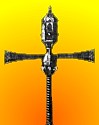
In 1868, gas-lit traffic lights were first placed in operation at the corner of Bridge Street and New Palace Yard, London, England, atop a 22-ft high cast-iron pillar. Semaphore arms were used with a revolving lantern which shone a red signal to indicate the oncoming trafffic should stop, and green to continue with caution. A constable turned the lantern using a lever at the base. Richard Mayne, Metro Commissioner of Police ordered the traffic signal to facilitate access for Members of Parliament to the Houses of Parliament. When removed in 1872, it had been the only traffic light in London, and no other traffic control of its kind was made for half a century.«*
In 1845, civil engineer Robert Thompson patented pneumatic tyres in London.
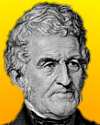
In 1801, Robert Hare (1781-1858) presented to the Chemical Society of Philadelphia his paper, Memoir of the Supply and Application of the Blow-Pipe. It presented the twenty-year-old scientist's discovery relating to the intense production of heat with his oxyhydrogen blow-pipe, progenitor of the welding torch. The Society published the paper the following year, and accounts of the invention also appeared in Tilloch's Philosophical Magazine and in the Annales de Chemie. In 1839 the American Academy of Arts and Sciences awarded him the first of its Rumford Medals.
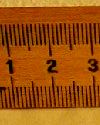
In 1799, a second legal definition of the metre was made by the French National Assembly to be 3 feet and 11.296 lines of the toise of Paris (slightly tweaking the 7 Apr 1795 measure, and no meridian in the definition). The metric system was made compulsory by law in France. The toise of Paris refered to an old unit of lmeasurement, defined by the length of a specific standard metal bar held at Paris. (1 toise = 6 French feet, 1 ft = 12 in, 1 inch = 12 lines.) This second legal definition of the metre was used until it was replaced by a third legal definition made on 28 Sep 1889 by the Paris General Conference, when a new International protype metre bar was made of a platinum-iridium alloy. The 4th legal definition on 14 Oct 1960 used the wavelength of a spectral line of krypton.«
The Measure of All Things: The Seven-Year Odyssey and Hidden Error That Transformed the World, by Ken Alder. - book suggestion.
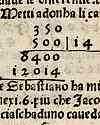
In 1478, the anonymous Arte dell'Abbaco (“The Art of the Abacus”), printed in Treviso, Italy had this publication date. It is the first dated printed book on arithmetic. The unknown author was likely a priest, and it was dedicated to some of his young friends who kept asking for it. The printer was probably Geradus de Lisa, dé Flandria. The 124-page text dealt with commercial applications of arithmetic, so the language was the local vernacular Venetian dialect, not the scholarly Latin used for the abstract studies of universities. The book teaches the four main operations, with numerous examples, and the concept of fractions (but not the as yet unknown decimals). He shows how to calculate the date of the new Moon. Although some pamphlets on Algorithmus are possibly older than this book, they are undated.«[Image: detail of a calculation shown in the book.]





