
Born 24 Apr 1905; died 28 Jun 1963 at age 58.
American author and conservationist recognized for saving the whooping crane from extinction by discovering (1955) the nesting ground of the sole remaining flock near the Arctic Circle. He was a leader in having whooping crane habitats in Texas and Canada proclaimed as refuges. He helped establish a working protective plan for flamingos and recommended methods of saving the small surviving colonies of roseate spoonbills, thus helping to perpetuate the species. His monographs on the whooping crane, the roseate spoonbill, and the American flamingo are the standard authoritative works on these species.[Listen to the whooping crane call]
American author and conservationist recognized for saving the whooping crane from extinction by discovering (1955) the nesting ground of the sole remaining flock near the Arctic Circle. He was a leader in having whooping crane habitats in Texas and Canada proclaimed as refuges. He helped establish a working protective plan for flamingos and recommended methods of saving the small surviving colonies of roseate spoonbills, thus helping to perpetuate the species. His monographs on the whooping crane, the roseate spoonbill, and the American flamingo are the standard authoritative works on these species.[Listen to the whooping crane call]
The Whooping Crane (Research report of the National Audubon Society), by Robert Porter Allen. - book suggestion.
Born 24 Apr 1903; died 14 Jan 1956 at age 52.
Siegfried Frederick Nadel was an Austrian-British anthropologist whose investigations of African ethnology led him to explore theoretical questions. From 1934-36, he worked with the Nupe and other groups in northern Nigeria. From 1941-46, he joined the Sudan Defense Force in order to have a personal involvement with the destruction of the Nazi forces. He produced outstanding ethnographic writings. Nadel was also a major theoretician who attempted to develop a new synthesis of social science, as in his books, The Foundations of Social Anthropology and A Theory of Social Structure. He wanted to link the “Study of Man with the whole universe of scientific knowledge.”
Siegfried Frederick Nadel was an Austrian-British anthropologist whose investigations of African ethnology led him to explore theoretical questions. From 1934-36, he worked with the Nupe and other groups in northern Nigeria. From 1941-46, he joined the Sudan Defense Force in order to have a personal involvement with the destruction of the Nazi forces. He produced outstanding ethnographic writings. Nadel was also a major theoretician who attempted to develop a new synthesis of social science, as in his books, The Foundations of Social Anthropology and A Theory of Social Structure. He wanted to link the “Study of Man with the whole universe of scientific knowledge.”
Born 24 Apr 1897; died 26 Jul 1941 at age 44. quotes
Benjamin Lee Whorf was an American anthropologist and linguist, who originally trained as a chemical engineer (1918), and began work as a fire prevention engineer. As an avocation, he pursued anthropology and studied native American languages. He became well known for his study of the Hopi language. With Sapir, he developed the Sapir-Whorf hypothesis concerning the way that language affects thought. This theory proposed that the language a person speaks (independent of the culture in which he or she resides) affects the way that he or she thinks, meaning that the structure of the language itself affects cognition. His studies, though not all were proven, helped future linguists in their studies. He died at only 44 years old, due to cancer.«
Benjamin Lee Whorf was an American anthropologist and linguist, who originally trained as a chemical engineer (1918), and began work as a fire prevention engineer. As an avocation, he pursued anthropology and studied native American languages. He became well known for his study of the Hopi language. With Sapir, he developed the Sapir-Whorf hypothesis concerning the way that language affects thought. This theory proposed that the language a person speaks (independent of the culture in which he or she resides) affects the way that he or she thinks, meaning that the structure of the language itself affects cognition. His studies, though not all were proven, helped future linguists in their studies. He died at only 44 years old, due to cancer.«
Born 24 Apr 1817; died 15 Apr 1894 at age 76.
Swiss chemist whose life work consisted of making many precise determinations of atomic weights suggested the possibility of isotopes and the packing fraction of nuclei. He began a study of the rare-earth elements in 1840, when barely 23 years old. In 1878, he heated until it decomposed some erbium nitrate obtained from gadolinite. Extracting the product with water he obtained two oxides: a red one he named erbia and a colourless one he named ytterbia. Thus he discovered ytterbium, and later was a codiscover of gadolinium (1880). By separating tantalic and columbic acids, he also proved that tantalum and colubium (niobium) were not identical. The last 10 years of his life he lay prostrate, suffering intensely from heart disease.
Swiss chemist whose life work consisted of making many precise determinations of atomic weights suggested the possibility of isotopes and the packing fraction of nuclei. He began a study of the rare-earth elements in 1840, when barely 23 years old. In 1878, he heated until it decomposed some erbium nitrate obtained from gadolinite. Extracting the product with water he obtained two oxides: a red one he named erbia and a colourless one he named ytterbia. Thus he discovered ytterbium, and later was a codiscover of gadolinium (1880). By separating tantalic and columbic acids, he also proved that tantalum and colubium (niobium) were not identical. The last 10 years of his life he lay prostrate, suffering intensely from heart disease.

English novelist who introduced the familiar red pillar boxes in Britain as street-side receptacles of letters for collection by the Post Office. Trollope was a Surveyor's Clerk (prior to his fame as a novelist) who was sent in 1851 to inspect the Channel Islands postal services. Postal boxes had previously been used in Belgium and France. Thus, Trollope was not their inventor, but he recommended their use at Jersey's capital, St. Helier, where there was no receiving office. After approval by the Postmaster- General, the first of four pillar boxes was installed there 23 Nov 1852. The first mainland pillar box appeared the next year in Carlisle, England and the first six in London on 11 Apr 1855.**[Image, right: The hexagonal box as designed and cast by St. Helier blacksmith John Vaudin (source)]
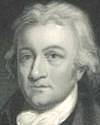
Born 24 Apr 1743; died 30 Oct 1823 at age 80.
English inventor who was inspired by a visit in 1784 to one ofRichard Arkwright’s cotton-spinning mills, and beganinventingnew looms to mechanize the manual weaving process, to increase production speed and the quality of woven cloth. By 1785, he had patented his first crude loom design. As he improved his machines, and opened his own mill in Doncaster, in 1787, Cartwright revolutionised the textile industry. Two years later, he applied steam power his looms, with engines produced byJames WattandMatthew Boulton. Cartwright also invented amachinefor combing wool. He went bankrupt in 1793 from poor business skills, but in 1809, Parliament awarded him £10,000 for his achievements.« more
English inventor who was inspired by a visit in 1784 to one ofRichard Arkwright’s cotton-spinning mills, and beganinventingnew looms to mechanize the manual weaving process, to increase production speed and the quality of woven cloth. By 1785, he had patented his first crude loom design. As he improved his machines, and opened his own mill in Doncaster, in 1787, Cartwright revolutionised the textile industry. Two years later, he applied steam power his looms, with engines produced byJames WattandMatthew Boulton. Cartwright also invented amachinefor combing wool. He went bankrupt in 1793 from poor business skills, but in 1809, Parliament awarded him £10,000 for his achievements.« more
Memoir of the Life, Writings and Mechanical Inventions of Edmund Cartwright, by Mary Strickland. - book suggestion.
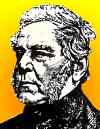
Born 24 Apr 1620; died 18 Apr 1674 at age 53. quotes
English statistician who is considered by many historians to have founded the science of demography (statistical study of human populations). For his published analysis of the parish records of christenings and deaths, he was made a charter member of the Royal Society. His 90-page book, “Natural and Political Observations Mentioned in a Following Index, and Made upon the Bills of Mortality” was distributed at the Royal Society meeting on 5 Feb 1662. He described his work as having “reduced several great confused volumes” of parish records into a few easily to understood tables, and “abridged such Observations... into a few succinct Paragraphs.” He initiated “life tables” of life expectancy. His use of demographics was further pioneered by his friend Sir William Petty and Edmond Halley, the Astronomer Royal.«
English statistician who is considered by many historians to have founded the science of demography (statistical study of human populations). For his published analysis of the parish records of christenings and deaths, he was made a charter member of the Royal Society. His 90-page book, “Natural and Political Observations Mentioned in a Following Index, and Made upon the Bills of Mortality” was distributed at the Royal Society meeting on 5 Feb 1662. He described his work as having “reduced several great confused volumes” of parish records into a few easily to understood tables, and “abridged such Observations... into a few succinct Paragraphs.” He initiated “life tables” of life expectancy. His use of demographics was further pioneered by his friend Sir William Petty and Edmond Halley, the Astronomer Royal.«

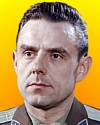
Died 24 Apr 1967 at age 40 (born 16 Mar 1927).
Soviet cosmonaut who was the first man known to have died during a space mission. He flew on two space missions. He was Command Pilot of Voskhod I, on a day-long mission, 12-13 Oct 1964. Also on board were Dr. Yegorov, a medical doctor as flight physiologist; and the spacecraft engineer Konstantin Feoktistov. For this landing, the spacecraft's parachutes opened at an altitude of 7 km followed by a soft-landing system that used streams of gases from nozzles to reduce touchdown velocity to near zero. Komarov died during the landing after his second space mission, when he was Commander of Soyuz-I, 23-24 Apr 1967, on a nearly 27 hour flight. On its return, his spacecraft became entangled in its main parachute and fell several miles to Earth.
Soviet cosmonaut who was the first man known to have died during a space mission. He flew on two space missions. He was Command Pilot of Voskhod I, on a day-long mission, 12-13 Oct 1964. Also on board were Dr. Yegorov, a medical doctor as flight physiologist; and the spacecraft engineer Konstantin Feoktistov. For this landing, the spacecraft's parachutes opened at an altitude of 7 km followed by a soft-landing system that used streams of gases from nozzles to reduce touchdown velocity to near zero. Komarov died during the landing after his second space mission, when he was Commander of Soyuz-I, 23-24 Apr 1967, on a nearly 27 hour flight. On its return, his spacecraft became entangled in its main parachute and fell several miles to Earth.
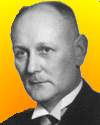
Died 24 Apr 1964 at age 68 (born 30 Oct 1895).
German bacteriologist and pathologist who was awarded the 1939 Nobel Prize for Physiology or Medicine for his discovery (announced in 1932) of the antibacterial effects of Prontosil, the first of the sulfonamide drugs. This prize was awarded despite the fact that the Nazi government intervened and informed the Nobel awarding committee in Sweden that the prize was not wanted. (Hitler had been enraged with the committee's award of the Peace Prize to a German in a concentration camp.) Domagk was arrested twice at gunpoint by his government, interrogated and imprisoned. He then refused to accept the prize, the first refusal in the history of the awards. After the fall of Hitler, in 1947, was able to go to Stockholm and accept the prize.
German bacteriologist and pathologist who was awarded the 1939 Nobel Prize for Physiology or Medicine for his discovery (announced in 1932) of the antibacterial effects of Prontosil, the first of the sulfonamide drugs. This prize was awarded despite the fact that the Nazi government intervened and informed the Nobel awarding committee in Sweden that the prize was not wanted. (Hitler had been enraged with the committee's award of the Peace Prize to a German in a concentration camp.) Domagk was arrested twice at gunpoint by his government, interrogated and imprisoned. He then refused to accept the prize, the first refusal in the history of the awards. After the fall of Hitler, in 1947, was able to go to Stockholm and accept the prize.
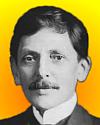
Died 24 Apr 1960 at age 88 (born 14 Aug 1871). quotes
German-American zoologist who was an authority on molluscs, but had broad interests in natural history including plants and birds. He began his career as assistant curator of marine invertebrates at the US National Museum, Washington, DC., but then worked until retirement for the Smithsonian Institution (1896-1942). He represented that organisation on numerous zoological expeditions. In 1902, he initiated a systematic, scientific bird banding program (credited as the first in North America since John James Audubon) by banding 23 Black-crowned Night-herons at Washington, DC. During WW I, he invented a gas detector for the Chemical Warfare Service in 1918. Bartsch organized the first Boy Scout troop in Washington.«
German-American zoologist who was an authority on molluscs, but had broad interests in natural history including plants and birds. He began his career as assistant curator of marine invertebrates at the US National Museum, Washington, DC., but then worked until retirement for the Smithsonian Institution (1896-1942). He represented that organisation on numerous zoological expeditions. In 1902, he initiated a systematic, scientific bird banding program (credited as the first in North America since John James Audubon) by banding 23 Black-crowned Night-herons at Washington, DC. During WW I, he invented a gas detector for the Chemical Warfare Service in 1918. Bartsch organized the first Boy Scout troop in Washington.«
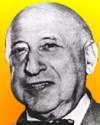
Died 24 Apr 1958 at age 80 (born 12 Apr 1878). quotes
Richard Benedikt Goldschmidt was a German-American zoologist who specialized in heredity. He studied the X-chromosomes of butterflies. He produced a theory, now discredited, that there were more decisive factors in inheritance than the qualities of the individual genes. He held that the serial pattern of the chromosomes and the chemical configuration of the chromosome molecule were more important factors. His experiments with the Gypsy Moth revealed that much geographical variation is genetic and not environmental in origin. However, he was able with high temperature to produce phenotypes in fruit flies, and demonstrate an environmental factor could mimic some of the effects of genetic mutation, though not inheritable.«
Richard Benedikt Goldschmidt was a German-American zoologist who specialized in heredity. He studied the X-chromosomes of butterflies. He produced a theory, now discredited, that there were more decisive factors in inheritance than the qualities of the individual genes. He held that the serial pattern of the chromosomes and the chemical configuration of the chromosome molecule were more important factors. His experiments with the Gypsy Moth revealed that much geographical variation is genetic and not environmental in origin. However, he was able with high temperature to produce phenotypes in fruit flies, and demonstrate an environmental factor could mimic some of the effects of genetic mutation, though not inheritable.«
Material Basis of Evolution, by Richard B. Goldschmidt. - book suggestion.
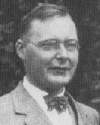
Died 24 Apr 1952 at age 57 (born 17 Dec 1894). quotes
Dutch physicist who, with Ralph de Laer Kronig, derived important equations relating the absorption to the dispersion of light. He also predicted (1924) the existence of the Raman effect, an inelastic scattering of light. Kramer's work covers almost the entire field of theoretical physics. He published papers dealing with mathematical formalism of quantum mechanics, and others on paramagnetism, magneto-optical rotation, ferro-magnetism, kinetic theory of gases, relativistic formalisms in particle theory, and on theory of radiation. His work shows outstanding mathematical skill and careful analysis of physical principles.
Dutch physicist who, with Ralph de Laer Kronig, derived important equations relating the absorption to the dispersion of light. He also predicted (1924) the existence of the Raman effect, an inelastic scattering of light. Kramer's work covers almost the entire field of theoretical physics. He published papers dealing with mathematical formalism of quantum mechanics, and others on paramagnetism, magneto-optical rotation, ferro-magnetism, kinetic theory of gases, relativistic formalisms in particle theory, and on theory of radiation. His work shows outstanding mathematical skill and careful analysis of physical principles.
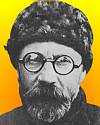
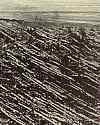
Russian mineralogist who conducted the first scientific expedition (for which records survive) to study the Tungusta meteor impact site. He began in 1927, and continued to work on the investigation until, while fighting for his country in WW II, he was captured and died of typhus in a Nazi prison camp. The Tungusta event, in a remote region of Russia, was a blast that destroyed 2,200 sq km of forest, believed to have been caused by a meteorite over 50-m diameter. It penetrated the Earth's atmosphere, heated to about 10,000 ºC and detonated 6 to10 km above the ground, leaving no crater. The region was sparsely populated, remote, and hard to reach, so there was little scientific interest until almost 20 years later, when Kulik began his work.«[Image right: a view of charred forest trees blown to the ground show the direction of the blast.]
Died 24 Apr 1924 at age 80 (born 1 Feb 1844). quotes
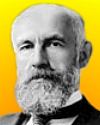
Granville Stanley Hall was an American psychologist who distinguished experimental psychology in the U.S. from the philosophical psychology that dominated in America at the time. He developed child psychology and educational psychology. He coined the phrase “Storm and Stress” relative to adolescence, with the three key aspects of conflict with parents, mood disruptions, and risky behaviour. Influenced by Charles Darwin's Theory of Evolution, Hall undertook a scientific examination of child development in the aspect of the inheritance of behaviour. He also pioneered the use of questionnaires. In 1887, Hall founded the American Journal of Psychology to publish psychological research from authors regardless of their disciplinary background.«
Granville Stanley Hall was an American psychologist who distinguished experimental psychology in the U.S. from the philosophical psychology that dominated in America at the time. He developed child psychology and educational psychology. He coined the phrase “Storm and Stress” relative to adolescence, with the three key aspects of conflict with parents, mood disruptions, and risky behaviour. Influenced by Charles Darwin's Theory of Evolution, Hall undertook a scientific examination of child development in the aspect of the inheritance of behaviour. He also pioneered the use of questionnaires. In 1887, Hall founded the American Journal of Psychology to publish psychological research from authors regardless of their disciplinary background.«
Died 24 Apr 1900 at age 64 (born 16 Mar 1836). quotes
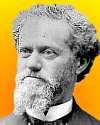
English-American engineer and inventor who built the cable car system first used on the steep hills of San Francisco streets (1 Aug 1873). Streetcars on rails were fitted with a mechanical device that gripped an underground endless moving cable to travel and released to stop. The cable passed around pulleys and was driven by a large wheel at an engine house. He had learned the business of making wire rope from his father before moving to the U.S. (1853), where he designed and built wire suspension bridges and flumes. He began manufacturing wire rope in 1857. Hallidie also developed a method of moving freight over canyons using an endless wire rope, and inventions for the transmission of power with wire rope, which seeded his idea for cable cars.« more
English-American engineer and inventor who built the cable car system first used on the steep hills of San Francisco streets (1 Aug 1873). Streetcars on rails were fitted with a mechanical device that gripped an underground endless moving cable to travel and released to stop. The cable passed around pulleys and was driven by a large wheel at an engine house. He had learned the business of making wire rope from his father before moving to the U.S. (1853), where he designed and built wire suspension bridges and flumes. He began manufacturing wire rope in 1857. Hallidie also developed a method of moving freight over canyons using an endless wire rope, and inventions for the transmission of power with wire rope, which seeded his idea for cable cars.« more
Cable Car Days in San Francisco, by Edgar Myron Kahn. - book suggestion.
Died 24 Apr 1898 at age 69 (born 23 Nov 1828).
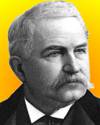
Cornelius Nevius Hoagland was an American physician who founded the Hoagland Laboratory (1887), the first institutional laboratory in America. erected, equipped and endowed by private means for the sole purpose of original medical research. It opened at 335 Henry Street, Brooklyn, N. Y. on 1 Oct 1888 with special departments for physiology, histology and bacteriology. In addition to the over $100,000 to establish the building and its facilities, Hoagland provided a $50,000 endowment. He became wealthy in partnership with his brother owning the Royal Baking Powder Company. (Private bacteriological laboratories had been established earlier by individual physicians.) Other charitable contributions included to the Brooklyn Eye and Ear Hospital, and the Brooklyn Free Kindergarten Society, which named one of its16 kindergartens after him.«[Image shows Hoagland while Surgeon, 71st Ohio Volunteers.] more
Cornelius Nevius Hoagland was an American physician who founded the Hoagland Laboratory (1887), the first institutional laboratory in America. erected, equipped and endowed by private means for the sole purpose of original medical research. It opened at 335 Henry Street, Brooklyn, N. Y. on 1 Oct 1888 with special departments for physiology, histology and bacteriology. In addition to the over $100,000 to establish the building and its facilities, Hoagland provided a $50,000 endowment. He became wealthy in partnership with his brother owning the Royal Baking Powder Company. (Private bacteriological laboratories had been established earlier by individual physicians.) Other charitable contributions included to the Brooklyn Eye and Ear Hospital, and the Brooklyn Free Kindergarten Society, which named one of its16 kindergartens after him.«[Image shows Hoagland while Surgeon, 71st Ohio Volunteers.] more
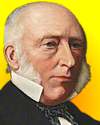
Died 24 Apr 1874 at age 73 (born 25 Dec 1800). quotes
English geologist was the nephew of William Smith, the “Father of British Geology”. Phillips became the pioneer of Yorkshire geology, producing volumes describing and illustrating the area’s stratigraphy and characteristic fossils of particular formations. He coined names for three broad periods to group all past life on Earth: the Palaeozoic, Mesozoic and Cainozoic. The Mesozoic name is still used collectively for the Triassic, Jurassic and Cretaceous periods. This was part of the classification he published (1841) in the first global time scale based on the characteristic fossils in rock strata. He was prolific as an author, and active in a broad range of fields from astronomy to zoology.«
English geologist was the nephew of William Smith, the “Father of British Geology”. Phillips became the pioneer of Yorkshire geology, producing volumes describing and illustrating the area’s stratigraphy and characteristic fossils of particular formations. He coined names for three broad periods to group all past life on Earth: the Palaeozoic, Mesozoic and Cainozoic. The Mesozoic name is still used collectively for the Triassic, Jurassic and Cretaceous periods. This was part of the classification he published (1841) in the first global time scale based on the characteristic fossils in rock strata. He was prolific as an author, and active in a broad range of fields from astronomy to zoology.«
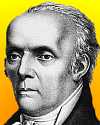
Died 24 Apr 1821 at age 76 (born 19 Mar 1745).
German physician, hospital administrator and public health pioneer who wrote many medical works, including System einer vollständigen medicinischen Polizey (1779-1825, six volumes, “System of a Complete Medical Police”) which detailed hygiene throughout a person's life. His vision of systematic medical care resembled a modern welfare state, covering both preventative and curative medical services, which he extended by proposing international regulation of health. In his treatment of mental patients, he regarded insanity as an illness. He founded (with R. Vetter) the pathological-anatomical museum of the Vienna General Hospital. He was Beethoven's doctor (1800-1809).«
German physician, hospital administrator and public health pioneer who wrote many medical works, including System einer vollständigen medicinischen Polizey (1779-1825, six volumes, “System of a Complete Medical Police”) which detailed hygiene throughout a person's life. His vision of systematic medical care resembled a modern welfare state, covering both preventative and curative medical services, which he extended by proposing international regulation of health. In his treatment of mental patients, he regarded insanity as an illness. He founded (with R. Vetter) the pathological-anatomical museum of the Vienna General Hospital. He was Beethoven's doctor (1800-1809).«
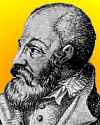
Died 24 Apr 1572 (born 1515).
(Pierre de La Ramée) French mathematician and logician who challenged Aristotelian philosophy. As early as in his Master of Arts thesis (1536) he held that quaecumque ab Aristotle dicta essent, commentitia esse ("everything which Aristotle said is invented or contrived"). His book Aristotelicae animadversiones (1543) led to a decree from Francis I (Mar 1544) prohibiting such teachings. Though the decree was rescinded three years later by Henry II, Ramus continued to draw hostility from other scholars. He was an early adherent of the Copernican system. Ramus was murdered during the St. Bartholomew's Day massacre, but his theories remained influential after his death.«
(Pierre de La Ramée) French mathematician and logician who challenged Aristotelian philosophy. As early as in his Master of Arts thesis (1536) he held that quaecumque ab Aristotle dicta essent, commentitia esse ("everything which Aristotle said is invented or contrived"). His book Aristotelicae animadversiones (1543) led to a decree from Francis I (Mar 1544) prohibiting such teachings. Though the decree was rescinded three years later by Henry II, Ramus continued to draw hostility from other scholars. He was an early adherent of the Copernican system. Ramus was murdered during the St. Bartholomew's Day massacre, but his theories remained influential after his death.«
In 1997, the U.S. ratified the worldwide Chemical Weapons Convention treaty between 88 countries that would take effect on 29 Apr 1997. However Russia and a number of other states known to possess such weapons failed to do so. eb.
In 1997, a group of paleontologists announced the discovery of a trove containing a large number of fossilized dinosaurs in northeastern China. eb.
In 1990, space shuttle Discover was launched from Cape Canaveral, carrying the Hubble Space Telescope to be placed into orbit.

In 1970, the People's Republic of China became the fifth nation with a satellite in orbit with the launch of DFH-1, from Jiuquab Satellite Launch Center. It had a design life of 15 days, and for propaganda, it transmitted the Communist China national anthem, The East is Red (in Chinese "Dongfanghong," hence the initials DFH). It had a 72-face polyhedral shape, 1-m diam., mass 173-kg. It was followed by on 3 Mar 1971 by a second DFH named SJ-1 (Practice-1). The first four nations with satellites in space were the USSR (Sputnik on 4 Oct 1957), the U.S. (Explorer-I on 31 Jan 1958), France (Astrix-1 on 26 Nov 1965 and Japan (Osumi 5, 11 Feb 1970). After China, Britain launched its Prospero satellite on 28 Oct 1972).«
In 1962, the Massachusetts Institute of Technology achieved the first transcontinental satellite relay of a television signal, between Camp Parks, California. and Westford, Massachusetts. The picture quality was poor, but the images were recognizable. The waves were reflected from Echo 1, launched two years earlier (12 Aug 1960). Echo 1, the first U.S. communications satellite, was a passive 100-ft diameter reflective metallized Mylar sphere. On 10 Jul 1962, AT&T's Telstar 1 satellite was launched. The next day, telecasts were viewed in the U.S. via Telstar. A few days later, on 23 Jul 1962, Telstar 1 was used to send a program from America to a network of 18 nations in Europe.
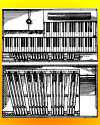
(USPTO)
In 1934, the first pipeless organ was patented by Laurens Hammond (No. 1,956,350). It used no vibrating parts, neither pipes nor reeds. It had a 37-note upper manual, 68-note lower manual and a 20-note pedalboard. His application only a few months earlier (19 Jan 1934) was expedited to help create jobs during the Depression. He did not call his "Electrical Musical Instrument" an "organ" until his third patent (1939). In fact, in 1936, he was prosecuted by the FTC (but won) for advertising his instrument as an "organ." Manufactured by the Hammond Clock Co., Chicago, Ill, it was first shown at the Industrial Exposition in New York City, NY, on 15 Apr 1935. Overall, Hammond had 110 patents issued or assigned to him.«
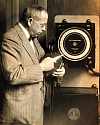
In 1928, the fathometer was patented by Herbert Grove Dorsey (No. 1,667,540). His invention was an electro-mechanical sounding instrument that measured underwater depths by using a series of electrical sounds signals and their echoes. He coined the name fathometer. The same instrument could measure both very shoal water and very deep water. His fathometers not only improved hydrographic surveying but also were valuable to the maritime shipping industry by saving time over line soundings. His instruments helped delineate much of the continental shelf and slope of the United States and its territories as well as much of the deep sea, in particular the northeast Pacific Ocean, the mid-Atlantic shelf and slope, and Gulf of Mexico.«[Image: Dorsey shown with a fathometer.]
Scopes
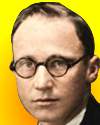
In 1925, Darwin's theory of evolution was reputed to be taught in Dayton, Tennessee, by teacher John Scopes, who used the high school textbook, Civic Biology by George Hunter. For this, Scopes, 24, was prosecuted under the Butler Act, a state law enacted in the previous month (21 Mar 1925. It prohibited the teaching of evolution in public schools. The trial , which began 10 Jul 1925, was used as a platform to challenge the legality of the statute. Scopes was supported by the American Civil Liberties Union. At its end, on 21 Jul 1925, Scopes was convicted and fined $100. On appeal, the state supreme court upheld the constitutionality of the 1925 law but acquitted Scopes on the technicality that he had been fined excessively. The law was not repealed until 17 May 1967.[24 Apr 1925 was the day stated on the original indictment for when the teaching took place, according to this site. The date is recollected differently by others.]
Center of the Storm: Memoirs of John T. Scopes, by John Scopes. - book suggestion.
1915
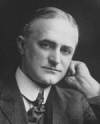
In 1888, the Eastman Kodak company was formed by inventor George Eastman to sell his revolutionary new easily-portable box camera (patent issued 4 Sep 1888) using roll film he had introduced since 26 Mar 1885. These he mass-produced so that now anyone - without needing special skills - could take photographs of family, events, outdoors and vacation trips.«
more
In 1886, petroleum was discovered in the Middle East. The first well to come in was on the Egyptian shore of the Red Sea.
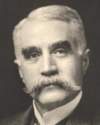
In 1877, a U.S. patent was issued to Charles F. Brush for his first dynamo, which he had first assembled in the summer of 1876. The patent was titled Improvement in Magneto-Electric Machines, (US No. 189997). Brush was a U.S. inventor and industrialist who also devised an electric arc lamp and a generator that produced a variable voltage controlled by the load and a constant current. It was adopted throughout the United States and abroad during the 1880s. The arc light preceded Edison's incandescent light bulb in commercial use and was suited to applications where a bright light was needed, such as street lights and lighting in commercial and public buildings.
In 1851, the first engineering society of importance in the U.S. was incorporated. The Boston Society of Civil Engineers was organized at an informal meeting on 26 Apr 1848, and its first regular meeting was held 3 Jul 1848. Its purpose was "promoting science and instruction in the department of civil engineering." In the following year, the national American Society of Civil Engineers and Architects was founded on 5 Nov 1852 in New York City. Earlier attempts in the U.S. to sustain an engineering society were unsuccessful, including those by the engineers of the Cincinnati & Charleston Railroad in 1836; engineers in Baltimore, Md. in 1839; and a society in Albany, N.Y. in 1841.«*
In 1844, David Stewart was appointed the first professor of pharmacy in the U.S. whose duties were on a full-time basis to instruct students in the theory and practice of pharmacy. He held that chair at the Maryland College of Pharmacy, in Baltimore, Md. for two years.*
In 1833, Jacob Ebert of Cadiz, Ohio, with George Dulty of Wheeling, West Virgina, patented the soda fountain. This is the same year as the birth of John Pemberton, creator of Coca Cola, whose famous new drink, in the form of a syrup mixed with soda, was first served in the soda fountain at Jacobs' Pharmacy on 8 May 1886.«*
In 1061, Halley's Comet heralded an invasion when it appeared over England. A monk spotted it and predicted the destruction of the country.




