
Born 8 May 1945; died 24 Feb 2006 at age 60.
English archaeologist who was expert on the prehistory of Europe and the origins of agriculture. He proposed (1980) a theory of a “Secondary Products Revolution” whereby farmers spurred profound advances by trading milk, wool and textiles. Starting a few thousand years after the initial domestication of animals in the Near East for meat, this revolution in approach made farming possible even on agriculturally marginal land not previously used. A profound global effect on human development resulted in a social division between those deriving benefits from using animals to haul ploughs (as in Europe), and leaving those that did not much poorer. He also studied large-scale aspects of global colonization, development of metallurgy and urbanism.«
English archaeologist who was expert on the prehistory of Europe and the origins of agriculture. He proposed (1980) a theory of a “Secondary Products Revolution” whereby farmers spurred profound advances by trading milk, wool and textiles. Starting a few thousand years after the initial domestication of animals in the Near East for meat, this revolution in approach made farming possible even on agriculturally marginal land not previously used. A profound global effect on human development resulted in a social division between those deriving benefits from using animals to haul ploughs (as in Europe), and leaving those that did not much poorer. He also studied large-scale aspects of global colonization, development of metallurgy and urbanism.«
Economy and Society in Prehistoric Europe, by Andrew Sherratt. - book suggestion.
2015
Born 8 May 1926. quotes
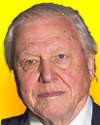
Sir David Frederick Attenborough is an English naturalist and broadcaster whose distinguished career spans more than a half-century. His Zoo Quest television series that began in 1952 ran for ten years, and was just the beginning of a life-long passion for presenting landmark natural history television series for the BBC from all parts of the world. In 1965, he became Controller of BBC when colour television was being introduced into Britain. By Jan 1969, his responsibilities spanned both of the BBC TV channels, but in 1973, he returned to travelling the world making ambitious series, including Life of Earth, The Living Planet and Life in the Undergrowth. In a newspaper interview after his 84th birthday, still in vigorous health, he vowed he would never retire, and in fact was already exploring the frontier of 3D television science programmes.«
Sir David Frederick Attenborough is an English naturalist and broadcaster whose distinguished career spans more than a half-century. His Zoo Quest television series that began in 1952 ran for ten years, and was just the beginning of a life-long passion for presenting landmark natural history television series for the BBC from all parts of the world. In 1965, he became Controller of BBC when colour television was being introduced into Britain. By Jan 1969, his responsibilities spanned both of the BBC TV channels, but in 1973, he returned to travelling the world making ambitious series, including Life of Earth, The Living Planet and Life in the Undergrowth. In a newspaper interview after his 84th birthday, still in vigorous health, he vowed he would never retire, and in fact was already exploring the frontier of 3D television science programmes.«
Life on Air: Memoirs of a Broadcaster, by David Attenborough. - book suggestion.
Born 8 May 1902; died 30 Sep 1994 at age 92. quotes
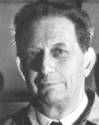
French biologist who contributed to the understanding of lysogeny, in which a bacterial virus, or bacteriophage, infects bacteria and is transmitted to subsequent bacterial generations solely through the cell division of its host. The observation of isolated bacteria led him to the conclusion that lysogenic bacteria did not secrete bacteriophages, that the production of bacteriophages led to the death of the bacterium, and above all that this production must be induced by external factors. It was this hypothesis which, together with Louis Siminovitch and Niels Kjeldgaard, led Lwoff to discover the inductive action of ultraviolet irradiation (1950). His discoveries brought him (with François Jacob and Jacques Monod) the 1965 Nobel Prize for Physiology or Medicine.
French biologist who contributed to the understanding of lysogeny, in which a bacterial virus, or bacteriophage, infects bacteria and is transmitted to subsequent bacterial generations solely through the cell division of its host. The observation of isolated bacteria led him to the conclusion that lysogenic bacteria did not secrete bacteriophages, that the production of bacteriophages led to the death of the bacterium, and above all that this production must be induced by external factors. It was this hypothesis which, together with Louis Siminovitch and Niels Kjeldgaard, led Lwoff to discover the inductive action of ultraviolet irradiation (1950). His discoveries brought him (with François Jacob and Jacques Monod) the 1965 Nobel Prize for Physiology or Medicine.
Born 8 May 1873; died 15 Mar 1952 at age 78. quotes
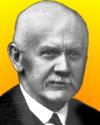
English chemist who contributed to the understanding of chemical bonding, especially in coordination compounds. He worked on kinetics (studying the rates of isomerisation of triphenylmethane dye intermediates and the hydration of carboxylic anhydrides), thermodynamics (investigating phase equilibria and the solubility of organic acids and bases), as well as investigating the colour of copper complexes. During WW I, he set to work on a process for the production of acetone (propanone) from ethanol and other wartime projects, such as the production of phenol from benzene. His book, The Electronic Theory of Valency (1927) was a culmination of many years' interest in the nature of covalent and dative bonds.
English chemist who contributed to the understanding of chemical bonding, especially in coordination compounds. He worked on kinetics (studying the rates of isomerisation of triphenylmethane dye intermediates and the hydration of carboxylic anhydrides), thermodynamics (investigating phase equilibria and the solubility of organic acids and bases), as well as investigating the colour of copper complexes. During WW I, he set to work on a process for the production of acetone (propanone) from ethanol and other wartime projects, such as the production of phenol from benzene. His book, The Electronic Theory of Valency (1927) was a culmination of many years' interest in the nature of covalent and dative bonds.
Born 8 May 1855; died 9 Aug 1911 at age 56.
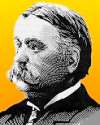
John Warne Gates was an American inventor and promoter, known as John “Bet A Million” Gates, because he was also a speculator. He discovered a market for wire fencing on the Western plains and helped convince ranchers to adopt barbed wire. He began its manufacture in St. Louis, Missouri. By a succession of consolidations and promotion schemes, he organized (1898) the American Steel and Wire Company. more
John Warne Gates was an American inventor and promoter, known as John “Bet A Million” Gates, because he was also a speculator. He discovered a market for wire fencing on the Western plains and helped convince ranchers to adopt barbed wire. He began its manufacture in St. Louis, Missouri. By a succession of consolidations and promotion schemes, he organized (1898) the American Steel and Wire Company. more
Bet a Million: The Story of John W. Gates, by L. Wendt. - book suggestion.
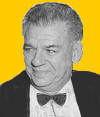
Born 8 May 1847; died 1 Aug 1919 at age 72.
German inventor, cigar maker, opera impresario, theater builder; and Oscar II's grandfather.Born in Stettin (now Szczecin, Poland), in his mid-teen years, he went to New York City (1863), with no money and no understanding of English. He worked in a cigar factory and made inventions for his employers. Then, learning of the patenting system, he began to accumulate great sums of money for his cigar rolling machines. With his new-found fortune he pursued his love for the arts with a passion. Hammerstein designed all his theaters himself and had an incredible genius for acoustics. His halls often used his own inventions and were all gloriously decorated, though often with inexpensive materials.
German inventor, cigar maker, opera impresario, theater builder; and Oscar II's grandfather.Born in Stettin (now Szczecin, Poland), in his mid-teen years, he went to New York City (1863), with no money and no understanding of English. He worked in a cigar factory and made inventions for his employers. Then, learning of the patenting system, he began to accumulate great sums of money for his cigar rolling machines. With his new-found fortune he pursued his love for the arts with a passion. Hammerstein designed all his theaters himself and had an incredible genius for acoustics. His halls often used his own inventions and were all gloriously decorated, though often with inexpensive materials.
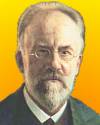

Danish botanist who revolutionised beer-making through development of new ways to culture yeast. He financed his education by writing novels. Though he never reached an M.Sc., in 1876, he received a gold medal for an essay on fungi. In 1879, he became superintendent of the Carlsberg breweries. In 1883, he successfully developed a cultivated yeast that revolutionized beer-making around the world, because Hansen by refusing to patent his method made it freely available to other brewers. He also proved there are different species of yeast. Hansen separated two species: Saccaromyces cerevisae, an over-yeast (floating on the surface of the fermenting beer) and S. carlsbergensis*, an under-yeast (laying on the bottom of the liquid).(*Image top right source)
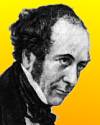
Born 8 May 1808; died 8 Jun 1882 at age 74. quotes
British civil engineer best known for researches in ship design. He designed the first seagoing battleship built entirely of iron. He was the first to record an observation of a soliton, while conducting experiments to determine the most efficient design for canal boats. In Aug 1834, he observed what he called the “Wave of Translation,” a solitary wave formed in the narrow channel of a canal which continues ahead after a canal boat stops. He also made the first experimental observation of the “Doppler shift” of sound frequency as a train passes (1848). He designed (with Brunel) the Great Eastern and built it; he designed the Vienna Rotunda and helped to design Britain's first armoured warship, the Warrior.
British civil engineer best known for researches in ship design. He designed the first seagoing battleship built entirely of iron. He was the first to record an observation of a soliton, while conducting experiments to determine the most efficient design for canal boats. In Aug 1834, he observed what he called the “Wave of Translation,” a solitary wave formed in the narrow channel of a canal which continues ahead after a canal boat stops. He also made the first experimental observation of the “Doppler shift” of sound frequency as a train passes (1848). He designed (with Brunel) the Great Eastern and built it; he designed the Vienna Rotunda and helped to design Britain's first armoured warship, the Warrior.
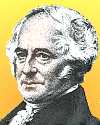
Born 8 May 1786; died 26 Mar 1865 at age 78.
English inventor and manufacturer who founded the British rubber industry. His chief invention, the "masticator," worked rubber scraps into a shredded mass of rubber that could be formed into blocks or rolled into sheets. This process, perfected in 1821, led to a partnership with the Scottish chemist, Charles Macintosh, inventor and manufacturer of waterproof rubber impregnated fabric. Hancock established the first English rubber factory in 1820 and supplied Macintosh. The process of vulcanization was discovered (1839) independently by Hancock and an American, Charles Goodyear. That made possible a resilient rubber product, and led eventually to the large-scale usage of rubber in bicycle and automobile tires.
English inventor and manufacturer who founded the British rubber industry. His chief invention, the "masticator," worked rubber scraps into a shredded mass of rubber that could be formed into blocks or rolled into sheets. This process, perfected in 1821, led to a partnership with the Scottish chemist, Charles Macintosh, inventor and manufacturer of waterproof rubber impregnated fabric. Hancock established the first English rubber factory in 1820 and supplied Macintosh. The process of vulcanization was discovered (1839) independently by Hancock and an American, Charles Goodyear. That made possible a resilient rubber product, and led eventually to the large-scale usage of rubber in bicycle and automobile tires.
Noble Obsession: Charles Goodyear, Thomas Hancock, and the Race to Unlock the Greatest Industrial Secret of the Nineteenth Century, by Charles Slack. - book suggestion.
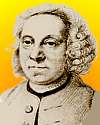
Born 8 May 1698; died 1774. quotes
English naturalist who introduced microscopy to the general audience with papers on the microscopical examinations of water creatures and fossils. He made a series of pioneering observations of crystal morphology. Baker also developed new methods of teaching the speech-impaired. The novelist, Daniel Defoe, was his father-in-law. Influenced by Baker's work, Defoe wrote a book about a deaf conjurer, The Life and Adventures of Duncan Campbell (1720). Together, they established the Universal Spectator and Weekly Journal (1728). Baker also published The Microscope Made Easy (1742), and Employment for the Microscope (1753).
English naturalist who introduced microscopy to the general audience with papers on the microscopical examinations of water creatures and fossils. He made a series of pioneering observations of crystal morphology. Baker also developed new methods of teaching the speech-impaired. The novelist, Daniel Defoe, was his father-in-law. Influenced by Baker's work, Defoe wrote a book about a deaf conjurer, The Life and Adventures of Duncan Campbell (1720). Together, they established the Universal Spectator and Weekly Journal (1728). Baker also published The Microscope Made Easy (1742), and Employment for the Microscope (1753).

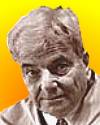
Died 8 May 1968 at age 84 (born 21 Dec 1883). quotes
American herpetologist, engineer and inventor whose interest was rattlesnakes, studying their natural history and relationship to humans. He advanced methods of taxonomy, was a tireless innovator, and amassed a personal collection of 36,000 preserved specimens. His studies had an emphasis on venom collection and antivenin. Further, being familiar with statistical treatment of data because of his engineering background, he was the first to apply statistical methods to herpetological taxonomy and to think of species in terms of populations in nature rather than as species in museum jars. His unique compendium, Rattlesnakes: Their Habits, Life Histories and Influence on Mankind, remains the authoritative source for information.«
American herpetologist, engineer and inventor whose interest was rattlesnakes, studying their natural history and relationship to humans. He advanced methods of taxonomy, was a tireless innovator, and amassed a personal collection of 36,000 preserved specimens. His studies had an emphasis on venom collection and antivenin. Further, being familiar with statistical treatment of data because of his engineering background, he was the first to apply statistical methods to herpetological taxonomy and to think of species in terms of populations in nature rather than as species in museum jars. His unique compendium, Rattlesnakes: Their Habits, Life Histories and Influence on Mankind, remains the authoritative source for information.«
Rattlesnakes, by Laurence Monroe Klauber. - book suggestion.
Died 8 May 1960 at age 55 (born 11 Nov 1904). quotes
John Henry Constantine Whitehead was a British mathematician who greatly influenced the development of homotopy theory (a special kind of mapping of topological spaces). Whitehead's work in differential geometry culminated in the paper “On the Covering of a Complete Space by the Geodesics Through a Point” (1935), containing pioneering contributions to this area of mathematics. He always retained his interest in geometry but soon focused on topology. He made substantial contributions to combinatorial homotopy and Stiefel manifolds and set up a school of topology at Oxford.
John Henry Constantine Whitehead was a British mathematician who greatly influenced the development of homotopy theory (a special kind of mapping of topological spaces). Whitehead's work in differential geometry culminated in the paper “On the Covering of a Complete Space by the Geodesics Through a Point” (1935), containing pioneering contributions to this area of mathematics. He always retained his interest in geometry but soon focused on topology. He made substantial contributions to combinatorial homotopy and Stiefel manifolds and set up a school of topology at Oxford.
Died 8 May 1933 at age 80 (born 10 Feb 1853).
German mineralogist who made important studies of crystallography. His first major publication, Index der Kristallformen (3 vol., 1886-91; "Index of Crystal Forms"), was a catalog of the known forms of crystals of all minerals. New tables of crystal angles to meet his new needs were devised and published
German mineralogist who made important studies of crystallography. His first major publication, Index der Kristallformen (3 vol., 1886-91; "Index of Crystal Forms"), was a catalog of the known forms of crystals of all minerals. New tables of crystal angles to meet his new needs were devised and published

Died 8 May 1915 at age 87 (born 27 Nov 1827).
American inventor with 260 patents related to looms and textile machinery. One of Wyman's first patents, issued to him on 29 Oct 1867, was for a loom. In the next few years, this was followed by a loom-box operating mechanism, a pile-fabric loom, and an improved shedding mechanism. In 1879, he was issued a patent for the first American "dobby" loom. One of his last but very important inventions was the weft replenishing loom having drop shuttle boxes (patented 8 Jan 1901). Textile mills throughout the world are still using machines of which the basic invention was Wyman's, and at the time of his death he was regarded as having done more for the loom industry than any other single individual.
American inventor with 260 patents related to looms and textile machinery. One of Wyman's first patents, issued to him on 29 Oct 1867, was for a loom. In the next few years, this was followed by a loom-box operating mechanism, a pile-fabric loom, and an improved shedding mechanism. In 1879, he was issued a patent for the first American "dobby" loom. One of his last but very important inventions was the weft replenishing loom having drop shuttle boxes (patented 8 Jan 1901). Textile mills throughout the world are still using machines of which the basic invention was Wyman's, and at the time of his death he was regarded as having done more for the loom industry than any other single individual.
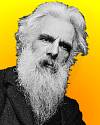
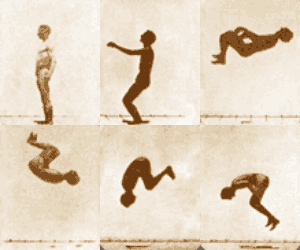
English photographer important for his pioneering work in photographic studies of motion and in motion-picture projection. For his work on human and animal motion, he invented a superfast shutter. Leland Stanford, former governor of California, hired Muybridge to settle a hotly debated issue: Is there a moment in a horse's gait when all four hooves are off the ground at once? In 1972, Muybridge took up the challenge. In 1878, he succeeded in taking a sequence of photographs with 12 cameras that captured the moment when the animal's hooves were tucked under its belly. Publication of these photographs made Muybridge an international celebrity. Another noteworthy event in his life was that he was tried (but acquitted) for the murder of his wife's lover.
Animals in Motion by Eadweard Muybridge, by Lewis S. Brown. - book suggestion.
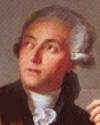
Died 8 May 1794 at age 50 (born 26 Aug 1743). quotes
French chemist, the “father of modern chemistry,” was a brilliant experimenter also active in public affairs. An aristocrat, he invested in a private company hired by the government to collect taxes. With his wealth he built a large laboratory. In 1778, he found that air consists of a mixture of two gases which he called oxygen and nitrogen. By studying the role of oxygen in combustion, he replaced the phlogiston theory. Lavoisier also discovered the law of conservation of mass and devised the modern method of naming compounds, which replaced the older nonsystematic method. During the French Revolution, for his involvement with tax-collecting, he was guillotined.
French chemist, the “father of modern chemistry,” was a brilliant experimenter also active in public affairs. An aristocrat, he invested in a private company hired by the government to collect taxes. With his wealth he built a large laboratory. In 1778, he found that air consists of a mixture of two gases which he called oxygen and nitrogen. By studying the role of oxygen in combustion, he replaced the phlogiston theory. Lavoisier also discovered the law of conservation of mass and devised the modern method of naming compounds, which replaced the older nonsystematic method. During the French Revolution, for his involvement with tax-collecting, he was guillotined.
Torch and Crucible: The Life and Death of Antoine Lavoisier, by Sidney J. French. - book suggestion.
In 1992, the source of a “red tide” in the Gulf of Mexico was suggested by scientists at a conference on the ecology of the Gulf. The red tide produced huge blooms of reddish algae in sufficient quantity to kill fish and cause severe respiratory problems for humans. A “green river'' that started 60 miles inland of Florida was indicated as the source of the algae. The wind and water currents that bring nutrients from the floor of the ocean to the surface provided the food that caused the algae population to explode once it reached the Gulf.
In 1980, the world was declared free of the deadly disease of smallpox at the World Health Assembly. The global eradication of smallpox is considered the biggest achievement in international public health. The last person to die of smallpox was Janet Parker on 11 Sep 1978. She worked one floor below a lab where research was being carried out on the smallpox virus. Since then, the number of laboratories holding stock of the virus has been reduced to two highly secure locations, one in the US, and one in Russia.«
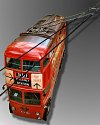
In 1962 the era of the trolleybus in London ended. Just as they replaced London trams from 16 May 1931, they were themselves now being superceded by diesel-fuelled buses as economical alternatives. The trolleybus ran on electricity from overhead lines, had pneumatic tyres and shared the existing road surface with other street traffic. One trolleybus running on the final day was an "A" class trolleybus which had made its first journey for the original London United Tramways. "Diddler" No. 1 (as known by the staff), which had been preserved after its retirement, was brought out to join in on the final day of the trolleybus. The Diddlers were replaced with newer trolleybuses in 1952. London's last service trolleybus ran from Wimbledon to Fulwell.«[Image: A later-type trolleybus seen from above its overhead electrical lines.]
The London Trolleybus: 1931-1945, by Ken Blacker. - book suggestion.
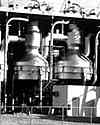
In 1961, the first practical seawater conversion plant in the U.S. was opened in Freeport, Texas, by the Office of Saline Water, U.S. Dept of the Interior. The plant was designed to produce about a million gallons of water a day at a cost of about $1.25 per thousand gallons. The plant was dedicated 21 Jun 1961 by President John Kennedy, who pressed a switch from his office in Washington, D.C. The large-scale evaporation method used then has now been replaced by reverse osmosis as scientific advances have produced special polymers suitable for use as filtering membranes.
In 1952, the first large coal hydrogenation chemicals plant in the U.S. opened in Institute, W.Va. The Carbide and Carbon Chemicals Company plant was designed for conveting coal into chemicals. Coal was pulverized and mixed with oil to form a paste, then converted with heat and pressure to combine with hydrogen gas to form liquid chemical intermediate products. The yield included cresols, higher phenols, naphthalene and aromatic hydrocarbons. The $11 million plant processed up to 300 tons of coal a day.
In 1951, Dacron men's suits were introduced in New York City. The 8-oz fabric consisted of 55% Dacron and 45% worsted. The fabri, made by Deering, Milliken & Co., of New York City, and the suits sold by Hart, Schaffner & Marx Co, used a new polymer fiber made of polyethylene terephthalate. Dacron, a registered trademark of DuPont, (along with Terylene in England), became the first commercially marketed polyester fiber. Dacron® is available as yarn, staple, and fiberfill. Polyester is durable and washes well, with good resistance to bleaches, soaps, detergents and dry cleaning agents. Dacron is also resistant to creasing and abrasion.
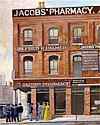
In 1886, Coca-Cola, the soft drink, was first sold to the public at the soda fountain in Jacob's Pharmacy in Atlanta, Georgia. It was invented by pharmacist, John Stith Pemberton, who mixed it in a 30-gal. brass kettle hung over a backyard fire. Until 1905, the drink, marketed as a "brain and nerve tonic," contained extracts of cocaine as well as the caffeine-rich kola nut. The name, using two C's from its ingredients, was suggested by his bookkeeper Frank Robinson, whose excellent penmanship provided the first scripted "Coca-Cola" letters as the famous logo. Asa Candler marketed Coke to world after buying the company from Pemberton.
For God, Country, and Coca-Cola: The Definitive History of the Great American Soft Drink and the Company That Makes It, by Mark Pendergrast. - book suggestion.
In 1879, the first U.S. patent for an automobile was filed by George Baldwin Selden of Rochester, N.Y. It was issued almost two decades later, on 5 Nov 1898 for a unique combination of an internal combustion engine and a road vehicle (No. 549,160).
In 1847, Robert W. Thomson of Adelphi, Middlesex, England was issued the first U.S. patent for Rubber tyres (No. 5104). His "improvement in carriage wheels" was the application of elastic bearings around the rims of carriage wheels. This was based on his British patent, issued 10 Jun 1846 (No. 10,990)
In 1840, the first U.S. photographic patent was issued to Alexander S. Wolcott of New York City (No. 1,582). His "method of taking a likeness by means of a concave reflector and plates so prepared that luminous or other rays will act thereon" produced photographs 1.75 x 2.5 inches in size. They were not reversed as were daguerrotype which used refracting lenses.
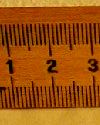
In 1790, acting on a motion by a bishop, Charles Maurice de Talleyrand (1754-1838), the French National Assembly decided to create a simple, stable, decimal system of measurement units. The earliest metre unit chosen was the length of a pendulum with a half-period of a second. On 30 Mar 1791, after a proposal by the Académie des sciences (Borda, Lagrange, Laplace, Monge and Condorcet), the Assembly revised the definition of the metre to be 1/10 000 000 of the distance between the north pole and the equator. On 7 Apr 1795, the Convention decreed that the new “Republican Measures” were to be henceforth legal measures in France. The metric system adopted prefixes: greek for multiples and latin for decimal fractions.«




