Born 11 Jan 1924.
Roger Charles Louis Guillemin is a French-American physiologist who researched the hormones produced by the hypothalamus gland. After focussing in other directions for seven years, Guillemin worked for another six years searching for the thyrotropin releasing factor (TRF). Such hormones were present in very small quantities. When Guillemin finally did succeed in 1968 in isolating one milligram of TRF, it had come from 5 million sheep's hypothalami. It turned out to be a small, relatively simple tripeptide, easy to synthesize. His work resulted in his being awarded a share (along with Andrew Schally and Rosalyn Yalow) of the Nobel Prize for Physiology or Medicine in 1977.
Roger Charles Louis Guillemin is a French-American physiologist who researched the hormones produced by the hypothalamus gland. After focussing in other directions for seven years, Guillemin worked for another six years searching for the thyrotropin releasing factor (TRF). Such hormones were present in very small quantities. When Guillemin finally did succeed in 1968 in isolating one milligram of TRF, it had come from 5 million sheep's hypothalami. It turned out to be a small, relatively simple tripeptide, easy to synthesize. His work resulted in his being awarded a share (along with Andrew Schally and Rosalyn Yalow) of the Nobel Prize for Physiology or Medicine in 1977.
Born 11 Jan 1906; died 29 Apr 2008 at age 102. quotes
Swiss pharmacologist who discovered LSD (-lysergic acid diethylamide). For his doctoral thesis he studied the chemical structure of chitin. Working for the pharmaceutical-chemical department of Sandoz Laboratories he studied the plant squill and the fungus ergot for the purification and synthesis of their active constituents as possible pharmaceuticals. He originally synthesised LSD-25, lysergic acid, the central shared component of ergot alkaloids, in 1938. Hofmann continued to study active substances in natural products. On 16 April 1943, because of accidental skin contact with the substance while handling its container, he discovered the psychedelic effects of LSD. Illegal use in the 1960's led to its worldwide prohibition. He died aged 102 yr.«
Swiss pharmacologist who discovered LSD (-lysergic acid diethylamide). For his doctoral thesis he studied the chemical structure of chitin. Working for the pharmaceutical-chemical department of Sandoz Laboratories he studied the plant squill and the fungus ergot for the purification and synthesis of their active constituents as possible pharmaceuticals. He originally synthesised LSD-25, lysergic acid, the central shared component of ergot alkaloids, in 1938. Hofmann continued to study active substances in natural products. On 16 April 1943, because of accidental skin contact with the substance while handling its container, he discovered the psychedelic effects of LSD. Illegal use in the 1960's led to its worldwide prohibition. He died aged 102 yr.«
LSD: My Problem Child, by Albert Hofmann. - book suggestion.

Clyde Ray Maben Kluckhohn was an American cultural anthropologist who a deep interest in culture and personality. He chose this profession based on his interest in psychology while at the same time expressing his interest in cultural diversity. He felt that diversities of authentic cultures must be represented in personality psychology. As a professor of anthropology at Harvard University, he contributed to anthropology in a number of ways: by his ethnographic studies of the Navajo; by his theories of culture, partial-value systems, and cultural patterns; by his intellectual leadership and stimulation of a large number of students; and by his representation of anthropology in government circles.Image: Navajo rug, circa 1900.
Born 11 Jan 1895; died 1 Jul 1973 at age 78.
American businessman and inventor who developed the electronic Hammond organ (patented 24 Apr 1934). Fascinated by science, Hammond patented his first invention, an automobile transmission, while barely a teenager. In 1909, he sold his idea for an inexpensive yet sensitive barometer, and in 1920, he sold his design for a “tickless” clock. In 1933, he stripped an old piano leaving only the keyboard action to use as a controller. He experimented with various different ways of generating sound until he found the one that sounded best - the tonewheel generator, with which he founded the Hammond Organ Company. During WW II, Laurens helped design guided missile controls with patents for bomb guidance.
American businessman and inventor who developed the electronic Hammond organ (patented 24 Apr 1934). Fascinated by science, Hammond patented his first invention, an automobile transmission, while barely a teenager. In 1909, he sold his idea for an inexpensive yet sensitive barometer, and in 1920, he sold his design for a “tickless” clock. In 1933, he stripped an old piano leaving only the keyboard action to use as a controller. He experimented with various different ways of generating sound until he found the one that sounded best - the tonewheel generator, with which he founded the Hammond Organ Company. During WW II, Laurens helped design guided missile controls with patents for bomb guidance.
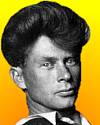
1927
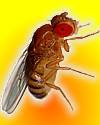
Fruit fly (Drosophila melanogaster)
American geneticist who advanced understanding of the role of chromosomes in heredity using the fruit fly, Drosophila melanogaster. He began, in 1910, as a laboratory assistant for Thomas Hunt Morgan tracking how observable changes in its chromosomes led to inherited variations. Bridges used natural “mistakes” in sex chromosome segregation to show that an improper number of chromosomes produced abnormal fruit flies. Such “mistakes,” called nondisjunction because chromosomes are not properly disjoined, result in gametes with either an extra copy of a sex chromosome or none at all. He created a nomenclature system for naming fly mutants. He correlated Drosophila genes with banding patterns in salivary chromosomes.«
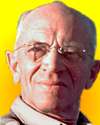
Born 11 Jan 1887; died 21 Apr 1948 at age 61. quotes
Rand Aldo Leopold was an American conservationist as well as a forester, philosopher, educator, writer, outdoor enthusiast and co-founder (in 1935) of the Wilderness Society. By the keen observations and land ethic expressed in his prolific essay writings, he has been recognized as the natural successor to Henry Thoreau. Leopold’s philosophy is found throughout the seminal work, A Sand County Almanac. His boyhood explorations of the outdoors led to a Master’s Degree in Forestry from Yale. He worked with timber management in U.S. Forest Service for several years, and his nascent passion for protecting wilderness blossomed. In 1924, the Gila Wilderness he proposed was established in the Gila National Forest.«
Rand Aldo Leopold was an American conservationist as well as a forester, philosopher, educator, writer, outdoor enthusiast and co-founder (in 1935) of the Wilderness Society. By the keen observations and land ethic expressed in his prolific essay writings, he has been recognized as the natural successor to Henry Thoreau. Leopold’s philosophy is found throughout the seminal work, A Sand County Almanac. His boyhood explorations of the outdoors led to a Master’s Degree in Forestry from Yale. He worked with timber management in U.S. Forest Service for several years, and his nascent passion for protecting wilderness blossomed. In 1924, the Gila Wilderness he proposed was established in the Gila National Forest.«
A Sand County Almanac: With Essays on Conservation from Round River, by Aldo Leopold. - book suggestion.
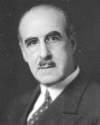
Born 11 Jan 1875; died 1 Dec 1942 at age 67.
Canadian metallurgist who held more than one hundred patents, covering a wide range of electric furnace and chemical products, notably ferro-alloys, calcium carbide, and special chromium steels. He developed a process of using silicon instead of carbon as a reducing agent in metal production, thus making low-carbon ferroalloys and certain steels practical. His processes for the production of low carbon ferro-alloys had world-wide application.
Canadian metallurgist who held more than one hundred patents, covering a wide range of electric furnace and chemical products, notably ferro-alloys, calcium carbide, and special chromium steels. He developed a process of using silicon instead of carbon as a reducing agent in metal production, thus making low-carbon ferroalloys and certain steels practical. His processes for the production of low carbon ferro-alloys had world-wide application.
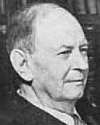
Born 11 Jan 1872; died 25 Aug 1956 at age 84.
American inventor who was a pioneer in radiotelephony and a noted teacher of communication engineering. He did work that led to the practical application of a variety of experimental discoveries in piezoelectricity and magnetostriction. He developed the Pierce oscillator, which utilizes quartz crystal to keep radio transmissions precisely on the assigned frequency and to provide similar accuracy for frequency meters. His other accomplishments include the mathematical calculation of the radiation properties of radio antennae; invention of the mercury-vapor discharge tube, which was the forerunner of the thyratron; invention of a method of recording sound on film; and sound generation by bats and insects.
American inventor who was a pioneer in radiotelephony and a noted teacher of communication engineering. He did work that led to the practical application of a variety of experimental discoveries in piezoelectricity and magnetostriction. He developed the Pierce oscillator, which utilizes quartz crystal to keep radio transmissions precisely on the assigned frequency and to provide similar accuracy for frequency meters. His other accomplishments include the mathematical calculation of the radiation properties of radio antennae; invention of the mercury-vapor discharge tube, which was the forerunner of the thyratron; invention of a method of recording sound on film; and sound generation by bats and insects.
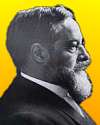
Born 11 Jan 1867; died 3 Aug 1927 at age 60. quotes
English psychologist and a major figure in the establishment of experimental psychology in the United States. A disciple of the German psychologist Wilhelm Wundt, the founder of experimental psychology, Titchener gave Wundt's theory on the scope and method of psychology a precise, systematic expression. The acknowledged leader of structuralism, Titchener was rated as the most distinguished psychologist in the United States, its most representative experimentalist, and an inspiring teacher who guided many of his pupils in the direction of scientific procedure.
English psychologist and a major figure in the establishment of experimental psychology in the United States. A disciple of the German psychologist Wilhelm Wundt, the founder of experimental psychology, Titchener gave Wundt's theory on the scope and method of psychology a precise, systematic expression. The acknowledged leader of structuralism, Titchener was rated as the most distinguished psychologist in the United States, its most representative experimentalist, and an inspiring teacher who guided many of his pupils in the direction of scientific procedure.
Born 11 Jan 1865; died 13 Sep 1936 at age 71.
German astronomer.
German astronomer.
Born 11 Jan 1850; died 30 Apr 1942 at age 92.
Joseph Charles Arthur was an American botanist who discovered basic facts about the parasitic fungi known as 'rusts.' He was the first head of the Department of Botany and Plant Pathology at Purdue University. The plant rusts form one of the largest natural groups of plant parasitic fungi. They are of great scientific interest because of their close evolutionary relationships with their host plants, their complex life cycles, and their numerous biological adaptations that permit them to thrive on all the continents (except Antarctica) under great extremes of environments.
Joseph Charles Arthur was an American botanist who discovered basic facts about the parasitic fungi known as 'rusts.' He was the first head of the Department of Botany and Plant Pathology at Purdue University. The plant rusts form one of the largest natural groups of plant parasitic fungi. They are of great scientific interest because of their close evolutionary relationships with their host plants, their complex life cycles, and their numerous biological adaptations that permit them to thrive on all the continents (except Antarctica) under great extremes of environments.
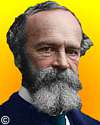
Born 11 Jan 1842; died 26 Aug 1910 at age 68. quotes
American psychologist and philosopher who was a leader of the philosophical movement of Pragmatism and of the psychological movement of functionalism. Although he first began a career as a zoologist, and traveled to Brazil on expedition with Louis Agassiz, James moved to the medical school, and then his life’s work investigating the mind. He served terms as President of the American Psychological Association and of the International Society for Psychical Research. After retiring from active teaching, he became the foremost American advocate for “pragmatism” in philosophical thought by which “that is true which works.”«
American psychologist and philosopher who was a leader of the philosophical movement of Pragmatism and of the psychological movement of functionalism. Although he first began a career as a zoologist, and traveled to Brazil on expedition with Louis Agassiz, James moved to the medical school, and then his life’s work investigating the mind. He served terms as President of the American Psychological Association and of the International Society for Psychical Research. After retiring from active teaching, he became the foremost American advocate for “pragmatism” in philosophical thought by which “that is true which works.”«
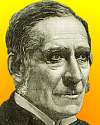
Born 11 Jan 1814; died 30 Dec 1899 at age 85. quotes
(1st Baronet) British surgeon and physiologist, considered (with Rudolf Virchow) to be a founder of scientific medical pathology. As a new medical student, in 1834, Paget discovered the pathogen for trichinosis, a parasitic disease caused by Trichina spiralis, a minute roundworm that infests the muscles of the human body. In 1877, he described Paget's disease of bone (osteitis deformans), a chronic disease of bones, occurring in the elderly and most frequently affecting the skull, backbone, pelvis, and long bones. He also described an early indication of breast cancer known as Paget's disease of the breast (1874). Paget was one of the first to urge surgical removal of bone-marrow tumours (myeloid sarcoma) instead of limb amputation. Also named for him is Paget's abscess, one recurring about the remains of a former abscess.«
(1st Baronet) British surgeon and physiologist, considered (with Rudolf Virchow) to be a founder of scientific medical pathology. As a new medical student, in 1834, Paget discovered the pathogen for trichinosis, a parasitic disease caused by Trichina spiralis, a minute roundworm that infests the muscles of the human body. In 1877, he described Paget's disease of bone (osteitis deformans), a chronic disease of bones, occurring in the elderly and most frequently affecting the skull, backbone, pelvis, and long bones. He also described an early indication of breast cancer known as Paget's disease of the breast (1874). Paget was one of the first to urge surgical removal of bone-marrow tumours (myeloid sarcoma) instead of limb amputation. Also named for him is Paget's abscess, one recurring about the remains of a former abscess.«
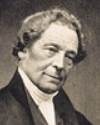
c. 1830s
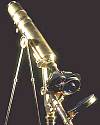
English optician, wine merchant and microscopist who, as an amateur, carried out research into the nature of red corpuscles in mammalian blood. In 1826, he designed possibly the most important optical microscope ever made. It used an achromatic objective lens corrected for chromatic and spherical aberrations, the resulting image was at the time the clearest produced by any microscope. In 1834, for instance, he succeeded in seeing the true biconcave form of red blood corpuscles for the first time. He was a founder member of the Microscopical Society. In 1832, Lister became a fellow of the Royal Society. His son, Sir Joseph Lister (1827-1912) is remembered for pioneering the use of antiseptics, improving the survival rates from surgery.
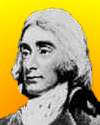
Born 11 Jan 1757; died 31 May 1831 at age 74.
British engineer, naval architect, and navy official in Russia (1780-91) and England (from 1795) who was an early advocate of explosive-shell weapons for warships. In 1780, he was sent by the Admiralty to visit dockyards in Northern Europe. In Russia he improved management of Prince Potemkin's factories. While he was in Russia he built and equipped a flotilla of ships and distinguished himself in a victorious naval battle with the Turks. Using special guns that he had built and mounted in the ships, shells were fired for the first time in naval warfare. There also, he began his ideas for machines which worked by unskilled labour, could produce the same results as skilled workmen.
British engineer, naval architect, and navy official in Russia (1780-91) and England (from 1795) who was an early advocate of explosive-shell weapons for warships. In 1780, he was sent by the Admiralty to visit dockyards in Northern Europe. In Russia he improved management of Prince Potemkin's factories. While he was in Russia he built and equipped a flotilla of ships and distinguished himself in a victorious naval battle with the Turks. Using special guns that he had built and mounted in the ships, shells were fired for the first time in naval warfare. There also, he began his ideas for machines which worked by unskilled labour, could produce the same results as skilled workmen.

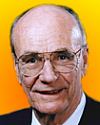
Died 11 Jan 2007 at age 82 (born 13 Jul 1924). quotes
Donald Edward Osterbrock was an American astronomer was an American astronomer who was a leading authority on the history of astronomy, and director of the University of California's Lick Observatory. He applied physics to produce accurate models of stars. For example, treating the outer part of the sun as turbulent and convective, he explained the seemingly anomalous fact that the sun's corona is hotter than its surface. He investigated the nature of ionized gas around hot stars, and was a pioneer in the use of spectroscopic methods for the study of gaseous nebulae. He discovered new types of active galactic nuclei, which are powered by black holes in the centers of galaxies. He fostered the construction of the 10-meter Keck Telescopes in Hawaii.«
Donald Edward Osterbrock was an American astronomer was an American astronomer who was a leading authority on the history of astronomy, and director of the University of California's Lick Observatory. He applied physics to produce accurate models of stars. For example, treating the outer part of the sun as turbulent and convective, he explained the seemingly anomalous fact that the sun's corona is hotter than its surface. He investigated the nature of ionized gas around hot stars, and was a pioneer in the use of spectroscopic methods for the study of gaseous nebulae. He discovered new types of active galactic nuclei, which are powered by black holes in the centers of galaxies. He fostered the construction of the 10-meter Keck Telescopes in Hawaii.«
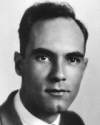
Died 11 Jan 1991 at age 85 (born 3 Sep 1905). quotes
American physicist who shared (with Victor Francis Hess of Austria) the Nobel Prize for Physics in 1936 for his discovery of the positron, or positive electron, the first known particle of antimatter. He examined the photographs of cosmic rays taken as they passed through a Wilson cloud chamber in a strong magnetic field. Besides the curved paths of negative electrons, he found also paths deviating in the opposite direction, corresponding to positively charged particles - yet having the the same mass as an electron! Previously, Dirac had predicted such particles by theoretical solution to electromagnetic field equations. Anderson subsequently found the physical existence of positron.
American physicist who shared (with Victor Francis Hess of Austria) the Nobel Prize for Physics in 1936 for his discovery of the positron, or positive electron, the first known particle of antimatter. He examined the photographs of cosmic rays taken as they passed through a Wilson cloud chamber in a strong magnetic field. Besides the curved paths of negative electrons, he found also paths deviating in the opposite direction, corresponding to positively charged particles - yet having the the same mass as an electron! Previously, Dirac had predicted such particles by theoretical solution to electromagnetic field equations. Anderson subsequently found the physical existence of positron.
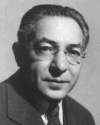
Died 11 Jan 1988 at age 89 (born 29 Jul 1898). quotes
Austrian-American physicist who was awarded the Nobel Prize for Physics in 1944 for his invention (in 1937) of the atomic and molecular beam magnetic resonance method of measuring magnetic properties of atoms, molecules, and atomic nuclei. He spent most of his life at Columbia University (1929-67), where he performed most of his pioneering research in radar and the magnetic moment associated with electron spin in the 1930s and 1940s. His Nobel-winning work led to the invention of the laser, the atomic clock, and diagnostic uses of nuclear magnetic resonance. He originated the idea for the CERN nuclear research center in Geneva (founded 1954).
Austrian-American physicist who was awarded the Nobel Prize for Physics in 1944 for his invention (in 1937) of the atomic and molecular beam magnetic resonance method of measuring magnetic properties of atoms, molecules, and atomic nuclei. He spent most of his life at Columbia University (1929-67), where he performed most of his pioneering research in radar and the magnetic moment associated with electron spin in the 1930s and 1940s. His Nobel-winning work led to the invention of the laser, the atomic clock, and diagnostic uses of nuclear magnetic resonance. He originated the idea for the CERN nuclear research center in Geneva (founded 1954).
Rabi: Scientist & Citizen, by John S. Rigden. - book suggestion.
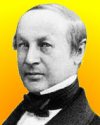
Died 11 Jan 1882 at age 71 (born 7 Dec 1810). quotes
German physiologist who founded modern histology by defining the cell in Mikroskopische Untersuchungen (1839) as the basic unit of animal structure that makes elementary parts (such as teeth, bone, muscle, cartilage, nerve tissue) by cell differentiation. This laid the foundations for the cell theory. Schwann also worked on fermentation and discovered the enzyme pepsin. Schwann cells are named after him. He also investigated muscular contraction and nerve structure; discovered the striated muscle in the upper esophagus and the Schwann sheath; identified the role of microorganisms in putrefaction; formulated basic principles of embryology (that the egg is a single cell that develops into a complete organism); and coined the term metabolism.
German physiologist who founded modern histology by defining the cell in Mikroskopische Untersuchungen (1839) as the basic unit of animal structure that makes elementary parts (such as teeth, bone, muscle, cartilage, nerve tissue) by cell differentiation. This laid the foundations for the cell theory. Schwann also worked on fermentation and discovered the enzyme pepsin. Schwann cells are named after him. He also investigated muscular contraction and nerve structure; discovered the striated muscle in the upper esophagus and the Schwann sheath; identified the role of microorganisms in putrefaction; formulated basic principles of embryology (that the egg is a single cell that develops into a complete organism); and coined the term metabolism.
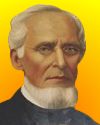
Died 11 Jan 1874 at age 72 (born 9 Nov 1801). quotes
American manufacturer who invented a commercial method of condensing milk by heating it in a vacuum to preserve it (patented 19 Aug 1856, U.S. No. 15,553) and investigated other food concentrates. He began with a process (patented 5 Feb 1850, No. 7,066) that cooked meat extracts with flour to form a meat biscuit capable of long term storage. When he devised a way to preserve milk by condensing it, he created a market in big cities which were distant from the farm sources, as well as supplying the military, travellers and seamen. The dairy company he founded (renamed Borden, Inc., in 1968) expanded and diversified to become a sizable conglomerate. more
American manufacturer who invented a commercial method of condensing milk by heating it in a vacuum to preserve it (patented 19 Aug 1856, U.S. No. 15,553) and investigated other food concentrates. He began with a process (patented 5 Feb 1850, No. 7,066) that cooked meat extracts with flour to form a meat biscuit capable of long term storage. When he devised a way to preserve milk by condensing it, he created a market in big cities which were distant from the farm sources, as well as supplying the military, travellers and seamen. The dairy company he founded (renamed Borden, Inc., in 1968) expanded and diversified to become a sizable conglomerate. more
Gail Borden: Dairyman to a Nation, by Joe Bertram Frantz. - book suggestion.
Died 11 Jan 1763 (born 1687).
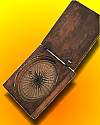
Francis Hauksbee, the Younger was an English instrument maker, science lecturer and manufacturer of scientific instruments, such as hydrostatic balances, air pumps and reflecting telescopes. He assisted with experiments by his uncle, Francis Hauksbee the Elder. His own independent research contributed to early studies of electricity. From c. 1714, he gave lectures and demonstrations. Hauksbee published an Essay for Introducing a Portable Laboratory (1731), and other works on chemistry, astronomical instruments, electricity, and pneumatics. In 1723, he became clerk and housekeeper to the Royal Society. In 1728, (with Benjamin Robinson) he obtained a patent “for preserving the Planks and Sheathing of Ships sailing to the East and West Indies.”«* "for preserving the Planks and Sheathing of Ships sailing to the East and West Indies."« [Image: Mariner's compass made bu Hauksbee.]
Francis Hauksbee, the Younger was an English instrument maker, science lecturer and manufacturer of scientific instruments, such as hydrostatic balances, air pumps and reflecting telescopes. He assisted with experiments by his uncle, Francis Hauksbee the Elder. His own independent research contributed to early studies of electricity. From c. 1714, he gave lectures and demonstrations. Hauksbee published an Essay for Introducing a Portable Laboratory (1731), and other works on chemistry, astronomical instruments, electricity, and pneumatics. In 1723, he became clerk and housekeeper to the Royal Society. In 1728, (with Benjamin Robinson) he obtained a patent “for preserving the Planks and Sheathing of Ships sailing to the East and West Indies.”«* "for preserving the Planks and Sheathing of Ships sailing to the East and West Indies."« [Image: Mariner's compass made bu Hauksbee.]
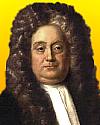
Died 11 Jan 1753 at age 92 (born 16 Apr 1660). quotes
(Baronet) British physician and naturalist whose collection of books, manuscripts, and curiosities formed the basis for the British Museum in London. By the time he died, Sloane had amassed one of the world's largest and most varied collections of natural history specimens. His passion for the collection and his concern for its future upkeep after his death led him to write a will which clearly stated that it must "remain together and not be separated." He offered it to the British nation, requesting in return a sum of £20,000 for his heirs. Parliament accepted, and King George II gave his royal assent 7 Jun 1753. Thus the British Museum was created and eventually its sister institution, the British Museum of Natural History.
(Baronet) British physician and naturalist whose collection of books, manuscripts, and curiosities formed the basis for the British Museum in London. By the time he died, Sloane had amassed one of the world's largest and most varied collections of natural history specimens. His passion for the collection and his concern for its future upkeep after his death led him to write a will which clearly stated that it must "remain together and not be separated." He offered it to the British nation, requesting in return a sum of £20,000 for his heirs. Parliament accepted, and King George II gave his royal assent 7 Jun 1753. Thus the British Museum was created and eventually its sister institution, the British Museum of Natural History.
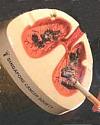
In 1964, the U.S. Surgeon General Luther Terry, announced the results of a study on the health effects of smoking, ordered by Pres. Kennedy in 1962. As America’s first widely publicized official recognition of the dangers, it stated “Cigarette smoking is a health hazard of sufficient importance in the United States to warrant appropriate remedial action.” From reviewing 7,000+ medical articles, the Report concluded cigarette smoking was a cause of lung and larynx cancer and of chronic bronchitis. Male cigarette smokers were about ten times* more likely to die from lung cancer than non-smokers. In 1965, the U.S. Congress required printed health warnings on cigarette packages.«See the Report p.28. On 3/11/2022, this paragraph was corrected from “1000 times” to “ten times” (1000%) per reader feedback.
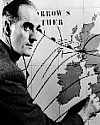
In 1954, the first in-vision weather forecaster broadcast on BBC television. George Cowling of the Meteorological Office presented from the BBC's Lime Grove studios with two hand-drawn weather charts pinned to an easel.«
In 1922, Leonard Thompson (1908-35), age 14, was the very first person to receive an injection of insulin as a treatment for diabetes. He weighed only 65 pounds and was about to slip into a coma and die. The allergic reaction he displayed was attributed to an impurity in the pioneering extract provided by Drs. Frederick Banting and Charles Best. Twelve days later Thompson received a more purified dose of insulin prepared by Dr. James Collip. His symptoms began to disappear as his blood sugar returned to normal and he regained strength. Before this time, diabetes had inevitably resulted in death within months or even weeks of the diagnosis. Thompson lived another 13 years with the insulin. He died at the age of 27 due to pneumonia, a diabetes complication.«
In 1911, the "Kaiser Wilhelm Society for the Advancement of Science" was founded in Berlin. This became the present Max Planck Society.*
In 1869, the first samples of alizarin, synthetically prepared by Carl Graebe and Carl Lieberman, were presented at the Berlin Chemical Society. The patent was acquired by the Badische Anilin- and Soda-Fabrik for commercial production using modifications by Heinrich Caro to optimize the process.*
In 1820, as the steel industry was making huge technological advances, chemists tried to create a rust-proof, or stainless steel. A French metallurgist observed that when carbon steel was combined with an alloy like chrome, it did yield a rust-resistant metal. A century would pass before two British scientists continued his work and, in 1913, Europe was introduced to stainless steel. Its smooth, hard surface doesn't trap dirt, bacteria or molds - and today, stainless steel is used in everything from silverware and jewelry to spacecraft.
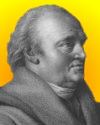
In 1787, William Herschel, a German astronomer, discovered the first two moons of Uranus, six years after he had discovered the planet, on 13 Mar 1781. Titania's diameter is 998.2 miles (1610 km) and its distance from Uranus is 271,104 miles (436,300 km). Oberon, the outermost of the major moons of Uranus, has a mean diameter of 1523 km and a mean distance from Uranus of 583,500 km. These names were suggested by Herschel's son John Herschel in 1852 at the request of William Lassell, who had discovered two more moons of Uranus the year before which became known as Ariel and Umbriel.«
In 1664, Robert Hooke was provided with an annual salary of £50 per annum by the Royal Society for his services as curator of experiments there.




