Born 26 Mar 1973.
Lawrence Edward Page is an American computer engineer who was a graduate student when he co-founded Google, Inc. with Sergey Brin, while working in the same Ph.D. program. They developed their ideas for the search engine at that time, and established the company in 1998, with financial support from investors, family and friends. Page was the company's president of products. It was so successful that by 19 Aug 2004, the company made an IPO (initial public offering) of shares to raise the capital to grow further. Eventually its worth exceeded that of Disney, McDonals and General Motors combined.«
Lawrence Edward Page is an American computer engineer who was a graduate student when he co-founded Google, Inc. with Sergey Brin, while working in the same Ph.D. program. They developed their ideas for the search engine at that time, and established the company in 1998, with financial support from investors, family and friends. Page was the company's president of products. It was so successful that by 19 Aug 2004, the company made an IPO (initial public offering) of shares to raise the capital to grow further. Eventually its worth exceeded that of Disney, McDonals and General Motors combined.«
Born 26 Mar 1941. quotes
English evolutionary biologist and science writer known for his outspoken, but intellectual opinions as an atheist on creationism. His books, beginning with The Blind Watchmaker (1976) have been international best-sellers. In The Selfish Gene (1989), he reformulated the theory of natural selection, though he credits Charles Darwin as being the“ founder of really everything that I do.” In lectures and media appearances, he articulates the lamentable ignorance of the creationists' views in their denial of real-world proofs. Dawkins traces the evidence of evolution through the chemical molecular evidence of genes, which complements the fossil record. In The Selfish Gene, he coined the term meme as the unit of cultural transmission, meaning the unit of imitation and replication of a cultural item in a manner analogous to the biological transmission of genes.«
English evolutionary biologist and science writer known for his outspoken, but intellectual opinions as an atheist on creationism. His books, beginning with The Blind Watchmaker (1976) have been international best-sellers. In The Selfish Gene (1989), he reformulated the theory of natural selection, though he credits Charles Darwin as being the“ founder of really everything that I do.” In lectures and media appearances, he articulates the lamentable ignorance of the creationists' views in their denial of real-world proofs. Dawkins traces the evidence of evolution through the chemical molecular evidence of genes, which complements the fossil record. In The Selfish Gene, he coined the term meme as the unit of cultural transmission, meaning the unit of imitation and replication of a cultural item in a manner analogous to the biological transmission of genes.«
The Selfish Gene: 30th Anniversary Edition, by Richard Dawkins. - book suggestion.
Born 26 Mar 1916; died 14 May 1995 at age 79.
American biochemist who (with Stanford Moore and William H. Stein) received the 1972 Nobel Prize for Chemistry for research on the shape and primary structure of ribonuclease (the enzyme that hydrolyses RNA). Ribonuclease is made up of a single peptide (a molecule consisting of two or more amino acid molecules joined by a peptide bond) chain folded into a sphere bound together by four disulphide bonds. These bonds can be broken down so that the enzyme becomes denatured (collapses), losing all of its enzyme properties. Anfinsen found that its shape and consequently its enzymatic power could be restored, and concluded( that ribonuclease must retain all of the information about its configuration within its amino acids.
American biochemist who (with Stanford Moore and William H. Stein) received the 1972 Nobel Prize for Chemistry for research on the shape and primary structure of ribonuclease (the enzyme that hydrolyses RNA). Ribonuclease is made up of a single peptide (a molecule consisting of two or more amino acid molecules joined by a peptide bond) chain folded into a sphere bound together by four disulphide bonds. These bonds can be broken down so that the enzyme becomes denatured (collapses), losing all of its enzyme properties. Anfinsen found that its shape and consequently its enzymatic power could be restored, and concluded( that ribonuclease must retain all of the information about its configuration within its amino acids.
Born 26 Mar 1913; died 20 Sep 1996 at age 83. quotes
Hungarian mathematician, who was one of the century's top math experts and pioneered the fields of number theory and combinatorics. The type of mathematics he worked on were beautiful problems that were simple to understand, but notoriously difficult to solve. At age 20, he discovered a proof for a classic theorem of number theory that states that there is always at least one prime number between any positive integer and its double. In the 1930s, he studied in England and moved to the USA by the late 1930s when his Jewish origins made a return to Hungary impossible. Affected by McCarthyism in the 1950s, he spent much of the next ten years in Israel. Writing his many hundreds of papers made him one of history's most prolific mathematicians.
Hungarian mathematician, who was one of the century's top math experts and pioneered the fields of number theory and combinatorics. The type of mathematics he worked on were beautiful problems that were simple to understand, but notoriously difficult to solve. At age 20, he discovered a proof for a classic theorem of number theory that states that there is always at least one prime number between any positive integer and its double. In the 1930s, he studied in England and moved to the USA by the late 1930s when his Jewish origins made a return to Hungary impossible. Affected by McCarthyism in the 1950s, he spent much of the next ten years in Israel. Writing his many hundreds of papers made him one of history's most prolific mathematicians.
The Man Who Loved Only Numbers: The Story of Paul Erdos, by Paul Hoffman. - book suggestion.
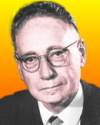
Born 26 Mar 1911.
German-born British physiologist who elucidated how nerve cells transmit signals to muscles. Although it was known that neurons release acetylcholine at their terminal ends, Katz discovered in the early 1950s that the release of this neurotransmitter occurs continuously and spontaneously, although at low levels when neurons are at rest. Further, he found that acetylcholine is released in discrete packets, later called vesicles. In the late 1960s, Katz determined that the amount of acetylcholine in a vesicle was related to the electrical potential at the terminal of an axon (the long extension of a neuron that transmits the impulse). These studies won him a share (with Julius Axelrod and Ulf von Euler) of the 1970 Nobel Prize for Physiology or Medicine.
German-born British physiologist who elucidated how nerve cells transmit signals to muscles. Although it was known that neurons release acetylcholine at their terminal ends, Katz discovered in the early 1950s that the release of this neurotransmitter occurs continuously and spontaneously, although at low levels when neurons are at rest. Further, he found that acetylcholine is released in discrete packets, later called vesicles. In the late 1960s, Katz determined that the amount of acetylcholine in a vesicle was related to the electrical potential at the terminal of an axon (the long extension of a neuron that transmits the impulse). These studies won him a share (with Julius Axelrod and Ulf von Euler) of the 1970 Nobel Prize for Physiology or Medicine.
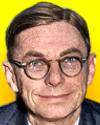
Born 26 Mar 1893; died 11 Feb 1978 at age 84. quotes
James Bryant Conant was an American educator and scientist. After earning his PhD at Harvard (1916), Conant spent a year in the research division of the chemical warfare service during World War I, then returned to Harvard as a chemistry instructor. In research, he made important findings on the chemistry of chlorophyll and hemoglobin. In 1933, Conant became president of Harvard University. An early advocate of aid to the Allies, Conant became a central figure in organizing American science for WW II, including the development of the atomic bomb. Following WW II, he became a diplomat, as U.S. high commissioner for western Germany (1953). From 1957, he was an education reformer.
James Bryant Conant was an American educator and scientist. After earning his PhD at Harvard (1916), Conant spent a year in the research division of the chemical warfare service during World War I, then returned to Harvard as a chemistry instructor. In research, he made important findings on the chemistry of chlorophyll and hemoglobin. In 1933, Conant became president of Harvard University. An early advocate of aid to the Allies, Conant became a central figure in organizing American science for WW II, including the development of the atomic bomb. Following WW II, he became a diplomat, as U.S. high commissioner for western Germany (1953). From 1957, he was an education reformer.

(EB)
Born 26 Mar 1879; died 22 Sep 1965 at age 86.
Swiss-American engineer and designer of numerous long suspension bridges as the New York Port Authority's Chief Engineer (1929), including the Verrazano-Narrows Bridge over New York harbour, at its completion (1965) the longest single span in the world. The first of six bridges he would design for the city was the George Washington Bridge, completed (1931) at a cost of $59 million, and opened to traffic on 25 Oct. It crosses the Hudson River between New Jersey and New York, and represents a marvel of construction for its time.
Swiss-American engineer and designer of numerous long suspension bridges as the New York Port Authority's Chief Engineer (1929), including the Verrazano-Narrows Bridge over New York harbour, at its completion (1965) the longest single span in the world. The first of six bridges he would design for the city was the George Washington Bridge, completed (1931) at a cost of $59 million, and opened to traffic on 25 Oct. It crosses the Hudson River between New Jersey and New York, and represents a marvel of construction for its time.
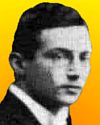
Born 26 Mar 1875; died 16 Nov 1922 at age 47.
German physicist whose life work was almost all related to Maxwell's theory. The text he wrote was the standard work on electrodynamics in Germany for a long time. Throughout his life, he remained strongly opposed to Einstein's Theory of Relativity, objecting to its postulates which he felt were contrary to classical common sense. He further held that the experimental evidence did not support that theory. In 1902, he had developed a theory of the electron in which he held that an electron was a perfectly rigid sphere with a charge distributed evenly over its surface. He also believed in the ether theory, thought that future astronomical data would validate it, and thus relativity was not in fact a good description of the real world.
German physicist whose life work was almost all related to Maxwell's theory. The text he wrote was the standard work on electrodynamics in Germany for a long time. Throughout his life, he remained strongly opposed to Einstein's Theory of Relativity, objecting to its postulates which he felt were contrary to classical common sense. He further held that the experimental evidence did not support that theory. In 1902, he had developed a theory of the electron in which he held that an electron was a perfectly rigid sphere with a charge distributed evenly over its surface. He also believed in the ether theory, thought that future astronomical data would validate it, and thus relativity was not in fact a good description of the real world.
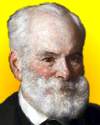
Born 26 Mar 1838; died 28 Oct 1922 at age 84. quotes
Scottish chemist and physiologist who built up chemistry as a major subject at the University of Edinburgh. A professorship of chemistry there is named after him. With a DSc (1862) from London University, he went to Germany, studying chemistry under Bunsen at Heidelberg, and then Kolbe at Marburg (where he made perhaps the first synthesis of adipic acid) before joining the faculty at Edinburgh University. He improved on Kekulé’s graphical representation of the structure of organic compounds. In 1865, he introduced the parallel lines symbol for a double bond. In 1892, he proposed the Crum Brown rule, predicting how substituents enter the benzene ring. In physiology, he investigated the sensations of vertigo.«
Scottish chemist and physiologist who built up chemistry as a major subject at the University of Edinburgh. A professorship of chemistry there is named after him. With a DSc (1862) from London University, he went to Germany, studying chemistry under Bunsen at Heidelberg, and then Kolbe at Marburg (where he made perhaps the first synthesis of adipic acid) before joining the faculty at Edinburgh University. He improved on Kekulé’s graphical representation of the structure of organic compounds. In 1865, he introduced the parallel lines symbol for a double bond. In 1892, he proposed the Crum Brown rule, predicting how substituents enter the benzene ring. In physiology, he investigated the sensations of vertigo.«
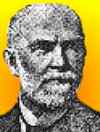
Born 26 Mar 1821; died 8 Dec 1896 at age 75. quotes
German statistician, the head of the Prussian Statistical Bureau (1860-82), known for the "Engel curve," or Engel's law, which states that the proportion of expenditure on food will fall as income rises, i.e. food is a necessary good. Engel's law applies to goods as a whole. Demand for food, clothing and shelter - and for most manufactured products - doesn't keep pace with increases in incomes. Engel curves are useful for separating the effect of income on demand from the effects of changes in relative prices. Engel also examined the relationship between the size of the Prussian rye harvest and the average price of rye over a number of years prior to 1860, probably the first empirical study of the relationship between price and supply.
German statistician, the head of the Prussian Statistical Bureau (1860-82), known for the "Engel curve," or Engel's law, which states that the proportion of expenditure on food will fall as income rises, i.e. food is a necessary good. Engel's law applies to goods as a whole. Demand for food, clothing and shelter - and for most manufactured products - doesn't keep pace with increases in incomes. Engel curves are useful for separating the effect of income on demand from the effects of changes in relative prices. Engel also examined the relationship between the size of the Prussian rye harvest and the average price of rye over a number of years prior to 1860, probably the first empirical study of the relationship between price and supply.
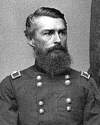
Born 26 Mar 1817; died 14 Dec 1905 at age 88.
American civil engineer, manufacturer and inventor, known especially for his work on the Hoosac Tunnel in Massachusetts. He designed and patented his Haupt Truss configuration in 1839. His greatest achievement came as Chief of construction and transportation for the military railroad system for the Union Army in the Civil War. Haupt supervised the rebuilding of bridges, restoration of track, integration of the railroad network, and the scheduling of shipments, He facilitated the rapid movement of troops and supplies that gave the Federal government a vitally important strategic advantage over the Confederacy. The systemization of the military railroads also provided an impetus for their postwar unification.
American civil engineer, manufacturer and inventor, known especially for his work on the Hoosac Tunnel in Massachusetts. He designed and patented his Haupt Truss configuration in 1839. His greatest achievement came as Chief of construction and transportation for the military railroad system for the Union Army in the Civil War. Haupt supervised the rebuilding of bridges, restoration of track, integration of the railroad network, and the scheduling of shipments, He facilitated the rapid movement of troops and supplies that gave the Federal government a vitally important strategic advantage over the Confederacy. The systemization of the military railroads also provided an impetus for their postwar unification.

(NASA)
Born 26 Mar 1789; died 12 Feb 1857 at age 67.
American meteorologist who observed the whirlwind character of tropical storms. Following a hurricane that struck New England on 3 Sep 1821, he noted that in central Connecticut trees had toppled toward the northwest, but in the opposite direction 80-km further west. He found that hurricanes are generated in a belt between the Equator and the tropics, then veer eastward when meeting westerly winds at about latitude 30ºN. In 1831, he published his evidence that storm winds whirl counterclockwise about a centre that moves in the normal direction of the prevailing winds. He also promoted railroads and steamships. He co-founded the American Association for the Advancement of Sciences and was president at its first meeting (Sep 1848).
American meteorologist who observed the whirlwind character of tropical storms. Following a hurricane that struck New England on 3 Sep 1821, he noted that in central Connecticut trees had toppled toward the northwest, but in the opposite direction 80-km further west. He found that hurricanes are generated in a belt between the Equator and the tropics, then veer eastward when meeting westerly winds at about latitude 30ºN. In 1831, he published his evidence that storm winds whirl counterclockwise about a centre that moves in the normal direction of the prevailing winds. He also promoted railroads and steamships. He co-founded the American Association for the Advancement of Sciences and was president at its first meeting (Sep 1848).
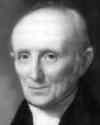
Born 26 Mar 1773; died 16 Mar 1838 at age 64. quotes
Self-educated American mathematician and astronomer. He learnt Latin to study Newton's Principia and later other languages to study mathematics in these languages. Between 1795 and 1799 he made four sea voyages and in 1802 he was in command of a merchant ship. He was author of the best book on navigation of his time, New American Practical Navigator (1802), and his translation (assisted by Benjamin Peirce) of Laplace's Mécanique céleste gave him an international reputation. Bowditch was the discoverer of the Bowditch curves, which have important applications in astronomy and physics.
Self-educated American mathematician and astronomer. He learnt Latin to study Newton's Principia and later other languages to study mathematics in these languages. Between 1795 and 1799 he made four sea voyages and in 1802 he was in command of a merchant ship. He was author of the best book on navigation of his time, New American Practical Navigator (1802), and his translation (assisted by Benjamin Peirce) of Laplace's Mécanique céleste gave him an international reputation. Bowditch was the discoverer of the Bowditch curves, which have important applications in astronomy and physics.
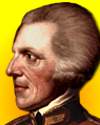
Born 26 Mar 1753; died 21 Aug 1814 at age 61. quotes
American-British physicist, government administrator, and a founder of the Royal Institution of Great Britain, London. Because he was a Redcoat officer and an English spy during the American revolution, he moved into exile in England. Through his investigations of heat he became one of the first scientists to declare that heat is a form of motion rather than a material substance, as was popularly believed until the mid-19th century. Among his numerous scientific contributions are the development of a calorimeter and a photometer. He invented a double boiler, a kitchen stove and a drip coffee pot. more
American-British physicist, government administrator, and a founder of the Royal Institution of Great Britain, London. Because he was a Redcoat officer and an English spy during the American revolution, he moved into exile in England. Through his investigations of heat he became one of the first scientists to declare that heat is a form of motion rather than a material substance, as was popularly believed until the mid-19th century. Among his numerous scientific contributions are the development of a calorimeter and a photometer. He invented a double boiler, a kitchen stove and a drip coffee pot. more
Count Rumford on the Nature of Heat, by Benjamin Rumford. - book suggestion.
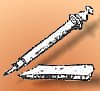
Born 26 Mar 1516; died 13 Dec 1565 at age 49. quotes
Swiss physician, naturalist, and encyclopedist is best known for his monumental works. Gesner's aim was to survey all the world's recorded knowledge. His books included systematic compilations of information on animals and plants. Elaborately illustrated, Historiae animalium comprised five volumes, the first appearing in 1551, each covering a portion of the animal kingdom. Gesner's pictures made his works both more appealing and less ambiguous. Although he listed all the animals known in Europe, he had no idea of the relationships one animal to another. Yet, in Historica Plantarum (History of Plants), published two centuries after his death, he was the first to recognize that similar species could be grouped to form genera.Image: The first known illustration of a lead pencil is found in Gesner's book on fossils (1565). [Name sometimes spelled as 'Konrad'.]
Swiss physician, naturalist, and encyclopedist is best known for his monumental works. Gesner's aim was to survey all the world's recorded knowledge. His books included systematic compilations of information on animals and plants. Elaborately illustrated, Historiae animalium comprised five volumes, the first appearing in 1551, each covering a portion of the animal kingdom. Gesner's pictures made his works both more appealing and less ambiguous. Although he listed all the animals known in Europe, he had no idea of the relationships one animal to another. Yet, in Historica Plantarum (History of Plants), published two centuries after his death, he was the first to recognize that similar species could be grouped to form genera.Image: The first known illustration of a lead pencil is found in Gesner's book on fossils (1565). [Name sometimes spelled as 'Konrad'.]

Died 26 Mar 2011 at age 94 (born 6 Mar 1917).
American chemist and inventor who invented Super Glue™. He accidentally discovered (1951) the adhesive properties of cyanoacrylate monomers that needed neither heat nor pressure to permanently bond between various surfaces. He patented the formula (U.S. No. 2,768,109) with the title “Alcohol-Catalyzed Cyanoacrylate Adhesive Compositions/Superglue.” It was first marketed (1958) under the “Eastman 910” name, after his employer, Eastman Kodak. From 1963, it has been sold as Loctite “Super Glue.” Memorable advertising showed a car lifted by a crane using an attachment bonded with just a few drops. Its versatility extends to derivatives used for repairing arteries, veins, teeth and as a spray to seal open wounds of soldiers during combat in Vietnam. Coover held 460 patents in his lifetime. After Eastman, he joined Loctite as its president.«
American chemist and inventor who invented Super Glue™. He accidentally discovered (1951) the adhesive properties of cyanoacrylate monomers that needed neither heat nor pressure to permanently bond between various surfaces. He patented the formula (U.S. No. 2,768,109) with the title “Alcohol-Catalyzed Cyanoacrylate Adhesive Compositions/Superglue.” It was first marketed (1958) under the “Eastman 910” name, after his employer, Eastman Kodak. From 1963, it has been sold as Loctite “Super Glue.” Memorable advertising showed a car lifted by a crane using an attachment bonded with just a few drops. Its versatility extends to derivatives used for repairing arteries, veins, teeth and as a spray to seal open wounds of soldiers during combat in Vietnam. Coover held 460 patents in his lifetime. After Eastman, he joined Loctite as its president.«
Died 26 Mar 1996 at age 83 (born 7 Sep 1912). quotes
American entrepreneur and electrical engineer who co-founded the Hewlett-Packard Co., a leading manufacturer computers, computer printers, and analytic and measuring equipment. In 1939, he formed a partnership known as Hewlett-Packard Company with William R. Hewlett, a friend and Stanford classmate. HP's first product was a resistance-capacitance audio oscillator based on a design developed by Hewlett when he was in graduate school. The company began with $538 in initial capital, and its first production facility was a small garage in Palo Alto.
American entrepreneur and electrical engineer who co-founded the Hewlett-Packard Co., a leading manufacturer computers, computer printers, and analytic and measuring equipment. In 1939, he formed a partnership known as Hewlett-Packard Company with William R. Hewlett, a friend and Stanford classmate. HP's first product was a resistance-capacitance audio oscillator based on a design developed by Hewlett when he was in graduate school. The company began with $538 in initial capital, and its first production facility was a small garage in Palo Alto.
Died 26 Mar 1988 at age 84 (born 24 May 1903).
Canadian heart surgeon, noted chiefly for his development, in 1950, of a surgical procedure for correction of impaired coronary circulation. In the Vineberg operation one end of an artery in the chest, called the internal mammary artery, is freed up. The side branches to the artery, like tributaries flowing off a river, are cut to allow blood to flow freely from them. The artery then is snaked under the surface of the heart muscle, and each time the heart beats, blood from the branches oozes into the heart muscle, nourishing it. Over time new vessels grow and supply blood to the myocardium. The first clinical procedure was carried out at the Royal Victoria Hospital in Montreal in 1950. Modern bypass surgery pre-empted it in the 1960s.
Canadian heart surgeon, noted chiefly for his development, in 1950, of a surgical procedure for correction of impaired coronary circulation. In the Vineberg operation one end of an artery in the chest, called the internal mammary artery, is freed up. The side branches to the artery, like tributaries flowing off a river, are cut to allow blood to flow freely from them. The artery then is snaked under the surface of the heart muscle, and each time the heart beats, blood from the branches oozes into the heart muscle, nourishing it. Over time new vessels grow and supply blood to the myocardium. The first clinical procedure was carried out at the Royal Victoria Hospital in Montreal in 1950. Modern bypass surgery pre-empted it in the 1960s.
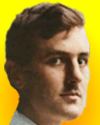
Died 26 Mar 1981 at age 77 (born 19 Dec 1903). quotes
English botanist and geneticist who did the groundbreaking research recognizing the function of chromosomes for their hereditary mechanisms in cells of sexually reproducing species. He detailed how chromosomes form gametes (meiosis). Building on the work of Thomas Hunt Morgan (who showed that portions of homologous chromosomes are exchanged), Darlington extended this to lay out a theoretical framework of evolution. His theory of evolution explained how the inherited characteristics of the next generation are variable, determined by the crossing over mechanism. Some obituaries referred to him as the “ Copernicus” or “ Newton” of cytology, although during his lifetime, he had been controversial as a eugenicist.«
English botanist and geneticist who did the groundbreaking research recognizing the function of chromosomes for their hereditary mechanisms in cells of sexually reproducing species. He detailed how chromosomes form gametes (meiosis). Building on the work of Thomas Hunt Morgan (who showed that portions of homologous chromosomes are exchanged), Darlington extended this to lay out a theoretical framework of evolution. His theory of evolution explained how the inherited characteristics of the next generation are variable, determined by the crossing over mechanism. Some obituaries referred to him as the “ Copernicus” or “ Newton” of cytology, although during his lifetime, he had been controversial as a eugenicist.«
The Man Who Invented the Chromosome: The Life of Cyril Darlington, by Oren Solomon Harman. - book suggestion.

Died 26 Mar 1974 at age 72 (born 2 Mar 1902). quotes
Edward Uhler Condon was an American physicist who is remembered for the Franck-Condon principle (1928), development of radar and contributing to the design of magnetic separation equipment subsequently applied to process uranium for atomic bombs. The Franck-Condon principle (1928) is a quantum-mechanical treatment of the earlier statement by James Franck (1925) that in any molecular system the transition from one energy state to another occurs so near to instantaneously that the nuclei of the atoms involved are stationary. During the Manhattan project, he assisted J. Robert Oppenheimer assemble the team of scientist that created the first atomic bombs at Los Alamos, N.M. He led a scientific study of UFO's, which found no credible evidence.«
Edward Uhler Condon was an American physicist who is remembered for the Franck-Condon principle (1928), development of radar and contributing to the design of magnetic separation equipment subsequently applied to process uranium for atomic bombs. The Franck-Condon principle (1928) is a quantum-mechanical treatment of the earlier statement by James Franck (1925) that in any molecular system the transition from one energy state to another occurs so near to instantaneously that the nuclei of the atoms involved are stationary. During the Manhattan project, he assisted J. Robert Oppenheimer assemble the team of scientist that created the first atomic bombs at Los Alamos, N.M. He led a scientific study of UFO's, which found no credible evidence.«
Selected popular writings of E.U. Condon, by Edward Uhler Condon. - book suggestion.
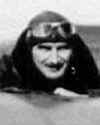
Died 26 Mar 1949 at age 63 (born 13 Mar 1886).
U.S. Army officer, balloonist, and early aerial photographer who took the first photograph of the Earth's curvature (1930) and the first photographs of the Moon's shadow on the Earth during a solar eclipse (1932). On 11 Nov 1935, Stevens made a record balloon ascent in the Explorer II to 72,395 ft with Captain (later Lieutenant General) Orvil Anderson at Rapid City, S.D.
U.S. Army officer, balloonist, and early aerial photographer who took the first photograph of the Earth's curvature (1930) and the first photographs of the Moon's shadow on the Earth during a solar eclipse (1932). On 11 Nov 1935, Stevens made a record balloon ascent in the Explorer II to 72,395 ft with Captain (later Lieutenant General) Orvil Anderson at Rapid City, S.D.
Died 26 Mar 1943 at age 91 (born 7 Jul 1851).
American psychologist who followed up her academic career with an active second career in gerontological psychology. Martin was determined to work in psychology though as a pioneer woman in psychology, she faced obstacles including age, as well as gender discrimination. Her determination was eventually rewarded with an honorary Ph.D. from a school that originally refused her a degree because of her sex. Martin worked with G.E. Muller in psychophysics, and founded the world's first mental health clinic for normal children and for the elderly. Her accomplishments and enthusiastic eagerness to share knowledge have changed the way applied psychology is viewed in areas of gerontology and mental hygiene for children.
American psychologist who followed up her academic career with an active second career in gerontological psychology. Martin was determined to work in psychology though as a pioneer woman in psychology, she faced obstacles including age, as well as gender discrimination. Her determination was eventually rewarded with an honorary Ph.D. from a school that originally refused her a degree because of her sex. Martin worked with G.E. Muller in psychophysics, and founded the world's first mental health clinic for normal children and for the elderly. Her accomplishments and enthusiastic eagerness to share knowledge have changed the way applied psychology is viewed in areas of gerontology and mental hygiene for children.
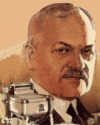
Died 26 Mar 1937 at age 79 (born 14 Jul 1857).
Frederick Louis Maytag was an American industrialist who with three other men in 1893 started a farm implement business in Newton, Iowa. They made threshing machine, band-cutter and self-feeder attachments invented by one of the founders, George Parsons. By 1902, the firm was the world's largest manufacturer of threshing machine feeders. However, the company later moved into the production of washing machines due to the seasonal nature of the farm industry. Its first washing machine was the Parson's Pastime hand-powered wood tub (1907-08). By 1909, Maytag took charge of his own industry, the Maytag Company to maintain his control of quality in the planning and production of washing machines.«
Frederick Louis Maytag was an American industrialist who with three other men in 1893 started a farm implement business in Newton, Iowa. They made threshing machine, band-cutter and self-feeder attachments invented by one of the founders, George Parsons. By 1902, the firm was the world's largest manufacturer of threshing machine feeders. However, the company later moved into the production of washing machines due to the seasonal nature of the farm industry. Its first washing machine was the Parson's Pastime hand-powered wood tub (1907-08). By 1909, Maytag took charge of his own industry, the Maytag Company to maintain his control of quality in the planning and production of washing machines.«
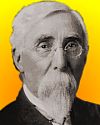
Died 26 Mar 1932 at age 89 (born 16 Feb 1843).
American inventor and industrialist who founded Cadillac Motors (22 Aug 1902) to build the Cadillac, the first automobile with high-precision, fully-interchangable parts. Earlier in his life, he had learned precision toolmaking making rifles during the Civil War, invented the first mechanical barber's clippers, and made engines for Oldsmobiles. When Leland designed an improved engine, but Olds did not want to adopt it, Leland started Cadillac to build his own own brand of automobile. He eventually sold the company to Will Durant's General Motors Co. During WW I, he formed a new company to manufactured aircraft engines, which after the war he produced a new automobile: the Lincoln. That company was bought by Henry Ford.«
American inventor and industrialist who founded Cadillac Motors (22 Aug 1902) to build the Cadillac, the first automobile with high-precision, fully-interchangable parts. Earlier in his life, he had learned precision toolmaking making rifles during the Civil War, invented the first mechanical barber's clippers, and made engines for Oldsmobiles. When Leland designed an improved engine, but Olds did not want to adopt it, Leland started Cadillac to build his own own brand of automobile. He eventually sold the company to Will Durant's General Motors Co. During WW I, he formed a new company to manufactured aircraft engines, which after the war he produced a new automobile: the Lincoln. That company was bought by Henry Ford.«
Master of precision: Henry M. Leland, by Ottilie M Leland. - book suggestion.
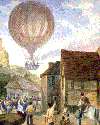
Died 26 Mar 1870 at age 85 (born 31 Jan 1785).
English balloonist whose outstanding achievement was his flight with two companions in 1836 from Vauxhall Gardens, London, to Weilburg, Germany, a distance of 480 miles. With this18-hour trip, Green set a long-distance balloon record for flights launched from England that was not beaten until 1907. He was accompanied on the flight by Monck Mason and Robert Hollond.
English balloonist whose outstanding achievement was his flight with two companions in 1836 from Vauxhall Gardens, London, to Weilburg, Germany, a distance of 480 miles. With this18-hour trip, Green set a long-distance balloon record for flights launched from England that was not beaten until 1907. He was accompanied on the flight by Monck Mason and Robert Hollond.
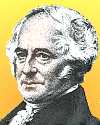
Died 26 Mar 1865 at age 78 (born 8 May 1786).
English inventor and manufacturer who founded the British rubber industry. His chief invention, the "masticator," worked rubber scraps into a shredded mass of rubber that could be formed into blocks or rolled into sheets. This process, perfected in 1821, led to a partnership with the Scottish chemist, Charles Macintosh, inventor and manufacturer of waterproof rubber impregnated fabric. Hancock established the first English rubber factory in 1820 and supplied Macintosh. The process of vulcanization was discovered (1839) independently by Hancock and an American, Charles Goodyear. That made possible a resilient rubber product, and led eventually to the large-scale usage of rubber in bicycle and automobile tires.
English inventor and manufacturer who founded the British rubber industry. His chief invention, the "masticator," worked rubber scraps into a shredded mass of rubber that could be formed into blocks or rolled into sheets. This process, perfected in 1821, led to a partnership with the Scottish chemist, Charles Macintosh, inventor and manufacturer of waterproof rubber impregnated fabric. Hancock established the first English rubber factory in 1820 and supplied Macintosh. The process of vulcanization was discovered (1839) independently by Hancock and an American, Charles Goodyear. That made possible a resilient rubber product, and led eventually to the large-scale usage of rubber in bicycle and automobile tires.
Noble Obsession: Charles Goodyear, Thomas Hancock, and the Race to Unlock the Greatest Industrial Secret of the Nineteenth Century, by Charles Slack. - book suggestion.
Died 26 Mar 1828 at age 75 (baptized 27 Feb 1753).
British balloonist and chemist who was the first English aeronaut, whose first successful ascent was on 4 Oct 1784, in a hot-air balloon, from Christ Church Meadow, Oxford. He rose to an estimated 3600 feet and travelled six miles. He made a 20-minute hydrogen balloon flight the next month, on 12 Nov 1784. By the time he attempted a crossing of St. George's Channel from Ireland, on 1 Oct 1812, he had made about sixty ascents. Almost reaching land, success eluded him when due to a change of wind he ditched in the sea off Liverpool. After some time in the water, he was rescued by a fishing boat. His two sons, John and Wyndham also took up ballooning. Wyndham succesfully made the Irish Sea crossing from Dublin to Holyhead on 22 Jul 1817. (He fell from his balloon 29 Sep 1824, and died the next day.)«[Obituary gives death on 26 Mar, but 27 Mar is on his tombstone. Shortly before Sadler's first flight, a Scotsman, James Tytler, made a modest ascent from Edinburgh, Scotland, on 27 Aug 1784, and an Italian, Vincent Lunardi, lifted off from London, on 15 Sep 1784.]
British balloonist and chemist who was the first English aeronaut, whose first successful ascent was on 4 Oct 1784, in a hot-air balloon, from Christ Church Meadow, Oxford. He rose to an estimated 3600 feet and travelled six miles. He made a 20-minute hydrogen balloon flight the next month, on 12 Nov 1784. By the time he attempted a crossing of St. George's Channel from Ireland, on 1 Oct 1812, he had made about sixty ascents. Almost reaching land, success eluded him when due to a change of wind he ditched in the sea off Liverpool. After some time in the water, he was rescued by a fishing boat. His two sons, John and Wyndham also took up ballooning. Wyndham succesfully made the Irish Sea crossing from Dublin to Holyhead on 22 Jul 1817. (He fell from his balloon 29 Sep 1824, and died the next day.)«[Obituary gives death on 26 Mar, but 27 Mar is on his tombstone. Shortly before Sadler's first flight, a Scotsman, James Tytler, made a modest ascent from Edinburgh, Scotland, on 27 Aug 1784, and an Italian, Vincent Lunardi, lifted off from London, on 15 Sep 1784.]
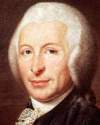

French physician who promoted a law requiring the use of a “machine that beheads painlessly” as a humane mode for all executions, for commoners or nobles alike. Without any further specifications from Guillotin, others actually designed and built the machine (following an example from earlier in history), and yet, it still became known by his name—the guillotine. After experiments on cadavers taken from a public hospital, the first such machine was erected in the Place de Grève in Paris (4 Apr 1792), and first used to execute a highwayman (25 Apr 1792). It was widely used during the French Revolution. Known first as the “machine”, after the beheading of Louis XVI it became known also as “la louisette” or “le louison,” but the name “la guillotine” prevailed. It was used in many countries.« more
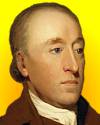
Died 26 Mar 1797 at age 70 (born 3 Jun 1726). quotes
Scottish geologist who initiated the principle of uniformitarianism with his Theory of the Earth (1785). He asserted that geological processes examined in the present time explain the formation of older rocks. John Playfair effectively championed Hutton's theory. Hutton, in effect, was the founder of modern geology, replacing a belief in the role of a biblical flood forming the Earth's crust. He introduced an understanding of the action of great heat beneath the Earth's crust in fusing sedimentary rocks, and the elevation of land forms from levels below the ocean to high land in a cyclical process. Hutton established the igneous origin of granite (1788). He also had early thoughts on the evolution of animal forms and meterology.«
Scottish geologist who initiated the principle of uniformitarianism with his Theory of the Earth (1785). He asserted that geological processes examined in the present time explain the formation of older rocks. John Playfair effectively championed Hutton's theory. Hutton, in effect, was the founder of modern geology, replacing a belief in the role of a biblical flood forming the Earth's crust. He introduced an understanding of the action of great heat beneath the Earth's crust in fusing sedimentary rocks, and the elevation of land forms from levels below the ocean to high land in a cyclical process. Hutton established the igneous origin of granite (1788). He also had early thoughts on the evolution of animal forms and meterology.«
The Man Who Found Time: James Hutton and the Discovery of Earth's Antiquity, by Jack Repcheck. - book suggestion.
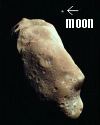
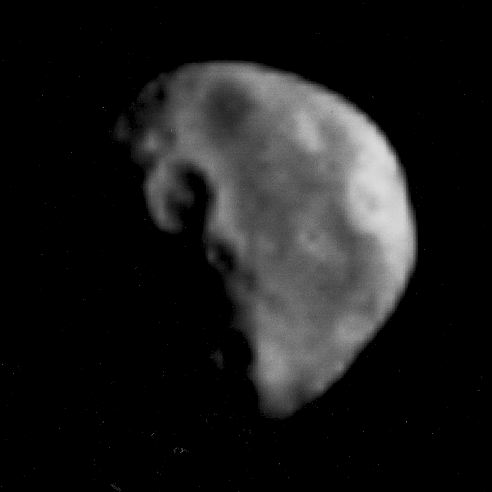
In 1994, a picture was released showing the first moon discovered be in orbit around an asteroid. The potato-shaped asteroid Ida and its newly-discovered moon, Dactyl was imaged by NASA’s Galileo spacecraft, about 14 minutes before its closest approach to the asteroid on 28 Aug 1993. Ida appears to be about about 36 miles long and 14 miles wide. It shows numerous craters, including many degraded craters, indicating Ida's surface is older than previously thought. The tiny moon is about one mile (1.5-km) across. The names are derived from the Dactyli, a group of mythological beings who lived on Mount Ida, where the infant Zeus was hidden (and raised, in some accounts) by the nymph Ida and protected by the Dactyli.
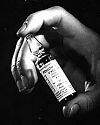
In 1953, Dr. Jonas Salk announced a new vaccine to immunize people against polio.
Jonas Salk: Beyond the Microscope, by Victoria Sherrow. - book suggestion.
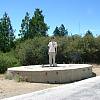
In 1936, a glass casting for the first 200-inch diameter, reflecting telescope mirror was shipped by train from Corning, New York to California for the new Hale telescope at the Mt. Palomar Observatory. It was cast on 2 Dec 1934, put in an annealing oven, then slowly allowed to cool for a year. The mirror weighed 20 tons, and was made of Pyrex glass, which does not expand and contract as much during temperature changes as ordinary glass. The train took about two weeks to reach Pasadena, travelling at a speed always under 25 m.p.h. to keep the mirror, in its specially made crate, safe from shocks. Upon arrival, the crate was taken to the optical workshop at the California Institute of Technology to begin a four-year grinding process to shape and polish the mirror. Work was delayed by WW II, and the Hale telescope in its new observatory building was dedicated on 3 Jun 1948.«Image: With the same size and weight as the 200 inch mirror, this cement disk was used while the telescope was built to test the mount.
The Perfect Machine: Building the Palomar Telescope, by Ronald Florence. - book suggestion.
In 1923, the BBC began its daily radio weather forecast.«
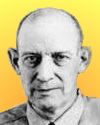
In 1916, Robert Stroud stabbed and killed a prison guard in Leavenworth Kansas. For this crime, he was imprisoned for life, and became the “Birdman of Alcatraz,” named for the prison where he spent his sentence. While there, Stroud conducted and published important research on bird diseases.
In 1900, the Roentgen Society of the United States was organised a meeting of doctors from nine states held in Dr. Herber Robarts' office in St. Louis. Dr. Robarts was founder and editor of the American X-Ray Journal, and had been active in radiology since exposing his first X-ray plates in Feb 1896. Robarts was elected as president of the new society and and Dr. J. Rudis-Jicinsky as secretary. They arranged to hold the first annual meeting at the Grand Central Palace in New York City on 13-14 Dec 1900. In 1901, it was renamed as the Roentgen Society of America to include Canadians. It was reorganised at the next annual meeting on 10-11 Dec 1902 as the American Roentgen Ray Society.«
In 1895, the Phantoscope, an early motion picture projector that enlarged film images for viewing by large groups, was patented by Charles Francis Jenkins (No. 536,569). The Phantascope was designed jointly by C. Francis Jenkins and Thomas Armat, and shown at the Cotton States Exposition in Atlanta, Ga. in October 1895. Armat sold his rights to Thomas Edison, who marketed the invention. The Phantascope, modified by Armat, became the basis of Edison's Vitascope projector. These developments owed much to George Eastman's invention of roll film, followed by transparency film, that enabled the same camera to make multiple photographs in a series.
In 1895, a patent was issued for a "railroad car for passing" invented by Henry Simmons (No. 538,366)
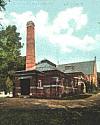
In 1885, the first cremation in England took place at Woking, where a crematorium was built. The deceased was a Mrs Jeannette C. Pickersgill, a well-known figure in literary and scientific circles. By year's end, only 3 cremations took place out of 597,357 deaths in the UK. The crematorium was founded in 1878, when a piece of land was bought by Sir Henry Thompson, surgeon to Queen Victoria and founder of The Cremation Society. By 1901, with 6 crematoria established, only 427 cremations took place out of 551,585 deaths - less than one-tenth percent. However, by the end of the century (2000), over 240 crematoria were in use. Over 70% of the deceased were cremated (437,609 out of 611,960 deaths).[Image: Crematorium, early 19th century]

In 1885, commercial production began of George Eastman's flexible, paper-backed photographic film, the first continuous-strip negative able to be compactly spooled. The film consisted of a layer of paper and a coating of insoluble sensitized gelatin emulsion, separated by a layer of soluble gelatin to enable release of the film layer after developing. He incorporated the Eastman Dry-Plate and Film Co., Rochester, NY, on 1 Oct 1884, and was issued patent No. 306,594 for this invention on 14 Oct 1884. He began promoting its convenience benefits to photographers over the bulkier, heavier and fragile glass plates then in use. Eastman designed the machinery for its manufacture, and a roll holder to use instead of glass plates.«[Image: Detail from an 1887 advertisement showing Eastman's negative paper on a roll and its package.] more
In 1872, African-American Thomas J. Martin of Dowagiac, Michigan, was granted a patent for an “Improvement of Fire Extinguishers”, (U.S. No. 125,063). It was designed as a system of piping, valves and pumps to be connected to a water source. It thus resembled a sprinkler system, rather than a portable tank, and thus provided greater extinguishing ability than previous designs. He also indicated other uses, for “warming, ventilating and washing buildings and for washing pavements and sprinkling streets.”«
In 1859, Lescarbault, a French medical doctor and amateur astronomer reported sighting a new planet in an orbit inside that of Mercury which he named Vulcan. He had seen a round black spot on the Sun with a transit time across the solar disk 4 hours 30 minutes. He sent this information and his calculations on the planet's movements to Jean LeVerrier, France's most famous astronomer. Le Verrier had already noticed that Mercury had deviated from its orbit. A gravitational pull from Vulcan would fit in nicely with what he was looking for. However, it was not consistently seen again and it is now believed to have been a "rogue asteroid" making a one-time pass close to the sun.
In 1845, a patent was awarded for an adhesive medicated plaster (No. 3,965), predating the "Band-Aid." Drs. Horace Harrell and William H. Shecut developed a process in which rubber is dissolved in a solvent then spread on fabric. The plaster was designed to be porous or full of minute holes, to allow the free release of perspiration and “other morbid matter which may exude,” instead of being trapped beneath a old style rigid plaster. The gum was designed to allow the plaster to be easily removed when needed to observe or clean the wound it covered. They later sold the idea to Dr. Thomas Allcock who marketed it as Allcock's Porous Plaster.
In 1845, Joseph Francis of New York City was issued a patent for “Making Boats and Other Vessels of Sheet-Iron or Other Metal”, (U.S. No. 3974). It described a method that formed sheet metal pressed into form between a die and matrix to make a complete side of a boat “with moldings or beads, in suitable places, to take up surplus metal.” The convex die had projections and corresponding depressions in the concave matrix mold. When sheet metal was pressed between them, longitudinal corrugations were formed—and a gunwale along the upper edge of the boat—which gave “sufficient strength and stiffness without frames or timbers inside.” Two sides thus made could be joined with a keel rivetted between them.«