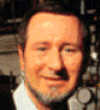
Born 1 Aug 1945.
Douglas Dean Osheroff is an American physicist who shared with David M. Lee and Robert Richardson) was the corecipient of the 1996 Nobel Prize for Physics for their discoveryof superfluidity in the isotope helium-3. As helium is reduced in temperature toward almost absolute zero, a strange phase transition occurs, and the helium takes on the form of a superfluid. The atoms had until that point had moved with random speeds and directions. But as a superfluid, the atoms then move in a co-ordinated manner! more
Douglas Dean Osheroff is an American physicist who shared with David M. Lee and Robert Richardson) was the corecipient of the 1996 Nobel Prize for Physics for their discoveryof superfluidity in the isotope helium-3. As helium is reduced in temperature toward almost absolute zero, a strange phase transition occurs, and the helium takes on the form of a superfluid. The atoms had until that point had moved with random speeds and directions. But as a superfluid, the atoms then move in a co-ordinated manner! more
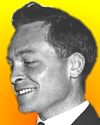
c. 1950's
Born 1 Aug 1927; died 11 Oct 2003 at age 76.
English botanist and conservationist, who was was one of the most influential botanists of his generation. He made a significant contribution to conservation as the co-author (with Max Walters) of the Atlas of the British Flora (1962), one of the most important British natural history publications of the 20th century. This compilation precisely was initiated in 1954 by the Botanical Society of the British Isles (BSBI) to record the incidence of all British flowering plants. Perring was a senior member of the team of researchers. Using a map of the country in 10 km grid squares, each square was visited, and the plants there recorded. Later, he encouraged zoologists to make similar atlases of distribution for mammals, butterflies, and other life forms.
English botanist and conservationist, who was was one of the most influential botanists of his generation. He made a significant contribution to conservation as the co-author (with Max Walters) of the Atlas of the British Flora (1962), one of the most important British natural history publications of the 20th century. This compilation precisely was initiated in 1954 by the Botanical Society of the British Isles (BSBI) to record the incidence of all British flowering plants. Perring was a senior member of the team of researchers. Using a map of the country in 10 km grid squares, each square was visited, and the plants there recorded. Later, he encouraged zoologists to make similar atlases of distribution for mammals, butterflies, and other life forms.
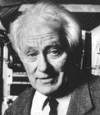
Born 1 Aug 1924; died 29 Sep 2010 at age 86.
Polish-French physicist who was awarded the Nobel Prize for Physics in 1992 for his invention and development of subatomic particle detectors, in particular the multiwire proportional chamber, a breakthrough in the technique for exploring the innermost parts of matter. As particle physicists have focussed their interest on very rare particle interactions, which often reveal the secrets of the inner parts of matter, sometimes only one particle interaction in a billion is the one searched for. Charpak replaced now inadequate photographic methods with modern electronics that connected the detector directly to a computer.
Polish-French physicist who was awarded the Nobel Prize for Physics in 1992 for his invention and development of subatomic particle detectors, in particular the multiwire proportional chamber, a breakthrough in the technique for exploring the innermost parts of matter. As particle physicists have focussed their interest on very rare particle interactions, which often reveal the secrets of the inner parts of matter, sometimes only one particle interaction in a billion is the one searched for. Charpak replaced now inadequate photographic methods with modern electronics that connected the detector directly to a computer.
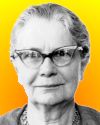
Born 1 Aug 1905; died 28 Jan 1993 at age 87.
Helen Battles Sawyer Hogg (neé Sawyer) was a Canadian astronomer who located, catalogued and measured the distances to variable stars in globular clusters (stars with cyclical changes of brightness found within huge, dense conglomerations of stars located in the outer halo of the Milky Way galaxy). Her interest in astronomy was spurred when she witnessed a total eclipse of the sun in 1925. Alongside her career work, she was also foremost in Canada in popularizing astronomy, about which she wrote a column in the Toronto Star for thirty years. She was the first woman to become president of the Royal Canadian Institute. In 1989, the observatory at the National Museum of Science and Technology in Ottawa was dedicated in her name.«
Helen Battles Sawyer Hogg (neé Sawyer) was a Canadian astronomer who located, catalogued and measured the distances to variable stars in globular clusters (stars with cyclical changes of brightness found within huge, dense conglomerations of stars located in the outer halo of the Milky Way galaxy). Her interest in astronomy was spurred when she witnessed a total eclipse of the sun in 1925. Alongside her career work, she was also foremost in Canada in popularizing astronomy, about which she wrote a column in the Toronto Star for thirty years. She was the first woman to become president of the Royal Canadian Institute. In 1989, the observatory at the National Museum of Science and Technology in Ottawa was dedicated in her name.«

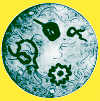
John Friend Mahoney was an American physician who pioneered the use of penicillin to treat syphilis, replacing hazardous arseno-therapy with a safe, treponemicidal cure. For the U.S. Public Health Service, he founded the Venereal Disease Research Center on Staten Island to conduct laboratory and clinical studies. With colleagues, he clarified how the syphilis spirochete penetrates tissues and improved serologic tests. Using early penicillin supplies, he confirmed its effectiveness against sulfonamide-resistant gonorrhea and, in 1943, proved its high efficacy against primary syphilis. He received the Lasker Award (1946) for this work.«[Right: electron micrograph drawing of spirochetes (x18,240) by Merck Penicillin Products.]
Born 1 Aug 1889; died 10 Aug 1979 at age 90.
German physicist noted especially for his work with Otto Stern on the deflections of atoms in a nonhomogeneous magnetic field. The Stern-Gerlach experiment is a demonstration of the restricted spatial orientation of atomic and subatomic particles with magnetic polarity, performed in the early 1920s by the German physicists Otto Stern and Walther Gerlach. In the experiment, a beam of neutral silver atoms was directed through a set of aligned slits, then through a nonuniform (nonhomogeneous) magnetic field.
German physicist noted especially for his work with Otto Stern on the deflections of atoms in a nonhomogeneous magnetic field. The Stern-Gerlach experiment is a demonstration of the restricted spatial orientation of atomic and subatomic particles with magnetic polarity, performed in the early 1920s by the German physicists Otto Stern and Walther Gerlach. In the experiment, a beam of neutral silver atoms was directed through a set of aligned slits, then through a nonuniform (nonhomogeneous) magnetic field.
Born 1 Aug 1885; died 5 Jul 1966 at age 80.
Hungarian-Danish-Swedish chemist who was awarded the 1943 Nobel Prize for developing isotopic tracer techniques which enabled understanding of the chemical paths of life processes. For example, a radioactive isotope of phosphorus, prepared in solutions of sodium phosphate can be injected into animals and humans, and blood samples analysed. This show that the radio-phosphorus content in human blood falls after only 2 hours to just 2% of its original amount as it changes places with the phosphorus atoms within the tissues, organs and skeleton. He also discovered, with Dirk Coster, the element hafnium (1923). He published Adventures in Radioisotope Research in two volumes (1962).[EB and a NYT obituary give date of death 5 Jul 1966. DSB gives 6 Jul 1966.]
Hungarian-Danish-Swedish chemist who was awarded the 1943 Nobel Prize for developing isotopic tracer techniques which enabled understanding of the chemical paths of life processes. For example, a radioactive isotope of phosphorus, prepared in solutions of sodium phosphate can be injected into animals and humans, and blood samples analysed. This show that the radio-phosphorus content in human blood falls after only 2 hours to just 2% of its original amount as it changes places with the phosphorus atoms within the tissues, organs and skeleton. He also discovered, with Dirk Coster, the element hafnium (1923). He published Adventures in Radioisotope Research in two volumes (1962).[EB and a NYT obituary give date of death 5 Jul 1966. DSB gives 6 Jul 1966.]

Ilya Ivanovich Ivanov was a Soviet biologist who developed a practical procedure for artificially inseminating domestic animals (extending earlier research by Spallanzani who discovered that it was possible). In 1901 Ivanov founded the world’s first centre for the artificial insemination of racehorses. Thereafter, his method was extensively used breeding farm animals. In 2005, Moscow newspapers reported that uncovered secret documents showed that Ivanov was ordered to use monkey sperm in humans as part of Stalin's quest for a super-warrior that would be “a new invincible human being, insensitive to pain, resistant and indifferent about the quality of food they eat.” His expensive work failed, and he was exiled in disgrace to Kazakhstan in 1931 where he died a year later.«
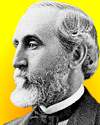
Born 1 Aug 1821; died 28 Sep 1888 at age 67.
American naturalist who contributed over one thousand medical and zoological articles to Appleton’s New American Cyclopædia. Although trained at Harvard as a physician, and was a surgeon during the Civil War, his activities later turned to natural history. He traveled abroad, interested in observing volcanoes, and the results of earthquakes. Later in life, he joined the faculty at Massachusetts Institute of Technology as an instructor (1867) and then professor of zoology and physiology (1869-78). Kneeland wrote several books, including An American in Iceland (1876), and The Wonders of Yosemite Valley and of California (1871) and was active in various scientific societies.«
American naturalist who contributed over one thousand medical and zoological articles to Appleton’s New American Cyclopædia. Although trained at Harvard as a physician, and was a surgeon during the Civil War, his activities later turned to natural history. He traveled abroad, interested in observing volcanoes, and the results of earthquakes. Later in life, he joined the faculty at Massachusetts Institute of Technology as an instructor (1867) and then professor of zoology and physiology (1869-78). Kneeland wrote several books, including An American in Iceland (1876), and The Wonders of Yosemite Valley and of California (1871) and was active in various scientific societies.«
An American in Iceland, by Samuel Kneeland. - book suggestion.
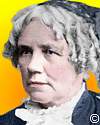
Born 1 Aug 1818; died 28 Jun 1889 at age 70. quotes
American astronomer who was the first professional woman in the field in the United States. While pursuing an amateur interest, on 1 Oct 1847, she gained fame from the observation of a comet which she was first to report. She was also the first female member of the American Association of Arts and Sciences.
American astronomer who was the first professional woman in the field in the United States. While pursuing an amateur interest, on 1 Oct 1847, she gained fame from the observation of a comet which she was first to report. She was also the first female member of the American Association of Arts and Sciences.
Maria Mitchell: A Life in Journals and Letters, by Henry Albers. - book suggestion.
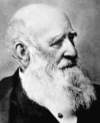
Born 1 Aug 1817; died 23 Dec 1901 at age 84.
English chemist who as co-director with John Bennet Lawes of the Rothamsted Experimental Station, Hertfordshire, for over 50 years established a premier reputation for research at the first organized agricultural experimental station in the world. Their work applied skills in chemistry, meteorology, botany, animal and vegetable physiology, and geology to determine practical improvements for agricultural methods. They studied the nitrogen requirements of plants, how the element was taken up by plants, and the effects of nitrogen fertilizers on grain production and quality. In the 1840s, they initiated the manufacture of superphosphate fertilizer, one of their inventions.«
English chemist who as co-director with John Bennet Lawes of the Rothamsted Experimental Station, Hertfordshire, for over 50 years established a premier reputation for research at the first organized agricultural experimental station in the world. Their work applied skills in chemistry, meteorology, botany, animal and vegetable physiology, and geology to determine practical improvements for agricultural methods. They studied the nitrogen requirements of plants, how the element was taken up by plants, and the effects of nitrogen fertilizers on grain production and quality. In the 1840s, they initiated the manufacture of superphosphate fertilizer, one of their inventions.«
Born 1 Aug 1808; died 29 May 1866 at age 57.
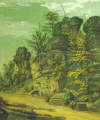
American structural geologist who contributed much to the theory of mountain building through his studies of the geology of Pennsylvania. The Dept.of Geology and Mineralogy at the University of Pennsylvania was founded in 1835 with Rogers as its first professor. Professor Rogers organized and directed the first Geological Survey of the State as the first State Geologist of Pennsylvania. Together with his brother William, he mapped Pennsylvania, New Jersey and Virginia, including much of the Appalachian Mountain system, interpreting the stratigraphy and structure and thus providing the first adequate understanding of the geologic structure of any large mountain belt.[Image: From lithograph of Pulpit Rocks in the 1855 survey.]
American structural geologist who contributed much to the theory of mountain building through his studies of the geology of Pennsylvania. The Dept.of Geology and Mineralogy at the University of Pennsylvania was founded in 1835 with Rogers as its first professor. Professor Rogers organized and directed the first Geological Survey of the State as the first State Geologist of Pennsylvania. Together with his brother William, he mapped Pennsylvania, New Jersey and Virginia, including much of the Appalachian Mountain system, interpreting the stratigraphy and structure and thus providing the first adequate understanding of the geologic structure of any large mountain belt.[Image: From lithograph of Pulpit Rocks in the 1855 survey.]
click to enlarge
Born 1 Aug 1779; died 11 Aug 1851 at age 72. quotes
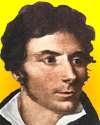
German naturalist who offered early evolutionary ideas and stimulated comparative anatomy. He theorized (incorrectly) that the skull was a modified vertebra, but formed some fundamental concepts which stimulated further thought from later scientists. In Die Zeugung, he discussed “the infusoria”—elementary units of living organisms—into which all flesh can be broken down. Higher animals, he proposed, consisted of constituent animalcules. Entities, whether plants or animals, became organisms by the fusion of these primal animals. Those elements lose all individuality and create a higher unity. Lorenz Oken wrote many books on natural history for students and adults, founded a scholarly journal (contributing most of its articles), and organized scientific congresses.«
German naturalist who offered early evolutionary ideas and stimulated comparative anatomy. He theorized (incorrectly) that the skull was a modified vertebra, but formed some fundamental concepts which stimulated further thought from later scientists. In Die Zeugung, he discussed “the infusoria”—elementary units of living organisms—into which all flesh can be broken down. Higher animals, he proposed, consisted of constituent animalcules. Entities, whether plants or animals, became organisms by the fusion of these primal animals. Those elements lose all individuality and create a higher unity. Lorenz Oken wrote many books on natural history for students and adults, founded a scholarly journal (contributing most of its articles), and organized scientific congresses.«
Born 1 Aug 1744; died 18 Dec 1829 at age 85. quotes
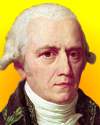
Pioneer French biologist and pre-Darwinian evolutionist who proposed that acquired traits are inheritable (Lamarckism), which was replaced by Darwinian theory. After time as an army officer, and as a worker in a bank, Lamarck became interested in medicine and botany. He wrote Flore française (French Flora, 1773), became keeper of the royal garden (1774), and professor of invertebrate zoology at the Museum of Natural History, Paris (1793). His scientific theories on heredity published in Philosophie zoologique (1809), were largely ignored or attacked at the time. His speculative theory was that acquired traits are inheritable (such as giraffes who, he said, through stretching to reach tall trees, make their necks longer, and then pass on longer necks to their offspring.) The Lamarck system of classification for invertebrate animals was published in his Histoire naturelle des animaux sans vertebres (7 vols, 1815-22). Lamarck’s speculations about the physical and natural world found little favour among his contemporaries and he died blind and in poverty. Darwin, however, writing in 1861 recognized his efforts for initiating interest in the idea of evolution.
Pioneer French biologist and pre-Darwinian evolutionist who proposed that acquired traits are inheritable (Lamarckism), which was replaced by Darwinian theory. After time as an army officer, and as a worker in a bank, Lamarck became interested in medicine and botany. He wrote Flore française (French Flora, 1773), became keeper of the royal garden (1774), and professor of invertebrate zoology at the Museum of Natural History, Paris (1793). His scientific theories on heredity published in Philosophie zoologique (1809), were largely ignored or attacked at the time. His speculative theory was that acquired traits are inheritable (such as giraffes who, he said, through stretching to reach tall trees, make their necks longer, and then pass on longer necks to their offspring.) The Lamarck system of classification for invertebrate animals was published in his Histoire naturelle des animaux sans vertebres (7 vols, 1815-22). Lamarck’s speculations about the physical and natural world found little favour among his contemporaries and he died blind and in poverty. Darwin, however, writing in 1861 recognized his efforts for initiating interest in the idea of evolution.
Lamarck’s Open Mind: The Lectures, by Jean-Baptiste Lamarck. - book suggestion.
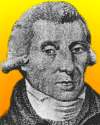
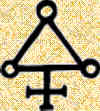
Irish chemist whose Elements of Mineralogy (1784), was the first English systematic treatment of the subject. He did valuable work on chemical affinity and the combining proportions of acids and bases forming salts. Previously a staunch defender of phlogiston theory, in 1791, Kirwan conceded that the experimental evidence was to the contrary. He was president of the Royal Irish Academy and the Royal Dublin Society. He challenged Antoine Lavoisier's discoveries and the revolutionary views of the Scottish geologist James Hutton. He was also a great eccentric; one of his pet hates was flies. He always dined alone, because of dysphagia; he was unable to swallow food without convulsive movements, which was distressing for others to view.[Image right: sign for phlogiston in eighteenth-century (source) ]

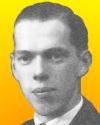
Died 1 Aug 2004 at age 91 (born 27 Apr 1913). quotes
Philip Hauge Abelson was an American physical chemist who proposed the gas diffusion process for separating uranium-235 from uranium-238 which was essential to the development of the atomic bomb. In collaboration with the U.S. physicist Edwin M. McMillan, he discovered a new element, later named neptunium, produced by irradiating uranium with neutrons. At the end WW II, his report on the feasibility of building a nuclear-powered submarine gave birth to the U.S. program in that field. In 1946, Abelson returned to the Carnegie Institution and pioneered in utilizing radioactive isotopes. As director of the Geophysics Laboratory of the Carnegie Institution (1953-71), he found amino acids in fossils, and fatty acids in rocks more than 1,000,000,000 years old.
Philip Hauge Abelson was an American physical chemist who proposed the gas diffusion process for separating uranium-235 from uranium-238 which was essential to the development of the atomic bomb. In collaboration with the U.S. physicist Edwin M. McMillan, he discovered a new element, later named neptunium, produced by irradiating uranium with neutrons. At the end WW II, his report on the feasibility of building a nuclear-powered submarine gave birth to the U.S. program in that field. In 1946, Abelson returned to the Carnegie Institution and pioneered in utilizing radioactive isotopes. As director of the Geophysics Laboratory of the Carnegie Institution (1953-71), he found amino acids in fossils, and fatty acids in rocks more than 1,000,000,000 years old.
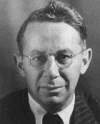
Died 1 Aug 1996 at age 99 (born 20 Jul 1897).
Swiss chemist who, with Philip S. Hench and Edward C. Kendall, received the Nobel Prize for Physiology or Medicine in 1950 for his discoveries concerning hormones of the adrenal cortex, their structure and biological effects. With his co-workers, Reichstein accomplished the first isolation of four active hormones from the adrenal cortex, the first synthesis of one of them, the proof of the steroid nature of said hormones, and numerous details on the structure and properties of these important bodies. This made synthesis possible, leading to the creation of new medications.Name also spelled Tadeusz.
Swiss chemist who, with Philip S. Hench and Edward C. Kendall, received the Nobel Prize for Physiology or Medicine in 1950 for his discoveries concerning hormones of the adrenal cortex, their structure and biological effects. With his co-workers, Reichstein accomplished the first isolation of four active hormones from the adrenal cortex, the first synthesis of one of them, the proof of the steroid nature of said hormones, and numerous details on the structure and properties of these important bodies. This made synthesis possible, leading to the creation of new medications.Name also spelled Tadeusz.
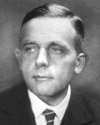
Died 1 Aug 1970 at age 86 (born 8 Oct 1883).
Otto Heinrich Warburg was a German biochemist awarded the Nobel Prize for Physiology or Medicine in 1931 for his research on cellular respiration, the process by which substances directly supplied to cells or stored in them are broken down into simpler components while using up oxygen. It is by this process that the energy required for other vital processes is made available to the cells in a form capable of immediate utilization. He devised a manometer for this research, enabling him to study the action of respiratory enzymes and poisons in detail.
Otto Heinrich Warburg was a German biochemist awarded the Nobel Prize for Physiology or Medicine in 1931 for his research on cellular respiration, the process by which substances directly supplied to cells or stored in them are broken down into simpler components while using up oxygen. It is by this process that the energy required for other vital processes is made available to the cells in a form capable of immediate utilization. He devised a manometer for this research, enabling him to study the action of respiratory enzymes and poisons in detail.
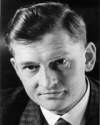
Died 1 Aug 1967 at age 66 (born 3 Dec 1900).
Austrian biochemist who was awarded the 1938 Nobel Prize for Chemistry for work on carotenoids and vitamins. In 1933, Kuhn had discovered a third carotene isomer. It was called gamma-carotene because two other components were previously known in carotene, C40H56, a compound found in carrots. Those were the optically inactive alpha-carotene and the optically active beta-carotene (which rotates the plane of polarized light to the right). Initially, Kuhn was required by Hitler to refuse the award because Hitler was offended by the Nobel Peace Prize for Carl von Ossietzky in a Nazi concentration camp. Kuhn finally received his diploma and gold medal after World War II in 1949.«[EB and a NYT obituary give date of death 1 Aug 1967. DSB gives 31 Jul 1967.]
Austrian biochemist who was awarded the 1938 Nobel Prize for Chemistry for work on carotenoids and vitamins. In 1933, Kuhn had discovered a third carotene isomer. It was called gamma-carotene because two other components were previously known in carotene, C40H56, a compound found in carrots. Those were the optically inactive alpha-carotene and the optically active beta-carotene (which rotates the plane of polarized light to the right). Initially, Kuhn was required by Hitler to refuse the award because Hitler was offended by the Nobel Peace Prize for Carl von Ossietzky in a Nazi concentration camp. Kuhn finally received his diploma and gold medal after World War II in 1949.«[EB and a NYT obituary give date of death 1 Aug 1967. DSB gives 31 Jul 1967.]
Died 1 Aug 1930 at age 80 (born 3 Mar 1850).
American naturalist, ornithologist, and ethnologist. From 1872-79, he made annual field trips to various parts of the West as naturalist with the Wheeler Survey, exploring west of the one-hundredth meridian, and prepared reports to Washington. In addition to making a notable collection of birds, he took an interest in other branches of natural history. In 1885 his collection of birds and eggs was acquired by the British Museum. During a period while ornithological work was available, he worked for the Bureau of Ethnology.
American naturalist, ornithologist, and ethnologist. From 1872-79, he made annual field trips to various parts of the West as naturalist with the Wheeler Survey, exploring west of the one-hundredth meridian, and prepared reports to Washington. In addition to making a notable collection of birds, he took an interest in other branches of natural history. In 1885 his collection of birds and eggs was acquired by the British Museum. During a period while ornithological work was available, he worked for the Bureau of Ethnology.
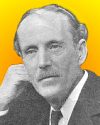
Died 1 Aug 1924 at age 73 (born 17 Nov 1850).
Scottish industrial chemist who developed (1890) the process of manufacturing potassium cyanide (widely used to extract gold from low-grade ore) by passing ammonia over a heated mixture of charcoal and potassium carbonate. Beilby entered the oil-shale industry in 1869 and greatly increased the yield of paraffin and ammonia by introducing the continuous retort. Noting the destruction of metals by ammonia at high temperatures, Beilby researched the flow of solids. He inferred that when a solid is caused to flow, as in polishing, the crystalline surface is broken down to a harder and denser layer. Although much criticized, this theory explained the hardening of metals under cold working and gave valuable stimulus to further research.
Scottish industrial chemist who developed (1890) the process of manufacturing potassium cyanide (widely used to extract gold from low-grade ore) by passing ammonia over a heated mixture of charcoal and potassium carbonate. Beilby entered the oil-shale industry in 1869 and greatly increased the yield of paraffin and ammonia by introducing the continuous retort. Noting the destruction of metals by ammonia at high temperatures, Beilby researched the flow of solids. He inferred that when a solid is caused to flow, as in polishing, the crystalline surface is broken down to a harder and denser layer. Although much criticized, this theory explained the hardening of metals under cold working and gave valuable stimulus to further research.
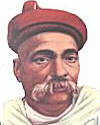
Died 1 Aug 1920 at age 64 (born 23 Jul 1856).
Indian scholar, mathematician, philosopher, and militant nationalist who helped lay the foundation for India's independence. Tilak was a great Sanskrit scholar and astronomer. He fixed the origin and date of Rigvedic Aryans, which was highly acclaimed and universally accepted by orientalists of his time. He founded (1914) and served as president of the Indian Home Rule League and, in 1916, concluded the Lucknow Pact with Mohammed Ali Jinnah, which provided for Hindu-Muslim unity in the struggle for independence.
Indian scholar, mathematician, philosopher, and militant nationalist who helped lay the foundation for India's independence. Tilak was a great Sanskrit scholar and astronomer. He fixed the origin and date of Rigvedic Aryans, which was highly acclaimed and universally accepted by orientalists of his time. He founded (1914) and served as president of the Indian Home Rule League and, in 1916, concluded the Lucknow Pact with Mohammed Ali Jinnah, which provided for Hindu-Muslim unity in the struggle for independence.
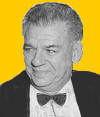
Died 1 Aug 1919 at age 72 (born 8 May 1847).
German inventor, cigar maker, opera impresario, theater builder; and Oscar II's grandfather.Born in Stettin (now Szczecin, Poland), in his mid-teen years, he went to New York City (1863), with no money and no understanding of English. He worked in a cigar factory and made inventions for his employers. Then, learning of the patenting system, he began to accumulate great sums of money for his cigar rolling machines. With his new-found fortune he pursued his love for the arts with a passion. Hammerstein designed all his theaters himself and had an incredible genius for acoustics. His halls often used his own inventions and were all gloriously decorated, though often with inexpensive materials.
German inventor, cigar maker, opera impresario, theater builder; and Oscar II's grandfather.Born in Stettin (now Szczecin, Poland), in his mid-teen years, he went to New York City (1863), with no money and no understanding of English. He worked in a cigar factory and made inventions for his employers. Then, learning of the patenting system, he began to accumulate great sums of money for his cigar rolling machines. With his new-found fortune he pursued his love for the arts with a passion. Hammerstein designed all his theaters himself and had an incredible genius for acoustics. His halls often used his own inventions and were all gloriously decorated, though often with inexpensive materials.
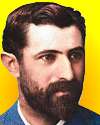
Died 1 Aug 1905 at age 46 (born 4 Sep 1858). quotes
Léo Abram Errera was a Belgian botanist whose wrote his first paper in 1874, at age 16. After his death in his 47th year, selections collected from his prolific lifetime output of papers were planned to fill six volumes. Among other topics, he wrote on the Latin names of plants, the scientific basis of agriculture, plant physiology, algae, Darwinism, relation of plants to the environment, the composition of plants, critique of systematic botany and suggestions for research on bacteria.«
Léo Abram Errera was a Belgian botanist whose wrote his first paper in 1874, at age 16. After his death in his 47th year, selections collected from his prolific lifetime output of papers were planned to fill six volumes. Among other topics, he wrote on the Latin names of plants, the scientific basis of agriculture, plant physiology, algae, Darwinism, relation of plants to the environment, the composition of plants, critique of systematic botany and suggestions for research on bacteria.«
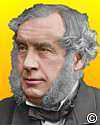
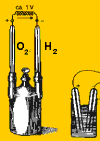
Welsh physicist, who first proved thermal dissociation, when steam on hot platinum splits reversibly into oxygen and hydrogen. In 1839 he created the Grove Cell in which hydrogen and oxygen with an electrolyte produced electricity and water. This first fuel cell, was later seriouslyrevisitedin the 1960s. In it, an electrochemical process changes a fuel’s energy directly into DC electricity without combustion. He also devised a two-fluid electric cell with zinc in sulfuric acid and a platinum cathode in nitric acid, separated by a porous barrier. While physics professor at London Institution (1840–47), he showed it producing electric light during a lecture. From 1880, he was a justice on Britain’s high court.« more
Died 1 Aug 1799 at age 54 (born 6 Jan 1745). quotes
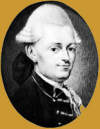
French ballooning pioneer, who with his brother Joseph-Michel Montgolfier, developed the hot-air balloon and conducted the first untethered flights. An initial experiment with a balloon of taffeta filled with hot smoke was given a public demonstration on 5 Jun 1783. This was followed by a flight carrying three animals as passengers on 19 Sep 1783, shown in Paris and witnessed by King Louis XVI. On 21 Nov 1783, their balloon carried the first two men on an untethered flight - the first manned balloon flight. Modifications of the basic Montgolfier design were incorporated in the construction of larger balloons that, in later years, led to exploration of the upper atmosphere. Étienne also developed a process for manufacturing vellum.[DSB gives date of death 1 Aug 1799, and that he was named Étienne in the baptismal register, but Jacques-Étienne in his death certificate. EB gives 2 Aug 1799.] more
French ballooning pioneer, who with his brother Joseph-Michel Montgolfier, developed the hot-air balloon and conducted the first untethered flights. An initial experiment with a balloon of taffeta filled with hot smoke was given a public demonstration on 5 Jun 1783. This was followed by a flight carrying three animals as passengers on 19 Sep 1783, shown in Paris and witnessed by King Louis XVI. On 21 Nov 1783, their balloon carried the first two men on an untethered flight - the first manned balloon flight. Modifications of the basic Montgolfier design were incorporated in the construction of larger balloons that, in later years, led to exploration of the upper atmosphere. Étienne also developed a process for manufacturing vellum.[DSB gives date of death 1 Aug 1799, and that he was named Étienne in the baptismal register, but Jacques-Étienne in his death certificate. EB gives 2 Aug 1799.] more
The Montgolfier Brothers and the Invention of Aviation, 1783-1784, by Charles Coulston Gillispie. - book suggestion.
Died 1 Aug 1708 (born 1650). quotes
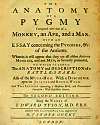
English physician and anatomist who published a number of important papers on such topics as the rattlesnake, human tapeworm, shark, lumpfish, opposum and dophin (1690) which he saw as a transition in atomic structure between fish and land creatures. He published a pioneering comparative anatomy between humans and primates with a juvenile chimpanzee described in a landmark workAnatomy of a Pygmy (1699). In this book he recognized graduational links whereby chimpanzees represented a rung preceding man in the Great Chain of Being. This viewpoint helped spark a fierce and continuing debate about the relationship of humans to other primates. (Tyson was a distant cousin to Charles Darwin.)«
English physician and anatomist who published a number of important papers on such topics as the rattlesnake, human tapeworm, shark, lumpfish, opposum and dophin (1690) which he saw as a transition in atomic structure between fish and land creatures. He published a pioneering comparative anatomy between humans and primates with a juvenile chimpanzee described in a landmark workAnatomy of a Pygmy (1699). In this book he recognized graduational links whereby chimpanzees represented a rung preceding man in the Great Chain of Being. This viewpoint helped spark a fierce and continuing debate about the relationship of humans to other primates. (Tyson was a distant cousin to Charles Darwin.)«
Philological Essay Concerning the Pygmies of the Ancients, by Edward Tyson. - book suggestion.
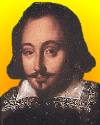
Died 1 Aug 1630 at age 45 (born 13 Mar 1585).
Italian naturalist who founded the Accademia dei Lincei (1603, Academy of Linceans or Lynxes), often cited as the first modern scientific society, and of which Galileo was the sixth member (1611). Cesi first announced the word telescope for Galileo's instrument. At an early age, while being privately educated, Cesi became interested in natural history and that believed it should be studied directly, not philosophically. The name of the Academy, which he founded at age 18, was taken from Lynceus of Greek mythology, the animal Lynx with sharp sight. He devoted the rest of his life to recording, illustrating and an early classification of nature, especially botany. The Academy was dissolved when its funding from Cesi ceased upon his sudden death.
Italian naturalist who founded the Accademia dei Lincei (1603, Academy of Linceans or Lynxes), often cited as the first modern scientific society, and of which Galileo was the sixth member (1611). Cesi first announced the word telescope for Galileo's instrument. At an early age, while being privately educated, Cesi became interested in natural history and that believed it should be studied directly, not philosophically. The name of the Academy, which he founded at age 18, was taken from Lynceus of Greek mythology, the animal Lynx with sharp sight. He devoted the rest of his life to recording, illustrating and an early classification of nature, especially botany. The Academy was dissolved when its funding from Cesi ceased upon his sudden death.
The Eye of the Lynx: Galileo, His Friends, and the Beginnings of Modern Natural History, by David Freedberg. - book suggestion.
In 2000, a man in Israel become the first recipient of the Jarvik 2000, the first total artificial heart that can maintain blood flow in addition to generating a pulse.
After Barney Clark: Reflections on the Utah Artificial Heart Program, by Margery W. Shaw. - book suggestion.
In 1999, a record-making giant 10 ft (3.2 m) diameter yo-yo was dropped from a crane, in Wythenshawe, Greater Manchester, England. Stockport College students constructed the 897-lb (407 kg) yo-yo. It bobbed back up the rope four times when released from the top of a crane at a height of about 187 ft (57 m). The record has since been broken with a newer entry in the 2015 Guiness World Records book. This new yo-yo, with a diameter of 11 ft 9 in (3.63 m), was built by Beth Johnson of Cincinnati, USA. It was reported to weigh 4620 lbs (2,096 kg).«

In 1974, the People's Liberation Army Navy put into service ChangZheng 1, their first nuclear-powered submarine, designed and built in China. Russia had refused to share nuclear propulsion technology with China, so Mao Tse-tung resolved to develop their own nuclear submarine building program. Construction had started by 1968 at Huludao Shipyard, in Liaoning Province. The pressurized-water 90 megawatt reactor provided power for turbo-electric propulsion. The type 091 submarine was launched in 1970, its nuclear reactor was activated in Jul 1971 and it began sea trials the next month. NATO codenamed it a Han class submarine. As China's first-generation design, its performance was generally inferior to American or Russian vessels of the time. It was decommissioned in 2000.«

In 1957, the Solar Building (Bridgers and Paxton Office Building), Albuquerque NM, was the first commercial building to be heated by the sun's energy. It was subsequently listed in the National Register of Historic Places for its "exceptional importance," in the area of engineering because it was an early solar-heated commercial building, the equipment for which survived largely intact. It was constructed when active solar-energy systems were still considered experimental. The site is privately owned, at 213 Truman St., NE., Albuquerque, NM. The architectural design was provided by Wright and Stanley.
In 1955, first microgravity research began.
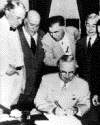
In 1946, the Atomic Energy Commission was established as President Harry S. Truman signed the Atomic Energy Act, which transfered the control of atomic energy from military to civilian hands. Almost a year after World War II ended, Congress established the United States Atomic Energy Commission to foster and control the peace time development of atomic science and technology. The National Laboratory system was established from the facilities created under the Manhattan Project. and Argonne National Laboratory was one of the first laboratories authorized under this legislation as a contractor-operated facility dedicated to fulfilling the new Commission's mission.
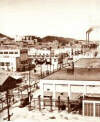
In 1943, this day marked the groundbreaking ceremony in Oak Ridge, TN for the first uranium-235 processing plant. (U-235 was needed to build the A-bomb.) The uranium manufacturing facility cost $280,000,000 to build and was completed in the summer of 1944.[Image: Oak Ridge facilities circa 1943.]
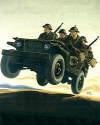
In 1941, Parade magazine called it “...the Army's most intriguing new gadget” The gadget was “a tiny truck which can do practically everything.” General Dwight D. Eisenhower said that America couldn't have won World War II without it. The tiny truck was the Jeep, built at the time by the Willys Truck Company. Parade was so enthusiastic about the Jeep, that, on this day, it devoted three full pages to the vehicle.
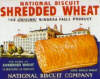
In 1893, Henry D. Perky of Colorado and William Ford of Watertown, NY, patented the pillow-shaped shredded wheat. The product is composed of whole wheat which has been boiled, partially dried, then drawn or pressed out into thin shreds and baked. It was shown at the World's Columbian Exposition of 1893 in Chicago, Ill. Once the original patent expired, the name “shredded wheat” became generic. A Federal court ruled thus, in favour of a competing brand under that name made by the Kellogg Company, decided on 14 Nov 1938, (Kellogg Co. v. National Biscuit Co., 305 U.S. 111 (1938)).
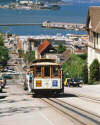
In 1873, English inventor Andrew Smith Hallidie, in the U.S. since 1852, revolutionized transportation methods in San Francisco when he successfully tested a cable car he had designed to solve the problem of providing mass transit up San Francisco's steep hills. He not only invented, but also manufactured, and patented the first cable car and its system of wire ropes, pulleys, tracks, and grips that made it possible. Hallidie, an engineer and one-time miner, realized the need on one foggy day in 1869 when he watched in horror as horses pulling a carriage up one of the City's steep grades slipped on the wet cobblestoned street, the heavy carriage rolled backward downhill and the five horses dragged behind it suffered fatal injuries. Hallidie, using wire rope, had already had much success in the use of cable drawn ore cars for use in mines.
Cable Car Days in San Francisco, by Edgar Myron Kahn. - book suggestion.
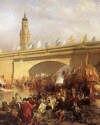
In 1831, New London Bridge opened to traffic. In 1821, a committee was formed by Parliament to consider the poor condition of the existing centuries-old bridge. The arches had been badly damaged by the Great Freeze, so it was decided to build a new bridge. Building commenced under John Rennie in 1825, and completed in 1831, at the expense of the city. The bridge is composed of five arches, and built of Dartmoor granite. It was opened with great splendour, on 1 Aug 1831, by King William the fourth, accompanied by Queen Adelaide, and many of the members of the royal family. In the 1960s, it was auctioned and sold for $2,460,000 to Robert McCulloch who moved it to Havasu City, Arizona. The rebuilt London Bridge was completed and dedicated on 10 Oct 1971.
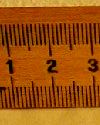
In 1793, the first definition was made for the metre: one ten-millionth of the northern quadrant of the Paris meridian (5,132,430 toises of Paris, from the north pole to the equator). The definition was tweaked based on a second measure made along the Dunkirk-Barcelona axis (5,130,740 toises of Paris) and made legal by the French National Assembly on 7 Apr 1795. The toise was six French feet, 76.74 English inches, a pre-metric measure, from Latin tendere, to stretch (implying the distance between fingertips of a man's arms stretched horizontally sideways, similar to the English fathom). In the Middle Ages, “the toise of Paris” was an iron bar with two tabs, fixed in a wall at the foot of the staircase of the Grand Châtelet in Paris.«
The Measure of All Things: The Seven-Year Odyssey and Hidden Error That Transformed the World, by Ken Alder. - book suggestion.
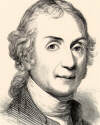
In 1774, Joseph Priestley, British Presbyterian minister and chemist, identified a gas which he called "dephlogisticated air" -- later known as oxygen. Priestley found that mercury heated in air became coated with "red rust of mercury," which, when heated separately, was converted back to mercury with "air" given off. Studying this "air" given off, he observed that candles burned very brightly in it. Also, a mouse in a sealed vessel with it could breathe it much longer than ordinary air. A strong believer in the phlogiston theory, Priestley considered it to be "air from which the phlogiston had been removed." Further experiments convinced him that ordinary air is one fifth dephlogisticated air, the rest considered by him to be phlogiston.
Joseph Priestley: Adventurer in Science and Champion of Truth, by F W. Gibbs. - book suggestion.




