Born 4 Oct 1935. quotes
British statistician.
British statistician.
Born 4 Oct 1932. quotes
Chinese astrophysicist.
Chinese astrophysicist.
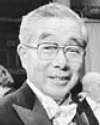
Born 4 Oct 1918; died 9 Jan 1998 at age 79.
Japanese chemist who shared the 1981 Nobel Prize for Chemistry with Roald Hoffmann for investigation of the mechanisms of chemical reactions. In 1952, at Kyoto University, Fukui introduced his “frontier orbital theory of reactions.” He proposed that the course of a reaction is determined by geometry and relative energies of molecular orbitals of reactants. The theory explains electrophilic attack, for example, occurs at the carbon atom having the greatest density of frontier (highest energy) electrons. In the mid-1960s, Fukui and Hoffmann discovered—almost simultaneously and independently of each other—that symmetry properties of frontier orbitals could explain certain reaction courses that had previously been difficult to understand.
Japanese chemist who shared the 1981 Nobel Prize for Chemistry with Roald Hoffmann for investigation of the mechanisms of chemical reactions. In 1952, at Kyoto University, Fukui introduced his “frontier orbital theory of reactions.” He proposed that the course of a reaction is determined by geometry and relative energies of molecular orbitals of reactants. The theory explains electrophilic attack, for example, occurs at the carbon atom having the greatest density of frontier (highest energy) electrons. In the mid-1960s, Fukui and Hoffmann discovered—almost simultaneously and independently of each other—that symmetry properties of frontier orbitals could explain certain reaction courses that had previously been difficult to understand.
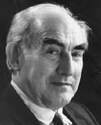
Born 4 Oct 1916; died 8 Nov 2009 at age 93.
Soviet physicist and astrophysicist whose research ranged over the theory of superconductivity and to the theory of high-energy processes in astrophysics, theories of electromagnetic wave propagation in plasmas, radio astronomy, and the origin of cosmic rays. He helped develop the Soviet hydrogen bomb. In 2003, Ginzburg shared the Nobel Prize in Physics (with Alexei A. Abrikosov and Anthony J. Leggett) for “for pioneering contributions to the theory of superconductors and superfluids.”
Soviet physicist and astrophysicist whose research ranged over the theory of superconductivity and to the theory of high-energy processes in astrophysics, theories of electromagnetic wave propagation in plasmas, radio astronomy, and the origin of cosmic rays. He helped develop the Soviet hydrogen bomb. In 2003, Ginzburg shared the Nobel Prize in Physics (with Alexei A. Abrikosov and Anthony J. Leggett) for “for pioneering contributions to the theory of superconductors and superfluids.”
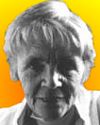
Born 4 Oct 1906; died 23 Jun 2002 at age 95. quotes
English epidemiologist who demonstrates the connection between foetal X-rays and childhood leukemia. Her research demonstrated greater danger from X-rays and nuclear radiation than was at the time accepted by nuclear and health physics establishments. She insisted that exposure to low-level radiation caused adverse effects greater than accepted was resisted by officials of the British and U.S. governments. Starting in WW II, she investigated the health effects of exposure to TNT in ammunitions factories, of carbon tetrachloride, and a prevalence of tuberculosis among shoe industry workers. After a visit to the U.S. in 1974, she consulted on a major investigation of the health of workers in the nuclear industry there.«
English epidemiologist who demonstrates the connection between foetal X-rays and childhood leukemia. Her research demonstrated greater danger from X-rays and nuclear radiation than was at the time accepted by nuclear and health physics establishments. She insisted that exposure to low-level radiation caused adverse effects greater than accepted was resisted by officials of the British and U.S. governments. Starting in WW II, she investigated the health effects of exposure to TNT in ammunitions factories, of carbon tetrachloride, and a prevalence of tuberculosis among shoe industry workers. After a visit to the U.S. in 1974, she consulted on a major investigation of the health of workers in the nuclear industry there.«
The Woman Who Knew Too Much: Alice Stewart and the Secrets of Radiation, by Gayle Jacoba Greene. - book suggestion.
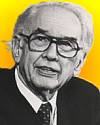
c. 1984
Born 4 Oct 1903; died 15 Jun 1995 at age 91.
John Vincent Atanasoff was an American physicist who was belatedly credited (1973) with developing the first electronic digital computer. Built in 1937-42 at Iowa State University by Atanasoff and a graduate student, Clifford Berry, it introduced the ideas of binary arithmetic, regenerative memory, and logic circuits. These ideas were communicated from Atanasoff to John Mauchly, who used them in the design of the better-known ENIAC built and patented several years later. On 19 Oct 1973, a US Federal Judge signed his decision following a lengthy court trial which declared the ENIAC patent invalid and named Atanasoff the original inventor of the electronic digital computer, the Atanasoff- Berry Computer or the ABC.
John Vincent Atanasoff was an American physicist who was belatedly credited (1973) with developing the first electronic digital computer. Built in 1937-42 at Iowa State University by Atanasoff and a graduate student, Clifford Berry, it introduced the ideas of binary arithmetic, regenerative memory, and logic circuits. These ideas were communicated from Atanasoff to John Mauchly, who used them in the design of the better-known ENIAC built and patented several years later. On 19 Oct 1973, a US Federal Judge signed his decision following a lengthy court trial which declared the ENIAC patent invalid and named Atanasoff the original inventor of the electronic digital computer, the Atanasoff- Berry Computer or the ABC.
The First Electronic Computer: The Atanasoff Story, by Alice R. Burks, Arthur W. Burks. - book suggestion.
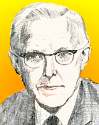
Born 4 Oct 1903; died 25 Aug 1952 at age 48.
British-American metallurgist who in 1943-44 determined the properties and technology of plutonium and uranium, the essential materials in the atomic bombs that were first exploded in 1945. Smith already then had 15 years of experience as a research metallurgist with the American Brass Co., during which time he studied properties of alloys and their microstructure. In WW II, he joined the Los Alamos Laboratory at its inception (1943). The properties and technology of plutonium had to be conducted with extremely limited quantities of available material. Smith and his group found it was unique, with five different allotropic forms with huge density differences between them. Postwar, he organized the Institute for the Study of Metal at the Univ. of Chicago.
British-American metallurgist who in 1943-44 determined the properties and technology of plutonium and uranium, the essential materials in the atomic bombs that were first exploded in 1945. Smith already then had 15 years of experience as a research metallurgist with the American Brass Co., during which time he studied properties of alloys and their microstructure. In WW II, he joined the Los Alamos Laboratory at its inception (1943). The properties and technology of plutonium had to be conducted with extremely limited quantities of available material. Smith and his group found it was unique, with five different allotropic forms with huge density differences between them. Postwar, he organized the Institute for the Study of Metal at the Univ. of Chicago.
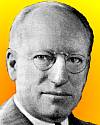
Born 4 Oct 1879; died 9 Nov 1938 at age 59. quotes
American plant geneticist, botanist, agronomist, and chemist, who contributed to genetic theory and to the development of hybrid corn (maize) by applying inbred strain breeding. This was a revolutionary method of seed production and improved corn crops around the world. He analyzed the protein and fat content of corn to increase its nutritional value as animal feed. East studied the genetics and breeding not only of corn, but also tobacco and potatoes. He independently discovered the phenomenon later called "multiple factors" that gives a Mendelian interpretation for "blending inheritance." He also made important studies of self- and cross-incompatibility, heterosis, cytoplasmic heredity, and hybridization.«
American plant geneticist, botanist, agronomist, and chemist, who contributed to genetic theory and to the development of hybrid corn (maize) by applying inbred strain breeding. This was a revolutionary method of seed production and improved corn crops around the world. He analyzed the protein and fat content of corn to increase its nutritional value as animal feed. East studied the genetics and breeding not only of corn, but also tobacco and potatoes. He independently discovered the phenomenon later called "multiple factors" that gives a Mendelian interpretation for "blending inheritance." He also made important studies of self- and cross-incompatibility, heterosis, cytoplasmic heredity, and hybridization.«
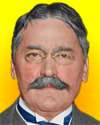
Born 4 Oct 1858; died 12 Mar 1935 at age 76. quotes
Mihajlo (Michael) Idvorsky Pupin was a Serbian-American physicist was born to illiterate parents who ensured he had a good education, Pupin migrated to America in 1874, supporting himself with jobs to graduate from Columbia University, New York, in 1883. He earned a Ph.D. in Germany under Helmholtz and Kirchhoff, then returned to Columbia in 1890 as an instructor in mathematical physics. Among his inventions was a fluoroscope for short-exposure X-ray images. In 1901, Bell Telephone purchased his patent for long-distance telephony, which used wire inductance coils at suitable intervals along the line to transmit signals farther without distortion. His autobiography, From Immigrant to Inventor (1923), won the Pulitzer Prize in 1924.«[With a discrepancy in records, some sources give his birth date as 9 Oct 1854.]
Mihajlo (Michael) Idvorsky Pupin was a Serbian-American physicist was born to illiterate parents who ensured he had a good education, Pupin migrated to America in 1874, supporting himself with jobs to graduate from Columbia University, New York, in 1883. He earned a Ph.D. in Germany under Helmholtz and Kirchhoff, then returned to Columbia in 1890 as an instructor in mathematical physics. Among his inventions was a fluoroscope for short-exposure X-ray images. In 1901, Bell Telephone purchased his patent for long-distance telephony, which used wire inductance coils at suitable intervals along the line to transmit signals farther without distortion. His autobiography, From Immigrant to Inventor (1923), won the Pulitzer Prize in 1924.«[With a discrepancy in records, some sources give his birth date as 9 Oct 1854.]
From Immigrant to Inventor, by Michael Pupin. - book suggestion.
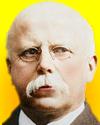
Born 4 Oct 1841; died 23 Mar 1924 at age 82. quotes
American physicist and meteorologist who was the first to propose the use of a ring pendulum for measuring absolute gravity. From 1889 to 1894 he served both as Director of the U.S. Coast and Geodetic Survey and also Superintendent of the U.S. Standard Weights and Measures where he oversaw the shift in the fundamental standards of the U.S. from the English yard and pound to the international meter and kilogram. Mendenhall devised a quarter second’s pendulum for gravity measurements and instituted improvements in the measurement of base lines with wire tapes, in the construction of instruments for precise leveling and in the methods used in triangulation and gravity work, and developed a comprehensive plan for the study of terrestrial magnetism.
American physicist and meteorologist who was the first to propose the use of a ring pendulum for measuring absolute gravity. From 1889 to 1894 he served both as Director of the U.S. Coast and Geodetic Survey and also Superintendent of the U.S. Standard Weights and Measures where he oversaw the shift in the fundamental standards of the U.S. from the English yard and pound to the international meter and kilogram. Mendenhall devised a quarter second’s pendulum for gravity measurements and instituted improvements in the measurement of base lines with wire tapes, in the construction of instruments for precise leveling and in the methods used in triangulation and gravity work, and developed a comprehensive plan for the study of terrestrial magnetism.
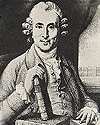
Born 4 Oct 1716; died 13 Jul 1794 at age 77. quotes
Scottish physician, “founder of naval hygiene in England,” who investigated sickness of sailors. On 20 May 1747, while a ship's surgeon on the HMS Salisbury, he began an experiment to remedy scurvy. He regulated the diets of the sailors, and especially included lemons and oranges. With a clearly positive outcome, he recommended fresh citrus fruit and lemon juice be incorporated in the diet of seamen on long voyages. When made a requirement by Sir Gilbert Blane, this resulted in the prompt eradication of scurvy from the British Navy. (The Dutch had implemented this practice almost two centuries earlier.) Lind also recommended shipboard delousing procedures and suggested the use of hospital ships for sick sailors in tropical ports. In 1761, he arranged for the shipboard distillation of seawater for drinking water.[World of Health gives birth data as 4 Oct 1716. EB gives only the year 1716.]
Scottish physician, “founder of naval hygiene in England,” who investigated sickness of sailors. On 20 May 1747, while a ship's surgeon on the HMS Salisbury, he began an experiment to remedy scurvy. He regulated the diets of the sailors, and especially included lemons and oranges. With a clearly positive outcome, he recommended fresh citrus fruit and lemon juice be incorporated in the diet of seamen on long voyages. When made a requirement by Sir Gilbert Blane, this resulted in the prompt eradication of scurvy from the British Navy. (The Dutch had implemented this practice almost two centuries earlier.) Lind also recommended shipboard delousing procedures and suggested the use of hospital ships for sick sailors in tropical ports. In 1761, he arranged for the shipboard distillation of seawater for drinking water.[World of Health gives birth data as 4 Oct 1716. EB gives only the year 1716.]
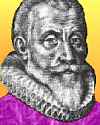
Born 4 Oct 1562; died 8 Oct 1647 at age 85.
Byname of Christian Severin, a Danish astronomer and astrologer who is best known for his association with, and published support for, Tycho Brahe. He became the first professor of astronomy at the University of Copenhagen, and in 1610 he received funds for instruments and he probably constructed a small observatory at his home. Longomontanus used Tycho's data to compile the Astronomia danica (1622), an exposition of the Tychonic system, which holds that the Sun revolves around the Earth and the other planets revolve around the Sun. He began the construction of the Copenhagen Observatory in 1632, but died before its completion.
Byname of Christian Severin, a Danish astronomer and astrologer who is best known for his association with, and published support for, Tycho Brahe. He became the first professor of astronomy at the University of Copenhagen, and in 1610 he received funds for instruments and he probably constructed a small observatory at his home. Longomontanus used Tycho's data to compile the Astronomia danica (1622), an exposition of the Tychonic system, which holds that the Sun revolves around the Earth and the other planets revolve around the Sun. He began the construction of the Copenhagen Observatory in 1632, but died before its completion.

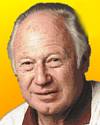
Died 4 Oct 2000 at age 68 (born 26 Apr 1932). quotes
British-born Canadian biochemist who won (with Kary B. Mullis) the 1993 Nobel Prize for Chemistry for his development of a technique called oligonucleotide-based site-directed mutagenesis, which enabled researchers to introduce specific mutations into genes and, thus, to the proteins that they encode. The prize recognized his groundbreaking work in reprogramming segments of DNA, the building blocks of life. His work launched a new era in genetics research.
British-born Canadian biochemist who won (with Kary B. Mullis) the 1993 Nobel Prize for Chemistry for his development of a technique called oligonucleotide-based site-directed mutagenesis, which enabled researchers to introduce specific mutations into genes and, thus, to the proteins that they encode. The prize recognized his groundbreaking work in reprogramming segments of DNA, the building blocks of life. His work launched a new era in genetics research.
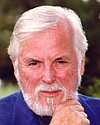
Died 4 Oct 1995 at age 75 (born 10 Jul 1920).
American inventor of Kitty Litter. After Navy duty (1941-45), Lowe joined his father's company in Cassopolis, Mich., selling industrial absorbents, including sawdust and an absorbent clay called Fuller's Earth. In 1947, Lowe suggested the use of the clay instead of ashes for his neighbor's cat's box to avoid sooty paw prints. It worked well and Lowe thought other cat owners would use this new cat-box filler. He filled ten brown bags with clay, wrote the name "Kitty Litter" on them and began selling it through the local pet store. By 1990, his marketing effort had grown into a clay mining and consumer product business, the largest U.S. producer of cat-box filler, now improved, 99% dust free, and sanitized against odor-causing bacteria. He held 67 US and foreign patents.
American inventor of Kitty Litter. After Navy duty (1941-45), Lowe joined his father's company in Cassopolis, Mich., selling industrial absorbents, including sawdust and an absorbent clay called Fuller's Earth. In 1947, Lowe suggested the use of the clay instead of ashes for his neighbor's cat's box to avoid sooty paw prints. It worked well and Lowe thought other cat owners would use this new cat-box filler. He filled ten brown bags with clay, wrote the name "Kitty Litter" on them and began selling it through the local pet store. By 1990, his marketing effort had grown into a clay mining and consumer product business, the largest U.S. producer of cat-box filler, now improved, 99% dust free, and sanitized against odor-causing bacteria. He held 67 US and foreign patents.
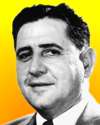
Died 4 Oct 1989 at age 85 (born 12 Dec 1903).
Ross Franco Nigrelli was an American marine biologist who was an expert on diseases of sea life, and was first to discover virus-induced tumours in fish. He investigated plankton blooms, such as the red tides of the 1940s along Florida's Gulf Coast that caused a die-off of millions of fish. He studied how the health of marine organisms was affected by, as well as changes in salinity or water temperature. As one of the earliest systematic researchers of venoms released by some marine life, and their uses of their extracts as sources of useful drugs. For example, he discovered that a secretion of Bahamian sea cucumbers that was fatal to fish, even in minute quantities. Yet, it could slow the growth of tumours in mice. He also found that certain secretions of sea sponges had antibacterial properties, and that the blood of horseshoe crabs could detect blood poisoning in humans.«
Ross Franco Nigrelli was an American marine biologist who was an expert on diseases of sea life, and was first to discover virus-induced tumours in fish. He investigated plankton blooms, such as the red tides of the 1940s along Florida's Gulf Coast that caused a die-off of millions of fish. He studied how the health of marine organisms was affected by, as well as changes in salinity or water temperature. As one of the earliest systematic researchers of venoms released by some marine life, and their uses of their extracts as sources of useful drugs. For example, he discovered that a secretion of Bahamian sea cucumbers that was fatal to fish, even in minute quantities. Yet, it could slow the growth of tumours in mice. He also found that certain secretions of sea sponges had antibacterial properties, and that the blood of horseshoe crabs could detect blood poisoning in humans.«
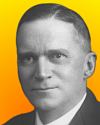
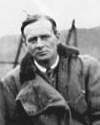
Died 4 Oct 1948 at age 62 (born 23 Jul 1886).
Scottish aviator, who was navigator with pilot Capt. John W. Alcock completed the first nonstop airplane crossing of the Atlantic, on 15 Jun 1919, in a Vickers Vimy, named after a battle in WW I. Brown began his career in engineering before the outbreak of WW I. Like Alcock, Brown also became a prisoner of war, after being shot down over Germany. Once released, Brown continued to develop his aerial navigation skills. While visiting the engineering firm of Vickers he was asked if he would be the navigator for the proposed transatlantic flight. By joining forces with the firm Vickers, Alcock and Brown entered a competition for the first direct transatlantic flight, set up by the Daily Mail newspaper, with a prize of ten thousand pounds.
Scottish aviator, who was navigator with pilot Capt. John W. Alcock completed the first nonstop airplane crossing of the Atlantic, on 15 Jun 1919, in a Vickers Vimy, named after a battle in WW I. Brown began his career in engineering before the outbreak of WW I. Like Alcock, Brown also became a prisoner of war, after being shot down over Germany. Once released, Brown continued to develop his aerial navigation skills. While visiting the engineering firm of Vickers he was asked if he would be the navigator for the proposed transatlantic flight. By joining forces with the firm Vickers, Alcock and Brown entered a competition for the first direct transatlantic flight, set up by the Daily Mail newspaper, with a prize of ten thousand pounds.
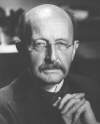
Died 4 Oct 1947 at age 89 (born 23 Apr 1858). quotes
Max Karl Ernst Ludwig Planck was a German theoretical physicist who studied at Munich and Berlin, where he studied under Helmholtz, Clausius and Kirchhoff and subsequently joined the faculty. He became professor of theoretical physics (1889-1926). His work on the law of thermodynamics and the distribution of radiation from a black body led him to abandon classical Newtonian principles and introduce the quantum theory (1900), for which he was awarded the Nobel Prize for Physics in 1918. This assumes that energy is not infinitely subdivisible, but ultimately exists as discrete amounts he called quanta (Latin, “how much”). Further, the energy carried by a quantum depends in direct proportion to the frequency of its source radiation.
Max Karl Ernst Ludwig Planck was a German theoretical physicist who studied at Munich and Berlin, where he studied under Helmholtz, Clausius and Kirchhoff and subsequently joined the faculty. He became professor of theoretical physics (1889-1926). His work on the law of thermodynamics and the distribution of radiation from a black body led him to abandon classical Newtonian principles and introduce the quantum theory (1900), for which he was awarded the Nobel Prize for Physics in 1918. This assumes that energy is not infinitely subdivisible, but ultimately exists as discrete amounts he called quanta (Latin, “how much”). Further, the energy carried by a quantum depends in direct proportion to the frequency of its source radiation.
Where Is Science Going?, by Max Planck. - book suggestion.
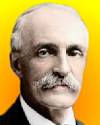
Died 4 Oct 1946 at age 81 (born 11 Aug 1865). quotes
American forester who as the first chief of the U.S. Forest Service popularized the conservation of natural resources. He became chief of the new Forest Service in 1905 when the management of the forest reserves was transferred to the Dept. of Agriculture from the Dept. of the Interior. At that time, the nation had 60 forest reserves covering 56 million acres. In his five years in office, by 1910 those numbers increased to 150 national forests covering 172 million acres. He is regarded as a father of American conservation because of his great and unrelenting concern for the protection of the American forests. His efforts were supported by President Theodore Roosevelt, but not by his successor, President Taft, who fired Pinchot on 7 Jan 1910.« more
American forester who as the first chief of the U.S. Forest Service popularized the conservation of natural resources. He became chief of the new Forest Service in 1905 when the management of the forest reserves was transferred to the Dept. of Agriculture from the Dept. of the Interior. At that time, the nation had 60 forest reserves covering 56 million acres. In his five years in office, by 1910 those numbers increased to 150 national forests covering 172 million acres. He is regarded as a father of American conservation because of his great and unrelenting concern for the protection of the American forests. His efforts were supported by President Theodore Roosevelt, but not by his successor, President Taft, who fired Pinchot on 7 Jan 1910.« more
Breaking New Ground (autobiography), by Gifford Pinchot. - book suggestion.
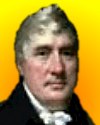
Died 4 Oct 1821 at age 60 (born 7 Jun 1761).
Scottish engineer and architect who designed London Bridge. After working as a millwright with Andrew Meikle he studied at Edinburgh University (1780-83). He was employed by Boulton & Watt for five years In 1791, he moved to London and started his own engineering company. Over the next few years he became famous as a bridge-builder, including Leeds Bridge, Southwark Bridge and Waterloo Bridge. He was also designed and built docks at Hull, Liverpool, Greenock and Leith and improving the harbours and dockyards at Portsmouth, Chatham and Plymouth. His last project was London Bridge, though he died in 1821 before it was finished. The bridge was completed by his son, Sir John Rennie. more
Scottish engineer and architect who designed London Bridge. After working as a millwright with Andrew Meikle he studied at Edinburgh University (1780-83). He was employed by Boulton & Watt for five years In 1791, he moved to London and started his own engineering company. Over the next few years he became famous as a bridge-builder, including Leeds Bridge, Southwark Bridge and Waterloo Bridge. He was also designed and built docks at Hull, Liverpool, Greenock and Leith and improving the harbours and dockyards at Portsmouth, Chatham and Plymouth. His last project was London Bridge, though he died in 1821 before it was finished. The bridge was completed by his son, Sir John Rennie. more
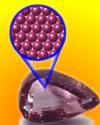
In 1971, the mole—the amount of substance (matter)—was adopted as a chemical measurement added to the six base quantities of the SI (International System of scientific units). The decision was made by the Conférence Général des Poids et Mesures (CGPM), the principal executive organization under the Treaty of the Meter (which dates back to the Metric Convention on 20 May 1875). IUPAC's participation was led by M.L. McGlashan. The mole is the amount of substance of a system which contains as many elementary entities as there are carbon atoms in 0.012 kg of carbon 12. The elementary entities must be specified, such as atoms, molecules, ions, electrons, other particles, or specified groups of such particles. The agreed symbol for the unit is mol, and the symbol for amount of substance is n.«
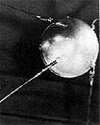
(NASA)
In 1957, the Space Age began as the Soviet Union, to the dismay of the United States, launched Sputnik, the first manmade satellite, into orbit around the earth. The craft circled the earth every 95 minutes at almost 20,000 miles per hour 500 miles above the Earth. The Sputnik (meaning "companion" or "fellow traveller") was launched from Kazakhstan. It stayed in orbit for about three months. Sputnik fell from the sky on 4 Jan 1958. The 184-lb satellite had transmitted a radio signal picked up around the world, and instrumentation for temperature measurement.
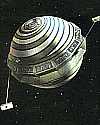
In 1957, two Johns Hopkins University Applied Physics Laboratory scientists tracking Sputnik found they could determine its orbit by analyzing the Doppler shift of its radio signals during a single pass. They conjectured that if a satellite's position were known and predictable, then the Doppler shift of its signals could be used to locate a receiver on Earth - thus, one could navigate by satellite. A system called Transit, was developed and from 1964 assisted the security of U.S. nuclear deterrent submarines. From 1967, this evolved into a navigation system for all nations, a forerunner of the present Global Positioning System (GPS). Transit also made key contributions to space science and technology, geodesy and health.*[Image: Transit 1B satellite]
In 1955, the world's first solar-powered telephone call was made by Bell Telephone.
In 1934, Enrico Fermi measured the speed of a neutron.
In 1923, Edwin Hubble photographed part of the Andromeda nebula. By 10 Oct 1923, he identified it as showing a faint variable star. On the plate, he crossed out his earlier “N” mark for a nova, and put in large letters, “Var!” for variable. This was a notable discovery. By early next Feb, he had measured the star's changing brightness. This confirmed it was a Cepheid variable star, the first found in the Andromeda nebula. Now he had a way, for the first time, to reliably measure the distance to Andromeda. The rate of variation of a Cepheid identifies its absolute intensity. By comparing that calculated quantity with the observed apparent intensity, the distance could be inferred. Andromeda was far beyond the Milky Way. After getting more data. he notified an AAS meeting with a paper read 1 Jan 1925.«
In 1830, the first power printing press capable of fine book work was patented by Isaac Adams of Boston, Massachusetts.
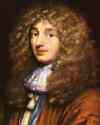
In 1675, Christian Huygens patented a pocket watch. Huygens was a Dutch astronomer an physicist who establishing the wave theory of light and making astronomical discoveries. He also patented the first pendulum clock in 1656, which he has developed to meet his need for exact time measurement while observing the heavens. In 1673, he studied the relation of the length of a pendulum to its period of osciallation.«
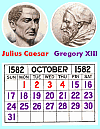
In 1582, this Thursday was the last day of the use of the Julian calendar in Italy and three other Catholic states (Spain, Portugal, and the Poland). Tomorrow, Friday would be 15 Oct 1582, the beginning of the Gregorian calendar, established by Pope Gregory XIII. Ten days had been skipped to realign the calendar, and Easter, with the equinoxes. The Julian calendar, and its leap years as introduced by Julius Caesar did not quite fit the solar year. An error of one day accumulated for each 128 years. In addition to skipping ten days to compemsate for most of the error, the Gregorian plan refined how leap years were to be calculated in certain centuries. Britain resisted this Popish change until 2 Sep 1752. Russia held on to its old calendar until 31 Jan 1918. The formal full adoption in China was not until 1929.«
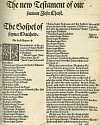
In 1535, the first complete English translation as a printed Bible was published. This translation, made by Miles Coverdale (1488-1569), was printed in Antwerp.




