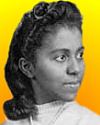
1942
Born 16 Apr 1921; died 28 Oct 2003 at age 82.
American biochemist who was the first African-American woman to receive a Ph.D. in Chemistry (1947). Her postdoctoral research at the Rockefeller Institute included studying the composition and metabolism of components of cell nuclei, determining the base composition of deoxypentose nucleic acids, and calculating the rate of uptake of labeled glycine by components of cell nuclei. Seven years later, she took a university position. She taught biochemistry and researched the metabolism of the arterial wall and its relationship to aging, hypertension, and atherosclerosis. Later, she studied the uptake, synthesis, and distribution of creatine in cell cultures and tissues. She retired in 1986.«
American biochemist who was the first African-American woman to receive a Ph.D. in Chemistry (1947). Her postdoctoral research at the Rockefeller Institute included studying the composition and metabolism of components of cell nuclei, determining the base composition of deoxypentose nucleic acids, and calculating the rate of uptake of labeled glycine by components of cell nuclei. Seven years later, she took a university position. She taught biochemistry and researched the metabolism of the arterial wall and its relationship to aging, hypertension, and atherosclerosis. Later, she studied the uptake, synthesis, and distribution of creatine in cell cultures and tissues. She retired in 1986.«
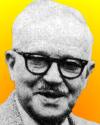
Born 16 Apr 1894; died 5 Aug 1981 at age 87.
Russian-American mathematician who was one of the principal architects of modern theoretical statistics. His papers on hypothesis testing (1928-33) helped establish the subject. During 1934-38, he gave a theory of confidence intervals (important in the analysis of data); extended statistical theory to contagious distributions, (for interpretation of biological data); wrote on sampling stratified populations (which led to such applications as the Gallup Poll); and developed the model for randomised experiments (widely relevant across the fields of science, including agriculture, biology, medicine, and physical sciences). His later research applied statistics to meteorology and medicine. In 1968 he was awarded the prestigious National Medal of Science.«
Russian-American mathematician who was one of the principal architects of modern theoretical statistics. His papers on hypothesis testing (1928-33) helped establish the subject. During 1934-38, he gave a theory of confidence intervals (important in the analysis of data); extended statistical theory to contagious distributions, (for interpretation of biological data); wrote on sampling stratified populations (which led to such applications as the Gallup Poll); and developed the model for randomised experiments (widely relevant across the fields of science, including agriculture, biology, medicine, and physical sciences). His later research applied statistics to meteorology and medicine. In 1968 he was awarded the prestigious National Medal of Science.«
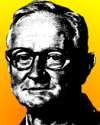
Born 16 Apr 1890; died 19 Jun 1963 at age 73.
American geneticist and agronomist whose hybridization methods for corn (maize) enabled an agricultural revolution. Prior methods of single-cross hybridization had disappointing results. In 1917, he invented the double-cross method of hybrid seed production, which solved a problem in producing useful strains that were uniform, true-breeding, while still vigorous and able to give greater yield. Earlier researchers obtained "pure lines" from self-pollination to eliminate the variable results of open-pollinated seeds, then investigated single crosses made between two such pure lines. For double-cross hybrids, Jones used two single-cross strains. By 1959, more than 95% of U.S. corn crops used hybrid seeds, producing twice the yield of 1929.«
American geneticist and agronomist whose hybridization methods for corn (maize) enabled an agricultural revolution. Prior methods of single-cross hybridization had disappointing results. In 1917, he invented the double-cross method of hybrid seed production, which solved a problem in producing useful strains that were uniform, true-breeding, while still vigorous and able to give greater yield. Earlier researchers obtained "pure lines" from self-pollination to eliminate the variable results of open-pollinated seeds, then investigated single crosses made between two such pure lines. For double-cross hybrids, Jones used two single-cross strains. By 1959, more than 95% of U.S. corn crops used hybrid seeds, producing twice the yield of 1929.«
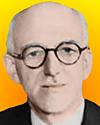
Born 16 Apr 1886; died 10 Nov 1978 at age 92.
Sir Edward James Salisbury was an English botanist and ecologist who studied and published on the function of soil in the ecology of woodlands and dunes. He investigated plant germination and seed output. He wrote several popular books on not only garden flowers (The Living Garden: the How and Why of Garden Life, 1935), but also weeds and invasive species (Weeds and Aliens, 1961). After WW II, he gave a public lecture in 1945 on the unexpected growth of colorful weeds on the rubble of London's blitzed bomb sites. The colorful yellow and purple flowers provided a welcome relief in the desolate environment, and fascinated Salisbury by the resilience and mobility of weeds. One of his experiments was dropping seeds from a height of 9 feet to measure the time taken for them to reach the floor, which correlated with the ability of the weed to spread in the wind.«
Sir Edward James Salisbury was an English botanist and ecologist who studied and published on the function of soil in the ecology of woodlands and dunes. He investigated plant germination and seed output. He wrote several popular books on not only garden flowers (The Living Garden: the How and Why of Garden Life, 1935), but also weeds and invasive species (Weeds and Aliens, 1961). After WW II, he gave a public lecture in 1945 on the unexpected growth of colorful weeds on the rubble of London's blitzed bomb sites. The colorful yellow and purple flowers provided a welcome relief in the desolate environment, and fascinated Salisbury by the resilience and mobility of weeds. One of his experiments was dropping seeds from a height of 9 feet to measure the time taken for them to reach the floor, which correlated with the ability of the weed to spread in the wind.«
The Living Garden, by Edward James Salisbury. - book suggestion.
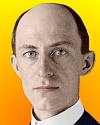
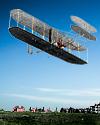
American inventor and aviator, who with his brother Orville, invented the first powered airplane, Flyer, capable of sustained, controlled flight (17 Dec 1903). Orville made the first flight, airborn for 12-sec. Wilbur took the second flight, covering 853-ft (260-m) in 59 seconds. By 1905, they had improved the design, built and and made several long flights in Flyer III, which was the first fully practical airplane (1905), able to fly up to 38-min and travel 24 miles (39-km). Their Model A was produced in 1908, capable of flight for over two hours of flight. They sold considerable numbers, but European designers became strong competitors. After Wilbur died of typhoid in 1912, Orville sold his interest in the Wright Company in 1915.« more
To Conquer the Air: The Wright Brothers and the Great Race for Flight, by James Tobin. - book suggestion.
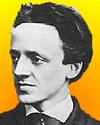
Born 16 Apr 1850; died 1 Feb 1885 at age 34.
British metallurgist and inventor who developed (1875), with his cousin Percy Gilchrist, the Thomas-Gilchrist process that eliminates the phosphorus impurity of certain iron ores in the Bessemer converter. Phosphorus causes steel to be brittle and of little use. Yet most iron ores from British, French, German, and Belgian sources was phosphoric. Thomas conceived the idea of incorporating lime (or magnesia or magnesian limestone with similar basic chemical properties), as the lining of the Bessemer converter. Gilchrist, an industrial chemist at a large ironworks, confirmed that idea 4 Apr 1879. Thomas filed a patent in 1878. Even the waste slag was profitable to the early artificial fertilizer industry. He died at age 34 of tuberculosis.«
British metallurgist and inventor who developed (1875), with his cousin Percy Gilchrist, the Thomas-Gilchrist process that eliminates the phosphorus impurity of certain iron ores in the Bessemer converter. Phosphorus causes steel to be brittle and of little use. Yet most iron ores from British, French, German, and Belgian sources was phosphoric. Thomas conceived the idea of incorporating lime (or magnesia or magnesian limestone with similar basic chemical properties), as the lining of the Bessemer converter. Gilchrist, an industrial chemist at a large ironworks, confirmed that idea 4 Apr 1879. Thomas filed a patent in 1878. Even the waste slag was profitable to the early artificial fertilizer industry. He died at age 34 of tuberculosis.«
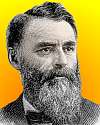
Born 16 Apr 1839; died 14 Aug 1915 at age 76.
American archaeologist, naturalist and museum director who played a major role in the popularization of anthropology, its acceptance as a university study, and instigated more anthropological museums. After entering Harvard College as a student (1856), he was much influenced Louis Agassiz. As Curator of the Peabody Museum (1875-1909), Putnam organized numerous pioneering expeditions in Southwest and Central American archeology. As director of the anthropological section of the World's Columbian Exposition in Chicago (1891-93), he mounted an impressive exhibit. It created wide-spread interest in anthropology, and subsequently became the nucleus of the great collections of the Field Museum in Chicago.«
American archaeologist, naturalist and museum director who played a major role in the popularization of anthropology, its acceptance as a university study, and instigated more anthropological museums. After entering Harvard College as a student (1856), he was much influenced Louis Agassiz. As Curator of the Peabody Museum (1875-1909), Putnam organized numerous pioneering expeditions in Southwest and Central American archeology. As director of the anthropological section of the World's Columbian Exposition in Chicago (1891-93), he mounted an impressive exhibit. It created wide-spread interest in anthropology, and subsequently became the nucleus of the great collections of the Field Museum in Chicago.«
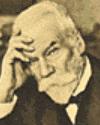
Born 16 Apr 1838; died 26 May 1922 at age 84.
Belgian industrial chemist who invented the Solvay Process (1863), a commercially viable ammonia-soda process for producing soda ash (sodium carbonate), widely used in the manufacture of such products as glass and soap. Although a half-century before, A.J. Fresnel had shown (1811) that sodium bicarbonate could be precipitated from a salt solution containing ammonium bicarbonate, many engineering obstacles had to be overcome. Solvay's successful design used an 80 foot tall high-efficiency carbonating tower in which ammoniated brine trickled down from above and carbon dioxide rose from the bottom. Plates and bubble caps helped create a larger surface over which the two could react forming sodium bicarbonate.
Belgian industrial chemist who invented the Solvay Process (1863), a commercially viable ammonia-soda process for producing soda ash (sodium carbonate), widely used in the manufacture of such products as glass and soap. Although a half-century before, A.J. Fresnel had shown (1811) that sodium bicarbonate could be precipitated from a salt solution containing ammonium bicarbonate, many engineering obstacles had to be overcome. Solvay's successful design used an 80 foot tall high-efficiency carbonating tower in which ammoniated brine trickled down from above and carbon dioxide rose from the bottom. Plates and bubble caps helped create a larger surface over which the two could react forming sodium bicarbonate.
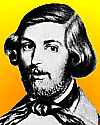
Born 16 Apr 1823; died 11 Oct 1852 at age 29. quotes
German mathematician whose work covered a range of topics including the theory of elliptic functions, and quadratic and cubic forms, which led to cyclotomy, the reciprocity theorem for cubic residues, and also theorems for quadratic and biquadratic residues from partition of prime numbers.«
German mathematician whose work covered a range of topics including the theory of elliptic functions, and quadratic and cubic forms, which led to cyclotomy, the reciprocity theorem for cubic residues, and also theorems for quadratic and biquadratic residues from partition of prime numbers.«
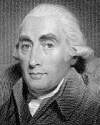
Born 16 Apr 1728; died 6 Dec 1799 at age 71. quotes
Scottish chemist and physicist who experimented with "fixed air" (carbon dioxide), discovered bicarbonates and identified latent heat. He lectured in chemistry, anatomy at the University of Glasgow, while also a physician. From heated magnesia alba (magnesium carbonate), Black collected a gas, carbon dioxide, different from common air. He published Experiments Upon Magnesia Alba, Quicklime, and Some Other Alcaline Substances (1756). Carbon dioxide was also released by fermentation, respiration, and burning charcoal so he assumed it was in the atmosphere. He also observed that ice melts without change of temperature, due to heat that becomes "hidden" - latent heat - and determined "specific heat" for heated of materials.[DSB gives date of death 6 Dec 1799. EB gives 10 Nov 1799.] more
Scottish chemist and physicist who experimented with "fixed air" (carbon dioxide), discovered bicarbonates and identified latent heat. He lectured in chemistry, anatomy at the University of Glasgow, while also a physician. From heated magnesia alba (magnesium carbonate), Black collected a gas, carbon dioxide, different from common air. He published Experiments Upon Magnesia Alba, Quicklime, and Some Other Alcaline Substances (1756). Carbon dioxide was also released by fermentation, respiration, and burning charcoal so he assumed it was in the atmosphere. He also observed that ice melts without change of temperature, due to heat that becomes "hidden" - latent heat - and determined "specific heat" for heated of materials.[DSB gives date of death 6 Dec 1799. EB gives 10 Nov 1799.] more
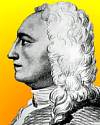
Born 16 Apr 1682; died 14 Feb 1744 at age 61.
British mathematician and inventor who perfected methods for grinding and polishing telescope lenses. Hadley improved the reflecting telescope (first introduced by Newton in 1668) and produced the first of its kind having sufficient accuracy and power to be useful in astronomy. It had a 6 inch mirror. He is also known for the reflecting octant (1730) used at sea to measure the altitude of the Sun or a celestial body above the horizon to within one second of arc. It was the ancestor of the modern nautical sextant. He was a prominent member of the Royal Society, of which he was vice-president from 21 Feb 1728. John Hadley was the older brother of George Hadley.«
British mathematician and inventor who perfected methods for grinding and polishing telescope lenses. Hadley improved the reflecting telescope (first introduced by Newton in 1668) and produced the first of its kind having sufficient accuracy and power to be useful in astronomy. It had a 6 inch mirror. He is also known for the reflecting octant (1730) used at sea to measure the altitude of the Sun or a celestial body above the horizon to within one second of arc. It was the ancestor of the modern nautical sextant. He was a prominent member of the Royal Society, of which he was vice-president from 21 Feb 1728. John Hadley was the older brother of George Hadley.«
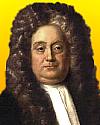
Born 16 Apr 1660; died 11 Jan 1753 at age 92. quotes
(Baronet) British physician and naturalist whose collection of books, manuscripts, and curiosities formed the basis for the British Museum in London. By the time he died, Sloane had amassed one of the world's largest and most varied collections of natural history specimens. His passion for the collection and his concern for its future upkeep after his death led him to write a will which clearly stated that it must "remain together and not be separated." He offered it to the British nation, requesting in return a sum of £20,000 for his heirs. Parliament accepted, and King George II gave his royal assent 7 Jun 1753. Thus the British Museum was created and eventually its sister institution, the British Museum of Natural History.
(Baronet) British physician and naturalist whose collection of books, manuscripts, and curiosities formed the basis for the British Museum in London. By the time he died, Sloane had amassed one of the world's largest and most varied collections of natural history specimens. His passion for the collection and his concern for its future upkeep after his death led him to write a will which clearly stated that it must "remain together and not be separated." He offered it to the British nation, requesting in return a sum of £20,000 for his heirs. Parliament accepted, and King George II gave his royal assent 7 Jun 1753. Thus the British Museum was created and eventually its sister institution, the British Museum of Natural History.
Born 16 Apr 1495; died 21 Apr 1552 at age 57.
German astronomer and geographer, also known as Petrus Apianus, whose major work was Instrumentum sinuum sivi primi mobilis (1534), in which he gave tables of his calculations of sines for every minute, with a decimal division of the radius.
German astronomer and geographer, also known as Petrus Apianus, whose major work was Instrumentum sinuum sivi primi mobilis (1534), in which he gave tables of his calculations of sines for every minute, with a decimal division of the radius.

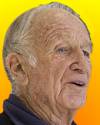
Died 16 Apr 2008 at age 90 (born 23 May 1917). quotes
American mathematician and meteorologist known for pointing out the “butterfly effect” whereby chaos theory predicts that “slightly differing initial states can evolve into considerably different states.” In his 1963 paper in the Journal of Atmospheric Sciences, he cited the flapping of a seagull’s wings as changing the state of the atmosphere in even such a trivial way can result in huge changes in outcome in weather patterns. Thus very long range weather forecasting becomes almost impossible. He determined this unexpected result in 1961 while running a computer weather simulation that gave wildly different results from even tiny changes in the input data.«
American mathematician and meteorologist known for pointing out the “butterfly effect” whereby chaos theory predicts that “slightly differing initial states can evolve into considerably different states.” In his 1963 paper in the Journal of Atmospheric Sciences, he cited the flapping of a seagull’s wings as changing the state of the atmosphere in even such a trivial way can result in huge changes in outcome in weather patterns. Thus very long range weather forecasting becomes almost impossible. He determined this unexpected result in 1961 while running a computer weather simulation that gave wildly different results from even tiny changes in the input data.«
Chaos: Making a New Science, by James Gleick. - book suggestion.
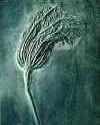
crinoid
Died 16 Apr 1974 at age 82 (born 20 Feb 1892).
American paleontologist known for his work on Paleozoic crinoids, bryozoans, and corals (invertebrate organisms existing 570 to 245 million years ago). Crinoids are stalked echinoderms (spiny-skinned, exclusively marine organisms), almost extinct today, related to sea stars. Fossil stemmed forms, sometimes called "sea lilies," have a superficial resemblance to flowers, but were animals. Moore is probably best known as the founder and editor of the landmark multi-volume Treatise of Invertebrate Paleontology.
American paleontologist known for his work on Paleozoic crinoids, bryozoans, and corals (invertebrate organisms existing 570 to 245 million years ago). Crinoids are stalked echinoderms (spiny-skinned, exclusively marine organisms), almost extinct today, related to sea stars. Fossil stemmed forms, sometimes called "sea lilies," have a superficial resemblance to flowers, but were animals. Moore is probably best known as the founder and editor of the landmark multi-volume Treatise of Invertebrate Paleontology.
Invertebrate Fossils, by Raymond C. Moore. - book suggestion.
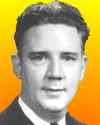
Died 16 Apr 1961 at age 48 (born 12 Jun 1912).
Carl Iver Hovland was an American psychologist who pioneered in the study of social communication and the modification of attitudes and beliefs. In 1929, he was one of 30 individuals to work in the communication program founded at Yale University. The program was implemented as a study and became a cooperation research group of 30 individuals. Their mission was to study persuasion communication such as educational programs, publicity campaigns, advertising, propaganda and their effects on behavior and opinion. In 1942, during WW II, Hovland worked on a government study concerning military films and their effect on soldiers' attitudes, behavior and morale.
Carl Iver Hovland was an American psychologist who pioneered in the study of social communication and the modification of attitudes and beliefs. In 1929, he was one of 30 individuals to work in the communication program founded at Yale University. The program was implemented as a study and became a cooperation research group of 30 individuals. Their mission was to study persuasion communication such as educational programs, publicity campaigns, advertising, propaganda and their effects on behavior and opinion. In 1942, during WW II, Hovland worked on a government study concerning military films and their effect on soldiers' attitudes, behavior and morale.

Died 16 Apr 1958 at age 37 (born 25 Jul 1920). quotes
Rosalind Elsie Franklin was an English physical chemist and X-ray crystallographer who contributed to the discovery of the molecular structure of deoxyribonucleic acid (DNA), a constituent of chromosomes that serves to encode genetic information. Beginning in 1951, she made careful X-ray diffraction photographs of DNA, leading her to suspect the helical form of the molecule, at least under the conditions she had used. When James Watson saw her photographs, he had confirmation of the double-helix form that he and Francis Crick then published. She never received the recognition she deserved for her independent work, but had died of cancer four years before the Nobel Prize was awarded to Crick and Watson.
Rosalind Elsie Franklin was an English physical chemist and X-ray crystallographer who contributed to the discovery of the molecular structure of deoxyribonucleic acid (DNA), a constituent of chromosomes that serves to encode genetic information. Beginning in 1951, she made careful X-ray diffraction photographs of DNA, leading her to suspect the helical form of the molecule, at least under the conditions she had used. When James Watson saw her photographs, he had confirmation of the double-helix form that he and Francis Crick then published. She never received the recognition she deserved for her independent work, but had died of cancer four years before the Nobel Prize was awarded to Crick and Watson.
Rosalind Franklin: The Dark Lady of DNA, by Brenda Maddox. - book suggestion.
Died 16 Apr 1949 at age 68 (born 31 Jan 1881).
U.S. paleontologist and geologist known for his work on paleoecology as shown by Foraminifera (marine protozoans). He was director of Boston Natural History Museum between 1913-23 and director of Cushman Laboratory for Foraminiferal Research in Sharon, Massachusetts in 1923. He was the most well-known foraminiferologist of his time
U.S. paleontologist and geologist known for his work on paleoecology as shown by Foraminifera (marine protozoans). He was director of Boston Natural History Museum between 1913-23 and director of Cushman Laboratory for Foraminiferal Research in Sharon, Massachusetts in 1923. He was the most well-known foraminiferologist of his time
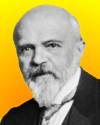
(EB)
Died 16 Apr 1941 at age 73 (born 28 Oct 1867).
German experimental embryologist and philosopher who was the last great spokesman for vitalism, the theory that life cannot be explained as physical or chemical phenomena. In 1891, he separated the first two cells formed by a dividing sea urchin egg and discovered that each would form a whole larva. Driesch concluded that the fate of a cell is not determined at the two-cell stage, but by its position in the whole organism. He published his first wholly theoretical monograph that year and, in 1892, speculated that vitalistic interpretations of biological data might be reasonable. His experimental results gave strong impetus to the then new science of experimental embryology. He also studied embryonic induction, enzyme action, and nuclear and cytoplasmic interaction.
German experimental embryologist and philosopher who was the last great spokesman for vitalism, the theory that life cannot be explained as physical or chemical phenomena. In 1891, he separated the first two cells formed by a dividing sea urchin egg and discovered that each would form a whole larva. Driesch concluded that the fate of a cell is not determined at the two-cell stage, but by its position in the whole organism. He published his first wholly theoretical monograph that year and, in 1892, speculated that vitalistic interpretations of biological data might be reasonable. His experimental results gave strong impetus to the then new science of experimental embryology. He also studied embryonic induction, enzyme action, and nuclear and cytoplasmic interaction.
The Crisis in Psychology, by Hans Adolf Eduard Driesch. - book suggestion.
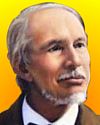
Died 16 Apr 1914 at age 76 (born 3 Mar 1838).
U.S. mathematical astronomer considered by many of his peers to be the greatest master of celestial mechanics of his time. Hill joined the Nautical Almanac Office in 1861. He computed the orbit of the moon while making original contributions to the three body problem. He introduced infinite determinants, a concept which later found application in many fields of mathematics and physics. When Simon Newcomb took over the Nautical Almanac in 1877 and began a complete recomputation of all solar system motions, Hill was assigned the difficult problem of the orbits of Jupiter and Saturn. After completing the enormous labor in ten years, he returned to his farm, where he continued his research in celestial mechanics.
U.S. mathematical astronomer considered by many of his peers to be the greatest master of celestial mechanics of his time. Hill joined the Nautical Almanac Office in 1861. He computed the orbit of the moon while making original contributions to the three body problem. He introduced infinite determinants, a concept which later found application in many fields of mathematics and physics. When Simon Newcomb took over the Nautical Almanac in 1877 and began a complete recomputation of all solar system motions, Hill was assigned the difficult problem of the orbits of Jupiter and Saturn. After completing the enormous labor in ten years, he returned to his farm, where he continued his research in celestial mechanics.
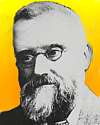
Died 16 Apr 1906 at age 61 (born 3 Apr 1845).
British-born Australian agricultural researcher who developed several varieties of drought- and rust-resistant wheat that made possible a great expansion of Australia's wheat belt. Farrer believed that he could produce a new strain which would be rust-resistant, as well as being suitable for Australian conditions. From 1889, although often ill, Farrer worked hard toward this goal for many hours a day and well into the night to record his results. His variety of wheat, noted for its drought-resistant qualities, was distributed in 1900 and therefore was called Federation. As a result, the average wheat yield per acre rose by about three bushels between 1900 and 1920. His wheats were not so much rust-resistant as rust escaping because of their early maturity.
British-born Australian agricultural researcher who developed several varieties of drought- and rust-resistant wheat that made possible a great expansion of Australia's wheat belt. Farrer believed that he could produce a new strain which would be rust-resistant, as well as being suitable for Australian conditions. From 1889, although often ill, Farrer worked hard toward this goal for many hours a day and well into the night to record his results. His variety of wheat, noted for its drought-resistant qualities, was distributed in 1900 and therefore was called Federation. As a result, the average wheat yield per acre rose by about three bushels between 1900 and 1920. His wheats were not so much rust-resistant as rust escaping because of their early maturity.
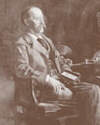
Died 16 Apr 1901 at age 52 (born 27 Nov 1848). quotes
American physicistwho invented the concave diffraction grating, which replaced prisms and plane gratings in many applications, and revolutionized spectrum analysis--the resolution of a beam of light into components that differ in wavelength. His first major research was an investigation of the magnetic permeability of iron, steel and nickel, work which won the praise of Maxwell. Another experiment was the first to conclusively demonstrate that the motion of charged bodies produced magnetic effects. In the late 1870s, he established an authoritative figure for the absolute value of the ohm, and redetermined the mechanical equivalent of heat in the early 1880s, demonstrating that the specific heat of water varied with temperature.
American physicistwho invented the concave diffraction grating, which replaced prisms and plane gratings in many applications, and revolutionized spectrum analysis--the resolution of a beam of light into components that differ in wavelength. His first major research was an investigation of the magnetic permeability of iron, steel and nickel, work which won the praise of Maxwell. Another experiment was the first to conclusively demonstrate that the motion of charged bodies produced magnetic effects. In the late 1870s, he established an authoritative figure for the absolute value of the ohm, and redetermined the mechanical equivalent of heat in the early 1880s, demonstrating that the specific heat of water varied with temperature.
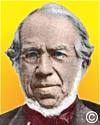
Died 16 Apr 1864 at age 75 (born 24 Jun 1788).
American inventor who made major contributions to the development of machine tools. He invented a number of machines before he created the famous lathe that bears his name. At age 13, he developing an apple-paring machine. While employed by his brother in the monotonous job of making tacks, which all had to be headed by hand, Blanchard came up with a machine for mass-producting the tacks. He went into the armory business, for which he developed a specialized lathe which could turn irregularly shaped parts, such as gunstocks. Blanchard's profile lathe also revolutionized other industries that manufactured standardized, asymmetrical items, such as axe handles, shoe lasts, and wheel-spokes. more
American inventor who made major contributions to the development of machine tools. He invented a number of machines before he created the famous lathe that bears his name. At age 13, he developing an apple-paring machine. While employed by his brother in the monotonous job of making tacks, which all had to be headed by hand, Blanchard came up with a machine for mass-producting the tacks. He went into the armory business, for which he developed a specialized lathe which could turn irregularly shaped parts, such as gunstocks. Blanchard's profile lathe also revolutionized other industries that manufactured standardized, asymmetrical items, such as axe handles, shoe lasts, and wheel-spokes. more
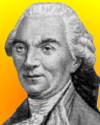
Died 16 Apr 1788 at age 80 (born 7 Sep 1707). quotes
French naturalist who formulated a crude theory of evolution and was the first to suggest that the earth might be older than suggested by the Bible. In 1739 he was appointed keeper of the Jardin du Roi, a post he occupied until his death. There he worked on a comprehensive work on natural history, for which he is remembered, Histoire naturelle, générale et particulière. He began this work in 1749, and it dominated the rest of his life. It would eventually run to 44 volumes, including quadrupeds, birds, reptiles and minerals. He proposed (1778) that the Earth was hot at its creation and, from the rate of cooling, calculated its age to be 75,000 years, with life emerging some 40,000 years ago.
French naturalist who formulated a crude theory of evolution and was the first to suggest that the earth might be older than suggested by the Bible. In 1739 he was appointed keeper of the Jardin du Roi, a post he occupied until his death. There he worked on a comprehensive work on natural history, for which he is remembered, Histoire naturelle, générale et particulière. He began this work in 1749, and it dominated the rest of his life. It would eventually run to 44 volumes, including quadrupeds, birds, reptiles and minerals. He proposed (1778) that the Earth was hot at its creation and, from the rate of cooling, calculated its age to be 75,000 years, with life emerging some 40,000 years ago.
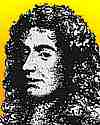
Died 16 Apr 1756 at age 79 (born 18 Feb 1677).
French astronomer whose direct measurement of the proper motions of the stars (1738) disproved the ancient belief in the unchanging sphere of the stars. He also studied the moons of Jupiter and Saturn and the structure of Saturn's rings. His two major treatises on these subject appeared in 1740: Elements of Astronomy and Astronomical Tables of the Sun, Moon, Planets, Fixed Stars, and Satellites of Jupiter and Saturn. He also wrote about electricity, barometers, the recoil of firearms, and mirrors. He was the son of astronomer, mathematician and engineer Giovanni Cassini (1625-1712) with whom he made numerous geodesic observations. Eventually, he took over his father's duties as head of the Paris Observatory.«[Different sources give different dates of birth and death. See this note.]
French astronomer whose direct measurement of the proper motions of the stars (1738) disproved the ancient belief in the unchanging sphere of the stars. He also studied the moons of Jupiter and Saturn and the structure of Saturn's rings. His two major treatises on these subject appeared in 1740: Elements of Astronomy and Astronomical Tables of the Sun, Moon, Planets, Fixed Stars, and Satellites of Jupiter and Saturn. He also wrote about electricity, barometers, the recoil of firearms, and mirrors. He was the son of astronomer, mathematician and engineer Giovanni Cassini (1625-1712) with whom he made numerous geodesic observations. Eventually, he took over his father's duties as head of the Paris Observatory.«[Different sources give different dates of birth and death. See this note.]
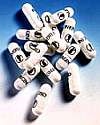
In 1992, thalidomide was reported by Johns Hopkins medical researchers to improve the survival rate of patients who get bone-marrow transplants. The drug effectively fought graft-versus-host disease, the most common and dangerous complication. Such transplants are standard treatments for potentially fatal disorders including aplastic anemia and some blood cancers. Thalidomide was previously known for years as among the most effective treatments for leprosy. Yet, thalidomide had caused horrendous birth defects in thousands of babies in the 1950s and 60s. The same properties of the drug that arrested the development of babies are capable of arresting progression of many terrible diseases, and even reversing the effects of others.«[Image: present day thalidomide pills.] [Ref.: New England Journal of Medicine, Vol. 326, No.16, pp 1055-58.]
Dark Remedy: The Impact of Thalidomide and Its Revival as a Vital Medicine, by Trent D. Stephens, Rock Brynner. - book suggestion.

In 1987, patents on genetic engineering patents were first authorized by the U.S. government, the first nation in the world to allow such patent applications. One year later, the first such patent was issued in the U.S. for a mouse designed to be highly susceptible to breast cancer. Designated as "oncomice," they were intended for use in testing anticancer therapies with more efficiency and accurate results. Geneticists Philip Leder and Timothy A. Stewart of Harvard University, Mass., developed the oncomouse, the patent was issued to the University, and commercial rights were assigned to E.I. du Pont de Nemours and Co., Del. The initial price of the oncomouse was $50 each.
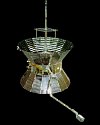
In 1976, the Helios-B deep-space probe made (what was then) the closest controlled approach to the Sun at 27 million miles (43 million km) or within 0.3 AU. (1 Astronomical Unit (AU) = Earth-Sun distance = 93 million miles.) The purpose of the Helios-B mission was to make measurements and comparisons of the material found in space between Earth's orbit and a distance from the Sun of 0.3 A (AU). The vehicle carried a fluxgate magnetometer; electric and magnetic wave experiments; charged particle experiments; and a micrometeoroid experiment. This was one of two deep-space probes co-developed by NASA (US) and Germany. NASA launched Helios A on 10 Dec 1974, and Helios B on 16 Jan 1976.«

In 1956, a radio made to run either on batteries or solar-cell power was first sold in the U.S. The Sun Power Pak was made by the Admiral Corporation, Chicago, Ill. By using six transistors instead of vacuum tubes, the radio needed so little electricity that with six ordinary flashlight batteries it could give 700 to 1,000 hours of use. The $60 radio was small (about 3 x 9 x 10 in.) and weighed only 5.25 pounds. The $185 auxillary Sun Power Pak provided electrical power from sunlight using a silicon "solar cell element." The Admiral Corp grew out of an earlier business, founded in 1924, selling battery chargers for radios. By 1934, it was making radios, then military electronics during WW II and afterwards became a pioneering TV brand.«

In 1947, the first zoom lens for the television camera was demonstrated by the National Broadcasting Company in New York City. Previously, moving into a closeup shot required moving the entire camera toward the actor or object, or away for a long-distance shot. Now the same zoom effects could be produced using the Zoomar lens, which revolutionized TV sports. It was patented as a "varifocal lens for cameras" on 23 Nov 1948 by its inventor, Dr. Frank Gerard Back of New York City. His company, Zoomar, continued to develop his technologies into the 1970s, with optical innovations for television and motion pictures, as well as astronomical, medical, commercial, and even military applications.«[Image: Dumont camera with Zoomar lens extending over two feet from its front, c.1950's]
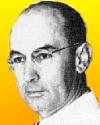
In 1943, the hallucinogenic effect of the drug LSD, lysergic acid diethylamide, was first observed. Swiss chemist, Albert Hofmann had synthesized the drug five years earlier, but hopes of its use for treating respiratory problems were not fulfilled, and it was shelved. On this day, he accidentally absorbed some of the drug through his skin from touching its container. It affected his nervous system such that he became dizzy with hallucinations. It is related to a substance in ergot, a fungus that grows on rye and other grains. It is now known LSD acts to block the action of serotonin (the indole amine transmitter of nerve impulses) in brain tissue. By the early 1990's no safe clinical use had been found, though dangerous side effects are well known.
LSD: My Problem Child, by Albert Hofmann. - book suggestion.
(EB)
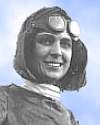
In 1912, American aviator Harriet Quimby became the first female pilot to fly across the English Channel. She left England in a 50-hp monoplane lent to her by Louis Blériot. She headed for France in a plane she had never flown before and a compass she had just learned how to use. Despite poor visibility and fog, Quimby landed 59 minutes later near Hardelot, France. Upon landing, she was greeted by the local residents, but the Titanic sinking just days earlier, limited reporting of Quimby's achievement in the world press. She died the same year, on 1 Jul 1912, when she lost control of her plane at a flying exhibition near Quincy, Mass. She was the first American woman to become a licensed pilot, but her career as a pilot lasted a mere 11 months.

(USPTO)
In 1895, black American inventor, Clatonia Joaquin Dorticus of Newton, New Jersey, patented a "machine for embossing photographs" (No. 537,442). Photographic prints could either be mounted, or embossed by using proper dies. A bed plate carried the female die. An upper hinged plate held the male die. They were closed and pressed together with a lever bar. The device was designed to distribute equal pressure over the entire surface of the photographic film. A few days later, he also patented a photographic print wash. One month before, he was issued a patent for "a device for applying coloring liquids to sides of soles and heels of shoes." In 1899, Dorticus received a patent for his invention of a "Hose Leak Stop."«
The Inventive Spirit of African Americans: Patented Ingenuity, by Patricia Carter Sluby. - book suggestion.
In 1878, a U.S. patent for coating items with celluloid was issued to John Hyatt (No. 202,441)
In 1842, Salvin Kellogg patented his air-heating stove design (U.S. No. 2,556)
In 1813, for the first time in the U.S., a requirement for standardization in factory production became part of a federal government contract which specified interchangeable parts. Twenty thousand pistols were ordered from the contractor, Col. Simeon North of Berlin, Conn. to be made such that “component parts of the pistols are to correspond so exactly that any limb or part of one pistol may be fitted to any other pistol of the 20,000.” The contract price was $7 per pistol, to be delivered over a five year period. Since 1810, Col. North had already owned a pistol factory in Middletown, Conn., and produced the pistols at the rate of about 10,000 per year.




