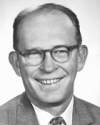
Born 17 Dec 1908; died 8 Sep 1980 at age 71. quotes
American chemist whose technique of carbon-14 (or radiocarbon) dating provided an extremely valuable tool for archaeologists, anthropologists, and earth scientists. For this development he was honoured with the Nobel Prize for Chemistry in 1960. Libby is a specialist in radiochemistry, particularly hot atom chemistry, tracer techniques, and isotope tracer work. He became well-known at Chicago University also for his work with natural tritium, and its use in hydrology and geophysics. On 18 May 1952, he determined that the age of Stonehenge was 1848 BC, based on analysis of radioisotopes in charcoal.
American chemist whose technique of carbon-14 (or radiocarbon) dating provided an extremely valuable tool for archaeologists, anthropologists, and earth scientists. For this development he was honoured with the Nobel Prize for Chemistry in 1960. Libby is a specialist in radiochemistry, particularly hot atom chemistry, tracer techniques, and isotope tracer work. He became well-known at Chicago University also for his work with natural tritium, and its use in hydrology and geophysics. On 18 May 1952, he determined that the age of Stonehenge was 1848 BC, based on analysis of radioisotopes in charcoal.
Radiocarbon Dating, by Willard F. Libby. - book suggestion.
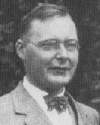
Born 17 Dec 1894; died 24 Apr 1952 at age 57. quotes
Dutch physicist who, with Ralph de Laer Kronig, derived important equations relating the absorption to the dispersion of light. He also predicted (1924) the existence of the Raman effect, an inelastic scattering of light. Kramer's work covers almost the entire field of theoretical physics. He published papers dealing with mathematical formalism of quantum mechanics, and others on paramagnetism, magneto-optical rotation, ferro-magnetism, kinetic theory of gases, relativistic formalisms in particle theory, and on theory of radiation. His work shows outstanding mathematical skill and careful analysis of physical principles.
Dutch physicist who, with Ralph de Laer Kronig, derived important equations relating the absorption to the dispersion of light. He also predicted (1924) the existence of the Raman effect, an inelastic scattering of light. Kramer's work covers almost the entire field of theoretical physics. He published papers dealing with mathematical formalism of quantum mechanics, and others on paramagnetism, magneto-optical rotation, ferro-magnetism, kinetic theory of gases, relativistic formalisms in particle theory, and on theory of radiation. His work shows outstanding mathematical skill and careful analysis of physical principles.
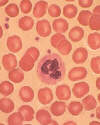
blood cells
American biochemist who helped develop the methods of cold ethanol blood fractionation (the separation of plasma proteins into fractions). During World War II he headed a team of chemists, physicians, and medical scientists who made possible the large-scale production, allowing use of the individual fractions of human plasma for treatment of the wounded - all together about a dozen different materials. Some of the results of this work include the use of serum albumin as a substitute for blood or plasma for transfusion; the use of gamma globulin for short-term protection against such diseases as measles and hepatitis; and the use of antihemophilic globulin for the treatment of hemophilia.
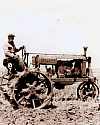
Farmall tractor, 1911
Born 17 Dec 1870; died Oct 1969.
Delbert Rufus “Bert” Benjamin was an American inventor of the Farmall tractor and the power take-off system on agricultural tractors. He held 140 patents for tractor and tractor accessories, including a cotton picker, corn shredder, and corn binder. The Farmall tractor he developed was the first tractor that could plow and cultivate row crops. Benjamin graduated from Iowa State College with a mechanical engineering degree in 1893. He became a draftsman-designer with McCormick Harvesting Machine Company, which merged with several other companies in 1902 to form the International Harvester Company (IHC), where he continued to work until 1940.«
Delbert Rufus “Bert” Benjamin was an American inventor of the Farmall tractor and the power take-off system on agricultural tractors. He held 140 patents for tractor and tractor accessories, including a cotton picker, corn shredder, and corn binder. The Farmall tractor he developed was the first tractor that could plow and cultivate row crops. Benjamin graduated from Iowa State College with a mechanical engineering degree in 1893. He became a draftsman-designer with McCormick Harvesting Machine Company, which merged with several other companies in 1902 to form the International Harvester Company (IHC), where he continued to work until 1940.«
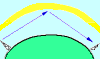
Irish-American electrical engineer who made innovations in analytic methods in electronics, particularly the definitive application of complex-number theory to alternating-current (ac) circuits. For six years he worked for Thomas Edison at West Orange Laboratory, then branched out as a consultant. Upon his co-discovery (with Oliver Heaviside) of the radio reflecting properties of the ionosphere in the upper atmosphere, the stratum was called the Kennelly- Heaviside layer. more
Born 17 Dec 1853; died 3 Nov 1933 at age 79. quotes
Pierre-Paul-Émile Roux was a French bacteriologist who began working with Louis Pasteur in 1878. He was noted for his work on diphtheria. In 1888, Roux and Alexandre Yersin isolated a soluble toxin from cultures of diphtheria. The bacterium itself, though only found in the throat, has destructive tissue and organ effects body wide, by producing, they hypothesized, the chemical toxin. They filtered diphtheria cultures to remove the bacteria and then used the remaining fluid filtrate into healthy animals. As expected the animals showed diphtheria lesions but without any obvious presence of bacteria thus demonstrating that a toxin is the active agent causing diphtheria. He became director of Pasteur Institute at Paris in 1904.
Pierre-Paul-Émile Roux was a French bacteriologist who began working with Louis Pasteur in 1878. He was noted for his work on diphtheria. In 1888, Roux and Alexandre Yersin isolated a soluble toxin from cultures of diphtheria. The bacterium itself, though only found in the throat, has destructive tissue and organ effects body wide, by producing, they hypothesized, the chemical toxin. They filtered diphtheria cultures to remove the bacteria and then used the remaining fluid filtrate into healthy animals. As expected the animals showed diphtheria lesions but without any obvious presence of bacteria thus demonstrating that a toxin is the active agent causing diphtheria. He became director of Pasteur Institute at Paris in 1904.
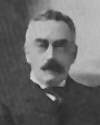
Born 17 Dec 1844; died 3 Jun 1919 at age 74.
U.S. mycologist and plant pathologist who developed cryptogamic botany in the U.S. with pioneer investigations in plant pathology. His course in this subject was the first taught in the United States. Farlow's publications were mainly on taxonomic and bibliographic phases of mycology, (the study of fungi), but he also wrote articles on algae, lichens, and ferns. From Summer 1872 to1874 while in Europe for further training, he established contacts, bought books, periodicals and specimens. His extensive library and collections of fungi, algae, lichens, and mosses became the nucleus of Harvard University's Farlow Research Library and herbarium, bequeathed in 1919, to meet the need for a complete reference library to establish relationships.
U.S. mycologist and plant pathologist who developed cryptogamic botany in the U.S. with pioneer investigations in plant pathology. His course in this subject was the first taught in the United States. Farlow's publications were mainly on taxonomic and bibliographic phases of mycology, (the study of fungi), but he also wrote articles on algae, lichens, and ferns. From Summer 1872 to1874 while in Europe for further training, he established contacts, bought books, periodicals and specimens. His extensive library and collections of fungi, algae, lichens, and mosses became the nucleus of Harvard University's Farlow Research Library and herbarium, bequeathed in 1919, to meet the need for a complete reference library to establish relationships.
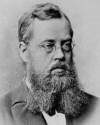
Born 17 Dec 1842; died 18 Feb 1899 at age 56. quotes
Marius Sophus Lie was a Norwegian mathematician who made significant contributions to the theories of algebraic invariants, continuous groups of transformations and differential equations. Lie groups and Lie algebras are named after him. Lie was in Paris at the outbreak of the French-German war of 1870. Lie left France, deciding to go to Italy. On the way however he was arrested as a German spy and his mathematics notes were assumed to be coded messages. Only after the intervention of French mathematician, Gaston Darboux, was Lie released and he decided to return to Christiania, Norway, where he had originally studied mathematics to continue his work.
Marius Sophus Lie was a Norwegian mathematician who made significant contributions to the theories of algebraic invariants, continuous groups of transformations and differential equations. Lie groups and Lie algebras are named after him. Lie was in Paris at the outbreak of the French-German war of 1870. Lie left France, deciding to go to Italy. On the way however he was arrested as a German spy and his mathematics notes were assumed to be coded messages. Only after the intervention of French mathematician, Gaston Darboux, was Lie released and he decided to return to Christiania, Norway, where he had originally studied mathematics to continue his work.
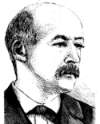
Born 17 Dec 1835; died 27 Mar 1910 at age 74. quotes
Alexander Emmanuel Rodolphe Agassiz was a Swiss marine zoologist, oceanographer and mining engineer who moved to the U.S. in 1849 to join his father, naturalist Jean Louis Agassiz, and studied at Harvard for degrees both in civil engineering (1857) and zoology (1862). Alexander Agassiz made important contributions to systematic zoology, to the knowledge of ocean beds, and to the development of the copper mines of Lake Superior (1866-9). He was curator of Harvard's Museum of Comparative Zoology (1873-85), founded by his father. He made numerous oceanographic zoological expeditions, wrote many books and examined thousands of coral reefs to refute Charles Darwin's ideas on atoll formation.
Alexander Emmanuel Rodolphe Agassiz was a Swiss marine zoologist, oceanographer and mining engineer who moved to the U.S. in 1849 to join his father, naturalist Jean Louis Agassiz, and studied at Harvard for degrees both in civil engineering (1857) and zoology (1862). Alexander Agassiz made important contributions to systematic zoology, to the knowledge of ocean beds, and to the development of the copper mines of Lake Superior (1866-9). He was curator of Harvard's Museum of Comparative Zoology (1873-85), founded by his father. He made numerous oceanographic zoological expeditions, wrote many books and examined thousands of coral reefs to refute Charles Darwin's ideas on atoll formation.
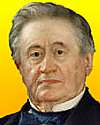
Born 17 Dec 1797; died 13 May 1878 at age 80. quotes
American physicist who was one of the notable American scientists after Benjamin Franklin. As an adolescent, Henry was interested in the theater, but after reading a book of lectures on science, his life forever turned to that pursuit. He assisted Samuel F.B. Morse in the development of the telegraph. Independently of Michael Faraday, Henry investigated electricity and magnetism, and discovered the phenomenon of self-induction. (His name was given to the SI unit for inductance, the henry, H). He was the first Secretary (director) of the Smithsonian Institution (1846-1878), where he initiated the foundation of a national weather service. Henry insisted that basic research was of fundamental importance, not a luxury.«
American physicist who was one of the notable American scientists after Benjamin Franklin. As an adolescent, Henry was interested in the theater, but after reading a book of lectures on science, his life forever turned to that pursuit. He assisted Samuel F.B. Morse in the development of the telegraph. Independently of Michael Faraday, Henry investigated electricity and magnetism, and discovered the phenomenon of self-induction. (His name was given to the SI unit for inductance, the henry, H). He was the first Secretary (director) of the Smithsonian Institution (1846-1878), where he initiated the foundation of a national weather service. Henry insisted that basic research was of fundamental importance, not a luxury.«
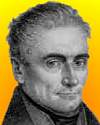
Born 17 Dec 1787; died 28 Jul 1869 at age 81.
Czech pioneer of experimental physiology whose investigations in the fields of histology, embryology and pharmacology helped to create a modern understanding of the eye and vision, brain and heart function, mammalian reproduction and the composition of cells. In 1837, Purkinje described not only clusters of beautiful drop-like cells, but also subtle elongated fiber-like processes in their vicinity, which seemed to be peculiar to the nervous system. Purkinje was the first to use the microtome, potassium bichromate and Canada balsam in the preparation of histological slides for microscopy. Purkinje introduced the scientific terms plasma, a component of blood, and protoplasm, used to describe young animal embryos.
Czech pioneer of experimental physiology whose investigations in the fields of histology, embryology and pharmacology helped to create a modern understanding of the eye and vision, brain and heart function, mammalian reproduction and the composition of cells. In 1837, Purkinje described not only clusters of beautiful drop-like cells, but also subtle elongated fiber-like processes in their vicinity, which seemed to be peculiar to the nervous system. Purkinje was the first to use the microtome, potassium bichromate and Canada balsam in the preparation of histological slides for microscopy. Purkinje introduced the scientific terms plasma, a component of blood, and protoplasm, used to describe young animal embryos.
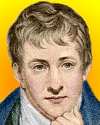
Born 17 Dec 1778; died 29 May 1829 at age 50. quotes
English chemist (Baronet), whose work exemplified the scientific method, discovered several elements, compounds, and invented the miner’s safety lamp. Appointed to the Pneumatic Institution, he studied the physiological effects of new gases, around 1800, and daringly inhaled substances such as nitrous oxide (“laughing gas”). He nearly died after inhaling water gas (a mixture of hydrogen and carbon monoxide). Pioneering use of electricity, in 1807, he isolated the alkali metals potassium and sodium, followed in 1808 by the alkaline earth metals calcium, strontium, barium, and magnesium. Davy independently discovered boron (coincident with Gay-Lussac), and correctly identified chlorine to be an element, not a compound, as others previously thought.«
English chemist (Baronet), whose work exemplified the scientific method, discovered several elements, compounds, and invented the miner’s safety lamp. Appointed to the Pneumatic Institution, he studied the physiological effects of new gases, around 1800, and daringly inhaled substances such as nitrous oxide (“laughing gas”). He nearly died after inhaling water gas (a mixture of hydrogen and carbon monoxide). Pioneering use of electricity, in 1807, he isolated the alkali metals potassium and sodium, followed in 1808 by the alkaline earth metals calcium, strontium, barium, and magnesium. Davy independently discovered boron (coincident with Gay-Lussac), and correctly identified chlorine to be an element, not a compound, as others previously thought.«
Humphry Davy: Life Beyond the Lamp, by Raymond Lamont-Brown. - book suggestion.
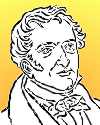
Born 17 Dec 1772; died 17 Nov 1838 at age 65.
French physician whose advocacy of leech treatments dominated Parisian medical practice early in the19th century. Early physicians felt that the depleting effect of bloodletting was "cooling," relieving the congestion of inflamed capillaries, and saw leeches as a panacea. From his findings of blood in the mucous membranes of the gastrointestinal tract during postmortem examinations, Broussais believed all disease results from inflammation due to excessive build-up of blood. Thus, he thought that all diseases could be treated through diet and bleeding, and was said to have routinely applied 30 leeches to each of his patients. But by 1850 new techniques and drugs replaced leeches. In 1836, François Broussais presented 20 lectures on phrenology.
French physician whose advocacy of leech treatments dominated Parisian medical practice early in the19th century. Early physicians felt that the depleting effect of bloodletting was "cooling," relieving the congestion of inflamed capillaries, and saw leeches as a panacea. From his findings of blood in the mucous membranes of the gastrointestinal tract during postmortem examinations, Broussais believed all disease results from inflammation due to excessive build-up of blood. Thus, he thought that all diseases could be treated through diet and bleeding, and was said to have routinely applied 30 leeches to each of his patients. But by 1850 new techniques and drugs replaced leeches. In 1836, François Broussais presented 20 lectures on phrenology.
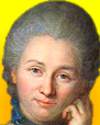
Born 17 Dec 1706; died 10 Sep 1749 at age 42.
Gabrielle-Émilie Le Tonnelier de Breteuil, Marquise du Châtelet was a French mathematician and physicist whose academic education began while growing up with aristocratic parents, and continued with tutors. She took a lively interest in the philosophies of Newton and Leibniz. She even dressed as a man to enter the cafés where the scientific discussions of the time took place. After she met Voltaire, they became lovers. Châtelet’s major work was a Latin to French translation of Newton’s Principia (begun 1745), published posthumously (1759) with a “Preface historique” by Voltaire. It remains the standard edition of the work in French. Her scientific treatises include one on the nature of heat and light, submitted to a competition (1738). She died in 1749, a few days after giving birth to a daughter.«
Gabrielle-Émilie Le Tonnelier de Breteuil, Marquise du Châtelet was a French mathematician and physicist whose academic education began while growing up with aristocratic parents, and continued with tutors. She took a lively interest in the philosophies of Newton and Leibniz. She even dressed as a man to enter the cafés where the scientific discussions of the time took place. After she met Voltaire, they became lovers. Châtelet’s major work was a Latin to French translation of Newton’s Principia (begun 1745), published posthumously (1759) with a “Preface historique” by Voltaire. It remains the standard edition of the work in French. Her scientific treatises include one on the nature of heat and light, submitted to a competition (1738). She died in 1749, a few days after giving birth to a daughter.«

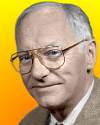
Died 17 Dec 1998 at age 75 (born 13 Feb 1923).
Alfred Peter Wolf was an American nuclear and organic chemist. As a senior chemist at the U.S. Brookhaven National Laboratory, he made pioneering contributions over nearly 50 years in the field of organic radiochemistry. By the mid-1960's, his fundamental studies in the synthesis of small, radiolabeled compounds grew into a new interest in developing radiotracers labeled with short-lived positron emitting isotopes like carbon-11 so that the tracer method could be applied to visualize biochemical transformations in living systems. His discoveries led to advances in medical imaging, especially the development of positron emission tomography, or PET, a tool now used worldwide to diagnose disease and study the brain's inner workings.
Alfred Peter Wolf was an American nuclear and organic chemist. As a senior chemist at the U.S. Brookhaven National Laboratory, he made pioneering contributions over nearly 50 years in the field of organic radiochemistry. By the mid-1960's, his fundamental studies in the synthesis of small, radiolabeled compounds grew into a new interest in developing radiotracers labeled with short-lived positron emitting isotopes like carbon-11 so that the tracer method could be applied to visualize biochemical transformations in living systems. His discoveries led to advances in medical imaging, especially the development of positron emission tomography, or PET, a tool now used worldwide to diagnose disease and study the brain's inner workings.
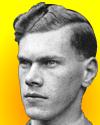
(1937)
Died 17 Dec 1997 at age 86 (born 29 Sep 1911).
Reginald Victor Jones was an English physicist who was a scientific adviser to the British foreign intelligence service MI-6, and a science officer for the Air Ministry. He was described in an obituary as “the father of electronic warfare” during World War II. Winston Churchill said, “He did more to save us from disaster than many who are glittering with trinkets.” One major contribution was countering the German radio navigation beams that guided enemy pilots on their way to bomb Britain. Jones’s single-handed solution was significant in the Battle of Britain. In various ways, he also used deception with bogus radio traffic to confuse the enemy. He was eventually awarded as a Companion of Honor, the second-highest civilian award.«
Reginald Victor Jones was an English physicist who was a scientific adviser to the British foreign intelligence service MI-6, and a science officer for the Air Ministry. He was described in an obituary as “the father of electronic warfare” during World War II. Winston Churchill said, “He did more to save us from disaster than many who are glittering with trinkets.” One major contribution was countering the German radio navigation beams that guided enemy pilots on their way to bomb Britain. Jones’s single-handed solution was significant in the Battle of Britain. In various ways, he also used deception with bogus radio traffic to confuse the enemy. He was eventually awarded as a Companion of Honor, the second-highest civilian award.«
Most Secret War, by R. V. Jones. - book suggestion.
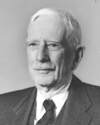
Died 17 Dec 1973 at age 101 (born 31 May 1872). quotes
Charles Greeley Abbot was an American astrophysicist who is thought to have been the first scientist to suspect that the radiation of the Sun might vary over time. In 1906, Abbot became director of the Smithsonian Astrophysical Observatory and, in 1928, fifth Secretary of the Smithsonian. To study the Sun, SAO established a network of solar radiation observatories around the world—usually at remote and desolate spots chosen primarily for their high percentage of sunny days. Beginning in May 1905 and continuing over decades, his studies of solar radiation led him to discover, in 1953, a connection between solar variations and weather on Earth, allowing general weather patterns to be predicted up to 50 years ahead.
Charles Greeley Abbot was an American astrophysicist who is thought to have been the first scientist to suspect that the radiation of the Sun might vary over time. In 1906, Abbot became director of the Smithsonian Astrophysical Observatory and, in 1928, fifth Secretary of the Smithsonian. To study the Sun, SAO established a network of solar radiation observatories around the world—usually at remote and desolate spots chosen primarily for their high percentage of sunny days. Beginning in May 1905 and continuing over decades, his studies of solar radiation led him to discover, in 1953, a connection between solar variations and weather on Earth, allowing general weather patterns to be predicted up to 50 years ahead.
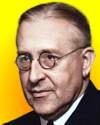
Died 17 Dec 1964 at age 81 (born 24 Jun 1883).
Austrian-American physicist who shared (with Carl D. Anderson) the 1936 Nobel Prize for Physics for his discovery of cosmic rays (high-energy radiation from outer space). He emigrated to the U.S. in 1938 and later naturalized. By making electrometer measurements during a series of high-altitude balloon ascents, Hess and others proved the cosmic origin of radiation that ionizes the atmosphere. In 1939, he correlated a 27-day cycle of cosmic-ray intensity to the magnetic field of the sun and its 27-day rotaion period. In other work, Hess devised methods for detecting minute quantities of radioactive substances, and studied the effects of radiation on the human body.«
Austrian-American physicist who shared (with Carl D. Anderson) the 1936 Nobel Prize for Physics for his discovery of cosmic rays (high-energy radiation from outer space). He emigrated to the U.S. in 1938 and later naturalized. By making electrometer measurements during a series of high-altitude balloon ascents, Hess and others proved the cosmic origin of radiation that ionizes the atmosphere. In 1939, he correlated a 27-day cycle of cosmic-ray intensity to the magnetic field of the sun and its 27-day rotaion period. In other work, Hess devised methods for detecting minute quantities of radioactive substances, and studied the effects of radiation on the human body.«
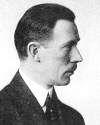
Died 17 Dec 1947 at age 68 (born 22 Feb 1879).
Danish physical chemist known for a widely applicable acid-base concept identical to that of Thomas Martin Lowry of England. Though both men introduced their definitions simultaneously (1923), they did so independently of each other. Acids are recognized by an excess of H+ ions, and bases have an excess of OH- ions. Brønsted was also an authority on the catalytic properties and strengths of acids and bases. His chief interest was thermodynamic studies, but he also did important work with electrolyte solutions.
Danish physical chemist known for a widely applicable acid-base concept identical to that of Thomas Martin Lowry of England. Though both men introduced their definitions simultaneously (1923), they did so independently of each other. Acids are recognized by an excess of H+ ions, and bases have an excess of OH- ions. Brønsted was also an authority on the catalytic properties and strengths of acids and bases. His chief interest was thermodynamic studies, but he also did important work with electrolyte solutions.
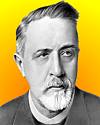
Died 17 Dec 1938 at age 77 (born 9 Jun 1861).
Gustav (Heinrich Johann Apollon) Tammann was a Russian chemist who helped to found the science of metallurgy and pioneered in the study of the internal structure and physical properties of metals and their alloys. In addition, his studies on heterogenous equilibria (i.e., the behaviour of matter as a function of chemical composition, temperature, and pressure) played a major role in systematizing inorganic chemistry and contributed significantly to the development of physical chemistry as a discipline. In 1903, Gustav Tammann established the first Institute of Inorganic Chemistry in Germany, before switching his research interest to the physical chemistry of metals and alloys.
Gustav (Heinrich Johann Apollon) Tammann was a Russian chemist who helped to found the science of metallurgy and pioneered in the study of the internal structure and physical properties of metals and their alloys. In addition, his studies on heterogenous equilibria (i.e., the behaviour of matter as a function of chemical composition, temperature, and pressure) played a major role in systematizing inorganic chemistry and contributed significantly to the development of physical chemistry as a discipline. In 1903, Gustav Tammann established the first Institute of Inorganic Chemistry in Germany, before switching his research interest to the physical chemistry of metals and alloys.
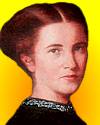
Died 17 Dec 1917 at age 81 (born 9 Jun 1836).
English physician and activist who sought the admission of women to professional education, especially in medicine. She became the first woman to be licensed as a medical practitioner in Britain (28 Sep 1865), despite originally being refused admission by the medical schools’ policy not to train women as doctors. She had to study medicine privately, under some of the country’s leading physicians; at times she was forced to dissect cadavers in her own room because she was forbidden to use hospital facilities. In 1865 she qualified as a medical practitioner by examination of the Society of Apothecaries. The following year, she founded the St. Mary’s Dispensary for Women in London. She was also the first female member of the British Medical Association (1873-92). more
English physician and activist who sought the admission of women to professional education, especially in medicine. She became the first woman to be licensed as a medical practitioner in Britain (28 Sep 1865), despite originally being refused admission by the medical schools’ policy not to train women as doctors. She had to study medicine privately, under some of the country’s leading physicians; at times she was forced to dissect cadavers in her own room because she was forbidden to use hospital facilities. In 1865 she qualified as a medical practitioner by examination of the Society of Apothecaries. The following year, she founded the St. Mary’s Dispensary for Women in London. She was also the first female member of the British Medical Association (1873-92). more
Elizabeth Garrett Anderson, by Jo Manton. - book suggestion.
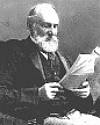
Died 17 Dec 1907 at age 83 (born 26 Jun 1824). quotes
Irish physicist, mathematician and engineer who became an influential physicist, who has been described as the Newton of his era. Born as William Thomson in Ireland. At Glasgow University, Scotland, he was a professor for over half a century. The name he made for himself was more than just a temperature scale. His activities ranged from being the brains behind the laying of a transatlantic telephone cable, to attempting to calculate the age of the earth from its rate of cooling. In 1892, when raised to the peerage as Baron Kelvin of Largs, he had chosen the name from the Kelvin River, near Glasgow. He is often described as a Scottish scientist because of his life career spent in Glasgow, but late in life, in a lecture in 1883, he referred to himself as an Irishman. more
Irish physicist, mathematician and engineer who became an influential physicist, who has been described as the Newton of his era. Born as William Thomson in Ireland. At Glasgow University, Scotland, he was a professor for over half a century. The name he made for himself was more than just a temperature scale. His activities ranged from being the brains behind the laying of a transatlantic telephone cable, to attempting to calculate the age of the earth from its rate of cooling. In 1892, when raised to the peerage as Baron Kelvin of Largs, he had chosen the name from the Kelvin River, near Glasgow. He is often described as a Scottish scientist because of his life career spent in Glasgow, but late in life, in a lecture in 1883, he referred to himself as an Irishman. more
Degrees Kelvin: A Tale of Genius, Invention, and Tragedy, by David Lindley. - book suggestion.
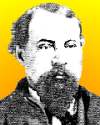
Died 17 Dec 1892 at age 62 (born 3 Oct 1830).
George Bailey Brayton was an American engineer who invented the first commercial gas internal combustion engine (patented 2 Apr 1872), which he manufactured and sold in the Providence, Rhode Island, area. Its principle of continuous ignition later became the basis for the turbine engine. A pressurized air-fuel mixture from a reservoir was ignited upon entering a water-cooled cylinder. The Brayton engine was given trials powering watercraft, one of John Holland's submarines and one used for a few months installed in a carriage (1872-3). His earlier career included developing steam engines.«
George Bailey Brayton was an American engineer who invented the first commercial gas internal combustion engine (patented 2 Apr 1872), which he manufactured and sold in the Providence, Rhode Island, area. Its principle of continuous ignition later became the basis for the turbine engine. A pressurized air-fuel mixture from a reservoir was ignited upon entering a water-cooled cylinder. The Brayton engine was given trials powering watercraft, one of John Holland's submarines and one used for a few months installed in a carriage (1872-3). His earlier career included developing steam engines.«
Internal Fire: The Internal-Combustion Engine 1673-1900, by C. Lyle Cummins, Jr. - book suggestion.
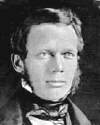
Died 17 Dec 1881 at age 63 (born 21 Nov 1818). quotes
American ethnologist and a principal founder of scientific anthropology, known especially for establishing the study of kinship systems and for his comprehensive theory of social evolution. Morgan discovered that the Indians in North America had some kinship patterns in common with each other. He was the first person to classify the kinship system of relationship in The Indian Journals (1859-62). Morgan's work was the foundation for the new world view of genetic explanation, cultural evolution or social Darwinism, in Houses and House-life of the American Aborigines (1865). He also brought to the people's attention the organization of the ancient Greeks and Romans was the same as the clan organization of the Indian tribes.
American ethnologist and a principal founder of scientific anthropology, known especially for establishing the study of kinship systems and for his comprehensive theory of social evolution. Morgan discovered that the Indians in North America had some kinship patterns in common with each other. He was the first person to classify the kinship system of relationship in The Indian Journals (1859-62). Morgan's work was the foundation for the new world view of genetic explanation, cultural evolution or social Darwinism, in Houses and House-life of the American Aborigines (1865). He also brought to the people's attention the organization of the ancient Greeks and Romans was the same as the clan organization of the Indian tribes.

Died 17 Dec 1857 at age 83 (born 7 May 1774).
British inventor who created the wind force scale. In 1806, British Admiral Sir Francis Beaufort devised a simple scale that coastal observers could use to report the state of the sea to the Admiralty. Originally to describe wind effects on a fully rigged man-of-war sailing vessel, it was later extended to include descriptions of effects on land features as well. Officially adopted in 1838, it uses numbers 0 to 12, to designate calm, light air, light breeze, gentle breeze, moderate breeze, fresh breeze, strong breeze, moderate gale, fresh gale, strong gale, whole gale, storm, and hurricane. Zero (calm) is a wind velocity of less than 1 mph (0.6 kph) and 12 (hurricane) represents a velocity of over 75 mph (120kph). He was Hydrographer of the Navy from 1829-55.
British inventor who created the wind force scale. In 1806, British Admiral Sir Francis Beaufort devised a simple scale that coastal observers could use to report the state of the sea to the Admiralty. Originally to describe wind effects on a fully rigged man-of-war sailing vessel, it was later extended to include descriptions of effects on land features as well. Officially adopted in 1838, it uses numbers 0 to 12, to designate calm, light air, light breeze, gentle breeze, moderate breeze, fresh breeze, strong breeze, moderate gale, fresh gale, strong gale, whole gale, storm, and hurricane. Zero (calm) is a wind velocity of less than 1 mph (0.6 kph) and 12 (hurricane) represents a velocity of over 75 mph (120kph). He was Hydrographer of the Navy from 1829-55.
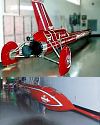
In 1979, the first rocket automobile vehicle claimed to break the sound barrier on land was driven by stunt driver Stan Barrett who reached 739.7 mph (faster than the speed of sound) on a 3-mile test-strip at Rogers Lake, Edwards Air Force Base, California. His 3-wheel vehicle had a 48,000 h.p. rocket boosted by a 12,000 h.p. Sidewinder missile. It was stopped by a drag parachute. The needlenosed car cost about $800,000. (The speed record never became official because the average of two runs is required, and the car never ran again. Further, the car's fuel load was insufficient to enable it to complete a measured mile at record speed, and the rocket engines could not be readied for a return run within the stipulated 1 hour period.)[Image: top, rear view: (source)bottom, nose view: (source)]
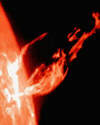
In 1919, Albert Porta an expert seismographer and meteorologist predicted that a conjunction of six planets on this date would spell the end of the world. The alignment of planets would cause a magnetic current which would pierce the sun and thereby engulf the earth in flames. As the date approached suicides and hysteria were reported throughout the world.(p.60-1, Richard Abanes, End-Time Visions. Four Walls Eight Windows, New York, 1998)
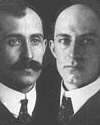
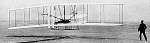
To Conquer the Air: The Wright Brothers and the Great Race for Flight, by James Tobin. - book suggestion.
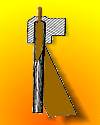
(USPTO)
In 1895, a “machine for making paper twine” invented by George L. Brownell was issued the first U.S. patent for this type of equipment (No. 551,615). It twisted strips or ribbons of paper into cord which was claimed to be as strong as any known steel of the time.*
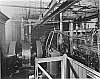
In 1880, the Edison Electric Illuminating Company was incorporated for the purpose of providing electric light to New York City. It was capitalized with $1,000,000. The first central electric station in the U.S. was opened by this company on 4 Sep 1882 at 257 Pearl St. in lower Manhattan. It had one engine, capable of generating power for 800 light bulbs. Within 14 months, the service had 508 subscribers and 12,732 bulbs. The company was the prototype for other local illuminating companies that were established in the United States during the 1880s. Edison's earlier Electric Light Company was incorporated 15 Oct 1878 for the purpose of financing Edison's invention of the incandescent lamp.Image: Interior of the Pearl Street Central Station, ca. 1880s.
In 1836, the world's first suburban railway opened in England. The London & Greenwich Railway (LGR) ran with two tracks between Depford and London Bridge. The 878-arch viaduct remains in use today. The construction was supervised Colonel George Landman, a military engineer who was born in Woolwich. He had hundreds of navvies at work, and those building the arches could lay 100,000 bricks a day. Six years earlier, the world's first all-steam railway service was between the cities of Liverpool to Manchester Railway which was first offered on 15 Sep 1830.«

In 1790, Mexico's greatest Aztec relic, an Aztec calendar stone is discovered in Mexico City. The 24-ton "Sun Stone" bears carved astronomical symbols. Based on the movements of the stars, it reflects the Aztecs' knowledge of astronomy and mathematics. Used to predict the seasons and natural events, it also regulated economic and social activities as well as religious ceremonies. Making it took them 52 years (1427-79), and it is 103 years older than the Gregorian calendar in use in most cultures today. The Spanish buried this colossal monument during the Conquest where the Metropolitan Cathedral stands today in the main plaza of Mexico City. It was lost for 250 years until 1790, when it was accidentally uncovered during repair work on the Cathedral.
In 1599, in Scotland, an ordinance was issued from Holyrood House that the 1st of January should thenceforth be accounted the first day of the year in Scotland. This replaced the centuries-old practice by which the civil new year was reckoned from 25 Mar (the Feast of the Annunciaton). Thus the Scottish year that began on 25 Mar 1599 ended on 31 Dec 1599 year, so that year had only 282 days. Since 1 Jan 1600, the Scottish New Year has been the same as modern useage. However, Scotland continued to use the Julian calendar until all Britain changed to the Gregorian calendar after 2 Sep 1752). England continued to use 25 Mar as the beginning of the new year for official purposes until 1752, and made the change to using 1 Jan at the same time as the adoption of the Gregorian calendar.«




