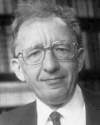
Born 19 Aug 1939.
British mathematician who was awarded the Fields Medal in 1970. Awarded every four years for outstanding discoveries in mathematics, the Medal is considered the highest honor in the field and the equivalent of the Nobel Prize. This award was for his work in Transcendental Number Theory. From ancient Greek times, people tried to 'square a circle' (create a square with the same area as a circle using a ruler and compasses only), but it proved impossible last century by showing that pi is a transcendental number (a number which is not a solution of a polynomial equation with integer coefficients). Baker's work here was a breakthrough with diophantine equations. Baker also made substantial contributions to Hilbert's seventh problem.
British mathematician who was awarded the Fields Medal in 1970. Awarded every four years for outstanding discoveries in mathematics, the Medal is considered the highest honor in the field and the equivalent of the Nobel Prize. This award was for his work in Transcendental Number Theory. From ancient Greek times, people tried to 'square a circle' (create a square with the same area as a circle using a ruler and compasses only), but it proved impossible last century by showing that pi is a transcendental number (a number which is not a solution of a polynomial equation with integer coefficients). Baker's work here was a breakthrough with diophantine equations. Baker also made substantial contributions to Hilbert's seventh problem.
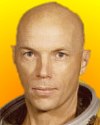
Born 19 Aug 1935. quotes
American surgeon and astronaut who made six flights into space. After being selected as a NASA scientist-astronaut (1967) he completed astronaut academic training, worked on the design and development of the Skylab Program and Space Shuttle extravehicular activity equipment (including spacesuits, life support systems, airlocks, and manned maneuvering units). His first space flight began on 9 Apr 1983 with the maiden voyage of Space Shuttle Challenger, during which he and Don Peterson conducted the first Space Shuttle extravehicular activity to test the new space suits. They also tested the devices and procedures for construction and repair. He flew on five more Space Shuttle flights before retiring from NASA in Aug 1997.«
American surgeon and astronaut who made six flights into space. After being selected as a NASA scientist-astronaut (1967) he completed astronaut academic training, worked on the design and development of the Skylab Program and Space Shuttle extravehicular activity equipment (including spacesuits, life support systems, airlocks, and manned maneuvering units). His first space flight began on 9 Apr 1983 with the maiden voyage of Space Shuttle Challenger, during which he and Don Peterson conducted the first Space Shuttle extravehicular activity to test the new space suits. They also tested the devices and procedures for construction and repair. He flew on five more Space Shuttle flights before retiring from NASA in Aug 1997.«
Story: The Way of Water, by Anne Lenehan. - book suggestion.
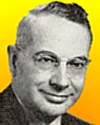
Born 19 Aug 1909; died 9 Dec 1974 at age 65.
American physicist and biophysicist who brought atomic isotopes into the battle against cancer. During WW II, he developed a radio proximity fuse and later was a health-physics scientist with "Manhattan Project." Hoffman studied nine accident victims of radiation disease at Los Alamos in Aug 1945 and May 1946. This research revealed for the first time that atoms of living human tissue could be transformed into radioactive atoms. He recognized "a completely new approach to studying the metabolism of atoms in living tissue and a new way of probing the complicated system of gene cells that determine heredity," and such knowledge was indispensable to understanding the mysteries of cancer research in which he engaged for the rest of his life.«
American physicist and biophysicist who brought atomic isotopes into the battle against cancer. During WW II, he developed a radio proximity fuse and later was a health-physics scientist with "Manhattan Project." Hoffman studied nine accident victims of radiation disease at Los Alamos in Aug 1945 and May 1946. This research revealed for the first time that atoms of living human tissue could be transformed into radioactive atoms. He recognized "a completely new approach to studying the metabolism of atoms in living tissue and a new way of probing the complicated system of gene cells that determine heredity," and such knowledge was indispensable to understanding the mysteries of cancer research in which he engaged for the rest of his life.«
The life and death of cells, by Joseph G Hoffman. - book suggestion.
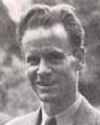
Born 19 Aug 1906; died 11 Mar 1971 at age 64.
American pioneer in the development of electronic television, taking all of the moving parts out of television inventions. Farnsworth was a 15-year-old high school student when he designed his first television system. Six years later he obtained his first patent. In 1935 he demonstrated his complete television system. Farnsworth's basic television patents covered scanning, focusing, synchronizing, contrast, controls, and power. He also invented the first cold cathode ray tubes and the first simple electronic microscope. The Philco TV manufacturing was named after him.(Image: Collier's Weekly, 1936)
American pioneer in the development of electronic television, taking all of the moving parts out of television inventions. Farnsworth was a 15-year-old high school student when he designed his first television system. Six years later he obtained his first patent. In 1935 he demonstrated his complete television system. Farnsworth's basic television patents covered scanning, focusing, synchronizing, contrast, controls, and power. He also invented the first cold cathode ray tubes and the first simple electronic microscope. The Philco TV manufacturing was named after him.(Image: Collier's Weekly, 1936)
The Last Lone Inventor: A Tale of Genius, Dec… (Paperback) The Last Lone Inventor: A Tale of Genius, Deceit, and the Birth of Television, by Evan I. Schwartz. - book suggestion.

Born 19 Aug 1899; died 11 Dec 1942 at age 43.
Franz C(arl) Schmelkes was a Czech-born chemist who was best known for his discovery of azochloramid, used to sterilize wounds and burns. This compound is also known by the name chlorazodin, but its formal name is 1-(amino-chloroimino-methyl)imino-2-chloro-guanidine. The image of the strucure of this molecule shows nitrogen atoms in blue, hydrogen in grey, chlorine in green, and carbon shown conventionally by the origin of its four bonds near each end of the molecule. The chlorine which has substituted a hydrogen atom of an amino group - which is present as =N-Cl - is active as a germicide.«
Franz C(arl) Schmelkes was a Czech-born chemist who was best known for his discovery of azochloramid, used to sterilize wounds and burns. This compound is also known by the name chlorazodin, but its formal name is 1-(amino-chloroimino-methyl)imino-2-chloro-guanidine. The image of the strucure of this molecule shows nitrogen atoms in blue, hydrogen in grey, chlorine in green, and carbon shown conventionally by the origin of its four bonds near each end of the molecule. The chlorine which has substituted a hydrogen atom of an amino group - which is present as =N-Cl - is active as a germicide.«
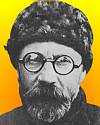
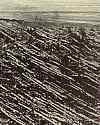
Russian mineralogist who conducted the first scientific expedition (for which records survive) to study the Tungusta meteor impact site. He began in 1927, and continued to work on the investigation until, while fighting for his country in WW II, he was captured and died of typhus in a Nazi prison camp. The Tungusta event, in a remote region of Russia, was a blast that destroyed 2,200 sq km of forest, believed to have been caused by a meteorite over 50-m diameter. It penetrated the Earth's atmosphere, heated to about 10,000 ºC and detonated 6 to10 km above the ground, leaving no crater. The region was sparsely populated, remote, and hard to reach, so there was little scientific interest until almost 20 years later, when Kulik began his work.«[Image right: a view of charred forest trees blown to the ground show the direction of the blast.]
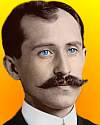
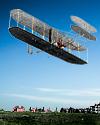
American inventor and aviator, who with his brother, Wilbur, invented the first powered airplane, Flyer, capable of sustained, controlled flight (17 Dec 1903). At Kitty Hawk, North Carolina, Orville made the first ever manned powered flight, airborn for 12 sec. By 1905, they had improved the design, built and and made several long flights in Flyer III, which was the first fully practical airplane (1905), able to fly up to 38-min and travel 24 miles (39-km). Their Model A was produced in 1908, capable of flight for over two hours of flight. They sold considerable numbers, but European designers became strong competitors. After Wilbur died of typhoid in 1912, Orville sold his interest in the Wright Company in 1915. more
To Conquer the Air: The Wright Brothers and the Great Race for Flight, by James Tobin. - book suggestion.
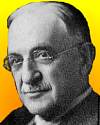
Born 19 Aug 1851; died 31 Jul 1937 at age 85.
Charles Elmer Hires was an American manufacturer who invented his own brand of root beer, sold by the Hires Co., which then dominated the market. Root beer dates back to colonial settlers. As a Philadelphia pharmacist, after sampling a herb tea while visiting New Jersey, he created a similar drink, “Hires’ Herb Tea,” using sassafras as the main flavoring ingredient. He sold the mixture at the 1876 Philadelphia Centennial Exposition in tiny packets of his dry mixture of various herbs, barks, and berries, for housewives to brew as “root beer.” In 1880, Hires introduced a more convenient, “new and improved” liquid version. He began advertised it in an 1884 issue of Harper’s Weekly. By 1892, he sold almost 3 million bottles a year.«
Charles Elmer Hires was an American manufacturer who invented his own brand of root beer, sold by the Hires Co., which then dominated the market. Root beer dates back to colonial settlers. As a Philadelphia pharmacist, after sampling a herb tea while visiting New Jersey, he created a similar drink, “Hires’ Herb Tea,” using sassafras as the main flavoring ingredient. He sold the mixture at the 1876 Philadelphia Centennial Exposition in tiny packets of his dry mixture of various herbs, barks, and berries, for housewives to brew as “root beer.” In 1880, Hires introduced a more convenient, “new and improved” liquid version. He began advertised it in an 1884 issue of Harper’s Weekly. By 1892, he sold almost 3 million bottles a year.«
Charles E. Hires and the Drink that Wowed a Nation: The Life and Times of a Philadelphia Entrepreneur, by Bill Double. - book suggestion.
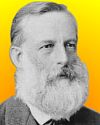
Born 19 Aug 1830; died 11 Apr 1895 at age 64. quotes
(Julius) Lothar Meyer was a German chemist who discovered the Periodic Law, independently of Dmitry Mendeleyev, at about the same time (1869). However, he did not develop the periodic classification of the chemical elements as thoroughly as Mendeleyev. Meyer trained originally in medicine and chemistry. He examined the effect of carbon monoxide on blood. In 1879, Meyer compared atomic volume to atomic weight. Plotted on a graph, the curve showed the periodicity of the elements. He also established the concept of valency by indicating that a given element combined with a characteristic number of hydrogen atoms, and coined the terms like univalent, bivalent, and trivalent, based on that number.«
(Julius) Lothar Meyer was a German chemist who discovered the Periodic Law, independently of Dmitry Mendeleyev, at about the same time (1869). However, he did not develop the periodic classification of the chemical elements as thoroughly as Mendeleyev. Meyer trained originally in medicine and chemistry. He examined the effect of carbon monoxide on blood. In 1879, Meyer compared atomic volume to atomic weight. Plotted on a graph, the curve showed the periodicity of the elements. He also established the concept of valency by indicating that a given element combined with a characteristic number of hydrogen atoms, and coined the terms like univalent, bivalent, and trivalent, based on that number.«
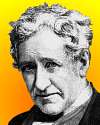
Born 19 Aug 1808; died 7 May 1890 at age 81.
Scottish engineer who invented the steam-hammer (24 Nov 1839) which was patented in Britain on 9 Jun 1842 (No. 9382). In his early career, Nasmyth improved the design of machine tools. Power hammers had previously been driven by steam, but Nasmyth designed his steam-hammer with more precision and control. The steam functioned to lift the hammer which then dropped by gravity, and repeated the cycle. Nasmyth adapted the idea to make a steam pile-driver. With later improvements, the steam-hammer enabled forging very large guns for the British navy. He became wealthy and in 1856 was able to retire at the age of 48. After retirement, Nasmyth pursued his hobby of astronomy, in which he published minor works.«
Scottish engineer who invented the steam-hammer (24 Nov 1839) which was patented in Britain on 9 Jun 1842 (No. 9382). In his early career, Nasmyth improved the design of machine tools. Power hammers had previously been driven by steam, but Nasmyth designed his steam-hammer with more precision and control. The steam functioned to lift the hammer which then dropped by gravity, and repeated the cycle. Nasmyth adapted the idea to make a steam pile-driver. With later improvements, the steam-hammer enabled forging very large guns for the British navy. He became wealthy and in 1856 was able to retire at the age of 48. After retirement, Nasmyth pursued his hobby of astronomy, in which he published minor works.«
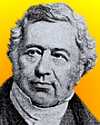
Born 19 Aug 1790; died 8 Mar 1853 at age 62.
English clockmaker and inventor whose chronometers were noted for high accuracy. His patents in this field included compasses for navigation and surveying. He experimented with springs made of steel, gold and glass, and devices for counteracting the effects of temperature change upon timepiece mechanisms. As clockmaker to Queen Victoria, he was commissioned to build the Great Clock for the clock tower of the Houses of Parliament (known as Big Ben, although that is actually the nickname of its hour bell) which he began in the year he died. His son, Frederick Dent, completed the work the following year and it was installed in the tower in 1859. It continues to be recognised for its great accuracy of 4 seconds in a year.«
English clockmaker and inventor whose chronometers were noted for high accuracy. His patents in this field included compasses for navigation and surveying. He experimented with springs made of steel, gold and glass, and devices for counteracting the effects of temperature change upon timepiece mechanisms. As clockmaker to Queen Victoria, he was commissioned to build the Great Clock for the clock tower of the Houses of Parliament (known as Big Ben, although that is actually the nickname of its hour bell) which he began in the year he died. His son, Frederick Dent, completed the work the following year and it was installed in the tower in 1859. It continues to be recognised for its great accuracy of 4 seconds in a year.«
Edward John Dent, Chronometer Maker, and his Successors, by Vaudrey Mercer. - book suggestion.
Born 19 Aug 1785; died 29 Jan 1859 at age 73.
American clock manufacturer who was one of the pioneers in the mass production of clocks. After working with Eli Terry and Silas Hoadley in firm of Terry, Thomas & Hoadley, which manufactured clocks by mass production methods (1807), Thomas founded a clock factory of his own at Plymouth Hollow, Conn. (1812). He was not an inventive genius, but he was an excellent mechanic and a keen business man. Two years later he paid Terry for the rights to manufacture the latter's popular shelf clock. Shortly, he was selling as many clocks as Terry. As his business developed Thomas built a mill for rolling brass and making wire at Plymouth Hollow, and operated it in conjunction with the clock factory. Finally, he organized the Seth Thomas Clock Co. (1853).
American clock manufacturer who was one of the pioneers in the mass production of clocks. After working with Eli Terry and Silas Hoadley in firm of Terry, Thomas & Hoadley, which manufactured clocks by mass production methods (1807), Thomas founded a clock factory of his own at Plymouth Hollow, Conn. (1812). He was not an inventive genius, but he was an excellent mechanic and a keen business man. Two years later he paid Terry for the rights to manufacture the latter's popular shelf clock. Shortly, he was selling as many clocks as Terry. As his business developed Thomas built a mill for rolling brass and making wire at Plymouth Hollow, and operated it in conjunction with the clock factory. Finally, he organized the Seth Thomas Clock Co. (1853).
Born 19 Aug 1745; died 8 Dec 1818 at age 73.
Swedish mineralogist and crystallographer who was born in an iron-ming town, and followed mining as a career. At the copper mine in Falun, he improved smelting methods and the use of by-products. He discovered manganese (1774), and also selenium. Gahn assisted his friend Carl Wilhelm Scheele (discoverer of chlorine) in finding phosphoric acid in bones. His limited published work included essays on the balance and use of the blowpipe as a convenient analytical tool. During the American Revolutionary War, one of his companies supplied copper for sheathing ships. Gahnite, a dark green to brown or black mineral, (ZnAl2O4), also called zinc spinel was named after Gahn.
Swedish mineralogist and crystallographer who was born in an iron-ming town, and followed mining as a career. At the copper mine in Falun, he improved smelting methods and the use of by-products. He discovered manganese (1774), and also selenium. Gahn assisted his friend Carl Wilhelm Scheele (discoverer of chlorine) in finding phosphoric acid in bones. His limited published work included essays on the balance and use of the blowpipe as a convenient analytical tool. During the American Revolutionary War, one of his companies supplied copper for sheathing ships. Gahnite, a dark green to brown or black mineral, (ZnAl2O4), also called zinc spinel was named after Gahn.
Born 19 Aug 1646; died 31 Dec 1719 at age 73. quotes
English astronomer who established the Greenwich Observatory, as one of a group of scientists who convinced King Charles II to build a national observatory. Appointed the first Astronomer Royal (1675-1719), Flamsteed was devoted to astronomical measurement, with the task of accurately providing the positions of stars for use in navigation. He eventually produced the first star catalogue, which gave the positions of nearly 3,000 stars. He also worked on the motions of the sun and moon, tidal tables, and was one of the only astronomers to maintain the comets of 1680-1681 were the same, viewed before and after passing around the sun. A quarrelsome man, he argued with Isaac Newton and Edmond Halley over their requests for access to his astronomical observations.
English astronomer who established the Greenwich Observatory, as one of a group of scientists who convinced King Charles II to build a national observatory. Appointed the first Astronomer Royal (1675-1719), Flamsteed was devoted to astronomical measurement, with the task of accurately providing the positions of stars for use in navigation. He eventually produced the first star catalogue, which gave the positions of nearly 3,000 stars. He also worked on the motions of the sun and moon, tidal tables, and was one of the only astronomers to maintain the comets of 1680-1681 were the same, viewed before and after passing around the sun. A quarrelsome man, he argued with Isaac Newton and Edmond Halley over their requests for access to his astronomical observations.
Born 19 Aug 1584; died 14 Sep 1638 at age 54.
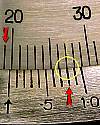
French mathematician who invented the vernier scale, which enabled instruments to make more accurate linear or angular measurements. He first described it in a work entitled La construction, l'usage et les propriétés du cadran nouveau (1631)*. It consists of a small graduated scale or arc made to slide along a larger fixed scale or arc to enable determining the increment between two graduations of the larger scale. The ten divisions of the smaller, vernier scale are equal to nine of the fixed scale. For example, calipers with a larger scale graduated in tenths of inches can be read by use of the vernier scale to within one-hundredths of an inch. Vernier scales are also used on sextants and mercury column barometers.«[Image: An angle scale reading of 19.8 degrees. The black arrow is the index mark showing the measurement on the fixed scale. "19" (not quite "20") is read at the left red arrow, ".8" from the right red arrow on the vernier scale, which graduation best aligns with a graduation on the fixed scale.][DSB gives dates 19 Aug 1584 - 14 Sep 1638. EB gives c.1580 to 14 Sep 1637.]
French mathematician who invented the vernier scale, which enabled instruments to make more accurate linear or angular measurements. He first described it in a work entitled La construction, l'usage et les propriétés du cadran nouveau (1631)*. It consists of a small graduated scale or arc made to slide along a larger fixed scale or arc to enable determining the increment between two graduations of the larger scale. The ten divisions of the smaller, vernier scale are equal to nine of the fixed scale. For example, calipers with a larger scale graduated in tenths of inches can be read by use of the vernier scale to within one-hundredths of an inch. Vernier scales are also used on sextants and mercury column barometers.«[Image: An angle scale reading of 19.8 degrees. The black arrow is the index mark showing the measurement on the fixed scale. "19" (not quite "20") is read at the left red arrow, ".8" from the right red arrow on the vernier scale, which graduation best aligns with a graduation on the fixed scale.][DSB gives dates 19 Aug 1584 - 14 Sep 1638. EB gives c.1580 to 14 Sep 1637.]

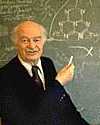
Died 19 Aug 1994 at age 93 (born 28 Feb 1901). quotes
Linus Carl Pauling was an American chemist, physicist and author who applied quantum mechanics to the study of molecular structures, particularly in connection with chemical bonding. Pauling was the only person ever to win two unshared Nobel prizes. The first was the Nobel Prize for Chemistry awarded in 1954 for charting the chemical underpinnings of life itself. In addition, because of his work for nuclear peace, he received the Nobel Prize for Peace in 1962. He is remembered also for his strong belief in the health benefits of large doses of vitamin C.
Linus Carl Pauling was an American chemist, physicist and author who applied quantum mechanics to the study of molecular structures, particularly in connection with chemical bonding. Pauling was the only person ever to win two unshared Nobel prizes. The first was the Nobel Prize for Chemistry awarded in 1954 for charting the chemical underpinnings of life itself. In addition, because of his work for nuclear peace, he received the Nobel Prize for Peace in 1962. He is remembered also for his strong belief in the health benefits of large doses of vitamin C.
Linus Pauling in His Own Words: Selections From his Writings, Speeches and Interviews, by Barbara Marinacci. - book suggestion.
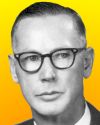
Died 19 Aug 1992 at age 80 (born 1 Nov 1911).
American physicist who invented the betatron (1940), the first device to accelerate electrons (“beta particles”) to speeds high enough to have sufficient momentum to produce nuclear transformations in atoms. The electrons are accelerated by electromagnetic induction in a doughnut-shaped (toroidal) ring from which the air has been removed. This type of particle accelerator can produce high-energy electrons up to 340 MeV for research purposes, including the production of high-energy X-rays. For such high velocities, the magnetic field is increased to match the relativistic increase in mass of the particles. During WW II, Kerst worked at Los Alamos on tue atomic bomb project. He completed the largest betatron in 1950, at the University of Illinois.
American physicist who invented the betatron (1940), the first device to accelerate electrons (“beta particles”) to speeds high enough to have sufficient momentum to produce nuclear transformations in atoms. The electrons are accelerated by electromagnetic induction in a doughnut-shaped (toroidal) ring from which the air has been removed. This type of particle accelerator can produce high-energy electrons up to 340 MeV for research purposes, including the production of high-energy X-rays. For such high velocities, the magnetic field is increased to match the relativistic increase in mass of the particles. During WW II, Kerst worked at Los Alamos on tue atomic bomb project. He completed the largest betatron in 1950, at the University of Illinois.
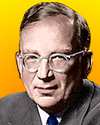
Died 19 Aug 1968 at age 64 (born 4 Mar 1904). quotes
Russian-born American nuclear physicist, cosmologist and writer who was one of the foremost advocates of the big-bang theory, which describes the origin of the universe as a colossal explosion that took place billions of years ago. In 1954, he expanded his interests into biochemistry and his work on deoxyribonucleic acid (DNA) made a basic contribution to modern genetic theory.
Russian-born American nuclear physicist, cosmologist and writer who was one of the foremost advocates of the big-bang theory, which describes the origin of the universe as a colossal explosion that took place billions of years ago. In 1954, he expanded his interests into biochemistry and his work on deoxyribonucleic acid (DNA) made a basic contribution to modern genetic theory.
Mr Tompkins in Paperback, by George Gamow. - book suggestion.
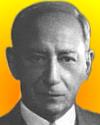
Died 19 Aug 1967 at age 83 (born 16 Aug 1884). quotes
American inventor (80 patents) and publisher who was largely responsible for the establishment of science fiction as an independent literary form. Hugo founded radio station WRNY, was involved in the first television broadcasts and is considered a pioneer in amateur radio. In 1926, as owner of a magazine, Modern Electrics, he filled a blank spot in his publication by dashing off the first chapter of a series called "Ralph 124C 41+." "Ralph" was an amazing success. The 12-part story was filled with all kinds of wild inventions unheard of in 1926, including television (he is credited with introducing this word), fluorescent lighting, juke boxes, solar energy, television, microfilm, vending machines, and a device we now call radar.«
American inventor (80 patents) and publisher who was largely responsible for the establishment of science fiction as an independent literary form. Hugo founded radio station WRNY, was involved in the first television broadcasts and is considered a pioneer in amateur radio. In 1926, as owner of a magazine, Modern Electrics, he filled a blank spot in his publication by dashing off the first chapter of a series called "Ralph 124C 41+." "Ralph" was an amazing success. The 12-part story was filled with all kinds of wild inventions unheard of in 1926, including television (he is credited with introducing this word), fluorescent lighting, juke boxes, solar energy, television, microfilm, vending machines, and a device we now call radar.«
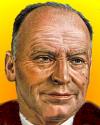
Died 19 Aug 1957 at age 58 (born 28 Dec 1898). quotes
Swedish-American meteorologist who first explained the large-scale motions of the atmosphere in terms of fluid mechanics. His work contributed to developing meteorology as a science. Rossby first theorized about the existence of the jet stream in 1939, and that it governs the easterly movement of most weather. U.S. Army Air Corps pilots flying B-29 bombing missions across the Pacific Ocean during World War II proved the jet stream's existence. The pilots found that when they flew from east to west, they experienced slower arrival times and fuel shortage problems. When flying from west to east, however, they found the opposite to be true. Rossby created mathematical models (Rossby equations) for computerized weather prediction (1950).«
Swedish-American meteorologist who first explained the large-scale motions of the atmosphere in terms of fluid mechanics. His work contributed to developing meteorology as a science. Rossby first theorized about the existence of the jet stream in 1939, and that it governs the easterly movement of most weather. U.S. Army Air Corps pilots flying B-29 bombing missions across the Pacific Ocean during World War II proved the jet stream's existence. The pilots found that when they flew from east to west, they experienced slower arrival times and fuel shortage problems. When flying from west to east, however, they found the opposite to be true. Rossby created mathematical models (Rossby equations) for computerized weather prediction (1950).«
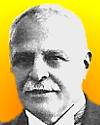
Died 19 Aug 1950 at age 78 (born 27 Nov 1871).
Italian physicist who proposed a widely used system for the definition of electrical, magnetic, and mechanical units of measurement. He developed the Giorgi International System of Measurement (also known as the mksa system) in 1901. Originally, he suggested that the basic units of scientific measurement be the metre, kilogram, second, and joule. With the the ampere replacing the joule as a basic unit, this system was subsequently endorsed by the General Conference of Weights and Measures (1960). Giorgi also worked in hydroelectric power, electricity distribution networks, and urban trolley systems.
Italian physicist who proposed a widely used system for the definition of electrical, magnetic, and mechanical units of measurement. He developed the Giorgi International System of Measurement (also known as the mksa system) in 1901. Originally, he suggested that the basic units of scientific measurement be the metre, kilogram, second, and joule. With the the ampere replacing the joule as a basic unit, this system was subsequently endorsed by the General Conference of Weights and Measures (1960). Giorgi also worked in hydroelectric power, electricity distribution networks, and urban trolley systems.
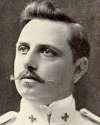
Died 19 Aug 1931 at age 63 (born 3 Jun 1868).
Cuban pathologist and bacteriologist who was a member of the Reed Yellow Fever Board of the U.S. Army that discovered (1901) the role of the mosquito in the transmission of yellow fever. In May 1898, he was appointed Acting Assistant Surgeon in the U.S. Army. Agramonte had acquired immunity to yellow fever from a mild childhood case in Cuba before emigrating to the U.S., which was an advantage when he was chosen by the Surgeon-General to study the yellow fever outbreak in General Shafter’s army in Cuba. There Agramonte performed autopsies in order to determine the causative agent of the disease. After additional work in Cuba, in May 1900, Agramonte was appointed to Walter Reed’s Yellow Fever Commission.
Cuban pathologist and bacteriologist who was a member of the Reed Yellow Fever Board of the U.S. Army that discovered (1901) the role of the mosquito in the transmission of yellow fever. In May 1898, he was appointed Acting Assistant Surgeon in the U.S. Army. Agramonte had acquired immunity to yellow fever from a mild childhood case in Cuba before emigrating to the U.S., which was an advantage when he was chosen by the Surgeon-General to study the yellow fever outbreak in General Shafter’s army in Cuba. There Agramonte performed autopsies in order to determine the causative agent of the disease. After additional work in Cuba, in May 1900, Agramonte was appointed to Walter Reed’s Yellow Fever Commission.
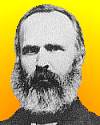
Died 19 Aug 1896 at age 76 (born 23 Nov 1819). quotes
American geologist and chemist, known for his studies of the regional geology of California. Whitney was an independent consulting expert in mining (1849-54) when he was appointed chemist for the state of Iowa and professor of mineralogy at the University of Iowa. He was California State Geologist (1860-1874). His name was given by a California Geological Survey field party to Mount Whitney (1864) in east-central California, the highest summit on the U.S. mainland outside Alaska. The survey was significant for the men it trained and the methods it introduced - notably topographical mapping by triangulation. During his years in California, Whitney was active in promoting the California Academy of Science, and served as a commissioner of Yosemite Park.
American geologist and chemist, known for his studies of the regional geology of California. Whitney was an independent consulting expert in mining (1849-54) when he was appointed chemist for the state of Iowa and professor of mineralogy at the University of Iowa. He was California State Geologist (1860-1874). His name was given by a California Geological Survey field party to Mount Whitney (1864) in east-central California, the highest summit on the U.S. mainland outside Alaska. The survey was significant for the men it trained and the methods it introduced - notably topographical mapping by triangulation. During his years in California, Whitney was active in promoting the California Academy of Science, and served as a commissioner of Yosemite Park.
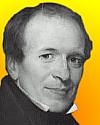
c.1840-45
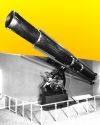
American astronomer whose family became the first significant manufacturers of astronomical instruments in the U.S. His company manufactured apparatus for most American observatories of the era, including Lick and Pulkovo, and others in Europe. In 1862, while testing a telescope, Clark discovered the companion star to Sirius, which had previously been predicted but until then never sighted. The 18½-in objective telescope he used was subsequently delivered to the Dearborn Observatory, Chicago. His sons, Alvan Graham Clark and George Bassett Clark, continued the business. The unexcelled 40-in refractor telescopes for the 40-in Yerkes observatory was made by Alvan Graham Clark.«[Image: Dearborn telescope, c.1864.]
Alvan Clark & Sons, Artists in Optics, by Warner and Ariail. - book suggestion.
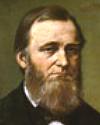
Died 19 Aug 1887 at age 64 (born 3 Feb 1823). quotes
American naturalist and vertebrate zoologist who in his time was the leading authority on North American birds and mammals. A pioneer in museum collecting and display, he was named the Smithsonian Institution's second Secretary upon the death of the first Secretary, Joseph Henry. Whereas Henry had envisioned the Smithsonian primarily as a research institute, Baird saw Smithson's gift as the means to develop a national museum. By 1878, Congress had formally given responsibility for the U.S. National Museum to the Smithsonian Institution. During the Baird years, the Smithsonian became a showcase for the nation's history, resources, and treasures. By the end of his tenure, the National Museum housed more than 2.5 million specimens and artifacts.
American naturalist and vertebrate zoologist who in his time was the leading authority on North American birds and mammals. A pioneer in museum collecting and display, he was named the Smithsonian Institution's second Secretary upon the death of the first Secretary, Joseph Henry. Whereas Henry had envisioned the Smithsonian primarily as a research institute, Baird saw Smithson's gift as the means to develop a national museum. By 1878, Congress had formally given responsibility for the U.S. National Museum to the Smithsonian Institution. During the Baird years, the Smithsonian became a showcase for the nation's history, resources, and treasures. By the end of his tenure, the National Museum housed more than 2.5 million specimens and artifacts.
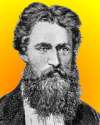
Died 19 Aug 1876 at age 36 (born 24 Mar 1840).
English archaeologist and Assyriologist who translated Babylonian cuneiform tablets (1872) describing a great deluge, part of the Gilgamesh epic, and akin to that found in Genesis. Smith, as an apprentice banknote engraver since age 14, spent much of his own time teaching himself how to decipher cuneiform, by studying inscriptions available at the British Museum. His skill was recognized, and he worked for the British Museum from 1867. Smith engaged in fieldwork in 1873 at Nineveh (Kuyunjik) finding more tablet fragments of the flood story, and others on the Babylonian dynasties. He published his work in The Chaldean Account of Genesis (1876). He died at age 36 of a fever while excavating more of Assurbanipal's library.« more
English archaeologist and Assyriologist who translated Babylonian cuneiform tablets (1872) describing a great deluge, part of the Gilgamesh epic, and akin to that found in Genesis. Smith, as an apprentice banknote engraver since age 14, spent much of his own time teaching himself how to decipher cuneiform, by studying inscriptions available at the British Museum. His skill was recognized, and he worked for the British Museum from 1867. Smith engaged in fieldwork in 1873 at Nineveh (Kuyunjik) finding more tablet fragments of the flood story, and others on the Babylonian dynasties. He published his work in The Chaldean Account of Genesis (1876). He died at age 36 of a fever while excavating more of Assurbanipal's library.« more
Chaldean Account of Genesis, by George Smith. - book suggestion.
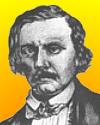
Died 19 Aug 1856 at age 39 (born 21 Aug 1816). quotes
Charles (-Frédéric) Gerhardt was a French chemist who, with Auguste Laurent, developed a classification of organic compounds. Like most chemists he was aware that the dualistic system of Jöns Berzelius was unsatisfactory and tried to create an alternative. He adopted what became known as type theory in which he thought all organic compounds were based on four main types - hydrogen, hydrogen chloride, ammonia, and water. Organic compounds were referred to these types by replacing a hydrogen atom in one of these compounds by a radical (i.e., by a group of atoms). His idea was opposed by his contemporaries and was later abandoned, but it proved important in the subsequent rationalization of structural organic chemistry.
Charles (-Frédéric) Gerhardt was a French chemist who, with Auguste Laurent, developed a classification of organic compounds. Like most chemists he was aware that the dualistic system of Jöns Berzelius was unsatisfactory and tried to create an alternative. He adopted what became known as type theory in which he thought all organic compounds were based on four main types - hydrogen, hydrogen chloride, ammonia, and water. Organic compounds were referred to these types by replacing a hydrogen atom in one of these compounds by a radical (i.e., by a group of atoms). His idea was opposed by his contemporaries and was later abandoned, but it proved important in the subsequent rationalization of structural organic chemistry.
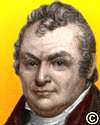
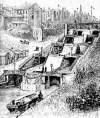
Lockport on Erie Canal
American civil engineer, lawyer and politician, who was born in Pennsylvania but moved to New York state in 1794, where he began the manufacture of salt. He became a justice of the peace (1800) and a member of the State assembly (1804). The N.Y. State Legislature introduced a bill to fund a feasibility study for a New York State canal, and retained Judge Geddes (1808) to survey routes across the state, east to Lake Erie and Lake Ontario. On 20 Jan 1809, Geddes recommended a Hudson-Erie route to the State legislature. Funding was delayed, but construction on the Erie Canal began on 4 Jul 1817. Taking eight years to complete, it was one of the first great engineering works in North America. Close to 1,000 Erie Canal workers died of malaria in the swamps. Geddes also consulted on canal routes for Ohio. more
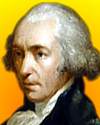
Died 19 Aug 1819 at age 83 (born 19 Jan 1736). quotes
Scottish engineer and inventor whose steam engine contributed substantially to the Industrial Revolution. In 1763 he repaired the model of Newcomen's steam engine belonging to Glasgow University, and began experiments on properties of steam. The Newcomen engine was simple in design: it acted as a pump and a jet of cold water was used to condense the steam. Watt improved on this design by adding a separate condenser and a system of valves to make the piston return to the top of the cylinder after descending. He took out a patent for the separate condenser in 1769. He later adapted the engine to rotary motion, making it suitable for a variety of industrial purposes, and invented the flywheel and the governor.[DSB and other sources give dete of death as 19 Aug 1819. EB gives 25 Aug 1819.] more
Scottish engineer and inventor whose steam engine contributed substantially to the Industrial Revolution. In 1763 he repaired the model of Newcomen's steam engine belonging to Glasgow University, and began experiments on properties of steam. The Newcomen engine was simple in design: it acted as a pump and a jet of cold water was used to condense the steam. Watt improved on this design by adding a separate condenser and a system of valves to make the piston return to the top of the cylinder after descending. He took out a patent for the separate condenser in 1769. He later adapted the engine to rotary motion, making it suitable for a variety of industrial purposes, and invented the flywheel and the governor.[DSB and other sources give dete of death as 19 Aug 1819. EB gives 25 Aug 1819.] more
James Watt: Making the World Anew, by Ben Russell. - book suggestion.
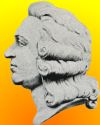
Died 19 Aug 1765 at age 42 (born 23 Dec 1722). quotes
Swedish chemist and metallurgist who was the first to isolate nickel (1751) and notice its slight magnetic properties. A new chemical classification of minerals he made was translated to several languages. Patterns he found in the internal structure of minerals enabled him to distinguish between simple one-compound minerals and those comprised of a mixture of several minerals. He discovered zeolite, a water-softening silicate and analysed the high-density mineral calcium tungstate. By adept use of the blowpipe to intensify a flame and burn a small quantity of a mineral he could make an identification of its chemical composition based on the colouring of the flame. He did not invent the instrument, but founded systematic blowpipe analysis technique.«
Swedish chemist and metallurgist who was the first to isolate nickel (1751) and notice its slight magnetic properties. A new chemical classification of minerals he made was translated to several languages. Patterns he found in the internal structure of minerals enabled him to distinguish between simple one-compound minerals and those comprised of a mixture of several minerals. He discovered zeolite, a water-softening silicate and analysed the high-density mineral calcium tungstate. By adept use of the blowpipe to intensify a flame and burn a small quantity of a mineral he could make an identification of its chemical composition based on the colouring of the flame. He did not invent the instrument, but founded systematic blowpipe analysis technique.«
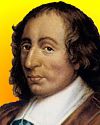
Died 19 Aug 1662 at age 39 (born 19 Jun 1623). quotes
French mathematician and physicist who was a child prodigy. He laid the foundation for the modern theory of probabilities. In hydrodynamics he formulated what came to be known as Pascal's law of pressure, and invented the syringe and hydraulic press. Pascal invented the first digital calculator to help his father with his work collecting taxes. He worked on it for three years (1642-45). The device, called the Pascaline, resembled a mechanical calculator of the 1940s. This, almost certainly, makes Pascal the second person to invent a mechanical calculator for Schickard had manufactured one in 1624. He died at the young age of 39 having been sickly and physically weak through life. Autopsy showed he had been born with a deformed skull.
French mathematician and physicist who was a child prodigy. He laid the foundation for the modern theory of probabilities. In hydrodynamics he formulated what came to be known as Pascal's law of pressure, and invented the syringe and hydraulic press. Pascal invented the first digital calculator to help his father with his work collecting taxes. He worked on it for three years (1642-45). The device, called the Pascaline, resembled a mechanical calculator of the 1940s. This, almost certainly, makes Pascal the second person to invent a mechanical calculator for Schickard had manufactured one in 1624. He died at the young age of 39 having been sickly and physically weak through life. Autopsy showed he had been born with a deformed skull.
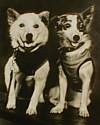
In 1960, Sputnik 5 was launched into Earth orbit, carrying two dogs named Belka (Squirrel) and Strelka (Little Arrow), along with 40 mice, 2 rats and a variety of plants, beginning a safe round trip into Space, after which they become the first living organisms to return space. After a day in orbit, the spaceship's retrorocket was fired and the landing capsule returned to Earth on 20 Aug 1960. Earlier, on 3 Nov 1957, the USSR launched Sputnik 2, with a stray Siberian husky, Laika ("Barker"). By design, it did not return to Earth; Laika died in space a few days later. On 12 Apr 1961, Russian cosmonaut Yuri Gagarin became the first man in space.«

In 1960, the first commercial atomic energy reactor, and the third in the U.S., achieved a self-sustaining nuclear reaction. It began producing power for distribution on 10 Nov 1960. This was the $57 million Yankee Atomic Electric Company's plant at Rowe, Mass., on the Deerfield River. The pressurized light-water reactor produced 125,000 kilowatts of electricity. The company was formed by twelve New England utility companies which signed a contract with the Westinghouse Corporation as the principal contractor. It was permanently shut down on 26 Feb 1992, due to reactor vessel embrittlement, after more than 31 years of service. Decommissioning began in 1993.

In 1947, the first full synthesis route for vitamin A was found by Dutch chemists, Jozef Ferdinand Arens and David Adriaan van Dorp. Later in 1947, a team headed by O. Isler also synthesized vitamin A using a method more suitable to produce commercial quantities. In 1913, Thomas B. Osborne and Lafayette Mendel had shown experimentally with rats that butter contained a factor responsible for growth development. Their work was confirmed (1913) by Elmer McCullum and Marguerite Davis who also identified a fat-soluble nutrient in butterfat and cod liver oil. It became known as vitamin A, and its chemical structure was determined in 1931 by Paul Karrer.«(Ref Arens and van Dorp, Synthesis of Vitamin A aldehyde, Nature 160: 187, 1947)
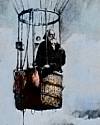
In 1887, Dmitri Ivanovich Mendeleev (1834-1907) used a balloon to ascend above the cloud cover to an altitude of 11,500 feet (3.5 km) to observe an eclipse in Russia. He made the solo ascent above Klin without any prior experience. While his family was rather concerned, he paid no attention to controlling the balloon until after he had completed his observations, at which time he worked out how to land it. Mendeleev is the Russian chemist known for the ordering of the Periodic Table of the Elements. Yet, he was interested in many fields of science. He studied problems associated with Russia's natural resources, such as coal, salt, metals, and the petroleum industry. In 1876, he visited the U.S. to observe the Pennsylvania oil fields.
Dmitry Ivanovich Mendeleyev: His Life and His Work, by O. N. Pisarzhevsky. - book suggestion.
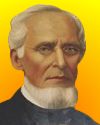
In 1856, Gail Borden of Brooklyn, NY, was issued a U.S. patent his process for condensed milk (No. 15,553). Condensed milk could be preserved for long periods of storage, and in this form milk became more readily available in large cities than had been possible before. His company's advertising slogan “The milk from contented cows” was one of the great American advertising campaigns. The Borden company is today one of the largest dairy product concerns in the world. The familiar flat-topped cans of Borden's condensed milk are still available, as are Borden's ice cream, cheese and other products - all with the seal of approval by Borden's famous mascot, Elsie, the cow.
more
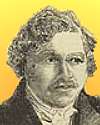
Daguerreotype
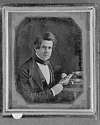
The Daguerreotype: Nineteenth-Century Technology and Modern Science, by Barger and White. - book suggestion.




