
Born 6 Sep 1943.
English molecular biologist who shared (with Phillip A. Sharp) the 1993 Nobel Prize for Physiology or Medicine, awarded for their discovery of “split genes.” In 1977, each independently discovered that genes could be discontinuous, that is, a given gene could be present in the genetic material (DNA) as several, well-separated segments. This discovery has changed our view on how genes in higher organisms develop during evolution. It also led to the prediction of a new genetic process - splicing - which is essential for expressing the genetic information. Their discovery has also been of fundamental importance for today's basic research in biology, as well as for more medically oriented research concerning the development of cancer and other diseases.
English molecular biologist who shared (with Phillip A. Sharp) the 1993 Nobel Prize for Physiology or Medicine, awarded for their discovery of “split genes.” In 1977, each independently discovered that genes could be discontinuous, that is, a given gene could be present in the genetic material (DNA) as several, well-separated segments. This discovery has changed our view on how genes in higher organisms develop during evolution. It also led to the prediction of a new genetic process - splicing - which is essential for expressing the genetic information. Their discovery has also been of fundamental importance for today's basic research in biology, as well as for more medically oriented research concerning the development of cancer and other diseases.

Born 6 Sep 1920; died 5 Sep 2010 at age 89. quotes
Panamanian nurse and educator who founded the National Association of Hispanic Nurses (1975) as its first president. Born in Panama, she moved the U.S. in 1945. When she began a nursing career in San Antonio, TX, she found the community had few Hispanic nurses, despite a large number of Hispanics in the local population. She pursued a BA degree in Psychiatric Mental Health Nursing at New York’s Columbia University, and by 1971 she earned a Ph.D. (the first awarded to a Hispanic nurse there). As a university associate dean, Murillo-Rohde found no Latina nurses in academic settings in research or in public policy, so she worked to enable Latina nurses secure an education and serve their community.«
Panamanian nurse and educator who founded the National Association of Hispanic Nurses (1975) as its first president. Born in Panama, she moved the U.S. in 1945. When she began a nursing career in San Antonio, TX, she found the community had few Hispanic nurses, despite a large number of Hispanics in the local population. She pursued a BA degree in Psychiatric Mental Health Nursing at New York’s Columbia University, and by 1971 she earned a Ph.D. (the first awarded to a Hispanic nurse there). As a university associate dean, Murillo-Rohde found no Latina nurses in academic settings in research or in public policy, so she worked to enable Latina nurses secure an education and serve their community.«
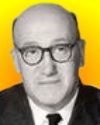
Born 6 Sep 1908; died 24 Aug 1997 at age 88. quotes
English physicist who invented the quartz crystal ring clock and the first practical atomic clock. These devices were capable of measuring time more accurately than any previous clocks. He built a cesium-beam atomic clock, a device that ultimately changed the way time is measured. Each chemical element and compound absorbs and emits electromagnetic radiation at its own characteristic frequencies. These resonances are inherently stable over time and space. The cesium atom's natural frequency was formally recognized as the new international unit of time in 1967: the second was defined as exactly 9,192,631,770 oscillations or cycles of the cesium atom's resonant frequency, replacing the old second defined in terms of the Earth's motion.
English physicist who invented the quartz crystal ring clock and the first practical atomic clock. These devices were capable of measuring time more accurately than any previous clocks. He built a cesium-beam atomic clock, a device that ultimately changed the way time is measured. Each chemical element and compound absorbs and emits electromagnetic radiation at its own characteristic frequencies. These resonances are inherently stable over time and space. The cesium atom's natural frequency was formally recognized as the new international unit of time in 1967: the second was defined as exactly 9,192,631,770 oscillations or cycles of the cesium atom's resonant frequency, replacing the old second defined in terms of the Earth's motion.
Splitting the Second: the Story of Atomic Time, by Tony Jones. - book suggestion.
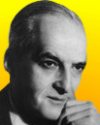
Born 6 Sep 1906; died 2 Dec 1987 at age 81. quotes
Argentine biochemist who won the Nobel Prize for Chemistry in 1970 for "his discovery of sugar nucleotides and their role in the biosynthesis of carbohydrates" (investigations of the processes by which carbohydrates are converted into energy in the body). Leloir, working in simple circumstances, isolated uridine diphosphate glucose and showed that it was incorporated into glycogen in the presence of a liver enzyme. He also worked out the mechanism of synthesis of starch. Leloir's discoveries - that the sugar nucleotides are principal actors in interconversion of sugars and polysaccharide formation - led to additional research in carbohydrate metabolism and on the medical implications of the discoveries.
Argentine biochemist who won the Nobel Prize for Chemistry in 1970 for "his discovery of sugar nucleotides and their role in the biosynthesis of carbohydrates" (investigations of the processes by which carbohydrates are converted into energy in the body). Leloir, working in simple circumstances, isolated uridine diphosphate glucose and showed that it was incorporated into glycogen in the presence of a liver enzyme. He also worked out the mechanism of synthesis of starch. Leloir's discoveries - that the sugar nucleotides are principal actors in interconversion of sugars and polysaccharide formation - led to additional research in carbohydrate metabolism and on the medical implications of the discoveries.
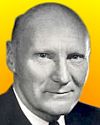
Born 6 Sep 1901; died 15 Feb 1996 at age 94.
Austrian-American electrical engineer who contributed to the development of microwave technology, applied in radar and communications systems. During WWII, he led researchers solving the problems of accurately measuring very high frequency microwaves, essential for the calibration of radar. (This involved learning how to coat glass tubes with a very thin layer of conducting metal, which Weber derived from the ancient skill of decorating chinaware with gold and silver, followed by success using a mixture of platinum and palladium.). The team created other designs and production techniques that helped the overall development of radar during the war. His expertise later guided the growth of the Polytechnic Institute in New York City.«
Austrian-American electrical engineer who contributed to the development of microwave technology, applied in radar and communications systems. During WWII, he led researchers solving the problems of accurately measuring very high frequency microwaves, essential for the calibration of radar. (This involved learning how to coat glass tubes with a very thin layer of conducting metal, which Weber derived from the ancient skill of decorating chinaware with gold and silver, followed by success using a mixture of platinum and palladium.). The team created other designs and production techniques that helped the overall development of radar during the war. His expertise later guided the growth of the Polytechnic Institute in New York City.«
The Evolution of Electrical Engineering: A Personal Perspective, by Ernst Weber. - book suggestion.
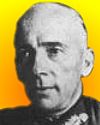
Born 6 Sep 1895; died 27 Jun 1980 at age 84.
German-American engineer who successfully a series of designs of rockets culminating in becoming commander of the entire Nazi guided missile program aand responsible for the manufacture of the V2 flying bombs. In 1944-45, 1,500 of these 46-foot 14-ton rockets were armed with explosive warheads and launched against Britain. Another 2,000 were fired into Antwerp, Belgium. After the Allied victory, he was held as a prisoner of war in England for three years (1945-47), then was moved to the U.S. to act as a civilian consultant to the American air force. From 1950, he worked for Bell Aircraft Corporation on their Rascal air-to-surface missile, and the Dyna-Soar manned Space Glider programme. His book, V2 (1952) tells of his contributions to the development of jet propulsion.«
German-American engineer who successfully a series of designs of rockets culminating in becoming commander of the entire Nazi guided missile program aand responsible for the manufacture of the V2 flying bombs. In 1944-45, 1,500 of these 46-foot 14-ton rockets were armed with explosive warheads and launched against Britain. Another 2,000 were fired into Antwerp, Belgium. After the Allied victory, he was held as a prisoner of war in England for three years (1945-47), then was moved to the U.S. to act as a civilian consultant to the American air force. From 1950, he worked for Bell Aircraft Corporation on their Rascal air-to-surface missile, and the Dyna-Soar manned Space Glider programme. His book, V2 (1952) tells of his contributions to the development of jet propulsion.«
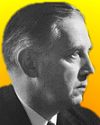
Born 6 Sep 1892; died 21 Apr 1965 at age 72. quotes
Sir Edward Victor Appleton was an English physicist who was awarded the 1947 Nobel Prize for Physics for his discovery of the Appleton layer of the ionosphere. From 1919, he devoted himself to scientific problems in atmospheric physics, using mainly radio techniques. He proved the existence of the ionosphere, and found a layer 60 miles above the ground that reflected radio waves. In 1926, he found another layer 150 miles above ground, higher than the Heaviside Layer, electrically stronger, and able to reflect short waves round the earth. This Appleton layer is a dependable reflector of radio waves and more useful in communication than other ionospheric layers that reflect radio waves sporadically, depending upon temperature and time of day.«
Sir Edward Victor Appleton was an English physicist who was awarded the 1947 Nobel Prize for Physics for his discovery of the Appleton layer of the ionosphere. From 1919, he devoted himself to scientific problems in atmospheric physics, using mainly radio techniques. He proved the existence of the ionosphere, and found a layer 60 miles above the ground that reflected radio waves. In 1926, he found another layer 150 miles above ground, higher than the Heaviside Layer, electrically stronger, and able to reflect short waves round the earth. This Appleton layer is a dependable reflector of radio waves and more useful in communication than other ionospheric layers that reflect radio waves sporadically, depending upon temperature and time of day.«
Sir Edward Appleton, by Ronald William Clark. - book suggestion.
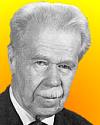
Born 6 Sep 1891; died 21 Jul 1971 at age 79.
Finnish meteorologist and astronomer regarded as the "father of space research in Finland," As early as 1946, he had suggested that geodetic triangulation at that time being done with rockets or balloons with onboard flashes could better be accomplished by artificial satellites. By the next year he was talking about artificial satellites being used for solar system exploration. In the 1950's he founded Tuorla Observatory and went on to build a tunnel under the hill at Tuorla Observatory to enable making interference measurements to accurately define the length standard for geodesy. He was outstanding in his ability to produce excellent optics for telescopes. Vaisala, together with Liisa Oterman at Tuorla, outpaced the rest of the world in their discovery of minor planets.«
Finnish meteorologist and astronomer regarded as the "father of space research in Finland," As early as 1946, he had suggested that geodetic triangulation at that time being done with rockets or balloons with onboard flashes could better be accomplished by artificial satellites. By the next year he was talking about artificial satellites being used for solar system exploration. In the 1950's he founded Tuorla Observatory and went on to build a tunnel under the hill at Tuorla Observatory to enable making interference measurements to accurately define the length standard for geodesy. He was outstanding in his ability to produce excellent optics for telescopes. Vaisala, together with Liisa Oterman at Tuorla, outpaced the rest of the world in their discovery of minor planets.«
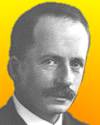
Born 6 Sep 1876; died 16 Mar 1935 at age 58.
John James Rickard Macleod was a Scottish physiologist and educator who researched carbohydrate metabolism and diabetes. He coined the name for the hormone insulin. In 1923, he shared the Nobel Prize in Physiology or Medicine with Sir Frederick Banting for the discovery of insulin, and its role in the metabolism of sugar in the body.
John James Rickard Macleod was a Scottish physiologist and educator who researched carbohydrate metabolism and diabetes. He coined the name for the hormone insulin. In 1923, he shared the Nobel Prize in Physiology or Medicine with Sir Frederick Banting for the discovery of insulin, and its role in the metabolism of sugar in the body.
Physiology and Biochemistry in Modern Medicine, by John James Rickard Macleod. - book suggestion.
Born 6 Sep 1830; died 30 Dec 1883 at age 53.
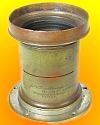
German-British inventor and manufacturer of lenses and telescopes. He introduced improvements in both photographic portrait and landscape lenses, in object glasses for the microscope, and in condensers for the optical lantern. Dallmeyer made photoheliographs (telescopes adapted for photographing the Sun) for Harvard observatory (1864), and the British government (1873). He introduced the "rapid rectilinear" (1866) which is a lens system composed of two matching doublet lenses, symmetrically placed around the focal aperture to remove many of the aberrations present in more simple constructions. He died on board a ship at sea off New Zealand.[Image: Dallmeyer 10x8 Rapid Rectilinear Brass Lens for a large format camera.]
German-British inventor and manufacturer of lenses and telescopes. He introduced improvements in both photographic portrait and landscape lenses, in object glasses for the microscope, and in condensers for the optical lantern. Dallmeyer made photoheliographs (telescopes adapted for photographing the Sun) for Harvard observatory (1864), and the British government (1873). He introduced the "rapid rectilinear" (1866) which is a lens system composed of two matching doublet lenses, symmetrically placed around the focal aperture to remove many of the aberrations present in more simple constructions. He died on board a ship at sea off New Zealand.[Image: Dallmeyer 10x8 Rapid Rectilinear Brass Lens for a large format camera.]
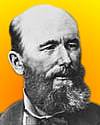
Born 6 Sep 1828; died 17 Aug 1886 at age 57. quotes
Russian chemist whose theory of organic chemistry structure was an important step towards the modern understanding of organic chemistry. In 1861, he read a paper to a congress of German scientists in which he defined "chemical structure" as the "chemical bond of capicity for the mutual union of atoms into a complex substance." Furthermore, "the chemical nature of a compound molecule is determined by the nature of its component parts, by their quantity and their chemical structure." In his rules for determining the chemical structure of molecules, he recognized the character of radicals to retain their own structure. In his investigation of unsaturated compounds, he supported the idea of multiple bonds. He also worked distinguishing isomers.«
Russian chemist whose theory of organic chemistry structure was an important step towards the modern understanding of organic chemistry. In 1861, he read a paper to a congress of German scientists in which he defined "chemical structure" as the "chemical bond of capicity for the mutual union of atoms into a complex substance." Furthermore, "the chemical nature of a compound molecule is determined by the nature of its component parts, by their quantity and their chemical structure." In his rules for determining the chemical structure of molecules, he recognized the character of radicals to retain their own structure. In his investigation of unsaturated compounds, he supported the idea of multiple bonds. He also worked distinguishing isomers.«
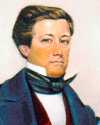
Born 6 Sep 1811; died 9 Feb 1865 at age 53.
U.S. naval officer and astronomer who founded the Naval Observatory in Washington, D.C., the first U.S. observatory devoted entirely to research. Gilliss joined the Navy as a midshipman at the age of 15. He taught himself astronomy, at a time when there was no fixed astronomical observatory in the U.S., and very little formal instruction. In 1838, when Charles Wilkes left on the famous South Seas Exploring Expedition, Gilliss became officer-in-charge of the Depot of Charts and Instruments, forerunner of the U. S. Naval Observatory. Gilliss's astronomical observations made during this time in connection with determining longitude differences with the Wilkes Expedition, resulted in the first star catalogue published in the United States. more
U.S. naval officer and astronomer who founded the Naval Observatory in Washington, D.C., the first U.S. observatory devoted entirely to research. Gilliss joined the Navy as a midshipman at the age of 15. He taught himself astronomy, at a time when there was no fixed astronomical observatory in the U.S., and very little formal instruction. In 1838, when Charles Wilkes left on the famous South Seas Exploring Expedition, Gilliss became officer-in-charge of the Depot of Charts and Instruments, forerunner of the U. S. Naval Observatory. Gilliss's astronomical observations made during this time in connection with determining longitude differences with the Wilkes Expedition, resulted in the first star catalogue published in the United States. more
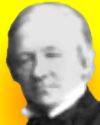
Born 6 Sep 1807; died 17 Oct 1887 at age 80. quotes
English physicist, geologist and author who also did some work in chemistry and took up an interest in photography (1938). Hunt wrote the first English book on that subject, Manual of Photography, which went through five editions. In 1840, he was appointed Secretary of the Royal Cornwall Polytechnic Society, where his investigations included “Chemical Action of the Sun’s Rays;” “The Influence of Light on Plants,” and “The electricity of Mineral Lodes.” On 19 Apr 1845, he became the Keeper of Mining Records in the Museum of Practical Geology. This led to producing the annual Mineral Statistics of the United Kingdom. For a while, from 1851, he also was a professor lecturing on Experiment or Mechanical Science at the Government School of Mines.«
English physicist, geologist and author who also did some work in chemistry and took up an interest in photography (1938). Hunt wrote the first English book on that subject, Manual of Photography, which went through five editions. In 1840, he was appointed Secretary of the Royal Cornwall Polytechnic Society, where his investigations included “Chemical Action of the Sun’s Rays;” “The Influence of Light on Plants,” and “The electricity of Mineral Lodes.” On 19 Apr 1845, he became the Keeper of Mining Records in the Museum of Practical Geology. This led to producing the annual Mineral Statistics of the United Kingdom. For a while, from 1851, he also was a professor lecturing on Experiment or Mechanical Science at the Government School of Mines.«
Born 6 Sep 1802; died 30 Jun 1857 at age 54.
French paleontologist and zoologist who founded the science of micropaleontology. From 1826-33, on commission for the Musée d' Histoire Naturelle, he travelled for eight years in South America, then produced a 10-volume report (1834-47) on its zoology, botany, paleontology and antrhropology. He made detailed studies of tiny marine fossils, pollen, grain and spores found in sedimentary rocks. In 1850, Orbigny undertook the detailed assignment of stages represented by Jurassic Period fossils in geologic formations of northwestern Europe. In 1926, he established the classification Foraminifera for microscopic cephalopods. Because of their evolutionary changes through geological time, they are very helpful for the purpose of dating rock strata. In particular, this now has great practical value in petroleum exploration when inspecting core samples.«
French paleontologist and zoologist who founded the science of micropaleontology. From 1826-33, on commission for the Musée d' Histoire Naturelle, he travelled for eight years in South America, then produced a 10-volume report (1834-47) on its zoology, botany, paleontology and antrhropology. He made detailed studies of tiny marine fossils, pollen, grain and spores found in sedimentary rocks. In 1850, Orbigny undertook the detailed assignment of stages represented by Jurassic Period fossils in geologic formations of northwestern Europe. In 1926, he established the classification Foraminifera for microscopic cephalopods. Because of their evolutionary changes through geological time, they are very helpful for the purpose of dating rock strata. In particular, this now has great practical value in petroleum exploration when inspecting core samples.«
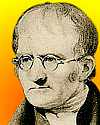
1825
Born c. 6 Sep 1766; died 27 Jul 1844. quotes
English chemist, physicist, meteorologist and teacher who, from investigating the physical and chemical properties of matter, deduced an Atomic Theory (1803) whereby atoms of the same element are the same, but different from the atoms of any other element. In 1804, he stated his law of multiple proportions by which he related the ratios of the weights of the reactants to the proportions of elements in compounds. He set the atomic weight of hydrogen to be identically equal to one and developed a table of atomic weights for other elements. He was the first to measure the temperature change of air under compression, and in 1801 suggested that all gases could be liquified by high pressure and low temperature. Dalton recognised that the aurora borealis was an electrical phenomenon.«
English chemist, physicist, meteorologist and teacher who, from investigating the physical and chemical properties of matter, deduced an Atomic Theory (1803) whereby atoms of the same element are the same, but different from the atoms of any other element. In 1804, he stated his law of multiple proportions by which he related the ratios of the weights of the reactants to the proportions of elements in compounds. He set the atomic weight of hydrogen to be identically equal to one and developed a table of atomic weights for other elements. He was the first to measure the temperature change of air under compression, and in 1801 suggested that all gases could be liquified by high pressure and low temperature. Dalton recognised that the aurora borealis was an electrical phenomenon.«
John Dalton and the Atomic Theory: The Biography of a Natural Philosopher, by Elizabeth C. Patterson. - book suggestion.

Died 6 Sep 2012 at age 93 (born 16 Jan 1919). quotes
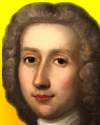
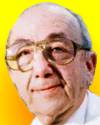
Jerome Phillip Horwitz was an American cancer researcher who first synthesized azidothymidine, AZT (1964), while seeking an effective cancer drug. For this application, it failed. He discontinued development and did not patent it. Yet, 22 years later, AZT was given federal approval, as the first drug proved to extend AIDS patent’s lives when tested and patented by Burroughs Wellcome. Although that drug company reaped great financial rewards from it, Horwitz never received any royalties. With colleagues, Horwitz had investigated AZT as one of a family of compounds he called dideoxythymidines which were “fraudulent” nucleosides (a component of DNA). It had been hoped that such a molecule injected in cancer cells might retard their growth.«
Jerome Phillip Horwitz was an American cancer researcher who first synthesized azidothymidine, AZT (1964), while seeking an effective cancer drug. For this application, it failed. He discontinued development and did not patent it. Yet, 22 years later, AZT was given federal approval, as the first drug proved to extend AIDS patent’s lives when tested and patented by Burroughs Wellcome. Although that drug company reaped great financial rewards from it, Horwitz never received any royalties. With colleagues, Horwitz had investigated AZT as one of a family of compounds he called dideoxythymidines which were “fraudulent” nucleosides (a component of DNA). It had been hoped that such a molecule injected in cancer cells might retard their growth.«
Died 6 Sep 1970 at age 79 (born 30 Mar 1891).
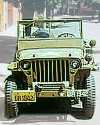
American engineer and manufacturer who developed a series of military vehicles, the best known of which was the World War II jeep. During World War I, he started to work on a new design for military trucks for rough terrain, the smallest of which was the quarter-ton jeep with four-wheel drive that became the prototype for various models built in the 1930s and 1940s. The Jeep served in WW II as a litterbearer, machine gun firing mount, reconnaissance vehicle, pickup truck, front line limousine, ammo bearer, wire-layer and taxi.
American engineer and manufacturer who developed a series of military vehicles, the best known of which was the World War II jeep. During World War I, he started to work on a new design for military trucks for rough terrain, the smallest of which was the quarter-ton jeep with four-wheel drive that became the prototype for various models built in the 1930s and 1940s. The Jeep served in WW II as a litterbearer, machine gun firing mount, reconnaissance vehicle, pickup truck, front line limousine, ammo bearer, wire-layer and taxi.
Died 6 Sep 1967 at age 81 (born 24 Aug 1886).
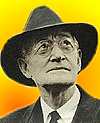
American naval architect, one of the most renowned in his time, having designed over 6,000 ships from a fireboat, to freighters, ocean liners and warships. Early in his life, he began building self-taught skills by studying blueprints and existing vessels. In 1915, Gibbs and his brother Frederic H., joined the International Mercantile Marine Company, but had their own firm by 1922 which converted an ex-German liner into the American luxury liner SS Leviathan. The Gibbs firm oversaw the design of 74% of all naval vessels built during WW II, making Gibbs an outstanding contributor to the American war effort. Postwar, he realized his lifelong dream: the 1,000 foot superliner, the SS United States, the fastest ship to cross the Atlantic.«
American naval architect, one of the most renowned in his time, having designed over 6,000 ships from a fireboat, to freighters, ocean liners and warships. Early in his life, he began building self-taught skills by studying blueprints and existing vessels. In 1915, Gibbs and his brother Frederic H., joined the International Mercantile Marine Company, but had their own firm by 1922 which converted an ex-German liner into the American luxury liner SS Leviathan. The Gibbs firm oversaw the design of 74% of all naval vessels built during WW II, making Gibbs an outstanding contributor to the American war effort. Postwar, he realized his lifelong dream: the 1,000 foot superliner, the SS United States, the fastest ship to cross the Atlantic.«
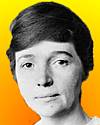
Died 6 Sep 1966 at age 86 (born 14 Sep 1879). quotes
(née Maragret Louisa Higgins) American birth-control champion who founded the first U.S. birth-control clinic in Brooklyn, New York (1916), where she had witnessed firsthand the interaction of poverty, uncontrolled fertility, and deaths from botched abortions, together with high rates of infant and maternal mortality. She became an international leader, and is credited with originating the term "birth control."
(née Maragret Louisa Higgins) American birth-control champion who founded the first U.S. birth-control clinic in Brooklyn, New York (1916), where she had witnessed firsthand the interaction of poverty, uncontrolled fertility, and deaths from botched abortions, together with high rates of infant and maternal mortality. She became an international leader, and is credited with originating the term "birth control."
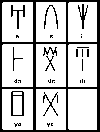
Died 6 Sep 1956 at age 34 (born 12 Jul 1922).
Michael George Francis Ventris was an English architect and cryptographer who showed (1952) that the Minoan Linear B script was a very early form of Greek, the oldest known examples. Since archaeologists working in Crete had discovered (1900) these incriptions on ancient clay tablets, the writings had stymied the experts. Ventris had been a keen amateur cryptographer since his teenage years, was later a student in architecture, served in WW II, then returned intent on analysing the code. When he was able to decipher the inscriptions, he identified them to be from c. 1400 to 1200 BC, roughly the period of the events narrated in the Homeric epics. Ventris died young, in an auto accident, soon after this accomplishment, but having provided the key findings, his work was taken up by others.«
Michael George Francis Ventris was an English architect and cryptographer who showed (1952) that the Minoan Linear B script was a very early form of Greek, the oldest known examples. Since archaeologists working in Crete had discovered (1900) these incriptions on ancient clay tablets, the writings had stymied the experts. Ventris had been a keen amateur cryptographer since his teenage years, was later a student in architecture, served in WW II, then returned intent on analysing the code. When he was able to decipher the inscriptions, he identified them to be from c. 1400 to 1200 BC, roughly the period of the events narrated in the Homeric epics. Ventris died young, in an auto accident, soon after this accomplishment, but having provided the key findings, his work was taken up by others.«
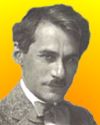
Died 6 Sep 1940 at age 71 (born 25 Feb 1869).
Phoebus Aaron Theodor Levene was a Russian-American chemist who was a pioneer in the study of nucleic acids. In 1909, he found that the carbohydrate present in nucleic acid from yeast is the pentose sugar ribose. In 1929, he succeeded in identifying the carbohydrate in the nucleic acid from the thymus of an animal. It is also a pentose sugar but lacks one oxygen atom of ribose and was therefore called deoxyribose. These were named ribonucleic and deoxyribonucleic acids (RNA and DNA). Levene also determined how the nucleic acid components combine to form the nucleotides and how the nucleotides combine in chains. Later discoveries showed DNA and RNA to be key elements in the maintenance of life.
Phoebus Aaron Theodor Levene was a Russian-American chemist who was a pioneer in the study of nucleic acids. In 1909, he found that the carbohydrate present in nucleic acid from yeast is the pentose sugar ribose. In 1929, he succeeded in identifying the carbohydrate in the nucleic acid from the thymus of an animal. It is also a pentose sugar but lacks one oxygen atom of ribose and was therefore called deoxyribose. These were named ribonucleic and deoxyribonucleic acids (RNA and DNA). Levene also determined how the nucleic acid components combine to form the nucleotides and how the nucleotides combine in chains. Later discoveries showed DNA and RNA to be key elements in the maintenance of life.
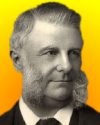
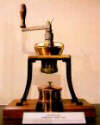
Frederick Augustus Abel was an English chemist who was a military explosives specialist, and with the chemist Sir James Dewar, invented cordite (1889). This smokeless gunpowder was later adopted as the standard explosive of the British army, and proved vital in WWI. Battles could now be fought without the obscuring smoke clouds of gunpowder weapons. Cordite was mixed from purified ingredients of nitroglycerine, nitrocellulose and petroleum jelly then extruded as cords. When dried, this explosive could be measured more precisely and handled more safely than gunpowder. Abel also studied dust explosions in coal mines, invented a device for testing the flash point of petroleum, and found a way to prevent guncotton from exploding.Image right: Cordite mill (1942) Dynamite Company Museum, Zaire. (source)
Died 6 Sep 1896 at age 45 (born 13 Feb 1851).
G(eorge) Brown Goode was an American zoologist who directed the scientific reorganization and recataloging of the collection at the National Museum of Natural History, Washington, D.C. During the 1880's he edited two volumes of atlases of illustrations of "The Fisheries and Fisheries Industries of the United States" while Deputy Commissioner of the United States Commission of Fish and Fisheries. The study captured the state of the American fisheries at that time. They describe a significant part of the marine environment with 532 etchings of marine mammals, fish, and shellfish and also illustrated the state of fishing vessels, gear, methods, and processing.
G(eorge) Brown Goode was an American zoologist who directed the scientific reorganization and recataloging of the collection at the National Museum of Natural History, Washington, D.C. During the 1880's he edited two volumes of atlases of illustrations of "The Fisheries and Fisheries Industries of the United States" while Deputy Commissioner of the United States Commission of Fish and Fisheries. The study captured the state of the American fisheries at that time. They describe a significant part of the marine environment with 532 etchings of marine mammals, fish, and shellfish and also illustrated the state of fishing vessels, gear, methods, and processing.
Died 6 Sep 1857 at age 78 (born 8 Apr 1779).
German physicist who invented the galvanometer (1820), a device to measure the strength of an electric current. He developed the principle from Oersted's experiment (1819) which showed that current in a wire will deflect a compass needle. Schweigger realized that suggested a basic measuring instrument, since a stronger current would produce a larger deflection, and he increased the effect by winding the wire many times in a coil around the magnetic needle. He named this instrument a “galvanometer” in honour of Luigi Galvani, the professor who gave Volta the idea for the first battery. Thomas Seebeck (1770-1831) named the innovative coil, Schweigger's multiplier. It became the basis of moving coil instruments and loudspeakers.
German physicist who invented the galvanometer (1820), a device to measure the strength of an electric current. He developed the principle from Oersted's experiment (1819) which showed that current in a wire will deflect a compass needle. Schweigger realized that suggested a basic measuring instrument, since a stronger current would produce a larger deflection, and he increased the effect by winding the wire many times in a coil around the magnetic needle. He named this instrument a “galvanometer” in honour of Luigi Galvani, the professor who gave Volta the idea for the first battery. Thomas Seebeck (1770-1831) named the innovative coil, Schweigger's multiplier. It became the basis of moving coil instruments and loudspeakers.
Died 6 Sep 1311 (born c. 1235).
Spanish physician and alchemist who was wealthy, widely travelled, and able to speak Arabic and Greek. Thus he transferred information from Arabic texts on the heart, drugs, and health regimens to Europe, as well as spreading the medicalteachings of Galen and Avicenna. Believing in the mystic, he made enemies in the church, and even predicted the end of the world in 1378. Though he never considered alchemy a legitimate art, he was interest in it, and wrote about the subject. Yet in practical chemistry, Asimov says he was the first to observe that wood burning in restricted ventilation produced poisonous fumes, (which we now know is due to carbon monoxide) and he also was the first to produce pure alcohol. He died on a voyage from Sicily to Avignon, on his way to treat the Pope.«
Spanish physician and alchemist who was wealthy, widely travelled, and able to speak Arabic and Greek. Thus he transferred information from Arabic texts on the heart, drugs, and health regimens to Europe, as well as spreading the medicalteachings of Galen and Avicenna. Believing in the mystic, he made enemies in the church, and even predicted the end of the world in 1378. Though he never considered alchemy a legitimate art, he was interest in it, and wrote about the subject. Yet in practical chemistry, Asimov says he was the first to observe that wood burning in restricted ventilation produced poisonous fumes, (which we now know is due to carbon monoxide) and he also was the first to produce pure alcohol. He died on a voyage from Sicily to Avignon, on his way to treat the Pope.«
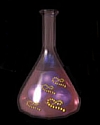
In 1978, U.S. scientists announced the production of human-type insulin by a strain of E. coli bacteria, that had been genetically engineered after months of creative use of gene-splicing techniques. The work was a joint effort by research teams in California at the biochemical firm, Genentech Inc, San Francisco and the City of Hope National Medical Center, Los Angeles. A normal body's production of insulin takes place within cells of the pancreas, programmed by certain genes (segments of DNA). The scientists synthesized copies of these genes and inserted them into a weakened lab strain of the intestinal microbe Escherichia coli. In 1982, insulin was the first recombinant DNA drug to be marketed, Humulin by Eli Lilly & Co.«[Image: graphic suggesting recombinant DNA cell culture.]

In 1958, The first U.S. interstate pipeline for the transport of ethylene was placed in service between Lake Charles, Louisiana and Orange, Texas. The 6-5/8" pipeline ran 30 miles, providing ethylene to the E.I. duPont de Nemours & Company at Orange for the manufacture of synthetic rubber. There are now many hundreds of miles of ethylene pipelines stretching across 14 counties in Texas and two parishes in Louisiana. They link the ethylene producer with a number of chemical manufacturers and storage facilities utilizing underground salt domes or wells. Ethylene is also manufactured into polyethylene products for many uses, including consumer goods, housing components or vehicle parts.*
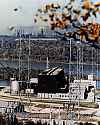
In 1954, ground breaking took place at Shippingport, Pennsylvania, for the first U.S. full-scale atomic electricity generating station devoted exclusively to peaceful uses. Televised from Denver, Colorado, President Eisenhower remotely signalled a radio-controlled bulldozer. On 2 Dec 1957, the reactor reached critical power. It produced its full rated net capacity of 60 megawatts about 3 weeks later on 23 Dec. This would be sufficient to supply a city of 250,000 homes. The plant consisted of a single pressurized water-type reactor which heated steam to drive an electrical turbine-generator. The plant was formally dedicated by the same president on 25 May 1958, by remote control from Washington, D.C. It operated until 1982.*
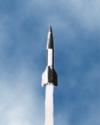
In 1947, the aircraft-carrier Midway became the first U.S. vessel from which a long-range rocket was launched. As part of Operation Sandy, accompanied by scientific observers, a captured German V-2 rocket was fired from the flight deck from a position at sea several hundred miles of the east coast of the U.S. the rocket travelled about 6 miles. A ship launch test was only conducted once. There were prior tests carried out at White Sands on a simulated aircraft carrier deck to see what effects the rocket would have if it were to explode on the deck. The Midway, launched 20 Mar 1945, was commanded by Captain Albert Kellogg Morehouse, and was the flagship of the task group commanded by Rear Admiral John Jennings Ballentine.«
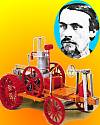
In 1892, the first gasoline tractor to be sold in the U.S. was shipped by its builder, John Froelich of Froelich, Iowa. It was sent to Langford, South Dakota, which lacked easy access to a wood or coal supply for steam-powered units. There, it spent a season threshing from 24 Sep to 16 Nov of the same year. His 16-horsepower machine was geared for both forward and reverse motion. It was powered by a Van Duzen vertical single-cylinder gasoline engine mounted on wooden beams upon a Robinson running gear. This both powered a J.I. Case threshing machine and propelled the vehicle. Froelich formed the Waterloo Gasoline Tractor Engine Company on 10 Jan 1893, which was was taken over in 1918 by the John Deere Plow Co.*
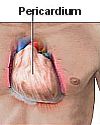
In 1891, the first operation to suture the pericardium (the fluid sac surrounding the heart muscle) took place at the City Hospital in St. Louis. Henry C. Dalton, professor of abdominal and clinical surgery at the Marion Sims College of Medicine repaired a 2" gssh in the pericardium of James Cornish a 22-yr-old man, caused by a stab wound in a fight. It was a daring operation since it involved opening the thoracic cavity at a time when contemporary medical opinion disapproved of surgical treatment of heart wounds. Dalton later recorded his procedure in Annals of Surgery (Feb 1895). In 1893, Daniel Hale Williams, a black American surgeon, performed a similar operation and published his report in Medical Record.«
more
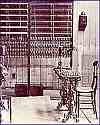
In 1879, Telephone Company Ltd opened the first public British telephone exchange in Lombard Street, London using Edison's system. The service was in effect an exclusive club, to which members paid a subscription - hence the origin of the term “subscriber.” The exchange served just eight subscribers with a two-panel Williams switchboard. Between the connected offices, private conversations could be made in either a loud or a low tone. By the end of the year, with about 200 subscribers, a further two exchanges had been opened at Leadenhall Street in the City, and at Westminster. The same year, the company also opened telephone exchanges in Glasgow, Manchester, Liverpool, Sheffield, Edinburgh, Birmingham and Bristol.
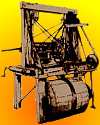
In 1819, a U.S. patent for a profile lathe was issued to Thomas Blanchard of Middlebury, Connecticut. It was capable of manufacturing irregular forms, such as gun stocks. His machine used a friction-wheel to follow the surface of a sample pattern and a cutting wheel on the same shaft which would thus carve the workpiece to the same contour. It could produce the work of 13 operators, and thus provided the finished materials at much less cost. After inventing a tack-making machine at his brother's factory, Blanchard was recruited by the U.S. Armory at Springfield, Mass. to build machines to efficiently produce gun parts. Congress twice extended this patent, first to 1834, then to 1848, giving a total of 42 years in force.* more





