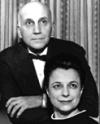
Born 27 Dec 1915; died 16 Feb 2001 at age 85. quotes
American physician who teamed with his wife in researching the physical aspects of sexuality and produced some of the first reliable data in the field. He began researching sexual function at the Washington University School of Medicine in 1954. Virginia Eshelman Johnson joined him three years later. Human Sexual Response, their first book, was published for the medical community but became a best seller. Masters & Johnson Institute opened in 1964 to provide sex therapy and counseling based on their findings. Their research, books and media activities profoundly affected American society. The Institute closed in 1994 upon his retirement.«
American physician who teamed with his wife in researching the physical aspects of sexuality and produced some of the first reliable data in the field. He began researching sexual function at the Washington University School of Medicine in 1954. Virginia Eshelman Johnson joined him three years later. Human Sexual Response, their first book, was published for the medical community but became a best seller. Masters & Johnson Institute opened in 1964 to provide sex therapy and counseling based on their findings. Their research, books and media activities profoundly affected American society. The Institute closed in 1994 upon his retirement.«
Human Sexual Response, by Masters and Johnson. - book suggestion.
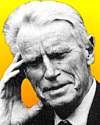
Born 27 Dec 1910; died 19 Jun 1987 at age 76. quotes
English physician who first successfully applied ultrasound reflection imaging for medical diagnosis. He had become familiar with sonar during service in WW II, and first tested the idea of probing organs with ultrasound on 21 Jul 1955, when he investigated specimens of tumours from human organs with an industrial ultrasonic metal flaw detector. After a period of development, he later he used ultrasound in a life-saving diagnosis of a huge, easily removable, ovarian cyst in a woman who had been diagnosed by others as having inoperable stomach cancer. He published the Investigation of Abdominal Masses by Pulsed Ultrasound in The Lancet (7 Jun 1958). The next year, he extended its use to investigate fetal growth during pregnancy.«*
English physician who first successfully applied ultrasound reflection imaging for medical diagnosis. He had become familiar with sonar during service in WW II, and first tested the idea of probing organs with ultrasound on 21 Jul 1955, when he investigated specimens of tumours from human organs with an industrial ultrasonic metal flaw detector. After a period of development, he later he used ultrasound in a life-saving diagnosis of a huge, easily removable, ovarian cyst in a woman who had been diagnosed by others as having inoperable stomach cancer. He published the Investigation of Abdominal Masses by Pulsed Ultrasound in The Lancet (7 Jun 1958). The next year, he extended its use to investigate fetal growth during pregnancy.«*

Born 27 Dec 1906; died 8 Apr 1996 at age 89.
American inventor of Sweet 'n Low artificial sweetener in 1957, and president of the Cumberland Packaging Corporation which manufactured it. The words "Sweet 'n Low" superimposed on a musical staff design became the US Trademark Registration No. 1,000,000. Before that, in the early 1950s, Eisenstadt originated putting sugar into little sanitary paper packets for restaurants. When saccharin became popular in the 1950s, it was available only as a liquid or as tiny effervescent pills. Working with his son Marvin, Eisenstadt created saccharin in a convenient packet form by mixing saccharin with dextrose (a form of glucose) and a few other ingredients to make Sweet 'n Low. (Patent No. 3,625,711). He died aged 89, of complications from bypass surgery.
American inventor of Sweet 'n Low artificial sweetener in 1957, and president of the Cumberland Packaging Corporation which manufactured it. The words "Sweet 'n Low" superimposed on a musical staff design became the US Trademark Registration No. 1,000,000. Before that, in the early 1950s, Eisenstadt originated putting sugar into little sanitary paper packets for restaurants. When saccharin became popular in the 1950s, it was available only as a liquid or as tiny effervescent pills. Working with his son Marvin, Eisenstadt created saccharin in a convenient packet form by mixing saccharin with dextrose (a form of glucose) and a few other ingredients to make Sweet 'n Low. (Patent No. 3,625,711). He died aged 89, of complications from bypass surgery.
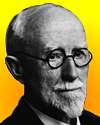
Born 27 Dec 1867; died 11 Dec 1952 at age 84. quotes
British scientist, agriculturist, and science historian who developed a method of extracting lactose (milk sugar) from the surplus whey. His invention, which was later put to use on a commercial scale, was prompted by the cheese shortage in Britain during WW I. From 1917, he conducted experiments for more efficient means of production on farm land with an estate inherited from one of his uncles. He was instrumental in the formation of the Agricultural Research Council, serving as its first secretary (1931-35). In A History of Science and Its Relations with Philosophy and Religion, he surveyed scientific breakthroughs from ancient Babylonia and Egypt, through to the early twentieth century. He was knighted (1931) for public service in agriculture.«
British scientist, agriculturist, and science historian who developed a method of extracting lactose (milk sugar) from the surplus whey. His invention, which was later put to use on a commercial scale, was prompted by the cheese shortage in Britain during WW I. From 1917, he conducted experiments for more efficient means of production on farm land with an estate inherited from one of his uncles. He was instrumental in the formation of the Agricultural Research Council, serving as its first secretary (1931-35). In A History of Science and Its Relations with Philosophy and Religion, he surveyed scientific breakthroughs from ancient Babylonia and Egypt, through to the early twentieth century. He was knighted (1931) for public service in agriculture.«
A history of science and its relations with philosophy & religion, by Sir William Cecil Dampier. - book suggestion.
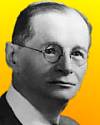
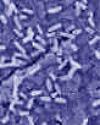
American bacteriologist who was lead author of Bergey's Manual of Determinative Bacteriology, which work remains a widely used international reference work for bacterial taxonomy. He was chairman of a committee to devise a classification scheme for all known bacteria suitable for identifying species. With four other bacteriologists, he first published the Bergey's Manual of Determinative Bacteriology in 1923, followed by revised editions every few years to keep pace with the discovery of new bacterial species and other changes. His research included tuberculosis, food preservatives, phagocytosis, and anaphylaxis. He distinguished the several organisms in a class called Schizomycetes.«
Bergey's Manual of Determinative Bacteriology, by Bergey, et al. - book suggestion.
Born 27 Dec 1851; died 16 Dec 1935 at age 83.
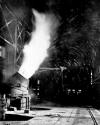
Percy Carlyle Gilchrist was an English metallurgist who is known for the Thomas-Gilchrist process (1876-77) he developed while assistant to his cousin, Sidney Gilchrist Thomas. This process manufactured low-phosphorus steel known as Thomas steel, in Bessemer converters and was adopted throughout Europe where iron ore has phosphorus impurities. The key feature of this process is the use of lime (calcined dolomite) to line the converter instead of acidic silica. The lime is a base and it captures acidic phosphorus oxides produced when air is blown through the molten iron. The phosphorous content, which otherwise makes steel brittle, was reduced to about 0.04%. Additionally, the cinder waste product of the steelmaking could be used as valuable artificial fertilizer.«
Percy Carlyle Gilchrist was an English metallurgist who is known for the Thomas-Gilchrist process (1876-77) he developed while assistant to his cousin, Sidney Gilchrist Thomas. This process manufactured low-phosphorus steel known as Thomas steel, in Bessemer converters and was adopted throughout Europe where iron ore has phosphorus impurities. The key feature of this process is the use of lime (calcined dolomite) to line the converter instead of acidic silica. The lime is a base and it captures acidic phosphorus oxides produced when air is blown through the molten iron. The phosphorous content, which otherwise makes steel brittle, was reduced to about 0.04%. Additionally, the cinder waste product of the steelmaking could be used as valuable artificial fertilizer.«
Born 27 Dec 1822; died 28 Sep 1895 at age 72. quotes
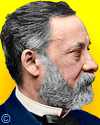
French chemist who became a founder of microbiology. He began as a chemist working on the optical properties of tartaric acid and its stereochemistry (1849). He moved into microbiology when he discovered the role of bacteria in fermentation - that it was micro-organisms in yeast causing the formation of alcohol from sugar - and proved that the growth of microorganisms was not spontaneously generated from non-living matter. This led to understanding of the germ theory of infection, and his method of killing harmful bacteria in liquids by holding them for a time at a given temperature, which is now known as pasteurisation. He created and tested vaccines for diphtheria, cholera, yellow fever, plague, rabies, anthrax, and tuberculosis.« more
French chemist who became a founder of microbiology. He began as a chemist working on the optical properties of tartaric acid and its stereochemistry (1849). He moved into microbiology when he discovered the role of bacteria in fermentation - that it was micro-organisms in yeast causing the formation of alcohol from sugar - and proved that the growth of microorganisms was not spontaneously generated from non-living matter. This led to understanding of the germ theory of infection, and his method of killing harmful bacteria in liquids by holding them for a time at a given temperature, which is now known as pasteurisation. He created and tested vaccines for diphtheria, cholera, yellow fever, plague, rabies, anthrax, and tuberculosis.« more
The Private Science of Louis Pasteur, by Gerald L. Geison. - book suggestion.
Born 27 Dec 1802; died 18 Apr 1880 at age 77.
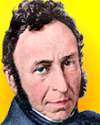
Dutch chemist remembered for his analysis of proteins, for which he coined the name (perhaps suggested to him by Berzelius), in French, protéine (1838) based on the stem “proto” from Greek, as a primary or fundamental substance forming the bodies of animals and plants. Further, he isolated fibrin, the protein associated with clotting blood. He also worked in soil chemistry, was the first to analyze phytol correctly during research on chlorophyll, and confirmed Bezelius' suspicion that theine and caffein were the same compound. He published technical works on the chemistry of indigo (1833), wine (1855) and beer (1857).«
Dutch chemist remembered for his analysis of proteins, for which he coined the name (perhaps suggested to him by Berzelius), in French, protéine (1838) based on the stem “proto” from Greek, as a primary or fundamental substance forming the bodies of animals and plants. Further, he isolated fibrin, the protein associated with clotting blood. He also worked in soil chemistry, was the first to analyze phytol correctly during research on chlorophyll, and confirmed Bezelius' suspicion that theine and caffein were the same compound. He published technical works on the chemistry of indigo (1833), wine (1855) and beer (1857).«
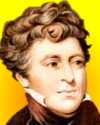
Born 27 Dec 1790; died 15 Jan 1878 at age 87.
English obstetrician and medical researcher who researched in the technique of blood transfusion, and was the first in Great Bitain to perform the procedure using human blood (rather than animal blood) on 26 Sep 1818 at Guy's Hospital, London. He used an apparatus of his his own design to collect and transfer the blood. His patient, who had an incurable disease, was anxious to try a blood transfusion from human donors. Although there seemed initial signs of benefit, he survived only another 56 hours. In the years that followed, his technique eventually led to saving lives, despite failures until the significance of matching blood types known after 1900.« more
English obstetrician and medical researcher who researched in the technique of blood transfusion, and was the first in Great Bitain to perform the procedure using human blood (rather than animal blood) on 26 Sep 1818 at Guy's Hospital, London. He used an apparatus of his his own design to collect and transfer the blood. His patient, who had an incurable disease, was anxious to try a blood transfusion from human donors. Although there seemed initial signs of benefit, he survived only another 56 hours. In the years that followed, his technique eventually led to saving lives, despite failures until the significance of matching blood types known after 1900.« more
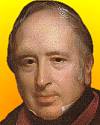
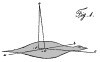
(6th Baronet ) English aeronautical pioneer who built the first successful man-carrying glider (1853). He made extensive anatomical and functional studies of bird flight. By measuring bird and human muscle masses, he realized it would be impossible for humans to strap on a pair of wings and take to the air. His further studies in the principles of lift, drag and thrust founded the science of aerodynamics from which he discovered stabilizing flying craft required both vertical and horizontal tail rudders, that concave wings produced more lift than flat surfaces and that swept-back wings provided greater stability. Cayley also invented the caterpillar tractor (1825), automatic railroad crossing signals, self-righting lifeboats, and an expansion-air (hot-air) engine.«[Image right: (source) ]
Sir George Cayley, the inventor of the aeroplane, by John Laurence. - book suggestion.
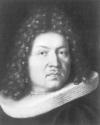
Born 27 Dec 1654; died 16 Aug 1705 at age 50. quotes
Jacob Jacques Bernoulli was a Swiss mathematician and astronomer who was one of the first to fully utilize differential calculus and introduced the term integral in integral calculus. Jacob Bernoulli's first important contributions were a pamphlet on the parallels of logic and algebra (1685), work on probability in 1685 and geometry in 1687. His geometry result gave a construction to divide any triangle into four equal parts with two perpendicular lines. By 1689 he had published important work on infinite series and published his law of large numbers in probability theory. He published five treatises on infinite series (1682 - 1704). Jacob was intrigued by the logarithmic spiral and requested it be carved on his tombstone. He was the first of the Bernoulli family of mathematicians, and the brother of Johann Bernoulli.Name also spelled Jakob, a.k.a. Jacque I or James I. Birth date 27 Dec 1654 (Old Style) is 6 Jan 1655 [New Style).
Jacob Jacques Bernoulli was a Swiss mathematician and astronomer who was one of the first to fully utilize differential calculus and introduced the term integral in integral calculus. Jacob Bernoulli's first important contributions were a pamphlet on the parallels of logic and algebra (1685), work on probability in 1685 and geometry in 1687. His geometry result gave a construction to divide any triangle into four equal parts with two perpendicular lines. By 1689 he had published important work on infinite series and published his law of large numbers in probability theory. He published five treatises on infinite series (1682 - 1704). Jacob was intrigued by the logarithmic spiral and requested it be carved on his tombstone. He was the first of the Bernoulli family of mathematicians, and the brother of Johann Bernoulli.Name also spelled Jakob, a.k.a. Jacque I or James I. Birth date 27 Dec 1654 (Old Style) is 6 Jan 1655 [New Style).
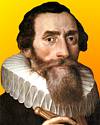
Born 27 Dec 1571; died 15 Nov 1630 at age 58. quotes
German astronomer who formulated three major laws of planetary motion which enabled Isaac Newton to devise the law of gravitation. Working from the carefully measured positions of the planets recorded by Tycho Brahe, Kepler mathematically deduced three relationships from the data: (1) the planets move in elliptical orbits with the Sun at one focus; (2) the radius vector sweeps out equal areas in equal times; and (3) for two planets the squares of their periods are proportional to the cubes of their mean distances from the sun. Kepler suggested that the tides were caused by the attraction of the moon. He believed that the universe was governed by mathematical rules, but recognized the importance of experimental verification.«
German astronomer who formulated three major laws of planetary motion which enabled Isaac Newton to devise the law of gravitation. Working from the carefully measured positions of the planets recorded by Tycho Brahe, Kepler mathematically deduced three relationships from the data: (1) the planets move in elliptical orbits with the Sun at one focus; (2) the radius vector sweeps out equal areas in equal times; and (3) for two planets the squares of their periods are proportional to the cubes of their mean distances from the sun. Kepler suggested that the tides were caused by the attraction of the moon. He believed that the universe was governed by mathematical rules, but recognized the importance of experimental verification.«
Johannes Kepler And the New Astronomy, by James R. Voelkel. - book suggestion.

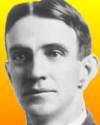
Died 27 Dec 1968 at age 91 (born 22 Sep 1877).
American zoologist and the most prominent animal ecologist of his generation who was primarily responsible for introducing animals into studies of climax communities and the successions leading to them. Succession in the Indiana Dunes was one of his early significant studies. He was influential in creating ecology as a distinct scientific discipline, with books such as his Animal Communities in Temperate America (1913). Shelford developed the biome concept in Bio-ecology (1939, with Frederic E. Clements) and contributed to the areas of physiological and population ecology. He was involved in the preservation of natural communities and founded the Ecologist's Union, which later became the Nature Conservancy.«
American zoologist and the most prominent animal ecologist of his generation who was primarily responsible for introducing animals into studies of climax communities and the successions leading to them. Succession in the Indiana Dunes was one of his early significant studies. He was influential in creating ecology as a distinct scientific discipline, with books such as his Animal Communities in Temperate America (1913). Shelford developed the biome concept in Bio-ecology (1939, with Frederic E. Clements) and contributed to the areas of physiological and population ecology. He was involved in the preservation of natural communities and founded the Ecologist's Union, which later became the Nature Conservancy.«
Pioneer Ecologist: The Life and Work of Victor Ernest Shelford, by Robert A. Croker. - book suggestion.
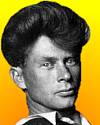
1927

Fruit fly (Drosophila melanogaster)
American geneticist who advanced understanding of the role of chromosomes in heredity using the fruit fly, Drosophila melanogaster. He began, in 1910, as a laboratory assistant for Thomas Hunt Morgan tracking how observable changes in its chromosomes led to inherited variations. Bridges used natural “mistakes” in sex chromosome segregation to show that an improper number of chromosomes produced abnormal fruit flies. Such “mistakes,” called nondisjunction because chromosomes are not properly disjoined, result in gametes with either an extra copy of a sex chromosome or none at all. He created a nomenclature system for naming fly mutants. He correlated Drosophila genes with banding patterns in salivary chromosomes.«
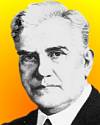
Died 27 Dec 1923 at age 64 (born 1 Jan 1859).
Michael Joseph Owens was an American inventor and manufacturer who invented the automatic glass bottle making machine that revolutionized the industry. His mechanization of the glass-blowing process eliminated child labor from glass-bottle factories. He took out patents in 1895 on a glass molding machine capable of crude results. In 1903, he formed the Owens Bottle Machine Company. By the next year his continuing improvements led to patents on a machine capable of producing four bottles per second. Owens' machines could be built with from six to twenty arms, each blowing a bottle. He expanded with a factory in England in 1905. He retired from management in 1919 to focus on inventing, and eventually held 45 U.S. patents.« more
Michael Joseph Owens was an American inventor and manufacturer who invented the automatic glass bottle making machine that revolutionized the industry. His mechanization of the glass-blowing process eliminated child labor from glass-bottle factories. He took out patents in 1895 on a glass molding machine capable of crude results. In 1903, he formed the Owens Bottle Machine Company. By the next year his continuing improvements led to patents on a machine capable of producing four bottles per second. Owens' machines could be built with from six to twenty arms, each blowing a bottle. He expanded with a factory in England in 1905. He retired from management in 1919 to focus on inventing, and eventually held 45 U.S. patents.« more
Michael Owens and the Glass Industry, by Quentin Skrabec Jr. - book suggestion.
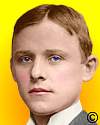
Died 27 Dec 1914 at age 51 (born 6 Dec 1863). quotes
American chemist who invented the inexpensive electrolytic method of extracting aluminium from its ore, enabling the wide commercial use of this metal. While a young chemist, he experimented in a woodshed, intent upon finding a method for separating aluminum from its ore. At first, he was unsuccessful, but then realized that he needed a nonaqueous solvent for the aluminum oxide during electrolysis. On 23 Feb 1886, Hall found that molten cryolite (the mineral sodium aluminum fluoride) was a suitable solvent and using carbon electrodes with home-made batteries, he produced his first small globules of aluminum. By 1914, Hall's process had brought the cost of aluminium, once a precious metal used for fine jewelry, down to 18 cents a pound.« more
American chemist who invented the inexpensive electrolytic method of extracting aluminium from its ore, enabling the wide commercial use of this metal. While a young chemist, he experimented in a woodshed, intent upon finding a method for separating aluminum from its ore. At first, he was unsuccessful, but then realized that he needed a nonaqueous solvent for the aluminum oxide during electrolysis. On 23 Feb 1886, Hall found that molten cryolite (the mineral sodium aluminum fluoride) was a suitable solvent and using carbon electrodes with home-made batteries, he produced his first small globules of aluminum. By 1914, Hall's process had brought the cost of aluminium, once a precious metal used for fine jewelry, down to 18 cents a pound.« more
Made of Aluminum: A Life of Charles Martin Hall, by Rosamond McPherson Young. - book suggestion.
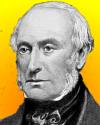
Died 27 Dec 1900 at age 90 (born 26 Nov 1810). quotes
Baron of Cragside, William George Armstrong was an English inventor, engineer and industrialist in hydraulic engineering, shipbuilding and artillery. He invented a hydroelectric machine which produced frictional electricity (1843), a hydraulic crane (1846), a hydraulic accumulator to power machinery (1850), the Armstrong breech-loading gun made of successive rings of metal shrunk upon an inner steel barrel with rifle bore (1855), prototype of all modern artillery, and a breech-loading gun with wire-wound cylinder (1880). He founded Elswick Engineering Works (1847) which merged (1927) its armament and shipbuilding activities with Vickers' Sons and Co. to form Vickers Armstrong, Ltd. His mansion, Cragside, was the first British home lighted by hydroelectricity.«
Baron of Cragside, William George Armstrong was an English inventor, engineer and industrialist in hydraulic engineering, shipbuilding and artillery. He invented a hydroelectric machine which produced frictional electricity (1843), a hydraulic crane (1846), a hydraulic accumulator to power machinery (1850), the Armstrong breech-loading gun made of successive rings of metal shrunk upon an inner steel barrel with rifle bore (1855), prototype of all modern artillery, and a breech-loading gun with wire-wound cylinder (1880). He founded Elswick Engineering Works (1847) which merged (1927) its armament and shipbuilding activities with Vickers' Sons and Co. to form Vickers Armstrong, Ltd. His mansion, Cragside, was the first British home lighted by hydroelectricity.«
Arms and the State: Sir William Armstrong and the Remaking of British Naval Power, 1854-1914, by Marshall J. Bastable. - book suggestion.
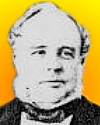
British industrialist who manufactured rolled-steel plates armour-plate for naval warships. Brown set up his steel business in 1844, and by 1846, he developed a conical steel spring buffer for railway carriages which cornered the market in Britain. His business grew rapidly and on 1 Jan 1856, he consolidated his operations at the Atlas Works, Sheffield. Henry Bessemer, who moved next door, licenced his Steel Convertor process to Brown for production of steel rails. In 1860, John Brown turned his attention to the production of armour plate by rolling instead of a forging process which was used elsewhere. He set up a rolling mill and started to produce the material which, by 1867 was used in three quarters of the British Navy's armour plated ships.«[Note: Date of death is 27 Dec 1896 in Encyclopedia Britannica, but gravestone says 28 Dec 1896)
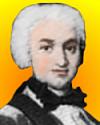
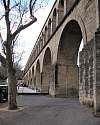
French hydraulic engineer who invented the Pitot tube (1732), an instrument to measure flow velocity either in liquids or gases. With subsequent improvements by Henri Darcy, its modern form is used to determine the airspeed of aircraft. Although originally a trained mathematician and astronomer, he became involved with an investigation of the velocity of flowing water at different depths, for which purpose he first created the Pitot tube. He disproved the prevailing belief that the velocity of flowing water increased with depth. Pitot became an engineer in charge of maintenance and construction of canals, bridges, drainage projects, and is particularly remembered for his kilometer-long Roman-arched Saint-Clément Aqueduct (1772) at Montpellier, France.«[Image right: Saint-Clément Aquaduct, Montpellier]
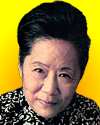
In 1956, the formerly believed “law” of conservation of parity was disproved in the first successful results from an experiment conducted by Madame Chien-Shiung Wu at Columbia University on the beta-decay of cobalt-60. It had been suggested in a paper published by Tsung-Dao Lee and Chen Ning Yang on 1 Oct 1956. There had been problems to overcome working with the cobalt sample and detectors in a vacuum at a working temperature of one-hundredth of a kelvin. Wu's team repeated the experiment, doing maintenance on the apparatus as necessary, until on 9 Jan 1957 further measurements confirmed the initial results. Leon Lederman performed an independent test of parity with Columbia's cyclotron. They held a press conference on 15 Jan 1957.«
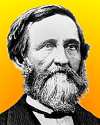
In 1845, ether anesthetic was first used in childbirth by Dr. Crawford W. Long in Jefferson, Ga, who gave it to his wife, and she successfully gave birth to a baby girl, their second child, Fanny. Previously, on 30 Mar 1842, Dr. Long administered inhaled ether to James M. Venable, for the removal of a tumor from his neck. This event predated William TG Morton's public demonstration of ether by four years, but was not disclosed until 1849 in the Southern Medical Journal, which was after Morton's widely publicized feat. However, Dr. Long's accomplishment in 1842 is now widely considered to represent the discovery of surgical anesthesia. He was the subject on a U.S. stamp issued 8 Apr 1940.
We Have Conquered Pain: The Discovery of Anesthesia, by Dennis Brindell Fradin. - book suggestion.
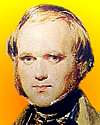
In 1831, Charles Darwin set sail from Plymouth harbour on his voyage of scientific discovery aboard the HMS Beagle, a British Navy ship. The Captain Robert FitzRoy was sailing to the southern coast of South America in order to complete a government survey. Darwin had an unpaid position as the ship's naturalist, at age 22, just out of university. Originally planned to be at sea for two years, the voyage lasted five years, making stops in Brazil, the Galapogos Islands, and New Zealand. From the observations he made and the specimens he collected on that voyage, Darwin developed his theory of biological evolution through natural selection, which he published 28 years after the Beagle left Plymouth. Darwin laid the foundation of modern evolutionary theory 
From So Simple a Beginning: Darwin's Four Great Books, by Charles Darwin, Edward O. Wilson. - book suggestion.




