Born 13 Jul 1966. quotes
American science writer whose career in writing books, mostly on evolution and parasites, began with At the Water's Edge: Macroevolution and the Transformation of Life (1998).
American science writer whose career in writing books, mostly on evolution and parasites, began with At the Water's Edge: Macroevolution and the Transformation of Life (1998).
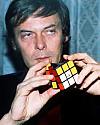

Hungarian mathematician, educator and inventor of Rubik's Cube (1974), which became a popular toy of the 1980s. Rubik's Cube consists of 26 small cubes that rotate on a central axis; nine coloured cube faces, in three rows of three each, form each side of the cube. When the cube arrangement is randomized, the player must then return it to the original condition of faces with matching colours, which is one among 43 quintillion possible configurations.[Animation source]
Born 13 Jul 1924; died 11 Jan 2007 at age 82. quotes
Donald Edward Osterbrock was an American astronomer was an American astronomer who was a leading authority on the history of astronomy, and director of the University of California's Lick Observatory. He applied physics to produce accurate models of stars. For example, treating the outer part of the sun as turbulent and convective, he explained the seemingly anomalous fact that the sun's corona is hotter than its surface. He investigated the nature of ionized gas around hot stars, and was a pioneer in the use of spectroscopic methods for the study of gaseous nebulae. He discovered new types of active galactic nuclei, which are powered by black holes in the centers of galaxies. He fostered the construction of the 10-meter Keck Telescopes in Hawaii.«
Donald Edward Osterbrock was an American astronomer was an American astronomer who was a leading authority on the history of astronomy, and director of the University of California's Lick Observatory. He applied physics to produce accurate models of stars. For example, treating the outer part of the sun as turbulent and convective, he explained the seemingly anomalous fact that the sun's corona is hotter than its surface. He investigated the nature of ionized gas around hot stars, and was a pioneer in the use of spectroscopic methods for the study of gaseous nebulae. He discovered new types of active galactic nuclei, which are powered by black holes in the centers of galaxies. He fostered the construction of the 10-meter Keck Telescopes in Hawaii.«
Born 13 Jul 1879; died 8 Jun 1962 at age 82.
Marie-Eugène-Léon Freyssinet was a French civil engineer who successfully developed pre-stressed concrete, whereby the strength of concrete beams or girders is greatly increased by embedding steel wire. The prestressing technique was devised to overcome difficulties in executing curved shapes in reinforced concrete. More an engineer than an architect, Freyssinet began creating innovative architecture using reinforced concrete as his main material, such as airship hangars at Orly Airport, France (1921), bridges and industrial buildings. His first use of pre-stressed concrete was for the renovation of the transatlantic pier at Le Havre (1933-35).
Marie-Eugène-Léon Freyssinet was a French civil engineer who successfully developed pre-stressed concrete, whereby the strength of concrete beams or girders is greatly increased by embedding steel wire. The prestressing technique was devised to overcome difficulties in executing curved shapes in reinforced concrete. More an engineer than an architect, Freyssinet began creating innovative architecture using reinforced concrete as his main material, such as airship hangars at Orly Airport, France (1921), bridges and industrial buildings. His first use of pre-stressed concrete was for the renovation of the transatlantic pier at Le Havre (1933-35).
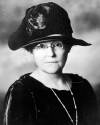
Born 13 Jul 1875; died 1932.
American psychologist and educator whose studies centred on the psychology of aesthetics and related philosophical issues. Her contributions were in the areas of clinical psychology and personality assessment. One of her projects was measuring other facets of human nature and attempting to calibrate them as is done with intelligence. Her Downey Will-Temperament Tests (1919) received some research attention in the 1920s. She founded the psychology laboratory at the University of Wyoming in 1900.
American psychologist and educator whose studies centred on the psychology of aesthetics and related philosophical issues. Her contributions were in the areas of clinical psychology and personality assessment. One of her projects was measuring other facets of human nature and attempting to calibrate them as is done with intelligence. Her Downey Will-Temperament Tests (1919) received some research attention in the 1920s. She founded the psychology laboratory at the University of Wyoming in 1900.
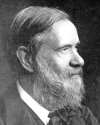
Born 13 Jul 1826; died 10 May 1910 at age 83. quotes
Italian chemist, teacher, and legislator who recognized the distinction between atomic and molecular weights. He discovered the Cannizzaro reaction in 1853, that treatment of benzaldehyde with a concentrated alcoholic hydroxide produced equal amounts of benzyl alcohol and the salt of benzoic acid. Earlier, in 1851, he helped prepare cyanamide, while at the laboratory of Michel-Eugène Chevreul. In 1858, he showed that the atomic weights of the elements in the molecules of a volatile compound can be calculated using Avogadro's principle. Further, the atomic weights of non-volatile compounds can be calculated by a measurement of specific heat instead of vapour density. Later, 1861-71, he studied aromatic compounds and amines.
Italian chemist, teacher, and legislator who recognized the distinction between atomic and molecular weights. He discovered the Cannizzaro reaction in 1853, that treatment of benzaldehyde with a concentrated alcoholic hydroxide produced equal amounts of benzyl alcohol and the salt of benzoic acid. Earlier, in 1851, he helped prepare cyanamide, while at the laboratory of Michel-Eugène Chevreul. In 1858, he showed that the atomic weights of the elements in the molecules of a volatile compound can be calculated using Avogadro's principle. Further, the atomic weights of non-volatile compounds can be calculated by a measurement of specific heat instead of vapour density. Later, 1861-71, he studied aromatic compounds and amines.
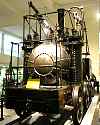
English coal-mine official and inventor who was probably the first to build a commercially useful steam locomotive dependent on friction between wheels and rails (as prevails in modern times) as opposed to using a geared track. He tested this method by experimenting with a test carriage loaded with weights and moved by men turning handles. Once satisfied that a friction-driven design was feasible, he began building and improving a satisfactory locomotive. He patented this design on 13 Mar 1813. The same year, his locomotive, Puffing Billy, began to pull coal trucks on a five mile line from a mine at Wylam, Northumberland, to dockside on the River Tyne. It was the first locomotive to haul 50-ton coal wagons. The track was damaged by the locomotive's weight so it was soon rebuilt on eight wheels but later reverted to four, perhaps after stronger cast-iron edge rails were laid in about 1828. Puffing Billy was retired 6 Jun 1862. It is now preserved at the Science Museum, London.Image right: Puffing Billy
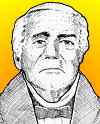
Born 13 Jul 1765; died 25 Aug 1852 at age 87. quotes
American inventor and manufacturer who, like Eli Whitney, incorporated interchangeable parts in manufacturing. At first a farmer, he began a business making scythes (1795), turned to pistol manufacturing for private use, then won a government contract (9 Mar 1799) for 500 pistols, and larger orders followed. By 1813, at North’s suggestion, a contract for 20,000 pistols included the provision that parts should be interchangeable. He developed machine tools to aid production. North built perhaps the earliest, though primitive, milling machine to replace manual filing operations (by about 1816). For 53 years, he filled War Dept. contracts, including rifles (from 1823), and devised a 10-round repeating rifle (1825).«
American inventor and manufacturer who, like Eli Whitney, incorporated interchangeable parts in manufacturing. At first a farmer, he began a business making scythes (1795), turned to pistol manufacturing for private use, then won a government contract (9 Mar 1799) for 500 pistols, and larger orders followed. By 1813, at North’s suggestion, a contract for 20,000 pistols included the provision that parts should be interchangeable. He developed machine tools to aid production. North built perhaps the earliest, though primitive, milling machine to replace manual filing operations (by about 1816). For 53 years, he filled War Dept. contracts, including rifles (from 1823), and devised a 10-round repeating rifle (1825).«
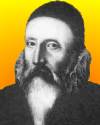
Born 13 Jul 1527; died Dec 1608. quotes
English alchemist, astrologer, and mathematician who contributed greatly to the revival of interest in mathematics in England. After becoming one of the first Fellows of Trinity College, Cambridge (1546), he made several visits to the Continent and studied with Gerardus Mercator. He returned (1551) with navigation instruments. Dee also wrote on calendar reform, navigation, geography and astrology. Dee became astrologer to Queen Mary but was imprisoned for being a magician. Released in 1555, he then found favour with Queen Elizabeth and cast horoscopes for her. Dee prepared nautical information, including charts for navigation in the polar regions, for 32 years. Later in life he turned to alchemy.
English alchemist, astrologer, and mathematician who contributed greatly to the revival of interest in mathematics in England. After becoming one of the first Fellows of Trinity College, Cambridge (1546), he made several visits to the Continent and studied with Gerardus Mercator. He returned (1551) with navigation instruments. Dee also wrote on calendar reform, navigation, geography and astrology. Dee became astrologer to Queen Mary but was imprisoned for being a magician. Released in 1555, he then found favour with Queen Elizabeth and cast horoscopes for her. Dee prepared nautical information, including charts for navigation in the polar regions, for 32 years. Later in life he turned to alchemy.

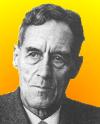
Died 13 Jul 1974 at age 76 (born 18 Nov 1897). quotes
(Baron Blackett of Chelsea) Patrick Maynard Stuart Blackett was an English physicist and winner of the Nobel Prize for Physics in 1948 for his discoveries in the field of cosmic radiation. In these studies he used cloud-chamber photographs that revealed the way in which a stable atomic nucleus can be disintegrated by bombarding it with alpha particles (helium nuclei). Although such nuclear disintegration had been observed previously, his data explained this phenomenon for the first time and were useful in explaining disintegration by other means.
(Baron Blackett of Chelsea) Patrick Maynard Stuart Blackett was an English physicist and winner of the Nobel Prize for Physics in 1948 for his discoveries in the field of cosmic radiation. In these studies he used cloud-chamber photographs that revealed the way in which a stable atomic nucleus can be disintegrated by bombarding it with alpha particles (helium nuclei). Although such nuclear disintegration had been observed previously, his data explained this phenomenon for the first time and were useful in explaining disintegration by other means.
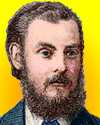
Died 13 Jul 1937 at age 89 (born 6 May 1848). quotes
English organic chemist whose major research in substitution reactions of naphthalene was important to the synthetic-dye industry. In early work, he developed a method for sanitary surveys of water supplies by determining the organic impurities (sewage) content, which helped to control typhoid fever. Later, Armstrong also pioneered in organic crystallography, and the understanding of the chemical composition of camphor and related terpene compounds. He also devised a centric formula for benzene. Armstrong challenged Arrhenius's ionic theory, proposing instead that water is a complex saturated with the gas “hydrone.” He maintained that vapor pressure was a measure of the concentration of free hydrone molecules.
English organic chemist whose major research in substitution reactions of naphthalene was important to the synthetic-dye industry. In early work, he developed a method for sanitary surveys of water supplies by determining the organic impurities (sewage) content, which helped to control typhoid fever. Later, Armstrong also pioneered in organic crystallography, and the understanding of the chemical composition of camphor and related terpene compounds. He also devised a centric formula for benzene. Armstrong challenged Arrhenius's ionic theory, proposing instead that water is a complex saturated with the gas “hydrone.” He maintained that vapor pressure was a measure of the concentration of free hydrone molecules.
Died 13 Jul 1934 at age 57 (born 4 Mar 1877).
Robert Fritz Graebner was a German ethnologist who advanced the theory of the Kulturkreise, or culture complex, which postulated diffusions of primitive culture spheres derived from a single archaic type. His scheme launched the culture-historical school of ethnology in Europe and stimulated much field research.
Robert Fritz Graebner was a German ethnologist who advanced the theory of the Kulturkreise, or culture complex, which postulated diffusions of primitive culture spheres derived from a single archaic type. His scheme launched the culture-historical school of ethnology in Europe and stimulated much field research.
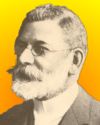
Died 13 Jul 1924 at age 72 (born 29 Jun 1852).
English paleobotanist who contributed greatly to our knowledge of Devonian plants He is noted for his discoveries and descriptions of plant fossils from the Devonian period (408 to 360 million years ago). An outstanding and respected scholar, he cataloged Paleozoic plants for many world-class institutions, including the British Museum. His work included excavating at Rhynie, Aberdeenshire, Scotland (from 1917) in the most famous plant fossil assemblage representing an early terrestrial ecosystem, preserved in the so-called Rhynie chert of early Devonian age. The chert is a silicified matrix of a swampy peat bed that contains plant remains and other organisms such as arthropods and fungi as a fossilized subterranean ecosystem.
English paleobotanist who contributed greatly to our knowledge of Devonian plants He is noted for his discoveries and descriptions of plant fossils from the Devonian period (408 to 360 million years ago). An outstanding and respected scholar, he cataloged Paleozoic plants for many world-class institutions, including the British Museum. His work included excavating at Rhynie, Aberdeenshire, Scotland (from 1917) in the most famous plant fossil assemblage representing an early terrestrial ecosystem, preserved in the so-called Rhynie chert of early Devonian age. The chert is a silicified matrix of a swampy peat bed that contains plant remains and other organisms such as arthropods and fungi as a fossilized subterranean ecosystem.
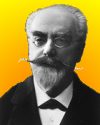
Died 13 Jul 1921 at age 75 (born 16 Aug 1845). quotes
Gabriel Jonas Lippmann was a French physicist who was awarded the Nobel Prize for Physics in 1908 for producing the first colour photographic plate. Lippmann was a giant of his day in classical physics research, especially in optics and electricity. He worked in Berlin with the famed Hermann von Helmholtz before settling in Paris to head (in 1886) the Sorbonne's Laboratories of Physical Research until his death. His inventions include an instrument for precisely measuring minute differences in electrical power and the “coleostat” for steady, long-exposure sky photography.
Gabriel Jonas Lippmann was a French physicist who was awarded the Nobel Prize for Physics in 1908 for producing the first colour photographic plate. Lippmann was a giant of his day in classical physics research, especially in optics and electricity. He worked in Berlin with the famed Hermann von Helmholtz before settling in Paris to head (in 1886) the Sorbonne's Laboratories of Physical Research until his death. His inventions include an instrument for precisely measuring minute differences in electrical power and the “coleostat” for steady, long-exposure sky photography.
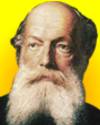
Died 13 Jul 1896 at age 66 (born 7 Sep 1829). quotes
Friedrich August Kekulé von Stradonitz was a German chemist who is traditionally attributed with devising the ring structure of carbon atoms in organic molecules. Although at first intending to study as an architect, his career in chemistry began after hearing Justus Liebig's lectures. He determined the tetravalence of carbon, and its ability to link in chains and form polyvalent radicals (1857-58). Further, he envisioned double or even triple bonds between carbon atoms in those chains, and isomers being molecules with the same atoms arranged differently. Kekulé suggested a vision of a serpent catching its own tail when saying that benzene has a ring structure (1863). Kekulé's ideas became the foundation of structural theory in organic chemistry.«
Friedrich August Kekulé von Stradonitz was a German chemist who is traditionally attributed with devising the ring structure of carbon atoms in organic molecules. Although at first intending to study as an architect, his career in chemistry began after hearing Justus Liebig's lectures. He determined the tetravalence of carbon, and its ability to link in chains and form polyvalent radicals (1857-58). Further, he envisioned double or even triple bonds between carbon atoms in those chains, and isomers being molecules with the same atoms arranged differently. Kekulé suggested a vision of a serpent catching its own tail when saying that benzene has a ring structure (1863). Kekulé's ideas became the foundation of structural theory in organic chemistry.«
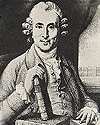
Died 13 Jul 1794 at age 77 (born 4 Oct 1716). quotes
Scottish physician, “founder of naval hygiene in England,” who investigated sickness of sailors. On 20 May 1747, while a ship's surgeon on the HMS Salisbury, he began an experiment to remedy scurvy. He regulated the diets of the sailors, and especially included lemons and oranges. With a clearly positive outcome, he recommended fresh citrus fruit and lemon juice be incorporated in the diet of seamen on long voyages. When made a requirement by Sir Gilbert Blane, this resulted in the prompt eradication of scurvy from the British Navy. (The Dutch had implemented this practice almost two centuries earlier.) Lind also recommended shipboard delousing procedures and suggested the use of hospital ships for sick sailors in tropical ports. In 1761, he arranged for the shipboard distillation of seawater for drinking water.[World of Health gives birth data as 4 Oct 1716. EB gives only the year 1716.]
Scottish physician, “founder of naval hygiene in England,” who investigated sickness of sailors. On 20 May 1747, while a ship's surgeon on the HMS Salisbury, he began an experiment to remedy scurvy. He regulated the diets of the sailors, and especially included lemons and oranges. With a clearly positive outcome, he recommended fresh citrus fruit and lemon juice be incorporated in the diet of seamen on long voyages. When made a requirement by Sir Gilbert Blane, this resulted in the prompt eradication of scurvy from the British Navy. (The Dutch had implemented this practice almost two centuries earlier.) Lind also recommended shipboard delousing procedures and suggested the use of hospital ships for sick sailors in tropical ports. In 1761, he arranged for the shipboard distillation of seawater for drinking water.[World of Health gives birth data as 4 Oct 1716. EB gives only the year 1716.]
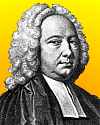
Died 13 Jul 1762 (born Mar 1693).
English astronomer who was the third Astronomer Royal. He discovered the aberration of starlight (announced 1728). This apparent slight change in the positions of stars results from the position change of the observer on the Earth, as it revolves around the sun. Bradley thus established the first direct evidence of the revolution of the Earth around the Sun. He was a skilled astronomer who took great pains to enable accuracy in all his measurements. The aberration of starlight showed that light had a finite speed, which he calculated to be about 283,000 km/s. Bradley also discovered an annual change in the declination in some of the fixed stars, deducing that the earth nods a little on its axis of rotation (which he named as nutation) due to the gravitational pull of the Moon.«
English astronomer who was the third Astronomer Royal. He discovered the aberration of starlight (announced 1728). This apparent slight change in the positions of stars results from the position change of the observer on the Earth, as it revolves around the sun. Bradley thus established the first direct evidence of the revolution of the Earth around the Sun. He was a skilled astronomer who took great pains to enable accuracy in all his measurements. The aberration of starlight showed that light had a finite speed, which he calculated to be about 283,000 km/s. Bradley also discovered an annual change in the declination in some of the fixed stars, deducing that the earth nods a little on its axis of rotation (which he named as nutation) due to the gravitational pull of the Moon.«
Died 13 Jul 1629 at age 44 (born 12 Feb 1585).
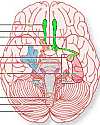
Caspar Berthelsen Bartholin was a Danish physician and theologian (Latin Bartholinus) who wrote one of the most widely read Renaissance manuals of anatomy. He was first to describe the olfactory nerve (associated with the sense of smell) as the first cranial nerve. In 1619, while Professor of medicine at the University of Copenhagen, along with others of the medical faculty, he published A Short Instruction on how one should care for oneself during the plague. Bartholin glands were first described by Caspar Bartholin, a Dutch anatomist, in 1677. They are paired glands present in female mammals. He died at age 44.Image: Olefactory nerve shown in green.
Caspar Berthelsen Bartholin was a Danish physician and theologian (Latin Bartholinus) who wrote one of the most widely read Renaissance manuals of anatomy. He was first to describe the olfactory nerve (associated with the sense of smell) as the first cranial nerve. In 1619, while Professor of medicine at the University of Copenhagen, along with others of the medical faculty, he published A Short Instruction on how one should care for oneself during the plague. Bartholin glands were first described by Caspar Bartholin, a Dutch anatomist, in 1677. They are paired glands present in female mammals. He died at age 44.Image: Olefactory nerve shown in green.
In 2018, the first drug to treat smallpox, TPOXX (tecovirimat), made by SIGA Technologies, was approved by the U.S. Food and Drug Administration. The fatal disease has been systematically eliminated from the world. The last recorded smallpox death was in 1978. However, one laboratory in America, and other in Russia, store samples of the variola virus under high security, in case the disease might somehow re-emerge. For example, in 2014, several vials of variola were discovered in a storeroom in a government lab in Maryland. It might also be engineered for bioterrorism by modern gene-editing techniques. The U.S. government stockpiled two million treatments—just in case.«
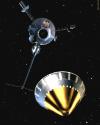
Galileo
In 1995, the spacecraft Galileo released a probe towards Jupiter was to become the first Earth emissary ever to penetrate the atmosphere of any of the outer gas giants (Dec 1995). The mission's scientific objectives included measurement of the temperature and pressure structure of Jupiter's atmosphere and the chemical composition of Jupiter. Also, it studied the cloud layers and cloud particle size and density. Measurement were made of the amount of helium relative to hydrogen on Jupiter, winds in the atmosphere, how sunlight and energy coming from the deep interior are distributed in Jupiter's atmosphere. The probe could also detect lightning and energetic protons and electrons trapped in Jupiter's magnetic field.

In 1977, a power failure blacked out New York. Starting at about 9 pm, four lightning strikes on high-voltage transmission lines within the course of about half-an-hour knocked out electricity and plunged millions of residents of New York City into darkness. Unlike the calm during a similar blackout in 1965, the 1977 blackout erupted in chaos. The city was already in the midst of a financial crisis and high unemployment. Responding to the tension of the times, mobs set fires, smashed windows and hauled away food, clothing and appliances. It took 25 hours to restore power to the entire city. About 4,500 people were arrested during the riots, which resulted in damage estimated at $61 million.
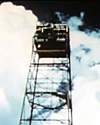
In 1945, the first atomic bomb arrived partly assembled at its test site in the New Mexico desert, on this Friday the 13th. By Sunday, it was completed and set at the top of a tower waiting for the first atomic bomb test the next day. On Monday 16 Jul 1945, it was successfully exploded and the nuclear era began. A mere 21 more days later, the world’s first deployed atomic bomb was dropped on Hiroshima, Japan.«
In 1937, a patent was issued to Leroy C. Lind for the Servisoft water softener (U.S. No. 2,087,157). The invention used a regeneratable granulated mineral, such as zeolite, which was already in use by domestic water softening systems using a permanent bed of the material. Leroy Lind devised a method that would be easier and faster to maintain. It would be less costly, and enabled the spent mineral to be regenerated collectively from a number of installations at a central location. The softener was packaged in water pervious, flexible walled cartridges or sacks sized to stack several vertically within a tall cylindrical tank connected to the water supply line. The contents of the sacks would settle to seal against the interior surface of the tank. The tank had a removable top to facilitate switching with renewed sacks.«
In 1919, the first lighter-than-air transatlantic flight was completed.
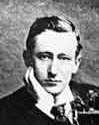
In 1897, Guglielmo Marconi received a U.S. patent for a wireless telegraph (No. 586,193).
In 1891, the name neuron, with the meaning "nerve cell", was coined for the first time in print, by W. Waldeyer in his paper published in this day's issue of the German journal, Berliner Klin. Wochenschr. The word ‘neuron’ had been introduced earlier in scientific papers, but used in difference senses, now obsolete, by B.T. Lowne (1883) for the neural part of the compound eye of athropods, and by B.G. Wilder (1884) for the neuraxis.
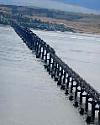
In 1887, the second Tay Rail Bridge was opened in Scotland, and remains in use today. Building was started in 1881 to replace the original single-track railway which had collapsed in a disaster on 28 Dec 1879 due to poor design and construction. The new bridge was designed for a double-track railway by William Henry Barlow and William Arrol on new, stronger piers within 60-ft (18-m) of the first. The stumps of the old piers remain as a breakwater. Many of the undamaged original girders together with new steelwork were incorporated into the new structure with a greater width to improve its lateral stability. On 18 Aug 1966, the Tay Road Bridge was opened by the Queen Mother to finally replace the ferry crossing of the Firth of Tay.«
In 1880, Stephen D. Field of New York City was issued a U.S. patent for "propelling railway cars by electromagnetism" (No. 229,991). When he first used it on a street car in an electric street car in 1874, his inntion was the first electric streetcar to run successfully with current generated by a stationary dynamo. The current was conveyed by one of the rails, via a metal wheel to the onboard motor, and returned through a second metal wheel to the other rail. Field first filed for a caveat on 21 May 1879, and when issued, the patent protected his claim for this system of supplying electric power through the rails and to the motor.
In 1875, the first cash carrier system in the U.S. was patented by David Brown of Lebanon , NJ (No. 165,473) which he called "an apparatus for transmission of goods, packages etc." The first installation of a cash carrier was at the ladies' furnishing store of William S. Lamson in Lowell, Mass, in Feb 1879. Using two overhead wires with endless rope pulleys, a small basket travelled between the sales clerk and the cashier. Lamson began manufacturing these in 1881, and in Jan 1882 incorporated the Lamson Cash Railway Company.
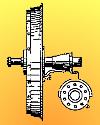
In 1836, John Ruggles of Thomaston, Maine received patent Number 1 from the U.S. Patent Office, under a new system for numbering patents. Before Ruggles, there had been 9,957 non-numbered patents issued. Ruggles received his patent for a traction wheel used in locomotive steam engines. He was Chairman of the Committee on Patents of the U.S. Senate, and was instrumental in patent law reform. However, in 1838, a Senate select committee investigated corruption charges against Senator Ruggles relating to a patent application.

In 1781, a British patent was taken out for the first compound steam engine by Jonathan Carter Hornblower (No. 1298). His invention was to use two cylinders of unequal size attached to the same beam. Steam acts first in a small high-pressure cylinder, leaving at a lower pressure, but still sufficient to expand further in a larger cylinder. Although he claimed greater efficiency, this was not realised at the low steam pressures of the day. Boulton and Watt claimed infringement on their earlier patent since this engine still used a separate condenser, so Hornblower had to abandon that design at the time. His compound steam engine principle was later revived in 1804 by Arthur Woolf using higher steam pressure with better results.«
more





