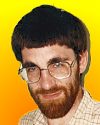
Born 29 Nov 1959.
British mathematician who won the Fields Medal in 1998 for his for his work in the fields of algebra and geometry, in particular for his proof of the so-called Moonshine conjecture. This conjecture had been formulated at the end of the '70s by the British mathematicians John Conway and Simon Norton and presents two mathematical structures in such an unexpected relationship that the experts gave it the name "Moonshine." In 1989, Borcherds was able to cast some more light on the mathematical background of this topic and to produce a proof for the conjecture. The Moonshine conjecture provides an interrelationship between the so-called "monster group" and elliptic functions.
British mathematician who won the Fields Medal in 1998 for his for his work in the fields of algebra and geometry, in particular for his proof of the so-called Moonshine conjecture. This conjecture had been formulated at the end of the '70s by the British mathematicians John Conway and Simon Norton and presents two mathematical structures in such an unexpected relationship that the experts gave it the name "Moonshine." In 1989, Borcherds was able to cast some more light on the mathematical background of this topic and to produce a proof for the conjecture. The Moonshine conjecture provides an interrelationship between the so-called "monster group" and elliptic functions.
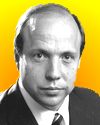
Born 29 Nov 1947; died 30 Nov 1999 at age 52.
American chemist who, at age 29, cofounded Genentech, Inc. (1976), a research-based company that pioneered the biotechnology industry. His cofounder, distinguished biochemist, Herbert Boyer, had developed one of the key techniques that opened up the possibility of the transfer of genes from one organism to another. Boyer was a pioneer using restriction enzymes to snip segments of DNA out of cells. In 1977, Genentech began mass- producing their first human protein by splicing a gene into bacteria. In 1978, Genentech created the first drug produced by genetic engineering, human-type insulin. It was also the first biotechnology company to sell its own drug, human growth hormone. Swanson died after a long battle against brain cancer.
American chemist who, at age 29, cofounded Genentech, Inc. (1976), a research-based company that pioneered the biotechnology industry. His cofounder, distinguished biochemist, Herbert Boyer, had developed one of the key techniques that opened up the possibility of the transfer of genes from one organism to another. Boyer was a pioneer using restriction enzymes to snip segments of DNA out of cells. In 1977, Genentech began mass- producing their first human protein by splicing a gene into bacteria. In 1978, Genentech created the first drug produced by genetic engineering, human-type insulin. It was also the first biotechnology company to sell its own drug, human growth hormone. Swanson died after a long battle against brain cancer.
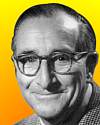
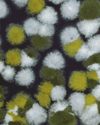
Italian geneticist who discovered the process of genetic recombination in the common soil fungus Aspergillus, and as a result of the discovery of the parasexual cycle, the originator of genetical studies in many other fungi. This cycle gives rise to genetic reassortment by means other than sexual reproduction and its discovery provided a method of genetically analyzing asexual fungi. Pontecorvo also put forward the idea of the gene as a unit of function, a theory substantiated by Seymour Benzer in 1955. He made significant contributions to modern genetics in elucidating the divisibility of the gene by recombination, and in his later years in the application of parasexual techniques to mammalian cell cultures.[Image right: Aspergillus plate.]
Born 29 Nov 1874; died 13 Dec 1955 at age 81.
Portuguese neurologist and statesman who was the founder of modern psychosurgery. In the 1920s, he pioneered the technique of cerebral angiography, enabling X-ray examination of arteries in the brain. In the 1930s, he developed the original form of prefrontal leucotomy (lobotomy), an operation for relieving severe symptoms of psychiatric illness. The operation consisted of inserting a sharp knife into the prefrontal lobe of the brain, roughly the area above and between the eyes; it required the minimum of equipment and lasted less than five minutes. For this development, he was awarded a share of the 1949 Nobel Prize for Physiology or Medicine with Walter Hess.
Portuguese neurologist and statesman who was the founder of modern psychosurgery. In the 1920s, he pioneered the technique of cerebral angiography, enabling X-ray examination of arteries in the brain. In the 1930s, he developed the original form of prefrontal leucotomy (lobotomy), an operation for relieving severe symptoms of psychiatric illness. The operation consisted of inserting a sharp knife into the prefrontal lobe of the brain, roughly the area above and between the eyes; it required the minimum of equipment and lasted less than five minutes. For this development, he was awarded a share of the 1949 Nobel Prize for Physiology or Medicine with Walter Hess.
Born 29 Nov 1866; died 22 Jul 1938 at age 71.
Ernest (William) Brown was a British astronomer who devoted his career to the theory of the Moon's motion and constructing accurate lunar tables. His theory took account of "the gravitational action of every particle of matter which can have a sensible effect on the Moon's motion," some 1500 terms. He then determined the numerical values of the constants by analyzing 150 years of Greenwich observations, and computed tables accurate to 0.01 arcsec. After 30 years of work, Brown published his lunar tables Tables of the Motion of the Moon in 1919. In 1926 Brown published a paper in which he ascribed fluctuations in the Moon's motion to irregular changes in the Earth's period of rotation, which has subsequently proved correct.
Ernest (William) Brown was a British astronomer who devoted his career to the theory of the Moon's motion and constructing accurate lunar tables. His theory took account of "the gravitational action of every particle of matter which can have a sensible effect on the Moon's motion," some 1500 terms. He then determined the numerical values of the constants by analyzing 150 years of Greenwich observations, and computed tables accurate to 0.01 arcsec. After 30 years of work, Brown published his lunar tables Tables of the Motion of the Moon in 1919. In 1926 Brown published a paper in which he ascribed fluctuations in the Moon's motion to irregular changes in the Earth's period of rotation, which has subsequently proved correct.
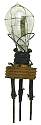
John Ambrose Fleming was an English electrical engineer who invented, and coined the name for, the diode—first thermonic valve (tube). It was a vacuum tube with two electrodes in which the electrons flowed from filament to anode only. Thus, it acted as a rectifier in a circuit, restricting current to flow in only one direction (patented 1904). For an alternating current, only the positive halves of the waves were passed, rectifying from a.c. to d.c. It was used in circuits for the growing telecommunications industry, because it stripped the intermittent Morse code signal from its radio carrier wave. His name is remembered in the Fleming “Left Hand Rule” mnemonic for relating the directions of motion, current and magnetic field for a motor.«
The Inventor of the Valve: a Biography of Sir Ambrose Fleming, by J.T. MacGregor. - book suggestion.
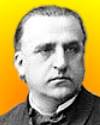
Born 29 Nov 1825; died 16 Aug 1893 at age 67. quotes
French founder (with Guillaume Duchenne) of modern neurology and one of France's greatest medical teachers and clinicians. Although he was a nineteenth century scientist, his influence carried on into the next century, especially in the work of some of his well-known students (Binet and Sigmund Freud). In 1882, he established a neurological clinic at the Salpêtrière Hospital, Paris, that was unique in Europe. He was first to describe the degeneration of ligaments and joint surfaces due to lack of use or control, now called Charcot's joint. He did research to determine the parts of the brain responsible for specific nerve functions and discovered the importance of small arteries in cerebral hemorrhage.
French founder (with Guillaume Duchenne) of modern neurology and one of France's greatest medical teachers and clinicians. Although he was a nineteenth century scientist, his influence carried on into the next century, especially in the work of some of his well-known students (Binet and Sigmund Freud). In 1882, he established a neurological clinic at the Salpêtrière Hospital, Paris, that was unique in Europe. He was first to describe the degeneration of ligaments and joint surfaces due to lack of use or control, now called Charcot's joint. He did research to determine the parts of the brain responsible for specific nerve functions and discovered the importance of small arteries in cerebral hemorrhage.
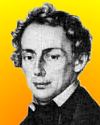
Born 29 Nov 1803; died 17 Mar 1853 at age 49.
Christian Andreas Doppler was an Austrian physicist who first described how the observed frequency of light and sound waves is affected by the relative motion of the source and the detector, known as the Doppler effect. In 1845, to test his hypothesis, Doppler used two sets of trumpeters: one set stationary at a train station and one set moving on an open train car, all holding the same note. As the train passed the station, it was obvious that the frequency of the notes from the two groups didn't match. Sound waves would have a higher frequency if the source was moving toward the observer and a lower freqency if the source was moving away from the observer. Edwin Hubble used the Doppler effect of light from distant stars to determine that the universe is expanding.[DSB (1981) gives full name Christian Johann Doppler. However, more recent study shows the name “Johann,” which has been widely copied, to be erroneous. Existing birth and baptismal records indicate the name “Andreas.”]
Christian Andreas Doppler was an Austrian physicist who first described how the observed frequency of light and sound waves is affected by the relative motion of the source and the detector, known as the Doppler effect. In 1845, to test his hypothesis, Doppler used two sets of trumpeters: one set stationary at a train station and one set moving on an open train car, all holding the same note. As the train passed the station, it was obvious that the frequency of the notes from the two groups didn't match. Sound waves would have a higher frequency if the source was moving toward the observer and a lower freqency if the source was moving away from the observer. Edwin Hubble used the Doppler effect of light from distant stars to determine that the universe is expanding.[DSB (1981) gives full name Christian Johann Doppler. However, more recent study shows the name “Johann,” which has been widely copied, to be erroneous. Existing birth and baptismal records indicate the name “Andreas.”]
The Search for Christian Doppler, by Alec Eden. - book suggestion.
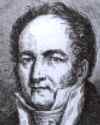
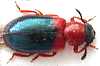
French zoologist and clergyman (ordained a Roman catholic priest in 1786) who became the father of modern entomology. During the French Revolution he was imprisoned in Bordeaux. He made the acquaintance of a physician, a fellow-prisoner, who had obtained a specimen of the rare beetle, Necrobia ruficollis. It was through this discovery that Latreille became acquainted with the naturalist, Bory de Saint-Vincent, who obtained his release. He did not share Lamarck's evolutionary views, although he worked under him from 1805 at the Muséum d'Histoire Naturelle. Latreille made the first detailed classification of crustaceans and insects. He used a “natural method” of classification combining the approaches of Linnaeus and Fabricius.[Image top right: Necrobia ruficollis]
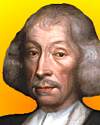
Born 29 Nov 1627; died 17 Jan 1705 at age 77. quotes
English naturalist and botanist who was a leader in his field during the 17th-century English and contributed significantly to progress in taxonomy, and is often referred to as the father of natural history in Britain. He toured Europe with Francis Willoughby in search of specimens of flora and fauna. Ray was the first to classify flowering plants into monocotyledons and dicotyledons. Ray established the species as the basic taxonomic unit - his enduring legacy to botany. His major work was the three-volume Historia Plantarum (1686-1704). He also attempted to classify the animal kingdom. In 1693 he published a system based on a number of structural characters, including internal anatomy, which provided a more natural classification than those being produced by his contemporaries.
English naturalist and botanist who was a leader in his field during the 17th-century English and contributed significantly to progress in taxonomy, and is often referred to as the father of natural history in Britain. He toured Europe with Francis Willoughby in search of specimens of flora and fauna. Ray was the first to classify flowering plants into monocotyledons and dicotyledons. Ray established the species as the basic taxonomic unit - his enduring legacy to botany. His major work was the three-volume Historia Plantarum (1686-1704). He also attempted to classify the animal kingdom. In 1693 he published a system based on a number of structural characters, including internal anatomy, which provided a more natural classification than those being produced by his contemporaries.
John Ray: Naturalist: His Life and Works, by Charles E. Raven. - book suggestion.

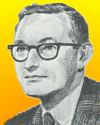
Died 29 Nov 1999 at age 81 (born 22 Dec 1917).
American organic chemist who prepared a synthetic version of the hormone cortisone (1944) using a complicated 36-step process. He was a research scientist (1942-48) at Merck & Co., Inc. Four years later the Mayo Clinic demonstrated the efficacy of the product against rheumatoid arthritis. Cortisone also has wide-ranging applications in the treatment of allergies as well as inflammatory and neoplastic diseases. In 1949, Sarett and several collaborators initiated an alternative synthesis commencing with raw materials derivable from coal, air, lime, and water. This led to the first route independent of naturally occurring starting materials. Sarett was the 1975 recipient of the National Medal of Science.«
American organic chemist who prepared a synthetic version of the hormone cortisone (1944) using a complicated 36-step process. He was a research scientist (1942-48) at Merck & Co., Inc. Four years later the Mayo Clinic demonstrated the efficacy of the product against rheumatoid arthritis. Cortisone also has wide-ranging applications in the treatment of allergies as well as inflammatory and neoplastic diseases. In 1949, Sarett and several collaborators initiated an alternative synthesis commencing with raw materials derivable from coal, air, lime, and water. This led to the first route independent of naturally occurring starting materials. Sarett was the 1975 recipient of the National Medal of Science.«
Died 29 Nov 1993 at age 89 (born 29 Jul 1904). quotes
Jehangir Ratanji Dadabhoy Tata was an Indian industrialist and aviator who was born to a French mother and grew up in France. Meeting pioneer Louis Blériot sparked his aviation interest. In 1925, moved to India to join the Tata Group family business, established by his great-grandfather in 1868. It was one of India’s great conglomerates, with businesses as diverse as steel, power and hotels. By 1929, Tata had given up his French citizenship and became licensed as one of India’s first commercial pilots. Over the next years, he established Tata Airmail which became Tata Airlines and then Air India. Tata diversified into chemicals, pharmaceuticals and more. He promoted science, including the Tata Institute of Fundamental Research.«
Jehangir Ratanji Dadabhoy Tata was an Indian industrialist and aviator who was born to a French mother and grew up in France. Meeting pioneer Louis Blériot sparked his aviation interest. In 1925, moved to India to join the Tata Group family business, established by his great-grandfather in 1868. It was one of India’s great conglomerates, with businesses as diverse as steel, power and hotels. By 1929, Tata had given up his French citizenship and became licensed as one of India’s first commercial pilots. Over the next years, he established Tata Airmail which became Tata Airlines and then Air India. Tata diversified into chemicals, pharmaceuticals and more. He promoted science, including the Tata Institute of Fundamental Research.«
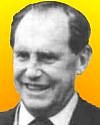
Died 29 Nov 1992 at age 86 (born 1 Jul 1906). quotes
French mathematician and educator known for his writings on abstract algebra, functional analysis, topology, and his theory of Lie groups. Dieudonné was one of the two main contributors to the Bourbaki series of texts. He began his mathematical career working on the analysis of polynomials. He worked in a wide variety of mathematical areas including general topology, topological vector spaces, algebraic geometry, invariant theory and the classical groups.
French mathematician and educator known for his writings on abstract algebra, functional analysis, topology, and his theory of Lie groups. Dieudonné was one of the two main contributors to the Bourbaki series of texts. He began his mathematical career working on the analysis of polynomials. He worked in a wide variety of mathematical areas including general topology, topological vector spaces, algebraic geometry, invariant theory and the classical groups.
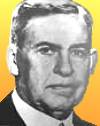
Died 29 Nov 1952 at age 85 (born 21 Nov 1867).
Russian-American chemist who was one of the first to investigate high-pressure catalytic reactions of hydrocarbons and who developed a process for manufacturing high-octane gasoline. While studying in Munich (1897) Ipatieff achieved the synthesis of isoprene, the basic unit of the rubber molecule. Upon return to Russia he worked particularly on the use of high-pressure catalysis and of metallic oxides as catalysts. With these techniques, he helped to establish the petrochemical industry in both pre- and post-revolutionary Russia. Before WW I, he had synthesized isooctane, and had polymerized ethylene. After moving to the U.S. (1930), Ipatieff showed how to convert low-octane gasolines into high-octane by 'cracking' hydrocarbons at high temperatures.
Russian-American chemist who was one of the first to investigate high-pressure catalytic reactions of hydrocarbons and who developed a process for manufacturing high-octane gasoline. While studying in Munich (1897) Ipatieff achieved the synthesis of isoprene, the basic unit of the rubber molecule. Upon return to Russia he worked particularly on the use of high-pressure catalysis and of metallic oxides as catalysts. With these techniques, he helped to establish the petrochemical industry in both pre- and post-revolutionary Russia. Before WW I, he had synthesized isooctane, and had polymerized ethylene. After moving to the U.S. (1930), Ipatieff showed how to convert low-octane gasolines into high-octane by 'cracking' hydrocarbons at high temperatures.
The life of a chemist: Memoirs of Vladimir N. Ipatieff, by Vladimir N. Ipatieff. - book suggestion.
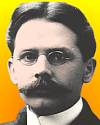
Died 29 Nov 1929 at age 58 (born 13 Dec 1870). quotes
American professor of English who was among the most popular nature writers of his time. His essays familiarized his readers with the natural world on their doorstep in the local woods and fields. In 1901 he published his first book, Wild Life Near Home. Rather than expansive vistas of the wilderness, Sharp wrote in the small-scale about flora and fauna of the back yard and pasture, such as the pines, persimmon, bees, chipmunks, muskrat and chick-a-dee. He urged people to take an interest in conservation, as in his bookThe Lay of the Land. Some of his books sold over one hundred thousand copies. He wrote many essays for popular magzines such as Atlantic Monthly. He died of a brain tumour with more than 20 books to his credit.«
American professor of English who was among the most popular nature writers of his time. His essays familiarized his readers with the natural world on their doorstep in the local woods and fields. In 1901 he published his first book, Wild Life Near Home. Rather than expansive vistas of the wilderness, Sharp wrote in the small-scale about flora and fauna of the back yard and pasture, such as the pines, persimmon, bees, chipmunks, muskrat and chick-a-dee. He urged people to take an interest in conservation, as in his bookThe Lay of the Land. Some of his books sold over one hundred thousand copies. He wrote many essays for popular magzines such as Atlantic Monthly. He died of a brain tumour with more than 20 books to his credit.«
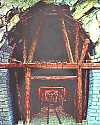
Died 29 Nov 1899 at age 53 (born 3 Sep 1846).
German civil engineer whose major achievement was enabling construction of the 12.5 mile (20-km) Simplon Tunnel, a major tunnel through the Alps between Italy and Switzerland. As a young engineer working on boring the St. Gotthard Tunnel between Italy and Switzerland, he learned about the difficulties involved, and the use of pneumatic drills and blasting. A hydraulic drill of his own design was used to drive the Arlberg Tunnel between Austria and Switzerland. To dig the Simplon Tunnel, he innovated by driving two separate tunnels 55-ft (17-m) apart, connected by crosshatches to provide for ventilation, temperature control and a circuit for debris-removal trains. He died early in the project, from the strain of overworking himself.«[Image: Simplon Tunnel during construction, model]
German civil engineer whose major achievement was enabling construction of the 12.5 mile (20-km) Simplon Tunnel, a major tunnel through the Alps between Italy and Switzerland. As a young engineer working on boring the St. Gotthard Tunnel between Italy and Switzerland, he learned about the difficulties involved, and the use of pneumatic drills and blasting. A hydraulic drill of his own design was used to drive the Arlberg Tunnel between Austria and Switzerland. To dig the Simplon Tunnel, he innovated by driving two separate tunnels 55-ft (17-m) apart, connected by crosshatches to provide for ventilation, temperature control and a circuit for debris-removal trains. He died early in the project, from the strain of overworking himself.«[Image: Simplon Tunnel during construction, model]
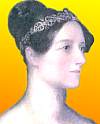
Died 29 Nov 1852 at age 36 (born 10 Dec 1815). quotes
(countess of Lovelace) English mathematician, the legitimate daughter of Lord Byron, was educated privately, studying mathematics and astronomy in addition to the more traditional topics. She seems to have developed an early ambition to be a famous scientist. After she met Charles Babbage in 1833, she began to assist in the development of his analytical engine and published notes on the work. She was one of the first to recognize the potential of computers and has been called the first computer programmer. (The programming language Ada is named after her.) Her other plans, such as a Calculus of the Nervous System, failed to mature - the obstacles in her way were simply too great. As a woman, for example, she was denied access to the Royal Society Library.[Note: Although the Encyclopedia Britannica gives a date of death as 29 Nov 1852, a memorial inside St Mary Magdalene's Church, Hucknall, where she is buried in the Byron Vault below, is inscribed 27 Nov 1852. She was interred on 3 Dec 1852.]
(countess of Lovelace) English mathematician, the legitimate daughter of Lord Byron, was educated privately, studying mathematics and astronomy in addition to the more traditional topics. She seems to have developed an early ambition to be a famous scientist. After she met Charles Babbage in 1833, she began to assist in the development of his analytical engine and published notes on the work. She was one of the first to recognize the potential of computers and has been called the first computer programmer. (The programming language Ada is named after her.) Her other plans, such as a Calculus of the Nervous System, failed to mature - the obstacles in her way were simply too great. As a woman, for example, she was denied access to the Royal Society Library.[Note: Although the Encyclopedia Britannica gives a date of death as 29 Nov 1852, a memorial inside St Mary Magdalene's Church, Hucknall, where she is buried in the Byron Vault below, is inscribed 27 Nov 1852. She was interred on 3 Dec 1852.]
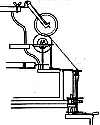
Died 29 Nov 1766 (born Apr 1700).
English inventor of machines for making files and rolling lead, with commercial support from the Birmingham inventor Lewis Paul. Wyatt invented and perfected the compound-lever weighing machine. After 1744, machines for weighing up to 5 tons were set up in several cities. He also engaged in road construction, bridge building, water-powered engines and canals. Wyatt contributed to the development of a powered machine for cotton spinning by rollers. This, first patented in 1738, was almost certainly Paul's idea, with Wyatt providing the technical skill. The principle was to draw the fibres through sets of rollers turning at different speeds. It had limited success for a time but was superseded by Richard Arkwright's water frame in the 1770s.[Image: detail from patent showing the rollers, spindle and bobbin]
English inventor of machines for making files and rolling lead, with commercial support from the Birmingham inventor Lewis Paul. Wyatt invented and perfected the compound-lever weighing machine. After 1744, machines for weighing up to 5 tons were set up in several cities. He also engaged in road construction, bridge building, water-powered engines and canals. Wyatt contributed to the development of a powered machine for cotton spinning by rollers. This, first patented in 1738, was almost certainly Paul's idea, with Wyatt providing the technical skill. The principle was to draw the fibres through sets of rollers turning at different speeds. It had limited success for a time but was superseded by Richard Arkwright's water frame in the 1770s.[Image: detail from patent showing the rollers, spindle and bobbin]
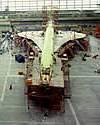
In 1962, the British Aircraft Corporation and the major French airline company, Sud Aviation, agreed to jointly design and manufacture a 100-seat supersonic passenger airliner. Two months later, in Jan 1963, a BAC executive suggested the name "Concord" after using a thesaurus, which was adopted as Concorde, reflecting the French spelling. In May 1963, it was decided each Concorde component would be single sourced, but with two final assembly lines, one in England at Filton and one in France at Toulouse. The U.K. was to manufacture 60 per cent of the engine and 40 per cent of the airframe. Within the decade, the first Concorde had broken the sound barrier on 1 Oct 1969. Passenger flights began on 21 Jan 1976.[Image: a production Concorde being assembled at Filton in 1973]
The Concorde Story: 21 Years in Service, by Christopher Orlebar. - book suggestion.
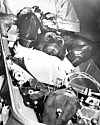
In 1961, the first U.S. satellite carrying an animal was launched by Mercury-Atlas 5 from Cape Canaveral. The passenger was Enos, a five-year-old chimpanzee, on a 2-orbit ride for 3-hr 20 min. The test was the prelude to John Glenn's orbital space flight. Enos experienced up to 7.6-G accelerative force during the launch. During the flight, Enos carried out the lever-pulling performance and psychological tests that he had trained on for the past 16-months. Enos performed the tasks well, and received a limited number of shocks for incorrect answers. Even when the input device failed and Enos received consecutive shocks even if the correct answer was given, the frustrated chimpanzee continued to give answers until the end of the flight.[Image: Enos wearing space suit and lying in Flight Couch]
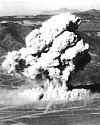
In 1951, the first U.S. underground atom bomb test - designated “Uncle” - was detonated. The low-yield 1.2 kt bomb was buried 17-ft sub-surface at Frenchman Flat, a 123-square-mile (320-sq.km.) dry lake bed at the Nevada Test Site (NTS). It was witnessed by members of Congress and military officers. The explosion, part of Operation Buster-Jangle, caused a hole 800-ft in diameter and 100-ft deep. Since WW II, five U.S. nuclear weapons tests had been conducted at distant islands in the Pacific Ocean. To reduce the extensive logistic effort, time and cost previously involved, testing was begun within the U.S. Although NTS originally was selected by criteria for atmospheric tests, it subsequently also was used for underground tests.
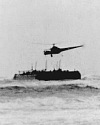
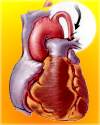
In 1944, the first “blue baby” operation was performed successfully at Johns Hopkins University by Dr. Alfred Blalock and pediatric cardiologist Helen B. Taussig. He devised the first subclavian-pulmonary artery anastomosis operation on the cyanotic (“blue-baby”) infant which had a hole in the wall between the heart's two major chambers (ventricles). The Blalock-Taussig shunt procedure joined an artery leaving the heart to an artery leading to the lungs, in an attempt to give the blood a second chance at oxygenation. Thousands of cyanotic children have been helped by the same operation until later surgeries repair the defect itself.«[Image: the Blalock-Taussig shunt shown after surgery on the heart.]
Partners of the Heart: Vivien Thomas and His Work With Alfred Blalock, by Vivien T. Thomas. - book suggestion.
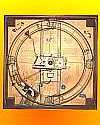
In 1932, a U.S. patent was issued for the first card game table with an automatic dealing device, to Laurens Hammond of Chicago, Ill. (No. 1,889,729), who later invented the Hammond organ. When cards were played in a recessed tray, four shuffled 13-card bridge hands were delivered to the players. A rotatary mechanism built within the square game table had an arm with a rubber tip to pick up and carry cards from the deck to the player. The destination hand was controlled by a serrated wheel with varied notch depths in 52 positions. A deal took about one minute. Marketed for a few years from 1932, the invention was an attempt to diversify Hammond's declining clock business during the depression-era, but sold poorly.«[Image: dealing mechanism shown with table top removed.]
(USPTO)
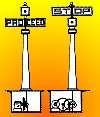
In 1910, the first U.S. patent for a traffic signal was issued to Ernest E. Sirrine for a "Street Traffic System" (No. 976,939). Sign arms were mounted crosswise on a post at a road intersection, rotating to showing "Stop" and "Proceed" signs alternately in each direction. The motor that turned the sign operate automatically or controlled by a policeman at the side of the road. Additional signs at intersections on parallel streets could be wired to operate simultaneously. The signs were on glass panels to be illuminated by electric lights behind them. M.H. Flaherty had filed a different design seven months earlier, but its patent was issued later as No. 991,964 on 9 May 1911.«
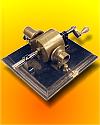
In 1877, Thomas Edison demonstrated his hand-cranked phonograph that recorded sound onto tinfoil cylinders. Although 12 Aug 1877, is often given as the date of this invention, it may have been only at the stage of a sketch, since Edison did not file for the patent until 24 Dec 1877. The idea came to Edison while working on a telegraph transmitter, when he noted that when the the tape of the machine was played at high speed, it gave off a noise resembling spoken words. After experimenting with a needle attached to the diaphragm of a telephone receiver to prick paper tape to record a message, his idea evolved to using a stylus on a tinfoil cylinder.«*
In 1814, The Times in London became the first newpaper to be printed by steam power. Its hand presses were replaced by new machines invented by Friedrich Koenig and Andreas Bauer. The replacement of hand presses by the new technology meant that for the first time it became possible to produce newspapers on a scale that could meet public demand. “A system of machinery almost organic has been devised…with such a velocity…that no less than eleven hundred sheets are impressed in one hour.”«
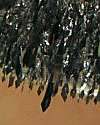
In 1813, a new substance - iodine - was announced at the French Institute by Nicolas Clément, in the name of its discoverer, Bernard Courtois. In 1811, Courtois had observed violet crystals with a metallic lustre that condensed from the vapour rising from the mother liquor of seaweed ash being leeched in sulphuric acid at his family's saltpetre business in Dijon. Although he made a preliminary investigation of this substance, he lacked the resources to fully research it. For this he turned to C.B. Desormes and Nicolas Clément. They suspected the substance was similar to chlorine, but confirmation of its nature as an element was made independently by Joseph-Louis Gay-Lussac, who named it iode, and Humphry Davy (1814).[Ref: Clément, N., Découverte d'une Substance Nouvelle dans l'Vareck par M.B. Courtois. Ann. Chim., 88, 304-310, 1813.] [Image: iodine crystals deposited from vapour on a col glass surface.]
In 1681, the Royal College of Physicians, Edinburgh, Scotland, was granted its charter by King Charles II.




