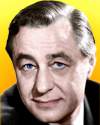
Born 6 Dec 1920; died 31 Aug 2002 at age 81. quotes
English chemist, who was awarded a share of the 1967 Nobel Prize for Chemistry, with Englishman Ronald Norrish and German Manfred Eigen, "for their studies of extremely fast chemical reactions, effected by disturbing the equlibrium by means of very short pulses of energy." Porter showed how the flash-photolysis method - a technique for observing the intermediate stages of very fast chemical reactions - can be extended and applied to many diverse problems of physics, chemistry and biology. An example is the examination of photosynthesis. He extended these techniques into the nanosecond and picosecond regions. Porter also made contributions to other techniques, particularly that of radical trapping and matrix stabilisation.«
English chemist, who was awarded a share of the 1967 Nobel Prize for Chemistry, with Englishman Ronald Norrish and German Manfred Eigen, "for their studies of extremely fast chemical reactions, effected by disturbing the equlibrium by means of very short pulses of energy." Porter showed how the flash-photolysis method - a technique for observing the intermediate stages of very fast chemical reactions - can be extended and applied to many diverse problems of physics, chemistry and biology. An example is the examination of photosynthesis. He extended these techniques into the nanosecond and picosecond regions. Porter also made contributions to other techniques, particularly that of radical trapping and matrix stabilisation.«

Born 6 Dec 1919; died 24 May 1974 at age 54.
Clyde Lorrain Cowan was an American physicist is best known for co-discovering the free neutrino (1956), a breakthrough that confirmed a key prediction of particle physics. Working with Frederick Reines at Los Alamos, Cowan designed and carried out an experiment at the Savannah River Plant that provided the first direct detection of neutrinos via inverse beta decay. Although the neutrino is an abundant particle, it is challenging to detect, because it is very penetrating, having no mass, no charge, and moves at extremely high velocity. Their work established neutrinos as real particles rather than theoretical constructs and opened new pathways in nuclear and astrophysical research. Cowan later contributed to nuclear instrumentation and taught univeristy physics.«[Click on “neutrino” above to link to an excellent explanatory video by Cowan himself.]
Clyde Lorrain Cowan was an American physicist is best known for co-discovering the free neutrino (1956), a breakthrough that confirmed a key prediction of particle physics. Working with Frederick Reines at Los Alamos, Cowan designed and carried out an experiment at the Savannah River Plant that provided the first direct detection of neutrinos via inverse beta decay. Although the neutrino is an abundant particle, it is challenging to detect, because it is very penetrating, having no mass, no charge, and moves at extremely high velocity. Their work established neutrinos as real particles rather than theoretical constructs and opened new pathways in nuclear and astrophysical research. Cowan later contributed to nuclear instrumentation and taught univeristy physics.«[Click on “neutrino” above to link to an excellent explanatory video by Cowan himself.]
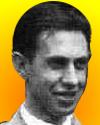
Born 6 Dec 1900; died 31 Oct 1988 at age 87. quotes
Dutch-American physicist who, with Samuel A. Goudsmit, proposed the concept of electron spin (Jan 1925) - a fourth quantum number which was a half integer. This provided Wolfgang Pauli's anticipated “fourth quantum number.” In their experiment, a horizontal beam of silver atoms travelling through a vertical magnetic field was deflected in two directions according to the interaction of their spin (either “up” or “down”) with the magnetic field. This was the first demonstration of this quantum effect, and an early confirmation of quantum theory. As well as fundamental work on quantum mechanics, Uhlenbeck worked on atomic structure, the kinetic theory of matter and extended Boltzmann's equation to dense gases.«
Dutch-American physicist who, with Samuel A. Goudsmit, proposed the concept of electron spin (Jan 1925) - a fourth quantum number which was a half integer. This provided Wolfgang Pauli's anticipated “fourth quantum number.” In their experiment, a horizontal beam of silver atoms travelling through a vertical magnetic field was deflected in two directions according to the interaction of their spin (either “up” or “down”) with the magnetic field. This was the first demonstration of this quantum effect, and an early confirmation of quantum theory. As well as fundamental work on quantum mechanics, Uhlenbeck worked on atomic structure, the kinetic theory of matter and extended Boltzmann's equation to dense gases.«
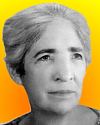
Born 6 Dec 1888; died 3 Aug 1969 at age 80. quotes
U.S. zoologist who wrote two laboratory manuals and a comprehensive six-volume reference work, The Invertebrates, (1940-67) covering most phyla of its subject. This work, important for its organization, description and classification of invertebrates, is a reference still used today. Hyman continued her laboratory studies throughout her life and published some 145 scientific papers. The sixth volume was her last, completed at the age of seventy-eight, when she was suffering from Parkinson's disease.
U.S. zoologist who wrote two laboratory manuals and a comprehensive six-volume reference work, The Invertebrates, (1940-67) covering most phyla of its subject. This work, important for its organization, description and classification of invertebrates, is a reference still used today. Hyman continued her laboratory studies throughout her life and published some 145 scientific papers. The sixth volume was her last, completed at the age of seventy-eight, when she was suffering from Parkinson's disease.
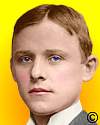
Born 6 Dec 1863; died 27 Dec 1914 at age 51. quotes
American chemist who invented the inexpensive electrolytic method of extracting aluminium from its ore, enabling the wide commercial use of this metal. While a young chemist, he experimented in a woodshed, intent upon finding a method for separating aluminum from its ore. At first, he was unsuccessful, but then realized that he needed a nonaqueous solvent for the aluminum oxide during electrolysis. On 23 Feb 1886, Hall found that molten cryolite (the mineral sodium aluminum fluoride) was a suitable solvent and using carbon electrodes with home-made batteries, he produced his first small globules of aluminum. By 1914, Hall's process had brought the cost of aluminium, once a precious metal used for fine jewelry, down to 18 cents a pound.« more
American chemist who invented the inexpensive electrolytic method of extracting aluminium from its ore, enabling the wide commercial use of this metal. While a young chemist, he experimented in a woodshed, intent upon finding a method for separating aluminum from its ore. At first, he was unsuccessful, but then realized that he needed a nonaqueous solvent for the aluminum oxide during electrolysis. On 23 Feb 1886, Hall found that molten cryolite (the mineral sodium aluminum fluoride) was a suitable solvent and using carbon electrodes with home-made batteries, he produced his first small globules of aluminum. By 1914, Hall's process had brought the cost of aluminium, once a precious metal used for fine jewelry, down to 18 cents a pound.« more
Made of Aluminum: A Life of Charles Martin Hall, by Rosamond McPherson Young. - book suggestion.
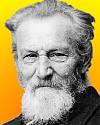
Born 6 Dec 1848; died 2 May 1925 at age 76.
Austrian astronomer who was a prolific discoverer of asteroids, 122 in all, beginning with Asteroid 136 Austria (on 18 Mar 1874, using a 6" refractor) to Asteroid 1073 Gellivara in 1923 - all by visual observation, without the aid of photography. In 1883, he joined the expedition of the French academy to observe the total solar eclipse on May 6 of that year. During the eclipse, he searched for the putative planet Vulcan, which was supposed to circle the sun within the orbit of Mercury. In addition to observing the eclipse, Palisa collected insects for the Natural History Museum in Vienna. He also prepared two catalogs containing the positions of almost 4,700 stars. He remains the most successful visual discoverer in the history of minor planet research.«
Austrian astronomer who was a prolific discoverer of asteroids, 122 in all, beginning with Asteroid 136 Austria (on 18 Mar 1874, using a 6" refractor) to Asteroid 1073 Gellivara in 1923 - all by visual observation, without the aid of photography. In 1883, he joined the expedition of the French academy to observe the total solar eclipse on May 6 of that year. During the eclipse, he searched for the putative planet Vulcan, which was supposed to circle the sun within the orbit of Mercury. In addition to observing the eclipse, Palisa collected insects for the Natural History Museum in Vienna. He also prepared two catalogs containing the positions of almost 4,700 stars. He remains the most successful visual discoverer in the history of minor planet research.«
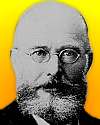
Born 6 Dec 1835; died 19 Nov 1910 at age 74.
German organic chemist who is famous for his extensive work synthesizing of organic compounds in the late 19th century. The action of sodium on organic compounds discovered by Wurtz (1817–84), was extended by Fittig using a mixture of an aromatic and alkyl haloid to produce homologues of benzene. Fittig prepared pinacones (which he named), diphenyl, phenanthrene (1872), coumarone (1883), toluene (with Tollens in 1864), and many other substances. He separated several aromatic compounds from coal tar, studied the reactions of unsaturated acids. Fittig proposed the correct structures for the quinones and (1871, with Ira Remsen) for the alkaloid piperine that gives the spice black pepper its taste and smell .«
German organic chemist who is famous for his extensive work synthesizing of organic compounds in the late 19th century. The action of sodium on organic compounds discovered by Wurtz (1817–84), was extended by Fittig using a mixture of an aromatic and alkyl haloid to produce homologues of benzene. Fittig prepared pinacones (which he named), diphenyl, phenanthrene (1872), coumarone (1883), toluene (with Tollens in 1864), and many other substances. He separated several aromatic compounds from coal tar, studied the reactions of unsaturated acids. Fittig proposed the correct structures for the quinones and (1871, with Ira Remsen) for the alkaloid piperine that gives the spice black pepper its taste and smell .«
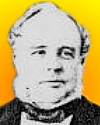
British industrialist who manufactured rolled-steel plates armour-plate for naval warships. Brown set up his steel business in 1844, and by 1846, he developed a conical steel spring buffer for railway carriages which cornered the market in Britain. His business grew rapidly and on 1 Jan 1856, he consolidated his operations at the Atlas Works, Sheffield. Henry Bessemer, who moved next door, licenced his Steel Convertor process to Brown for production of steel rails. In 1860, John Brown turned his attention to the production of armour plate by rolling instead of a forging process which was used elsewhere. He set up a rolling mill and started to produce the material which, by 1867 was used in three quarters of the British Navy's armour plated ships.«[Note: Date of death is 27 Dec 1896 in Encyclopedia Britannica, but gravestone says 28 Dec 1896)
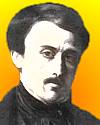
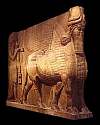
French consul and archaeologist whose momentous discovery of the palace of the Assyrian king Sargon II at Dur Sharrukin (modern Khorsabad), Iraq, initiated the large-scale field archaeology of ancient Mesopotamia. As a French diplomat working in Mosul, a city on the River Tigris, Botta's duty included excavation. In 1843, Botta began to excavate a large mound in Khorsabad about 15 miles northeast of Nineveh. He uncovered the first of the Assyrian palaces, the monumental palace of Sargon II who ruled from 721 to 705 BC. His palace was built on a scale never till then attempted by an Assyrian monarch, covering an entire city within walls a mile long with huge stone sculptures.[Image right: Winged human-headed bull from Khorsabad]
Born 6 Dec 1786; died 30 May 1864 at age 77.
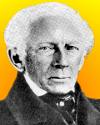
Swiss mechanic and prolific inventor of machine tools and textile-making machinery. In 1824 he established a small factory at Bolton, Lancashire, to manufacture machinery that made the process from carding to spinning wool continuous. This machinery was widely adopted in England and the U.S. and is said to have revolutionized the industry. He worked on the improvement of the conveyor belt, and contrived new methods so that it could transport heavier material and for a greater variety of uses. He was an exceedingly versatile inventor, and worked on machine tools, a gear-making machine, spinning machines, water wheels, steam engines, locomotives, and a traveling crane. He is credited with inventing the cylinder with opposed pistons for steam engines.
Swiss mechanic and prolific inventor of machine tools and textile-making machinery. In 1824 he established a small factory at Bolton, Lancashire, to manufacture machinery that made the process from carding to spinning wool continuous. This machinery was widely adopted in England and the U.S. and is said to have revolutionized the industry. He worked on the improvement of the conveyor belt, and contrived new methods so that it could transport heavier material and for a greater variety of uses. He was an exceedingly versatile inventor, and worked on machine tools, a gear-making machine, spinning machines, water wheels, steam engines, locomotives, and a traveling crane. He is credited with inventing the cylinder with opposed pistons for steam engines.
Born 6 Dec 1778; died 9 May 1850 at age 71. quotes
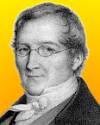
French chemist best known for his work on gases. In 1805, by exploding together given volumes of hydrogen and oxygen, Gay-Lussac discovered they combined in ratio 2:1 by volume to form water. By 1808, after researches using other gases, he formulated his famous law of combining volumes - that when gases combine their relative volumes bear a simple numerical relation to each other (e.g., 1:1, 2:1) and to their gaseous product (under constant pressure and temperature). He developed techniques of quantitative chemical analysis, confirmed that iodine was an element, discovered cyanogen, improved the process for manufacturing sulphuric acid, prepared potassium and boron (1808). He made two balloon ascents to study the atmosphere.
French chemist best known for his work on gases. In 1805, by exploding together given volumes of hydrogen and oxygen, Gay-Lussac discovered they combined in ratio 2:1 by volume to form water. By 1808, after researches using other gases, he formulated his famous law of combining volumes - that when gases combine their relative volumes bear a simple numerical relation to each other (e.g., 1:1, 2:1) and to their gaseous product (under constant pressure and temperature). He developed techniques of quantitative chemical analysis, confirmed that iodine was an element, discovered cyanogen, improved the process for manufacturing sulphuric acid, prepared potassium and boron (1808). He made two balloon ascents to study the atmosphere.
Gay-Lussac: Scientist and Bourgeois, by Maurice P. Crosland. - book suggestion.
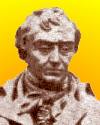
Born 6 Dec 1742; died 16 Jan 1806 at age 63.
French surgeon and chemist who in 1790 developed the process for making soda ash (sodium carbonate) from common salt (sodium chloride). This process, which bears his name, became one of the most important industrial chemical processes of the 19th century. In the Leblanc process, salt was treated with sulphuric acid to obtain salt cake (sodium sulphate). This was then roasted with limestone or chalk and coal to produce black ash, which consisted primarily of sodium carbonate and calcium sulphide. The sodium carbonate was dissolved in water and then crystallized. The Leblanc process was simple, cheap, and direct, but because of the disruption of the French Revolution, he profitted little from it. He died by suicide in 1806.
French surgeon and chemist who in 1790 developed the process for making soda ash (sodium carbonate) from common salt (sodium chloride). This process, which bears his name, became one of the most important industrial chemical processes of the 19th century. In the Leblanc process, salt was treated with sulphuric acid to obtain salt cake (sodium sulphate). This was then roasted with limestone or chalk and coal to produce black ash, which consisted primarily of sodium carbonate and calcium sulphide. The sodium carbonate was dissolved in water and then crystallized. The Leblanc process was simple, cheap, and direct, but because of the disruption of the French Revolution, he profitted little from it. He died by suicide in 1806.
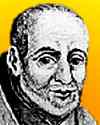
Born 6 Dec 1586; died 21 May 1670 at age 83.
Italian astronomer who, in approximately 1616, designed one of the earliest reflecting telescopes, antedating those of James Gregory and Sir Isaac Newton. A professor at the Jesuit College in Rome, Zucchi developed an interest in astronomy from a meeting with Johannes Kepler. With this telescope Zucchi discovered the belts of the planet Jupiter (1630) and examined the spots on Mars (1640). He also demonstrated (in 1652) that phosphors generate rather than store light. His book Optica philosophia experimentalis et ratione a fundamentis constituta (1652-56) inspired Gregory and Newton to build improved telescopes.
Italian astronomer who, in approximately 1616, designed one of the earliest reflecting telescopes, antedating those of James Gregory and Sir Isaac Newton. A professor at the Jesuit College in Rome, Zucchi developed an interest in astronomy from a meeting with Johannes Kepler. With this telescope Zucchi discovered the belts of the planet Jupiter (1630) and examined the spots on Mars (1640). He also demonstrated (in 1652) that phosphors generate rather than store light. His book Optica philosophia experimentalis et ratione a fundamentis constituta (1652-56) inspired Gregory and Newton to build improved telescopes.

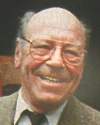
Died 6 Dec 1993 at age 80 (born 10 Aug 1913).
German physicist who developed the Paul trap, an electromagnetic device that captures ions and holds them long enough for study and precise measurement of their properties. During the 1950s he developed the so-called Paul trap as a means of confining and studying electrons. The device consists of three electrodes - two end caps and an encircling ring. The ring is connected to an oscillating potential. The direction of the electric field alternates; for half the time the electron is pushed from the caps to the ring and for the other half it is pulled from the ring and pushed towards the caps. For his work he shared the 1989 Nobel Prize for Physics with Hans Georg Dehmelt and Norman F. Ramsey.
German physicist who developed the Paul trap, an electromagnetic device that captures ions and holds them long enough for study and precise measurement of their properties. During the 1950s he developed the so-called Paul trap as a means of confining and studying electrons. The device consists of three electrodes - two end caps and an encircling ring. The ring is connected to an oscillating potential. The direction of the electric field alternates; for half the time the electron is pushed from the caps to the ring and for the other half it is pulled from the ring and pushed towards the caps. For his work he shared the 1989 Nobel Prize for Physics with Hans Georg Dehmelt and Norman F. Ramsey.
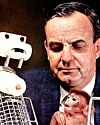
Died 6 Dec 1981 at age 71 (born 31 Oct 1910). quotes
American psychologist who studied the social behaviour and development of monkeys. His research in the areas of learning, motivation, and affection extended understanding in general human and child psychology. He experimented with 6-12 hours old infant monkeys separated from their mothers then provided with an inanimate substitute “mother” made either of wire mesh or cloth providing warmth and food. However, as adults, these deprived monkeys exhibited strange behavioral patterns. Some females were negligent as mothers that did not nurse or comfort their young. The other mothers were abusive, biting or injuring their young, even sometimes causing the baby's death. In 1967, he was awarded the National Medal of Science.
American psychologist who studied the social behaviour and development of monkeys. His research in the areas of learning, motivation, and affection extended understanding in general human and child psychology. He experimented with 6-12 hours old infant monkeys separated from their mothers then provided with an inanimate substitute “mother” made either of wire mesh or cloth providing warmth and food. However, as adults, these deprived monkeys exhibited strange behavioral patterns. Some females were negligent as mothers that did not nurse or comfort their young. The other mothers were abusive, biting or injuring their young, even sometimes causing the baby's death. In 1967, he was awarded the National Medal of Science.
Love at Goon Park: Harry Harlow and the Science of Affection, by Deborah Blum. - book suggestion.
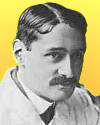
Died 6 Dec 1957 at age 76 (born 8 Nov 1881).
French engineer and aviator who made important pioneering contributions to the beginnings of heavier-than-air flight in Europe. He built a copy of the glider made in 1902 by the brothers Orville and Wilbur Wright. Since he distrusted their steering technique, so he made an innovation by inventing the aileron (a movable airfoil at the edge of the wing). He used a hand operated wheel to control them. Used symmetrically, they provided longitudinal stability. Used differentially, they controlled lateral stability. In 1907, he built one of the first monoplanes, REP-1, more noteworthy for its innovative 7-cylinder radial engine. It was the first plane with a completely enclosed fuselage. His longest flight in this aircraft was only 600 m (2,600 feet). He also invented a new type of fuel pump.
French engineer and aviator who made important pioneering contributions to the beginnings of heavier-than-air flight in Europe. He built a copy of the glider made in 1902 by the brothers Orville and Wilbur Wright. Since he distrusted their steering technique, so he made an innovation by inventing the aileron (a movable airfoil at the edge of the wing). He used a hand operated wheel to control them. Used symmetrically, they provided longitudinal stability. Used differentially, they controlled lateral stability. In 1907, he built one of the first monoplanes, REP-1, more noteworthy for its innovative 7-cylinder radial engine. It was the first plane with a completely enclosed fuselage. His longest flight in this aircraft was only 600 m (2,600 feet). He also invented a new type of fuel pump.
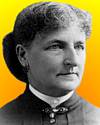
Died 6 Dec 1931 at age 97 (born 19 May 1834).
American botanist who spent sixty years meticulously collecting, classifying and drawing the flora of Maine increased the scientific knowledge of the state, and contributed to a number of botanical collections. She began this work in 1870, and extensively traveled the state for 38 years. She enthusiastically explored the depths of wilderness areas to discover new specimens. The exquisite, accurately detailed watercolor drawings she made of the collected specimens were highly regarded by academic botanists. In 1895, she helped found the Josselyn Botanical Society of Maine. She described her fieldwork in American Naturalist in 1881, 1882 and 1901. Her watercolor drawings have been preserved in the 16 folio volumes she gave to Bowdoin College Library in 1908.«
American botanist who spent sixty years meticulously collecting, classifying and drawing the flora of Maine increased the scientific knowledge of the state, and contributed to a number of botanical collections. She began this work in 1870, and extensively traveled the state for 38 years. She enthusiastically explored the depths of wilderness areas to discover new specimens. The exquisite, accurately detailed watercolor drawings she made of the collected specimens were highly regarded by academic botanists. In 1895, she helped found the Josselyn Botanical Society of Maine. She described her fieldwork in American Naturalist in 1881, 1882 and 1901. Her watercolor drawings have been preserved in the 16 folio volumes she gave to Bowdoin College Library in 1908.«
Died 6 Dec 1930 at age 72 (born 7 Jul 1858).
Sidney Abram Weltmer was an American author who founded the Weltmer Institute of Suggestive Therapeutics (19 Feb 1897), offering to gullible patients healing based on thought transference and “magnetic healing.” Medical professionals and theologians denounced him for quackery. He offered instruction in his methods by correspondence courses. When the U.S. Postmaster General identified (1900) Welmer's medical self-help by mail as an outright fraudulent scheme, mail delivery to his institute was blocked. Remarkably, the U.S. Supreme Court decided against the Post Office. He was still publically called a charlatan, and the Missouri State Supreme Court ruled against him in a libel case he pursued to silence his vocal critics. Welmer wrote books, published many pamphlets and Weltner's Magazine promoting his pseudoscience, and managed to keep operating his Institute until his death.«
Sidney Abram Weltmer was an American author who founded the Weltmer Institute of Suggestive Therapeutics (19 Feb 1897), offering to gullible patients healing based on thought transference and “magnetic healing.” Medical professionals and theologians denounced him for quackery. He offered instruction in his methods by correspondence courses. When the U.S. Postmaster General identified (1900) Welmer's medical self-help by mail as an outright fraudulent scheme, mail delivery to his institute was blocked. Remarkably, the U.S. Supreme Court decided against the Post Office. He was still publically called a charlatan, and the Missouri State Supreme Court ruled against him in a libel case he pursued to silence his vocal critics. Welmer wrote books, published many pamphlets and Weltner's Magazine promoting his pseudoscience, and managed to keep operating his Institute until his death.«
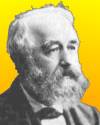
Died 6 Dec 1893 at age 77 (born 7 Jul 1816).
Swiss astronomer and astronomical historian. Wolf's main contribution was the discovery of the 11 year sunspot cycle and he was the codiscoverer of its connection with geomagnetic activity on Earth. In 1849 he devised a system now known as Wolf's sunspot numbers. This system is still in use for studying solar activity by counting sunspots and sunspot groups. In mathematics, Wolf wrote on prime number theory and geometry, then later on probability and statistics - a long paper discussed Buffon's needle experiment. He estimated π by Monte Carlo methods.
Swiss astronomer and astronomical historian. Wolf's main contribution was the discovery of the 11 year sunspot cycle and he was the codiscoverer of its connection with geomagnetic activity on Earth. In 1849 he devised a system now known as Wolf's sunspot numbers. This system is still in use for studying solar activity by counting sunspots and sunspot groups. In mathematics, Wolf wrote on prime number theory and geometry, then later on probability and statistics - a long paper discussed Buffon's needle experiment. He estimated π by Monte Carlo methods.
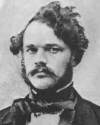
Died 6 Dec 1892 at age 75 (born 13 Dec 1816).
German electrical engineer who played an important role in originating the modern electrical industry. Siemens combined his skill as a successful inventor and an entrepreneur beginning with his firm, Siemens & Halske. Its first work was in the telegraph industry, building Germany's first important telegraph line, then others in Europe and Asia. The company he expanded more broadly into electric technology became the present multinational Siemens company. His birth name was Ernst Werner Siemens, until ennobled as Werner von Siemens. His younger brother, Sir William Siemens, moved to England, invented the regenerative fuel system for the steel-making furnace and was also active in electrical technology.«
German electrical engineer who played an important role in originating the modern electrical industry. Siemens combined his skill as a successful inventor and an entrepreneur beginning with his firm, Siemens & Halske. Its first work was in the telegraph industry, building Germany's first important telegraph line, then others in Europe and Asia. The company he expanded more broadly into electric technology became the present multinational Siemens company. His birth name was Ernst Werner Siemens, until ennobled as Werner von Siemens. His younger brother, Sir William Siemens, moved to England, invented the regenerative fuel system for the steel-making furnace and was also active in electrical technology.«
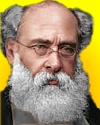

English novelist who introduced the familiar red pillar boxes in Britain as street-side receptacles of letters for collection by the Post Office. Trollope was a Surveyor's Clerk (prior to his fame as a novelist) who was sent in 1851 to inspect the Channel Islands postal services. Postal boxes had previously been used in Belgium and France. Thus, Trollope was not their inventor, but he recommended their use at Jersey's capital, St. Helier, where there was no receiving office. After approval by the Postmaster- General, the first of four pillar boxes was installed there 23 Nov 1852. The first mainland pillar box appeared the next year in Carlisle, England and the first six in London on 11 Apr 1855.**[Image, right: The hexagonal box as designed and cast by St. Helier blacksmith John Vaudin (source)]
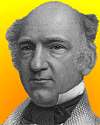
Died 6 Dec 1879 at age 65 (born 2 Apr 1814). quotes
American industrialist whose inventive work transformed American textile production, making lace, durable carpets, and such goods, more widely available. At 23, Erastus Bigelow invented his first loom for weaving coach lace (20 Apr 1837). He soon developed power looms capable of producing many types of figured fabrics, including tapestry and ingrain carpeting. On 26 May 1842, he secured a patent for a power carpet loom, and on10 Apr 1845he received the first U.S. patent for machinery to produce gingham. In 1861, Bigelow helped found the Massachusetts Institute of Technology (M.I.T.) as part of a 21-member committee to promote industrial science and apply knowledge to practical needs.« more
American industrialist whose inventive work transformed American textile production, making lace, durable carpets, and such goods, more widely available. At 23, Erastus Bigelow invented his first loom for weaving coach lace (20 Apr 1837). He soon developed power looms capable of producing many types of figured fabrics, including tapestry and ingrain carpeting. On 26 May 1842, he secured a patent for a power carpet loom, and on10 Apr 1845he received the first U.S. patent for machinery to produce gingham. In 1861, Bigelow helped found the Massachusetts Institute of Technology (M.I.T.) as part of a 21-member committee to promote industrial science and apply knowledge to practical needs.« more
Broadlooms and Businessmen: A History of the Bigelow-Sanford Carpet Company, by John S. Ewing. - book suggestion.
Died 6 Dec 1872 at age 72 (born 26 Aug 1800).
French naturalist who was a leading advocate of the idea of the spontaneous generation of life from nonliving matter.
French naturalist who was a leading advocate of the idea of the spontaneous generation of life from nonliving matter.
Died 6 Dec 1867 at age 73 (born 15 Apr 1794).
French physiologist who was the first to demonstrate the general functions of the major portions of the vertebrate brain.
French physiologist who was the first to demonstrate the general functions of the major portions of the vertebrate brain.
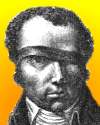
Died 6 Dec 1805 at age 50 (born 4 Aug 1755).
French inventor who devised a method of manufacturing pencil leads by mixing a finely powdered graphite with finely ground clay particles, baked, and used encased in wood. His innovation was prompted when imported plumbago supplies were disrupted by war. He was the first to use graphite - and that is still used as the basis for making pencil leads today. Using different ratios of clay to graphite varies the hardness of the pencil lead. He was commissioned by Napoleon as chief of the balloon corps in Egypt, where he invented ways to improvise tools and machines necessary to provide bread, cloth, munitions, surgical instruments and engineers' tools. As a youth, he had worked as a portrait painter. He lost his left eye in a chemistry laboratory accident.«
French inventor who devised a method of manufacturing pencil leads by mixing a finely powdered graphite with finely ground clay particles, baked, and used encased in wood. His innovation was prompted when imported plumbago supplies were disrupted by war. He was the first to use graphite - and that is still used as the basis for making pencil leads today. Using different ratios of clay to graphite varies the hardness of the pencil lead. He was commissioned by Napoleon as chief of the balloon corps in Egypt, where he invented ways to improvise tools and machines necessary to provide bread, cloth, munitions, surgical instruments and engineers' tools. As a youth, he had worked as a portrait painter. He lost his left eye in a chemistry laboratory accident.«
The Pencil: A History of Design and Circumstance, by Henry Petroski. - book suggestion.
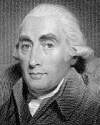
Died 6 Dec 1799 at age 71 (born 16 Apr 1728). quotes
Scottish chemist and physicist who experimented with "fixed air" (carbon dioxide), discovered bicarbonates and identified latent heat. He lectured in chemistry, anatomy at the University of Glasgow, while also a physician. From heated magnesia alba (magnesium carbonate), Black collected a gas, carbon dioxide, different from common air. He published Experiments Upon Magnesia Alba, Quicklime, and Some Other Alcaline Substances (1756). Carbon dioxide was also released by fermentation, respiration, and burning charcoal so he assumed it was in the atmosphere. He also observed that ice melts without change of temperature, due to heat that becomes "hidden" - latent heat - and determined "specific heat" for heated of materials.[DSB gives date of death 6 Dec 1799. EB gives 10 Nov 1799.] more
Scottish chemist and physicist who experimented with "fixed air" (carbon dioxide), discovered bicarbonates and identified latent heat. He lectured in chemistry, anatomy at the University of Glasgow, while also a physician. From heated magnesia alba (magnesium carbonate), Black collected a gas, carbon dioxide, different from common air. He published Experiments Upon Magnesia Alba, Quicklime, and Some Other Alcaline Substances (1756). Carbon dioxide was also released by fermentation, respiration, and burning charcoal so he assumed it was in the atmosphere. He also observed that ice melts without change of temperature, due to heat that becomes "hidden" - latent heat - and determined "specific heat" for heated of materials.[DSB gives date of death 6 Dec 1799. EB gives 10 Nov 1799.] more
In 1998, astronauts aboard the space shuttle Endeavour in orbit over the southern Pacific Ocean used a robot arm to begin assembly of the International Space Station. Endeavour was launched on 4 Dec 1998, and reached the already orbitting Zarya, a 22-ton, a U.S.-funded, Russian-built module launched earlier. In preparation, on 5 Dec, Unity was removed from the cargo bay and connected to Endeavour’s docking system. Unity, the first U.S.-built component of the ISS was built as a six-sided connecting module, 18-ft long and 15-ft diameter with six berthing ports. On 6 Dec 1998, Zarya was connected to Unity at the port opposite the Shuttle and cables, connectors and hand rails were attached during three space walks. By 7 Dec, Unity was ready and powered up.«
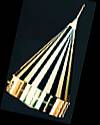
In 1958, the U.S. army's moon probe, Pioneer 3, was launched, but due to depletion of propellant, fell back to Earth after reaching 65,000 miles into space. Although it failed in its first objective of a lunar flyby, there was still scientific success because its detection equipment provided two almost complete cross-sections of space surrounding the Earth. There are two sharply defined bands of radiation girdling the earth. The first one lies between 1,400 and 3,400 miles from the earth’s surface; the second is between 8,000 and 12,000 miles out. Dr. James Van Allen reported that radiation in the heart of each belt was measured and compared with the count in between the bands.«
In 1957, America's first attempt at putting a satellite into orbit failed when the Vanguard rocket carrying it blew up on the launch pad at Cape Canaveral, Florida. With a series of rumbles audible for miles around, the vehicle, having risen about four feet into the air, suddenly sank. Falling against the firing structure, fuel tanks rupturing as it did so, the rocket toppled to the ground on the northeast or ocean side of the structure in a roaring, rolling, ball-shaped volcano of flame.
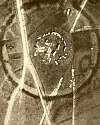
In 1906, the first aerial photographs of Stonehenge - the first aerial photographs of any British archaeological monument - were displayed at the London premises of the Society of Antiquaries. They were taken from a hydrogen balloon, probably around late Sep 1906, by 2nd Lieutenant Philip Sharpe of the Royal Engineers' Balloon Section. He had been stationed since 15 Sep 1906 at Bulford Camp on Salisbury Plain, very close to Stonehenge. The Royal Engineers began using hydrogen balloons in 1878 (not hot-air), and had been experimenting with aerial photography from at least 1881. The first intentional aerial photo for archaeological purposes was taken in Jun 1899, of excavations at the Forum in Rome.«
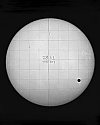
In 1882, the transit of Venus across the sun was photographed on a series of glass plate negatives made by Amherst College astronomer David Peck Todd. He used a solar photographic telescope (made by the renowned optical firm Alvan Clark & Sons) stationed on the summit of Mount Hamilton, California, where the Lick Observatory was under construction. Of the photos, 147 survived, having been archived in the mountain vault. A century later, they were retrieved and an animation made from them premiered at the International Astronomical Union's general assembly in Sydney in Jul 2003. This is perhaps the most complete surviving record of a historical transit of Venus, dating from the time when Chester Arthur was president of the United States.
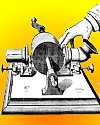
In 1877, Thomas Edison demonstrated the first sound recording, reciting “Mary had a Little Lamb” at his Menlo Park Laboratory, making the first surviving recording of the human voice. (The word “Halloo” may have been recorded in July on an early paper model derived from his 1876 telegraph repeater, but the paper has not survived). John Kruesi built this first practical machine 1-6 Dec, from a sketch given to him by Edison that was made 29 Nov (not on “Aug. 12” that Edison mistakenly wrote on another sketch in 1917). When Kruesi heard Edison's first words 6 Dec, he exclaimed “Gott in Himmel!” (“God in Heaven”). Edison was granted patent 200,521 on 19 Feb 1878.
more
Edison: A Biography, by Matthew Josephson. - book suggestion.
In 1866, the first water supply tunnel for a U.S. city was completed for Chicago, Illinois. The Chicago Lake Tunnel extended 10,587 feet under Lake Michigan to an inlet crib. It was 5 feet in diameter. The city engineer was Ellis Sylvester Chesbrough at the time of construction. Work started on 17 Mar 1864 at a final cost of $380,784. Water was not allowed into the tunnel until 25 Mar 1867. The pumping station with the standpipe tower still stands at the intersection of Michigan Blvd and Chicago Ave., having escaped destruction in the 1871 Chicago fire.
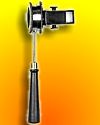
In 1850, Hermann von Helmholtz (1821-94) announced his invention, the ophthalmoscope, to the Berlin Physical Society. His description Beschreibung eines Augenspiegels zur Untersuchung der Netzhaut im lebenden Auge (An Eye mirror for the Investigation of the Retina of the Living Eye) was published in Oct 1851. Using his invention he looked through one side of a glass plate while light was reflected into the subject's eye from the other. It revolutionized ophthalmology, enabling a view inside a person’s eye to see the details of the living retina, diagnose eye diseases and prevent blindness. It pioneered endoscopy, making new information available in a way as dramatic as the invention of the telescope or micrscope opened new vistas.*
Hermann von Helmholtz and the Foundations of Nineteenth-Century Science, by David Cahan. - book suggestion.
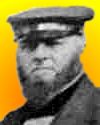
In 1830, the U.S. Naval Observatory, one of the oldest scientific agencies in the U.S., was established as the Depot of Charts and Instruments in Washington, D.C. Its primary mission was to care for the U.S. Navy's chronometers, charts and other navigational equipment. The first instrument installed was a 30-inch portable transit. Lieutenant Louis M. Goldsborough was the first officer in charge of the observatory. Today, the U.S. Naval Observatory is the preeminent authority in the areas of time keeping and celestial observing; determining and distributing the timing and astronomical data required for accurate navigation and fundamental astronomy.[Image: Officer-in-Charge of the Depot of Charts and Instruments 6 Dec 1830 - 11 Feb 1833, Lt Louis M. Goldsborough.]
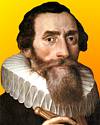
In 1631, the transit of Venus occurred as first predicted by Johannes Kepler. He correctly predicted that an ascending node transit of Venus would occur in Dec 1631, but no-one observed it - due to the fact that it occurred after sunset for most of Europe. Kepler himself died in 1630. He not only predicted this particular transit but also worked out that transits of Venus involve a cyclical period of approximately 120 years. When such a transit is observed, Venus appears as a small black circle moving across the face of the Sun. None occurred during the twentieth century, but the next happened on 8 Jun 2004.




