Born 24 May 1942; died 30 Dec 2024 at age 82.
Scottish-American organic chemist who shared the 2016 Nobel Prize in Chemistry “for the design and synthesis of molecular machines.”
Scottish-American organic chemist who shared the 2016 Nobel Prize in Chemistry “for the design and synthesis of molecular machines.”
Born 24 May 1906; died 25 Aug 1969 at age 63. quotes
American geologist who made the first comprehensive attempt at explaining the phenomenon of seafloor spreading (1960). This revived Alfred Wegener's earlier theory of continental drift. Together, these provided an interpretation of the earth's crust in terms of plate tectonics. The surface of the globe is not continuous. Rather, it is broken into a number of huge plates that float on the molten rock under the crust, moved over eons of geologic time by convective currents driven by earth's internal heat. With this motion these plates rub against, collide with, or separate from other plates. Thus the nature of earthquakes and volcanoes could be explained, plus the existence of ridges of young rock mapped around the globe under the ocean where the sea floor was spreading.
American geologist who made the first comprehensive attempt at explaining the phenomenon of seafloor spreading (1960). This revived Alfred Wegener's earlier theory of continental drift. Together, these provided an interpretation of the earth's crust in terms of plate tectonics. The surface of the globe is not continuous. Rather, it is broken into a number of huge plates that float on the molten rock under the crust, moved over eons of geologic time by convective currents driven by earth's internal heat. With this motion these plates rub against, collide with, or separate from other plates. Thus the nature of earthquakes and volcanoes could be explained, plus the existence of ridges of young rock mapped around the globe under the ocean where the sea floor was spreading.
Born 24 May 1903; died 26 Mar 1988 at age 84.
Canadian heart surgeon, noted chiefly for his development, in 1950, of a surgical procedure for correction of impaired coronary circulation. In the Vineberg operation one end of an artery in the chest, called the internal mammary artery, is freed up. The side branches to the artery, like tributaries flowing off a river, are cut to allow blood to flow freely from them. The artery then is snaked under the surface of the heart muscle, and each time the heart beats, blood from the branches oozes into the heart muscle, nourishing it. Over time new vessels grow and supply blood to the myocardium. The first clinical procedure was carried out at the Royal Victoria Hospital in Montreal in 1950. Modern bypass surgery pre-empted it in the 1960s.
Canadian heart surgeon, noted chiefly for his development, in 1950, of a surgical procedure for correction of impaired coronary circulation. In the Vineberg operation one end of an artery in the chest, called the internal mammary artery, is freed up. The side branches to the artery, like tributaries flowing off a river, are cut to allow blood to flow freely from them. The artery then is snaked under the surface of the heart muscle, and each time the heart beats, blood from the branches oozes into the heart muscle, nourishing it. Over time new vessels grow and supply blood to the myocardium. The first clinical procedure was carried out at the Royal Victoria Hospital in Montreal in 1950. Modern bypass surgery pre-empted it in the 1960s.
Born 24 May 1898; died 20 May 1986 at age 87.
American physician who founded pediatric cardiology. She pioneered using X-rays and fluoroscopy to identify heart defects in newborns. With surgeon Alfred Blalock, she developed a surgical procedure for treating blue baby syndrome. After 1944, when the first Blalock-Taussig operation was developed, many blue babies were saved from invalidism or death. The Blalock-Taussig shunt (a surgical shunt made between the pulmonary artery and the aorta as treatment for tricuspid and pulmonary atresia) is named for her. In the early 1960s, Taussig was a major person in revealing and stopping the harm caused by the sedative drug thalidamide, which when taken by pregnant woman caused terrible deformations of their to newborn children.
American physician who founded pediatric cardiology. She pioneered using X-rays and fluoroscopy to identify heart defects in newborns. With surgeon Alfred Blalock, she developed a surgical procedure for treating blue baby syndrome. After 1944, when the first Blalock-Taussig operation was developed, many blue babies were saved from invalidism or death. The Blalock-Taussig shunt (a surgical shunt made between the pulmonary artery and the aorta as treatment for tricuspid and pulmonary atresia) is named for her. In the early 1960s, Taussig was a major person in revealing and stopping the harm caused by the sedative drug thalidamide, which when taken by pregnant woman caused terrible deformations of their to newborn children.
Born 24 May 1891; died 19 Sep 1971 at age 80.
William Foxwell Albright was a Chilean-American archaeologist who excavated primarily biblical sites and an expert on the culture and history of the Near East. He spent a decade from 1919 at the American School of Oriental Reseach in Jerusalem. During this time, he directed excavations in Palestine at Gibeah, Tell Beit Mirsim, Bethel and Ader. After further work, he produced three volumes of Excavation of Tell Beit Mirsim. His most famous work, From the Stone Age to Christianity (1940) traced the growth of man's belief in God. In 1947, Albright was the first outside expert to declare that the Dead Sea scrolls were genuine. He called their discovery "the most momentous discovery in modern time pertaining to the Bible."«
William Foxwell Albright was a Chilean-American archaeologist who excavated primarily biblical sites and an expert on the culture and history of the Near East. He spent a decade from 1919 at the American School of Oriental Reseach in Jerusalem. During this time, he directed excavations in Palestine at Gibeah, Tell Beit Mirsim, Bethel and Ader. After further work, he produced three volumes of Excavation of Tell Beit Mirsim. His most famous work, From the Stone Age to Christianity (1940) traced the growth of man's belief in God. In 1947, Albright was the first outside expert to declare that the Dead Sea scrolls were genuine. He called their discovery "the most momentous discovery in modern time pertaining to the Bible."«
Archaeology and the Religion of Israel, by William Foxwell Albright et al. - book suggestion.
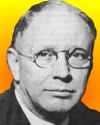
Born 24 May 1884; died 10 May 1952 at age 67.
Clark Leonard Hull was an American psychologist who developed an influential theory of behaviour in which he identified the variables that intervene between stimulus and response. He made experimental studies on learning, that he presented in his book, Aptitude Testing (1928) and attempted to structure psychological theory following a deductive method of reasoning similar to that used in geometry. He proposed that from a set of postulates about psychology, logical conclusions could be deduced and tested. Hull was the first known psychologist to apply quantitative experimental methods to the investigation of hypnosis. His last books were Essentials of Behavior (1951) and A Behavior System (1952).«
Clark Leonard Hull was an American psychologist who developed an influential theory of behaviour in which he identified the variables that intervene between stimulus and response. He made experimental studies on learning, that he presented in his book, Aptitude Testing (1928) and attempted to structure psychological theory following a deductive method of reasoning similar to that used in geometry. He proposed that from a set of postulates about psychology, logical conclusions could be deduced and tested. Hull was the first known psychologist to apply quantitative experimental methods to the investigation of hypnosis. His last books were Essentials of Behavior (1951) and A Behavior System (1952).«
Hypnosis and Suggestibility: An Experimental Approach, by Clark W. Hull. - book suggestion.
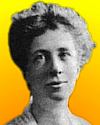
Born 24 May 1878; died 2 Jan 1972 at age 93.
(née Moller) American efficiency expert, who as wife of Frank Bunker Gilbreth, contracting engineer, together developed the method of time-and-motion study. Upon her marriage, 19 Oct 1904, she became a partner in her husband's fledgling motion study business. As a contractor, he was already applying ideas to improve the speed of building. After a few years, they applied motion study to industry. Each step of work activity was to be studied in detail (employing motion pictures for analysis) to determine the optimal way to execute a given task. By choosing a method of least exertion, the employees would be more healthy, more productive, and economically improve the business. She continued after her husband's death in 1924.
(née Moller) American efficiency expert, who as wife of Frank Bunker Gilbreth, contracting engineer, together developed the method of time-and-motion study. Upon her marriage, 19 Oct 1904, she became a partner in her husband's fledgling motion study business. As a contractor, he was already applying ideas to improve the speed of building. After a few years, they applied motion study to industry. Each step of work activity was to be studied in detail (employing motion pictures for analysis) to determine the optimal way to execute a given task. By choosing a method of least exertion, the employees would be more healthy, more productive, and economically improve the business. She continued after her husband's death in 1924.
Making Time: Lillian Moller Gilbreth..., by Jane Lancaster. - book suggestion.
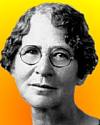
Born 24 May 1870; died 12 Jul 1938 at age 68.
Ynes Enriquetta Julietta Mexia was an American botanical collector, who developed her passion for botany and fieldwork in her 50s, and yet was able to make about 150,000 collections in 12 years on seven expeditions. She was aged 55 when she made her first collecting trip. She accompanied Stanford's Assistant Herbarium Curator, Roxanna Ferris, in Mexico. Her activity was remarkable, as she spent several years exploring for specimens in remote reaches of Central and South Americas. At age 59, she began a 2½ year expedition in Peru and Brazil which included a three-month period trapped by floods with her team in a 600-m deep gorge which they escaped eventually by building a raft and running the river and its rapids.«
Ynes Enriquetta Julietta Mexia was an American botanical collector, who developed her passion for botany and fieldwork in her 50s, and yet was able to make about 150,000 collections in 12 years on seven expeditions. She was aged 55 when she made her first collecting trip. She accompanied Stanford's Assistant Herbarium Curator, Roxanna Ferris, in Mexico. Her activity was remarkable, as she spent several years exploring for specimens in remote reaches of Central and South Americas. At age 59, she began a 2½ year expedition in Peru and Brazil which included a three-month period trapped by floods with her team in a 600-m deep gorge which they escaped eventually by building a raft and running the river and its rapids.«
Ynes Mexia: Botanist And Adventurer, by Durlynn Anema. - book suggestion.

1898
Born 24 May 1855; died 20 Apr 1940 at age 84.
English anthropologist who is recognised as one the founders of modern British anthropology as an observational science. He began as a professor of zoology, and in 1888 spent eight months studying the coral reefs and marine zoology of the Torres Straits. He thereby became interested in the folk-lore, ceremonies and beliefs of the islanders and began to rescue such fast-perishing knowledge by collecting information from the elders. He organised the Cambridge Anthropological Expedition to the Torres Strait Islands in 1898, as he saw a need in the field of ethnology to make intensive studies in limited areas. Upon his return, he changed disciplines from biology to ethnology at the Cambridge University Museum.«*
English anthropologist who is recognised as one the founders of modern British anthropology as an observational science. He began as a professor of zoology, and in 1888 spent eight months studying the coral reefs and marine zoology of the Torres Straits. He thereby became interested in the folk-lore, ceremonies and beliefs of the islanders and began to rescue such fast-perishing knowledge by collecting information from the elders. He organised the Cambridge Anthropological Expedition to the Torres Strait Islands in 1898, as he saw a need in the field of ethnology to make intensive studies in limited areas. Upon his return, he changed disciplines from biology to ethnology at the Cambridge University Museum.«*
Magic and Fetishism, by Alfred Cort Haddon. - book suggestion.
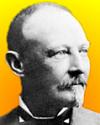
Born 24 May 1846; died 23 Feb 1934 at age 87.
Danish paleontologist who was prominent in the study of Bronze and Iron ages and Oriental influence on prehistoric Europe. In the late 1800s, he discovered and excavated burial mounds in central Jutland, Denmark, that represented the first evidence of the Neolithic battle-axe cultures of the later Middle Neolithic Periods in Scandinavia. He identified chronological sequences of the single graves within these barrows. The antiquities he recovered from them included well-proportioned battle-axes, flint axes, amber beads, beakers, and cups.«
Danish paleontologist who was prominent in the study of Bronze and Iron ages and Oriental influence on prehistoric Europe. In the late 1800s, he discovered and excavated burial mounds in central Jutland, Denmark, that represented the first evidence of the Neolithic battle-axe cultures of the later Middle Neolithic Periods in Scandinavia. He identified chronological sequences of the single graves within these barrows. The antiquities he recovered from them included well-proportioned battle-axes, flint axes, amber beads, beakers, and cups.«
Born 24 May 1803; died 29 Jul 1857 at age 54. quotes
French zoologist (Prince) who was a nephew of Napoleon Bonaparte. From 1822 to 1828, he was in the United States, where he wrote four volumes of American Ornithology (1825-33) adding to the body of work left unfinished by Alexander Wilson at his death. Bonaparte's scientific reputation was established by these volumes, with which he had the assistance of the artist Titian Peale, who found and painted birds for him from the Rocky Mountains and Florida. In 1848-49, Bonaparte's scientific career experienced a brief hiatus when he took part in the political agitation for Italian independence against the Austrians and he was forced to leave Italy in July 1849. He went to Holland and then to France.
French zoologist (Prince) who was a nephew of Napoleon Bonaparte. From 1822 to 1828, he was in the United States, where he wrote four volumes of American Ornithology (1825-33) adding to the body of work left unfinished by Alexander Wilson at his death. Bonaparte's scientific reputation was established by these volumes, with which he had the assistance of the artist Titian Peale, who found and painted birds for him from the Rocky Mountains and Florida. In 1848-49, Bonaparte's scientific career experienced a brief hiatus when he took part in the political agitation for Italian independence against the Austrians and he was forced to leave Italy in July 1849. He went to Holland and then to France.
The Emperor of Nature: Charles-Lucien Bonaparte and his World, by Patricia Tyson Stroud. - book suggestion.
Born 24 May 1794; died 6 Mar 1866 at age 71. quotes
English scholar and philosopher known for his survey of the scientific method and for creating scientific words. He founded mathematical crystallography and developed a revision of Friedrich Mohs's classification of minerals. He created the words scientist and physicist by analogy with the word artist. They soon replaced the older term natural philosopher. Other useful words were coined to help his friends: biometry for John Lubbock; Eocine, Miocene and Pliocene for Charles Lyell; and for Michael Faraday, anode, cathode, diamagnetic, paramagnetic, and ion (whence the sundry other particle names ending -ion). In metereology, Whewell devised a self-recording anemometer. He was second only to Isaac Newton for work on tidal theory. He died as a result of being thrown from his horse.«*
English scholar and philosopher known for his survey of the scientific method and for creating scientific words. He founded mathematical crystallography and developed a revision of Friedrich Mohs's classification of minerals. He created the words scientist and physicist by analogy with the word artist. They soon replaced the older term natural philosopher. Other useful words were coined to help his friends: biometry for John Lubbock; Eocine, Miocene and Pliocene for Charles Lyell; and for Michael Faraday, anode, cathode, diamagnetic, paramagnetic, and ion (whence the sundry other particle names ending -ion). In metereology, Whewell devised a self-recording anemometer. He was second only to Isaac Newton for work on tidal theory. He died as a result of being thrown from his horse.«*
William Whewell: Theory of Scientific Method, by William Whewell. - book suggestion.
Born 24 May 1790; died 24 Jan 1868 at age 77. quotes
English physician, physiologist and chemist was the younger brother of Humphry Davy. From school in Penzance, John went to London (1808) to assist Humphry in the chemistry laboratory at the Royal Institution. From 1810-1814, John trained as a physician at the University of Edinburgh. During this time, he was first to discover the highly toxic phosgene gas, COCl₂, which he named and characterised. He then began a career as an army doctor, including many years abroad, and eventually became inspector general of hospitals. While abroad, he observed and recorded the local culture, studied and dissected animals, and analyzed minerals. He wrote Memoirs of the Life of Sir Humphry Davy (1836) and other works on his brother’s scientific career.«[phosgene named from Greek phōs ‘light’ + -gen, with reference to its original production by the action of sunlight on chlorine and carbon monoxide.
English physician, physiologist and chemist was the younger brother of Humphry Davy. From school in Penzance, John went to London (1808) to assist Humphry in the chemistry laboratory at the Royal Institution. From 1810-1814, John trained as a physician at the University of Edinburgh. During this time, he was first to discover the highly toxic phosgene gas, COCl₂, which he named and characterised. He then began a career as an army doctor, including many years abroad, and eventually became inspector general of hospitals. While abroad, he observed and recorded the local culture, studied and dissected animals, and analyzed minerals. He wrote Memoirs of the Life of Sir Humphry Davy (1836) and other works on his brother’s scientific career.«[phosgene named from Greek phōs ‘light’ + -gen, with reference to its original production by the action of sunlight on chlorine and carbon monoxide.
Memoirs of the Life of Sir Humphry Davy, by John Davy. - book suggestion.
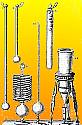
Born 24 May 1686; died 16 Sep 1736 at age 50. quotes
Gabriel Daniel Fahrenheit was a German-Dutch physicist and instrument maker (meteorological). He lived in Holland for most of his life. He invented the alcohol thermometer (1709) and mercury thermometer (1714) and developed the Fahrenheit temperature scale. For the zero of his scale he used the temperature of an equal ice-salt mixture; 30° for the freezing point of water; and 90° for normal body temperature. Later, he adjusted to 32° for the freezing point of water and 212° for the boiling point of water, the interval between the two being divided into 180 parts. He also invented a hygrometer to measure relative humidity and experimented with other liquids discovering that each liquid had a different boiling point that would change with atmospheric pressure.
Gabriel Daniel Fahrenheit was a German-Dutch physicist and instrument maker (meteorological). He lived in Holland for most of his life. He invented the alcohol thermometer (1709) and mercury thermometer (1714) and developed the Fahrenheit temperature scale. For the zero of his scale he used the temperature of an equal ice-salt mixture; 30° for the freezing point of water; and 90° for normal body temperature. Later, he adjusted to 32° for the freezing point of water and 212° for the boiling point of water, the interval between the two being divided into 180 parts. He also invented a hygrometer to measure relative humidity and experimented with other liquids discovering that each liquid had a different boiling point that would change with atmospheric pressure.
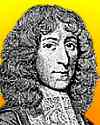
Born 24 May 1640; died Sep 1679. quotes
English physiologist and chemist who, about a hundred years before Joseph Priestley and Antoine-Laurent Lavoisier, identified spiritus nitroaereus (oxygen) as a distinct atmospheric entity. He further recognized the role of oxygen in the combustion of metals. His medical writings include a remarkably correct anatomical description of respiration.[Date of birth 24 May 1640 given by EB and Chambers Dict. of Sci., but DSB gives Dec 1641. Date of death Sep 1679 given by Chambers and DSB but EB gives Oct 1679.]
English physiologist and chemist who, about a hundred years before Joseph Priestley and Antoine-Laurent Lavoisier, identified spiritus nitroaereus (oxygen) as a distinct atmospheric entity. He further recognized the role of oxygen in the combustion of metals. His medical writings include a remarkably correct anatomical description of respiration.[Date of birth 24 May 1640 given by EB and Chambers Dict. of Sci., but DSB gives Dec 1641. Date of death Sep 1679 given by Chambers and DSB but EB gives Oct 1679.]
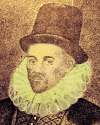
Born 24 May 1544; died 10 Dec 1603 at age 59. quotes
English scientist, the “father of electrical studies” and a pioneer researcher into magnetism, who spent years investigating magnetic and electrical attractions. Gilbert coined the names of electric attraction, electric force, and magnetic pole. He became the most distinguished man of science in England during the reign of Queen Elizabeth I. Noting that a compass needle not only points north and south, but also dips downward, he thought the Earth acts like a bar magnet. Like Copernicus, he believed the Earth rotates on its axis, and that the fixed stars were not all at the same distance from the earth. Gilbert thought it was a form of magnetism that held planets in their orbits.[EB gives death date as 10 Dec (Old Style 30 Nov) 1603.]
English scientist, the “father of electrical studies” and a pioneer researcher into magnetism, who spent years investigating magnetic and electrical attractions. Gilbert coined the names of electric attraction, electric force, and magnetic pole. He became the most distinguished man of science in England during the reign of Queen Elizabeth I. Noting that a compass needle not only points north and south, but also dips downward, he thought the Earth acts like a bar magnet. Like Copernicus, he believed the Earth rotates on its axis, and that the fixed stars were not all at the same distance from the earth. Gilbert thought it was a form of magnetism that held planets in their orbits.[EB gives death date as 10 Dec (Old Style 30 Nov) 1603.]

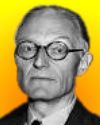
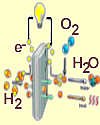
English mechanical engineerwho pioneered the first modern hydrogen-oxygen fuel cells, which electrochemically convert air and fuel directly into electricity. The principle was first observed by Sir William Grove (1842) when he supplied oxygen and hydrogen to platinum electrodes immersed in sulphuric acid and a current was produced in an external circuit. It remained a curiosity until Bacon began serious research in the early 1940s for proposed application in submarines. By 1959 he developed a successful six-kilowatt fuel cell. When fuel cells were used by U.S. Apollo space vehicles, they could both provide in-flight power and clean drinking water, the by-product of the electrochemical reaction.«[Image: fuel cell schematic (source)]

Died 24 May 1974 at age 54 (born 6 Dec 1919).
Clyde Lorrain Cowan was an American physicist is best known for co-discovering the free neutrino (1956), a breakthrough that confirmed a key prediction of particle physics. Working with Frederick Reines at Los Alamos, Cowan designed and carried out an experiment at the Savannah River Plant that provided the first direct detection of neutrinos via inverse beta decay. Although the neutrino is an abundant particle, it is challenging to detect, because it is very penetrating, having no mass, no charge, and moves at extremely high velocity. Their work established neutrinos as real particles rather than theoretical constructs and opened new pathways in nuclear and astrophysical research. Cowan later contributed to nuclear instrumentation and taught univeristy physics.«[Click on “neutrino” above to link to an excellent explanatory video by Cowan himself.]
Clyde Lorrain Cowan was an American physicist is best known for co-discovering the free neutrino (1956), a breakthrough that confirmed a key prediction of particle physics. Working with Frederick Reines at Los Alamos, Cowan designed and carried out an experiment at the Savannah River Plant that provided the first direct detection of neutrinos via inverse beta decay. Although the neutrino is an abundant particle, it is challenging to detect, because it is very penetrating, having no mass, no charge, and moves at extremely high velocity. Their work established neutrinos as real particles rather than theoretical constructs and opened new pathways in nuclear and astrophysical research. Cowan later contributed to nuclear instrumentation and taught univeristy physics.«[Click on “neutrino” above to link to an excellent explanatory video by Cowan himself.]
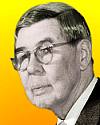
Died 24 May 1964 at age 77 (born 7 Aug 1886).
(Louis) Alan Hazeltine was an American electrical engineer and physicist who invented the neutrodyne circuit, which made commercial radio possible. As one of the few experts in radio engineering at the outbreak of WW I, he designed a radio receiver for the U.S. Navy. In 1922, Hazeltine invented the "neutrodyne" receiver to eliminate the squeaks and howls of the early radio receivers, using neutralizing capacitors to in effect siphon off the high pitched squeals. The Hazeltine amplifier neutralized the grid-to-plate capacitative coupling which was a cause of oscillation in triode amplifiers. The neutrodyne was the first commercial receiver suited to general public reception. By 1927 some ten million of these receivers were being used by listeners in the U.S.
(Louis) Alan Hazeltine was an American electrical engineer and physicist who invented the neutrodyne circuit, which made commercial radio possible. As one of the few experts in radio engineering at the outbreak of WW I, he designed a radio receiver for the U.S. Navy. In 1922, Hazeltine invented the "neutrodyne" receiver to eliminate the squeaks and howls of the early radio receivers, using neutralizing capacitors to in effect siphon off the high pitched squeals. The Hazeltine amplifier neutralized the grid-to-plate capacitative coupling which was a cause of oscillation in triode amplifiers. The neutrodyne was the first commercial receiver suited to general public reception. By 1927 some ten million of these receivers were being used by listeners in the U.S.
Died 24 May 1883 at age 72 (born 8 Jul 1810).
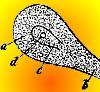
German-Swiss physiologist who was the first person to note the digestive activity of pancreatic juice (1844)*. With Purkinje, one of his medical school teachers, he discovered in 1834 that certain cells on the inner surface of the oviduct contained cilia, tiny threadlike structures that beat in coordinated fashion independently of the nervous system and thus force the ovum to move along the tube. They investigated the occurence of ciliated cells elesewhere among vertebrates)*. In 1836, he identified the neuron nucleus and nucleolus. In 1841 he was the first to observe one type of Trypanozoma (they are now know to cause sleeping sickness). The Valentin knife was named after him.* [Image: Drawing of a neuron by Valentin, showing the protoplasm (a), the nucleus (c), the nucleolus (d) and the axonal cone (b)]
German-Swiss physiologist who was the first person to note the digestive activity of pancreatic juice (1844)*. With Purkinje, one of his medical school teachers, he discovered in 1834 that certain cells on the inner surface of the oviduct contained cilia, tiny threadlike structures that beat in coordinated fashion independently of the nervous system and thus force the ovum to move along the tube. They investigated the occurence of ciliated cells elesewhere among vertebrates)*. In 1836, he identified the neuron nucleus and nucleolus. In 1841 he was the first to observe one type of Trypanozoma (they are now know to cause sleeping sickness). The Valentin knife was named after him.* [Image: Drawing of a neuron by Valentin, showing the protoplasm (a), the nucleus (c), the nucleolus (d) and the axonal cone (b)]
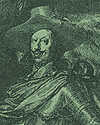
Died 24 May 1670 at age 59 (born 14 Jul 1610).
Ferdinand II de Medici, Grand Duke of Tuscany was an Italian monarch and science patronwas Grand Duke from 1621. His eager and liberal patronage of men of science included Nicolaus Steno and Galileo, and he helped suppost the foundation of the Accademia del Cimento (1657). He also devised a sealed thermometer which, unlike Galileo's open one, was not affected by changes in air pressure. It was to him that Galileo dedicated the lens with which he had discovered the satellites of Jupiter and he also made him a gift of the armed lodestone. J. W. Blaeu dedicated to him one of his globes of the fifth type. Ferdinand II was also a patron of Robert Dudley.
Ferdinand II de Medici, Grand Duke of Tuscany was an Italian monarch and science patronwas Grand Duke from 1621. His eager and liberal patronage of men of science included Nicolaus Steno and Galileo, and he helped suppost the foundation of the Accademia del Cimento (1657). He also devised a sealed thermometer which, unlike Galileo's open one, was not affected by changes in air pressure. It was to him that Galileo dedicated the lens with which he had discovered the satellites of Jupiter and he also made him a gift of the armed lodestone. J. W. Blaeu dedicated to him one of his globes of the fifth type. Ferdinand II was also a patron of Robert Dudley.
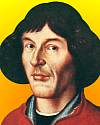
Died 24 May 1543 at age 70 (born 19 Feb 1473). quotes
Polish astronomer who proposed the heliocentric model of the Solar System in which all the planets orbit around the Sun at the centre. He recognized that the Earth is a planet which, besides orbiting the Sun annually, also turns once daily on its own axis; and that very slow, long-term changes in the direction of this axis account for the precession of the equinoxes. He understood the immense distance of the stars. He wrote his ideas in a book, De Orbium Coelestium Revolutionibus. Although completed in 1530, he requested it be published after his death in 1543. Until 1758, the Roman Catholic Church banned the book as contrary to religious dogma.« more
Polish astronomer who proposed the heliocentric model of the Solar System in which all the planets orbit around the Sun at the centre. He recognized that the Earth is a planet which, besides orbiting the Sun annually, also turns once daily on its own axis; and that very slow, long-term changes in the direction of this axis account for the precession of the equinoxes. He understood the immense distance of the stars. He wrote his ideas in a book, De Orbium Coelestium Revolutionibus. Although completed in 1530, he requested it be published after his death in 1543. Until 1758, the Roman Catholic Church banned the book as contrary to religious dogma.« more
The Book Nobody Read: Chasing the Revolutions of Nicolaus Copernicus, by Owen Gingerich. - book suggestion.

In 2002, the Falkirk Wheel - the world's first rotating boat lift - was opened by Queen Elizabeth II. It moves boats between the Union and Forth & Clyde Canals in Scotland, linking the two canals for the first time in decades since 1933 when the original flight of eleven locks were closed and filled-in due to lack of use. More recently, the canals have been revitalized for recreational boating. The Falkirk Wheel was installed at a cost of £84.5 million to carry boats to and from the Union Canal aqueduct elevated 115 feet above the lower basin. This extraordinary engineering feat efficiently handles loads of 300 tons at each end.
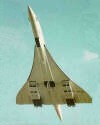
In 1976, the Concorde began regular passenger service between Europe and Washington D.C., the first U.S. destination for transatlantic supersonic flights by Air France and British Airways. Scheduled Concorde flights started on 21 Jan 1976 for London-Bahrain and Paris-Rio routes. On 17 Dec 1975, the U.S. House of Representatives voted by 199 to 198 to put a six month ban on Concorde landings in the America, mainly due to citizens alarmed about sonic booms. The ban was lifted on 4 Feb 1976, but only allowed supersonic flight over the ocean. When on 3 Mar 1976, New York banned Concorde landings locally, Washington D.C. was chosen for the first route. New York finally conceded, and service to there began 22 Nov 1977.«
The Concorde Story: 21 Years in Service, by Christopher Orlebar. - book suggestion.
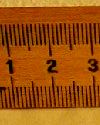
In 1965, Hansard, the official record of all English parliamentary debates, recorded in an Appendix the statement by Mr Jay (President of the Board of Trade) saying he was impressed by the case for adoption of the metric system—by a long-term, gradual, voluntary process—and was arranging for the British Standards Institution to investigate. Eventually, as a member of the European Common Market, the transition to the metric system for trade and commerce became obligatory.
The Measure of All Things: The Seven-Year Odyssey and Hidden Error That Transformed the World, by Ken Alder. - book suggestion.
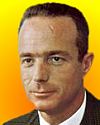
In 1962, astronaut Scott Carpenter became the second American to orbit the Earth as he flew aboard Aurora 7. He made three revolutions of the earth, reaching a maximum altitude of 164 miles. The spacecraft landed in the Atlantic Ocean about 1000 miles southeast of Cape Canaveral after 4 hr 54 min of flight time. Shortly afterwards, he also became an aquanaut. In summer 1965, he participated in the Navy's Sealab II program off the coast of La Jolla, California. During the 45-day experiment, Carpenter spent 30 days living and working on the ocean floor. He was team leader for two of the three ten-man teams of Navy and civilian divers who conducted deep sea diving activities based in a sea floor habitat at a depth of 205 ft.
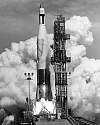

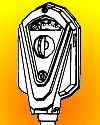
(USPTO)
In 1938, a U.S. patent was issued for a Coin Controlled Parking Meter to Carl C. McGee of Oklahoma City, Oklahoma (No. 2,118,318). The invention was designed for "measuring the time of occupancy or use of parking or other space, for the use of which it is desirous an incidental charge be made upon a time basis." One or more coins were to be inserted, and a signal would indicate when a predetermined period of time after that had elapsed. (In this patent description, this time signal was designed to disappear from view when time expired.) The coin remained in an operative position until a clockwork spring was properly wound to drive the mechanism. The display was graduated to show time remaining.
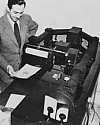
In 1935, the first spectrophotometer was sold by General Electric Co., assignee of the patent issued at the beginning of the year to the inventor, Arthur Cobb Harvey (“Photometric Apparatus,” 8 Jan 1935, U.S. No. 1,987,441). This electronic machine was capable of distinguishing and charting two million different shades of colour. The apparatus used a photo-electric device to receive light alternately from a sample and from a standard for comparison. Its important innovation was to eliminate any need for the two beams (from sample and from standard) to travel different optical paths which in previous designs could introduce inaccuracies when one path varied from the other, caused for example by dirt on a lens in one path.«[Image: a "GE-Hardy" double-beam recording spectrophotometer photographed in 1938 showing Walt Disney with the instrument at his studios.]
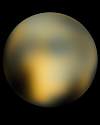
NASA 2010
In 1930, Pluto was announced to be the name chosen for the newly-discovered ninth planet (previously known as Planet X) by Roger Lowell Putnam, trustee of Lowell Observatory, Flagstaff, Arizona, (and nephew of the late Percival Lowell who had established the observatory and initiated the search there for the ninth planet). Pluto was located on 18 Feb 1930* by Clyde Tombaugh at that institution. Putnam was quoted on the front page of the New York Times, saying, “We felt in making our choice of a name for Planet X, that the line of Roman gods for whom the other planets are named should not be broken, and we believe that Dr. Lowell, whose researches led directly to its discovery, would have felt the same way.” Pluto in mythology was the ruler of the underworld, regions of darkness. “P.L.” is also Lowell's monogram.«[* The date “located on” was previously shown here, in error, as 13 Mar 1930. The error was typed on 13 Mar 2013, and corrected on 21 May 2023.]
In 1921, Thomas A. Edison received one of his various patents concerning a “Storage Battery” (U.S. No. 1,379,088) and another relating to the “Production of Thin Metallic Sheets or Foils” (No. 1,379,089).
In 1892, Thomas A. Edison was issued three patents for an “Electric Locomotive” and a fourth patent relating to an “Electric Railway” (U.S. Nos. 475,491 -4).
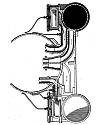
(USPTO)
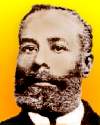
McCoy
The Real McCoy, by Portia P. James. - book suggestion.
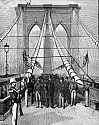
In 1883, Brooklyn Bridge was formally opened. It crossed the East River, New York City, USA, with a length of 1,600 feet in a single span, with clearance beneath for navigation. What was then regarded as the greatest engineering feat still stands in service today, and remains the world’s only stone-towered, steel cabled bridge. Twice the size of the Niagara Suspension Bridge and four times the longest non-extension spans ever attempted, the total length of this colossal structure is 6,927 ft. The road bed is 80 feet wide, and at an elevation of 186 feet above high water. Building began on 2 Jan 1870. John Roebling, and after his death his son Washington Roebling, worked on its construction for 13 years.«
more
The Great Bridge: The Epic Story of the Building of the Brooklyn Bridge, by David McCullough. - book suggestion.
(USPTO)
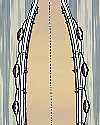
In 1881, a patent for a "Life Saving Apparatus" was issued to black American inventor, James Wormley (U.S. No. 242,091). The invention "consists in a float or number of floats attached to the free end of a rope, which at that end has one or more eyes and runs out as the ship moves through the water, in combination with a lock and cast-off mechanism consisting essentially of a sliding rod at the ship's side, provided with projecting arms, which, in their normal position, are passed through each eye in the rope, but which disengage therefrom by a movement of the sliding rod which is controlled, through a suitable intervening mechanism, by a hand-lever at the ship's wheel."«[Image: detail from patent diagram showing midsection of vessel showing floats stored along ship's bulwarks.]
The Inventive Spirit of African Americans: Patented Ingenuity, by Patricia Carter Sluby. - book suggestion.
In 1869, John Wesley Powell, a 35-year-old one-armed Civil War veteran and nine men set out in four boats on the Green River from Green River Station, Wyoming. Those that stayed with the expedition would reach the Colorado River on a journey through the Grand Canyon. Four men left the group along the way. Powell and the remaining five adventurers travelled 1,000 miles in three months, surviving the treacherous rapids. He had satisfied his wish to know more of the geology and natural history of the canyon. He returned in 1871 for a second trip to produce a map and material for scientific publications. By Mar 1881, he began 13 years as director of the U.S. Geological Survey.«
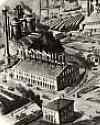
In 1865, the first Bessemer steel rails ever rolled in the U.S. were a few rolled at the North Chicago Rolling Mill from hammered blooms made at the Wyandotte rolling mill from ingots of steel made at the experimental steel works at Wyandotte, Mich. The American Iron and Steel Association was in session in Chicago at that time, and several of its members witnessed the rolling of these rails. The North Chicago Rolling Mill was the first large iron and steel plant in the Chicago area, founded in 1857. The first steel rails rolled for a business order in the U.S., were made at the Cambria Iron Company, at Johnstown, Pa., in Aug 1867, from ingots manufactured at the works of the Pennsylvania Steel Company, at Harrisburg, Pa.*[Image: detail from engraving of the much larger area covered by the factory buildings.] more
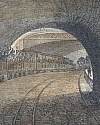
In 1862, the first trial run of a train was made through the Metropolitan underground line, the world's first underground passenger railway. The public opening was held on 10 Jan 1863. The four mile, 33-min route had seven stations between Farringdon St. and Paddington. Charles Pearson first proposed the underground method to relieve congestion in London. The Metropolitan Railway Co. was founded in Aug 1854. After financial delays, the first shaft was sunk at Euston Square, in 1860. The tunnel was built by “cut-and-cover” whereby a trench was dug to the rail level, then covered with beams and a new surface.«
The Subterranean Railway: How the London Underground Was Built, by Christian Wolmar. - book suggestion.

In 1862, a field telegraph was used for the first time in U.S. warfare. This was the time of the American Civil War. An army general's headquarters near Williamsport, Va., was connected by wire to an advance guard several miles away at Mechanicsville, Va.

 more
more Lightning Man: The Accursed Life of Samuel F. B. Morse, by Kenneth Silverman. - book suggestion.




