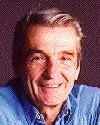
Born 5 Apr 1929.
Norwegian-American physicist who, for his experimental discoveries regarding tunneling phenomena in superconductors, shared the Nobel Prize for Physics in 1973 with Leo Esaki and Brian Josephson for work in solid-state physics. Giaever demonstrated (1960) the tunneling of electrons through a sandwich with an extremely thin oxide layer surrounded with metal either in superconducting state on both sides or in superconducting state on one side and in normal state on the other side. This gave direct evidence for the so called energy gap in a superconductor (predicted by John Bardeen et al., in 1972). Later, Giaever developed the method into a very powerful and accurate spectroscopy to study the detailed properties of superconductors.
Norwegian-American physicist who, for his experimental discoveries regarding tunneling phenomena in superconductors, shared the Nobel Prize for Physics in 1973 with Leo Esaki and Brian Josephson for work in solid-state physics. Giaever demonstrated (1960) the tunneling of electrons through a sandwich with an extremely thin oxide layer surrounded with metal either in superconducting state on both sides or in superconducting state on one side and in normal state on the other side. This gave direct evidence for the so called energy gap in a superconductor (predicted by John Bardeen et al., in 1972). Later, Giaever developed the method into a very powerful and accurate spectroscopy to study the detailed properties of superconductors.
The Road to Stockholm: Nobel Prizes, Science, and Scientists, by Istvan Hargittai, James D. Watson. - book suggestion.
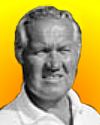
Born 5 Apr 1918; died 27 Mar 1998 at age 79.
American inventor of racquetball who developed the sport (1950) to play at the Greenwich, Connecticut, YMCA. As a squash and tennis professional for seven years, he invented racquetball as an alternative indoor racquet sport. He drafted rules, drew a racquet design, which was created in 1951 by Magnan Racket Manufacturing Company. To promote his invention, he founded the Paddle Rackets Association with a group of players. He withdrew from active promotion as the sport quickly rose in popularity, as an athletic activity that was easy to learn, and needed no power or strength to enjoy. By the early 70's, there were court clubs in every state. There are now millions of players, and it is an Olympic sport.«
American inventor of racquetball who developed the sport (1950) to play at the Greenwich, Connecticut, YMCA. As a squash and tennis professional for seven years, he invented racquetball as an alternative indoor racquet sport. He drafted rules, drew a racquet design, which was created in 1951 by Magnan Racket Manufacturing Company. To promote his invention, he founded the Paddle Rackets Association with a group of players. He withdrew from active promotion as the sport quickly rose in popularity, as an athletic activity that was easy to learn, and needed no power or strength to enjoy. By the early 70's, there were court clubs in every state. There are now millions of players, and it is an Olympic sport.«
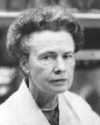
Born 5 Apr 1901; died 24 Jun 1968 at age 67.
American pediatrician and microbiologist whose groundbreaking work on influenzal meningitis significantly reduced infant death rates and advanced the field of microbiological genetics. She made a major contribution in her third published paper (1939), devising an anti-influenzal rabbit serum against H. influenzae type b, the causative organism of a then almost uniformly fatal meningitis in infants and children. Her antiserum reduced the mortality rate to 20 percent. When the advent of antibiotics made the antiserum obsolete, she quickly mastered their use against all the bacterial meningitides. Late in her career--the 1950s and 60s--she became a pioneer in microbial genetics. Over 30 years she published some 70 papers.
American pediatrician and microbiologist whose groundbreaking work on influenzal meningitis significantly reduced infant death rates and advanced the field of microbiological genetics. She made a major contribution in her third published paper (1939), devising an anti-influenzal rabbit serum against H. influenzae type b, the causative organism of a then almost uniformly fatal meningitis in infants and children. Her antiserum reduced the mortality rate to 20 percent. When the advent of antibiotics made the antiserum obsolete, she quickly mastered their use against all the bacterial meningitides. Late in her career--the 1950s and 60s--she became a pioneer in microbial genetics. Over 30 years she published some 70 papers.
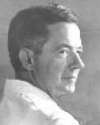
Born 5 Apr 1899; died 15 Sep 1964 at age 65. quotes
American surgeon who (with pediatric cardiologist Helen B. Taussig) devised a surgical treatment for infants born with the "blue baby" syndrome (tetralogy of Fallot), which consists of a hole in the wall between the heart's two major chambers (ventricles). Earlier in his career he did pioneering work on the nature and treatment of hemorrhagic and traumatic shock. He demonstrated that surgical shock resulted primarily from the loss of blood, and he encouraged the use of plasma or whole-blood transfusions as treatment following the onset of shock. By 29 Nov 1944, he made the first operation on a cyanotic infant with blue-baby syndrome using his procedure, known as the subclavian-pulmonary artery anastomosis.
American surgeon who (with pediatric cardiologist Helen B. Taussig) devised a surgical treatment for infants born with the "blue baby" syndrome (tetralogy of Fallot), which consists of a hole in the wall between the heart's two major chambers (ventricles). Earlier in his career he did pioneering work on the nature and treatment of hemorrhagic and traumatic shock. He demonstrated that surgical shock resulted primarily from the loss of blood, and he encouraged the use of plasma or whole-blood transfusions as treatment following the onset of shock. By 29 Nov 1944, he made the first operation on a cyanotic infant with blue-baby syndrome using his procedure, known as the subclavian-pulmonary artery anastomosis.
Partners of the Heart: Vivien Thomas and His Work With Alfred Blalock, by Vivien T. Thomas. - book suggestion.
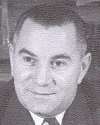
Born 5 Apr 1894; died 20 Oct 1956 at age 62.
American aircraft designer and aircraft manufacturer, founder of Bell Aircraft Co., whose experimental X-1 rocket-propelled airplane in 1947 was the first to break the sound barrier in level flight. This firm also produced such significant aviation contributions as the nation's first jet propelled airplane, the world's first commercial helicopter, the world's fastest and highest flying airplane, the Bell X-1A, and the first jet vertical take-off and landing plane.
American aircraft designer and aircraft manufacturer, founder of Bell Aircraft Co., whose experimental X-1 rocket-propelled airplane in 1947 was the first to break the sound barrier in level flight. This firm also produced such significant aviation contributions as the nation's first jet propelled airplane, the world's first commercial helicopter, the world's fastest and highest flying airplane, the Bell X-1A, and the first jet vertical take-off and landing plane.
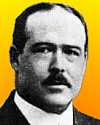
Born 5 Apr 1877; died 10 Nov 1916 at age 39. quotes
Walter Stanborough Sutton was an American geneticist who provided the first conclusive evidence that chromosomes carry the units of inheritance and occur in distinct pairs. While he was working as a graduate student at Columbia University, studying grasshopper cells, Sutton observed that chromosomes occurred in distinct pairs, and that during meiosis, the chromosome pairs split, and each chromosome goes to its own cell. Sutton announced this discovery in his 1902 paper On the Morphology of the Chromosome Group in Brachyotola. In 1903, Sutton discovered that chromosomes contained genes, and that their behavior during meiosis was random, concepts that later provided the basis for the Chromosomal Theory of Heredity.
Walter Stanborough Sutton was an American geneticist who provided the first conclusive evidence that chromosomes carry the units of inheritance and occur in distinct pairs. While he was working as a graduate student at Columbia University, studying grasshopper cells, Sutton observed that chromosomes occurred in distinct pairs, and that during meiosis, the chromosome pairs split, and each chromosome goes to its own cell. Sutton announced this discovery in his 1902 paper On the Morphology of the Chromosome Group in Brachyotola. In 1903, Sutton discovered that chromosomes contained genes, and that their behavior during meiosis was random, concepts that later provided the basis for the Chromosomal Theory of Heredity.
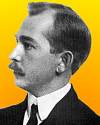
Born 5 Apr 1870; died 17 Jan 1946 at age 75.
Clarence Erwin McClung was an American geneticist and paleontologist who discovered the role of chromosomes in sex determination in a species of grasshopper. In a key paper, he reported that sperm exist in two forms, each with a different chromosome configuration. Thus, he was one of the first (1901) to deduce that chromosomes determine the sex of offspring. McClung also studied how the behaviour of chromosomes in the sex cells of different organisms affects their heredity. His theory was one of many that inspired scientists to pursue investigations such as the Human Genome Project, an attempt to map the structure and location of all human genes. He also published on Cretaceous fishes.[This birth date given in ADB. However, EB states 6 April 1870.]
Clarence Erwin McClung was an American geneticist and paleontologist who discovered the role of chromosomes in sex determination in a species of grasshopper. In a key paper, he reported that sperm exist in two forms, each with a different chromosome configuration. Thus, he was one of the first (1901) to deduce that chromosomes determine the sex of offspring. McClung also studied how the behaviour of chromosomes in the sex cells of different organisms affects their heredity. His theory was one of many that inspired scientists to pursue investigations such as the Human Genome Project, an attempt to map the structure and location of all human genes. He also published on Cretaceous fishes.[This birth date given in ADB. However, EB states 6 April 1870.]
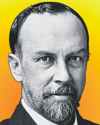
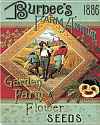
1886 cover
Washington Atlee Burpee was an American horticulturist who founded the world's largest mail-order seed company. He had a boyhood interest in selective breeding poultry, and a passion for research in the genetics of breeding, and he subsequently experimented with other livestock, dogs and plants. By age 18, in 1876, he founded his own Burpee company in Philadelphia, aided by his mother's loan of $1000 to starte up. His original line was primarily livestock to farmers, but he gravitated toward plant seeds as an easier product. In 1888, he bought a farm at Doylestown, Pennsylvania, for plant development. After 25 years in business, he had expanded into the largest, most progressive seed company in America. Much of his company's success resulted from his work in creating new hybrids and strains of flowers and vegetables. Luther Burbank was his cousin.«[Image right height compressed.]
Born 5 Apr 1838; died 15 Jan 1902 at age 63.
U.S. zoologist and paleontologist who studied invertebrate fossil records, the evolution of the cephalopods (a class of mollusks including squids and octopuses) and the development of primitive organisms. Along with E. Cope, he was the most prominent American neo-Lamarckian. Based on the analogy of ontogeny with phylogeny, Hyatt claimed that lineages, like individuals, had cycles of youth, old age, and death (extinction). Decline was programmed in. As maturity leads to old age, the best individuals die, leaving the worst to see the end. This idea became the bulwark of orthogenetic theories in the U.S. Hyatt was the founder and first editor of the American Naturalist, and first president of Woods Hole laboratory.
U.S. zoologist and paleontologist who studied invertebrate fossil records, the evolution of the cephalopods (a class of mollusks including squids and octopuses) and the development of primitive organisms. Along with E. Cope, he was the most prominent American neo-Lamarckian. Based on the analogy of ontogeny with phylogeny, Hyatt claimed that lineages, like individuals, had cycles of youth, old age, and death (extinction). Decline was programmed in. As maturity leads to old age, the best individuals die, leaving the worst to see the end. This idea became the bulwark of orthogenetic theories in the U.S. Hyatt was the founder and first editor of the American Naturalist, and first president of Woods Hole laboratory.
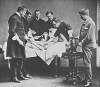
Lord Joseph Lister (Baron Lister, of Lyme Regis) was an English surgeon and medical scientist who was the founder of antiseptic medicine and a pioneer in preventive medicine. Influenced by Louis Pasteur's germ theory, Lister resolved to keep such organisms away from wounds. His book, On the Antiseptic Principle in the Practice of Surgery (1867), was the first treatise on the subject. While at the Royal Infirmary, Glasgow, Scotland, he introduced the use of carbolic acid (phenol) as a disinfectant used on bandages, ligatures, utensils, as well as for direct use on wounds and washing surgeon's hands. His first such surgery was conducted on 12 Aug 1865. Modern medical practice continues to follow Lister's principle that wounds must be kept free of bacteria, though sterilization has replaced most antiseptic use. Lister was the first medical person raised to the peerage.« more
Germ Theory & The Antiseptic Principle, by Louis Pasteur, Joseph Lister. - book suggestion.
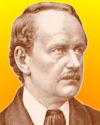
Born 5 Apr 1804; died 23 Jun 1881 at age 77. quotes
German botanist who first formulated the theory that plants are composed of cells. Instead of plant classification, Schleiden studied plant growth and structure under the microscope. This led to his Contributions to Phytogenesis (1838), which stated that the various structures of the plant are composed of cells or their derivatives. He thus formulated the cell theory for plants, which was later eleborated and extended to animals by the German physiologist Theodor Schwann. Schleiden recognized the significance of the cell nucleus and sensed its importance in cell division, although he thought (wrongly) that new cells were produced by budding from its surface. He was one of the first German biologists to accept Darwinism.
German botanist who first formulated the theory that plants are composed of cells. Instead of plant classification, Schleiden studied plant growth and structure under the microscope. This led to his Contributions to Phytogenesis (1838), which stated that the various structures of the plant are composed of cells or their derivatives. He thus formulated the cell theory for plants, which was later eleborated and extended to animals by the German physiologist Theodor Schwann. Schleiden recognized the significance of the cell nucleus and sensed its importance in cell division, although he thought (wrongly) that new cells were produced by budding from its surface. He was one of the first German biologists to accept Darwinism.
Born 5 Apr 1804; died 2 Apr 1880 at age 75. quotes
French crystallographer and chemist who contributed to the early chemistry of photography. He introduced potassium cyanide as a fixing agent. It reacted with the silver salts on the light-sensitive plate surface to form soluble silver cyanide, which could be washed away water. He published his method in La Lumière on 23 Apr 1853. The following year, in the same journal he published what are regarded as the first experiments with collodion dry plates on 22 Apr and 27 May 1854. In 1873, he grew the first synthetic ruby crystal.
French crystallographer and chemist who contributed to the early chemistry of photography. He introduced potassium cyanide as a fixing agent. It reacted with the silver salts on the light-sensitive plate surface to form soluble silver cyanide, which could be washed away water. He published his method in La Lumière on 23 Apr 1853. The following year, in the same journal he published what are regarded as the first experiments with collodion dry plates on 22 Apr and 27 May 1854. In 1873, he grew the first synthetic ruby crystal.
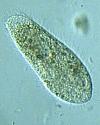
Born 5 Apr 1801; died 8 Apr 1860 at age 59.
French biologist and cytologist, noted for his studies in the classification of protozoans and invertebrates, animals he found in “infusoria” - mixtures of water and decaying matter. He was largely self-educated, yet in 1834 he was the first to propose that single-cell animals should be classified in a group by themselves that he called Rhizopoda, but now named protozoans. Dujardin's careful studies of flatworms gave a foundation for the future work of parasitologists. In 1835, he disproved Ehrenberg's theory that tiny animals have the same organs as large ones. Also in 1835, he was the first to describe protoplasm, the jellylike material in animal cells to which he applied the term sarcode (Gr. sari. flesh) to it. This substance was later found in living plant cells.
French biologist and cytologist, noted for his studies in the classification of protozoans and invertebrates, animals he found in “infusoria” - mixtures of water and decaying matter. He was largely self-educated, yet in 1834 he was the first to propose that single-cell animals should be classified in a group by themselves that he called Rhizopoda, but now named protozoans. Dujardin's careful studies of flatworms gave a foundation for the future work of parasitologists. In 1835, he disproved Ehrenberg's theory that tiny animals have the same organs as large ones. Also in 1835, he was the first to describe protoplasm, the jellylike material in animal cells to which he applied the term sarcode (Gr. sari. flesh) to it. This substance was later found in living plant cells.
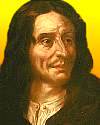
Born 5 Apr 1622; died 22 Sep 1703 at age 81.
Italian mathematician and geometer who was a leader in his field and founded the Accademia del Cimento. As one of the first important scientific societies, this organization came before England's Royal Society. In 1639, at age 17, he became the student, secretary and assistant of Galileo (now blind) in Arcetri, until Galileo died in 1642. During his long career, Viviani published a number of books on mathematical and scientific subjects. He edited the first edition of Galileo's collected works (1655-1656), and worked tirelessly to have his master's memory rehabilitated. In 1660, together with Borelli, he measured the velocity of sound by timing the difference between the flash and the sound of a cannon. They obtained the value of 350 metres per second.
Italian mathematician and geometer who was a leader in his field and founded the Accademia del Cimento. As one of the first important scientific societies, this organization came before England's Royal Society. In 1639, at age 17, he became the student, secretary and assistant of Galileo (now blind) in Arcetri, until Galileo died in 1642. During his long career, Viviani published a number of books on mathematical and scientific subjects. He edited the first edition of Galileo's collected works (1655-1656), and worked tirelessly to have his master's memory rehabilitated. In 1660, together with Borelli, he measured the velocity of sound by timing the difference between the flash and the sound of a cannon. They obtained the value of 350 metres per second.


Died 5 Apr 2022 at age 82 (born 7 May 1939).
Canadian-American molecular biologist who shared the 1989 Nobel Prize for Chemistry with Thomas R. Cech, for their discoveries about ribonucleic acid (RNA), one of the basic molecules present in every living cell. In 1978, Altman made the key discovery that RNA had properties that were previously unknown. Prior to this work, it was believed that the purpose of RNA was to transmit genetic information contained in DNA to the proteins. Altman showed beyond that, RNA could also undergo a transformation that allowed it to perform the catalytic functions of an enzyme, and engage in chemical reactions. This research extended scientists’ understanding of fundamental biochemical processes and led to applications in medicine and gene therapy.«
Canadian-American molecular biologist who shared the 1989 Nobel Prize for Chemistry with Thomas R. Cech, for their discoveries about ribonucleic acid (RNA), one of the basic molecules present in every living cell. In 1978, Altman made the key discovery that RNA had properties that were previously unknown. Prior to this work, it was believed that the purpose of RNA was to transmit genetic information contained in DNA to the proteins. Altman showed beyond that, RNA could also undergo a transformation that allowed it to perform the catalytic functions of an enzyme, and engage in chemical reactions. This research extended scientists’ understanding of fundamental biochemical processes and led to applications in medicine and gene therapy.«
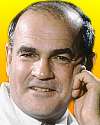
Died 5 Apr 2011 at age 85 (born 28 Jul 1925).
Baruch Samuel Blumberg was an American physician who shared (with D. Carleton Gajdusek) the 1976 Nobel Prize in Physiology or Medicine “for their discoveries concerning new mechanisms for the origin and dissemination of infectious diseases.” In 1963, Blumberg accidentally discovered an antigen in the blood of an Australian aborigine which he subsequently identified as the hepatitis B surface antigen, a molecule from the surface of the hepatitis B molecule. His report of this discovery (1967) at first encountered indifference, but when confirmed by others, the virus was acknowledged to be the cause of the disease. He then developed a vaccine, though it had high production cost and limited distribution. But his work led to other researchers using recombinant DNA technology to produce a successful vaccine now in widespread use.«
Baruch Samuel Blumberg was an American physician who shared (with D. Carleton Gajdusek) the 1976 Nobel Prize in Physiology or Medicine “for their discoveries concerning new mechanisms for the origin and dissemination of infectious diseases.” In 1963, Blumberg accidentally discovered an antigen in the blood of an Australian aborigine which he subsequently identified as the hepatitis B surface antigen, a molecule from the surface of the hepatitis B molecule. His report of this discovery (1967) at first encountered indifference, but when confirmed by others, the virus was acknowledged to be the cause of the disease. He then developed a vaccine, though it had high production cost and limited distribution. But his work led to other researchers using recombinant DNA technology to produce a successful vaccine now in widespread use.«
Hepatitis B: The Hunt for a Killer Virus, by Baruch S. Blumberg. - book suggestion.
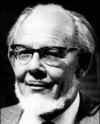
Died 5 Apr 1998 at age 87 (born 6 Mar 1911).
English physicist and chemist whose work encompassed the physics of earthquakes, the growth of crystals (from diamonds to ice), the strength of polymers, and the molecular alignments within liquid crystals. During WW II, he worked for Scientific Intelligence at the Air Ministry. In 1946, at the University of Bristol, Frank looked into problems concerned with crystal growth and the plastic deformation of metallic crystals when mechanically loaded. His scientific fame was established by a decade bringing successes in applications of crystal-dislocation theory. This theoretical work has been the foundation of researches by scientists of all nationalities ever since, and continues to guide practice in the metallurgical and semiconductor industries.
English physicist and chemist whose work encompassed the physics of earthquakes, the growth of crystals (from diamonds to ice), the strength of polymers, and the molecular alignments within liquid crystals. During WW II, he worked for Scientific Intelligence at the Air Ministry. In 1946, at the University of Bristol, Frank looked into problems concerned with crystal growth and the plastic deformation of metallic crystals when mechanically loaded. His scientific fame was established by a decade bringing successes in applications of crystal-dislocation theory. This theoretical work has been the foundation of researches by scientists of all nationalities ever since, and continues to guide practice in the metallurgical and semiconductor industries.
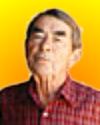
Died 5 Apr 1994 (born 1901).
Russian-born U.S. enologist, was a pivotal figure in the revitalization of the California wine industry following Prohibition (1919-33) and used his Paris training in viticulture and wine making to pioneer such techniques as the cold fermentation (now widely used in producing white and rose wines) and the use of American oak barrels for aging. He developed frost-prevention techniques and helped curb vine disease in Napa Valley. Beside managing Beaulieu Vineyards in Napa for 35 years, Mr. Tchelistcheff operated a private wine laboratory in St. Helena for 15 years. He also assembled a fabled library of wine literature.
Russian-born U.S. enologist, was a pivotal figure in the revitalization of the California wine industry following Prohibition (1919-33) and used his Paris training in viticulture and wine making to pioneer such techniques as the cold fermentation (now widely used in producing white and rose wines) and the use of American oak barrels for aging. He developed frost-prevention techniques and helped curb vine disease in Napa Valley. Beside managing Beaulieu Vineyards in Napa for 35 years, Mr. Tchelistcheff operated a private wine laboratory in St. Helena for 15 years. He also assembled a fabled library of wine literature.
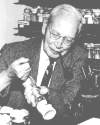
Died 5 Apr 1970 at age 78 (born 21 Nov 1891). quotes
American geneticist who developed (1913) a technique for mapping the location of specific genes of the chromosomes in the fruit fly Drosophila. Sturtevant's method for “chromosome mapping”, relies on the analysis of groups of linked genes. His paper, published in 1913, described the location of six sex-linked genes as deduced by the way in which they associate with each other: it is one of the classic papers in genetics. Sturtevant later discovered the so-called 'position effect', in which the expression of a gene depends on its position in relation to other genes. He also demonstrated that crossing over between chromosomes is prevented in regions where a part of the chromosome material is inserted the wrong way round.
American geneticist who developed (1913) a technique for mapping the location of specific genes of the chromosomes in the fruit fly Drosophila. Sturtevant's method for “chromosome mapping”, relies on the analysis of groups of linked genes. His paper, published in 1913, described the location of six sex-linked genes as deduced by the way in which they associate with each other: it is one of the classic papers in genetics. Sturtevant later discovered the so-called 'position effect', in which the expression of a gene depends on its position in relation to other genes. He also demonstrated that crossing over between chromosomes is prevented in regions where a part of the chromosome material is inserted the wrong way round.
History Of Genetics, by A. H. Sturtevant. - book suggestion.
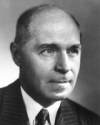
Died 5 Apr 1967 at age 76 (born 21 Dec 1890). quotes
American geneticist who demonstrated that mutations and hereditary changes could be caused by X-rays striking the genes and chromosomes of living cells (first produced in the fruit fly Drosophila in 1927). His first task - to create procedures to exactly measure the mutation frequency - took several years. Then he investigated the effect of different agents on the frequency of mutations. He found that experiments could be arranged, for instance, so that nearly 100 per cent of the offspring of irradiated flies showed mutations. Thus a possibility had been created for the first time of influencing the hereditary mass itself artificially. Muller was awarded the Nobel Prize for Physiology or Medicine in 1946.«
American geneticist who demonstrated that mutations and hereditary changes could be caused by X-rays striking the genes and chromosomes of living cells (first produced in the fruit fly Drosophila in 1927). His first task - to create procedures to exactly measure the mutation frequency - took several years. Then he investigated the effect of different agents on the frequency of mutations. He found that experiments could be arranged, for instance, so that nearly 100 per cent of the offspring of irradiated flies showed mutations. Thus a possibility had been created for the first time of influencing the hereditary mass itself artificially. Muller was awarded the Nobel Prize for Physiology or Medicine in 1946.«
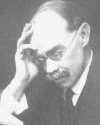
Died 5 Apr 1950 at age 88 (born 28 May 1861).
British geographer and meteorologist who exercised a great influence in the reform of geography teaching and on the development of meteorology as a science. As Royal Geographic Librarian he had a great influence on Robert Falcon Scott and Ernest Shackleton and was involved with the exploration of the Antarctic, around 1901. He redefined geography, tracing its history from Aristotle and Ptolemy into the Middle Ages, the reawakening in the 16th century, the Oxford geographers, then Varenius and Isaac Newton and Immanuel Kant to modern times. He lectured on geography as a science and its mathematical principles, descriptive surveys and the importance of cartography.
British geographer and meteorologist who exercised a great influence in the reform of geography teaching and on the development of meteorology as a science. As Royal Geographic Librarian he had a great influence on Robert Falcon Scott and Ernest Shackleton and was involved with the exploration of the Antarctic, around 1901. He redefined geography, tracing its history from Aristotle and Ptolemy into the Middle Ages, the reawakening in the 16th century, the Oxford geographers, then Varenius and Isaac Newton and Immanuel Kant to modern times. He lectured on geography as a science and its mathematical principles, descriptive surveys and the importance of cartography.
Shackleton: The Polar Journeys, by Ernest Henry Shackleton, with Introduction. - book suggestion.
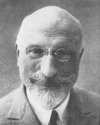
Died 5 Apr 1940 at age 68 (born 6 Feb 1872).
Swiss bridge engineer whose radical use of reinforced concrete revolutionized masonry arch bridge design. Maillart utilized the structural strength and expressive potential of reinforced concrete to generate a modern form for his bridges. To avoid structural beams and arches, he established a structural form based on both flat and curved concrete slabs reinforced with steel. Using very simple construction concepts, Maillart produced major new forms, fundamentally radical ideas, such as: the open three-hinged, hollow-box arch, the mushroom slab, and the deck-stiffened arch.
Swiss bridge engineer whose radical use of reinforced concrete revolutionized masonry arch bridge design. Maillart utilized the structural strength and expressive potential of reinforced concrete to generate a modern form for his bridges. To avoid structural beams and arches, he established a structural form based on both flat and curved concrete slabs reinforced with steel. Using very simple construction concepts, Maillart produced major new forms, fundamentally radical ideas, such as: the open three-hinged, hollow-box arch, the mushroom slab, and the deck-stiffened arch.
Robert Maillart: Builder, Designer, and Artist, by David P. Billington. - book suggestion.
Died 5 Apr 1924 at age 89 (born 10 Feb 1835).
Christian Andreas Victor Hensen was a German physiologist and oceanographer who coined the name plankton for the tiny organisms that live suspended in the sea and bodies of freshwater. He discovered the importance of plankton—practically all marine animal life is dependent on them, directly or indirectly. He developed equipment for the study of plankton. Hensen led the first marine biological Plankton Expedition, and four more, including to the Baltic Sea, North Sea, and Atlantic Ocean. What had begun as a hobby, expanded to make him the origination of quantitative marine research. As a professor of physiology at the University of Kiel, his work settled certain open questions on hearing and sight. His name remains known for the Cells of Hensen and the Canal of Hensen in the inner ear.«
Christian Andreas Victor Hensen was a German physiologist and oceanographer who coined the name plankton for the tiny organisms that live suspended in the sea and bodies of freshwater. He discovered the importance of plankton—practically all marine animal life is dependent on them, directly or indirectly. He developed equipment for the study of plankton. Hensen led the first marine biological Plankton Expedition, and four more, including to the Baltic Sea, North Sea, and Atlantic Ocean. What had begun as a hobby, expanded to make him the origination of quantitative marine research. As a professor of physiology at the University of Kiel, his work settled certain open questions on hearing and sight. His name remains known for the Cells of Hensen and the Canal of Hensen in the inner ear.«
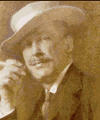
Died 5 Apr 1923 at age 56 (born 26 Jun 1866). quotes
The 5th Earl of Carnarvon (George Edward Stanhope Molyneux Herbert) was a British egyptologist. He first dabbled in archaeology as a small boy, digging in the park at his ancestral home, Highclere Castle. Sent to Egypt for health reasons, he found a new fascination in the relics of the past. He funded and participated in excavations from 1907, until his association with Howard Carter and the discovery of King Tutankhamun's tomb on 27 Nov 1922. more
The 5th Earl of Carnarvon (George Edward Stanhope Molyneux Herbert) was a British egyptologist. He first dabbled in archaeology as a small boy, digging in the park at his ancestral home, Highclere Castle. Sent to Egypt for health reasons, he found a new fascination in the relics of the past. He funded and participated in excavations from 1907, until his association with Howard Carter and the discovery of King Tutankhamun's tomb on 27 Nov 1922. more
The Tomb of Tut.Ankh.Amen, by Howard Carter. - book suggestion.
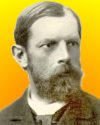
Died 5 Apr 1902 at age 51 (born 16 Dec 1850).
Hans Ernst Angass Buchner was a German bacteriologist who discovered gamma globulins, natural bactericides carried in the blood, while making immunological studies in1886-90. He also devised methods of studying anaerobic bacteria. In 1891, Buchner proposed the existence of antibacterial proteins in blood serum which he called "alexines". This began a protracted debate with Metchnikoff, who championed a cellular theory of immunity. In 1893, he proposed that antitoxin formed directly from the toxin itself. With his brother, Eduard, in 1897, Hans demonstrated that completely dead yeast juice could ferment sugar, forming carbon dioxide and alcohol, exactly as the intact cells would have done. This presaged the description of enzyme activity.
Hans Ernst Angass Buchner was a German bacteriologist who discovered gamma globulins, natural bactericides carried in the blood, while making immunological studies in1886-90. He also devised methods of studying anaerobic bacteria. In 1891, Buchner proposed the existence of antibacterial proteins in blood serum which he called "alexines". This began a protracted debate with Metchnikoff, who championed a cellular theory of immunity. In 1893, he proposed that antitoxin formed directly from the toxin itself. With his brother, Eduard, in 1897, Hans demonstrated that completely dead yeast juice could ferment sugar, forming carbon dioxide and alcohol, exactly as the intact cells would have done. This presaged the description of enzyme activity.
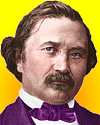
Died 5 Apr 1900 at age 78 (born 11 Mar 1822). quotes
Joseph-Louis-François Bertrand was a French mathematician and educator and educator remembered for his elegant applications of differential equations to analytical mechanics, particularly in thermodynamics, and for his work on statistical probability and the theory of curves and surfaces. In 1845 Bertrand conjectured that there is at least one prime between n and (2n-2) for every n>3, as proved five years later by Chebyshev. In 1855 he translated Gauss's work on the theory of errors and the method of least squares into French. He wrote a number of notes on the reduction of data from observations.
Joseph-Louis-François Bertrand was a French mathematician and educator and educator remembered for his elegant applications of differential equations to analytical mechanics, particularly in thermodynamics, and for his work on statistical probability and the theory of curves and surfaces. In 1845 Bertrand conjectured that there is at least one prime between n and (2n-2) for every n>3, as proved five years later by Chebyshev. In 1855 he translated Gauss's work on the theory of errors and the method of least squares into French. He wrote a number of notes on the reduction of data from observations.
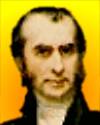
Died 5 Apr 1866 at age 67 (born 17 Aug 1798).
English physician and philanthropist who early described (1832) the malignant disease of lymph tissue that bears his name as Hodgkin's disease. He was the most prominent British pathologist of his time and a pioneer in preventive medicine. At Guy's Hospital, he was responsible for the introduction of the systematic arrangement of pathological and anatomical specimens for teaching purposes. In a strange contrast to his great popularity, above all in London, stands the fact that Hodgkin was denied a professional advancement. More and more disappointed by medicine he became an Oriental traveller, making important contributions. He devoted much of his life to philanthropic causes such as the relief of suffering in under-developed countries and the freeing of slaves. more
English physician and philanthropist who early described (1832) the malignant disease of lymph tissue that bears his name as Hodgkin's disease. He was the most prominent British pathologist of his time and a pioneer in preventive medicine. At Guy's Hospital, he was responsible for the introduction of the systematic arrangement of pathological and anatomical specimens for teaching purposes. In a strange contrast to his great popularity, above all in London, stands the fact that Hodgkin was denied a professional advancement. More and more disappointed by medicine he became an Oriental traveller, making important contributions. He devoted much of his life to philanthropic causes such as the relief of suffering in under-developed countries and the freeing of slaves. more
Thomas Hodgkin: Morbid Anatomist & Social Activist, by Louis Rosenfeld. - book suggestion.
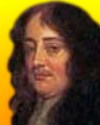
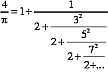
Irish-English mathematician, educated at Oxford, who was a founder and first president of the Royal Society, London. He is known for his work on continued fractions and calculating logarithms by infinite series. In 1655 he gave a continued fraction expansion of 4/π. He also produced several solutions for the Diophantine equation αx2+1=y2, and a solution for the quadrature of a rectangular hyperbola. He was one of the dozen scientists at the 28 Nov 1660 meeting in Gresham College, London, that constituted the Society for the Promoting of Physico-Mathematical Experimental Learning to promote experimental philosophy. The Society received a Royal Charter, passed by the Great Seal on 15 Jul 1662, creating the Royal Society of London.«
Thm.jpg "John Winthrop Jr.")
Died 5 Apr 1676 (born c. 1605).
English colonial governor of Connecticut (later a state of the U.S.) for the periods 1657-58 and 1659-76. Because of his scientific interests in chemistry and medicine, he was made a member of the Royal Society (1663) during a stay back in England - and became the first member resident in America. He established iron, lead and salt works, but they did not prosper. In astronomy, he predicted a fifth satellite of Jupiter, although instruments the time were not powerful enough to confirm his theory. In a letter to the Royal Society, he wrote what he had heard in midsummer 1670 about a hill near Wells, Maine, that had leapt from its original location and fallen upside down into the Kennebunk River, blocking its waters.«*
English colonial governor of Connecticut (later a state of the U.S.) for the periods 1657-58 and 1659-76. Because of his scientific interests in chemistry and medicine, he was made a member of the Royal Society (1663) during a stay back in England - and became the first member resident in America. He established iron, lead and salt works, but they did not prosper. In astronomy, he predicted a fifth satellite of Jupiter, although instruments the time were not powerful enough to confirm his theory. In a letter to the Royal Society, he wrote what he had heard in midsummer 1670 about a hill near Wells, Maine, that had leapt from its original location and fallen upside down into the Kennebunk River, blocking its waters.«*
In 1973, Washington: Scientists produce human blood cells in living mouse.*

In 1964, driverless trains first ran on the London Underground. Now, on the Victoria Line, once the Train Operator has closed the train doors and pressed the start buttons, the trains run automatically to the next station, responding to coded impulses transmitted through the track. The Victoria Line was the first new deep-level Underground line to be built across central London since the "tube boom" of 1905-07. It links Walthamstow in north east London with Brixton in south London. The line opened in stages between 1968 and 1971 penetrating areas of north and south London not previously served by the Underground
London Under London, by Richard Trench and Ellis Hillman. - book suggestion.
In 1963, the U.S. Atomic Energy Commission gave the Fermi Award to J. Robert Oppenheimer for research in nuclear energy. Oppenheimer was the chief scientist of the Manhattan Project during WWII that created the atomic bomb. Later, he opposed the more destructive hydrogen bomb development and his security clearance was revoked (1954). Nine years later, a wiser U.S. government awarded Oppenheimer the prestigious Fermi Award, “For contributions to theoretical physics as a teacher and originator of ideas, and for leadership of the Los Alamos Laboratory and the atomic energy program during critical years.” The actual presentation of the medal and $50,000 was made 2 Dec 1963 by President Lyndon B. Johnson.
American Prometheus: The Triumph and Tragedy of J. Robert Oppenheimer, by Kai Bird, Martin J. Sherwin. - book suggestion.
In 1957, the Soviets tested another H-bomb to warn Western Europe against nuclear war.*
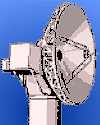
In 1955, detection of radio emissions from the planet Jupiter was reported at the semi-annual meeting of the American Astronomical Society in Princeton, N.J. Bernard F. Burke and Kenneth L. Franklin, astronomers at the Carnegie Institution in Washington, had discovered waves that resembled short bursts of radio static, similar to the interference on home radios from lightning. These unexplained, about 22 MHz, radio waves were the first to be detected from any planet in our solar system. At first noticed by chance, it took several weeks to pinpoint Jupiter as the origin. Many other bodies outside our Solar System were previously known to emit radio waves and long studied by radio telescopes.«[Previously on the 6 Jun web page, the date of the NYT newspaper report.]
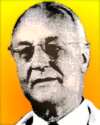
In 1933, the first operation for a one-stage subtotal removal of a lung was performed at Barnes Hospital in St. Louis, Missouri by Dr. Evarts Graham. He was operating on a fellow physician with lung cancer. Until then, removal of a lobe of a lung was occasionally done to treat lung cancer, if the tumour was limited to one lobe. When exploration revealed this patient’s cancer involved more than one lobe, he removed (almost) the entire lung. Seven ribs were removed to permit the soft tissues of the chest wall to fill the resulting cavity. The patient recovered and was cured of the disease. This was a triumph for the era that electrified the surgical world. Graham devoted many years to the study of lung cancer and its link to cigarette smoking.
Evarts A. Graham: The Life, Lives, and Times of the Surgical Spirit of St. Louis, by C. Barber Mueller. - book suggestion.
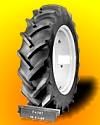
In 1923, Firestone Tire and Rubber Company of Akron, Ohio, began the first regular production of balloon tyres for commercial use. These were large-section, thin-walled tyres with a small bead. Earlier, occasional production had been used for experimental or special purposes.Firestone low-pressure balloon tyres developed in 1932 revolutionised work on the farm. A wider contact area gave balloon tyres a more comfortable ride and reduced the danger of high-pressure blowouts. Now the pounding and vibration of a steel-wheeled tractor could be replaced with pnematic tyres with better grip, less vibration, more comfort, and lower fuel consumption. This created a new worldwide market in agricultural and earth-moving tyres.
Uncommon Friends: Life with Thomas Edison, Henry Ford, Harvey Firestone, Alexis Carrel, and Charles Lindbergh, by James Newton. - book suggestion.
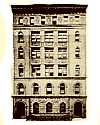
In 1909, the first U.S. institute for research in nervous diseases was incorporated - The Neurological Institute of New York - which opened its hospital on 1 Oct 1909. Its first superintendent was Alexander H Candlish. While the National Hospital for Nervous Diseases at Queens Square and the Salpêtrière were well known in Europe, there were no similar institutions in the U.S. at that time which had special wards for patients with neurological disorders. The Institute was established as the first specialty hospital in the nation devoted entirely to the study and treatment of the nervous system. Early consultants included such founders of American neurology as: Charles A. Dana, Bernard Sachs, Pearce Bailey, and Joseph Collins.*
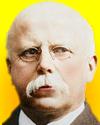
In 1893, Thomas Corwin Mendenhall, then Superintendent of Weights and Measures, with the approval of the Secretary of the Treasury, decided that the international meter and kilogram would become the fundamental standards of length and mass in the United States, both for metric and customary weights and measures. This decision, now known as “The Mendenhall Order,” published as “Fundamental Standards of Length and Mass,” in the Coast and Geodetic Survey Bulletin No. 26, established a change from the prior policy of the U.S. to maintain its standards of length and mass to be identical with those of Great Britain. Henceforth, for example, the U.S. yard was defined in terms of the International Prototype meter. The U.S. National Bureau of Standards, established in Jul 1901, acted likewise.«
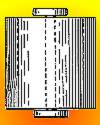
(USPTO)
In 1892, a U.S. patent was issued for packaging decorative gold leaf in roll form to Walter H. Coe of Providence, R.I. (No. 472,252). The W.H. Coe Mfg. Co. of the same city manufactured the gold leaf in rolls 67 feet in length in widths between 1/16 to 3-1/4 inches wide. The foil thickness was 1/250,000 inch, and was packaged on a backing material of the same width, for uses such as bookbinding. As compared to the previous use of leaves of gold foil, this packaging method allowed correctly precut widths to be matched to the application with correct lengths without need for overlapping pieces. The spool was designed to press the ribbon down on the part to be gilded as the ribbon was unwound. Thus waste was much reduced.
In 1881, Hermann von Helmholtz presented The Faraday Lecture before the Fellows of the Chemical Society in London. His topic was The Modern Development of Faraday's Conception of Electricity. Helmholtz recognized Michael Faraday as being the person who most advanced the general scientific method, saying “His principal aim was to express in his new conceptions only facts, with the least possible use of hypothetical substances and forces.”
Science and Culture: Popular and Philosophical Essays, by Hermann Von Helmholtz. - book suggestion.
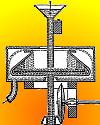
(USTPO)
In 1881, a centrifugal separator, was patented by Edwin J. Houston and Elihu Thomson (No. 239,659). A vessel spins inside a case that receives the lighter components separated "by the action of centrifugal force," while heavier components drain through an opening in the same tubular shaft by which the vessel is rotated. The separating vessel is swelled at the bottom, such as the frustrum of a cone, and fitted with a horizontal deflecting plate a short distance above the bottom which extends to a short distance from the side. The liquid to be separated is supplied through a central feedtube, enabling continous operation. The patent suggested various uses, including separating milk and cream or clearing muddy water for paper making.
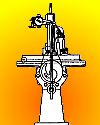
(USTPO)
In 1864, a U.S. patent for a machine for cutting files was issued to William Nicholson of Providence, R.I. (No. 42,216). This machine was put to use in the first successful U.S. file factory, the Nicholson File Company (1864). Prior to the Civil War, Nicholson had a machine tool business, at which time he developed his ideas on machine file making and built his first file cutting machine. He went to Europe, which at that time supplied most of the files used in America, and studied this industries, including the manufacture and treatment of steel. He opened his plant with the hope of developing to a production of 300 dozen files per day. The goal was not easily met, until he proved the quality of his files matched those made by hand.

In 1806, Isaac Quintard of Stanfield, Conn., received a U.S. patent for his apple cider and bark mill. Apples are processed to extract the juice. The fresh juice is known in the U.S. as sweet apple cider. It can be preserved in wooden barrels where it ferments, transforming it into what is then called hard cider, a tangy alcoholic drink. Hard cider was a very popular drink for the first colonists in the U.S. Everybody put away a barrel of cider for the wintertime. It was equal to beer up until the time of prohibition. When prohibition ended, peoples' tastes had changed, and cider popularity declined.*
Cider, Hard and Sweet: History, Traditions, and Making Your Own, by Ben Watson. - book suggestion.
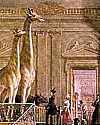
In 1753, the British Museum was founded by an Act of Parliament granting £20,000 to purchase the 50,000 volume library of Sir Hans Sloane and his vast collection of 69,352 items of nature and art. Sloane was a prominent London physician who made the collection available in his will at much below its intrinsic value. Montagu House, Bloomsbury, was purchased in 1754 by the government to house this and other collections. Since it opened, on 15 Jan 1759, the Museum has been collecting, conserving and studying millions of artefacts. The British Museum established its Research Laboratory in 1920 with the appointment of Dr Alexander Scott as its first scientist.«
more




