Born 15 Sep 1932; died 5 Aug 2008 at age 75.
English-American chemist who formed the first compound with a noble gas element, xenon platinofluoride, XePtF6 (23 Mar 1962), a yellow-orange crystalline solid, stable at room temperature by immersing platinum fluoride in xenon gas. For a half-century since Ramsay discovered xenon, it had, with the other elements in its group on the Periodic Table, been known as an inert gas. After Bartlett's discovery, a new field of investigation was opened, and other chemists found further compounds of not only xenon, but the noble gas elements radon and krypton. The heaviest elements of the noble gases, as the least inert, were susceptible to combination with a highly reactive element. Pauling had proposed this in theoretical calculations made thirty years before Bartlett's experimental success.«
English-American chemist who formed the first compound with a noble gas element, xenon platinofluoride, XePtF6 (23 Mar 1962), a yellow-orange crystalline solid, stable at room temperature by immersing platinum fluoride in xenon gas. For a half-century since Ramsay discovered xenon, it had, with the other elements in its group on the Periodic Table, been known as an inert gas. After Bartlett's discovery, a new field of investigation was opened, and other chemists found further compounds of not only xenon, but the noble gas elements radon and krypton. The heaviest elements of the noble gases, as the least inert, were susceptible to combination with a highly reactive element. Pauling had proposed this in theoretical calculations made thirty years before Bartlett's experimental success.«
Born 15 Sep 1929. quotes
American theoretical physicist who predicted the existence of quarks. He was awarded the 1969 Nobel Prize for Physics for his contributions to particle physics. His first major contribution to high-energy physics was made in 1953, when he demonstrated how some puzzling features of hadrons (particles responsive to the strong force) could be explained by a new quantum number, which he called “strangeness”. In 1964, he (and Yuval Ne'eman) proposed the eightfold way to define the structure of particles. This led to Gell-Mann's postulate of the quark, a name he coined (from a word in James Joyce's Finnegan's Wake).
American theoretical physicist who predicted the existence of quarks. He was awarded the 1969 Nobel Prize for Physics for his contributions to particle physics. His first major contribution to high-energy physics was made in 1953, when he demonstrated how some puzzling features of hadrons (particles responsive to the strong force) could be explained by a new quantum number, which he called “strangeness”. In 1964, he (and Yuval Ne'eman) proposed the eightfold way to define the structure of particles. This led to Gell-Mann's postulate of the quark, a name he coined (from a word in James Joyce's Finnegan's Wake).
Born 15 Sep 1926. quotes
French mathematician who was awarded the 1954 Fields medal for his work in algebraic topolgy.
French mathematician who was awarded the 1954 Fields medal for his work in algebraic topolgy.

Born 15 Sep 1912; died 10 Nov 2003 at age 91.
Francis William Simpson was an English naturalist, conservationist and chronicler of the countryside and wild flowers of his native Suffolk. His love of nature began in school, when one of his teachers gave him a flora, a descriptive list of the region's plants. He became a botanist at Ipswich Museum, where he worked until his retirement in 1977. In 1938, he saved a small meadow, famous for its snakeshead fritillaries, from being drained and ploughed into farmland. Using donations amounting to £75, he was able to purchase the field, Mickfield Meadow, for the Society for the Promotion of Nature Reserves. Today, it is one of the oldest nature reserves in the country, protecting the meadow flowers in this small area now surrounded by farmland.[Image: snakeshead fritillaries]
Francis William Simpson was an English naturalist, conservationist and chronicler of the countryside and wild flowers of his native Suffolk. His love of nature began in school, when one of his teachers gave him a flora, a descriptive list of the region's plants. He became a botanist at Ipswich Museum, where he worked until his retirement in 1977. In 1938, he saved a small meadow, famous for its snakeshead fritillaries, from being drained and ploughed into farmland. Using donations amounting to £75, he was able to purchase the field, Mickfield Meadow, for the Society for the Promotion of Nature Reserves. Today, it is one of the oldest nature reserves in the country, protecting the meadow flowers in this small area now surrounded by farmland.[Image: snakeshead fritillaries]
Born 15 Sep 1901; died 5 May 1985 at age 83.
British engineer who invented the Bailey bridge, which was of great military value in World War II.
British engineer who invented the Bailey bridge, which was of great military value in World War II.
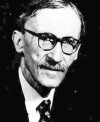
Born 15 Sep 1886; died 15 Dec 1971 at age 85.
Paul Pierre Lévy was a French mining engineer and mathematician. He contributed to probability, functional analysis, partial differential equations and series. He also studied geometry. In 1926 he extended Laplace transforms to broader function classes. He undertook a large-scale work on generalised differential equations in functional derivatives.
Paul Pierre Lévy was a French mining engineer and mathematician. He contributed to probability, functional analysis, partial differential equations and series. He also studied geometry. In 1926 he extended Laplace transforms to broader function classes. He undertook a large-scale work on generalised differential equations in functional derivatives.
Born 15 Sep 1881; died 21 Aug 1947 at age 65.
Ettore Arco Isidoro Bugatti was an Italian builder of racing and luxury automobiles Shortly after establishing a factory at Molsheim, Alsace in 1909, he produced a highly successful low-powered racer for the Le Mans. The most meticulously built of his cars. the Type 41, "Golden Bugatti" or "La Royale" was one of the most costly cars, of which only six to eight were ever manufactured. His eldest son, his presumed heir, died before him and the Bugatti firm did not survive long after Ettore Bugatti's death.
Ettore Arco Isidoro Bugatti was an Italian builder of racing and luxury automobiles Shortly after establishing a factory at Molsheim, Alsace in 1909, he produced a highly successful low-powered racer for the Le Mans. The most meticulously built of his cars. the Type 41, "Golden Bugatti" or "La Royale" was one of the most costly cars, of which only six to eight were ever manufactured. His eldest son, his presumed heir, died before him and the Bugatti firm did not survive long after Ettore Bugatti's death.
Born 15 Sep 1879; died 27 Nov 1943 at age 64.
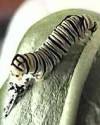
American entomologist, museum curator, educator, conservationist and writer who was probably the leading U.S. entomologist of the first half of the twentieth century. He who taught that insects were an integral part of the environment. As a boy, his fascination watching a caterpillar shedding its skin developed into a lifelong interest in insects. In 1909, he joined the American Museum of Natural History and became (1921) the first curator of the newly created Department of Entomology, where he remained for the rest of life. He created popular museum exhibits, including the first insect dioramas and "insect zoos" featuring live specimens. In the 1920s, established the country's first guided nature trail in Harriman State Park, New York.[Image: Monarch caterpillar shedding skin]
American entomologist, museum curator, educator, conservationist and writer who was probably the leading U.S. entomologist of the first half of the twentieth century. He who taught that insects were an integral part of the environment. As a boy, his fascination watching a caterpillar shedding its skin developed into a lifelong interest in insects. In 1909, he joined the American Museum of Natural History and became (1921) the first curator of the newly created Department of Entomology, where he remained for the rest of life. He created popular museum exhibits, including the first insect dioramas and "insect zoos" featuring live specimens. In the 1920s, established the country's first guided nature trail in Harriman State Park, New York.[Image: Monarch caterpillar shedding skin]
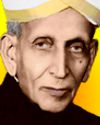
c.1890
Born 15 Sep 1860; died 14 Apr 1962 at age 101. quotes
Sir Mokshagundam ("Sir MV") Visvesvaraya was an Indian civil engineer and statesman who in his early career designed, and established, an ingenious waterworks for the municipality of Sukkur (1894). He implemented significant works of irrigation, including construction of automatic gates (of his own patented design) at Lake Fife Storage Reservoir. In 1903, M.V. introduced a new system of irrigation known as a “Block System”. He traveled to various countries to study engineering projects. M.V. engineered the extensive Hirakud Dam. A flood protection system was welcomed by the city of Hyderabad. In his career, he continued to devote himself to India’s nation building, with rural developments and industrialization. His birthday is now commemorated in as Engineer’s Day.«
Sir Mokshagundam ("Sir MV") Visvesvaraya was an Indian civil engineer and statesman who in his early career designed, and established, an ingenious waterworks for the municipality of Sukkur (1894). He implemented significant works of irrigation, including construction of automatic gates (of his own patented design) at Lake Fife Storage Reservoir. In 1903, M.V. introduced a new system of irrigation known as a “Block System”. He traveled to various countries to study engineering projects. M.V. engineered the extensive Hirakud Dam. A flood protection system was welcomed by the city of Hyderabad. In his career, he continued to devote himself to India’s nation building, with rural developments and industrialization. His birthday is now commemorated in as Engineer’s Day.«
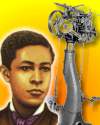
Matzeliger & machine
Born 15 Sep 1852; died 24 Aug 1889 at age 36.
Dutch Guianian-American inventor who is best known for his shoe-lasting machine that revolutionished the shoe industry by replacing the hand work of attaching the sole to the upper of a shoe. He left his homeland of Dutch Guiana and sailed for America at age 19. He settled in Lynn, Massachussetts, by about age 25, where he became a shoe stitching machine operator. There he saw the tedious and slow process of finishing the shoe by hand, and resolved to develop a machine able to do that job more efficiently. Despite being so poor that obtaining materials was difficult, he made a wooden model. He obtained a patent for his invention, issued on 20 Mar 1883. With improvements, by 1885, he had a production model ready, able to produce shoes far more rapidly than hand workers. He died of tuberculosis at the early age of not yet 37.«
Dutch Guianian-American inventor who is best known for his shoe-lasting machine that revolutionished the shoe industry by replacing the hand work of attaching the sole to the upper of a shoe. He left his homeland of Dutch Guiana and sailed for America at age 19. He settled in Lynn, Massachussetts, by about age 25, where he became a shoe stitching machine operator. There he saw the tedious and slow process of finishing the shoe by hand, and resolved to develop a machine able to do that job more efficiently. Despite being so poor that obtaining materials was difficult, he made a wooden model. He obtained a patent for his invention, issued on 20 Mar 1883. With improvements, by 1885, he had a production model ready, able to produce shoes far more rapidly than hand workers. He died of tuberculosis at the early age of not yet 37.«
Born 15 Sep 1830; died 11 Sep 1922 at age 91.
R(obert) H(enry) Coddrington was an English Anglican priest and anthropologist who made the first systematic study of the Melanesian society and culture. The reports of his observation remain classics in ethnography.
R(obert) H(enry) Coddrington was an English Anglican priest and anthropologist who made the first systematic study of the Melanesian society and culture. The reports of his observation remain classics in ethnography.
Born 15 Sep 1824; died 13 Apr 1903 at age 78. quotes
German philosopher and psychologist, who was a founder of comparative psychology. He held that humanity must be studied from the historical, comparative viewpoint, analyzing the elements that constitute the fabric of society, with its customs, its conventions, and the main tendencies of its evolution. He was Jewish and a leading opponent of anti-Semitism in his time.
German philosopher and psychologist, who was a founder of comparative psychology. He held that humanity must be studied from the historical, comparative viewpoint, analyzing the elements that constitute the fabric of society, with its customs, its conventions, and the main tendencies of its evolution. He was Jewish and a leading opponent of anti-Semitism in his time.
Born 15 Sep 1736; died 12 Nov 1793 at age 57. quotes
French astronomer who computed an orbit for Halley's Comet (1759) and studied the four satellites of Jupiter then known. He was the first Mayor of Paris (1789-91). He was executed by guillotine in Paris during the French Revolution.
French astronomer who computed an orbit for Halley's Comet (1759) and studied the four satellites of Jupiter then known. He was the first Mayor of Paris (1789-91). He was executed by guillotine in Paris during the French Revolution.

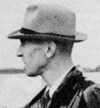
Died 15 Sep 1978 at age 80 (born 26 Jun 1898).
German aircraft engineer and designer, born Frankfurt-am-Main. Messerschmitt. He studied at the Munich Institute of Technology, and in 1926 joined the Bayerische Flugzeugwerke as its chief designer and engineer. In 1938 the company became the Messerschmitt-Aitken-Gesellschaft, producing military aircraft. His Me109 set a world speed record in 1939, and during World War 2 he supplied the Luftwaffe with its foremost types of combat aircraft. In 1944 he produced the Me262 fighter, the first jet plane flown in combat. more
German aircraft engineer and designer, born Frankfurt-am-Main. Messerschmitt. He studied at the Munich Institute of Technology, and in 1926 joined the Bayerische Flugzeugwerke as its chief designer and engineer. In 1938 the company became the Messerschmitt-Aitken-Gesellschaft, producing military aircraft. His Me109 set a world speed record in 1939, and during World War 2 he supplied the Luftwaffe with its foremost types of combat aircraft. In 1944 he produced the Me262 fighter, the first jet plane flown in combat. more

Died 15 Sep 1971 at age 70 (born 10 May 1901). quotes
Irish physicist and X-ray crystallographer whose seminal contributions to X-ray crystallography were used to determine the atomic structures of solid compounds. After graduating from Cambridge, he began research in 1923 at the Royal Institution in London for William Henry Bragg, on the structure of graphite. By 1927, he returned to Cambridge as the first lecturer in structural crystallography. The range of his research expanded into molecular biology, the origin of life and the structure and composition of the Earth's crust. Although he never won a Nobel Prize himself, he trained other scientists who did, including Dorothy Hodgkin, Max Perutz, and Aaron Klug. During WWII, he consulted concerning civilian defence, effects of explosions, RAF bombing strategy and post-war rebuilding.«
Irish physicist and X-ray crystallographer whose seminal contributions to X-ray crystallography were used to determine the atomic structures of solid compounds. After graduating from Cambridge, he began research in 1923 at the Royal Institution in London for William Henry Bragg, on the structure of graphite. By 1927, he returned to Cambridge as the first lecturer in structural crystallography. The range of his research expanded into molecular biology, the origin of life and the structure and composition of the Earth's crust. Although he never won a Nobel Prize himself, he trained other scientists who did, including Dorothy Hodgkin, Max Perutz, and Aaron Klug. During WWII, he consulted concerning civilian defence, effects of explosions, RAF bombing strategy and post-war rebuilding.«
J. D. Bernal: The Sage of Science, by Andrew Brown. - book suggestion.
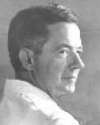
Died 15 Sep 1964 at age 65 (born 5 Apr 1899). quotes
American surgeon who (with pediatric cardiologist Helen B. Taussig) devised a surgical treatment for infants born with the "blue baby" syndrome (tetralogy of Fallot), which consists of a hole in the wall between the heart's two major chambers (ventricles). Earlier in his career he did pioneering work on the nature and treatment of hemorrhagic and traumatic shock. He demonstrated that surgical shock resulted primarily from the loss of blood, and he encouraged the use of plasma or whole-blood transfusions as treatment following the onset of shock. By 29 Nov 1944, he made the first operation on a cyanotic infant with blue-baby syndrome using his procedure, known as the subclavian-pulmonary artery anastomosis.
American surgeon who (with pediatric cardiologist Helen B. Taussig) devised a surgical treatment for infants born with the "blue baby" syndrome (tetralogy of Fallot), which consists of a hole in the wall between the heart's two major chambers (ventricles). Earlier in his career he did pioneering work on the nature and treatment of hemorrhagic and traumatic shock. He demonstrated that surgical shock resulted primarily from the loss of blood, and he encouraged the use of plasma or whole-blood transfusions as treatment following the onset of shock. By 29 Nov 1944, he made the first operation on a cyanotic infant with blue-baby syndrome using his procedure, known as the subclavian-pulmonary artery anastomosis.
Partners of the Heart: Vivien Thomas and His Work With Alfred Blalock, by Vivien T. Thomas. - book suggestion.
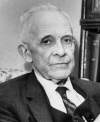
Died 15 Sep 1962 at age 88 (born 20 Nov 1873).
William W(eber) Coblentz was an American physicist and astronomer whose work lay primarily in infrared spectroscopy. In 1905 he founded the radiometry section of the National Bureau of Standards, which he headed for 40 years. Coblentz measured the infrared radiation from stars, planets, and nebulae and was the first to determine accurately the constants of blackbody radiation, thus confirming Planck's law.
William W(eber) Coblentz was an American physicist and astronomer whose work lay primarily in infrared spectroscopy. In 1905 he founded the radiometry section of the National Bureau of Standards, which he headed for 40 years. Coblentz measured the infrared radiation from stars, planets, and nebulae and was the first to determine accurately the constants of blackbody radiation, thus confirming Planck's law.
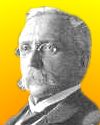
Died 15 Sep 1924 at age 74 (born 9 Jun 1850). quotes
German zoologist who was a founder of experimental embryology, by which he studied how organs and tissues are assigned their structural form and functions at the time of fertilization. In the 1880s, he experimented with frog eggs. He thought that mitotic cell division of the fertilized egg is the mechanism by which future parts of a developing organism are determined. He destroyed one of the two initial subdivisions (blastomeres) of a fertilized frog egg, obtaining half an embryo from the remaining blastomere. It seemed to him that determination of future parts and functions had already occurred in the two-cell stage and that each of the two blastomeres had already received the determinants necessary to form half the embryo. His theory was later negated by Hans Driesch.
German zoologist who was a founder of experimental embryology, by which he studied how organs and tissues are assigned their structural form and functions at the time of fertilization. In the 1880s, he experimented with frog eggs. He thought that mitotic cell division of the fertilized egg is the mechanism by which future parts of a developing organism are determined. He destroyed one of the two initial subdivisions (blastomeres) of a fertilized frog egg, obtaining half an embryo from the remaining blastomere. It seemed to him that determination of future parts and functions had already occurred in the two-cell stage and that each of the two blastomeres had already received the determinants necessary to form half the embryo. His theory was later negated by Hans Driesch.
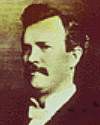
Died 15 Sep 1898 at age 43 (born 28 Jan 1855). quotes
American inventor who invented the world's first commercially viable recording adding machine and pioneer of its manufacture. He was inspired by his experience in his beginning career as a bank clerk. On 10 Jan 1885 he submitted his first patent (issued 399,116 on 21 Aug 1888) for his mechanical “calculating machine.” Burroughs co-founded the American Arithmometer Co in 1886 to develop and market the machine. The manufacture of the first machines was contracted out, and their durability was unsatisfactory. He continued to refine his design for accuracy and reliability, receiving more patents in 1892, and began selling the much-improved model for $475 each. By 1895, 284 machines had been sold, mostly to banks, and 1500 by 1900. The company later became Burroughs Corporation (1905) and eventually Unisys.« more
American inventor who invented the world's first commercially viable recording adding machine and pioneer of its manufacture. He was inspired by his experience in his beginning career as a bank clerk. On 10 Jan 1885 he submitted his first patent (issued 399,116 on 21 Aug 1888) for his mechanical “calculating machine.” Burroughs co-founded the American Arithmometer Co in 1886 to develop and market the machine. The manufacture of the first machines was contracted out, and their durability was unsatisfactory. He continued to refine his design for accuracy and reliability, receiving more patents in 1892, and began selling the much-improved model for $475 each. By 1895, 284 machines had been sold, mostly to banks, and 1500 by 1900. The company later became Burroughs Corporation (1905) and eventually Unisys.« more
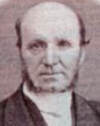
Died 15 Sep 1875 at age 68 (born 17 Sep 1806). quotes
French neurologist, born in Boulogne, who studied at Douai and Paris. He was first to describe several nervous and muscular disorders and, in developing medical treatment for them, created electrodiagnosis and electrotherapy. In 1858, he was the first to describe locomotor ataxia. In 1862, he mapped 100 facial muscles and pointed out that false, or even half-hearted, smiles involved only muscles of the mouth. But "the sweet emotions of the soul," he said, activate the pars lateralis muscle around the eyes. He first described Tabes dorsalis in 1885, which is also known as Duchenne's disease.
French neurologist, born in Boulogne, who studied at Douai and Paris. He was first to describe several nervous and muscular disorders and, in developing medical treatment for them, created electrodiagnosis and electrotherapy. In 1858, he was the first to describe locomotor ataxia. In 1862, he mapped 100 facial muscles and pointed out that false, or even half-hearted, smiles involved only muscles of the mouth. But "the sweet emotions of the soul," he said, activate the pars lateralis muscle around the eyes. He first described Tabes dorsalis in 1885, which is also known as Duchenne's disease.
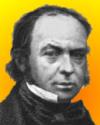
Died 15 Sep 1859 at age 53 (born 9 Apr 1806). quotes
English civil and mechanical engineer of great originality and productivity who designed the first transatlantic steamer, the Great Western. In 1823, he began work with his father, Marc Brunel, on the Thames Tunnel, and later became the resident engineer at the site. In 1829, Brunel designed a suspension bridge to cross the River Avon at Clifton. In 1831, he was appointed chief engineer at the Bristol Docks, and Brunel later designed the Monkwearmouth Docks and others at Plymouth, Cardiff, Brentford and Milford Haven. In 1833, age 27, he was appointed chief engineer of the Great Western Railway, the line that linked London to Bristol. He further built bridges, viaducts, and three steam ships: the Great Western, Great Britain and Great Eastern.« more
English civil and mechanical engineer of great originality and productivity who designed the first transatlantic steamer, the Great Western. In 1823, he began work with his father, Marc Brunel, on the Thames Tunnel, and later became the resident engineer at the site. In 1829, Brunel designed a suspension bridge to cross the River Avon at Clifton. In 1831, he was appointed chief engineer at the Bristol Docks, and Brunel later designed the Monkwearmouth Docks and others at Plymouth, Cardiff, Brentford and Milford Haven. In 1833, age 27, he was appointed chief engineer of the Great Western Railway, the line that linked London to Bristol. He further built bridges, viaducts, and three steam ships: the Great Western, Great Britain and Great Eastern.« more
Brunel: The Life and Times of Isambard Kingdom Brunel, by Angus Buchanan. - book suggestion.
In 2002, this was the 366th day to be added to the Today in Science History site, now providing a web page for every day of the year. The project began on 18 Jun 1999, and new entries are continuing to be added.«
In 1998, the rings around the planet Jupiter were declared to be made of dust from the impacts of cosmic bodies that crashed into Jupiter's moons. The idea came from studies of the rings made by scientists at several institutions.
In 1997, two popular diet drugs, fenfluramine and dexfenfluramine, were withdrawn from the market by their manufacturers after the U.S. Food and Drug Administration (FDA) established a possible link between heart-valve damage and these drugs - often used in combination with another appetite suppressant, phentermine
In 1917, the term bacteriophage (“eater of bacteria”) was coined in a note from Dr. Félix d'Hérelle to the French Academy of Sciences.
In 1910, cosmic radiation was the subject of a paper published in Physikalische Zeitchrift by Theodor Wulf, a priest and amateur physicist. He reported the result of four days of observations he made the previous Spring from the top of the Eiffel Tower. He suggested that Earth was under constant bombardment from radiation from outer space, from sources other than the sun. Using a portable electroscope as a detector, Wulf found the ionization rate at the top of the tower was not even half that at ground level. This was surprising, because it was a much smaller decrease than expected from the prevailing belief that the radiation came from the ground.
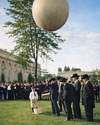
In 1904, the first U.S. free balloon for meteorological research was released in St. Louis, Missouri, to register atmospheric measurements. After the instruments carried aloft had collected their data, they returned to Earth when the balloon burst. Before this time, meteorological research had been undertaken by scientists in several lands, manning balloons to heights up to above 10,000 meters. In England, on 5 Sep 1862, James Glaisher reached the near-fatal estimated height of 37,000 feet (11,300 meters). In 1893, Charles Hermite and Georges Besançon pioneered use of small, free balloons capable of lifting light instruments. To date, literally millions of weather balloons have been launched by the National Weather Service and its predecessors.«[Image: from The Principles of Aerography by Alexander McAdie, 1917]
In 1885, a U.S. patent was issued for saccharine, the artificial sweetener discover by Constantin Fahlberg (No. 326,281). He had alreaday patented the substance “benzoic sulfinide” which he had found to be exceptionally sweet tasting (No. 319,082, 2 Jun 1885). In his new patent, his invention was to mix a small quantity of this compound with a large amount of grape or starch sugar, which he then called “dextro-saccharine.” In this form, the mixture had, he claimed, “the sweetening property of cane sugar, or saccharose, so as to be successfully used in the preparation of candies, preserves, cordials, &c.” He described mixing 2-lb of the chemical compound with 1-ton of grape sugar, by solution and evaporation. Taking advantage of the lower cost of grape sugar, this was cheaper than cane-sugar.«
In 1857, a U.S. patent was issued for the design of a typesetting machine invented by Timothy Alden of New York (No. 18,175). This is the first such machine that actually operated. The type was arranged in cells around the circumference of a horizontal wheel. As the wheel revolved, several receivers also started to rotate. The desired type was picked up and dropped in proper order in a line.
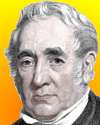
In 1830, the Liverpool to Manchester line was ceremonially opened in England. It was built by George Stephenson, a principal inventor of the railroad locomotive. His famous Rocket locomotive, won the Rainhill trials (1829) as the fastest of the competing locomotives. This line was the world's first intercity passenger railway operated solely by steam locomotives. The Rocket and six similar engines, all built by Stephenson, formed a procession, each drawing four carriages. In addition, the Northumbrian in the lead pulled a special carriage for the dignitaries. A total of 600 persons were carried. The event was marred by a fatal accident. William Huskisson, a statesman, stumbled in front of the passing Rocket which ran over his leg. He died that evening.«
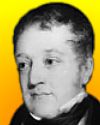
In 1830, William Huskisson (1770-1830), a British statesman became the first railway fatality while observing the ceremonial procession of locomotives at the opening of the Liverpool and Manchester railway. He was one of the dignitaries riding in a special carriage pulled by the leading locomotive, the Northumbrian. Partway along the line, while the Northumbrian stopped to take on water, the passengers stood by the rails to observe the procession of other locomotives passing on the parallel line. Huskisson stumbled and fell in the path of the Rocket locomotive. With severe injuries to his leg and thigh, he died later that evening. Among other government positions, he had been colonial secretary and leader of the House of Commons.«
The Last Journey of William Huskisson, by Simon Garfield. - book suggestion.
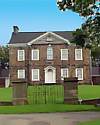
In 1817, the first U.S. mill to roll and puddle iron was opened. Plumstock Rolling Mill, built by pioneer ironmaster Isaac Meason (15 Aug 1743 - 23 Jan 1818), stood at Redstone Creek, Pennsylvania. A puddling furnace reduces the carbon content in cast iron to produce malleable iron. The mill produced wrought iron by roll milling rather than than hammer forging. It was destroyed by floods in 1824. Meason had led the iron and steel industry since 1791 when he establishing the first commercially successful iron furnace and forge west of the Alleghenies. A rich man, he eventually owned 20,000 acres of land, six iron furnaces, toll ferries and bridges, two sawmills, grist mills, the entire town of New Haven and property in Kentucky.«[Image: Isaac Meason commissioned architect Adam Wilson to build his Georgian-style mansion (1802), which is now a National Historic Landmark.]
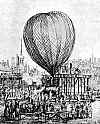
In 1784, the first successful balloon ascent to be made in England was demonstrated by an Italian, Vincenzo Lunardi before a crowd of onlookers in London that included the Prince of Wales and other eminent statesmen. He lifted off from the Artillery Ground in a brightly decorated, hydrogen balloon accompanied by a dog, a cat and a pigeon. Because of the impatience of the crowd, he left before the balloon was fully inflated, thus needing to leave behind his friend George Biggin who had planned to travel with him. Lunardi's flight covered a distance of 24 miles, and he descended at Ware. It was only in the previous year that the Montgolfier brothers made the first hot-air balloon ascent on 5 Jun 1783.«




