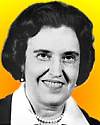
Born 19 Jul 1921; died 30 May 2011 at age 89. quotes
Rosalyn Sussman Yalow was an American biophysicist who shared (with Andrew V. Schally and Roger Guillemin) the 1977 Nobel Prize for Physiology or Medicine, making her the second woman to win the Nobel Prize in medicine, “for the development of radioimmuno assays (RIA) of peptide hormone.” RIA brought about a revolution in biological and medical research. With her coworkers, she applied RIA to study of the physiology of the peptide hormones insulin, ACTH, growth hormone, and also to throw light upon the pathogenesis of diseases caused by abnormal secretion of these hormones. This was pioneering work that opened diabetes research in new directions. She has been called the “Madame Curie of the Bronx..”«
Rosalyn Sussman Yalow was an American biophysicist who shared (with Andrew V. Schally and Roger Guillemin) the 1977 Nobel Prize for Physiology or Medicine, making her the second woman to win the Nobel Prize in medicine, “for the development of radioimmuno assays (RIA) of peptide hormone.” RIA brought about a revolution in biological and medical research. With her coworkers, she applied RIA to study of the physiology of the peptide hormones insulin, ACTH, growth hormone, and also to throw light upon the pathogenesis of diseases caused by abnormal secretion of these hormones. This was pioneering work that opened diabetes research in new directions. She has been called the “Madame Curie of the Bronx..”«
Rosalyn Yalow, Nobel Laureate: Her Life and Work in Medicine, by Eugene Straus. - book suggestion.
Born 19 Jul 1877; died 5 Jul 1932 at age 54.
Nils Erland Herbert Nordenskiöld was a Swedish ethnologist and archaeologist, and a foremost scholar of South American Indian culture in his time. From 1913, at the Gotebörg Ethnographic Museum, Sweden, he started a period of intensive acquisition. Exhibits and documentation increased and the collection grew more rapidly than before. His work influenced the study of anthropology in Sweden and Denmark. He made zoological expeditions to Patagonia (1899) and Agentina and Bolivia (1901-02), then turned to archeological research in the mountains of Peru and Boliva (1904-05). A later expeditions led to a paper dealing with mounds and urn burials in Bolivia (1912). On his last expedition (1927) he studied the Chocó and Cuna Indians of Columbia and Panama.
Nils Erland Herbert Nordenskiöld was a Swedish ethnologist and archaeologist, and a foremost scholar of South American Indian culture in his time. From 1913, at the Gotebörg Ethnographic Museum, Sweden, he started a period of intensive acquisition. Exhibits and documentation increased and the collection grew more rapidly than before. His work influenced the study of anthropology in Sweden and Denmark. He made zoological expeditions to Patagonia (1899) and Agentina and Bolivia (1901-02), then turned to archeological research in the mountains of Peru and Boliva (1904-05). A later expeditions led to a paper dealing with mounds and urn burials in Bolivia (1912). On his last expedition (1927) he studied the Chocó and Cuna Indians of Columbia and Panama.
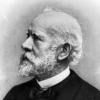
Born 19 Jul 1865; died 11 Dec 1933 at age 68.
French crystallographer who formulated basic laws concerning the external morphology and internal structure of crystals. He was the son of Charles Friedel (1832-99), French mineralogist and organic chemist. He recognized, in 1892, that liquid crystals had three types of organisation (mesophases). In 1893, he became professor at the National School of the Mines in Saint-Etienne. After WW I, he moved to the University of Strasbourg. Illness caused his premature retirement in 1930.
French crystallographer who formulated basic laws concerning the external morphology and internal structure of crystals. He was the son of Charles Friedel (1832-99), French mineralogist and organic chemist. He recognized, in 1892, that liquid crystals had three types of organisation (mesophases). In 1893, he became professor at the National School of the Mines in Saint-Etienne. After WW I, he moved to the University of Strasbourg. Illness caused his premature retirement in 1930.
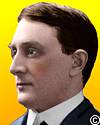
Born 19 Jul 1865; died 26 May 1939 at age 73. quotes
Charles Horace Mayo was an American surgeon and philanthropist who co-founded the Mayo Clinic and Mayo Foundation. During the frontier practice of their father, Dr. William Worrall Mayo, Charles and his brother, William J. Mayo, began their medical training early, first by observing him, and later by assisting him on patient visits and with autopsies. After medical school, the family practiced together. In 1914 they built a clinic for the integrated group practice of medicine. In 1919, the brothers turned over the clinic, assets, and most of their life savings, to the charitable organization now known as Mayo Foundation.
Charles Horace Mayo was an American surgeon and philanthropist who co-founded the Mayo Clinic and Mayo Foundation. During the frontier practice of their father, Dr. William Worrall Mayo, Charles and his brother, William J. Mayo, began their medical training early, first by observing him, and later by assisting him on patient visits and with autopsies. After medical school, the family practiced together. In 1914 they built a clinic for the integrated group practice of medicine. In 1919, the brothers turned over the clinic, assets, and most of their life savings, to the charitable organization now known as Mayo Foundation.
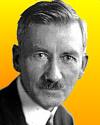
Born 19 Jul 1863; died 25 Aug 1935 at age 72.
Curtis Fletcher Marbut was a U.S. geologist and cofounder of modern soil science, who worked closely with experts from many countries to develop international classification systems (1927) for soil materials. From 1895 Marbut taught geology at University of Missouri, while also working for the Missouri Geological Survey and directing the Missouri Soil Survey. In 1910 he left Missouri and was a soil scientist for the U.S. Bureau of Soils, for the rest of his life. Due to his exceptional service, his mandatory civil service retirement at 70 was twice waived by President Franklin D. Roosevelt. He died during a field trip to China.
Curtis Fletcher Marbut was a U.S. geologist and cofounder of modern soil science, who worked closely with experts from many countries to develop international classification systems (1927) for soil materials. From 1895 Marbut taught geology at University of Missouri, while also working for the Missouri Geological Survey and directing the Missouri Soil Survey. In 1910 he left Missouri and was a soil scientist for the U.S. Bureau of Soils, for the rest of his life. Due to his exceptional service, his mandatory civil service retirement at 70 was twice waived by President Franklin D. Roosevelt. He died during a field trip to China.
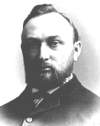
Born 19 Jul 1846; died 3 Feb 1919 at age 72. quotes
Edward Charles Pickering, was born Boston, Mass., U.S. physicist and astronomer. After graduating from Harvard, he taught physics for ten years at MIT where he built the first instructional physics laboratory in the United States. At age 30, he directed the Harvard College Observatory for 42 years. His observations were assisted by a staff of women, including Annie Jump Cannon. He introduced the use of the meridian photometer to measure the magnitude of stars, and established the Harvard Photometry (1884), the first great photometric catalog. By establishing a station in Peru (1891) to make the southern photographs, he published the first all-sky photographic map (1903).
Edward Charles Pickering, was born Boston, Mass., U.S. physicist and astronomer. After graduating from Harvard, he taught physics for ten years at MIT where he built the first instructional physics laboratory in the United States. At age 30, he directed the Harvard College Observatory for 42 years. His observations were assisted by a staff of women, including Annie Jump Cannon. He introduced the use of the meridian photometer to measure the magnitude of stars, and established the Harvard Photometry (1884), the first great photometric catalog. By establishing a station in Peru (1891) to make the southern photographs, he published the first all-sky photographic map (1903).
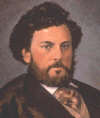
Born 19 Jul 1814; died 10 Jan 1862 at age 47. quotes
Samuel Colt, born Hartford, Conn., was an American firearms manufacturer who popularized the Colt 45 revolver and other firearms. While an apprentice seaman, he made a wooden model of an automatically revolving breech pistol (perhaps inspired by the ship's wheel) and on returning to the U.S.A. he made metal models, filed for patents, and toured as "Dr. Coult," thus earning the money he needed to begin manufacturing. His factory was one of the most innovative in its use of mass-production technique. His Barnum-like salesmanship and self-promotion also popularized his product.
Samuel Colt, born Hartford, Conn., was an American firearms manufacturer who popularized the Colt 45 revolver and other firearms. While an apprentice seaman, he made a wooden model of an automatically revolving breech pistol (perhaps inspired by the ship's wheel) and on returning to the U.S.A. he made metal models, filed for patents, and toured as "Dr. Coult," thus earning the money he needed to begin manufacturing. His factory was one of the most innovative in its use of mass-production technique. His Barnum-like salesmanship and self-promotion also popularized his product.
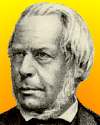
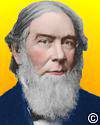
Born 19 Jul 1806; died 17 Feb 1867 at age 60.
Alexander Dallas Bache was an American physicist who was Ben Franklin's great grandson and trained at West Point. Bache became the second Superintendent of the Coast Survey (1844-65). He made an ingenious estimate of ocean depth (1856) by studying records of a tidal wave that had taken 12 hours to cross the Pacific. Knowing that wave speeds depend on depth, he calculated a 2.2- mile average depth for the Pacific (which is within 15% of the presently accepted value). As President of the National Academy of Sciences, Bache secured greater government involvement in science. Through the Franklin Institute he instituted boiler tests to promote safety for steamboats. more
Alexander Dallas Bache was an American physicist who was Ben Franklin's great grandson and trained at West Point. Bache became the second Superintendent of the Coast Survey (1844-65). He made an ingenious estimate of ocean depth (1856) by studying records of a tidal wave that had taken 12 hours to cross the Pacific. Knowing that wave speeds depend on depth, he calculated a 2.2- mile average depth for the Pacific (which is within 15% of the presently accepted value). As President of the National Academy of Sciences, Bache secured greater government involvement in science. Through the Franklin Institute he instituted boiler tests to promote safety for steamboats. more


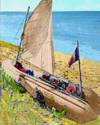
l'Hérétique boat
French biologist and physician who made a single-handed voyage across the Atlantic Ocean in a small boat to test his theory that a shipwrecked person could survive without provisions. He was age 27 when he left the Canary Islands on 19 Oct 1952 with almost no provisions and only a sextant for navigation. He ate raw fish he speared with a home-made harpoon and netted surface plankton. He drank seawater, limited to occasional sips. His Zodiac inflatable boat, l’Hérétique, was just 4.5 m (15-ft) long and fitted with a sail. Bombard reached Barbados 65 days later on 23 Dec 1952, having lost about 25-kg (55-lb) in weight.«
The Voyage of the Heretique, by Alain Bombard. - book suggestion.
Died 19 Jul 1999 at age 94 (born 11 Sep 1904).
Austrian-born American physician who showed that leukemia could be caused by a virus. After his first discovery in 1951 of an RNA leukemia virus in mice, the subsequent studies by Gross revealed much about the mode of action of his RNA virus, including the vertical transmission of virus from one generation to the next, the activation of viruses by radiation, and the role of immunity in protection against the agent. His work led other researchers to study the role of viruses in cancer.«
Austrian-born American physician who showed that leukemia could be caused by a virus. After his first discovery in 1951 of an RNA leukemia virus in mice, the subsequent studies by Gross revealed much about the mode of action of his RNA virus, including the vertical transmission of virus from one generation to the next, the activation of viruses by radiation, and the role of immunity in protection against the agent. His work led other researchers to study the role of viruses in cancer.«
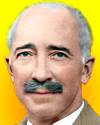
Died 19 Jul 1996 at age 87 (born 13 Apr 1909).
English wildlife conservationist who championed the preservation of wildlife in East Africa for over 40 years. He founded Kenya’s Royal National Parks (1946) and served as its first director for 20 years, working to protect game from both hunters, and thousands of advancing cattle, herded by tribesmen, which squeezed wildlife off the land. As well as the prevention of poaching, he was responsible for staffing, buildings, and construction of roads. Cowie raised funds, partly by lecturing, and was frequently at international conferences. He assisted the development of parks and tourism throughout East Africa. His books informed a wider audience. In 1960, Cowie was appointed CBE. In 1979, he retired to Suffolk.«
English wildlife conservationist who championed the preservation of wildlife in East Africa for over 40 years. He founded Kenya’s Royal National Parks (1946) and served as its first director for 20 years, working to protect game from both hunters, and thousands of advancing cattle, herded by tribesmen, which squeezed wildlife off the land. As well as the prevention of poaching, he was responsible for staffing, buildings, and construction of roads. Cowie raised funds, partly by lecturing, and was frequently at international conferences. He assisted the development of parks and tourism throughout East Africa. His books informed a wider audience. In 1960, Cowie was appointed CBE. In 1979, he retired to Suffolk.«
Fly, Vulture, by Mervyn Cowie. - book suggestion.
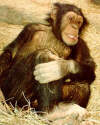
Died 19 Jul 1988 at age 78 (born 17 Nov 1909).
Geoffrey (Howard) Bourne was an Australian-born American anatomist. His studies of the mammalian adrenal gland made him a pioneer in the chemistry of cells and tissues (histochemistry). Professor and Chairman of the Anatomy Department of the Emory University Medical School, Atlanta, Ga.; later became Director (1962-78) of the Yerkes Primate Research Center there. Bourne was a most articulate spokesman for nonhuman primate research. He fought vigorously to proceed with research involving all primates, especially the dwarf chimpanzee. His numerous books covered many facets of biology.
Geoffrey (Howard) Bourne was an Australian-born American anatomist. His studies of the mammalian adrenal gland made him a pioneer in the chemistry of cells and tissues (histochemistry). Professor and Chairman of the Anatomy Department of the Emory University Medical School, Atlanta, Ga.; later became Director (1962-78) of the Yerkes Primate Research Center there. Bourne was a most articulate spokesman for nonhuman primate research. He fought vigorously to proceed with research involving all primates, especially the dwarf chimpanzee. His numerous books covered many facets of biology.
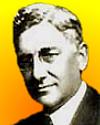
Died 19 Jul 1937 at age 73 (born 1 Nov 1863).
George Safford Parker was an American inventor who perfected the fountain pen and founded the Parker Pen Company to manufacture it. He began in a teaching career which introduced him to the unreliability of existing fountain pens used by his students. Through selling and repairing them, he learned of their construction. He ceased teaching in 1888 to experiment with his own design. By 8 Mar 1892, he incorporated Parker Pen Company. He subsequently patented many improvements, and was particularly successful in creating a reliable ink-flow system. During WW I, his Trench Pen utilized a tablet of pigment to be inserted into the pen and turned to fluid ink by filling the barrel with water.
George Safford Parker was an American inventor who perfected the fountain pen and founded the Parker Pen Company to manufacture it. He began in a teaching career which introduced him to the unreliability of existing fountain pens used by his students. Through selling and repairing them, he learned of their construction. He ceased teaching in 1888 to experiment with his own design. By 8 Mar 1892, he incorporated Parker Pen Company. He subsequently patented many improvements, and was particularly successful in creating a reliable ink-flow system. During WW I, his Trench Pen utilized a tablet of pigment to be inserted into the pen and turned to fluid ink by filling the barrel with water.
(EB)
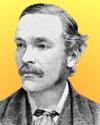
Died 19 Jul 1882 at age 30 (born 10 Nov 1851). quotes
British zoologist, younger brother of the statesman Arthur James Balfour, and a founder of modern embryology. Influenced by the work of Michael Foster, with whom he wrote Elements of Embryology (1883), Balfour showed the evolutionary connection between vertebrates and certain invertebrates (similar to research being done by Aleksandr Kovalevski). Balfour proposed the term Chordata for all animals possessing a notochord at some stage in their development. He also did pioneer work on the development of the kidneys and related organs, as well as the spinal nervous system. While convalescing from typhoid fever in Switzerland, he died at the young age of 30 from a fall while attempting an ascent of the unconquered Aiguille Blanche of Mont Blanc.
British zoologist, younger brother of the statesman Arthur James Balfour, and a founder of modern embryology. Influenced by the work of Michael Foster, with whom he wrote Elements of Embryology (1883), Balfour showed the evolutionary connection between vertebrates and certain invertebrates (similar to research being done by Aleksandr Kovalevski). Balfour proposed the term Chordata for all animals possessing a notochord at some stage in their development. He also did pioneer work on the development of the kidneys and related organs, as well as the spinal nervous system. While convalescing from typhoid fever in Switzerland, he died at the young age of 30 from a fall while attempting an ascent of the unconquered Aiguille Blanche of Mont Blanc.
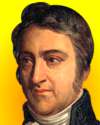
Died 19 Jul 1842 at age 54 (born 22 Mar 1788). quotes
French chemist who is known for his research in partnership with Joseph-Bienaimé Caventou into vegetable bases and the resulting contributions of alkaloid chemistry to the field of medicine. They helped found the chemistry of vegetable alkaloids. They isolated chlorophyll (1817), for which they coined the French name chlorophyle in Ann. de Chimie(1818), IX, 195. Their alkaloid discoveries included strychnine (1818), brucine (1819), quinine (1820), caffeine (1821), and cinchonine. In 1823, using elementary closed-tube analyses in which the alkaloids were combusted, they discovered nitrogen was present in the compounds. Alkaloids are organic compounds which form water-soluble salts that perform various functions in medicine, including analgesics (pain-killers), and respiratory stimulants.
French chemist who is known for his research in partnership with Joseph-Bienaimé Caventou into vegetable bases and the resulting contributions of alkaloid chemistry to the field of medicine. They helped found the chemistry of vegetable alkaloids. They isolated chlorophyll (1817), for which they coined the French name chlorophyle in Ann. de Chimie(1818), IX, 195. Their alkaloid discoveries included strychnine (1818), brucine (1819), quinine (1820), caffeine (1821), and cinchonine. In 1823, using elementary closed-tube analyses in which the alkaloids were combusted, they discovered nitrogen was present in the compounds. Alkaloids are organic compounds which form water-soluble salts that perform various functions in medicine, including analgesics (pain-killers), and respiratory stimulants.
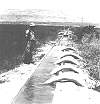
In 1955, Yarkon Water Project opens to supply water to Negev desert in Israel. Water shortage is a severe problem in Israel. There is not much water in this area and the existing sources lie partly in Syria and Jordan. The Yarkon “flows” through the most densely populated areas of the country to the Mediterranean. The river has deteriorated rapidly since the 1950s due to excessive draining for irrigation by the National Water Carrier; with marked decline in water quality, animal habitats, flora and fauna. The National Water Carrier (1964), which crosses Israel from north to south, is the 81-mile main artery connecting all regional water projects in the State.
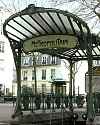
In 1900, the Métropolitan subway (Métro) in Paris opened the first eight stations on its first line running east-west through the centre of the city from Porte de Vincennes to Porte Maillot. Within two months the total number of stations became 18, as more were opened on 6 Aug and 1 Sep1900. Fulgence Bienvenüe was the engineer in charge of construction. The line was built close to the surface using the “cut and cover” method along existing streets. Its Art Nouveau entrances were designed by architect Hector Guimard.With extensions built in the 1930s and 1992, it now extends from La Défense high-rise district in the west to the Château de Vincennes, a medieval castle in the east. Still known as line number 1, it is the busiest route.«
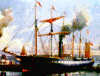
In 1843, the S.S. Great Britain, was launched from Bristol, England, the world's first all-metal liner, first single screw-propeller driven and with 322-ft overall length, the biggest ship of the time. The six-masted, 3,270-ton vessel, designed by Isambard Kingdom. Brunel, became the world's first iron-hulled steamship to cross the Atlantic (1845). Its crew of 130 included 30 stewards for the 360-seat dining room. As a luxury liner, it carried passengers to New York and Melbourne. Later it became a ferry carrying troops to the Crimea and India, then a cargo ship, finally abandoned in the Falkland Islands following storm damage (1886). On this day in 1970, it was towed back to Bristol's Great Western Dock (where it was originally built) to be restored by volunteers.«
Brunel's Ships, by Denis Griffiths. - book suggestion.
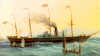
In 1837, Isambard Kingdom Brunel's S.S. Great Western, an oak-hulled steamship propelled by paddle wheels powered by a two-cylinder steam engine, was launched at Bristol. The 2,300-ton vessel had an overall length of 236 feet. He began work in 1836 on the Great Western, the first of three ships, each of them the largest in the world when launched. In 1838 the Great Western began regular transatlantic service and became the first steamship to cross the Atlantic from Bristol to New York. The 15 day crossing, the first of 67, established steam-power as the norm. He also built S.S. Great Britain (1843) and S.S. Great Eastern (1858).
Brunel: The Life and Times of Isambard Kingdom Brunel, by Angus Buchanan. - book suggestion.




