
Born 6 Jan 1944.
Swiss immunologist and pathologist who received the Nobel Prize for Physiology or Medicine in 1996 because of his relatively early work with colleague Peter Doherty defining the system by which the immune system identifies friend and foe. His work since then has built upon this discovery, revealing how the thymus gland selects only white blood cells that react properly to virus-infected cells and investigating the complex interplay by which viruses and their hosts co-evolve. Zinkernagel has also been a vocal proponent of the promise of biotechnology in his native Switzerland.
Swiss immunologist and pathologist who received the Nobel Prize for Physiology or Medicine in 1996 because of his relatively early work with colleague Peter Doherty defining the system by which the immune system identifies friend and foe. His work since then has built upon this discovery, revealing how the thymus gland selects only white blood cells that react properly to virus-infected cells and investigating the complex interplay by which viruses and their hosts co-evolve. Zinkernagel has also been a vocal proponent of the promise of biotechnology in his native Switzerland.
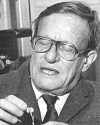
Born 6 Jan 1906; died 19 Jan 2000 at age 94.
American geneticist who was one of the leading evolutionary biologists. Stebbins is considered one of the "architects" of the modern evolutionary synthesis of the 1930-40s (with Dobzhansky, animal systematist Ernst Mayr, and paleontologist George Gaylord Simpson ) Together, their work was a synthesis of research in cytology, genetics, systematics, paleontology. Stebbins created a modern framework for the study of plant evolution. From the 1940s, he artificially created fertile hybrids having more than twice the basic number of chromosomes (and was the first scientist to do so). This technique had value in both taxonomy and plant breeding.
American geneticist who was one of the leading evolutionary biologists. Stebbins is considered one of the "architects" of the modern evolutionary synthesis of the 1930-40s (with Dobzhansky, animal systematist Ernst Mayr, and paleontologist George Gaylord Simpson ) Together, their work was a synthesis of research in cytology, genetics, systematics, paleontology. Stebbins created a modern framework for the study of plant evolution. From the 1940s, he artificially created fertile hybrids having more than twice the basic number of chromosomes (and was the first scientist to do so). This technique had value in both taxonomy and plant breeding.
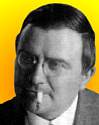
Born 6 Jan 1879; died 14 Sep 1940 at age 61. quotes
Swiss geologist who studied the structure of the Alps. He produced a map of the Dent Blanche massif (1908) with a description of his investigation of the strata. In 1915, he coined the term embryotectonics for a new line of research which analyzed the sequential evolution of geological structures back to its origins as a sedimentary terrain.«
Swiss geologist who studied the structure of the Alps. He produced a map of the Dent Blanche massif (1908) with a description of his investigation of the strata. In 1915, he coined the term embryotectonics for a new line of research which analyzed the sequential evolution of geological structures back to its origins as a sedimentary terrain.«
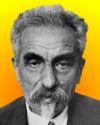
Born 6 Jan 1865; died 20 Dec 1934 at age 69.
Russian archaeologist, ethnographer and linguist, who contributed to the language studies and archaeology of the Caucasus. In the 1930s, his "theory of the staging" (1929) led the archaeology of the USSR. This theory held that it is possible to reconstruct a social and an economical situation in the ancient societies by investigating only material finds on the base of the marxists so called "rise method". In this method the material is investigated by separation of groups which have social and functional meaning, (by these investigations). In his study of the Caucasian, Afro-Asiatic and Basque languages, his nonsensical Japhetic Theory that all languages of the world derived from an original set of four monosyllables: sal, ber, yon, rosh.«
Russian archaeologist, ethnographer and linguist, who contributed to the language studies and archaeology of the Caucasus. In the 1930s, his "theory of the staging" (1929) led the archaeology of the USSR. This theory held that it is possible to reconstruct a social and an economical situation in the ancient societies by investigating only material finds on the base of the marxists so called "rise method". In this method the material is investigated by separation of groups which have social and functional meaning, (by these investigations). In his study of the Caucasian, Afro-Asiatic and Basque languages, his nonsensical Japhetic Theory that all languages of the world derived from an original set of four monosyllables: sal, ber, yon, rosh.«
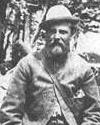
In a mountain camp
Born 6 Jan 1842; died 24 Dec 1901 at age 59.
American geologist and mining engineer who directed the survey of the 40th parallel (1867-78), an intensive study of the mineral resources along the site of the proposed Union Pacific Railroad, recorded in his classic volume, Systematic Geology (1878). This investigative effort included the first discovery of glaciers in the U.S. while studying the extinct volcanoes of Mounts Shasta, Rainier, and Hood. He is credited with introducing the use of contour lines on maps to indicate topographic features. Instrumental in forming the U.S. Geological Survey, he was then appointed its first head (1879-81). He wrote a series of Atlantic Monthly articles on Mountaineering in the Sierra Nevada (1872), marking a transition to popularized climbing sport.
American geologist and mining engineer who directed the survey of the 40th parallel (1867-78), an intensive study of the mineral resources along the site of the proposed Union Pacific Railroad, recorded in his classic volume, Systematic Geology (1878). This investigative effort included the first discovery of glaciers in the U.S. while studying the extinct volcanoes of Mounts Shasta, Rainier, and Hood. He is credited with introducing the use of contour lines on maps to indicate topographic features. Instrumental in forming the U.S. Geological Survey, he was then appointed its first head (1879-81). He wrote a series of Atlantic Monthly articles on Mountaineering in the Sierra Nevada (1872), marking a transition to popularized climbing sport.
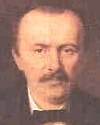
Born 6 Jan 1822; died 26 Dec 1890 at age 68.
German archaeologist who excavated sites at Troy, Mycenae, and Tiryns he associated with Homer's Iliad and Vergil's Aeneid. After a successful business career, Schliemann retired (1863) to pursue his childhood ambition of discovering Homeric Troy. Ignoring scholarly derision, he excavated Hissarlik on the Asia Minor coast of Turkey, finding ruins of nine consecutive cities. The second oldest (Troy II), which he wrongly identified with Homer's city, yielded a hoard that Schliemann romantically called "Priam's Treasure." His spectacular finds in Greece at Mycenae (1874-76), Orchomenos in Boeotia (1880), and Tiryns (1884-85) established him as the discoverer of Mycenaean civilization and the leader in discovery of prehistoric Greece.«
German archaeologist who excavated sites at Troy, Mycenae, and Tiryns he associated with Homer's Iliad and Vergil's Aeneid. After a successful business career, Schliemann retired (1863) to pursue his childhood ambition of discovering Homeric Troy. Ignoring scholarly derision, he excavated Hissarlik on the Asia Minor coast of Turkey, finding ruins of nine consecutive cities. The second oldest (Troy II), which he wrongly identified with Homer's city, yielded a hoard that Schliemann romantically called "Priam's Treasure." His spectacular finds in Greece at Mycenae (1874-76), Orchomenos in Boeotia (1880), and Tiryns (1884-85) established him as the discoverer of Mycenaean civilization and the leader in discovery of prehistoric Greece.«
Lost and Found: The 9,000 Treasures of Troy: Heinrich Schliemann and the Gold That Got Away, by Caroline Moorehead. - book suggestion.
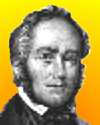
Born 6 Jan 1795; died 12 May 1871 at age 76.
French chemist who made important contributions to industrial chemistry and discovered cellulose, a basic constituent of plant cells. His father's factories produced various chemicals, and refined sugar, so Payen studied science. In 1815, age 20, he was made manager of his father's plant for refining imported crude borax. There, he developed a synthesis for borax from soda and boric acid and in 1820 he created a new industry which could market the synthetic product at one-third the price of the refined natural borax. His father died in 1820, and Payen took over the family business. By 1822, he had found the value of animal charcoal to clarify sugar solutions. In 1833, Payen discovered the first enzyme, for which he coined the name diastase. It converts starch to sugar, and was later (1893) called amylase.
French chemist who made important contributions to industrial chemistry and discovered cellulose, a basic constituent of plant cells. His father's factories produced various chemicals, and refined sugar, so Payen studied science. In 1815, age 20, he was made manager of his father's plant for refining imported crude borax. There, he developed a synthesis for borax from soda and boric acid and in 1820 he created a new industry which could market the synthetic product at one-third the price of the refined natural borax. His father died in 1820, and Payen took over the family business. By 1822, he had found the value of animal charcoal to clarify sugar solutions. In 1833, Payen discovered the first enzyme, for which he coined the name diastase. It converts starch to sugar, and was later (1893) called amylase.
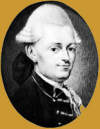
Born 6 Jan 1745; died 1 Aug 1799 at age 54. quotes
French ballooning pioneer, who with his brother Joseph-Michel Montgolfier, developed the hot-air balloon and conducted the first untethered flights. An initial experiment with a balloon of taffeta filled with hot smoke was given a public demonstration on 5 Jun 1783. This was followed by a flight carrying three animals as passengers on 19 Sep 1783, shown in Paris and witnessed by King Louis XVI. On 21 Nov 1783, their balloon carried the first two men on an untethered flight - the first manned balloon flight. Modifications of the basic Montgolfier design were incorporated in the construction of larger balloons that, in later years, led to exploration of the upper atmosphere. Étienne also developed a process for manufacturing vellum.[DSB gives date of death 1 Aug 1799, and that he was named Étienne in the baptismal register, but Jacques-Étienne in his death certificate. EB gives 2 Aug 1799.] more
French ballooning pioneer, who with his brother Joseph-Michel Montgolfier, developed the hot-air balloon and conducted the first untethered flights. An initial experiment with a balloon of taffeta filled with hot smoke was given a public demonstration on 5 Jun 1783. This was followed by a flight carrying three animals as passengers on 19 Sep 1783, shown in Paris and witnessed by King Louis XVI. On 21 Nov 1783, their balloon carried the first two men on an untethered flight - the first manned balloon flight. Modifications of the basic Montgolfier design were incorporated in the construction of larger balloons that, in later years, led to exploration of the upper atmosphere. Étienne also developed a process for manufacturing vellum.[DSB gives date of death 1 Aug 1799, and that he was named Étienne in the baptismal register, but Jacques-Étienne in his death certificate. EB gives 2 Aug 1799.] more
The Montgolfier Brothers and the Invention of Aviation, 1783-1784, by Charles Coulston Gillispie. - book suggestion.

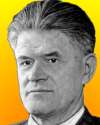
Died 6 Jan 1990 at age 85 (born 15 Jul 1904).
Pavel Alekseyevich Cherenkov (or Cerenkov) was a Russian physicist who discovered Cherenkov radiation (1934), a faint blue light emitted by electrons passing through a transparent medium when their speed exceeds the speed of light in that medium. Fellow Soviet scientists Igor Y. Tamm and Ilya M. Frank investigated the phenomenon from which the Cherenkov counter was developed. Extensive use of this Cherenkov detector was later made in applications of experimental nuclear and particle physics. For their work, the trio shared the 1958 Nobel Prize for Physics.[Note: birth date 15 Jul 1904 Old Style is 28 Jul 1904 New Style]
Pavel Alekseyevich Cherenkov (or Cerenkov) was a Russian physicist who discovered Cherenkov radiation (1934), a faint blue light emitted by electrons passing through a transparent medium when their speed exceeds the speed of light in that medium. Fellow Soviet scientists Igor Y. Tamm and Ilya M. Frank investigated the phenomenon from which the Cherenkov counter was developed. Extensive use of this Cherenkov detector was later made in applications of experimental nuclear and particle physics. For their work, the trio shared the 1958 Nobel Prize for Physics.[Note: birth date 15 Jul 1904 Old Style is 28 Jul 1904 New Style]
Died 6 Jan 1988 at age 90 (born 18 Aug 1897).
Ukrainian-American engineer and science historian who worked as an engineer during the electrification of Cuba. Realizing the need for improved methods of connecting electrical conductors, in 1924, he founded the Burndy Engineering Company. A few years later, he became interested in the history of Renaissance science. Subsequently, he began collecting books and everything he could find that was related to the history of science. This became a second career as a scholar that would run parallel with his life as a businessman. He wrote many books and pamphlets, on topics from the transport of ancient obelisks, to authoritative biographies of many scientific pioneers, including Alessandro Volta, inventor of the electric battery, and Wilhelm Röntgen, discoverer of the X ray.
Ukrainian-American engineer and science historian who worked as an engineer during the electrification of Cuba. Realizing the need for improved methods of connecting electrical conductors, in 1924, he founded the Burndy Engineering Company. A few years later, he became interested in the history of Renaissance science. Subsequently, he began collecting books and everything he could find that was related to the history of science. This became a second career as a scholar that would run parallel with his life as a businessman. He wrote many books and pamphlets, on topics from the transport of ancient obelisks, to authoritative biographies of many scientific pioneers, including Alessandro Volta, inventor of the electric battery, and Wilhelm Röntgen, discoverer of the X ray.
Died 6 Jan 1945 at age 81 (born 12 Mar 1863). quotes
Russian geochemist and mineralogist who was a founder of the specialist sciences of geochemistry and biogeochemistry. He was the first to popularize the concept of the noosphere - the biosphere controlled by the mind of man. Within the last 200 years, humanity has been a powerful geologic force, moving more mass upon the earth than the biosphere. Two of the laws detailed by Vernadsky are that the number and kinds of chemical elements and compounds entering the cycling organization of living matter increase with time, and that as we move toward the present the pace of cycling increases.
Russian geochemist and mineralogist who was a founder of the specialist sciences of geochemistry and biogeochemistry. He was the first to popularize the concept of the noosphere - the biosphere controlled by the mind of man. Within the last 200 years, humanity has been a powerful geologic force, moving more mass upon the earth than the biosphere. Two of the laws detailed by Vernadsky are that the number and kinds of chemical elements and compounds entering the cycling organization of living matter increase with time, and that as we move toward the present the pace of cycling increases.
Died 6 Jan 1918 at age 72 (born 3 Mar 1845). quotes
Georg (Ferdinand Ludwig Philipp) Cantor was a Russian-German mathematician who created modern set theory and extended it to give the concept of transfinite numbers,with cardinal and ordinal number classes. Although Cantor's earliest work was concerned with Fourier series, his reputation rests upon his contribution to transfinite set theory. He began with the definition of infinite sets proposed by Dedekind in 1872: a set is infinite when it is similar to a proper part of itself. Sets with this property, such as the set of natural numbers are said to be 'denumerable' or 'countable'. His career was repeatedly interrupted after 1884 by mental illness. He died of heart failure in 1918 in a mental institution.
Georg (Ferdinand Ludwig Philipp) Cantor was a Russian-German mathematician who created modern set theory and extended it to give the concept of transfinite numbers,with cardinal and ordinal number classes. Although Cantor's earliest work was concerned with Fourier series, his reputation rests upon his contribution to transfinite set theory. He began with the definition of infinite sets proposed by Dedekind in 1872: a set is infinite when it is similar to a proper part of itself. Sets with this property, such as the set of natural numbers are said to be 'denumerable' or 'countable'. His career was repeatedly interrupted after 1884 by mental illness. He died of heart failure in 1918 in a mental institution.
1862
Died 6 Jan 1884 at age 61 (born 22 Jul 1822). quotes
Gregor Johann Mendel was an Austrian botanist, geneticist and monk who pioneered in the study of heredity. He spent his adult life with the Augustinian monastery in Brunn, where as a geneticist, botanist and plant experimenter, he was the first to lay the mathematical foundation of the science of genetics, in what came to be called Mendelism. Over the period 1856-63, Mendel grew and analyzed over 28,000 pea plants. He carefully studied for each their plant height, pod shape, pod color, flower position, seed color, seed shape and flower color. He made two very important generalizations from his pea experiments, known today as the Laws of Heredity. He read a paper on his studies on 8 Feb 1865 to the Brünn Society for Natural Sciences in Moravia. It was unappreciated until 1900. Mendel coined the present day terms in genetics: recessiveness and dominance.«[Original name (until 1843) Johann Mendel. Although the baptismal register entry is written as 20 Jul 1822, it is believed that he was actually born on 22 Jul 1822, which is the date Mendel himself always stated.]
Gregor Johann Mendel was an Austrian botanist, geneticist and monk who pioneered in the study of heredity. He spent his adult life with the Augustinian monastery in Brunn, where as a geneticist, botanist and plant experimenter, he was the first to lay the mathematical foundation of the science of genetics, in what came to be called Mendelism. Over the period 1856-63, Mendel grew and analyzed over 28,000 pea plants. He carefully studied for each their plant height, pod shape, pod color, flower position, seed color, seed shape and flower color. He made two very important generalizations from his pea experiments, known today as the Laws of Heredity. He read a paper on his studies on 8 Feb 1865 to the Brünn Society for Natural Sciences in Moravia. It was unappreciated until 1900. Mendel coined the present day terms in genetics: recessiveness and dominance.«[Original name (until 1843) Johann Mendel. Although the baptismal register entry is written as 20 Jul 1822, it is believed that he was actually born on 22 Jul 1822, which is the date Mendel himself always stated.]
The Monk in the Garden: The Lost and Found Genius of Gregor Mendel, the Father of Genetics, by Robin Marantz Henig. - book suggestion.
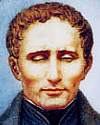
Died 6 Jan 1852 at age 43 (born 4 Jan 1809).
French educator who developed a tactile form of printing and writing, known as braille, since widely adopted by the blind. He himself knew blindness from the age four, following an accident while playing with an awl. In 1821, while Braille was at a school for the blind, a soldier named Charles Barbier visited and showed a code system he had invented. The system, called "night writing" had been designed for soldiers in war trenches to silently pass instructions using combinations of twelve raised dots. Young Braille realised how useful this system of raised dots could be. He developed a simpler scheme using six dots. In 1827 the first book in braille was published. Now the blind could also write it for themselves using a simple stylus to make the dots.
French educator who developed a tactile form of printing and writing, known as braille, since widely adopted by the blind. He himself knew blindness from the age four, following an accident while playing with an awl. In 1821, while Braille was at a school for the blind, a soldier named Charles Barbier visited and showed a code system he had invented. The system, called "night writing" had been designed for soldiers in war trenches to silently pass instructions using combinations of twelve raised dots. Young Braille realised how useful this system of raised dots could be. He developed a simpler scheme using six dots. In 1827 the first book in braille was published. Now the blind could also write it for themselves using a simple stylus to make the dots.
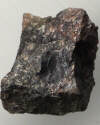
wolframite
Spanish chemist and mineralogist who assisted his older brother Juan José in experiments to separate tungsten metal from its wolframite ore (1783). Two years earlier, Swedish chemist Carl Scheele discovered tungstic acid, though did not isolate the elemental form, from a mineral known since about 1758 as tung sten (Swedish, heavy stone; which is now known as scheelite). The Elhuyar brothers, working at the Seminary of Bergara, succeeded in extracting the metal by reducing tungstic acid with charcoal. For the first time, Basque scientists entered the history of science. Each became a director of a school of mines, but in different countries. Although Juan José discovered tungsten metal, Fausto became better known.«
Died 6 Jan 1786 at age 70 (born 22 Sep 1715).
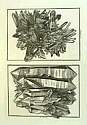
French geologist and mineralogist who produced the first mineralogical map of France (1746), marking the birth of modern geology. He was first to identify several fossil species in the Paris Basin region and studied its exposed strata. Linking geology, botany and chemistry, he linked certain plants with their underlying minerals and rocks, mapping vegetation and geological formations. He described landform erosion by running water, formation of caves by subterranean streams, and the action of waves on coastal cliffs. He studied the volcanic origin of rocks in Central France, charted extinct volcanoes in the Auvergne region, and described how their eruptions had shaped the surrounding landscape. Guettard’s students included famed chemist Antoine-Laurent Lavoisier.«[Image: illustration from Minéralogie du Dauphiné, 1782]
French geologist and mineralogist who produced the first mineralogical map of France (1746), marking the birth of modern geology. He was first to identify several fossil species in the Paris Basin region and studied its exposed strata. Linking geology, botany and chemistry, he linked certain plants with their underlying minerals and rocks, mapping vegetation and geological formations. He described landform erosion by running water, formation of caves by subterranean streams, and the action of waves on coastal cliffs. He studied the volcanic origin of rocks in Central France, charted extinct volcanoes in the Auvergne region, and described how their eruptions had shaped the surrounding landscape. Guettard’s students included famed chemist Antoine-Laurent Lavoisier.«[Image: illustration from Minéralogie du Dauphiné, 1782]
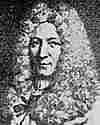
Died 6 Jan 1731 at age 58 (born 13 Feb 1672).
French chemist, who was the first to recognize the relative fixed affinities of reagents for one another. He composed tables (1718) listing the relative affinities of different reagents for particular substances, showing how one acid displaces another acid of weaker affinity for a specific base in the salt of that base. (These tables stood for most of the 18th century, until Claude-Louis Berthollet demonstrated that reactions instead depend upon the initial relative quantities of the reactants and physical conditions during the reaction.) Geoffroy considered the quest for the philosopher's stone (a substance capable of transforming base metals into gold) a delusion, but he believed that iron could be formed during the combustion of vegetable matter.
French chemist, who was the first to recognize the relative fixed affinities of reagents for one another. He composed tables (1718) listing the relative affinities of different reagents for particular substances, showing how one acid displaces another acid of weaker affinity for a specific base in the salt of that base. (These tables stood for most of the 18th century, until Claude-Louis Berthollet demonstrated that reactions instead depend upon the initial relative quantities of the reactants and physical conditions during the reaction.) Geoffroy considered the quest for the philosopher's stone (a substance capable of transforming base metals into gold) a delusion, but he believed that iron could be formed during the combustion of vegetable matter.

In 2014, the last flight of a U.S. passenger McDonnell Douglas DC-9 aircraft left Minneapolis/St. Paul, going to Atlanta. The Delta airline was the first to begin service with the original 65-seat version in 1965, as well as the last U.S. major airline to retire it. Delta had originally phased out their DC-9 fleet in 1993. The merger with Northwest in 2008 brought back 94 DC-9s with an average age (as of 31 Dec 2007) of 35.6 years, to be phased out again. Despite being known as a reliable workhorse, the jet’s technology was dated, its engines noisy, but most importantly, it could not match the newer airplanes in fuel economy, while fuel prices were continuing to increase. They have been replaced with newer, quieter, more efficient aircraft, such as the Boeing 717 (which still owes much to the original DC-9 design).«
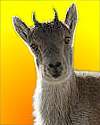
In 2000, the last Pyrenean ibex was found dead under a fallen tree with a crushed skull, by forest rangers in the Ordesa National Park in northern Spain. The 13-year-old female, named Celia, was the last known survivor of Capra pyrenaica pyrenaica, one of the four subspecies of the Spanish ibex. Of those, another subspecies, the Portuguese ibex had already became extinct in 1892. Known locally as a bucardo, Celia was studied by scientists while she lived in captivity within the park. Shortly before her death, they had taken tissue and blood samples to preserve the DNA for a cloning attempt. On 23 Jan 2009, a baby Pyranean ibex was born from a surrogate gate, becoming the first extinct species to be resurrected. Sadly, the baby died 7 minutes later due to lung defects. The Pyranean ibex was thus also the first species to go extinct twice.«
In 1971, Berkeley chemists announced the first synthetic production of growth hormones.
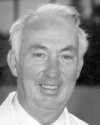
In 1971, the first adult heart transplant in the U.S. was performed at the Stanford Medical Center, Stanford, Calif., by Dr. Norman Shumway. The 54-year-old patient, whose heart had been damaged by virus infection, survived for 15 days after the surgery. Shumway, an American surgeon, continued to pioneer in cardiac transplantation. His surgical team went on to perform many other heart-transplant operations. Later, Shumway also accomplished open-heart surgery for the transplantation of valves.

In 1954, a New York Times article on food included the news that a frozen turkey dinner from C.A. Swanson & Sons of Omaha was soon to be available in the newspaper’s home area for about $1. This was the first frozen meal of the “TV Dinner” type that was successfully sold across the U.S. An aluminium foil tray with a foil overwrap was filled with white and dark turkey slices, cornbread sage dressing and gravy, plus two separate segments contained green peas and mashed sweet potatoes with butter. Each 12-oz dinner needed only about 25 minutes in a hot oven to be ready to eat from the disposable foil tray (no plate needed). Six months later, having had great response to the turkey meal, Swanson introduced a “TV Fried Chicken Dinner,” reported in the Times on 10 Jun 1954. “TV Dinner” was the Swanson brand.
In 1953, Phenytoin (diphenylhydantoin), an anti-epileptic drug, was approved by the US Food and Drug Administration. This drug was first synthesized in 1908 by Heinrich Biltz, a German physician. It is now one of the more popular anti-convulsive medications.«

In 1929, Sheffield Farms of New York began using Sealcone wax paper cartons instead of glass bottles for milk delivery, using packaging equipment from Sealcone Inc. of New York. These quart, pint and half pint truncated cone containers used a flexible spruce fibre paper rather than a stiff cardboard. The upper end was flattened and hermetically sealed with a metal closure that permitted storage even upside-down. This triangular shape meant two Sealcones used only as much space as one glass milk bottle, with a 94% saving in packaging weight, and at lower cost. Advertisements said they were transparent enough to see the cream line. Borden's plant in New York adopted Sealcones in Feb 1930. Various other designs of single-use wax paper cartons had been devised and used elsewhere before the Sealcone.[Image: from a 1936 advertisement.]
The Untold Story of Milk, by Ron Schmid. - book suggestion.
In 1927, commercial transatlantic telephone service was inaugurated between New York and London.
In 1913, William M. Burton patented a process to "crack" petroleum, converting oil to produce gasoline. Standard Oil used his method.
In 1857, a U.S. patent (#16,362), which was the country's first patent related to zinc ore was issued to Samuel Wetherill, Bethlehem, Pa.
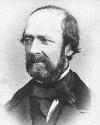
Foucault
In 1851, the rotation of the Earth was proved experimentally by Leon Foucault. After weeks of work, he recorded in his journal that he made this discovery at 2:00 am working with a pendulum in the cellar of the house he shared with his mother. Using a steel wire 2-m long with a 5-kg brass bob, he had made a pendulum suspended in a way that freely permitted it, he found that its plane of oscillation slowly rotated relative to the ground. This led to using much longer versions of his pendulum. He found that the angular velocity of the rotation equalled wsinq where w is the angular velocity of the Earth rotating on its axis, and q is the latitude of the site of the pendulum. He demonstrated his discovery on 31 Mar 1851 for Napoleon.«
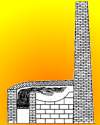
In 1844, U.S. patent No. 3,605 was issued, the country's first patent related to iron ore, to S. Broadmeadow of Woodbridge, N.J. Under the title of “Improvement in the mode of obtaining Wrought-Iron Directly from the Ore,” he gave his preferred form for an iron furnace. He used a different shape for the arch of the roof of the fire-chamber as it approaches the stack, intended to avoid reflecting back the flame and heat; and thus to remove any reverbatory effect which causes more of the ore to be converted to slag instead of reducing it to malleable iron. The ore (oxides of iron) was to be pulverised to a coarse powder, mixed with a suitable proportion of powdered “carburet of iron.” The mass is left at rest during heating using coal as fuel, while the carbon of the latter combines with the oxygen of the ore.«
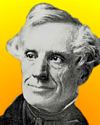
Morse
In 1838, Samuel Morse, with his partner, Alfred Vail, gave the first public demonstration of their new invention electric telegraphic system at the Speedwell Iron Works in Morristown, N.J.
Lightning Man: The Accursed Life of Samuel F. B. Morse, by Kenneth Silverman. - book suggestion.
In 1714, an idea for a possible typewriter predecessor was patented by Englishman Henry Mill, but he never succeeded in perfecting his invention and it died with him. Nothing more than the patent record remains known about the machine. It was British patent number 385, granted “by the grace of Queen Anne.” The patent's title was: An artificial machine or method for the impressing or transcribing of letters singly or progressively one after another, as in writing, whereby all writing whatever may be engrossed in paper or parchment so neat and exact as not to be distinguished from print.




