
Born 21 Aug 1973. quotes
Sergey Mikhaylovich Brin is a Russian-American computer scientist who was a computer science graduate when he co-founded Google, Inc. with Larry Page in 1998, though they had been working on their search engine ideas since a few years earlier. He was a young boy when his family moved from Russia to the U.S. His academic papers include “Extracting Patterns and Relations from the World Wide Web” and “Dynamic Data Mining.” Brin took on leave from his Ph.D. studies to devote his time to Google. Initial financing came from investors, family and friends. The name morphed from “googol” (the word for the huge number given by 1 followed by 100 zeros.) In relatively few years, the company has grown to a value exceeing Disney, McDonalds and General Motors combined.«
Sergey Mikhaylovich Brin is a Russian-American computer scientist who was a computer science graduate when he co-founded Google, Inc. with Larry Page in 1998, though they had been working on their search engine ideas since a few years earlier. He was a young boy when his family moved from Russia to the U.S. His academic papers include “Extracting Patterns and Relations from the World Wide Web” and “Dynamic Data Mining.” Brin took on leave from his Ph.D. studies to devote his time to Google. Initial financing came from investors, family and friends. The name morphed from “googol” (the word for the huge number given by 1 followed by 100 zeros.) In relatively few years, the company has grown to a value exceeing Disney, McDonalds and General Motors combined.«
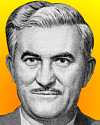
Born 21 Aug 1907; died 27 May 1972 at age 64. quotes
Roy Kenneth Marshall was an American astronomer with the Fels Planetarium, Philadelphia, then the first director of Morehead Planetarium, Chapel Hill, N.C. He contributed to the slim but classic work Star Maps For Beginners, by I.M. Levitt, a book on skylore and learning the constellations which first appeared in 1942 with periodic revisions over 50 years. He combined his scientific expertise with showmanship as a pioneering TV science broadcaster with a weekly Nature of Things 15 minute program. It premiered on the National Broadcasting Company (NBC) network on 5 Feb 1948 with a broadcast from the Fels Planetarium. It became so popular it ran year-round until 29 Aug 1952.«Image from advertisement for Ford cars in Popular Mechanics Magazine (Jul 1952).
Roy Kenneth Marshall was an American astronomer with the Fels Planetarium, Philadelphia, then the first director of Morehead Planetarium, Chapel Hill, N.C. He contributed to the slim but classic work Star Maps For Beginners, by I.M. Levitt, a book on skylore and learning the constellations which first appeared in 1942 with periodic revisions over 50 years. He combined his scientific expertise with showmanship as a pioneering TV science broadcaster with a weekly Nature of Things 15 minute program. It premiered on the National Broadcasting Company (NBC) network on 5 Feb 1948 with a broadcast from the Fels Planetarium. It became so popular it ran year-round until 29 Aug 1952.«Image from advertisement for Ford cars in Popular Mechanics Magazine (Jul 1952).
The Nature Of Things, by Roy K. Marshall. - book suggestion.
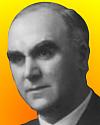
Born 21 Aug 1901; died 16 Feb 1980 at age 78.
Edward Thomas Copson was an English mathematician known for his studies in classical analysis, differential and integral equations, and their use in mathematical physics. After graduating from Oxford University with a B.A. degree in 1922, he moved to Scotland where he spent the nearly all of his career. His first book, The Theory of Functions of a Complex Variable (1935) was immediately successful. He was a co-author for his next book, The Mathematical Theory of Huygens' Principle (1939). By 1975, he had published four more books, on asymptotic expansions, metric spaces and partial differential equations. Many of the papers he wrote bridged mathematics and physics, of which his last showed his interest in astrophysics, Electrostatics in a Gravitational Field (1978) which was relevant to Black Holes.«
Edward Thomas Copson was an English mathematician known for his studies in classical analysis, differential and integral equations, and their use in mathematical physics. After graduating from Oxford University with a B.A. degree in 1922, he moved to Scotland where he spent the nearly all of his career. His first book, The Theory of Functions of a Complex Variable (1935) was immediately successful. He was a co-author for his next book, The Mathematical Theory of Huygens' Principle (1939). By 1975, he had published four more books, on asymptotic expansions, metric spaces and partial differential equations. Many of the papers he wrote bridged mathematics and physics, of which his last showed his interest in astrophysics, Electrostatics in a Gravitational Field (1978) which was relevant to Black Holes.«
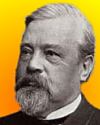
Born 21 Aug 1826; died 14 Jun 1903 at age 76. quotes
German anatomist who laid emphasis on comparative anatomy. This research led him to become one of Europe's strongest supporters of the theory of evolution. Gegenbaur's work on fishes provided evidence in support of Huxley's stand against a theory that held that the skull originated from expanded vertebrae. From studies in embryology, he asserted that all eggs are simple cells (1861) as suggested earlier by Schwann (1838). Thus not only the eggs and sperm of mammals, but all eggs and sperm were single cells, and so were even the relatively huge eggs of birds and reptiles.«
German anatomist who laid emphasis on comparative anatomy. This research led him to become one of Europe's strongest supporters of the theory of evolution. Gegenbaur's work on fishes provided evidence in support of Huxley's stand against a theory that held that the skull originated from expanded vertebrae. From studies in embryology, he asserted that all eggs are simple cells (1861) as suggested earlier by Schwann (1838). Thus not only the eggs and sperm of mammals, but all eggs and sperm were single cells, and so were even the relatively huge eggs of birds and reptiles.«
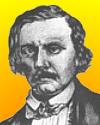
Born 21 Aug 1816; died 19 Aug 1856 at age 39. quotes
Charles (-Frédéric) Gerhardt was a French chemist who, with Auguste Laurent, developed a classification of organic compounds. Like most chemists he was aware that the dualistic system of Jöns Berzelius was unsatisfactory and tried to create an alternative. He adopted what became known as type theory in which he thought all organic compounds were based on four main types - hydrogen, hydrogen chloride, ammonia, and water. Organic compounds were referred to these types by replacing a hydrogen atom in one of these compounds by a radical (i.e., by a group of atoms). His idea was opposed by his contemporaries and was later abandoned, but it proved important in the subsequent rationalization of structural organic chemistry.
Charles (-Frédéric) Gerhardt was a French chemist who, with Auguste Laurent, developed a classification of organic compounds. Like most chemists he was aware that the dualistic system of Jöns Berzelius was unsatisfactory and tried to create an alternative. He adopted what became known as type theory in which he thought all organic compounds were based on four main types - hydrogen, hydrogen chloride, ammonia, and water. Organic compounds were referred to these types by replacing a hydrogen atom in one of these compounds by a radical (i.e., by a group of atoms). His idea was opposed by his contemporaries and was later abandoned, but it proved important in the subsequent rationalization of structural organic chemistry.
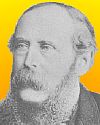
Born 21 Aug 1813; died 13 Dec 1891 at age 78.
Belgian chemist, notable for his accurate determinations of atomic weights. He had worked under the direction of Dumas, with whom he established the atomic weight of carbon. Stas worked assiduously to make more accurate measurements of other atomic weights than had ever been done before. Stas wished to prove the hypothesis of Joseph Proust, that all atoms were conglomerations of hydrogen atoms, though this could not be achieved. Stas was probably the most skilful chemical analyst of the nineteenth century.
Belgian chemist, notable for his accurate determinations of atomic weights. He had worked under the direction of Dumas, with whom he established the atomic weight of carbon. Stas worked assiduously to make more accurate measurements of other atomic weights than had ever been done before. Stas wished to prove the hypothesis of Joseph Proust, that all atoms were conglomerations of hydrogen atoms, though this could not be achieved. Stas was probably the most skilful chemical analyst of the nineteenth century.
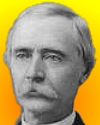
Born 21 Aug 1811; died 11 Feb 1888 at age 76.
American ironmaster who invented the pneumatic process of making steel. While a Kentucky manufacturer of iron kettles, he discovered that cold air blown on red-hot iron caused the metal to become white-hot by igniting the carbon and thus eliminating impurities. He applied his “air boiling” technique to his own product, but his customers decried “Kelly's fool steel,” and his business declined. In a legal fight, by asserting his practical efforts investigating the process had been carried out earlier in time, his belated patent of 23 Jun 1857 won priority over the U.S. patent of Sir Henry Bessemer of Great Britain. However, Kelly's invention was only a first step. They jointly licenced their patents. Bessemer's further developments were more successful. The Bessemer-Kelly process won acceptance, produced the first inexpensive steel, and furthered the industrial age.« more
American ironmaster who invented the pneumatic process of making steel. While a Kentucky manufacturer of iron kettles, he discovered that cold air blown on red-hot iron caused the metal to become white-hot by igniting the carbon and thus eliminating impurities. He applied his “air boiling” technique to his own product, but his customers decried “Kelly's fool steel,” and his business declined. In a legal fight, by asserting his practical efforts investigating the process had been carried out earlier in time, his belated patent of 23 Jun 1857 won priority over the U.S. patent of Sir Henry Bessemer of Great Britain. However, Kelly's invention was only a first step. They jointly licenced their patents. Bessemer's further developments were more successful. The Bessemer-Kelly process won acceptance, produced the first inexpensive steel, and furthered the industrial age.« more
William Kelly: a True History of the So-Called Bessemer Process, by John Newton Boucher. - book suggestion.
Born 21 Aug 1789; died 23 May 1857 at age 67. quotes
French mathematician who pioneered in analysis and the theory of substitution groups (groups whose elements are ordered sequences of a set of things). He was one of the greatest of modern mathematicians. His name is one of the 72 French scientists engraved on the Eiffel Tower.
French mathematician who pioneered in analysis and the theory of substitution groups (groups whose elements are ordered sequences of a set of things). He was one of the greatest of modern mathematicians. His name is one of the 72 French scientists engraved on the Eiffel Tower.
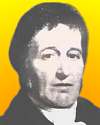
Born 21 Aug 1754; died 15 Nov 1839 at age 85. quotes
Scottish inventor who was the first to make extensive use of coal gas for illumination and a pioneer in the development of steam power. He joined James Watt and Matthew Boulton and in 1784 he was sent to supervise the installation of Boulton & Watt steam engines working pumping equipment in Cornish tin mines. While there, he tested his ideas to use the gas given off by burning coal. From an iron retort in the backyard of his home, he ran a metal tube into his living room. On 29 Jul 1792, Murdock achieved a gas flame inside the room. In 1802, Boulton installed two gas lamps outside his Soho factory. Next year, the foundry was entirely illuminated by gas. Shortly, Boulton & Watt began to sell lighting and heating equipment with Murdock as a partner in the business.
Scottish inventor who was the first to make extensive use of coal gas for illumination and a pioneer in the development of steam power. He joined James Watt and Matthew Boulton and in 1784 he was sent to supervise the installation of Boulton & Watt steam engines working pumping equipment in Cornish tin mines. While there, he tested his ideas to use the gas given off by burning coal. From an iron retort in the backyard of his home, he ran a metal tube into his living room. On 29 Jul 1792, Murdock achieved a gas flame inside the room. In 1802, Boulton installed two gas lamps outside his Soho factory. Next year, the foundry was entirely illuminated by gas. Shortly, Boulton & Watt began to sell lighting and heating equipment with Murdock as a partner in the business.
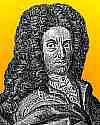
Born 21 Aug 1660; died 27 Sep 1737 at age 77.
French engineer who authored the first book on bridge building, Traité des Ponts, in 1716. It covered bridges in masonry and timber, foundations, piers and centering, the velocity of water, and such reference tools as a dictionary of terms and a list of edicts. He had previous written a treatise of roads, published in 1693. Originarily a medical doctor, he became a naval engineer and later on general inspector of the Ponts et Chaussées. He also authored books on fortifications, the antiquities of his native town Nîmes, and a first manual for watercolor practitioners. Watercolor had also some military interest, as it was needed for mapmakers in order to impart the correct hue, and this explains why Gautier choose to write this treatice.
French engineer who authored the first book on bridge building, Traité des Ponts, in 1716. It covered bridges in masonry and timber, foundations, piers and centering, the velocity of water, and such reference tools as a dictionary of terms and a list of edicts. He had previous written a treatise of roads, published in 1693. Originarily a medical doctor, he became a naval engineer and later on general inspector of the Ponts et Chaussées. He also authored books on fortifications, the antiquities of his native town Nîmes, and a first manual for watercolor practitioners. Watercolor had also some military interest, as it was needed for mapmakers in order to impart the correct hue, and this explains why Gautier choose to write this treatice.

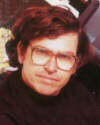
Died 21 Aug 2012 at age 65 (born 30 Oct 1946). quotes
American mathematician who was awarded the Fields Medal in 1983 for his work in topology. As early as his Ph.D. thesis entitled Foliations of 3-manifolds which are circle bundles (1972) that showed the existence of compact leaves in foliations of 3-manifolds, Thurston had been working in the field of topology. In the following years, Thurston's contributions to the field of foliations were recognized to be of considerable depth, set apart by their originality. This was also true of his subsequent work on Teichmüller space.
American mathematician who was awarded the Fields Medal in 1983 for his work in topology. As early as his Ph.D. thesis entitled Foliations of 3-manifolds which are circle bundles (1972) that showed the existence of compact leaves in foliations of 3-manifolds, Thurston had been working in the field of topology. In the following years, Thurston's contributions to the field of foliations were recognized to be of considerable depth, set apart by their originality. This was also true of his subsequent work on Teichmüller space.
Died 21 Aug 2005 at age 71 (born 23 May 1934).
Robert Arthur Moog was an American engineer and inventor who advanced electronic music with his Moog synthesizer. His passion for building electronic circuits began in his youth, and at age 14 he had built a theremin. While a post-graduate, Moog developed his first analog electronic synthesizer, complete with control dials to create a wide spectrum of modifications of sound waveforms generated from electronic oscillator circuits. By the 1960s, he had a portable model, the Minimoog, which provided many rock groups with distinctive sounds. In 1968 Walter (later Wendy) Carlos won a Grammy for Switched on Bach, with all instrument tracks played entirely on a Moog synthesizer.«
Robert Arthur Moog was an American engineer and inventor who advanced electronic music with his Moog synthesizer. His passion for building electronic circuits began in his youth, and at age 14 he had built a theremin. While a post-graduate, Moog developed his first analog electronic synthesizer, complete with control dials to create a wide spectrum of modifications of sound waveforms generated from electronic oscillator circuits. By the 1960s, he had a portable model, the Minimoog, which provided many rock groups with distinctive sounds. In 1968 Walter (later Wendy) Carlos won a Grammy for Switched on Bach, with all instrument tracks played entirely on a Moog synthesizer.«
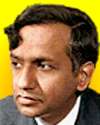
Died 21 Aug 1995 at age 84 (born 19 Oct 1910). quotes
Indian-American astronomer and astrophysicist who shared (with William A.Fowler) the 1983 Nobel Prize for Physics for formulating the currently accepted theory on the later evolutionary stages of massive stars (which has led to the discovery of black holes and neutron stars). He was one of the first scientists to combine the disciplines of physics and astronomy. At age 19, he demonstrated that there is an upper limit, now called the Chandrasekhar limit, to the mass of a white dwarf star. (A white dwarf is the last stage in the evolution of a star such as the Sun, which ends with collapse when the nuclear energy source in its centre has become exhausted.) Further, it shows that stars much more massive than the Sun must either explode or form black holes.
Indian-American astronomer and astrophysicist who shared (with William A.Fowler) the 1983 Nobel Prize for Physics for formulating the currently accepted theory on the later evolutionary stages of massive stars (which has led to the discovery of black holes and neutron stars). He was one of the first scientists to combine the disciplines of physics and astronomy. At age 19, he demonstrated that there is an upper limit, now called the Chandrasekhar limit, to the mass of a white dwarf star. (A white dwarf is the last stage in the evolution of a star such as the Sun, which ends with collapse when the nuclear energy source in its centre has become exhausted.) Further, it shows that stars much more massive than the Sun must either explode or form black holes.
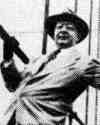
Died 21 Aug 1960 at age 74 (born 11 Jun 1886).
American engineer whose studies of airflow and wind velocity helped make possible the design of aerodynamically stable bridges. Steinman's thesis for his Ph.D. from Colombia University (1911) was published as "The Design of the Henry Hudson Memorial Bridge as a Steel Arch, and more than 20 years later he built the bridge he had planned over the Harlem River. Steinman designed more than 400 bridges, for instance Sidney Harbor Bridge in Australia, Mackinac Straits Bridge, Carquinez Strait Bridge, San Francisco (1937), Saint Johns Bridge, Portland, Ore, Deer Isle Bridge, Maine, Mount Hope Bridge, Rhode Island.
American engineer whose studies of airflow and wind velocity helped make possible the design of aerodynamically stable bridges. Steinman's thesis for his Ph.D. from Colombia University (1911) was published as "The Design of the Henry Hudson Memorial Bridge as a Steel Arch, and more than 20 years later he built the bridge he had planned over the Harlem River. Steinman designed more than 400 bridges, for instance Sidney Harbor Bridge in Australia, Mackinac Straits Bridge, Carquinez Strait Bridge, San Francisco (1937), Saint Johns Bridge, Portland, Ore, Deer Isle Bridge, Maine, Mount Hope Bridge, Rhode Island.
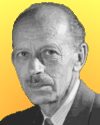
Died 21 Aug 1957 at age 68 (born 15 Nov 1888).
Harald Ulrik Sverdrup was a Norwegian meteorologist and oceanographer known for his studies of the physics, chemistry, and biology of the oceans. He explained the equatorial countercurrents and helped develop the method of predicting surf and breakers. As scientific director of Roald Amundsen's polar expedition on Maud (1918-1925), Sverdrup worked extensively on meteorology, magnetics, atmospheric electricity, physical oceanography, and tidal dynamics on the Siberian shelf, and even on the anthropology of Chukchi natives. In 1953, Sverdrup quantified the concept of "critical depth", explaining the onset of the spring phytoplankton bloom in newly stratified water columns.
Harald Ulrik Sverdrup was a Norwegian meteorologist and oceanographer known for his studies of the physics, chemistry, and biology of the oceans. He explained the equatorial countercurrents and helped develop the method of predicting surf and breakers. As scientific director of Roald Amundsen's polar expedition on Maud (1918-1925), Sverdrup worked extensively on meteorology, magnetics, atmospheric electricity, physical oceanography, and tidal dynamics on the Siberian shelf, and even on the anthropology of Chukchi natives. In 1953, Sverdrup quantified the concept of "critical depth", explaining the onset of the spring phytoplankton bloom in newly stratified water columns.
Died 21 Aug 1947 at age 65 (born 15 Sep 1881).
Ettore Arco Isidoro Bugatti was an Italian builder of racing and luxury automobiles Shortly after establishing a factory at Molsheim, Alsace in 1909, he produced a highly successful low-powered racer for the Le Mans. The most meticulously built of his cars. the Type 41, "Golden Bugatti" or "La Royale" was one of the most costly cars, of which only six to eight were ever manufactured. His eldest son, his presumed heir, died before him and the Bugatti firm did not survive long after Ettore Bugatti's death.
Ettore Arco Isidoro Bugatti was an Italian builder of racing and luxury automobiles Shortly after establishing a factory at Molsheim, Alsace in 1909, he produced a highly successful low-powered racer for the Le Mans. The most meticulously built of his cars. the Type 41, "Golden Bugatti" or "La Royale" was one of the most costly cars, of which only six to eight were ever manufactured. His eldest son, his presumed heir, died before him and the Bugatti firm did not survive long after Ettore Bugatti's death.
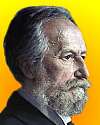
Died 21 Aug 1901 at age 71 (born 3 Sep 1829). quotes
German physiologist who made several physiological measurment devices, including the first practical opthalmotonometer for the measurement of intraocular pressure. He developed fundamental laws of diffusion in living organisms (published in Die medizinische Physik, 1856) and is remembered for Fick's Law which enables calculation of the cardiac output.
German physiologist who made several physiological measurment devices, including the first practical opthalmotonometer for the measurement of intraocular pressure. He developed fundamental laws of diffusion in living organisms (published in Die medizinische Physik, 1856) and is remembered for Fick's Law which enables calculation of the cardiac output.
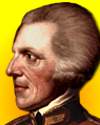
Died 21 Aug 1814 at age 61 (born 26 Mar 1753). quotes
American-British physicist, government administrator, and a founder of the Royal Institution of Great Britain, London. Because he was a Redcoat officer and an English spy during the American revolution, he moved into exile in England. Through his investigations of heat he became one of the first scientists to declare that heat is a form of motion rather than a material substance, as was popularly believed until the mid-19th century. Among his numerous scientific contributions are the development of a calorimeter and a photometer. He invented a double boiler, a kitchen stove and a drip coffee pot. more
American-British physicist, government administrator, and a founder of the Royal Institution of Great Britain, London. Because he was a Redcoat officer and an English spy during the American revolution, he moved into exile in England. Through his investigations of heat he became one of the first scientists to declare that heat is a form of motion rather than a material substance, as was popularly believed until the mid-19th century. Among his numerous scientific contributions are the development of a calorimeter and a photometer. He invented a double boiler, a kitchen stove and a drip coffee pot. more
Count Rumford on the Nature of Heat, by Benjamin Rumford. - book suggestion.
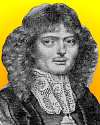
c.1664
Died 21 Aug 1673 at age 32 (born 30 Jul 1641).
Dutch physician who discovered the follicles of the ovary (known as Graafian follicles), in which the individual egg cells are formed (1672) and also published on male reproductive organs (1668). He was also important for his studies on pancreatic juice (1663) and on the reproductive organs of mammals. He is considered one of the creators of experimental physiology. He used a technique of injecting dye into organs in order to be able to observe them better. It was on this technique that a bitter priority dispute with Swammerdam developed. He wrote a brief tract on the use of the syringe in anatomy (1669). He died, perhaps by suicide, at only 32 years of age.Name also spelled Regnier. Day of death given as 21 Aug in DSB. 17 Aug in Enc. Brit.
Dutch physician who discovered the follicles of the ovary (known as Graafian follicles), in which the individual egg cells are formed (1672) and also published on male reproductive organs (1668). He was also important for his studies on pancreatic juice (1663) and on the reproductive organs of mammals. He is considered one of the creators of experimental physiology. He used a technique of injecting dye into organs in order to be able to observe them better. It was on this technique that a bitter priority dispute with Swammerdam developed. He wrote a brief tract on the use of the syringe in anatomy (1669). He died, perhaps by suicide, at only 32 years of age.Name also spelled Regnier. Day of death given as 21 Aug in DSB. 17 Aug in Enc. Brit.
In 1993, contact was lost with the Mars Observer spacecraft, following the pressurization of the rocket thruster fuel tanks, three days before it was to begin orbiting the Red Planet. The Mars Observer was to be the first U.S. spacecraft to study Mars since the Viking missions 18 years earlier. The fate of the $980 million mission remains unknown, though a commission studied possible causes for the failure.
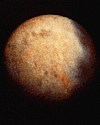
In 1989, the U.S. space probe Voyager 2 fired its thrusters to bring it closer to Neptune's mysterious moon Triton. This later photograph (left) shows a false-color image of Triton, taken two days before closest approach. At 2,700 km diameter, Triton is Neptune's largest satellite. The smallest features resolvable in this image are about 47 km across. The image is a composite of three images taken through ultraviolet, green, and violet filters.
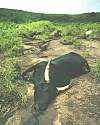
In 1986, more than 1700 people died when toxic gas erupted from Lake Nyos, a volcanic lake in the West African nation of Cameroon. The gas was carbon dioxide which, being more dense than air, hugged the ground and flowed down valleys. The cloud travelled as far as 15 miles (25 km) from the lake. It was moving fast enough to flatten vegetation, including a few trees. In addition to the human deaths caused by suffocation, 845 people were hospitalized and 3,000 cattle died. Lake Nyos is a few square kilometres in area, and is around 200 m deep. It is situated in the crater formed from the collapse of the pipe feeding a now extinct volcano.
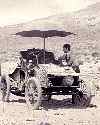
In 1903, a 12 horsepower single-cylinder Model F Packard mud-covered automobile arrived in New York, completing a trip across the U.S. from San Francisco. It was driven by “Tommy” Fetch from the Packard Motor Car works, with Marius Krarup, a journalist. They left San Fransisco on 21 Jun 1903, after dipping the car's rear wheels in the Pacific Ocean. The 51 days of actual running time gave an average run of almost 80 miles per day. They had crossed the Utah desert and the Colorado mountains and, according to the New York Times report, during their journey replaced only three tires and a broken front spring. Vermont doctor Horatio Nelson with mechanic Crocker Sewell, had completed a similar, but two days slower, trip in a Winton car the previous month.«
Packard Motor Car Company, by Evan P. Idle. - book suggestion.
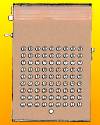
In 1888, William Seward Burroughs of St. Louis, Missouri, received patents on four adding machine applications (No. 388,116-388,119), the first U.S. patents for a "Calculating-Machine" that the inventor would continue to improve and successfully market. One year after making his first patent application on 10 Jan 1885, he incorporated his business as the American Arithmometer Corporation of St. Louis, in Jan 1886, with an authorized capitalization of $100,000. After Burrough's early death in 1898, after moving from St. Louis to Detroit, Michigan, that company reorganized as the Burroughs Adding Machine Co., incorporated in Jan 1905, with a capital of $5 million. The new name was in tribute to the inventor.«
more

In 1841, the first U.S. patent for a venetian blind was issued to John Hampson of New Orleans, Louisiana on a "manner of retaining in any desired position the slats of Venetian Blinds" (No. 2223) It is said the first U.S. installation of Venetian blinds was in 1761 in St. Peter's Church, Third and Pine streets, Philadelphia, Pennsylvania.




