
Born 5 Jun 1949; died 27 Oct 2016 at age 67. quotes
Susan Lee Lindquist was an American molecular biologist who pioneered with her studies of protein folding. She showed that alternate structural shapes of protein molecules could result in substantially different effects. She demonstrated instances in fields as diverse as human diseases, evolution and synthetic biomaterials designed to interact with biological systems. Prion protein are known as disease agents, but her work with yeast prion proteins also demonstrated a mechanism of protein-only inheritance. She extended this to interpret involvement in cellular memory and cross-kingdom communication. On 17 Nov 2010, Lindquist was awarded a National Medal of Science for her work, presented by President Obama at the White House.«
Susan Lee Lindquist was an American molecular biologist who pioneered with her studies of protein folding. She showed that alternate structural shapes of protein molecules could result in substantially different effects. She demonstrated instances in fields as diverse as human diseases, evolution and synthetic biomaterials designed to interact with biological systems. Prion protein are known as disease agents, but her work with yeast prion proteins also demonstrated a mechanism of protein-only inheritance. She extended this to interpret involvement in cellular memory and cross-kingdom communication. On 17 Nov 2010, Lindquist was awarded a National Medal of Science for her work, presented by President Obama at the White House.«
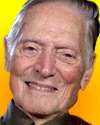
Born 5 Jun 1924; died 12 Apr 2019 at age 94. quotes
Geoffrey Foucar Chew was an American physicist who was part of Edward Teller’s group of the Manhattan Project (and witnessed the Trinity Test). After the war, he was a graduate student of Enrico Fermi. Chew spent most of his career at the Physics Dept, University of California, Berkeley (1957-1991), then as a professor emeritus. He led the group of S-matrix (scattering matrix) theorists researching the strong interaction and the bootstrap principle. Using analytic properties of the scattering matrix, they calculated the interactions of bound-states without assuming that there is a point-particle field theory underneath. As the theory developed and became more widely accepted, it provided a basis leading others to a quantum theory of gravity.«
Geoffrey Foucar Chew was an American physicist who was part of Edward Teller’s group of the Manhattan Project (and witnessed the Trinity Test). After the war, he was a graduate student of Enrico Fermi. Chew spent most of his career at the Physics Dept, University of California, Berkeley (1957-1991), then as a professor emeritus. He led the group of S-matrix (scattering matrix) theorists researching the strong interaction and the bootstrap principle. Using analytic properties of the scattering matrix, they calculated the interactions of bound-states without assuming that there is a point-particle field theory underneath. As the theory developed and became more widely accepted, it provided a basis leading others to a quantum theory of gravity.«
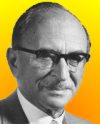
Born 5 Jun 1900; died 8 Feb 1979 at age 78. quotes
Hungarian-British physicist and electrical engineer who was awarded the Nobel Prize for Physics in 1971 for his invention of holography, a system of lensless, three-dimensional photography that has many applications. He first conceived the idea of holography in 1947 using conventional filtered-light sources. Because such sources had limitations of either too little light or too diffuse, holography was not commercially feasible until the invention of the laser (1960), which amplifies the intensity of light waves. He also did research on high-speed oscilloscopes, communication theory, physical optics, and television. Gabor held more than 100 patents.[EB, a NYT obituary and the Nobel Prize website give the date of death as 8 Feb 1979. Some sources give 9 Feb 1979.]
Hungarian-British physicist and electrical engineer who was awarded the Nobel Prize for Physics in 1971 for his invention of holography, a system of lensless, three-dimensional photography that has many applications. He first conceived the idea of holography in 1947 using conventional filtered-light sources. Because such sources had limitations of either too little light or too diffuse, holography was not commercially feasible until the invention of the laser (1960), which amplifies the intensity of light waves. He also did research on high-speed oscilloscopes, communication theory, physical optics, and television. Gabor held more than 100 patents.[EB, a NYT obituary and the Nobel Prize website give the date of death as 8 Feb 1979. Some sources give 9 Feb 1979.]

(EB)
Born 5 Jun 1887; died 17 Sep 1948 at age 61. quotes
Ruth Fulton Benedict was an American anthropologist who is regarded as one of the most articulate interpreters in cultural anthropology, and influenced later cultural-personality studies. She trained with Franz Boas and Elsie Clews Parsons. Her fieldwork among the Native Americans of the Southwest provided a background to write her first book, Patterns of Culture (1934) in which she compared and contrasted Zuñi, Dobu, and Kwakiutl cultures. In Race: Science and Politics, she aimed to dispel myths about race. Margaret Mead was a student of hers, with whom she continued to collaborate. Benedict’s less-noticed works extended her interest worldwide to other national cultures, including Thailand, Romania, Japan.«
Ruth Fulton Benedict was an American anthropologist who is regarded as one of the most articulate interpreters in cultural anthropology, and influenced later cultural-personality studies. She trained with Franz Boas and Elsie Clews Parsons. Her fieldwork among the Native Americans of the Southwest provided a background to write her first book, Patterns of Culture (1934) in which she compared and contrasted Zuñi, Dobu, and Kwakiutl cultures. In Race: Science and Politics, she aimed to dispel myths about race. Margaret Mead was a student of hers, with whom she continued to collaborate. Benedict’s less-noticed works extended her interest worldwide to other national cultures, including Thailand, Romania, Japan.«
An Anthropologist at Work, by Ruth Benedict. - book suggestion.
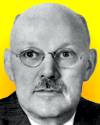
Born 5 Jun 1885; died 18 Mar 1955 at age 69. quotes
American zoologist and ecologist who researched the social behaviour, aggregations, and distribution of both land and sea animals. He demonstrated that an unconscious drive existed among many species of animals for their fellow individuals, such that undercrowding was detrimental to some animals. He noted what he called “protocooperation” among animals, unconscious cooperation instead of competition. Allee believed this evolved in the higher animals to become both unconscious and conscious cooperation creating levels of community organization. He investigated the role and function of social hierarchies in nature, and the capacity of animals to maintain internal equilibrium by making physiological adaptations.«
American zoologist and ecologist who researched the social behaviour, aggregations, and distribution of both land and sea animals. He demonstrated that an unconscious drive existed among many species of animals for their fellow individuals, such that undercrowding was detrimental to some animals. He noted what he called “protocooperation” among animals, unconscious cooperation instead of competition. Allee believed this evolved in the higher animals to become both unconscious and conscious cooperation creating levels of community organization. He investigated the role and function of social hierarchies in nature, and the capacity of animals to maintain internal equilibrium by making physiological adaptations.«
Principles of Animal Ecology, by Warder Clyde Allee. - book suggestion.
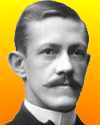
Born 5 Jun 1862; died 21 Jul 1930 at age 68.
Swedish ophthalmologist, recipient of the 1911 Nobel Prize for Physiology or Medicine for his research on the eye as a light-refracting apparatus. Hermann von Helmholtz had earlier shown that the eye solves the problem of accommodation (how to focus on both near and distant objects) by changing the surface curvature of the lens - the nearer the object, the more convex the lens becomes; the further the object, the more concave the lens. Gullstrand showed that this could in fact account for only two thirds of the accommodation a normal eye could achieve. The remaining third was produced by what Gullstrand termed the “intracapsular mechanism” and depended on the fact that the eye was not a homogeneous medium.[DSB gives date of death 21 Jul 1930. EB gives 28 Jul 1930.]
Swedish ophthalmologist, recipient of the 1911 Nobel Prize for Physiology or Medicine for his research on the eye as a light-refracting apparatus. Hermann von Helmholtz had earlier shown that the eye solves the problem of accommodation (how to focus on both near and distant objects) by changing the surface curvature of the lens - the nearer the object, the more convex the lens becomes; the further the object, the more concave the lens. Gullstrand showed that this could in fact account for only two thirds of the accommodation a normal eye could achieve. The remaining third was produced by what Gullstrand termed the “intracapsular mechanism” and depended on the fact that the eye was not a homogeneous medium.[DSB gives date of death 21 Jul 1930. EB gives 28 Jul 1930.]
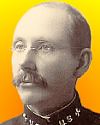
Born 5 Jun 1854; died 16 Sep 1907 at age 53.
English-American physician who served on the Yellow fever Commission. Army Surgeon-General Sternberg assigned Carroll to the medical faculty of the Army Medical Museum in Washington, where he and Walter Reed worked together in bacteriology research. In 1899, Sternberg appointed Carroll and Reed to investigate the bacillus icteroides, the microbe that Italian bacteriologist Giuseppe Sanarelli had identified as the cause of yellow fever. Their work helped disprove Sanarelli's theory and catapulted Carroll and Reed into the yellow fever debate. In 1900, Carroll was promoted to Acting Asst. Surgeon in the Army Medical Corps and placed him second-in-command on the Yellow Fever Commission with Reed as officer-in-charge.
English-American physician who served on the Yellow fever Commission. Army Surgeon-General Sternberg assigned Carroll to the medical faculty of the Army Medical Museum in Washington, where he and Walter Reed worked together in bacteriology research. In 1899, Sternberg appointed Carroll and Reed to investigate the bacillus icteroides, the microbe that Italian bacteriologist Giuseppe Sanarelli had identified as the cause of yellow fever. Their work helped disprove Sanarelli's theory and catapulted Carroll and Reed into the yellow fever debate. In 1900, Carroll was promoted to Acting Asst. Surgeon in the Army Medical Corps and placed him second-in-command on the Yellow Fever Commission with Reed as officer-in-charge.
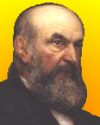
Born 5 Jun 1819; died 21 Jan 1892 at age 72. quotes
English astronomer and mathematician, one of two people who independently discovered the planet Neptune. On 3 Jul 1841, Adams had entered in his journal: “Formed a design in the beginning of this week of investigating, as soon as possible after taking my degree, the irregularities in the motion of Uranus ... in order to find out whether they may be attributed to the action of an undiscovered planet beyond it.” Adams made many other contributions to astronomy, notably his studies of the Leonid meteor shower (1866) where he showed that the orbit of the meteor shower was very similar to that of a comet. He was able to correctly conclude that the meteor shower was associated with the comet. Adams considered the motion of the Moon, and studied terrestrial magnetism.
English astronomer and mathematician, one of two people who independently discovered the planet Neptune. On 3 Jul 1841, Adams had entered in his journal: “Formed a design in the beginning of this week of investigating, as soon as possible after taking my degree, the irregularities in the motion of Uranus ... in order to find out whether they may be attributed to the action of an undiscovered planet beyond it.” Adams made many other contributions to astronomy, notably his studies of the Leonid meteor shower (1866) where he showed that the orbit of the meteor shower was very similar to that of a comet. He was able to correctly conclude that the meteor shower was associated with the comet. Adams considered the motion of the Moon, and studied terrestrial magnetism.
The Neptune File: A Story of Astronomical Rivalry and the Pioneers of Planet Hunting, by Tom Standage. - book suggestion.
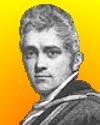
Born 5 Jun 1769; died 9 Mar 1822 at age 52.
English mineralogist and traveller who amassed a valuable collection of minerals. In 1799, he began a 3-year tour through Asia Minor, Italy, Greece, Scandinavia and Siberia, where he also collected maps, statues and sarcophagi, manuscripts, and Greek coins. He was the first professor of mineralogy at Cambridge University (1808). In 1817 he became librarian there, until his health failed, though he continued to lecture until 1821. He had a significant impact through his teaching of minerology in terms of crystallography and the new chemistry, and through the topological geology and volcanological observations in his widely read Travels (6 vols. 1810-23). His mineral collection was bought by Cambridge at his death for 1,500 pounds.
English mineralogist and traveller who amassed a valuable collection of minerals. In 1799, he began a 3-year tour through Asia Minor, Italy, Greece, Scandinavia and Siberia, where he also collected maps, statues and sarcophagi, manuscripts, and Greek coins. He was the first professor of mineralogy at Cambridge University (1808). In 1817 he became librarian there, until his health failed, though he continued to lecture until 1821. He had a significant impact through his teaching of minerology in terms of crystallography and the new chemistry, and through the topological geology and volcanological observations in his widely read Travels (6 vols. 1810-23). His mineral collection was bought by Cambridge at his death for 1,500 pounds.
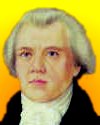
Born 5 Jun 1760; died 15 Aug 1852 at age 92.
Finnish chemist who discovered the element yttrium (1794). This was the first of a family of 15 rare earth elements called the lanthanides. He studied in Uppsala, Sweden, and taught chemistry there (1797-1822) and promoted Antoine Lavoisier's discoveries about combustion and his system of chemical nomenclature. In analysing a new black mineral from Ytterby, Sweden, he isolating from it the rare earth mineral, yttria. This was an important step towards identifying the remaining undiscovered elements. Over the next century yttria was found to contain the oxides of nine new rare earth elements. After Gadolin's death, one discovered by Jean Charles Galissard de Marignac and Paul Emile Lecoq de Boisbaudran, was named gadolinium.
Finnish chemist who discovered the element yttrium (1794). This was the first of a family of 15 rare earth elements called the lanthanides. He studied in Uppsala, Sweden, and taught chemistry there (1797-1822) and promoted Antoine Lavoisier's discoveries about combustion and his system of chemical nomenclature. In analysing a new black mineral from Ytterby, Sweden, he isolating from it the rare earth mineral, yttria. This was an important step towards identifying the remaining undiscovered elements. Over the next century yttria was found to contain the oxides of nine new rare earth elements. After Gadolin's death, one discovered by Jean Charles Galissard de Marignac and Paul Emile Lecoq de Boisbaudran, was named gadolinium.
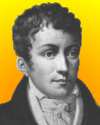
Born 5 Jun 1757; died 5 May 1808 at age 50. quotes
French philosopher and physiologist noted for Rapports du physique et du moral de l'homme (1802; "Relations of the Physical and the Moral in Man"), which explained all of reality, including the psychic, mental, and moral aspects of man, in terms of a mechanistic Materialism. He argued that "to have an accurate idea of the operations from which thought results, it is necessary to consider the brain as a special organ designed especially to produce it, as the stomach and the intestines are designed to operate the digestion, (and) the liver to filter bile..."
French philosopher and physiologist noted for Rapports du physique et du moral de l'homme (1802; "Relations of the Physical and the Moral in Man"), which explained all of reality, including the psychic, mental, and moral aspects of man, in terms of a mechanistic Materialism. He argued that "to have an accurate idea of the operations from which thought results, it is necessary to consider the brain as a special organ designed especially to produce it, as the stomach and the intestines are designed to operate the digestion, (and) the liver to filter bile..."
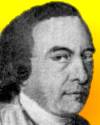
Born 5 Jun 1717; died 31 May 1791 at age 73. quotes
English naturalist, conchologist and collector who as clerk (hired 1763) to the Royal Society embezzled membership funds to indulge his reckless penchant for collecting. When caught in Dec 1767, the treasury was short by £1500—a substantial amount in those years. He confessed, his collections were auctioned to make restitution, but was still imprisoned for five years in debtor’s prison. He published A Natural History of Fossils in 1757. After release from prison, he scraped by, with lecturing about fossils, translating, and trading in mineral, fossil and shell specimens. He wrote two books on shells (1776, 1778). He was perhaps the first to coin the word conchology, that he used in the titles. Still impoverished, he died in penury.«[Also spelled Mendez.]
English naturalist, conchologist and collector who as clerk (hired 1763) to the Royal Society embezzled membership funds to indulge his reckless penchant for collecting. When caught in Dec 1767, the treasury was short by £1500—a substantial amount in those years. He confessed, his collections were auctioned to make restitution, but was still imprisoned for five years in debtor’s prison. He published A Natural History of Fossils in 1757. After release from prison, he scraped by, with lecturing about fossils, translating, and trading in mineral, fossil and shell specimens. He wrote two books on shells (1776, 1778). He was perhaps the first to coin the word conchology, that he used in the titles. Still impoverished, he died in penury.«[Also spelled Mendez.]
A Natural History of Fossils, by Emanuel Mendes da Costa. - book suggestion.
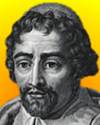
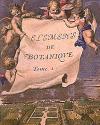
French botanist and physician, whose pioneering systematic approach to botany included creating a system of plant classification that used the "genus" in the modern sense. On scientific expeditions, he collected many plant species from Greece, Asia Minor, and the Pyrenees. In Élémens de botanique (1694), he arranged the petal-bearing plants into classes based on the form of the corolla, then into families based on the position of the corolla, and finally into genera as defined by the character of the fruit and seed. His system was used through the 18th century, elaborated by others such as Linnæus, but superceded as research advanced. Tournefort did not use a microscope and did no research on plant structure, function or reproduction.«[Image right: (source)]

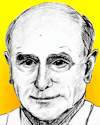
Self-portrait
Died 5 Jun 1984 at age 86 (born 3 Nov 1897).
Frederick Stratten Russell was an English marine biologist who linked the depth distribution of planktonic organisms to the intensity of light in the seas off the British Isles. He used photoelectric cells to measure the light, finding that the plankton moved up and down the water column in a daily cycle. Seasonal variations in light intensity also affected the migrations. His work helped explain the long-term changes in the ecosystem of the English Channel. Russell was fascinated by the larval stages of fishes and the life histories of certain types of jellyfish, which he studied in great detail. He wrote and illustrated several books on his findings. He was knighted in 1965.
Frederick Stratten Russell was an English marine biologist who linked the depth distribution of planktonic organisms to the intensity of light in the seas off the British Isles. He used photoelectric cells to measure the light, finding that the plankton moved up and down the water column in a daily cycle. Seasonal variations in light intensity also affected the migrations. His work helped explain the long-term changes in the ecosystem of the English Channel. Russell was fascinated by the larval stages of fishes and the life histories of certain types of jellyfish, which he studied in great detail. He wrote and illustrated several books on his findings. He was knighted in 1965.
The Seas: Our Knowledge of Life in the Sea and How it is Gained, by Sir Frederick S. Russell, and C.M. Yonge. - book suggestion.
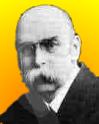
Died 5 Jun 1940 at age 77 (born 17 Apr 1863).
British geophysicist and mathematician who discovered a major type of earthquake wave that was subsequently named for him. Love assumed that the Earth consists of concentric layers that differ in density and postulated the occurrence of a seismic wave confined to the surface layer (crust) of the Earth which propagated between the crust and underlying mantle. His prediction was confirmed by recordings of the behaviour of waves in the surface layer of the Earth. He proposed a method, based on measurements of Love waves, to measure the thickness of the Earth's crust. In addition to his work on geophysical theory, Love studied elasticity and wrote A Treatise on the Mathematical Theory of Elasticity, 2 vol. (1892-93).
British geophysicist and mathematician who discovered a major type of earthquake wave that was subsequently named for him. Love assumed that the Earth consists of concentric layers that differ in density and postulated the occurrence of a seismic wave confined to the surface layer (crust) of the Earth which propagated between the crust and underlying mantle. His prediction was confirmed by recordings of the behaviour of waves in the surface layer of the Earth. He proposed a method, based on measurements of Love waves, to measure the thickness of the Earth's crust. In addition to his work on geophysical theory, Love studied elasticity and wrote A Treatise on the Mathematical Theory of Elasticity, 2 vol. (1892-93).
Treatise on the Mathematical Theory of Elasticity, by Augustus E. Love. - book suggestion.
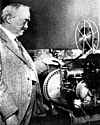
Died 5 Jun 1934 at age 66 (born 22 Aug 1867).
American inventor of an altimeter, automobile self-starter, and a cone-shaped drinking cup, but known especially as an early television pioneer. In May 1920, at the Toronto meeting of the Society of Motion Picture Engineers, Jenkins introduced his "prismatic rings" as a device to replace the shutter on a film projector. This invention laid the foundation for his first radiovision broadcast. He claimed to have transmitted the earliest moving silhouette images on 14 Jun 1923, but his first public demonstration of these did not take place until Jun 1925. Jenkins Laboratories constructed a radiovision transmitter, W3XK, in Washington D.C. The short-wave station began transmitting radiomovies across the Eastern U.S. on a regular basis by 2 Jul 1928.
American inventor of an altimeter, automobile self-starter, and a cone-shaped drinking cup, but known especially as an early television pioneer. In May 1920, at the Toronto meeting of the Society of Motion Picture Engineers, Jenkins introduced his "prismatic rings" as a device to replace the shutter on a film projector. This invention laid the foundation for his first radiovision broadcast. He claimed to have transmitted the earliest moving silhouette images on 14 Jun 1923, but his first public demonstration of these did not take place until Jun 1925. Jenkins Laboratories constructed a radiovision transmitter, W3XK, in Washington D.C. The short-wave station began transmitting radiomovies across the Eastern U.S. on a regular basis by 2 Jul 1928.
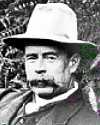
Died 5 Jun 1912 at age 56 (born 28 Oct 1855).
Australian anthropologist who did pioneering fieldwork among the Aborigines of central Australia. After working for the South Australian telegraph Department throughout Central Australia (1875-99), he became stationmaster at the Alice Springs Overland Telegraph station. Gillen became very interested in the Aboriginal people. He took a special interest in the Arrentic people who lived near his home. He learned their language, became a friend of the group and was welcomed as a member of their society. He met Baldwin Spencer when, in 1894, the Horn Expedition visited Alice Springs to make an appraisal of the areas geology and the Aboriginal culture. Together, they later made many anthropological expeditions which showed the Aboriginal complex yet subtle culture.
Australian anthropologist who did pioneering fieldwork among the Aborigines of central Australia. After working for the South Australian telegraph Department throughout Central Australia (1875-99), he became stationmaster at the Alice Springs Overland Telegraph station. Gillen became very interested in the Aboriginal people. He took a special interest in the Arrentic people who lived near his home. He learned their language, became a friend of the group and was welcomed as a member of their society. He met Baldwin Spencer when, in 1894, the Horn Expedition visited Alice Springs to make an appraisal of the areas geology and the Aboriginal culture. Together, they later made many anthropological expeditions which showed the Aboriginal complex yet subtle culture.
Died 5 Jun 1865 at age 77 (born 5 Nov 1787). quotes
Scottish naval surgeon and naturalist who made accurate surveys of more of the Canadian Arctic coast than any other explorer, in service with the Royal navy (1807-55). During this time he was surgeon and naturalist to Sir John Franklin's polar expeditions (1819-22, 1825-27). On the second expeditions, he separated from Franklin to explore the coast to the Coppermine River and Great Slave Lake (1826). He conducted a search expedition (1848-49) for Franklin's lost third Arctic expedition that had started in 1845, but was unable to find any trace of Franklin's ships. He wrote Fauna Boreali-Americana (1829-37) which became a standard work on Arctic biology. He also wrote on ichthyology and polar exploration.
Scottish naval surgeon and naturalist who made accurate surveys of more of the Canadian Arctic coast than any other explorer, in service with the Royal navy (1807-55). During this time he was surgeon and naturalist to Sir John Franklin's polar expeditions (1819-22, 1825-27). On the second expeditions, he separated from Franklin to explore the coast to the Coppermine River and Great Slave Lake (1826). He conducted a search expedition (1848-49) for Franklin's lost third Arctic expedition that had started in 1845, but was unable to find any trace of Franklin's ships. He wrote Fauna Boreali-Americana (1829-37) which became a standard work on Arctic biology. He also wrote on ichthyology and polar exploration.
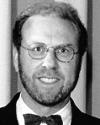
1969
In 1981, an epidemic disease, later called AIDS, was briefly described by Dr. Michael Gottlieb in the newsletter of the U.S. Centers for Disease Control. This was the first notice to be published on AIDS, though not yet named. Gottlieb was in his first research position as assistant professor of medicine at the University of California at Los Angeles. Despite the medical profession's refusal to acknowledge the AIDS crisis, he pursued early immune deficiency cases and urged the publication of his findings. He left UCLA in 1987 to open a private practice, devoting his career to treating AIDS patients and fostering AIDS research. He was one of the first researchers to test the drug AZT on AIDS patients.

In 1977, first personal computer, the Apple II, went on sale. They were the invention of Steve Wozniak and Steve Jobs. They have the 6502 microprocessor, ability to do Hi-res and Lo-res color graphics, sound, joystick input, and casette tape I/O. They have a total of eight expansion Slots for adding peripherials. Clock speed is 1MHz and, with Apple's Language Card installed, standard memory size is 64kB. (The Apple I designation referred to an earlier computer that was not much more than a board. You had to supply your own keyboard, monitor and case.) The Apple II was one of three prominent personal computers that came out in 1977. Despite its higher price, it quickly pulled ahead of the TRS-80 and the Commodore Pet.
In 1974, the first World Environment Day was celebrated with world-wide activities. Each year thereafter, 5 Jun has been designated as World Environment Day. The day was chosen as the anniversary of the opening day of the Conference on the Human Environment, the first major conference on environmental issues. The day was established by resolution of the United Nations General Assembly on 15 Dec 1972. World Environment Day is an opportunity to reaffirm global concern for the preservation and enhancement of the environment, first expressed at the landmark conference. Also, on 15 Dec 1972, a resolution created United Nations Environment Programme (UNEP) to help shape national and international environmental policy.«
In 1972, the first major conference on environmental issues was convened in Stockholm, Sweden. The Conference on the Human Environment, was held 5-16 Jun 1972 under the auspices of the United Nations. Following a resolution of the U.N. General Assembly (15 Dec 1972), each anniversary of the conference opening day, 5 Jun, is celebrated as World Environment Day.
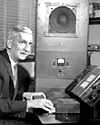
In 1938, the first machine to produce intelligible speech-like sounds was exhibited by Bell Telephone scientists. Called "Pedro, the Voder," it was put on display to the public at the Franklin Institute, Philadelphia, Pa. It could also imitate the sound of various farm animals. The inventor was Homer Dudley with Richard Riesz and Stanley Watkins. It was also demonstrated at the 1939 World's Fair in New York. It was basically a spectrum-synthesis device operated from a finger keyboard and a foot pedal pitch control. It duplicated an important physiological characteristic of the vocal system, namely, that the excitation could be voiced or unvoiced. However, its operation required persons to be well trained in the use of the controls.
In 1930, the Colorscope was first publically demonstrated in New York City. It used a photocell that reacts to colours of light, and could match colours more exactly than the human eye. The tiny electrical current generated was sufficient to operate relays or meters. It was invented by Harold H. Sheldon and Dr. Walter A Schneider.
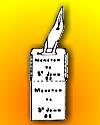
In 1882, John Mitchell Lyons was issued a Canadian patent for his "Improvements in Baggage Checks and Coupon Tickets" (No. 14911). He was a railway clerk in Moncton, New Brunswick, Canada, who devised this now familiar way to track and identify luggage. As the headquarters of the Intercolonial Railway of Canada, Moncton was an important railway hub. To better control the passengers' luggage, Lyons devised a baggage check which separated along a perforation into two halves. Both pieces were printed with the same route information and an identifying number. One half was attached to the bag, and the other was given to the passager to claim his luggage at his destination.«[Image: figure from Canadian patent.]
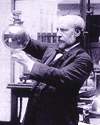
In 1878, liquid air obtained at a temperature of -192ºC was exhibited by Professor James Dewar at the Royal Institution, London. His work followed the small-scale production of liquid air by Raoul Pictet of Geneva (Dec 1877) and Cailletet of Paris (Jan 1878). In March 1893, Dewar produced solid air. He gave six well-illustrated Christmas Lectures on “Air: gaseous and liquid” at the Royal Institution bewteen 28 Dec 1893 and 9 Jan 1894. (Some of the air in the room was liquified in the presence of the audience, and remained so for some time, when enclosed in a vacuum jacket.) He demonstrated several physical properties of liquid air, and produced solid air at the Friday 19 Jan 1894 meeting of the Royal Institution.
more
In 1877, the state of New York passed a law to tax on "oleomargarine." When a court voided a ban on margarine in New York, dairy militants turned their attention to Washington, resulting in Congressional passage of the Margarine Act of 1886.The purpose was to protect dairymen and their product, real butter. Margarine had first been created in France (1870) by Hippolyte Mège-Mouriez in response to an offer by the Emperor Louis Napoleon III for the production of a satisfactory substitute for butter. To formulate his entry, Mège-Mouriez used margaric acid, a fatty acid component isolated in 1813 by Michael Chevreul and named because of the lustrous pearly drops that reminded him of the Greek word for pearl - "margarites".

In 1783, the first hot-air balloon ascent - unmanned - flew for ten minutes. It was made by the French brothers Joseph-Michel and Jacques-Étienne Montgolfier at their home town of Annonay, France.
more
The Montgolfier Brothers and the Invention of Aviation, 1783-1784, by Charles Coulston Gillispie. - book suggestion.




