Born 21 Jun 1965.
Yang Liwei is a Chinese astronaut and administrator who was China’s first astronaut in his nation’s first manned spacecraft, Shenzhou 5. He was launched on the morning of 15 Oct 2003, from the Jiuquan Satellite Launch Center in the Gobi desert in northwest China's Gansu Province. The capsule completed 14 earth orbits before returning to earth the following morning, landing safely on the central grasslands of Inner Mongolia. Liwei went on to be Deputy Director of the China Astronaut Research and Training Center.«
Yang Liwei is a Chinese astronaut and administrator who was China’s first astronaut in his nation’s first manned spacecraft, Shenzhou 5. He was launched on the morning of 15 Oct 2003, from the Jiuquan Satellite Launch Center in the Gobi desert in northwest China's Gansu Province. The capsule completed 14 earth orbits before returning to earth the following morning, landing safely on the central grasslands of Inner Mongolia. Liwei went on to be Deputy Director of the China Astronaut Research and Training Center.«
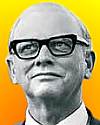
Born 21 Jun 1916; died 1 Mar 2001 at age 84.
English inventor and industrialist who invented and manufactured the JCB construction machine with a hydraulically operated shovel on the front and an excavator arm on the back. From the business which bore his initials that he started in a garage in 1945, he became one of Britain's most successful industrialists. He pioneered the backhoe loader concept in Europe, which he first introduced in 1954. He is also credited with the widespread application of hydraulic technology in construction and agricultural equipment. The company he founded now has a global market in heavy plant and agricultural machinery. In 1968, he created a nature reserve in the grounds of the factory which now successfully hosts much wildlife.«
English inventor and industrialist who invented and manufactured the JCB construction machine with a hydraulically operated shovel on the front and an excavator arm on the back. From the business which bore his initials that he started in a garage in 1945, he became one of Britain's most successful industrialists. He pioneered the backhoe loader concept in Europe, which he first introduced in 1954. He is also credited with the widespread application of hydraulic technology in construction and agricultural equipment. The company he founded now has a global market in heavy plant and agricultural machinery. In 1968, he created a nature reserve in the grounds of the factory which now successfully hosts much wildlife.«
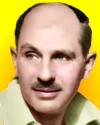
Born 21 Jun 1916; died 9 Sep 2000 at age 84.
American astronomer who made seminal contributions to the study of solar radiation. He joined the Naval Research Laboratory in 1940 and developed defense-related radiation detection devices during WW II. In 1949, he obtained the first scientific proof that X rays emanate from the sun. When he directed the firing into space of a V-2 rocket carrying a detecting instrument. Through rocket astronomy, he also produced the first ultraviolet map of celestial bodies, and gathered information for the theory that stars are being continuously formed, on space radiation affecting Earth and on the nature of gases in space. He also made fundamental advances in the application of x rays to material analysis.
American astronomer who made seminal contributions to the study of solar radiation. He joined the Naval Research Laboratory in 1940 and developed defense-related radiation detection devices during WW II. In 1949, he obtained the first scientific proof that X rays emanate from the sun. When he directed the firing into space of a V-2 rocket carrying a detecting instrument. Through rocket astronomy, he also produced the first ultraviolet map of celestial bodies, and gathered information for the theory that stars are being continuously formed, on space radiation affecting Earth and on the nature of gases in space. He also made fundamental advances in the application of x rays to material analysis.
The Astronomer's Universe, by Herbert Freidman. - book suggestion.
Born 21 Jun 1898; died 16 Nov 1964 at age 66. quotes
American botanist, naturalist and author who won high critical acclaim for his several books on plant life and nature. After college, he joined the U.S. Department of Agriculture as a botanist in the office of foreign seed and plant introduction. From 1922-3 he worked on frost resistance in tropical plants. In 1926, he left the USDA to free-lance in his own field, writing books and also began a nature column in the Washington Star which ran for 10 years. An example of his writing for lay people, his book Flowering Earth (1939, reprinted 1991) reveals the miracle of plant life. Needing no chemical formulas or botanical glossary, it involves the reader in the vital stories of chlorophyll and of protoplasm, of algae and seaweeds, conifers and cycads.
American botanist, naturalist and author who won high critical acclaim for his several books on plant life and nature. After college, he joined the U.S. Department of Agriculture as a botanist in the office of foreign seed and plant introduction. From 1922-3 he worked on frost resistance in tropical plants. In 1926, he left the USDA to free-lance in his own field, writing books and also began a nature column in the Washington Star which ran for 10 years. An example of his writing for lay people, his book Flowering Earth (1939, reprinted 1991) reveals the miracle of plant life. Needing no chemical formulas or botanical glossary, it involves the reader in the vital stories of chlorophyll and of protoplasm, of algae and seaweeds, conifers and cycads.
Flowering Earth, by Donald Culross Peattie. - book suggestion.
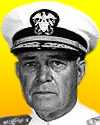
Born 21 Jun 1896; died 25 May 1967 at age 70.
Vice-Admiral Charles Bowers Momsen was an American inventor and navy officer who created the Momsen Lung, an underwater breathing device for escape from disabled submarines. It was an oblong rubber bag hung from the neck and strapped around the waist. A tube led from the bag to a mouthpiece to inhale oxygen and a return tube through a canister of soda lime inside the canister to remove exhaled carbon dioxide and then recycle the air. This provided air for a gradual ascent to avoid the “bends.” In Aug 1937 he became Officer in Charge of Experimental Diving at the NavyYard, Washington, D.C., where he developed new decompression tables and supported proposed use of a helium and oxygen mixture for deep diving. Momsen received the Distinguished Service Medal (1933). Today, the Momsen lung has been superced by other methods, such as the Stanke Hood or free ascent.«
Vice-Admiral Charles Bowers Momsen was an American inventor and navy officer who created the Momsen Lung, an underwater breathing device for escape from disabled submarines. It was an oblong rubber bag hung from the neck and strapped around the waist. A tube led from the bag to a mouthpiece to inhale oxygen and a return tube through a canister of soda lime inside the canister to remove exhaled carbon dioxide and then recycle the air. This provided air for a gradual ascent to avoid the “bends.” In Aug 1937 he became Officer in Charge of Experimental Diving at the NavyYard, Washington, D.C., where he developed new decompression tables and supported proposed use of a helium and oxygen mixture for deep diving. Momsen received the Distinguished Service Medal (1933). Today, the Momsen lung has been superced by other methods, such as the Stanke Hood or free ascent.«
The Terrible Hours: The Greatest Submarine Rescue in History, by Peter Maas. - book suggestion.
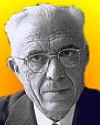
Born 21 Jun 1891; died 9 Jan 1979 at age 87.
Italian engineer and architect who gained international recognition for his dramatic designs for large-span structures made possible with the use of reinforced concrete. In the 1940s he developed ideas for a reinforced concrete which allowed him to create structures of “strength, simplicity and grace.” His services as an engineering consultant were highly sought as a result of his experimentation with structural concrete. His important works include a prefabricated 309-foot-span arch for the Turin Exhibition Building consisting of a single undulating large-span roof, the UNESCO building in Paris, the cathedral at New Norcia, near Perth, Australia, and as structural engineer for the first skyscraper in Italy, the Pirelli Building in Milan.
Italian engineer and architect who gained international recognition for his dramatic designs for large-span structures made possible with the use of reinforced concrete. In the 1940s he developed ideas for a reinforced concrete which allowed him to create structures of “strength, simplicity and grace.” His services as an engineering consultant were highly sought as a result of his experimentation with structural concrete. His important works include a prefabricated 309-foot-span arch for the Turin Exhibition Building consisting of a single undulating large-span roof, the UNESCO building in Paris, the cathedral at New Norcia, near Perth, Australia, and as structural engineer for the first skyscraper in Italy, the Pirelli Building in Milan.
Pier Luigi Nervi, by Ada Louise Huxtable. - book suggestion.
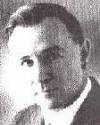
Born 21 Jun 1887; died 11 Sep 1956 at age 69.
Canadian geologist who was one of the most important pioneers in the field of experimental petrology (i.e., the experimental study of the origin and chemical composition of rocks). He was widely recognized for his phase-equilibrium studies of silicate systems as they relate to the origin of igneous rocks. Bowen's legacy, in addition to the many accurate and precise phase diagrams of the end members of common rock-forming minerals, was the construction of an experimental and theoretical basis for the interpretation and documentation of the diversity of igneous and metamorphic rocks.
Canadian geologist who was one of the most important pioneers in the field of experimental petrology (i.e., the experimental study of the origin and chemical composition of rocks). He was widely recognized for his phase-equilibrium studies of silicate systems as they relate to the origin of igneous rocks. Bowen's legacy, in addition to the many accurate and precise phase diagrams of the end members of common rock-forming minerals, was the construction of an experimental and theoretical basis for the interpretation and documentation of the diversity of igneous and metamorphic rocks.
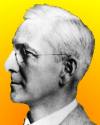
Born 21 Jun 1880; died 29 May 1961 at age 80.
Arnold Lucius Gesell was an American psychologist and pediatrician who pioneered the use of motion-picture cameras (1926) to study the physical and mental development of normal infants and children. His books gave norms for behavior at successive stages of development and were widely read by parents. Gesell was one of the first to attempt a quantitative study of child development, developing his own methods of observation and measurement. Gesell's initial work focused on developmentally disabled children, but he believed that it was necessary to understand normal infant and child development in order to understand nonnormality. He also studied Down's syndrome, cretinism, and cerebral palsy.
Arnold Lucius Gesell was an American psychologist and pediatrician who pioneered the use of motion-picture cameras (1926) to study the physical and mental development of normal infants and children. His books gave norms for behavior at successive stages of development and were widely read by parents. Gesell was one of the first to attempt a quantitative study of child development, developing his own methods of observation and measurement. Gesell's initial work focused on developmentally disabled children, but he believed that it was necessary to understand normal infant and child development in order to understand nonnormality. He also studied Down's syndrome, cretinism, and cerebral palsy.
The Embryology of Behavior, by Arnold Gesell. - book suggestion.
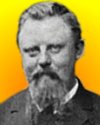
Born 21 Jun 1876; died 24 Mar 1956 at age 79.
Dutch physicist who was a pioneer in cryogenics and was the first to solidify helium under pressure (1926). He was a research assistant for Kamerlingh Onnes working on the liquefaction of helium, and several years later, subsequently succeeded him (1923) as director of the Physics Laboratory at Leiden. In work done with M. Wolfke, after studying discontinuities in several properties of helium at very low temperatures (1927) they suggested that it may be due to a phase change. They called the helium above the transitional helium I and the helium below the transition helium II. In 1932, he produced a temperature just two degrees above absolute zero (-272° C or -457.6° F). In 1942 he wrote the book Helium.
Dutch physicist who was a pioneer in cryogenics and was the first to solidify helium under pressure (1926). He was a research assistant for Kamerlingh Onnes working on the liquefaction of helium, and several years later, subsequently succeeded him (1923) as director of the Physics Laboratory at Leiden. In work done with M. Wolfke, after studying discontinuities in several properties of helium at very low temperatures (1927) they suggested that it may be due to a phase change. They called the helium above the transitional helium I and the helium below the transition helium II. In 1932, he produced a temperature just two degrees above absolute zero (-272° C or -457.6° F). In 1942 he wrote the book Helium.
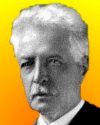
Born 21 Jun 1863; died 26 Jan 1939 at age 75.
Belgian-born American metallurgist whose microscopic and photomicroscopic studies of metal structures make him one of the founders of physical metallurgy. In 1891 he began working with the South Chicago works of the Illinois Steel Company where, to follow his ideas, he was provided with a microscope and a room to work in. "This small beginning," Sauveur later wrote, "marked the introduction of metallography into the iron and steel industry of the United States." He is best known for his research on the hardening of steel (1893) that "the properties of steel rails were largely dependent on the dimensions of their microscopical constituents or grain sizes, and that in turn these dimensions resulted chiefly from the finishing temperatures."
Belgian-born American metallurgist whose microscopic and photomicroscopic studies of metal structures make him one of the founders of physical metallurgy. In 1891 he began working with the South Chicago works of the Illinois Steel Company where, to follow his ideas, he was provided with a microscope and a room to work in. "This small beginning," Sauveur later wrote, "marked the introduction of metallography into the iron and steel industry of the United States." He is best known for his research on the hardening of steel (1893) that "the properties of steel rails were largely dependent on the dimensions of their microscopical constituents or grain sizes, and that in turn these dimensions resulted chiefly from the finishing temperatures."
Born 21 Jun 1863; died 3 Oct 1932 at age 69.
Maximilian Franz Joseph Cornelius Wolf was a German astronomer who founded and directed the Königstuhl Observatory. He used wide-field photography to study the Milky Way and used statistical treatment of star counts to prove the existence of clouds of dark matter. He was among the first astronomers to show that the spiral nebulae have absorption spectra typical of stars and thus differ from gaseous nebulae. His most important contribution was the introduction of photography to discover hundreds of asteroids, the first of which he named Brucia in honor of the donor of his 16-inch double telescope, Catherine Wolfe Bruce.
Maximilian Franz Joseph Cornelius Wolf was a German astronomer who founded and directed the Königstuhl Observatory. He used wide-field photography to study the Milky Way and used statistical treatment of star counts to prove the existence of clouds of dark matter. He was among the first astronomers to show that the spiral nebulae have absorption spectra typical of stars and thus differ from gaseous nebulae. His most important contribution was the introduction of photography to discover hundreds of asteroids, the first of which he named Brucia in honor of the donor of his 16-inch double telescope, Catherine Wolfe Bruce.
Born 21 Jun 1857; died 22 Feb 1944 at age 86. quotes
Hugh Frank Newall was an English astronomer and physicist who held the first chair of astrophysics at Cambridge University (1909-1928). After teaching at Wellington College, he went to Cambridge to be an assistant to J. J. Thomson. He changed his interests from being senior demonstrator in experimental physics to astronomy when he facilitated the university's acquisition of the 25-inch Newall Telescope after the death of his father, Robert Stirling Newall, in 1889. His father, an engineer in manufacturing wire ropes and submarine telegraph cables, had the telescope built for private use at his Gateshead home. Hugh paid the moving expenses. When built, it was the largest in the world, and remained so for many years. He designed spectrographs and studied the solar corona, became director of the Solar Physics Observatory (1913) and led many eclipse expeditions.«
Hugh Frank Newall was an English astronomer and physicist who held the first chair of astrophysics at Cambridge University (1909-1928). After teaching at Wellington College, he went to Cambridge to be an assistant to J. J. Thomson. He changed his interests from being senior demonstrator in experimental physics to astronomy when he facilitated the university's acquisition of the 25-inch Newall Telescope after the death of his father, Robert Stirling Newall, in 1889. His father, an engineer in manufacturing wire ropes and submarine telegraph cables, had the telescope built for private use at his Gateshead home. Hugh paid the moving expenses. When built, it was the largest in the world, and remained so for many years. He designed spectrographs and studied the solar corona, became director of the Solar Physics Observatory (1913) and led many eclipse expeditions.«
Born 21 Jun 1805; died 28 Aug 1880 at age 75. quotes
American physician, chemist, and pioneer geologist and mineralogist. Jackson's professional career consisted of a series of spectacular claims to the work of others which continued until he finally became insane in 1873. In 1832, during a voyage, he discussed with the portrait painter Samuel Morse the possibilities of electric telegraphy. Morse exhibited his telegraph to Congress in 1837 but had to spend seven years to establish a right to his own invention against Jackson's claim that Morse had stolen it from him. Jackson similarly claimed priority in the idea of use of ether as an anaesthetic, which he had suggested to a dentist, William Morton. Though the effects of ether were somewhat known at the time, it was Morton who made the idea practical.
American physician, chemist, and pioneer geologist and mineralogist. Jackson's professional career consisted of a series of spectacular claims to the work of others which continued until he finally became insane in 1873. In 1832, during a voyage, he discussed with the portrait painter Samuel Morse the possibilities of electric telegraphy. Morse exhibited his telegraph to Congress in 1837 but had to spend seven years to establish a right to his own invention against Jackson's claim that Morse had stolen it from him. Jackson similarly claimed priority in the idea of use of ether as an anaesthetic, which he had suggested to a dentist, William Morton. Though the effects of ether were somewhat known at the time, it was Morton who made the idea practical.
Born 21 Jun 1781; died 25 Apr 1840 at age 58. quotes
French mathematician who is known known for his work on definite integrals, advances in Fourier series, electromagnetic theory, and probability. The Poisson distribution (1837) describes the probability that a random event will occur in a time or space interval under the conditions that the probability of the event occurring is very small, but the number of trials is very large so that the event actually occurs a few times. His works included applications to electricity and magnetism, and astronomy. He is also known for the Poisson's integral, Poisson's equation in potential theory, Poisson brackets in differential equations, Poisson's ratio in elasticity, and Poisson's constant in electricity.
French mathematician who is known known for his work on definite integrals, advances in Fourier series, electromagnetic theory, and probability. The Poisson distribution (1837) describes the probability that a random event will occur in a time or space interval under the conditions that the probability of the event occurring is very small, but the number of trials is very large so that the event actually occurs a few times. His works included applications to electricity and magnetism, and astronomy. He is also known for the Poisson's integral, Poisson's equation in potential theory, Poisson brackets in differential equations, Poisson's ratio in elasticity, and Poisson's constant in electricity.

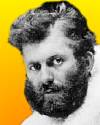
Died 21 Jun 1995 at age 98 (born 22 Aug 1896).
Laurence McKinley Gould was an American explorer and geologist who was the first geologist to reach the interior of the Antarctic continent. He travelled to the Queen Maud Mountains, making geological and glaciological surveys. This involved a 2½-month, 1,500-mile dog-sledge journey that left on 4 Nov 1929. In that month, his party climbed Mount Fridtjof Nansen. Gould found layers of sandstone outcrops at the mountain's peak that showed Antartica's geological links with other continents. Gould's name is on several features on the map of Antarctica. Earlier, in 1926 Gould travelled to the Arctic as an expedition geologist. He was second in command on Admiral Byrd's 1929 South Pole expedition.«
Laurence McKinley Gould was an American explorer and geologist who was the first geologist to reach the interior of the Antarctic continent. He travelled to the Queen Maud Mountains, making geological and glaciological surveys. This involved a 2½-month, 1,500-mile dog-sledge journey that left on 4 Nov 1929. In that month, his party climbed Mount Fridtjof Nansen. Gould found layers of sandstone outcrops at the mountain's peak that showed Antartica's geological links with other continents. Gould's name is on several features on the map of Antarctica. Earlier, in 1926 Gould travelled to the Arctic as an expedition geologist. He was second in command on Admiral Byrd's 1929 South Pole expedition.«
Cold: The Record of an Arctic Sledge Journey, by Laurence M. Gould. - book suggestion.
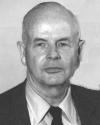
Died 21 Jun 1994 at age 88 (born 3 Jan 1906). quotes
American astronomer who, in 1951, provided the first evidence that the Milky Way Galaxy has spiral arms. He spent his entire career at the Yerkes Observatory, including three years as director. Eschewing theory, his research was devoted to morphology, the classification of objects by their form and structure. With Keenan and Kellman, he introduced stellar luminosity classes and the two-dimensional classification of stellar spectra strictly based on the spectra themselves. With Osterbrock and Sharpless he demonstrated the existence of spiral arms in the Galaxy using precise distances of O and B stars obtained from spectral classifications. Morgan invented the UBV system of magnitudes and colors.
American astronomer who, in 1951, provided the first evidence that the Milky Way Galaxy has spiral arms. He spent his entire career at the Yerkes Observatory, including three years as director. Eschewing theory, his research was devoted to morphology, the classification of objects by their form and structure. With Keenan and Kellman, he introduced stellar luminosity classes and the two-dimensional classification of stellar spectra strictly based on the spectra themselves. With Osterbrock and Sharpless he demonstrated the existence of spiral arms in the Galaxy using precise distances of O and B stars obtained from spectral classifications. Morgan invented the UBV system of magnitudes and colors.
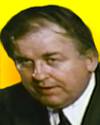
Died 21 Jun 1977 at age 53 (born 11 Apr 1924).
American oceanographer and geologist whose data collection helped Marie Tharp meticulously draft ocean-floor maps that confirmed Alfred Wegener’s continental drift theory. Beginning in the late 1940s, Heezen collaborated under Maurice Ewing, using seismic and sonar data to map the seafloor, until the relationship became antagonistic. Heezen identified turbidites: huge undersea landslides, usually triggered by earthquakes. They cause millions of tons of rock and debris to race down the continental shelf at prodigious speeds, up to 400 km/hr. This work brought him professional recognition, which helped him to access to much oceanic data from many sources. He had a fatal heart attack while submerged on a submarine survey.«
American oceanographer and geologist whose data collection helped Marie Tharp meticulously draft ocean-floor maps that confirmed Alfred Wegener’s continental drift theory. Beginning in the late 1940s, Heezen collaborated under Maurice Ewing, using seismic and sonar data to map the seafloor, until the relationship became antagonistic. Heezen identified turbidites: huge undersea landslides, usually triggered by earthquakes. They cause millions of tons of rock and debris to race down the continental shelf at prodigious speeds, up to 400 km/hr. This work brought him professional recognition, which helped him to access to much oceanic data from many sources. He had a fatal heart attack while submerged on a submarine survey.«
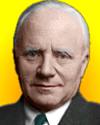
Died 21 Jun 1972 at age 72 (born 1 Nov 1899). quotes
Sir Gavin Rylands de Beer was an English zoologist and morphologist who contributed to experimental embryology, anatomy, and evolution. He refuted the germ-layer theory and developed the concept of paedomorphism (the retention of juvenile characteristics of ancestors in mature adults). From examination of the fossil Archaeopteryx, De Beer proposed mosaic evolution with piecemeal evolutionary changes to explain the combination of bird and reptile features. He was director of the British Museum's Natural History section (1950-60). Applying knowledge of biology (plant pollen) and geology (glaciology) to his study of original documents, he proposed the route taken by Hannibal across the Alps for his attack on ancient Rome.
Sir Gavin Rylands de Beer was an English zoologist and morphologist who contributed to experimental embryology, anatomy, and evolution. He refuted the germ-layer theory and developed the concept of paedomorphism (the retention of juvenile characteristics of ancestors in mature adults). From examination of the fossil Archaeopteryx, De Beer proposed mosaic evolution with piecemeal evolutionary changes to explain the combination of bird and reptile features. He was director of the British Museum's Natural History section (1950-60). Applying knowledge of biology (plant pollen) and geology (glaciology) to his study of original documents, he proposed the route taken by Hannibal across the Alps for his attack on ancient Rome.
Charles Darwin: Evolution by Natural Selection (British Men of Science), by Gavin Rylands De Beer. - book suggestion.
(EB)
Died 21 Jun 1948 at age 88 (born 2 May 1860). quotes
Scottish zoologist and classical scholar, who is noted for his influential workOn Growth and Form (1917, new ed. 1942). It is a profound consideration of the shapes of living things, starting from the simple premise that “everything is the way it is because it got that way.” Hence one must study not only finished forms, but also the forces that moulded them: “the form of an object is a ‘diagram of forces’, in this sense, at least, that from it we can judge of or deduce the forces that are acting or have acted upon it.”' One of his great themes is the tremendous light cast on living things by using mathematics to describe their shapes and fairly simple physics and chemistry to explain them..
Scottish zoologist and classical scholar, who is noted for his influential workOn Growth and Form (1917, new ed. 1942). It is a profound consideration of the shapes of living things, starting from the simple premise that “everything is the way it is because it got that way.” Hence one must study not only finished forms, but also the forces that moulded them: “the form of an object is a ‘diagram of forces’, in this sense, at least, that from it we can judge of or deduce the forces that are acting or have acted upon it.”' One of his great themes is the tremendous light cast on living things by using mathematics to describe their shapes and fairly simple physics and chemistry to explain them..
Died 21 Jun 1948 at age 74 (born 16 Mar 1874).
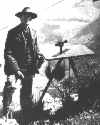
Dutch-born American geologist and topographer whose mapping, with marvelous draftsmanship, of some of the most rugged and scenic features of the western United States was instrumental in the establishment of several notable national parks. He came to the U.S.A. in 1891, studied at the Massachusetts Institute of Technology, and worked with the US Geological Survey (1896-1947). An authority on glaciers and glaciation, he was chairman of the committee on glaciers of the American Geophysical Union (1932-46), and developed an international glacier study program. During both world wars, he engaged in military geology.[Image: Plane station table at Cape Royal in 1904]
Dutch-born American geologist and topographer whose mapping, with marvelous draftsmanship, of some of the most rugged and scenic features of the western United States was instrumental in the establishment of several notable national parks. He came to the U.S.A. in 1891, studied at the Massachusetts Institute of Technology, and worked with the US Geological Survey (1896-1947). An authority on glaciers and glaciation, he was chairman of the committee on glaciers of the American Geophysical Union (1932-46), and developed an international glacier study program. During both world wars, he engaged in military geology.[Image: Plane station table at Cape Royal in 1904]
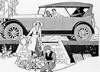
Scottish-born American pioneer automobile manufacturer who put thousands of "Winton Sixes" on the road. Beginning as a bicycle manufacturer on Cleveland's West Side, Winton became the designer and developer of high-end automobiles. He produced his first horseless carriage in 1896. Winton's legacy includes more than 100 patents instrumental in the early designs of automobiles and diesel engines. He was also generous in passing the technology along to competitors when safety was an issue.
Died 21 Jun 1881 at age 80 (born 24 Dec 1800).
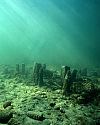
Swiss archaeologist and prehistorian who conducted the first systematic excavation of prehistoric Alpine lake dwellings, at Obermeilen on Lake Zürich, Switzerland. In the dry winter of 1853-4, the water-level there dropped to reveal numerous wooden pilings. After farmers found flints, bones, and bronze jewelry under the mud around them. Keller began a thorough examination of the site. His finds included even pieces of cloth, basketry, and netting. Keller declared that the pilings were remaining portions of platforms needed to support dwellings in marshy land about 4000 years ago. He thus initiated the study of similar remains elsewhere in Switzerland and Europe, from which much was learned about Late Stone Age and Bronze Age life.
Swiss archaeologist and prehistorian who conducted the first systematic excavation of prehistoric Alpine lake dwellings, at Obermeilen on Lake Zürich, Switzerland. In the dry winter of 1853-4, the water-level there dropped to reveal numerous wooden pilings. After farmers found flints, bones, and bronze jewelry under the mud around them. Keller began a thorough examination of the site. His finds included even pieces of cloth, basketry, and netting. Keller declared that the pilings were remaining portions of platforms needed to support dwellings in marshy land about 4000 years ago. He thus initiated the study of similar remains elsewhere in Switzerland and Europe, from which much was learned about Late Stone Age and Bronze Age life.
Died 21 Jun 1874 at age 59 (born 13 Aug 1814).
Anders Jonas Ångström was a Swedish physicist whose pioneering use of spectroscopy is recognised in the name of the angstrom, a unit of length equal to 10-10 metre. In 1853, he studied the spectrum of hydrogen for which Balmer derived a formula. He announced in 1862 that analysis of the solar spectrum showed that hydrogen is present in the Sun's atmosphere. In 1867 he was the first to examine the spectrum of aurora borealis (northern lights). He published his extensive research on the solar spectrum in Recherches sur le spectre solaire (1868), with detailed measurements of more than 1000 spectral lines. He also published works on thermal theory and carried out geomagnetical measurements in different places around Sweden.«
Anders Jonas Ångström was a Swedish physicist whose pioneering use of spectroscopy is recognised in the name of the angstrom, a unit of length equal to 10-10 metre. In 1853, he studied the spectrum of hydrogen for which Balmer derived a formula. He announced in 1862 that analysis of the solar spectrum showed that hydrogen is present in the Sun's atmosphere. In 1867 he was the first to examine the spectrum of aurora borealis (northern lights). He published his extensive research on the solar spectrum in Recherches sur le spectre solaire (1868), with detailed measurements of more than 1000 spectral lines. He also published works on thermal theory and carried out geomagnetical measurements in different places around Sweden.«
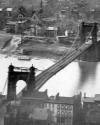
Wheeling suspension bridge (photo 1885)
American engineer who built (1842) the first wire-cable suspension bridge in America, 358-ft (109-m) across the Schuylkill River at Fairmont, Penn. Its 27-ft wide truss-stiffened deck was supported by five wire cables on each side. The 1,010-ft (308-m) span suspension railway bridge he built (1846-49) across the Ohio River at Wheeling , WV, was then the world's longest of its kind. He built the “Mountain Top Track”across the summit of the Blue Ridge at Rock Fish Gap, Virgina (1854). Ellet was a colonel during the Civil War. He formed the Mississippi Marine Rams war fleet with nine heavy, frame-reinforced steam ships used as battering-rams. He attacked the Confederate fleet on the Mississippi River, and won the Battle of Memphis (6 Jun 1862). He died later, from a pistol ball shot to the knee during the battle.«
Charles Ellet, Jr., The Engineer as Individualist, by Gene D Lewis. - book suggestion.
Died 21 Jun 1857 at age 80 (born 4 May 1777). quotes
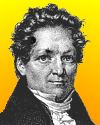
French chemist, teacher, and author of an influential four-volume text on basic chemical theory and practice (1813-16). In 1808, he was the first to isolate the element boron in collaboration with Gay-Lussac. His independent achievements included studies of esters (1807), the discovery of hydrogen peroxide (1818), and work in organophosphorus compounds. He also produced a pigment known as Thenard's blue, which is stable at high temperatures and so can be used in porcelain.
French chemist, teacher, and author of an influential four-volume text on basic chemical theory and practice (1813-16). In 1808, he was the first to isolate the element boron in collaboration with Gay-Lussac. His independent achievements included studies of esters (1807), the discovery of hydrogen peroxide (1818), and work in organophosphorus compounds. He also produced a pigment known as Thenard's blue, which is stable at high temperatures and so can be used in porcelain.
Died 21 Jun 1820 at age 28 (born 2 Oct 1791).
French physicist.
French physicist.
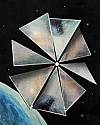
In 2005, the world's first solar sail spacecraft placed in orbit to test controlled flight was launched on a Volna rocket fired from a Russian submarine submerged in the Barents Sea. A 825-km quasi-polar orbit was intended for the 112-kg Cosmos-1 spacecraft with an eight-petalled solar sail - 650 square metres of a thin aluminium alloy coated film. The non-profit U.S. Planetary Society financed the four million dollar project, built in Russia by the Lavochkin Association and the Space Research Institute of the Russian Academy. It was designed for experiments in controlled flight while in orbit, achieved by rotating each sail to change its pitch, to test the possiblility of propulsion, though very small, provided by the impact of light radiation.«
In 2004, Mike Melvill became the first civilian to pilot a craft into space. By flying to 100-km (62 miles) in altitude, SpaceShipOne left the Earth's atmosphere in a sub-orbital space flight. It was built by Burt Rutan and financed by Paul Allen. It began by riding piggy-back on its launcher White Knight to 46,000-ft (13.8-km) Then SpaceShipOne separated, glided briefly and fired its rocket for 80-sec to continue its trip to the edge of space. For re-entry, the ship's wings could swing into a new configuration for a 20-min glide back down to Mojave Airport, California. The 90-min flight ended with a safe landing on the desert airport runway. The rocket engine fuel was a solid rubber propellant with liquid nitrous oxide.«
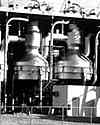
In 1961, the first practical plant for the conversion of seawater to drinking water was dedicated when President John Kennedy pressed a switch installed in his office in Washington D.C. It was built in less than a year at a cost of $1.5 million at Freeport, Texas by the Dow Chemical Co. The plant was capable of producing about a million gallons of water a day, supplying fresh water to the city of Freeport at a cost of about $1.25 per thousand gallons. The plant was opened 8 May 1961, by the Office of Saline Water, U.S. Department of the Interior. The large-scale evaporation method used then has now been replaced by reverse osmosis as scientific advances have produced special polymers suitable for use as filtering membranes.

In 1948, the first successful long-playing microgroove phonograph records were introduced to the public at the Waldorf-Astoria Hotel in New York City. Made of nonbreakable Vinilyte plastic, and designed for the new speed of 33-1/3 r.p.m., the records were developed by Dr. Peter Goldmark of Columbia Records. The 12 inch record could play 23 minutes per side, as compared to only 4 minutes per side on the earlier 78 rpm record. The LP was also an improvement by the quietness of its surfaces and its greatly increased fidelity. The first LP featured violinist Yehudi Menuhin. Columbia originated the term “LP” itself, which was copyrighted. Thus, although many other firms could make long-playing records, only Columbia could make an LP.
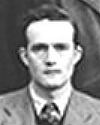
Kilburn
In 1948, the first stored-program computer, the Small-Scale Experimental Machine, SSEM, ran its first program. Written by Professor Tom Kilburn, it took 52 minutes to run. The tiny experimental computer had no keyboard or printer, but it successfully tested a memory system developed at Manchester University in England. The system, based on a cathode-ray tube, could store programs. Previous electronic computers had to be rewired to execute each new problem. The Manchester computer proved theories set forth by John von Neumann in a report that proposed modifications to ENIAC, the electronic computer built at the University of Pennsylvania in the mid-1940s. The report also proposed the use of binary instead of digital numbers.
In 1913, the first successful parachute jump from an airplane by a woman was made by Georgia Broadwick, age 18. She jumped from an airplane flying at about 30 m.p.h. at an altitude of about 1,000-ft over Griffith Field, Los Angeles, California. Her silk parachute opened within about 100 feet of the initial free-fall.. Her pilot was Glenn Martin. The previous year, Capain Albert Berry had made the first parachute jump from an airplane 1 Mar 1912 over Jefferson Barracks, Missouri. Parachuting from a balloon had been accompished more than a century earlier in France.«
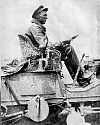
In 1903, a 12 h.p., single-cylinder Model F Packard began a transcontinental journey by automobile. It set off from San Francisco, after first dipping its wheels in the Pacific Ocean. It was driven by “Tommy” Fetch from the Packard Motor Car works, with Marius Krarup, a journalist. The 51 days of actual running time gave an average run of almost 80 miles per day. They had crossed the Utah desert and the Colorado mountains and (according to the New York Times report) during their journey replaced only three tires and a broken front spring. The mud-covered car arrived in New York, completing their trip on 21 Aug 1903. Vermont doctor Horatio Nelson with mechanic Crocker Sewell, had completed a similar, but two days slower, trip in a Winton car the previous month.«
Packard Motor Car Company, by Evan P. Idle. - book suggestion.
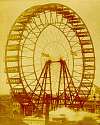
In 1893, the first Ferris wheel premiered at Chicago’s Columbian Exposition, America’s third world’s fair. It was invented by George Washington Ferris, a Pittsburgh bridge builder, for the purpose of creating an attraction like the Eiffel Tower in Paris. Each of the 36 cars carried 60 passengers, making a full passenger load of 150 tons. Ferris didn’t use rigid spokes: instead, he used a web of taut cables, like a bicycle wheel. Supported by two 140 foot steel towers, its 45 foot axle was the largest single piece of forged steel at the time in the world. The highest point of the wheel was 264 feet. The wheel and cars weighed 2100 tons, with another 2200 tons of associated levers and machinery. Ferris died just four years later, at the age of only 38.
more
Circles in the Sky the Life and Times of George Ferris, by Richard Weingardt. - book suggestion.
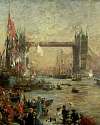
In 1886, the foundation stone of the Tower Bridge in London, England was laid (over a time capsule) by the Prince of Wales. The need to cross the River Thames at this point had become increasingly urgent for many years, and finally the necessary Act was passed in 1885. The bridge, designed by Mr. Wolfe Barry, CB, was completed at a cost of about £1,000,000. To permit the passage of tall ships between the towers, two bascule spans, each of 100-ft length, are raised. The side spans to the towers are of the more familiar suspension type. Pedestrians can traverse a high-level footway nearly at the top of the towers, even when the bridge is raised. It was officially opened 30 Jun 1894, by the Prince of Wales, later Edward VII, on behalf of Queen Victoria.«[Image: detail from The Opening of Tower Bridge by William Lionel Wyllie, oil on canvas, 1894.] more
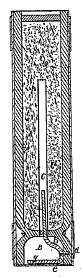
(USPTO)
In 1859, Andrew Lanergan, of Boston, Mass., received the first rocket patent for "an improvement in exhibition rockets" (U.S. No. 24,468). His design allowed for the fuse (which he called the "match") to be pre-assembled with the rocket. The outer end of the fuse was packed inside a recess at the bottom of the rocket and covered with a light seal which could be easily broken to draw out the fuse when needed. Thus, he claimed a greater safety from accidental firing by falling cinders or sparks falling on exposed fuses.
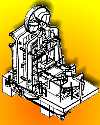
(USPTO)
In 1853, the first U.S. patent for a commercially succesful "Envelop-Folding Machine" was issued to Dr. Russell L. Hawes of Worcester, Mass. (No. 9812). Three workers could produce over 12,500 envelopes a day. The self-feeding machine had a series of shaft, pulleys, cranks, plates and knives and it would "take one sheet of paper at one time, and carry it forward to impress or form a base, and thus to retain it until it is carried onward to the finisher, whence it is discharged, a finished or folded and pasted envelop." A pasting process was incorporated as part of the machine's cycle. (J.K. Park and C.S. Watson were granted the first U.S. patent for an envelope folding machine (23 Jan 1849, No. 6055) but it was not used commercially.)«

In 1838, his discovery of the stereoscopic viewer was described in a paper by Charles Wheatstone, On some remarkable, and hitherto unobserved, Phenomena of Binocular Vision, which he read to the Royal Society, London. This is the visual effect whereby pictures of an object drawn from slightly different viewpoints for individual eyes could be viewed with his stereoscope and give the perception of the object in three dimensions. He read a second part to this paper on 15 Jan 1852. This principle was later popularized with photographs to make stereo view cards.[Ref.: Philosophical Transactions of the Royal Society of London, Vol. 128, pp. 371-394 and Vol. 142, pp. 1-17.]
Sir Charles Wheatstone, by Margaret Wilson and Brian Bowers (Ed.). - book suggestion.
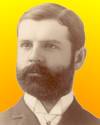
1885
In 1834, Cyrus Hall McCormick received a patent for his reaping machine, recognized as the first such practical machine. He demonstrated his machine in 1831 at a public trial in a field near Walnut Grove, Va. The owner of the field, fearing the machine would rattle the heads of his wheat, stopped the demonstration, which was then moved to a more level field on the neighbour's farm. There, the test was impressive, cutting six acres in a half a day. Although it did the work of six men, it was very difficult to popularize, and it took until 1841 before McCormick sold his first two machines. In 1902, the McCormick Harvesting Machine Company merged with five other leading farm implement manufacturers to form the International Harvester Company.
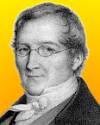
Gay-Lussac
In 1808, the isolation of the element boron was announced* by French chemist, Joseph Louis Gay-Lussac, nine days ahead of Englishman Humphry Davy who independently separated boron and made his announcement on 30 Jun 1808.«[Image: ]
In 1768, the first commencement of a U.S. medical college was held at the College of Philadelphia, Pennsylvania. When the Department of Medicine it was established in 1765, this was the first medical school in the U.S. Instruction took place in a wooden building, Surgeon's Hall. The institution granted ten Batchelor of Medecine degrees its first commencement. Being alphabetically at the head of the list, John Archer became the first doctor in the U.S. to receive such a degree. Four of these ten also received a Doctor of Medicine from the college three years later, in 1771. (The first Doctor of Medicine was granted in 1770 at King's College, New York, now Columbia University.)«*




