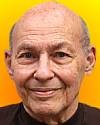
Born 9 Aug 1927; died 24 Jan 2016 at age 88. quotes
American biochemist and the founder of the MIT Artificial Intelligence Project. Marvin Minsky has made many contributions to AI, cognitive psychology, mathematics, computational linguistics, robotics, and optics. He holds several patents, including those for the first neural-network simulator (SNARC, 1951), the first head-mounted graphical display, the first confocal scanning microscope, and the LOGO "turtle" device. His other inventions include mechanical hands and the "Muse" synthesizer for musical variations (with E. Fredkin). In recent years he has worked chiefly on imparting to machines the human capacity for commonsense reasoning.
American biochemist and the founder of the MIT Artificial Intelligence Project. Marvin Minsky has made many contributions to AI, cognitive psychology, mathematics, computational linguistics, robotics, and optics. He holds several patents, including those for the first neural-network simulator (SNARC, 1951), the first head-mounted graphical display, the first confocal scanning microscope, and the LOGO "turtle" device. His other inventions include mechanical hands and the "Muse" synthesizer for musical variations (with E. Fredkin). In recent years he has worked chiefly on imparting to machines the human capacity for commonsense reasoning.
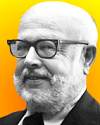
Born 9 Aug 1911; died 14 Mar 1995 at age 83. quotes
William Alfred (Willy) Fowler was an American astrophysicist, who shared the Nobel Prize in Physics in 1983 for “his theoretical and experimental studies of the nuclear reactions of importance in the formation of the chemical elements in the universe.” He spent much of his life measuring the rates nuclear reactions of astrophysical interest, as in the interior of stars. From 1964, Fowler made theoretical calculations relating to supernovae, gravitational collapse, neutrinos, formation of light elements, and nucleocosmochronology. Fowler co-authored a paper, Synthesis of the Elements in Stars, (with Geoffrey and Margaret Burbidge and Fred Hoyle) which demonstrated how cosmic abundances of most nuclides (other than the lightest) could result from nuclear reactions in stars.«
William Alfred (Willy) Fowler was an American astrophysicist, who shared the Nobel Prize in Physics in 1983 for “his theoretical and experimental studies of the nuclear reactions of importance in the formation of the chemical elements in the universe.” He spent much of his life measuring the rates nuclear reactions of astrophysical interest, as in the interior of stars. From 1964, Fowler made theoretical calculations relating to supernovae, gravitational collapse, neutrinos, formation of light elements, and nucleocosmochronology. Fowler co-authored a paper, Synthesis of the Elements in Stars, (with Geoffrey and Margaret Burbidge and Fred Hoyle) which demonstrated how cosmic abundances of most nuclides (other than the lightest) could result from nuclear reactions in stars.«

Born 9 Aug 1908; died 29 Apr 2008 at age 99. quotes
Mary Golda Ross was an American engineer who was a citizen of the Cherokee Nation, and the first known Native American female engineer, and an aerospace pioneer. Her career began with a few years teaching in high school. In 1941, she was employed as a mathematician at Lockheed Corporation, working on problems related to the design of fighter planes. By 1952, pursuing her interest in interplanetary space travel, she moved to Lockheed’s Advanced Development Program, where she began work on missiles and rockets. In particular, her her work was critical to the Agena space rocket project, and the mathematics of satellite orbits. (That program led to the Apollo space flights.).« more
Mary Golda Ross was an American engineer who was a citizen of the Cherokee Nation, and the first known Native American female engineer, and an aerospace pioneer. Her career began with a few years teaching in high school. In 1941, she was employed as a mathematician at Lockheed Corporation, working on problems related to the design of fighter planes. By 1952, pursuing her interest in interplanetary space travel, she moved to Lockheed’s Advanced Development Program, where she began work on missiles and rockets. In particular, her her work was critical to the Agena space rocket project, and the mathematics of satellite orbits. (That program led to the Apollo space flights.).« more
Power in Numbers: The Rebel Women of Mathematics, by Talithia Williams. - book suggestion.
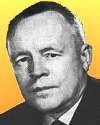
Born 9 Aug 1897; died 3 Nov 1994 at age 97. quotes
Ralph (Walter Graystone) Wyckoff was an American scientist, a pioneer in the application of X-ray methods to determine crystal structures and one of the first to use these methods for studying biological substances. He became famous in two areas of structural research: X-ray diffraction and electron microscopy. He developed a new technique of 'metal shadowing' for observation with the electron microscope. A specimen, such as a virus, is placed in a vacuum together with a heated tungsten filament covered with gold. Vaporized gold coated the side of the specimen nearest the filament, leaving a 'shadow' on the far side. This allowed better estimates to be made of their size and shape, as well as revealing details of their structure.
Ralph (Walter Graystone) Wyckoff was an American scientist, a pioneer in the application of X-ray methods to determine crystal structures and one of the first to use these methods for studying biological substances. He became famous in two areas of structural research: X-ray diffraction and electron microscopy. He developed a new technique of 'metal shadowing' for observation with the electron microscope. A specimen, such as a virus, is placed in a vacuum together with a heated tungsten filament covered with gold. Vaporized gold coated the side of the specimen nearest the filament, leaving a 'shadow' on the far side. This allowed better estimates to be made of their size and shape, as well as revealing details of their structure.
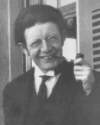
Born 9 Aug 1896; died 17 Sep 1980 at age 84. quotes
Swiss psychologist and zoologist. By age 15 he was contributing articles on molluscs to journals of zoology, and his doctoral degree (1918) thesis was on the distribution of molluscs in the Valaisian Alps. Thereafter, he turned to researching how mental growth develops in several successive stages from infancy to adulthood - “the embryology of intelligence”—for which he became distinguished. In the journal Science (27 Jun 1958), he summarized that at the age of eleven or twelve “a child becomes capable of certain formal or abstract operations of thought which before were possible only as concrete operations on properties of the immediately present object world. This provides the last of three mental revolutions during development.”«
Swiss psychologist and zoologist. By age 15 he was contributing articles on molluscs to journals of zoology, and his doctoral degree (1918) thesis was on the distribution of molluscs in the Valaisian Alps. Thereafter, he turned to researching how mental growth develops in several successive stages from infancy to adulthood - “the embryology of intelligence”—for which he became distinguished. In the journal Science (27 Jun 1958), he summarized that at the age of eleven or twelve “a child becomes capable of certain formal or abstract operations of thought which before were possible only as concrete operations on properties of the immediately present object world. This provides the last of three mental revolutions during development.”«
The Psychology of the Child, by Jean Piaget. - book suggestion.
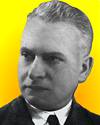
Born 9 Aug 1895; died 13 May 1961 at age 65.
Yuri Yurijevich Voronoy was a Russian surgeon who achieved the first human kidney allotransplant of a human cadaver kidney implanted into the thigh of a patient on 3 Apr 1933. In a six hour operation, the kidney was connected to blood vessels at the graft site. The kidney excreted urine until the second day after surgery. The patient had acute mercury intoxication from a suicide attempt by taking poison. When conventional treatment was ineffective, and with a kidney available from another patient that had just died from a skull fracture injury, the unprecedented kidney transplant was tried. The blood mismatch meant the attempt failed, with acute rejection. Although this was the first human allograft kidney transplantation, there had been some earlier attempts with animals.«
Yuri Yurijevich Voronoy was a Russian surgeon who achieved the first human kidney allotransplant of a human cadaver kidney implanted into the thigh of a patient on 3 Apr 1933. In a six hour operation, the kidney was connected to blood vessels at the graft site. The kidney excreted urine until the second day after surgery. The patient had acute mercury intoxication from a suicide attempt by taking poison. When conventional treatment was ineffective, and with a kidney available from another patient that had just died from a skull fracture injury, the unprecedented kidney transplant was tried. The blood mismatch meant the attempt failed, with acute rejection. Although this was the first human allograft kidney transplantation, there had been some earlier attempts with animals.«
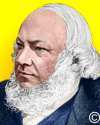
Born 9 Aug 1822; died 20 May 1893 at age 70. quotes
Dutch physiologist and philosopher noted for his belief in the material basis of emotion and thought. His most important work, Kreislauf des Lebens (1852; “The Cycle of Life”), expounded scientific materialism, requiring “scientific answers to scientific questions.” For example, he recognized that the miner brings phosphoric lime out of the earth, and the farmer uses it to fertilize his wheat, which nourishes not only the body, but also, at the very end, the human brain. Thus, “No thought without phosphorus!” Man is the sum of parents and nurse, place and time, air and weather, sound and light, food and clothing, in short, conditioned by external influences. Organisms have emerged from the inorganic.« more
Dutch physiologist and philosopher noted for his belief in the material basis of emotion and thought. His most important work, Kreislauf des Lebens (1852; “The Cycle of Life”), expounded scientific materialism, requiring “scientific answers to scientific questions.” For example, he recognized that the miner brings phosphoric lime out of the earth, and the farmer uses it to fertilize his wheat, which nourishes not only the body, but also, at the very end, the human brain. Thus, “No thought without phosphorus!” Man is the sum of parents and nurse, place and time, air and weather, sound and light, food and clothing, in short, conditioned by external influences. Organisms have emerged from the inorganic.« more
Born 9 Aug 1819; died 3 May 1880 at age 60.
American astrophysicist who was the first to investigate mathematically the Sun as a gaseous body. His work demonstrated the interrelationships of pressure, temperature, and density inside the Sun and was fundamental to the emergence of modern theories of stellar evolution.
American astrophysicist who was the first to investigate mathematically the Sun as a gaseous body. His work demonstrated the interrelationships of pressure, temperature, and density inside the Sun and was fundamental to the emergence of modern theories of stellar evolution.
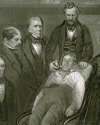
Born 9 Aug 1819; died 15 Jul 1868 at age 48.
William T(homas) G(reen) Morton was an American surgeon who was the first dentist to use ether (letheon) during an tooth extraction, privately on on 30 Sep 1846. He followed this by a public demonstration of this method of anesthesia on16 Oct 1846 during an operation performed by Dr. John Collins Warren (1778-1856) at the Massachusetts General Hospital in Boston. The patient, Gilbert Abbott, age 20, had a small superficial tumor removed from beneath the left lower jaw. The suggestion to use ether came from the chemist Charles T. Jackson, (1860-1913). After the success of the public demonstration, the use of ether for painless operations spread quickly to other countries.
William T(homas) G(reen) Morton was an American surgeon who was the first dentist to use ether (letheon) during an tooth extraction, privately on on 30 Sep 1846. He followed this by a public demonstration of this method of anesthesia on16 Oct 1846 during an operation performed by Dr. John Collins Warren (1778-1856) at the Massachusetts General Hospital in Boston. The patient, Gilbert Abbott, age 20, had a small superficial tumor removed from beneath the left lower jaw. The suggestion to use ether came from the chemist Charles T. Jackson, (1860-1913). After the success of the public demonstration, the use of ether for painless operations spread quickly to other countries.
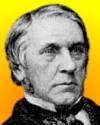
Born 9 Aug 1805; died 18 Sep 1860 at age 55.
English civil engineer who build many significant early main-line railways. In 1823, he began learning his trade while surveying railways and working with Robert Stephenson at his locomotive factory. Within three years, Locke became a railway construction engineer under George Stephenson, and by 1835 was a Chief Engineer building the Grand Junction Railway. Locke put double-headed rails into use that were secured in chairs on wooden sleepers. These developed into the standard bullhead track used for a century afterwards for railways throughout Britain. In addition to a number of main lines in England, he undertook engineering for several early main lines in France. In 1847, he won election to serve as Member of Parliament for Honiton.«
English civil engineer who build many significant early main-line railways. In 1823, he began learning his trade while surveying railways and working with Robert Stephenson at his locomotive factory. Within three years, Locke became a railway construction engineer under George Stephenson, and by 1835 was a Chief Engineer building the Grand Junction Railway. Locke put double-headed rails into use that were secured in chairs on wooden sleepers. These developed into the standard bullhead track used for a century afterwards for railways throughout Britain. In addition to a number of main lines in England, he undertook engineering for several early main lines in France. In 1847, he won election to serve as Member of Parliament for Honiton.«
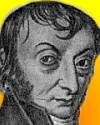
Born 9 Aug 1776; died 9 Jul 1856 at age 79. quotes
Italian chemist and physicist who found that at the same temperature and pressure equal volumes of all perfect gases contain the same number of particles, known as Avogadro's Law (1811) leading to the Avogadro's constant being 6.022 x 10²³units per mole of a substance. He realized the particules could be either atoms, or more often, combinations of atoms, for which he coined the word "molecule." This explained Gay-Lussac's law of combining volumes (1809). Further, Avogadro determined from the electrolysis of water that it contained molecules formed from two hydrogen atoms for each atom of oxygen, by which the individual oxygen atom was 16 times heavier than one hydrogen atom (not 8 times as suggested earlier by John Dalton.)«
Italian chemist and physicist who found that at the same temperature and pressure equal volumes of all perfect gases contain the same number of particles, known as Avogadro's Law (1811) leading to the Avogadro's constant being 6.022 x 10²³units per mole of a substance. He realized the particules could be either atoms, or more often, combinations of atoms, for which he coined the word "molecule." This explained Gay-Lussac's law of combining volumes (1809). Further, Avogadro determined from the electrolysis of water that it contained molecules formed from two hydrogen atoms for each atom of oxygen, by which the individual oxygen atom was 16 times heavier than one hydrogen atom (not 8 times as suggested earlier by John Dalton.)«
Amedeo Avogadro: A Scientific Biography, by M. Morselli. - book suggestion.
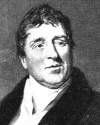
Born 9 Aug 1757; died 2 Sep 1834 at age 77.
Scottish engineer who was a road, bridge and canal builder. He began as a stonemason apprentice at age 14, but then taught himself architecture and in 1787 became surveyor of public works for Shropshire. He planned the Ellesmere (1793-1805) and Caledonian (1803-23) canals, the road from London to Holyhead, with the Menai Suspension Bridge (1819-1826), and Katherine's Docks in London (1824-1828). In all, he built over 1000 miles of road and 1200 bridges, as well as aquaducts, harbours, docks, and other buildings. He died in London.
Scottish engineer who was a road, bridge and canal builder. He began as a stonemason apprentice at age 14, but then taught himself architecture and in 1787 became surveyor of public works for Shropshire. He planned the Ellesmere (1793-1805) and Caledonian (1803-23) canals, the road from London to Holyhead, with the Menai Suspension Bridge (1819-1826), and Katherine's Docks in London (1824-1828). In all, he built over 1000 miles of road and 1200 bridges, as well as aquaducts, harbours, docks, and other buildings. He died in London.
Thomas Telford, by L.T.C. Rolt. - book suggestion.

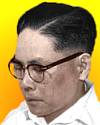
1958
Died 9 Aug 2007 at age 84 (born 20 Aug 1922).
Japanese surgeon who built the first artificial heart that was implanted and kept an animal alive. He was a thoracic surgeon at the Cleveland Clinic in 1957 when he was asked by Dr. Willem Kolff to collaborate in the pioneering project. On 12 Dec 1957, it kept a dog alive for 90 minutes. Thus, a new frontier was opened for artificial heart development for humans. Akutsu became assistant director at the Texas Heart Institute, and continued to develop his total artificial heart. Dr Denton Cooley had already implanted the first artifial heart in a human in 1969, but Akutsu was on his team for the implantation of the second human artificial heart at THI in 1981. After that, he returned to Japan and continued taking a major leadership role as a world expert developing the field. He published Heart Replacement: Artificial Heart.«
Japanese surgeon who built the first artificial heart that was implanted and kept an animal alive. He was a thoracic surgeon at the Cleveland Clinic in 1957 when he was asked by Dr. Willem Kolff to collaborate in the pioneering project. On 12 Dec 1957, it kept a dog alive for 90 minutes. Thus, a new frontier was opened for artificial heart development for humans. Akutsu became assistant director at the Texas Heart Institute, and continued to develop his total artificial heart. Dr Denton Cooley had already implanted the first artifial heart in a human in 1969, but Akutsu was on his team for the implantation of the second human artificial heart at THI in 1981. After that, he returned to Japan and continued taking a major leadership role as a world expert developing the field. He published Heart Replacement: Artificial Heart.«
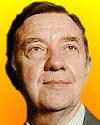
Died 9 Aug 2006 at age 91 (born 7 Sep 1914). quotes
American physicist who discovered the Earth's magnetosphere, two toroidal zones of radiation due to trapped charged particles encircling the Earth (also known as the Van Allen radiation belts). During WWII he gained experience miniaturizing electronics, such as in the proximity fuse of a missile. After the war, he studied cosmic radiation, taking advantage of the unused German stock of V2 rockets launched into the outer regions of the atmosphere, carrying research devices using radio to relay back the data gathered. He was also involved in the early U.S. space program, and he had radiation measuring instruments on the first U.S. satellite, Explorer 1, launched 31 Jan 1958 with follow-up carried out by satellites Explorer 3 and 4 later the same year.«
American physicist who discovered the Earth's magnetosphere, two toroidal zones of radiation due to trapped charged particles encircling the Earth (also known as the Van Allen radiation belts). During WWII he gained experience miniaturizing electronics, such as in the proximity fuse of a missile. After the war, he studied cosmic radiation, taking advantage of the unused German stock of V2 rockets launched into the outer regions of the atmosphere, carrying research devices using radio to relay back the data gathered. He was also involved in the early U.S. space program, and he had radiation measuring instruments on the first U.S. satellite, Explorer 1, launched 31 Jan 1958 with follow-up carried out by satellites Explorer 3 and 4 later the same year.«
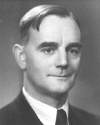
Died 9 Aug 1969 at age 65 (born 5 Dec 1903).
English physicist who was awarded the Nobel Prize for Physics in 1950 for his development of the photographic method of studying nuclear processes and for the resulting discovery of the pion (pi-meson), a heavy subatomic particle. The pion proved to be the hypothetical particle proposed in 1935 by Yukawa Hideki of Japan in his theory.
English physicist who was awarded the Nobel Prize for Physics in 1950 for his development of the photographic method of studying nuclear processes and for the resulting discovery of the pion (pi-meson), a heavy subatomic particle. The pion proved to be the hypothetical particle proposed in 1935 by Yukawa Hideki of Japan in his theory.
Died 9 Aug 1960 at age 88 (born 18 Apr 1872).
American botanist and pioneer researcher on heredity in fungi.
American botanist and pioneer researcher on heredity in fungi.
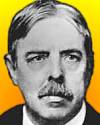
Died 9 Aug 1949 at age 74 (born 31 Aug 1874). quotes
Edward L(ee) Thorndike was a U.S. psychologist considered to be the father of Educational Psychology who studied the process of learning in animals, children and adults. His theory of connectionism proposed that mental or behavioral responses to specific stimuli are the result of a process of trial and error that produces neural connections linking the stimuli with the most satisfactory response. Thorndike studied how animals learn through trial and error in his "puzzlebox" experiments, such as observing a hungry cat in a box which received food when it escaped. Gradually, the animal learned what it had to do to escape, and the escape time became shorter. He applied such associative learning to humans and to the practice of education.«
Edward L(ee) Thorndike was a U.S. psychologist considered to be the father of Educational Psychology who studied the process of learning in animals, children and adults. His theory of connectionism proposed that mental or behavioral responses to specific stimuli are the result of a process of trial and error that produces neural connections linking the stimuli with the most satisfactory response. Thorndike studied how animals learn through trial and error in his "puzzlebox" experiments, such as observing a hungry cat in a box which received food when it escaped. Gradually, the animal learned what it had to do to escape, and the escape time became shorter. He applied such associative learning to humans and to the practice of education.«
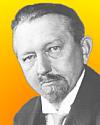
Died 9 Aug 1938 at age 65 (born 29 Jun 1873).
Leo (Viktor) Frobenius was a German explorer, archaeologist and ethnologist who proposed a theory that culture evolves through stages of youth, maturity, and age. He helped to spread knowledge of West African art and culture throughout Europe. Between 1904-35, he made a series of twelve major expeditions throughout Africa, gathering knowledge of art and culture, travelling across the deserts, savannahs and rain forests of Africa and South Africa, the River Nile and the shores of the Red Sea. He enthusiastically reported his finding in numerous books and essays. Frobenius also explored centres of prehistoric art in the Alps, Norway, Spain, and Africa. He founded the Institute of Culture Morphology (1925).«
Leo (Viktor) Frobenius was a German explorer, archaeologist and ethnologist who proposed a theory that culture evolves through stages of youth, maturity, and age. He helped to spread knowledge of West African art and culture throughout Europe. Between 1904-35, he made a series of twelve major expeditions throughout Africa, gathering knowledge of art and culture, travelling across the deserts, savannahs and rain forests of Africa and South Africa, the River Nile and the shores of the Red Sea. He enthusiastically reported his finding in numerous books and essays. Frobenius also explored centres of prehistoric art in the Alps, Norway, Spain, and Africa. He founded the Institute of Culture Morphology (1925).«
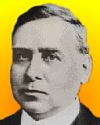
Died 9 Aug 1932 at age 69 (born 14 May 1863).
American mathematician who originated the idea, postumously given his name - for the Fields Medal. It became the most prestigious award for mathematicians, often referred to as the equivalent of a Nobel Prize for mathematicians. As a professor at the University of Toronto, he had worked to bring the International Congress of Mathematicians to Toronto (1924). The Congress was so successful that afterward there was a surplus of about $2,500 which Fields, as chairman of the organizing committee, proposed be used to fund two medals to be awarded at each of future Congresses. This was approved on 24 Feb 1931. He died the following year, leaving $47,000 as additional funding for the medals, which have been awarded since 1936.« more
American mathematician who originated the idea, postumously given his name - for the Fields Medal. It became the most prestigious award for mathematicians, often referred to as the equivalent of a Nobel Prize for mathematicians. As a professor at the University of Toronto, he had worked to bring the International Congress of Mathematicians to Toronto (1924). The Congress was so successful that afterward there was a surplus of about $2,500 which Fields, as chairman of the organizing committee, proposed be used to fund two medals to be awarded at each of future Congresses. This was approved on 24 Feb 1931. He died the following year, leaving $47,000 as additional funding for the medals, which have been awarded since 1936.« more
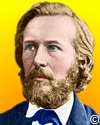
Died 9 Aug 1919 at age 85 (born 16 Feb 1834). quotes
Ernst Heinrich Haeckel was a German naturalist and biologist who separated the animal kingdom into unicellar and multicellular organisms, and was an enthusiastic supporter of Darwin's theories. He led numerous scientific expedition, and cataloged 4,000 new species of lower marine animals. However, he held an erroneous concept, popularized an expression, "Ontogeny recapitulates phylogeny," (meaning that he supposed any animal embryo progresses through all previous evolutionary stages as it develops) which he based on the striking resemblance of the early embryos of many early vertibrate embryos. Such interpretation may not have lasted, but he nevertheless stimulated enquiry. He coined many words used by biologists today, such as ecology, phylum and phylogeny.« more
Ernst Heinrich Haeckel was a German naturalist and biologist who separated the animal kingdom into unicellar and multicellular organisms, and was an enthusiastic supporter of Darwin's theories. He led numerous scientific expedition, and cataloged 4,000 new species of lower marine animals. However, he held an erroneous concept, popularized an expression, "Ontogeny recapitulates phylogeny," (meaning that he supposed any animal embryo progresses through all previous evolutionary stages as it develops) which he based on the striking resemblance of the early embryos of many early vertibrate embryos. Such interpretation may not have lasted, but he nevertheless stimulated enquiry. He coined many words used by biologists today, such as ecology, phylum and phylogeny.« more
The Tragic Sense of Life: Ernst Haeckel and the Struggle over Evolutionary Thought, by Robert J. Richards. - book suggestion.
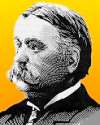
Died 9 Aug 1911 at age 56 (born 8 May 1855).
John Warne Gates was an American inventor and promoter, known as John “Bet A Million” Gates, because he was also a speculator. He discovered a market for wire fencing on the Western plains and helped convince ranchers to adopt barbed wire. He began its manufacture in St. Louis, Missouri. By a succession of consolidations and promotion schemes, he organized (1898) the American Steel and Wire Company. more
John Warne Gates was an American inventor and promoter, known as John “Bet A Million” Gates, because he was also a speculator. He discovered a market for wire fencing on the Western plains and helped convince ranchers to adopt barbed wire. He began its manufacture in St. Louis, Missouri. By a succession of consolidations and promotion schemes, he organized (1898) the American Steel and Wire Company. more
Bet a Million: The Story of John W. Gates, by L. Wendt. - book suggestion.
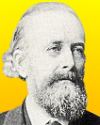
Died 9 Aug 1899 at age 74 (born 18 Jan 1825). quotes
English chemist who was one of the first investigators in the field of structural chemistry, invented the chemical bond, and became known as the father of valency. He studied organometallic compounds - hybrid molecules of the familiar organic non-metallic elements (such as carbon, hydrogen, nitrogen, sulphur, phosphorus) with true metals. By 1850, he had prepared small organic molecules containing such metals as zinc. Subsequently, he devised the theory of valence (announced 10 May 1852), that each type of atom has a fixed capacity for combination with other atoms. For his investigations on water purification and for his services to the government as water analyst, Frankland was knighted in 1897.
English chemist who was one of the first investigators in the field of structural chemistry, invented the chemical bond, and became known as the father of valency. He studied organometallic compounds - hybrid molecules of the familiar organic non-metallic elements (such as carbon, hydrogen, nitrogen, sulphur, phosphorus) with true metals. By 1850, he had prepared small organic molecules containing such metals as zinc. Subsequently, he devised the theory of valence (announced 10 May 1852), that each type of atom has a fixed capacity for combination with other atoms. For his investigations on water purification and for his services to the government as water analyst, Frankland was knighted in 1897.
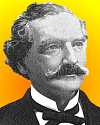
Died 9 Aug 1898 at age 84 (born 7 Feb 1814). quotes
American lecturer who was the first to administer nitrous oxide as an anaesthetic. This followed when one of Colton's public demonstrations of the properties of nitrous oxide, was attended by a dentist. It was Horace Wells, who observed a volunteer paid no heed to any pain when he accidentally gashed leg while stumbling around under the influence of a moderate dose of the gas. Wells suggested the use of the gas as an anaesthetic, and even volunteered to have Colton administer the nitrous oxide while one of Wells' molars was extracted by his partner, dentist John Riggs (11 Dec 1844). Between 1864-97, Colton as anaesthetist administered nitrous oxide while his dental colleagues successfully extracted tens of thousands of teeth.« more
American lecturer who was the first to administer nitrous oxide as an anaesthetic. This followed when one of Colton's public demonstrations of the properties of nitrous oxide, was attended by a dentist. It was Horace Wells, who observed a volunteer paid no heed to any pain when he accidentally gashed leg while stumbling around under the influence of a moderate dose of the gas. Wells suggested the use of the gas as an anaesthetic, and even volunteered to have Colton administer the nitrous oxide while one of Wells' molars was extracted by his partner, dentist John Riggs (11 Dec 1844). Between 1864-97, Colton as anaesthetist administered nitrous oxide while his dental colleagues successfully extracted tens of thousands of teeth.« more
The History of Surgical Anesthesia, by Thomas E Keys. - book suggestion.
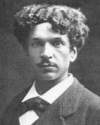
Died 9 Aug 1888 at age 45 (born 1 Oct 1842).
(Émile-Hortensius-) Charles Cros was a French inventor and poet whose work in several fields foreshadowed or paralleled important developments. He was interested in mechanical and physical sciences. He designed an automatic telegraph and showed it at the World Fair of 1867. He sent to the Société française de photographie, in 1869, a system for reproduction of color images. Also, he delivered viable plans on 18 April 1877 to the Académie des Sciences, for an apparatus called a paléophone, which was the principle of the gramophone. Thus, he had the idea before Edison. Nevertheless, he died in poverty and was never recognized for his discoveries in his lifetime, due to more influential and better funded competitors.
(Émile-Hortensius-) Charles Cros was a French inventor and poet whose work in several fields foreshadowed or paralleled important developments. He was interested in mechanical and physical sciences. He designed an automatic telegraph and showed it at the World Fair of 1867. He sent to the Société française de photographie, in 1869, a system for reproduction of color images. Also, he delivered viable plans on 18 April 1877 to the Académie des Sciences, for an apparatus called a paléophone, which was the principle of the gramophone. Thus, he had the idea before Edison. Nevertheless, he died in poverty and was never recognized for his discoveries in his lifetime, due to more influential and better funded competitors.
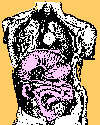
Died 9 Aug 1847 at age 49 (born 27 Oct 1797).
Scottish physiologist who was the younger brother of George Combe (1788-1858) who was the author of some of the most popular works on phrenology. Andrew published The Principles of Physiology describing the “structure and functions of the skin, muscles, bones, lungs, and nervous system, the laws or conditions of their healthy action, and the unsuspected origin of many of their diseases.” He continued with The Principles of Digestion, “considered with relation to the principles of dietetics.”
Scottish physiologist who was the younger brother of George Combe (1788-1858) who was the author of some of the most popular works on phrenology. Andrew published The Principles of Physiology describing the “structure and functions of the skin, muscles, bones, lungs, and nervous system, the laws or conditions of their healthy action, and the unsuspected origin of many of their diseases.” He continued with The Principles of Digestion, “considered with relation to the principles of dietetics.”
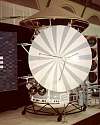
In 1973, the USSR launched the Mars 7, on a Proton SL-12/D-1-e booster. It was one of several Soviet Mars probes - Mars 4, 5, 6, and 7 - launched in Jul-Aug 1973. The Mars 7 spacecraft was made up of a flyby bus and a descent module intended separate to study the atmosphere and land on the Martian surface with instruments to study soil composition, and mechanical properties soil sensors. The combined vehicle reached Mars on 9 Mar 1974. However, an equipment problem believed to be due to a faulty computer chip resulted in the premature separation of the lander. Being released about 4 hours too early, the lander missed the planet by 1300-km. Both the bus and the lander instead travelled into solar orbits.«
The Scientific Exploration of Mars, by Fredric W. Taylor. - book suggestion.
In 1956, the first statewide, state-supported educational television network in the U.S. went on the air in Alabama.
In 1945, during WW II, an atomic bomb was dropped on Nagasaki, Japan, by the Americans. It was a plutonium bomb, code-named “Fat Man.” Three days earlier, the first wartime use of an atomic bomb was the destruction of the Japanese city of Hiroshima. The first bomb, code-named “Little Boy” was a uranium bomb.
In 1910, an electric washing machine was patented by Alva J. Fisher of Chicago, Illinois.
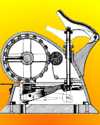
In 1904, the Protectograph check-writing machine was patented under the title “Printing-Stamp” by Libanus McLouth Todd of Rochester, New York (U.S. Patent No. 766,853). It was designed to protect against check forgers by marking and embossing the amount on a check, thereby preventing the amount thus shown to be later dishonestly changed to a higher value. The apparatus had co-axial printing wheels with lines of raised type forming a series of numbers and suitable words. A check would be placed between the wheels and a platen. An inked felt-covered roller applied ink to the type as the wheels were turned to select the chosen imprint. The platen surface had a yielding material, such as rubber. When actuated by a hand-lever, it was raised from beneath the check and embossed the paper against the type.«
In 1898, the diesel internal combustion engine was issued a U.S. patent by 608,845. The inventor was Rudolf Diesel.«
(USPTO)
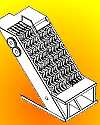
In 1859, the first U.S. patent for an escalator-type idea - titled "Revolving Stairs" - was issued to Nathan Ames, of Saugus, Mass. (No. 25,076). He arranged steps on an inclined, endless belt placed around rollers, so when placed in motion, the steps act as elevators saving muscular effort. When stationary, the stairs could be used in the usual way, but when in motion, a person could also walk up the steps and so ascend with increased speed. The patent showed not only two parallel sets of stairs (one up, one down), but also a triangular arrangement whereby the same endless belt would provide upward movement on one inclined plane to the apex, and from there downward motion on the second inclined plane.«
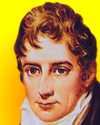
In 1803, Robert Fulton tested his steam paddle-boat in France, on the River Seine. The project was undertaken in connection with Chancellor Livingston, the U.S. ambassador in Paris.*
The Fire of His Genius: Robert Fulton and the American Dream, by Kirkpatrick Sale. - book suggestion.




