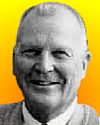
Born 17 Sep 1916; died 7 Jan 2004 at age 87.
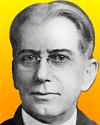
American electronics engineer who developed over-the-horizon radar (a way to detect objects out of direct sight by bouncing radar off the ionosphere, an electrically charged layer in the upper atmosphere) so radar could peer around the Earth's curvature to detect aircraft and missiles thousands of miles away. His interest in electricity began with a copy of Harper's Electricity Book for Boys. At age 12, he put together a radio from a kit. During WW II, he researched countermeasures to protect Allied forces against enemy radio and radar devices. He made pioneering studies of radar jamming. In 1947, he designed a simplified voice transmitter permitting two-way communication on a single radio channel, such as a telephone conversation.
American electronics engineer who developed over-the-horizon radar (a way to detect objects out of direct sight by bouncing radar off the ionosphere, an electrically charged layer in the upper atmosphere) so radar could peer around the Earth's curvature to detect aircraft and missiles thousands of miles away. His interest in electricity began with a copy of Harper's Electricity Book for Boys. At age 12, he put together a radio from a kit. During WW II, he researched countermeasures to protect Allied forces against enemy radio and radar devices. He made pioneering studies of radar jamming. In 1947, he designed a simplified voice transmitter permitting two-way communication on a single radio channel, such as a telephone conversation.
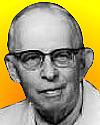
Born 17 Sep 1905; died 5 Jan 2004 at age 98.
American immunologist who made groundbreaking discoveries in cellular immunology and experimental allergy. In the early 1940's, by transferring white blood cells between guinea pigs he found an immunity in the donor against the tuberculosis organism was also transferred. Thus he discovered a new class of immune response - cell-mediated immunity (which aids antibodies in protecting against disease). By the 1950s, using improved cell culture techniques, other experimenters identified lymphocyte cells (about 25% of white blood cells) as responsible for immunity, and later found different types. T cells are derived from the thymus mediated cellular immunity, and B cells from the bursa of Fabricius (an outgrowth of the cloaca in birds).«
American immunologist who made groundbreaking discoveries in cellular immunology and experimental allergy. In the early 1940's, by transferring white blood cells between guinea pigs he found an immunity in the donor against the tuberculosis organism was also transferred. Thus he discovered a new class of immune response - cell-mediated immunity (which aids antibodies in protecting against disease). By the 1950s, using improved cell culture techniques, other experimenters identified lymphocyte cells (about 25% of white blood cells) as responsible for immunity, and later found different types. T cells are derived from the thymus mediated cellular immunity, and B cells from the bursa of Fabricius (an outgrowth of the cloaca in birds).«
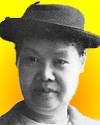
Born 17 Sep 1888; died 1 Jun 1969 at age 80.
Japanese agricultural scientist and biochemist who did rigorous research on the substances derived from green tea. In 1920, at a time when Hokkaido Imperial University would not accept a female student, she worked as an unpaid laboratory assistant in the university’s Food Nutritional Laboratory. By Oct 1923, she was accepted as a research student at the Institute of Physical and Chemical Research. There, in 1924, Tsujimura and colleague Seitaro Miura found that green tea was a natural source of vitamin C. From green tea, Tsujimura also isolated the bitter flavonoid catechin (1929), tannin (1930), and gallocatechin (1934) She went on to be the first woman in Japan to earn a Ph.D. in agriculture (1932). She became a professor in 1949.«
Japanese agricultural scientist and biochemist who did rigorous research on the substances derived from green tea. In 1920, at a time when Hokkaido Imperial University would not accept a female student, she worked as an unpaid laboratory assistant in the university’s Food Nutritional Laboratory. By Oct 1923, she was accepted as a research student at the Institute of Physical and Chemical Research. There, in 1924, Tsujimura and colleague Seitaro Miura found that green tea was a natural source of vitamin C. From green tea, Tsujimura also isolated the bitter flavonoid catechin (1929), tannin (1930), and gallocatechin (1934) She went on to be the first woman in Japan to earn a Ph.D. in agriculture (1932). She became a professor in 1949.«
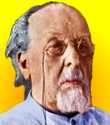
Born 17 Sep 1857; died 19 Sep 1935 at age 78. quotes
Russian pioneer space theorist who, while a provincial Russian schoolteacher, worked out many of the principles of space travel. In 1883, he noted that a vehicle in space would travel in the opposite direction to gas that it emitted, and was the first to seriously propose this method propulsion in space travel. He wrote various papers, including the 1903 article “Exploration of Space with Reactive Devices.” The engineering equations he derived included parameters such as specific impulse, thrust coefficient and area ratio. He established that the most efficient chemical combination would be that of liquid hydrogen and liquid oxygen. He was later recognized by the Soviet Union as the “father of cosmonautics.” He also built the first wind tunnel.«
Russian pioneer space theorist who, while a provincial Russian schoolteacher, worked out many of the principles of space travel. In 1883, he noted that a vehicle in space would travel in the opposite direction to gas that it emitted, and was the first to seriously propose this method propulsion in space travel. He wrote various papers, including the 1903 article “Exploration of Space with Reactive Devices.” The engineering equations he derived included parameters such as specific impulse, thrust coefficient and area ratio. He established that the most efficient chemical combination would be that of liquid hydrogen and liquid oxygen. He was later recognized by the Soviet Union as the “father of cosmonautics.” He also built the first wind tunnel.«
Selected Works of Konstantin E. Tsiolkovsky, by Konstantin E. Tsiolkovsky. - book suggestion.
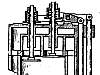
Scottish-American inventor and automobile manufacturer who was a pioneer in the industry. He invented the more powerful valve-in-head engine and the windshield. Lacking business acumen, he was a manufacturer for only a few years, but Buick's brand name remained after his business was taken over by his financiers. Buick had begun (1884) in the plumbing supply business, and developed a method for bonding enamel to iron in the production of baths and sinks. By 1899, he made internal combustion engines, which led to forming the Buick Manufacturing Company (1902) to manufacture automobiles. After about a year in business, his company was turned over to other businessmen able to expand it. Buick left in 1906 to pursue other interests.«
The Buick: A Complete History, by Terry B. Dunham. - book suggestion.
Born 17 Sep 1846; died 31 Dec 1913 at age 67.
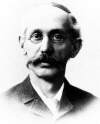
Seth Carlo Chandler, Jr. was an American astronomer best known for his discovery (1884-85) of the Chandler Wobble, a complex movement in the Earth's axis of rotation (now refered to as polar motion) that causes latitude to vary with a period of 14 months. His interests were much wider than this single subject, however, and he made substantial contributions to such diverse areas of astronomy as cataloging and monitoring variable stars, the independent discovery of the nova T Coronae, improving the estimate of the constant of aberration, and computing the orbital parameters of minor planets and comets. His publications totaled more than 200.
Seth Carlo Chandler, Jr. was an American astronomer best known for his discovery (1884-85) of the Chandler Wobble, a complex movement in the Earth's axis of rotation (now refered to as polar motion) that causes latitude to vary with a period of 14 months. His interests were much wider than this single subject, however, and he made substantial contributions to such diverse areas of astronomy as cataloging and monitoring variable stars, the independent discovery of the nova T Coronae, improving the estimate of the constant of aberration, and computing the orbital parameters of minor planets and comets. His publications totaled more than 200.
Born 17 Sep 1826; died 20 Jul 1866 at age 39. quotes
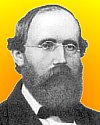
Georg Friedrich Bernhard Riemann was a German mathematician whose work widely influenced geometry and analysis. In addition, his ideas concerning geometry of space had a profound effect on the development of modern theoretical physics and provided the foundation for the concepts and methods used later in relativity theory. He clarified the notion of integral by defining what we now call the Riemann integral. He was an original thinker and a host of methods, theorems and concepts are named after him. Riemann suffered from tuberculosis and he spent his last years in Italy in an attempt to improve his health.
Georg Friedrich Bernhard Riemann was a German mathematician whose work widely influenced geometry and analysis. In addition, his ideas concerning geometry of space had a profound effect on the development of modern theoretical physics and provided the foundation for the concepts and methods used later in relativity theory. He clarified the notion of integral by defining what we now call the Riemann integral. He was an original thinker and a host of methods, theorems and concepts are named after him. Riemann suffered from tuberculosis and he spent his last years in Italy in an attempt to improve his health.
Prime Obsession: Bernhard Riemann and the Greatest Unsolved Problem in Mathematics, by John Derbyshire. - book suggestion.
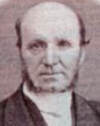
Born 17 Sep 1806; died 15 Sep 1875 at age 68. quotes
French neurologist, born in Boulogne, who studied at Douai and Paris. He was first to describe several nervous and muscular disorders and, in developing medical treatment for them, created electrodiagnosis and electrotherapy. In 1858, he was the first to describe locomotor ataxia. In 1862, he mapped 100 facial muscles and pointed out that false, or even half-hearted, smiles involved only muscles of the mouth. But "the sweet emotions of the soul," he said, activate the pars lateralis muscle around the eyes. He first described Tabes dorsalis in 1885, which is also known as Duchenne's disease.
French neurologist, born in Boulogne, who studied at Douai and Paris. He was first to describe several nervous and muscular disorders and, in developing medical treatment for them, created electrodiagnosis and electrotherapy. In 1858, he was the first to describe locomotor ataxia. In 1862, he mapped 100 facial muscles and pointed out that false, or even half-hearted, smiles involved only muscles of the mouth. But "the sweet emotions of the soul," he said, activate the pars lateralis muscle around the eyes. He first described Tabes dorsalis in 1885, which is also known as Duchenne's disease.
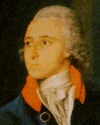
Born 17 Sep 1764; died 20 Apr 1786 at age 21.
English astronomer who was the first to notice that some variable stars were periodic.Born a deaf-mute, after a proper education he was able to read lips and to speak. He was the first to calculate the period of Algol to 68 hours and 50 minutes, where the star was changing its brightness by more than a magnitude as seen from Earth. He was also first to correctly propose that the distant sun is periodically occulted by a dark body. John Goodricke was admitted to the Royal Society on 16 April 1786, when 21 years old. He didn't recognized this honour, because he died four days later, in York, by pneumonia.
English astronomer who was the first to notice that some variable stars were periodic.Born a deaf-mute, after a proper education he was able to read lips and to speak. He was the first to calculate the period of Algol to 68 hours and 50 minutes, where the star was changing its brightness by more than a magnitude as seen from Earth. He was also first to correctly propose that the distant sun is periodically occulted by a dark body. John Goodricke was admitted to the Royal Society on 16 April 1786, when 21 years old. He didn't recognized this honour, because he died four days later, in York, by pneumonia.
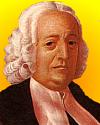
Born 17 Sep 1677; died 4 Jan 1761 at age 83. quotes
English botanist, chemist and physiologist who pioneered the quantitative experimental approach in plant and animal physiology. He was a clergyman whose work in plant physiology, Vegetable Staticks (1787), included early demonstrations of the importance of air and light in plant growth, and of the role of transpiration in causing upward sap flow. He also measured the rates of growth of shoots and leaves and the pressure roots exert on sap, and he investigated plant respiration. Hales was the first to quantitatively measure blood pressure, measured the capacity of the left ventricle of the heart, and the output of the heart per minute. He invented an artificial ventilator that could convey fresh air into prisons, ships' holds, and granaries.[DSB gives date of birth as 17 Sep 1677. EB gives 7/17 Sep 1677.]
English botanist, chemist and physiologist who pioneered the quantitative experimental approach in plant and animal physiology. He was a clergyman whose work in plant physiology, Vegetable Staticks (1787), included early demonstrations of the importance of air and light in plant growth, and of the role of transpiration in causing upward sap flow. He also measured the rates of growth of shoots and leaves and the pressure roots exert on sap, and he investigated plant respiration. Hales was the first to quantitatively measure blood pressure, measured the capacity of the left ventricle of the heart, and the output of the heart per minute. He invented an artificial ventilator that could convey fresh air into prisons, ships' holds, and granaries.[DSB gives date of birth as 17 Sep 1677. EB gives 7/17 Sep 1677.]

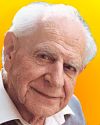
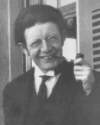
Died 17 Sep 1980 at age 84 (born 9 Aug 1896). quotes
Swiss psychologist and zoologist. By age 15 he was contributing articles on molluscs to journals of zoology, and his doctoral degree (1918) thesis was on the distribution of molluscs in the Valaisian Alps. Thereafter, he turned to researching how mental growth develops in several successive stages from infancy to adulthood - “the embryology of intelligence”—for which he became distinguished. In the journal Science (27 Jun 1958), he summarized that at the age of eleven or twelve “a child becomes capable of certain formal or abstract operations of thought which before were possible only as concrete operations on properties of the immediately present object world. This provides the last of three mental revolutions during development.”«
Swiss psychologist and zoologist. By age 15 he was contributing articles on molluscs to journals of zoology, and his doctoral degree (1918) thesis was on the distribution of molluscs in the Valaisian Alps. Thereafter, he turned to researching how mental growth develops in several successive stages from infancy to adulthood - “the embryology of intelligence”—for which he became distinguished. In the journal Science (27 Jun 1958), he summarized that at the age of eleven or twelve “a child becomes capable of certain formal or abstract operations of thought which before were possible only as concrete operations on properties of the immediately present object world. This provides the last of three mental revolutions during development.”«
The Psychology of the Child, by Jean Piaget. - book suggestion.
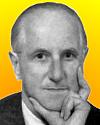
Died 17 Sep 1958 at age 71 (born 31 Aug 1887). quotes
Austrian chemist who improved methods in the 1920's to isolate and measure the minute amounts of helium (as little as 10-10 cm3) slowly released by traces of radioactive elements in rocks. This enabled determination of both the age of rocks on earth, and also the age of meteorites which implies the age of the solar system, (presently accepted as 4,600 million years). Earlier, he and his friend Georg Charles de Hevesy introduced radioactive tracer techniques (1912-13). Paneth used radium D as a tracer to measure the solubility of lead salts, then extended the technique to the study of the unstable hydrides of lead and bismuth. He contributed to the study of the stratosphere by determining its composition as a function of altitude up to 45 miles.«
Austrian chemist who improved methods in the 1920's to isolate and measure the minute amounts of helium (as little as 10-10 cm3) slowly released by traces of radioactive elements in rocks. This enabled determination of both the age of rocks on earth, and also the age of meteorites which implies the age of the solar system, (presently accepted as 4,600 million years). Earlier, he and his friend Georg Charles de Hevesy introduced radioactive tracer techniques (1912-13). Paneth used radium D as a tracer to measure the solubility of lead salts, then extended the technique to the study of the unstable hydrides of lead and bismuth. He contributed to the study of the stratosphere by determining its composition as a function of altitude up to 45 miles.«
Chemistry and Beyond: A Selection From the Writings of the Late F.A. Paneth, by Fritz Paneth. - book suggestion.

(EB)
Died 17 Sep 1948 at age 61 (born 5 Jun 1887). quotes
Ruth Fulton Benedict was an American anthropologist who is regarded as one of the most articulate interpreters in cultural anthropology, and influenced later cultural-personality studies. She trained with Franz Boas and Elsie Clews Parsons. Her fieldwork among the Native Americans of the Southwest provided a background to write her first book, Patterns of Culture (1934) in which she compared and contrasted Zuñi, Dobu, and Kwakiutl cultures. In Race: Science and Politics, she aimed to dispel myths about race. Margaret Mead was a student of hers, with whom she continued to collaborate. Benedict’s less-noticed works extended her interest worldwide to other national cultures, including Thailand, Romania, Japan.«
Ruth Fulton Benedict was an American anthropologist who is regarded as one of the most articulate interpreters in cultural anthropology, and influenced later cultural-personality studies. She trained with Franz Boas and Elsie Clews Parsons. Her fieldwork among the Native Americans of the Southwest provided a background to write her first book, Patterns of Culture (1934) in which she compared and contrasted Zuñi, Dobu, and Kwakiutl cultures. In Race: Science and Politics, she aimed to dispel myths about race. Margaret Mead was a student of hers, with whom she continued to collaborate. Benedict’s less-noticed works extended her interest worldwide to other national cultures, including Thailand, Romania, Japan.«
An Anthropologist at Work, by Ruth Benedict. - book suggestion.
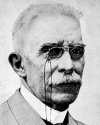
Died 17 Sep 1936 at age 85 (born 8 Oct 1850).
French chemist who is best known for the principle of Le Chatelier, which makes it possible to predict the effect a change of conditions (temperature, pressure, and concentration of reaction components) will have on a chemical reaction. This principle proved invaluable in the chemical industry for developing the most efficient chemical processes. Fritz Haber successfully utilized it in his process for the production of ammonia. Le Chatelier's interests began in metallurgy, cements, ceramics, and glass, and his studies of flames led him to study heat and its measurement. Of several contributions to thermometry, his most important was the first successful design of a platinum and rhodium thermocouple for measuring high temperatures (1887).
French chemist who is best known for the principle of Le Chatelier, which makes it possible to predict the effect a change of conditions (temperature, pressure, and concentration of reaction components) will have on a chemical reaction. This principle proved invaluable in the chemical industry for developing the most efficient chemical processes. Fritz Haber successfully utilized it in his process for the production of ammonia. Le Chatelier's interests began in metallurgy, cements, ceramics, and glass, and his studies of flames led him to study heat and its measurement. Of several contributions to thermometry, his most important was the first successful design of a platinum and rhodium thermocouple for measuring high temperatures (1887).
Died 17 Sep 1924 at age 71 (born 10 Jan 1853).
German-American astronomer.
German-American astronomer.
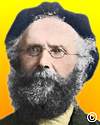
Died 17 Sep 1909 at age 83 (born 20 Apr 1826).
Scottish seedsman and horticulturist who became known as the “Daffodil King” for his work identifying and developing varieties of daffodils. Further, he tirelessly popularized the flower's popularity with articles, lectures, and a post-retirement seven-year world tour. His interest in horticulture stemmed from his father's passion as an amateur gardener. Peter's career began with a position at a seed shop. In time, this led to establishing a nursery and making a systematic study and identification of garden plants. He corresponded with other nurserymen in Britain and abroad. He offered a catalog to aid his distribution of his products. In the mid-19th century, daffodils had fallen out of fashion with gardeners. Barr actively sought old varieties, saved hybrids from extinction and made new crosses—all of which he re-introduced in Britain, filling the gap in availability, beginning at a time when most daffodil bulbs were sourced from Europe.«
Scottish seedsman and horticulturist who became known as the “Daffodil King” for his work identifying and developing varieties of daffodils. Further, he tirelessly popularized the flower's popularity with articles, lectures, and a post-retirement seven-year world tour. His interest in horticulture stemmed from his father's passion as an amateur gardener. Peter's career began with a position at a seed shop. In time, this led to establishing a nursery and making a systematic study and identification of garden plants. He corresponded with other nurserymen in Britain and abroad. He offered a catalog to aid his distribution of his products. In the mid-19th century, daffodils had fallen out of fashion with gardeners. Barr actively sought old varieties, saved hybrids from extinction and made new crosses—all of which he re-introduced in Britain, filling the gap in availability, beginning at a time when most daffodil bulbs were sourced from Europe.«
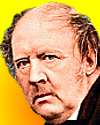
Died 17 Sep 1877 at age 77 (born 11 Feb 1800).
William Henry Fox Talbot was an English inventor, mathematician, chemist, physicist, philologist and Egyptologist who invented the negative-positive photographic process. He improved the discovery by Thomas Wedgwood (1802) that brushing silver nitrate solution onto paper produces a light-sensitive medium able to record negative images, but Wedgewood was unable to control the darkening. In February 1835, Talbot found that a strong solution of salt fixed the image. Using a camera obscura to focus an image onto his paper to produce a negative, then - by exposing a second sheet of paper to sunlight transmitted through the negative - he was the first to produce a positive picture of which he was able to make further copies at will. His Pencil of Nature (1844) was the first photographically illustrated book.
William Henry Fox Talbot was an English inventor, mathematician, chemist, physicist, philologist and Egyptologist who invented the negative-positive photographic process. He improved the discovery by Thomas Wedgwood (1802) that brushing silver nitrate solution onto paper produces a light-sensitive medium able to record negative images, but Wedgewood was unable to control the darkening. In February 1835, Talbot found that a strong solution of salt fixed the image. Using a camera obscura to focus an image onto his paper to produce a negative, then - by exposing a second sheet of paper to sunlight transmitted through the negative - he was the first to produce a positive picture of which he was able to make further copies at will. His Pencil of Nature (1844) was the first photographically illustrated book.
First Photographs: William Henry Fox Talbot and the Birth of Photography, by William Henry Fox. Talbot, Michael Gray. - book suggestion.
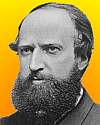
Died 17 Sep 1869 at age 45 (born 8 Mar 1824).
Scottish marine engineer who, assisted by W.J.M. Rankine, developed the compound steam marine engine (1854) by dividing the steam expansion into two cylinders, so that each cycled through a smaller range of temperatures and pressures which greatly improved fuel efficiency. The S.S. Brandon sailed in Jul 1854 with their first engine of this type, which used a third less coal than was possible before. Elder continued improve his designs to give even more economy. As a result, his engineering business on the Clyde in Glasgow, Scotland, continued to grow, with over 4,000 workers. Between 1853 and 1867, his firm took out fourteen important patents, including a quadruple-expansion engine (1862). He died at the young age of 45 from liver disease. However, his ship yard remains today as Kvaerner Govan Ltd.«
Scottish marine engineer who, assisted by W.J.M. Rankine, developed the compound steam marine engine (1854) by dividing the steam expansion into two cylinders, so that each cycled through a smaller range of temperatures and pressures which greatly improved fuel efficiency. The S.S. Brandon sailed in Jul 1854 with their first engine of this type, which used a third less coal than was possible before. Elder continued improve his designs to give even more economy. As a result, his engineering business on the Clyde in Glasgow, Scotland, continued to grow, with over 4,000 workers. Between 1853 and 1867, his firm took out fourteen important patents, including a quadruple-expansion engine (1862). He died at the young age of 45 from liver disease. However, his ship yard remains today as Kvaerner Govan Ltd.«
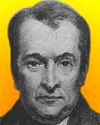
Died 17 Sep 1851 at age 76 (born 10 Sep 1775).
English chemist and physician who obtained naphthalene (1819), which name he coined. It was the first of many useful organic chemicals derived from coal tar, the thick black liquid resulting when coal is heated to make coke and gas. In addition to teaching chemistry (1801) at Oxford, elected in 1803 as the first Aidrichian professor of chemistry, he later taught minerology and geology. His geology students included William Conybeare, William Buckland and Charles Daubeny. Holding a medical degree, he also taught anatomy (from 1816) and medicine (from 1822). He wrote a pamphlet on the role of science in education, as well as geology and mineralogy textbooks. Kidd was the son of a navy captain.«
English chemist and physician who obtained naphthalene (1819), which name he coined. It was the first of many useful organic chemicals derived from coal tar, the thick black liquid resulting when coal is heated to make coke and gas. In addition to teaching chemistry (1801) at Oxford, elected in 1803 as the first Aidrichian professor of chemistry, he later taught minerology and geology. His geology students included William Conybeare, William Buckland and Charles Daubeny. Holding a medical degree, he also taught anatomy (from 1816) and medicine (from 1822). He wrote a pamphlet on the role of science in education, as well as geology and mineralogy textbooks. Kidd was the son of a navy captain.«
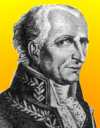
Died 17 Sep 1836 at age 88 (born 12 Apr 1748).
French botanist who developed the principles that served as the foundation of a natural system of plant classification. He was born into a family of eminent botanists from Lyons in France. After graduating from the Jardin du Roi in 1770, he continued to work there. He is remembered for introducing a natural classification system that distinguishes relationships between plants relying a large number of characters, unlike the artificial Linnean system, which uses only a few. He distinguished 15 classes and 100 families, of which 76 remain in botanical nomenclature today. His uncles Antoine, Bernard, and Joseph de Jussieu all made important contributions to botany and his son, Adrien, subsequently continued the family tradition.
French botanist who developed the principles that served as the foundation of a natural system of plant classification. He was born into a family of eminent botanists from Lyons in France. After graduating from the Jardin du Roi in 1770, he continued to work there. He is remembered for introducing a natural classification system that distinguishes relationships between plants relying a large number of characters, unlike the artificial Linnean system, which uses only a few. He distinguished 15 classes and 100 families, of which 76 remain in botanical nomenclature today. His uncles Antoine, Bernard, and Joseph de Jussieu all made important contributions to botany and his son, Adrien, subsequently continued the family tradition.
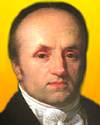
Died 17 Sep 1823 at age 76 (born 10 Jan 1747).
Swiss-French horologist and inventor who became the leading French watchmaker of his time because of his artistic as well as technical skill. His innovations included a self-winding or "perpétuelle" watch (1780), the gong spring which decreased the size of repeater watches, and the first anti-shock device or "pare-chute", which improved the reliability of his watches while making them less fragile. In 1775 he founded the Breguet watchmaking firm. After a two year interruption during the French Revolution, he continued business with more inventions. He sold the first modern carriage clock to Bonaparte, and created the tact watch by which time could be read by touch.«
Swiss-French horologist and inventor who became the leading French watchmaker of his time because of his artistic as well as technical skill. His innovations included a self-winding or "perpétuelle" watch (1780), the gong spring which decreased the size of repeater watches, and the first anti-shock device or "pare-chute", which improved the reliability of his watches while making them less fragile. In 1775 he founded the Breguet watchmaking firm. After a two year interruption during the French Revolution, he continued business with more inventions. He sold the first modern carriage clock to Bonaparte, and created the tact watch by which time could be read by touch.«
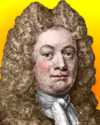
Died 17 Sep 1734 at age 80 (born 24 Jun 1654). quotes
English physician who was a good clinical observer and a pioneer in recognizing the specificness in infection and immunity. His practice was in Sevenoaks, Kent. He collected the “best and neatest medicines,” and published a thousand such prescriptions in his Pharmacopoiea, which appeared in at least 12 editions. Through a keen interest reading about medical progress, he remained well-informed. Fuller was an early advocate of protective inoculation against smallpox. His published list of qualifications for nurses may have been the first of its kind by an English physician. Long before microbic investigations by such as Pasteur, Fuller recognized diseases like measles or smallpox were “produced by its proper and peculiar Species of Virus” (meaning venom). In Gnomologia he collected 6496 adagies and proverbs.«
English physician who was a good clinical observer and a pioneer in recognizing the specificness in infection and immunity. His practice was in Sevenoaks, Kent. He collected the “best and neatest medicines,” and published a thousand such prescriptions in his Pharmacopoiea, which appeared in at least 12 editions. Through a keen interest reading about medical progress, he remained well-informed. Fuller was an early advocate of protective inoculation against smallpox. His published list of qualifications for nurses may have been the first of its kind by an English physician. Long before microbic investigations by such as Pasteur, Fuller recognized diseases like measles or smallpox were “produced by its proper and peculiar Species of Virus” (meaning venom). In Gnomologia he collected 6496 adagies and proverbs.«
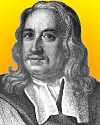
Died 17 Sep 1702 at age 71 (born 12 Dec 1630).
Swedish naturalist who discovered the lymphatic vessels (1650). These resemble the veins and capillaries, but have thinner walls and carry the clear, watery fluid portion of the blood (lymph). He demonstrated these to Queen Christina of Sweden in 1653, using a dog for the purpose. Rudbeck was a man of encyclopedic interests, who taught at the medical school at the University of Uppsala, Sweden, and beyond medicine, mathematics, astronomy, architecture, fortification, gunnery, and even more. He founded the tradition of natural history at Uppsala. He established the first botanical garden there in 1654. He provided Uppsala with water pipes and stone paving for the streets, and constructed bridges. He built several greenhouses for tropical plants.
Swedish naturalist who discovered the lymphatic vessels (1650). These resemble the veins and capillaries, but have thinner walls and carry the clear, watery fluid portion of the blood (lymph). He demonstrated these to Queen Christina of Sweden in 1653, using a dog for the purpose. Rudbeck was a man of encyclopedic interests, who taught at the medical school at the University of Uppsala, Sweden, and beyond medicine, mathematics, astronomy, architecture, fortification, gunnery, and even more. He founded the tradition of natural history at Uppsala. He established the first botanical garden there in 1654. He provided Uppsala with water pipes and stone paving for the streets, and constructed bridges. He built several greenhouses for tropical plants.
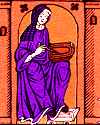
Died 17 Sep 1179 (born 1098).
Saint Hildegarde (Latin: Hildegarde de Pinguia), abbess of Bingen was a German abbess and naturalist, the “Sibyl of the Rhine,” whose original observations on natural history appear in nine volumes. The Physica, were first printed in 1533, followed by a second edition in 1536. Taking as an example Book V, it has 37 chapters, and the descriptions given therein of fishes have detail sufficient in modern times to identify the species. Her other books focus on Plants, Elements, Trees, Stones, Birds, Animals, and Reptiles. Hildegarde wrote in Latin, two centuries before the Buch der Natur of German naturalist Konrad von Megenberg. His is recognized as the earliest German-language natural history compendium. She also left a body of extensive theological writings demonstrating imaginative and rational faculties.«[Image: detail from German stamp issued 9 Aug 1979 for 850th day of death of Hildegard of Bingen. Death date 17 Sep 1179 from Catholic Enc. (1913).]
Saint Hildegarde (Latin: Hildegarde de Pinguia), abbess of Bingen was a German abbess and naturalist, the “Sibyl of the Rhine,” whose original observations on natural history appear in nine volumes. The Physica, were first printed in 1533, followed by a second edition in 1536. Taking as an example Book V, it has 37 chapters, and the descriptions given therein of fishes have detail sufficient in modern times to identify the species. Her other books focus on Plants, Elements, Trees, Stones, Birds, Animals, and Reptiles. Hildegarde wrote in Latin, two centuries before the Buch der Natur of German naturalist Konrad von Megenberg. His is recognized as the earliest German-language natural history compendium. She also left a body of extensive theological writings demonstrating imaginative and rational faculties.«[Image: detail from German stamp issued 9 Aug 1979 for 850th day of death of Hildegard of Bingen. Death date 17 Sep 1179 from Catholic Enc. (1913).]
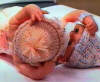
In 1953, at the Ochsner Foundation Hospital in New Orleans, Louisiana, Carolyn Anne and Catherine Anne Mouton were the first siamese twins to be successfully separated by surgery. They were connected at the waist when born in July 1953. Siamese twins develop from a single fertilized ovum that has divided imperfectly.

In 1931, very early versions of 33 rpm long-playing records were first demonstrated at the Savoy Plaza Hotel in New York by RCA (Radio Corporation of America). The record players were so expensive that the product flopped. The first plastic LP records as we know them, did not come out until 1948, when RCA rival, Columbia, began mass production of the LP.
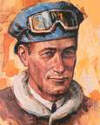
In 1911, "Cal" (Calbraith Perry) Rogers (1879-1912) took off from Long Island, NY, on the first coast to coast airplane flight. When William Randolph Hearst offered a $50,000 prize for the first 30-day transcontinental flight, Cal Rodgers took up the challenge. He was a slender motorcycle racer with only limited flying experience (some of it gained at the Wright School,) using a 35 h.p.Wright EX biplane, named the Vin Fiz after his commercial sponsor's soft drink. He made thirty stops, including nineteen crashes, virtually rebuilding the Vin Fiz by the time he reached Pasadena, California, on Nov 5. During 49 days, he flew for 82 hours, becoming the first person to complete a transcontinental flight (though 19 days too late to win the prize).
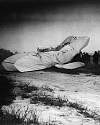
To Conquer the Air: The Wright Brothers and the Great Race for Flight, by James Tobin. - book suggestion.

(USPTO)
In 1901, the first U.S. patents for a mercury vapour lamp were issued to inventor Peter Cooper Hewitt of New York City (Nos. 682,692-99). These eight patents covered the design of an elongated vacuum tube fitted with a mercury electrode at one end and an iron electrode at the other end. Light was produced when an electric current passed through the mercury vapour. However, it was a garish blue-green colour, lacking any red light. The lamps were subsequently manufactured by the Cooper Hewitt Electric Company in New York City, in Dec 1902. They were an important forerunner of today's fluorescent lights.«
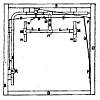
In 1872, the first U.S. patent for an automatic sprinkler system was issued to Phillip W. Pratt, of Abington, Mass., titled “Improvement in Fire-Extinguishers” (No. 131,370). The system consisted of overhead, pivoted water-arms or perforated pipes, which when connected to a supply of water from a supply-pipe would revolve rapidly, throwing water in all directions, wetting ceiling, walls and floor. This operation was controlled by a valve opened by a spring-loaded lever, held closed by a system of cords and fuses. In case of a fire, when the fuses ignited, the cords burned, and the valve opened releasing the scattered stream of water. Pratt was an inventor holding a number of other patents, and is also credited with demonstrating the first electrically powered automobile in the U.S., a tricycle, on 27 Jul 1888.
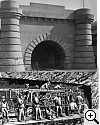
In 1871, the Mont Cenis Tunnel opened, the world's first important mountain tunnel. The two track railway tunnel through the Alps under Mont Cenis, united Savoy (north of the mountains) through Switzerland with the rest of Italy to the south. It was 8 miles long, double any previous tunnel's length. Work began in 1857. In 1861, after three years of tedious hand-boring eight inches a day into the Alpine rock face, its builder, French engineer Germain Sommeiller, introduced industrial-scale pneumatics in tunnel digging for the first time. Workers tunnelling from each side met halfway on 26 Dec 1870. The tunnel was inaugurated with the passage of 22 carriages in 20 minutes. Regular train service began 16 Oct 1871. Mail was sent by the tunnel beginning 5 Jan 1872, saving 24 hours from the overland route.*«[Image top: Mont Cenis Tunnel entrance arch; bottom: Sommeiller Boring Machines.] more
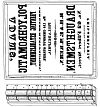
In 1844, the first U.S. patent was issued for a printing press with different colours of ink applied in one impression (No. 3,744). The inventor, Thomas F. Adams of Philadelphia, Pa., called it "polychrome printing." The process used several ink fountains feeding different colour rollers which operated in parallel on the same axle, to produce stripes of different colours to ink corresponding lines of type.
Antonie Van Leeuwenhoek and His "Little Animals", by Antonie Van Leeuwenhoek. - book suggestion.





