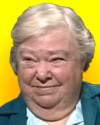
Born 3 Sep 1914; died 2 Jan 1994 at age 79. quotes
(Margaret Ray) American marine biologist whose interests extended to the environment and the need for greater public understanding of science. A year after appointment to the Atomic Energy Commission, she became its first female chair (1973-75) and championed nuclear power plant construction. On 2 Nov 1976, Ray won election as the first woman to be governor of Washington state. In her single term as governor, Ray generated more controversy than accomplishments, advocating reductions in environmental protections, and supporting nuclear power. She feuded with aides and refused to close the Hanford nuclear dump. She was featured on the cover of Time issue of 12 Dec 1977.
(Margaret Ray) American marine biologist whose interests extended to the environment and the need for greater public understanding of science. A year after appointment to the Atomic Energy Commission, she became its first female chair (1973-75) and championed nuclear power plant construction. On 2 Nov 1976, Ray won election as the first woman to be governor of Washington state. In her single term as governor, Ray generated more controversy than accomplishments, advocating reductions in environmental protections, and supporting nuclear power. She feuded with aides and refused to close the Hanford nuclear dump. She was featured on the cover of Time issue of 12 Dec 1977.
Is it true what they say about Dixy?: A biography of Dixy Lee Ray, by Louis R Guzzo. - book suggestion.
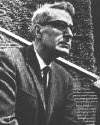
Born 3 Sep 1907; died 9 Jul 1977 at age 69. quotes
Loren Corey Eiseley was a American anthropologist and ecologist was one of the foremost literary naturalists of the twentieth century.Writing in an eloquent, poetic style for general readers, he explored anthropology, the history of civilization, and humanity’s relationship with the natural world. His first popular essay,The Folsom Mystery(1942), was published inScientific American. Eiseley’s best-known work,The Immense Journey (1959), blends science and humanism in a collection of essays, many inspired by his own early experiences in Nebraska. Over the course of his career, he gained international recognition, receiving major awards and honorary degrees for his distinctivecontributions.«
Loren Corey Eiseley was a American anthropologist and ecologist was one of the foremost literary naturalists of the twentieth century.Writing in an eloquent, poetic style for general readers, he explored anthropology, the history of civilization, and humanity’s relationship with the natural world. His first popular essay,The Folsom Mystery(1942), was published inScientific American. Eiseley’s best-known work,The Immense Journey (1959), blends science and humanism in a collection of essays, many inspired by his own early experiences in Nebraska. Over the course of his career, he gained international recognition, receiving major awards and honorary degrees for his distinctivecontributions.«
The Immense Journey: An Imaginative Naturalist Explores the Mysteries of Man and Nature, by Loren Eiseley. - book suggestion.
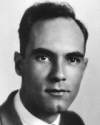
Born 3 Sep 1905; died 11 Jan 1991 at age 85. quotes
American physicist who shared (with Victor Francis Hess of Austria) the Nobel Prize for Physics in 1936 for his discovery of the positron, or positive electron, the first known particle of antimatter. He examined the photographs of cosmic rays taken as they passed through a Wilson cloud chamber in a strong magnetic field. Besides the curved paths of negative electrons, he found also paths deviating in the opposite direction, corresponding to positively charged particles - yet having the the same mass as an electron! Previously, Dirac had predicted such particles by theoretical solution to electromagnetic field equations. Anderson subsequently found the physical existence of positron.
American physicist who shared (with Victor Francis Hess of Austria) the Nobel Prize for Physics in 1936 for his discovery of the positron, or positive electron, the first known particle of antimatter. He examined the photographs of cosmic rays taken as they passed through a Wilson cloud chamber in a strong magnetic field. Besides the curved paths of negative electrons, he found also paths deviating in the opposite direction, corresponding to positively charged particles - yet having the the same mass as an electron! Previously, Dirac had predicted such particles by theoretical solution to electromagnetic field equations. Anderson subsequently found the physical existence of positron.
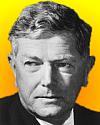
Born 3 Sep 1899; died 31 Aug 1985 at age 85. quotes
Sir Frank Macfarlane Burnet was an Australian physician, virologist, and recipient, with Sir Peter Medawar, of the 1960 Nobel Prize for Physiology or Medicine for the discovery of acquired immunological tolerance to tissue transplants. He studied the nature of antibody formation and immune processes and developed the notion of immunological tolerance to explain why humans do not form antibodies to their own bodily constituents. He also wrote about how mistakes of the immune system might cause obscure forms of blood, liver and kidney disease. He made pioneering use of fertile hen's eggs as hosts for virus multiplication. The concepts he developed are part of the basis for current theories about viruses as cancer-causing agents.
Sir Frank Macfarlane Burnet was an Australian physician, virologist, and recipient, with Sir Peter Medawar, of the 1960 Nobel Prize for Physiology or Medicine for the discovery of acquired immunological tolerance to tissue transplants. He studied the nature of antibody formation and immune processes and developed the notion of immunological tolerance to explain why humans do not form antibodies to their own bodily constituents. He also wrote about how mistakes of the immune system might cause obscure forms of blood, liver and kidney disease. He made pioneering use of fertile hen's eggs as hosts for virus multiplication. The concepts he developed are part of the basis for current theories about viruses as cancer-causing agents.

Born 3 Sep 1888; died 12 May 1962 at age 73.
American virologist who, as chairman of the virus research committee of the National Foundation for Infantile Paralysis (now the March of Dimes Birth Defects Foundation; 1938-55), organized the long-range research program that led to development of the Salk and Sabin anti-poliomyelitis vaccines. His interest in medical research was awakened while with the Army medical corps (1918). He worked from 1922-55 at the Rockefeller Institute as a bacteriologist, and as its Director (after 1937). Rivers addressed a range of topics relating to some of the most devastating viral diseases, including smallpox, Rift Valley Fever, and epidemic encephalitis. He also discovered the parainfluenzae bacillus and cultivated vaccine virus for human use.
American virologist who, as chairman of the virus research committee of the National Foundation for Infantile Paralysis (now the March of Dimes Birth Defects Foundation; 1938-55), organized the long-range research program that led to development of the Salk and Sabin anti-poliomyelitis vaccines. His interest in medical research was awakened while with the Army medical corps (1918). He worked from 1922-55 at the Rockefeller Institute as a bacteriologist, and as its Director (after 1937). Rivers addressed a range of topics relating to some of the most devastating viral diseases, including smallpox, Rift Valley Fever, and epidemic encephalitis. He also discovered the parainfluenzae bacillus and cultivated vaccine virus for human use.
1914
Born 3 Sep 1883; died 10 Jul 1933 at age 49.
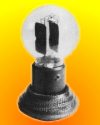
American physicist whose research led to the development of long-distance telephony and radio communication. He worked at Western Electric on thermionic tubes, which amplified radio and telephone signals, leading to transcontinental telephony (July 1914). Even before the transcontinental line was completed, Arnold was directing work on the development of new higher power tubes to extend telephone service by radio to other continents. The first transcontinental demonstration of radio telephone (29 Sep 1915) was transmitted from New York City to Arlington, Virginia, then to San Francisco and Honolulu. Arnold later became the first director of research at Bell Telephone Labs (1925 to his death in 1933).
American physicist whose research led to the development of long-distance telephony and radio communication. He worked at Western Electric on thermionic tubes, which amplified radio and telephone signals, leading to transcontinental telephony (July 1914). Even before the transcontinental line was completed, Arnold was directing work on the development of new higher power tubes to extend telephone service by radio to other continents. The first transcontinental demonstration of radio telephone (29 Sep 1915) was transmitted from New York City to Arlington, Virginia, then to San Francisco and Honolulu. Arnold later became the first director of research at Bell Telephone Labs (1925 to his death in 1933).
Born 3 Sep 1875; died 30 Jan 1951 at age 75.
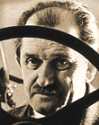
Austrian automotive engineer who designed the popular Volkswagen car. In 1900, as a young engineer and test driver, Porsche had devised the wheel hub motors on the Lohner-Porsche Electric Car exhibited at the Paris Exposition, making the name Porsche famous worldwide. In 1935, the brainchild of Adolph Hitler - the VW Beetle - was designed by Porsche. Hitler wanted a car built for the masses. By 1938 the first Beetle was completed - just before the outbreak of World War II. The car offered innovative technology, including an air-cooled motor, an atypical shape, no front grill and a rear motor. It was not until 1946 that the Volkswagen (which name means "people's car") went into series production. His son, Ferdinand, continued the business.
Austrian automotive engineer who designed the popular Volkswagen car. In 1900, as a young engineer and test driver, Porsche had devised the wheel hub motors on the Lohner-Porsche Electric Car exhibited at the Paris Exposition, making the name Porsche famous worldwide. In 1935, the brainchild of Adolph Hitler - the VW Beetle - was designed by Porsche. Hitler wanted a car built for the masses. By 1938 the first Beetle was completed - just before the outbreak of World War II. The car offered innovative technology, including an air-cooled motor, an atypical shape, no front grill and a rear motor. It was not until 1946 that the Volkswagen (which name means "people's car") went into series production. His son, Ferdinand, continued the business.
Born 3 Sep 1874; died 13 Aug 1957 at age 82.
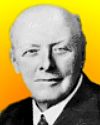
Fredrik (Carl Mülertz) Størmer was a Norwegian geophysicist and mathematician who developed a mathematical theory of auroral phenomena. An aurora is the light emitted by energetic protons and electrons at the top of Earth's atmosphere when they come in contact with solar wind particles. He also contributed both important photographic observations and mathematical data to the understanding of the polar aurora, of stratospheric and mesospheric clouds, and of the structure of the ionosphere. The discovery of the Van Allen Radiation Belts by James Van Allen confirmed with surprising accuracy Størmer's theoretical analysis of solar charged particle trajectories in Earth's magnetic field.
Fredrik (Carl Mülertz) Størmer was a Norwegian geophysicist and mathematician who developed a mathematical theory of auroral phenomena. An aurora is the light emitted by energetic protons and electrons at the top of Earth's atmosphere when they come in contact with solar wind particles. He also contributed both important photographic observations and mathematical data to the understanding of the polar aurora, of stratospheric and mesospheric clouds, and of the structure of the ionosphere. The discovery of the Van Allen Radiation Belts by James Van Allen confirmed with surprising accuracy Størmer's theoretical analysis of solar charged particle trajectories in Earth's magnetic field.
Born 3 Sep 1869; died 13 Dec 1930 at age 61.
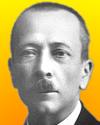
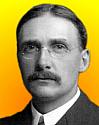
Austrian chemist awarded the 1923 Nobel Prize for Chemistry for developing techniques in the microanalysis of organic compounds. Pregl began research on bile acids in about 1904. With only tiny yields to study, he pioneered techniques of microanalysis. Whereas Justus von Liebig had needed about 1 gram of a substance before he could make an accurate analysis; through his new techniques, Pregl could work with 2.5 milligrams. This was achieved by the careful scaling down of his analytic equipment and the design of a new balance (produced in collaboration with the instrument maker W. Kuhlmann of Hamburg) capable of weighing 20 grams to an accuracy of 0.001 milligram. His techniques are of immense importance in organic chemistry.
Austrian chemist awarded the 1923 Nobel Prize for Chemistry for developing techniques in the microanalysis of organic compounds. Pregl began research on bile acids in about 1904. With only tiny yields to study, he pioneered techniques of microanalysis. Whereas Justus von Liebig had needed about 1 gram of a substance before he could make an accurate analysis; through his new techniques, Pregl could work with 2.5 milligrams. This was achieved by the careful scaling down of his analytic equipment and the design of a new balance (produced in collaboration with the instrument maker W. Kuhlmann of Hamburg) capable of weighing 20 grams to an accuracy of 0.001 milligram. His techniques are of immense importance in organic chemistry.
1905
Born 3 Sep 1866; died 5 Dec 1910 at age 44.
American physician who investigated the role of bacteria in the gastrointestinal tract and developed techniques for measuring their products such as indol. Herter's early research interests culminated in the publication of The Diagnosis of Diseases of the Nervous System (1892). He then shifted his attention to the biochemical study of disease. In 1893 had the upper floor of his house remodelled so that he could carry out laboratory work. Examining the biochemistry of metabolic disorders and the formation of gallstones and glycosuria. He was commissioned by President Theodore Roosevelt to examine the possible effects of sodium benzoate in its use in food preservatives and from the investigation concluded that it was perfectly safe.
American physician who investigated the role of bacteria in the gastrointestinal tract and developed techniques for measuring their products such as indol. Herter's early research interests culminated in the publication of The Diagnosis of Diseases of the Nervous System (1892). He then shifted his attention to the biochemical study of disease. In 1893 had the upper floor of his house remodelled so that he could carry out laboratory work. Examining the biochemistry of metabolic disorders and the formation of gallstones and glycosuria. He was commissioned by President Theodore Roosevelt to examine the possible effects of sodium benzoate in its use in food preservatives and from the investigation concluded that it was perfectly safe.
Born 3 Sep 1856; died 14 Apr 1924 at age 67.
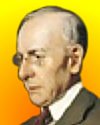
Louis (Henry) Sullivan was an American architect who is identified with the aesthetics and innovation of early skyscraper design. Called the “Father of Modernism,” he was greatly influenced Frank Lloyd Wright and others. He was one of the first to design skyscrapers, such as the Wainwright building in St Louis (1890-91) and the Carson store in Chicago (1899-1904). His experimental, functional skeleton constructions of skyscrapers and office blocks included the Gage building and Stock Exchange, Chicago. His more than 100 works in collaboration (1879-95) with Dankmar Adler include the Auditorium Building, Chicago (1866-89) and the Guaranty Building, Buffalo.
Louis (Henry) Sullivan was an American architect who is identified with the aesthetics and innovation of early skyscraper design. Called the “Father of Modernism,” he was greatly influenced Frank Lloyd Wright and others. He was one of the first to design skyscrapers, such as the Wainwright building in St Louis (1890-91) and the Carson store in Chicago (1899-1904). His experimental, functional skeleton constructions of skyscrapers and office blocks included the Gage building and Stock Exchange, Chicago. His more than 100 works in collaboration (1879-95) with Dankmar Adler include the Auditorium Building, Chicago (1866-89) and the Guaranty Building, Buffalo.
Sullivan: His Life and Work, by Robert Twombly. - book suggestion.
Born 3 Sep 1846; died 29 Nov 1899 at age 53.
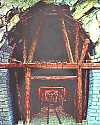
German civil engineer whose major achievement was enabling construction of the 12.5 mile (20-km) Simplon Tunnel, a major tunnel through the Alps between Italy and Switzerland. As a young engineer working on boring the St. Gotthard Tunnel between Italy and Switzerland, he learned about the difficulties involved, and the use of pneumatic drills and blasting. A hydraulic drill of his own design was used to drive the Arlberg Tunnel between Austria and Switzerland. To dig the Simplon Tunnel, he innovated by driving two separate tunnels 55-ft (17-m) apart, connected by crosshatches to provide for ventilation, temperature control and a circuit for debris-removal trains. He died early in the project, from the strain of overworking himself.«[Image: Simplon Tunnel during construction, model]
German civil engineer whose major achievement was enabling construction of the 12.5 mile (20-km) Simplon Tunnel, a major tunnel through the Alps between Italy and Switzerland. As a young engineer working on boring the St. Gotthard Tunnel between Italy and Switzerland, he learned about the difficulties involved, and the use of pneumatic drills and blasting. A hydraulic drill of his own design was used to drive the Arlberg Tunnel between Austria and Switzerland. To dig the Simplon Tunnel, he innovated by driving two separate tunnels 55-ft (17-m) apart, connected by crosshatches to provide for ventilation, temperature control and a circuit for debris-removal trains. He died early in the project, from the strain of overworking himself.«[Image: Simplon Tunnel during construction, model]
Born 3 Sep 1829; died 21 Aug 1901 at age 71. quotes
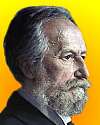
German physiologist who made several physiological measurment devices, including the first practical opthalmotonometer for the measurement of intraocular pressure. He developed fundamental laws of diffusion in living organisms (published in Die medizinische Physik, 1856) and is remembered for Fick's Law which enables calculation of the cardiac output.
German physiologist who made several physiological measurment devices, including the first practical opthalmotonometer for the measurement of intraocular pressure. He developed fundamental laws of diffusion in living organisms (published in Die medizinische Physik, 1856) and is remembered for Fick's Law which enables calculation of the cardiac output.
Born 3 Sep 1827; died 18 Nov 1898 at age 71.
John Ernst Worrell Keely was a fraudulent American inventor. In 1873 he announced that he had discovered a new physical force that, if harnessed, would produce unheard-of power. He claimed, for example, to be able to produce from a quart of water enough fuel to move a 30-car train from Philadelphia to New York City. He began construction of an engine to perform this feat and by 1874 was able to give preliminary demonstrations of his machine. He made a great show of guarding the secret of the motor he was developing to obtain power "from intermolecular vibrations of ether," and scientists and engineers scoffed at his unverified claims.
John Ernst Worrell Keely was a fraudulent American inventor. In 1873 he announced that he had discovered a new physical force that, if harnessed, would produce unheard-of power. He claimed, for example, to be able to produce from a quart of water enough fuel to move a 30-car train from Philadelphia to New York City. He began construction of an engine to perform this feat and by 1874 was able to give preliminary demonstrations of his machine. He made a great show of guarding the secret of the motor he was developing to obtain power "from intermolecular vibrations of ether," and scientists and engineers scoffed at his unverified claims.
Born 3 Sep 1814; died 15 Mar 1897 at age 82. quotes
British mathematician who, with Arthur Cayley, founded the theory of algebraic invariants, algebraic-equation coefficients that are unaltered when the coordinate axes are translated or rotated. Beginning in 1833, he studied at St John's College, Cambridge. However, at this time signing a religious oath to the Church of England was required to graduate. Being Jewish, he refused and so he did not graduate. He taught physics at the University of London (1838-41), one of the few places which did not bar him because of his religion. Sylvester did important work on matrix theory, in particular, to study higher dimensional geometry. In 1851 he discovered the discriminant of a cubic equation. Earlier in his life, he tutored Florence Nightingale.
British mathematician who, with Arthur Cayley, founded the theory of algebraic invariants, algebraic-equation coefficients that are unaltered when the coordinate axes are translated or rotated. Beginning in 1833, he studied at St John's College, Cambridge. However, at this time signing a religious oath to the Church of England was required to graduate. Being Jewish, he refused and so he did not graduate. He taught physics at the University of London (1838-41), one of the few places which did not bar him because of his religion. Sylvester did important work on matrix theory, in particular, to study higher dimensional geometry. In 1851 he discovered the discriminant of a cubic equation. Earlier in his life, he tutored Florence Nightingale.
Born 3 Sep 1767; died 11 Apr 1834 at age 66.
Australian agriculturist and promoter who helped found the Australian wool industry, now the world's largest. He was one of the first in New South Wales to obtain Spanish Merino sheep from the Cape of Good Hope (1797). He took specimens of their fleeces to England (1802), wrote a Statement of the Improvement and Progress of the Breed of Fine Woolled Sheep in New South Wales (London, 1803) and was granted 5,000 acres of the best pasture land in the colony, to be increased if tangible results were forthcoming. Each time he returned to England (first for four years and later for eight years) his wife, Elizabeth, was left to breed the sheep, produce the wool, manage workers, bushfires and Aboriginal uprisings, and run a profitable farm.
Australian agriculturist and promoter who helped found the Australian wool industry, now the world's largest. He was one of the first in New South Wales to obtain Spanish Merino sheep from the Cape of Good Hope (1797). He took specimens of their fleeces to England (1802), wrote a Statement of the Improvement and Progress of the Breed of Fine Woolled Sheep in New South Wales (London, 1803) and was granted 5,000 acres of the best pasture land in the colony, to be increased if tangible results were forthcoming. Each time he returned to England (first for four years and later for eight years) his wife, Elizabeth, was left to breed the sheep, produce the wool, manage workers, bushfires and Aboriginal uprisings, and run a profitable farm.
Born 3 Sep 1728; died 17 Aug 1809 at age 80. quotes
British manufacturer and engineer who financed and introduced James Watt's steam engine. On inheriting his father's silver-stamping business he produced buttons and buckles, and later, other goods of silver and ormolu (a sort of gilded bronze) for the up and coming mercantile classes. After meeting James Watt he became fascinated by the development of steam power and produced steam engines which sold all over the world. In 1786, Boulton established the first steam powered coining presses at his mint at Soho, Birmingham. This replaced hand processes in which workers placed blanks into a hand operated screw-press. more
British manufacturer and engineer who financed and introduced James Watt's steam engine. On inheriting his father's silver-stamping business he produced buttons and buckles, and later, other goods of silver and ormolu (a sort of gilded bronze) for the up and coming mercantile classes. After meeting James Watt he became fascinated by the development of steam power and produced steam engines which sold all over the world. In 1786, Boulton established the first steam powered coining presses at his mint at Soho, Birmingham. This replaced hand processes in which workers placed blanks into a hand operated screw-press. more
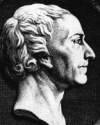
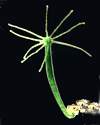
Swiss naturalist, is best known for his studies of the freshwater hydra, mainly Chlorohydra viridissima. He discovered the freshwater hydra in 1740. His extensive systematic experiments foreshadowed modern research on tissue regeneration and grafting. In 1744, Trembley published that he found that a complete hydra would be regenerated from as little as 1/8th of the parent body. He also succeeded in turning these animals inside out, a remarkably delicate operation which he performed by threading them on horse hairs. Trembley showed that the hydras would survive even this drastic operation. A thorough researcher, Trembley studied three species of hydra and published his findings in 1744.

Born 3 Sep 1704; died 11 Apr 1779 at age 74.
French botanist who went with French physicist Charles-Marie de la Condamine's expedition to Peru to measure an arc of meridian (1735). Therafter, he remained in South America for 35 years, supporting himself chiefly by the practice of medicine. By sending the seed to his brother Bernard, he introduced the common garden heliotrope (Heliotropium peruvianum) into Europe. His extended and arduous explorations in Peru took place mainly in the years 1747-50. The botanical results of these journeys were large, but the greater part of his manuscripts and collections was lost. He returned to Paris in 1771, in poor health. His brothers Antoine and Bernard were also notable botanists.«[Image: heliotrope flower and leaves]
French botanist who went with French physicist Charles-Marie de la Condamine's expedition to Peru to measure an arc of meridian (1735). Therafter, he remained in South America for 35 years, supporting himself chiefly by the practice of medicine. By sending the seed to his brother Bernard, he introduced the common garden heliotrope (Heliotropium peruvianum) into Europe. His extended and arduous explorations in Peru took place mainly in the years 1747-50. The botanical results of these journeys were large, but the greater part of his manuscripts and collections was lost. He returned to Paris in 1771, in poor health. His brothers Antoine and Bernard were also notable botanists.«[Image: heliotrope flower and leaves]
Born 3 Sep 1643; died 8 Jan 1704 at age 60.
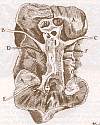
Italian physician and anatomist who described the collecting, or excretory, tubules of the kidney, known as Bellini's ducts (tubules). Bellini is considered a founder of Italian iatromechanism, a pioneer in applying mechanical philosophy to the functions of the human body. His early interests were anatomy and physiology. The first essay he published, Exercitatio anatomica de usu renum (1662), contains his anatomical discovery that in the supposedly unorganized parenchyma there is a complicated structure composed of fibers, open spaces, and densely packed tubules opening into the pelvis of the kidney. His further publications extended his effort to explain all important physiological phenomena according to the law of mechanics. (Several discoveries previously ascribed to Lorenzo Bellini were made earlier by Bartolomeo Eustachi.)Image: kidney structure as drawn by Bellini
Italian physician and anatomist who described the collecting, or excretory, tubules of the kidney, known as Bellini's ducts (tubules). Bellini is considered a founder of Italian iatromechanism, a pioneer in applying mechanical philosophy to the functions of the human body. His early interests were anatomy and physiology. The first essay he published, Exercitatio anatomica de usu renum (1662), contains his anatomical discovery that in the supposedly unorganized parenchyma there is a complicated structure composed of fibers, open spaces, and densely packed tubules opening into the pelvis of the kidney. His further publications extended his effort to explain all important physiological phenomena according to the law of mechanics. (Several discoveries previously ascribed to Lorenzo Bellini were made earlier by Bartolomeo Eustachi.)Image: kidney structure as drawn by Bellini

Died 3 Sep 1992 at age 90 (born 16 Jun 1902). quotes
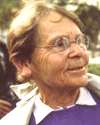
American scientist regarded as one of the most important figures in the history of genetics. In the 1940s and 1950s McClintock's work on the cytogenetics of maize led her to theorize that genes are transposable - they can move around - on and between chromosomes. McClintock drew this inference by observing changing patterns of coloration in maize kernels over generations of controlled crosses. The idea that genes could move did not seem to fit with what was then known about genes, but improved molecular techniques of the late 1970s and early 1980s allowed other scientists to confirm her discovery. She was awarded the 1983 Nobel Prize in Physiology or Medicine, the first American woman to win an unshared Nobel Prize.
American scientist regarded as one of the most important figures in the history of genetics. In the 1940s and 1950s McClintock's work on the cytogenetics of maize led her to theorize that genes are transposable - they can move around - on and between chromosomes. McClintock drew this inference by observing changing patterns of coloration in maize kernels over generations of controlled crosses. The idea that genes could move did not seem to fit with what was then known about genes, but improved molecular techniques of the late 1970s and early 1980s allowed other scientists to confirm her discovery. She was awarded the 1983 Nobel Prize in Physiology or Medicine, the first American woman to win an unshared Nobel Prize.
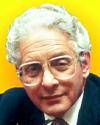
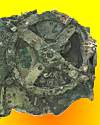
Derek John de Solla Price was an English-American physicist and science historian, also known as the information scientist who created scientometrics, the scientific measurement of the work of scientists, especially by way of analysing their publications and the citations within them. Beginning in 1951, Price studied the complex Antikythera geared mechanism recovered from an Ancient Greek shipwreck off the Greek island of Antikythera. By 1971 he and Greek nuclear physicist Charalampos Karakalos were making X-ray and gamma-ray images of the various fragments. In 1974, Price published their findings in a 70-page paper. Together with indications from gear settings and inscriptions, Price dated its manufacture at about 87 BC to be a mechanical astronomical calculator.«
Science Since Babylon, by Derek J. de Solla Price. - book suggestion.
Died 3 Sep 1942 at age 71 (born 15 May 1871).
German chemist.
German chemist.
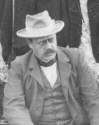
Died 3 Sep 1939 at age 76 (born 20 Nov 1862). quotes
Finnish sociologist, philosopher, and anthropologist who denied the widely held view that early humans had lived in a state of promiscuity and instead theorized that the original form of human sexual attachment had been monogamy. He asserted that primitive marriage was rooted in the needs of the nuclear family, which he considered to be the fundamental and universal unit of society.
Finnish sociologist, philosopher, and anthropologist who denied the widely held view that early humans had lived in a state of promiscuity and instead theorized that the original form of human sexual attachment had been monogamy. He asserted that primitive marriage was rooted in the needs of the nuclear family, which he considered to be the fundamental and universal unit of society.
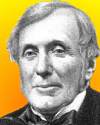
Died 3 Sep 1874 at age 80 (born 30 Aug 1794).
English civil engineer, son of John Rennie,(1761-1821), continued his great engineering tradition. In his own right, he became one of Britain’s foremost civil engineers of the Industrial Age, constructing and designing major works of infrastructure. Rennie was knighted for completing London Bridge (opened 1831), a landmark in stone-arch engineering and urban transport. He also engineered land drainage works, harbors, docks, and breakwaters across Britain and projects abroad. He improved the London Docks and built key naval facilities, including the Royal William Yard, Plymouth (1835) as a naval victualling yard. The Royal Military Canal from Hythe near Folkestone to Cliff End near Hastings was conceived (1804) for defense against French invasion.« more
English civil engineer, son of John Rennie,(1761-1821), continued his great engineering tradition. In his own right, he became one of Britain’s foremost civil engineers of the Industrial Age, constructing and designing major works of infrastructure. Rennie was knighted for completing London Bridge (opened 1831), a landmark in stone-arch engineering and urban transport. He also engineered land drainage works, harbors, docks, and breakwaters across Britain and projects abroad. He improved the London Docks and built key naval facilities, including the Royal William Yard, Plymouth (1835) as a naval victualling yard. The Royal Military Canal from Hythe near Folkestone to Cliff End near Hastings was conceived (1804) for defense against French invasion.« more
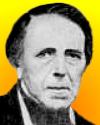
Died 3 Sep 1860 at age 67 (born 25 Aug 1793).
German physiologist and pathologist who was one of the founders of modern embryology. He was the first to describe the embryonic precursors of gill slits and gill arches in the embryos of higher animals - mammals and birds - which have none when fully grown. Rathke compared the development of the air sacs in birds and the larynx in birds and mammals. In 1839, he traced the origin of the anterior pituitary gland from a depression in the roof of the mouth, which embryonic structure is now known as Rathke's pouch. Rathke also did pioneering work in marine zoology, as being first to describe lancet fish.«
German physiologist and pathologist who was one of the founders of modern embryology. He was the first to describe the embryonic precursors of gill slits and gill arches in the embryos of higher animals - mammals and birds - which have none when fully grown. Rathke compared the development of the air sacs in birds and the larynx in birds and mammals. In 1839, he traced the origin of the anterior pituitary gland from a depression in the roof of the mouth, which embryonic structure is now known as Rathke's pouch. Rathke also did pioneering work in marine zoology, as being first to describe lancet fish.«
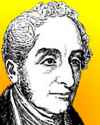
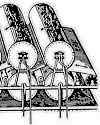
English inventor of paper-making machinery known by his name. He and his brother Sealy (d. 1847) spent a fortune over their lifetime perfecting a machine capable of producing paper of unlimited length, beginning with pulp fed at the beginning, to finished paper rolled on a drum at the other end. The pulp was carried on a wire-mesh belt and squeezed between rollers to remove the water. They were assisted by mechanic Bryan Donkin. Despite holding patents, the cost and effort involved to defend them left the brothers without any substantial return on their investment, and they died having obtained a small grant of compensation from Parliament. The principles developed in their machine are still in use in modern paper-making.«[Image right: detail showing delivery end of a Fourdrinier machine, c.1850.] more

(NASA)
In 2000, NASA data showed the hole at just under 11 million square miles, the biggest it had ever been to date. Record low temperatures in the stratosphere are believed to have helped the expansion of the ozone hole during the southern hemisphere's spring season. Antarctic ozone depletion starts in July, when sunlight triggers chemical reactions in cold air trapped over the South Pole during the Antarctic winter. It intensifies during August and September before tailing off as temperatures rise in late November of early December. Depletion of the ozone layer over Antarctica and the Arctic is being monitored because ozone protects Earth from harmful ultraviolet radiation. By 9 Sep 2000, the hole had grown over Chile, exposing a populated city for the first time. A larger hole was recorded on 24 Sep 2006.Image, compiled from NASA's Total Ozone Mapping Spectrometer instrument onboard the Earth Probe satellite, reveals how the ozone hole (in deep blue) has extended as far as southern Chile.
In 1996, Slowinski & Gage discovered 2^1257787-1 (34th known Mersenne prime).
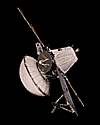
In 1976, the unmanned spacecraft Viking II landed on Mars and took the first pictures of the surface of Mars. Its twin, Viking I was the first to arrive on the surface of Mars on 20 Jul 1976. Each lander housed instruments that examined the physical and magnetic properties of the soil; analyzed the atmosphere and weather patterns of Mars; and determined any evidence of past or present life. Each Viking spacecraft, as launched inside the nose cone of a Titan Centaur rocket, was made of two parts: an orbiter and a lander. The orbiter's initial job was to survey the planet for a suitable landing site. Later the orbiter's instruments studied the planet and its atmosphere, while the orbiter acted as a radio relay station for transmitting lander data.
In 1976, the Convention on the International Maritime Satellite Organization (INMARSAT) was signed in London by representatives of the member countries. It was set up by the International Maritime Organization (IMO) to enable ships to stay in constant touch with shore or to call for help in an emergency, no matter how far out to sea. Operations began in 1982. On 15 Apr 1999, it transformed from an intergovernmental organization into a private company overseen by the International Mobile Satellite Organization (IMSO). It now provides a global network using 11 satellites, offering mobile and fixed communications services for maritime, enterprise, government and aviation.«
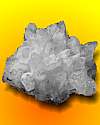
In 1970, a record hailstone fell on Coffeyville, Kansas, the heaviest authenticated one to fall in the U.S. in the 20th century. Its weight was recorded as 1-lb 11-oz (0.77 kg) with 5.7-in (14.7 cm) diam. It broke the old record from 6 Jul 1928 at Potter, Nebraska, for one weighing about 1-lb 8-oz (0.68 kg), around 7-in diam. A newer U.S. record for size was set on 22 Jun 2003 in Aurora, Nebraska, when a hailstone was found about 7-in diam. (17.8 cm) and 18.75-in (46.6 cm) circumference. The world record was broken on 23 Jul 2010, by a hailstone found in Vivian, South Dakota at 1-lb 15-oz, (0.88 kg), 8.0-in (20 cm) diam., 18.6-in (47.3 cm) circumference. A larger hailstone is said to have fallen on 14 Apr 1986 that weighed 2-lb 4-oz (1.02 kg) during a hailstorm in Bangladesh that killed 92 people.«
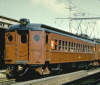
In 1931, the Lackawanna railroad inaugurated electric suburban service from Hoboken to Montclair, NJ, in an effort to keep smoke down around New York. Thomas Edison himself was at the controls of the first multiple-unit train to leave Hoboken Terminal. The “wickerliners” were so named for their early wicker seats. To supply electricity, the railroads erected bare overhead wires, called a “catenary.” The locomotives had a special, cage-like contact on the roof that touched the catenary to provide a flow of electricty from the contact to a large electric motor. Short-run commuter electric trains did not need large engine power because they carried passengers. The locomotive looked like a passenger car, but with an engineer's compartment in front.[Image: unidentified train.]
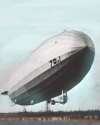
In 1925, the U.S. Navy airship Shenandoah, the first American-built rigid dirigible crashed. It was struck and destroyed in a violent thunderstorm, ripped apart by high winds, over Caldwell, Ohio. Of the 43 crew members, 14 died, but 29 survived. It was the first of the Zeppelin type to use helium gas, of which a supply was was available in the U.S. This ZR-1 was launched 20 Aug 1923, and tested in flight 3 Sep 1923. Covered with an aluminum-painted fabric, it was 680 feet long, weighed 36 tons, could bear 55 tons, and carry enough fuel to cruise 5,000 miles at an average speed of 65 mph. Although at the time the crash made front-page news around the world, this tragedy has been largely forgotten.«
America's Forgotten Airship Disaster: The Crash of the USS Shenandoah, by Aaron J. Keirns. - book suggestion.
1825
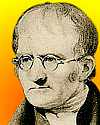
In 1803, John Dalton recorded in his notebook “Observations on the Ultimate Particles of Bodies and their Combinations,” in which he introduced his atomic symbols. On 23 Oct 1803, he delivered a paper on the absorption of gases by water, which he concluded with a series of atomic weights for 21 simple and compound elements.«
John Dalton and the Atomic Theory: The Biography of a Natural Philosopher, by Elizabeth C. Patterson. - book suggestion.
In 1752, the day of 3 Sep never happened in Britain, nor the next 10 dates. The Roman era Julian Calendar, had become 11 days out of step from the solar cycle.Britain and its American colonies adopted the Gregorian Calendar, which moved this day's date up from Sep 3 to Sep 14. People rioted in the streets thinking the government stole 11 days of their lives. Instituted by Pope Gregory XIII in 1582, the calendar has 365 days with an extra day every four years (the leap year) except in years divisible by 100 but not divisible by 400. Thus, the calendar year has an average length of 365.2422 days. Some other countries, including Russia, did not change until the twentieth century.«




