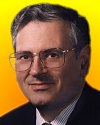
Born 23 Dec 1938. quotes
Robert Elliot Kahn is an American computer scientist who co-created the packet-switching protocols that enable computers to exchange information on the Internet. In the late 1960s Kahn realized that a packet-switching network could effectively transmit large amounts of data between computers. Along with fellow computer scientists Vinton Cerf, Lawrence Roberts, Paul Baran, and Leonard Kleinrock, Kahn built the ARPANET, the first network to successfully link computers around the country. Kahn and Cerf also developed the Transmission Control Protocol (TCP) and the Internet Protocol (IP), which together enable communication between different types of computers and networks; TCP/IP is the standard still in use today.«
Robert Elliot Kahn is an American computer scientist who co-created the packet-switching protocols that enable computers to exchange information on the Internet. In the late 1960s Kahn realized that a packet-switching network could effectively transmit large amounts of data between computers. Along with fellow computer scientists Vinton Cerf, Lawrence Roberts, Paul Baran, and Leonard Kleinrock, Kahn built the ARPANET, the first network to successfully link computers around the country. Kahn and Cerf also developed the Transmission Control Protocol (TCP) and the Internet Protocol (IP), which together enable communication between different types of computers and networks; TCP/IP is the standard still in use today.«
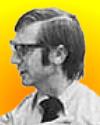
Born 23 Dec 1923; died 24 Aug 1990 at age 66.
American geologist and senior scientist at the U.S. Geological Survey's astrogeology branch supporting space exploration. Starting in the mid 1960s, he helped analyze the photographs from the Ranger, Lunar Orbiter, and Surveyor lunar missions. In mapping the moon, suitable landing spots were being sought for the unmanned Surveyor 5 spacecraft (1967) and the manned Apollo landings (1969-72). Masursky headed the group that interpreted television transmissions from Martian satellite Mariner 9 (1971), producing maps to plan the landing of unmanned Viking spacecraft on Mars (1976). He analyzed data on the geological origins and evolution of the planets. He collaborated in foreign projects such as the Soviet Venus probes.«
American geologist and senior scientist at the U.S. Geological Survey's astrogeology branch supporting space exploration. Starting in the mid 1960s, he helped analyze the photographs from the Ranger, Lunar Orbiter, and Surveyor lunar missions. In mapping the moon, suitable landing spots were being sought for the unmanned Surveyor 5 spacecraft (1967) and the manned Apollo landings (1969-72). Masursky headed the group that interpreted television transmissions from Martian satellite Mariner 9 (1971), producing maps to plan the landing of unmanned Viking spacecraft on Mars (1976). He analyzed data on the geological origins and evolution of the planets. He collaborated in foreign projects such as the Soviet Venus probes.«
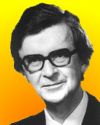
Born 23 Dec 1911; died 7 Oct 1994 at age 82. quotes
Niels Kaj Jerne was a Danish immunologist who shared (with César Milstein and Georges Köhler) the 1984 Nobel Prize for Physiology or Medicine. Jerne has provided three important theories of immunology. (1) Natural selection theory of anti-body formation (1955) which initiated modern cellular immunology since the1960s. (2) Somatic generation theory of the generation of antibody diversity (1968) which brought together molecular and cellular immunology in the 1970s. (3) Network theory (1974), which explains a complex system of interactions when the immune system is activated to counteract disease and then is shut down after the need passes. The principles of this theory are beginning to be exploited in prevention, diagnosis and treatment of disease.«
Niels Kaj Jerne was a Danish immunologist who shared (with César Milstein and Georges Köhler) the 1984 Nobel Prize for Physiology or Medicine. Jerne has provided three important theories of immunology. (1) Natural selection theory of anti-body formation (1955) which initiated modern cellular immunology since the1960s. (2) Somatic generation theory of the generation of antibody diversity (1968) which brought together molecular and cellular immunology in the 1970s. (3) Network theory (1974), which explains a complex system of interactions when the immune system is activated to counteract disease and then is shut down after the need passes. The principles of this theory are beginning to be exploited in prevention, diagnosis and treatment of disease.«
Science As Autobiography: The Troubled Life of Niels Jerne, by Thomas Soderqvist. - book suggestion.
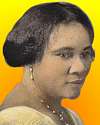
(c. 1914)
Born 23 Dec 1867; died 25 May 1919 at age 51. quotes
Madame C.J. Walker (born Sarah Breedlove) was a Black-American businessperson and inventor who invented a metal heating comb and conditioner for straightening hair. She made her fortune by her hugely successful marketing and developing of hair and beauty products for black women. After starting out with her business headquarters in 1910 in Indianapolis, Indiana, she opened part of her company operations in New York City. She established a chain of beauty parlors throughout the U.S. and the Caribbean. The number of African American agents earning commissions by selling her products was about 5,000 in 1910, and this grew in the next nine years to 25,000. Walker has been called the first self-accomplished American millionairess, yet engaged in philanthropy.«
Madame C.J. Walker (born Sarah Breedlove) was a Black-American businessperson and inventor who invented a metal heating comb and conditioner for straightening hair. She made her fortune by her hugely successful marketing and developing of hair and beauty products for black women. After starting out with her business headquarters in 1910 in Indianapolis, Indiana, she opened part of her company operations in New York City. She established a chain of beauty parlors throughout the U.S. and the Caribbean. The number of African American agents earning commissions by selling her products was about 5,000 in 1910, and this grew in the next nine years to 25,000. Walker has been called the first self-accomplished American millionairess, yet engaged in philanthropy.«
On Her Own Ground: The Life and Times of Madam C.J. Walker, by A'Lelia Bundles. - book suggestion.
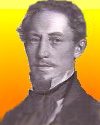
Born 23 Dec 1822; died 20 Jun 1875 at age 52.
German inventor who was a pioneer of submarines. On 1 Feb 1851, in Kiel Harbour, he made a test-dive in his first submarine, Le Plongeur-Marin ("The Marine Diver"), only to sink 50-ft due to water leaks in the hull. He survived by waiting for the inside air pressure, compressed as more water leaked in, to match the water pressure outside. Seven hours later, he and his crew opened the hatch and rose to the surface to find funeral services in progress. In 1855, Bauer built a four-man treadmill-powered, 52-ft iron submarine, Le Diable-Marin ("The Marine Devil") carrying 11 crew. The photographs Bauer made through its windows are probably the first taken underwater. He also experimented on air purification and underwater sound signals.«
German inventor who was a pioneer of submarines. On 1 Feb 1851, in Kiel Harbour, he made a test-dive in his first submarine, Le Plongeur-Marin ("The Marine Diver"), only to sink 50-ft due to water leaks in the hull. He survived by waiting for the inside air pressure, compressed as more water leaked in, to match the water pressure outside. Seven hours later, he and his crew opened the hatch and rose to the surface to find funeral services in progress. In 1855, Bauer built a four-man treadmill-powered, 52-ft iron submarine, Le Diable-Marin ("The Marine Devil") carrying 11 crew. The photographs Bauer made through its windows are probably the first taken underwater. He also experimented on air purification and underwater sound signals.«
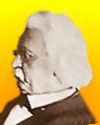
Born 23 Dec 1810; died 10 Jul 1884 at age 73.
German Egyptologist who is regarded as a founding father of scientific methods in archaeology. His plans, maps and drawings of tomb and temple walls are of high accuracy and reliability. In 1842, he headed a team of carefully chosen specialists on a four year expedition to the Nile Valley sponsored by King Fredrich Wilhelm IV of Prussia. Lepsius explored Khartoum and Sennar, during which he collected 15,000 artifacts and dispatched for display in Berlin. In winter 1844-45, Lepsius travelled throughout the Valley of the Kings, recording numerous scenes and inscriptions. He returned in 1866 and found the Canopus decree at Tanis. Being written in two languages, it was a valuable cross-reference for the prior interpretation of the Rosetta stone by Champollion.«
German Egyptologist who is regarded as a founding father of scientific methods in archaeology. His plans, maps and drawings of tomb and temple walls are of high accuracy and reliability. In 1842, he headed a team of carefully chosen specialists on a four year expedition to the Nile Valley sponsored by King Fredrich Wilhelm IV of Prussia. Lepsius explored Khartoum and Sennar, during which he collected 15,000 artifacts and dispatched for display in Berlin. In winter 1844-45, Lepsius travelled throughout the Valley of the Kings, recording numerous scenes and inscriptions. He returned in 1866 and found the Canopus decree at Tanis. Being written in two languages, it was a valuable cross-reference for the prior interpretation of the Rosetta stone by Champollion.«
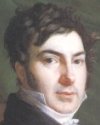
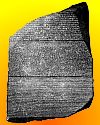
Rosetta Stone
French Egyptologist who established scientific methods in archaeology and pioneered in deciphering Egyptian hieroglyphics. He was well prepared, with a genius for languages, having by age 13 mastered Latin, Greek, Arabic, Syrian, and Chaldean and later Hebrew, Persian, Chinese, and Coptic, an old Egyptian language written in Greek letters. He started interpreting Egyptian hieroglyphics, building on the earlier efforts of Thomas Young. Champollion succeeded in deciphering the Rosetta Stone, a stone slab unearthed (1799) at Rosetta (near Alexandria, Egypt) inscribed in two languages and three scripts: Egyptian hieroglyphic and demotic, and Greek, each recording.a decree (196 BC) of Ptolemy V Epiphanes (reigned 205-180).«
The Rosetta Stone: The Story of the Decoding of Hieroglyphics, by Robert Sole, et al. - book suggestion.
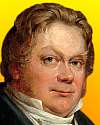
Born 23 Dec 1766; died 28 Jun 1852 at age 85.
Swedish mineralogist who inherited his father's iron works, and pursued science privately. From one of his iron mines at Bastnäs came a mineral of unusually high density. Hisinger distributed samples to several European chemical analysts. After his examination in 1803, Martin Klaproth suspected it held a new element. That year, both Hisinger and Jöns Berzelius isolated the new element. They named it cerium in recognition of Giussepe Piazzi's discovery of the new minor plant, Ceres, two years earlier (1 Jan 1801). In 1806, Hisinger investigated electricity's effect on salt solutions. He contributed to the geological knowledge of his country, and recorded finds of its animal and plant fossils. He also amassed fine rock, mineral and fossil collections, which he eventually gave to the Swedish natural history museum.«
Swedish mineralogist who inherited his father's iron works, and pursued science privately. From one of his iron mines at Bastnäs came a mineral of unusually high density. Hisinger distributed samples to several European chemical analysts. After his examination in 1803, Martin Klaproth suspected it held a new element. That year, both Hisinger and Jöns Berzelius isolated the new element. They named it cerium in recognition of Giussepe Piazzi's discovery of the new minor plant, Ceres, two years earlier (1 Jan 1801). In 1806, Hisinger investigated electricity's effect on salt solutions. He contributed to the geological knowledge of his country, and recorded finds of its animal and plant fossils. He also amassed fine rock, mineral and fossil collections, which he eventually gave to the Swedish natural history museum.«
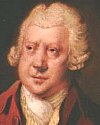
Born 23 Dec 1732; died 3 Aug 1792 at age 59. quotes
English industrialist and inventor whose introduction of power-driven mechanization of textile factory production methods were enormously successful. The Spinning-Frame machine he invented (1769, British patent No. 931) to spin cotton yarn used multiple sets of paired rollers that turned at different speeds able to draw out yarn of the correct thickness, and a set of spindles to twist the fibres firmly together. It produced a far stronger thread that that made by the Spinning-Jenny of James Hargreaves. Arkwright's machine was too large to be manually driven, so he powered it with a water-wheel (1771) when it became known as the Water Frame. Arkwright's textile business expanded, he built more factories, and later adopted steam power.«
English industrialist and inventor whose introduction of power-driven mechanization of textile factory production methods were enormously successful. The Spinning-Frame machine he invented (1769, British patent No. 931) to spin cotton yarn used multiple sets of paired rollers that turned at different speeds able to draw out yarn of the correct thickness, and a set of spindles to twist the fibres firmly together. It produced a far stronger thread that that made by the Spinning-Jenny of James Hargreaves. Arkwright's machine was too large to be manually driven, so he powered it with a water-wheel (1771) when it became known as the Water Frame. Arkwright's textile business expanded, he built more factories, and later adopted steam power.«
The Arkwrights: Spinners of Fortune, by R.S Fitton. - book suggestion.
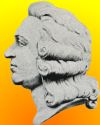
Born 23 Dec 1722; died 19 Aug 1765 at age 42. quotes
Swedish chemist and metallurgist who was the first to isolate nickel (1751) and notice its slight magnetic properties. A new chemical classification of minerals he made was translated to several languages. Patterns he found in the internal structure of minerals enabled him to distinguish between simple one-compound minerals and those comprised of a mixture of several minerals. He discovered zeolite, a water-softening silicate and analysed the high-density mineral calcium tungstate. By adept use of the blowpipe to intensify a flame and burn a small quantity of a mineral he could make an identification of its chemical composition based on the colouring of the flame. He did not invent the instrument, but founded systematic blowpipe analysis technique.«
Swedish chemist and metallurgist who was the first to isolate nickel (1751) and notice its slight magnetic properties. A new chemical classification of minerals he made was translated to several languages. Patterns he found in the internal structure of minerals enabled him to distinguish between simple one-compound minerals and those comprised of a mixture of several minerals. He discovered zeolite, a water-softening silicate and analysed the high-density mineral calcium tungstate. By adept use of the blowpipe to intensify a flame and burn a small quantity of a mineral he could make an identification of its chemical composition based on the colouring of the flame. He did not invent the instrument, but founded systematic blowpipe analysis technique.«

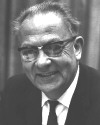
Died 23 Dec 1973 at age 68 (born 7 Dec 1905).
Dutch-born American astronomer, who discovered Miranda, a moon of Uranus, and Nereid, a moon of Neptune. The Kuiper Belt is so-named after his original suggestion of its existence outside the orbit of Neptune before it was confirmed as a belt of small bodies. He measured the diameter of Pluto. In the Martian atmosphere Kuiper detected carbon dioxide, but the absence of oxygen (1947). In the 1960s, Kuiper pioneered airborne infrared observing using a Convair 990 aircraft and served as chief scientist for the Ranger spacecraft crash-landing probes of the moon. By analyzing Ranger photographs, he identified landing sites on the lunar surface most suitable for safe manned landings.«
Dutch-born American astronomer, who discovered Miranda, a moon of Uranus, and Nereid, a moon of Neptune. The Kuiper Belt is so-named after his original suggestion of its existence outside the orbit of Neptune before it was confirmed as a belt of small bodies. He measured the diameter of Pluto. In the Martian atmosphere Kuiper detected carbon dioxide, but the absence of oxygen (1947). In the 1960s, Kuiper pioneered airborne infrared observing using a Convair 990 aircraft and served as chief scientist for the Ranger spacecraft crash-landing probes of the moon. By analyzing Ranger photographs, he identified landing sites on the lunar surface most suitable for safe manned landings.«
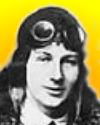
Died 23 Dec 1939 at age 49 (born 6 Apr 1890).
Dutch-American airman and pioneer aircraft manufacturer who, having seen an airplane flight at age 16, was inspired to build his first airplane by age 20. This was a braced monoplane, the Spider he put assembled in an empty Zeppelin hangar in Baden-Baden, and flying it gained his pilot's licence. His first factory built many of Germany's WW I pursuit aircraft, and gained recognition, but at the end of the war was put out of business there by the treaty of Versailles. On 21 Jul 1919, he established a company for civil aircraft, in the Netherlands and subsequently started manufacturing in the U.S. He continued to influence airplane construction techniques, and adopted welded-steel tubing fusulage construction.«
Dutch-American airman and pioneer aircraft manufacturer who, having seen an airplane flight at age 16, was inspired to build his first airplane by age 20. This was a braced monoplane, the Spider he put assembled in an empty Zeppelin hangar in Baden-Baden, and flying it gained his pilot's licence. His first factory built many of Germany's WW I pursuit aircraft, and gained recognition, but at the end of the war was put out of business there by the treaty of Versailles. On 21 Jul 1919, he established a company for civil aircraft, in the Netherlands and subsequently started manufacturing in the U.S. He continued to influence airplane construction techniques, and adopted welded-steel tubing fusulage construction.«
Fokker Dr.I Triplane: A World War One Legend, by Paul Leaman. - book suggestion.
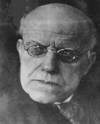
Died 23 Dec 1934 at age 84 (born 20 Jul 1850).
Georg Elias Nathanael Müller was a German psychologist whose research work encompassed four principal areas: psychophysical method, memory, thought psychology, and color perception theory. The psychophysics anticipated the color theory, which was founded on Hering. The memory work led into the thought psychology, which was founded on Herbart and Külpe. Whereas earlier in his career his published works lacked original data, he sharpened his approach and became known as the methodologist of psychological experimentation. The experiments carried out in his lab were the gold standard of experimental results. He was directed one of the major centres of psychological research at the University of Göttingen (1881-1921).«
Georg Elias Nathanael Müller was a German psychologist whose research work encompassed four principal areas: psychophysical method, memory, thought psychology, and color perception theory. The psychophysics anticipated the color theory, which was founded on Hering. The memory work led into the thought psychology, which was founded on Herbart and Külpe. Whereas earlier in his career his published works lacked original data, he sharpened his approach and became known as the methodologist of psychological experimentation. The experiments carried out in his lab were the gold standard of experimental results. He was directed one of the major centres of psychological research at the University of Göttingen (1881-1921).«
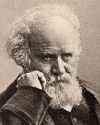
Died 23 Dec 1907 at age 83 (born 22 Feb 1824). quotes
Pierre-Jules-César Janssen was a French astronomer who in 1868 devised a method for observing solar prominences without an eclipse (an idea reached independently by Englishman Joseph Norman Lockyer). Janssen observed the total Sun eclipse in India (1868). Using a spectroscope, he proved that the solar prominences are gaseous, and identified the chromosphere as a gaseous envelope of the Sun. He noted an unknown yellow spectral line in the Sun in 1868, and told Lockyer (who subsequently recognized it as a new element he named helium, from Greek helios for sun). Janssen was the first to note the granular appearance of the Sun, regularly photographed it, and published a substantial solar atlas with 6000 photographs (1904).« more
Pierre-Jules-César Janssen was a French astronomer who in 1868 devised a method for observing solar prominences without an eclipse (an idea reached independently by Englishman Joseph Norman Lockyer). Janssen observed the total Sun eclipse in India (1868). Using a spectroscope, he proved that the solar prominences are gaseous, and identified the chromosphere as a gaseous envelope of the Sun. He noted an unknown yellow spectral line in the Sun in 1868, and told Lockyer (who subsequently recognized it as a new element he named helium, from Greek helios for sun). Janssen was the first to note the granular appearance of the Sun, regularly photographed it, and published a substantial solar atlas with 6000 photographs (1904).« more
The Astronomer Jules Janssen: A Globetrotter of Celestial Physics, by Françoise Launay. - book suggestion.
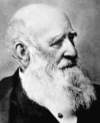
Died 23 Dec 1901 at age 84 (born 1 Aug 1817).
English chemist who as co-director with John Bennet Lawes of the Rothamsted Experimental Station, Hertfordshire, for over 50 years established a premier reputation for research at the first organized agricultural experimental station in the world. Their work applied skills in chemistry, meteorology, botany, animal and vegetable physiology, and geology to determine practical improvements for agricultural methods. They studied the nitrogen requirements of plants, how the element was taken up by plants, and the effects of nitrogen fertilizers on grain production and quality. In the 1840s, they initiated the manufacture of superphosphate fertilizer, one of their inventions.«
English chemist who as co-director with John Bennet Lawes of the Rothamsted Experimental Station, Hertfordshire, for over 50 years established a premier reputation for research at the first organized agricultural experimental station in the world. Their work applied skills in chemistry, meteorology, botany, animal and vegetable physiology, and geology to determine practical improvements for agricultural methods. They studied the nitrogen requirements of plants, how the element was taken up by plants, and the effects of nitrogen fertilizers on grain production and quality. In the 1840s, they initiated the manufacture of superphosphate fertilizer, one of their inventions.«
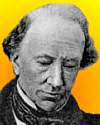
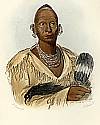
English physician and ethnologist who was among the first to argue that a single human species embraces all the world's races in Researches Into the Physical History of Man (1813). He was able to study sailors of many different races because his home was in the port town of Bristol. He later proposed a theory in a Treatise on Insanity and other Disorders affecting the Mind (1835) that moral insanity (psychopathic personality) was a distinct disease. Later he published on the legal questions of insanity (1842) was in 1845 moved to London as a commissioner of lunacy.«[Image right: Muck-a-tah-mish-a-kah-kaik, illustration by George Catlin, from Prichard's The Natural History of Man.]
James Cowles Prichard's Anthropology: Remaking the Science of Man in Early Nineteenth Century Britain, by H. F. Augstein. - book suggestion.
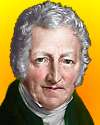
Died 23 Dec 1834 at age 68 (born 13 Feb 1766). quotes
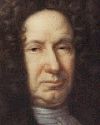
English economist and demographer who can be regarded as a pioneer sociologist. He was one of the first to systematically analyze human society when he published his theories in An Essay on the Principle of Population. Malthus predicted population would always outrun the food supply and that would result in famine, disease or war to reduce the number of people. As Malthus observed the Industrial Revolution was causing a rapid increase in population, he indicated keeping improved social conditions would require imposing strict limits on reproduction. Reading the book inspired Charles Darwin to reflect upon the survival of the fittest individuals in the process of natural selection in evolving populations of any organism. Alfred Russell Wallace likewise acknowledged his theory was stimulated by the book by Malthus. (NPR audio).«[DSB gives birth date 13 Feb 1766. EB gives the range 14/17 Feb 1766.]
English economist and demographer who can be regarded as a pioneer sociologist. He was one of the first to systematically analyze human society when he published his theories in An Essay on the Principle of Population. Malthus predicted population would always outrun the food supply and that would result in famine, disease or war to reduce the number of people. As Malthus observed the Industrial Revolution was causing a rapid increase in population, he indicated keeping improved social conditions would require imposing strict limits on reproduction. Reading the book inspired Charles Darwin to reflect upon the survival of the fittest individuals in the process of natural selection in evolving populations of any organism. Alfred Russell Wallace likewise acknowledged his theory was stimulated by the book by Malthus. (NPR audio).«[DSB gives birth date 13 Feb 1766. EB gives the range 14/17 Feb 1766.]
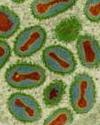
In 1993, the U.S. Centers for Disease Control, Atlanta, Georgia, announced that the smallpox virus stockpile would now not be destroyed. The last specimens of the virus to exist on Earth had been secured in storage in 600 frozen vials in Atlanta and Russia, ready to make vaccine should it ever again be necessary. This reversed an earlier decision for final destruction of the last remnants of smallpox with heat on 31 Dec of the same year. Scientists who wanted to continue research on the virus stopped the destruction plan. Smallpox (variola) had been one of the world's most dreaded plagues until 1977, when it was declared eradicated. Its name comes from the pockmarks on the skin that it caused.
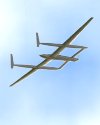
In 1986, the experimental airplane Voyager, piloted by Dick Rutan and Jeana Yeager, completed the first non-stop, round- the- world flight without refueling which began 14 Dec. It returned safely to Edwards Air Force Base in California after travelling 24,986 miles in 216 hours, at an average speed of 115.8 mph. For nine days they piloted the aircraft from a cramped 7.5-ft tall , 3.3-ft wide and under 3-ft. tall cockpit. Voyager's takeoff weight was more than 10 times the structural weight, but its drag was lower than almost any other powered aircraft. The aircraft's design and light-weight structural materials allowed it to carry an unprecedented amount of fuel. Their flight nearly doubled the previous distance record set in 1962 by a USAF Boeing B-52H.
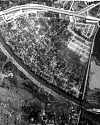
In 1982, it was announced that the soil on unpaved roads of Times Beach, Missouri, USA contained dangerous levels of poisonous dioxin and its 2,800 residents were recommended to relocate. The dioxin came from industrial waste oil sprayed on the roads for dust control in 1972-73. The Centers for Disease Control (CDC) issued the health advisory report only a few weeks after the Environmental Protection Agency (EPA) had started to sample the soil. Analyses found dioxin at levels up to 127 parts per billion. By 22 Feb 1983, the EPA pledged $33 million from the government's Superfund for hazardous chemical cleanup to purchase the Times Beach property. The city was subsequently bulldozed and decontaminated.«[Image: Aerial view of Times Beach and the Meramec River.]
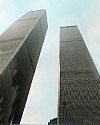
In 1970, the construction of the World Trade Center in New York City reached 1353 feet high (411 m), its highest point. This was a complex of 7 buildings including twin 110-story towers, with 9 million sq.ft. of office space. The towers' design by architect Minoru Yamasaki used a steel frame with glass curtain walls. Observation decks at the top of the towers gave a view of 45 miles. The building had three vertical zones served by express elevators to skylobbies at the 41st and 74th floors and local elevators within the three zones. Once the highest skyscrapers in the world (until surpassed by the Sears Tower, Chicago), the twin towers were totally destroyed by fire 11 Sep 2001 by terrorists who crashed hijacked airliners into them.
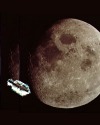
In 1968, American astronauts on Apollo 8 became the first men to orbit the Moon. The three-man crew was Frank Borman (Commander), James A. Lovell, Jr. (Command Module Pilot) and William Anders (Lunar Module Pilot). Not only was this the first manned flight to and from the Moon, but Apollo 8 served to validate many of the technical procedures necessary to support upcoming lunar missions. During ten lunar orbits, the astronauts took star sightings to pinpoint landmarks, surveyed landing sites, took both still and motion pictures and made two television transmissions to Earth. It was also the world's first manned flight to escape the influence of Earth's gravity. Launched on 21 Dec 1968, the mission lasted 6 days 3 hours until recovery on 27 Dec 1968.
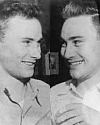
In 1954, the first successful kidney transplant was carried out between identical twins by surgeons at Peter Bent Hospital, Boston, Mass. The kidney was donated to Richard Herrick, 23, by his identical twin, Ronald. The operation was led by Dr. John P. Merrill who had previously completed a series of nine kidney transplants, only to find they failed. He suspected they were rejected by the recipients' immune system. The identical twins presented an opportunity to test the hypothesis. Merill's team carried out an exchange of skin grafts between Richard and his twin brother. Finding the grafts were successful, the way was clear to carry out the kidney transplant. This time the surgery was successful, and Richard lived until 1962.[Image: Richard Herrick (right) and Ronald ten months after their surgery]
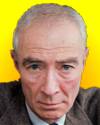
In 1953, Dr. Robert Oppenheimer was notified that his security clearance had been suspended. (He had directed the Manhattan Project that produced the atomic bombs used during WW II). There were allegations questioning his trustworthiness for association with Communists. By telegram dated 29 Jan 1954, he requested a hearing. On 4 Mar 1954, he submitted his answer to the original notification. Within two weeks, the Commisssion informed him who would conduct the hearing, to be led by Gordon Gray. The hearing before the Gray Board began 12 Apr 1954. It returned a result on 29 Jun 1954 that by a vote of 4 to 1, it had made a decision against reinstating Dr. J. Robert Oppenheimer's access to classified information.
American Prometheus: The Triumph and Tragedy of J. Robert Oppenheimer, by Kai Bird, Martin J. Sherwin. - book suggestion.

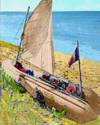
l'Hérétique boat

The Voyage of the Heretique, by Alain Bombard. - book suggestion.
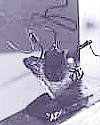
In 1947, the transistor was first demonstrated by Walter H. Brattain and John Bardeen to their higher-ups at Bell Laboratories. A microphone and headphones were connected to the transistor, and the device was actually spoken over "with no noticeable change in quality" as Brattain wrote in his notes about that day. The name transistor came from its electrical property known as trans-resistance. The original device, which the researchers first had working on 16 Dec 1947 was a point-contact version, which was later improved by William Schockley as a junction transistor. The inventors shared the 1956 Nobel prize in physics for their work. The transistor replaced the bulkier vacuum tube, and was referred to as the electronic engineer's dream.Image: the first point contact transistor.
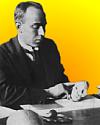
In 1924, Raymond Dart completed his work removing the first fossil skull of Australopithecus from its matrix of rock. Being one of "missing links" in man's evolution, Dart had taken exquisite care during 73 days to separate skull and stone, at work in his laboratory in Johannesburg, South Africa. Dart with his students made the find in the Taung limestone works in the Harts Valley of Bechuanaland. When an endocranial cast was found, at first it seemed to be just another primate skull. Then, Dart noticed how amazingly close to human it looked. Dart had discovered the Taung child, who was only three years old at the time of death. He named it Australopithecus africanus. (Australis means "south" and pithecus means "ape").
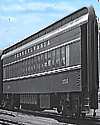
In 1907, the first U.S. all-steel passenger railroad coach was completed in Altoona, Pa. by the Pennsylvania Railroad Co. in its shop at Altoona, Pennsylvania. They were designated P70, meaning a passenger (P) coach with a 70-ft passenger compartment, plus vestibules at each end making an 80-ft total car length The elevated clerestory roof style gave extra height over the aisle, fitted with little windows and vents that released the rising hot air. They featured 88 seats. By 1929, over 1,000 of the cars were built by Altoona and other car builders. (A previous design, built there in 1902-03, had a steel underframe and superstructure, but with a composite roof, and wooden window frames and sills.)«
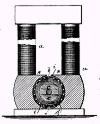
In 1870, Thomas A. Edison was issued a U.S. patent for an “Improvement in Magneto Electric Machines” (No. 222,881). The object of his improvement was to increase the effectiveness and cheapen the construction of the revolving armature. He designed the armature of a cylinder of wood with two iron heads between which fine iron wire was wound on the cylinder. At the ends of the cylinder, outside the iron heads there were disks of hard rubber or other insulating material, and the wires forming the induction helix are wound lengthwise of the cylinders into notches in the edges of the disk.
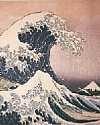
In 1854, a tsunami struck the coast of Japan. In the harbor of Simoda the water was agitated so that its depth varied between 8 and 40 feet. Twelve hours later this giant tidal wave reached the Pacific coast of the U.S. Notice of the earthquake waves was observedon newly installed self-registering tide gauges, a new technology at the time. The information derived from this event enabled Alexander D. Bache, Superintendent of the U.S. Coast and Geodetic Survey, to apply a newly derived law relating ocean depth to wave speed and provide the first relatively accurate scientific estimate of the depth of an ocean between Japan and the Pacific coast of the U.S. The velocity of the sea wave from Simoda to San Francisco was 369 mph.
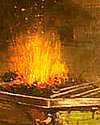
In 1834, the first U.S. patent for bellows was issued to John.R. Morrison of Springfield, Ohio. (There was no numbering of patents of the time, but it was retroactively assigned Patent No. X8553). It described “Improvement in a Bellows for blowing Smith’s and furnace fires.” The handwritten text gave details of specific dimensions for construction with wood, leather, and iron pipe. A 34×27×15 inch wooden box interior was horizontally divided with a board having holes covered with valves (windfalls). A mechanism delivered air to be pumped from the lower space into the upper reservoir from which a spout would deliver a “constant & strong blast.”«
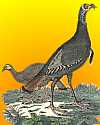
Wild turkey
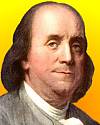
Benjamin Franklin: An American Life, by Walter Isaacson. - book suggestion.
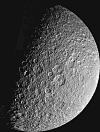
Cassini




