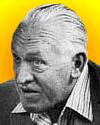
Born 6 Jul 1913; died 2 Mar 1997 at age 83.
Canadian-American scientist who, as head of the theoretical division at the Los Alamos (N.M.) Scientific Laboratory, was involved in the development of various weapons systems, including thermonuclear bombs. He began at Los Alamos in 1945 as a collaborator on the Manhattan Project. He joined the staff in 1946 and became leader of T Division the following year until his retirement in 1973. He had a broad range of research interests, including hydrodynamics, neutron physics and transport theory. By the 1960s, much of the weapons work had been relocated and the T division diversified into working with outside agencies and private industry. After his retirement, he was active in issues related to disarmament and nonproliferation.«
Canadian-American scientist who, as head of the theoretical division at the Los Alamos (N.M.) Scientific Laboratory, was involved in the development of various weapons systems, including thermonuclear bombs. He began at Los Alamos in 1945 as a collaborator on the Manhattan Project. He joined the staff in 1946 and became leader of T Division the following year until his retirement in 1973. He had a broad range of research interests, including hydrodynamics, neutron physics and transport theory. By the 1960s, much of the weapons work had been relocated and the T division diversified into working with outside agencies and private industry. After his retirement, he was active in issues related to disarmament and nonproliferation.«
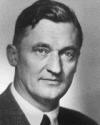
Born 6 Jul 1903; died 15 Aug 1982 at age 79.
Swedish biochemist whose study of enzymes that facilitate oxidation reactions in living cells contributed to the understanding of enzyme action and led to the discovery of the ways in which nutrients are used by organisms in the presence of oxygen to produce usable energy. Theorell won the Nobel Prize for Physiology in 1955 for "for his discoveries concerning the nature and mode of action of oxidation enzymes."
Swedish biochemist whose study of enzymes that facilitate oxidation reactions in living cells contributed to the understanding of enzyme action and led to the discovery of the ways in which nutrients are used by organisms in the presence of oxygen to produce usable energy. Theorell won the Nobel Prize for Physiology in 1955 for "for his discoveries concerning the nature and mode of action of oxidation enzymes."
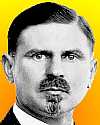
Born 6 Jul 1879; died 6 Feb 1960 at age 80.
German engineer who designed engines, following in the footsteps of his father, Wilhelm Maybach (partner of Gottlieb Daimler). In 1909, he co-founded Luftfahrzeug-Motorenbau, with his father and Count Ferdinand von Zeppelin. Karl designed engines, not only for Zeppelin airships, but also supercharged engines for aircraft. For ground and ocean transport, his diesel engines powered rail, ships, submarines and tanks. In the interwar years, 1921-1941, he produced six models of luxury automobiles, with a variety of exclusive body styles crafted by the finest coachbuilders. In May 1933, when the high-speed, streamlined rail travel was introduced in Germany, the Fliegender Hamburger (Hamburg Flier) train was powered by two Maybach engines. Its speed record between Hamburg and Berlin was unbroken for 64 years.«
German engineer who designed engines, following in the footsteps of his father, Wilhelm Maybach (partner of Gottlieb Daimler). In 1909, he co-founded Luftfahrzeug-Motorenbau, with his father and Count Ferdinand von Zeppelin. Karl designed engines, not only for Zeppelin airships, but also supercharged engines for aircraft. For ground and ocean transport, his diesel engines powered rail, ships, submarines and tanks. In the interwar years, 1921-1941, he produced six models of luxury automobiles, with a variety of exclusive body styles crafted by the finest coachbuilders. In May 1933, when the high-speed, streamlined rail travel was introduced in Germany, the Fliegender Hamburger (Hamburg Flier) train was powered by two Maybach engines. Its speed record between Hamburg and Berlin was unbroken for 64 years.«
Karl Maybach: His Engines And Automobiles, by Harry Niemann. - book suggestion.
Born 6 Jul 1873; died 1948.
American-born British electrical engineer, inventor and radio pioneer with over 1000 patents. He patented the first solid state detector to be useful in a receiving apparatus on 3 Jun 1904. It was actually a solid state electrolytic detector but its macroscopic characteristics were so similar to those of a crystal detector that it was later catalogued with the latter for sales purposes. In 1911, he founded the SG Brown Company which concentrated primarily on designing and manufacturing navigation and communication products for the military and commercial marine industry. SG Brown became famous, over the years, for highly accurate and reliable auto-pilot and gyrocompass products.
American-born British electrical engineer, inventor and radio pioneer with over 1000 patents. He patented the first solid state detector to be useful in a receiving apparatus on 3 Jun 1904. It was actually a solid state electrolytic detector but its macroscopic characteristics were so similar to those of a crystal detector that it was later catalogued with the latter for sales purposes. In 1911, he founded the SG Brown Company which concentrated primarily on designing and manufacturing navigation and communication products for the military and commercial marine industry. SG Brown became famous, over the years, for highly accurate and reliable auto-pilot and gyrocompass products.
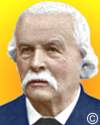
Born 6 Jul 1817; died 2 Nov 1905 at age 88. quotes
Rudolph Albert von Kölliker was a Swiss anatomist, physiologist and histologist who was one of the founders of embryology. His thorough microscopic work on tissues enabled him to be among the first to identify their structure. He showed that they were made up of cells, that did not freely come into being, but must develop from existing cells. Nerve fibres, he discovered, were elongated cells. In animal reproduction, he identified the cellular form of both the egg in the female, and the sperm from the male. Furthermore, he identified the formation of the sperm from the walls of the testes. In like fashion, pollen grains form from the cells of the anthers in flowers. Although he suspected the nucleus of the cell was involved in heredity, it was left to others coming later to recognize the function of the DNA molecules therein.«[Name also written as Koelliker.] more
Rudolph Albert von Kölliker was a Swiss anatomist, physiologist and histologist who was one of the founders of embryology. His thorough microscopic work on tissues enabled him to be among the first to identify their structure. He showed that they were made up of cells, that did not freely come into being, but must develop from existing cells. Nerve fibres, he discovered, were elongated cells. In animal reproduction, he identified the cellular form of both the egg in the female, and the sperm from the male. Furthermore, he identified the formation of the sperm from the walls of the testes. In like fashion, pollen grains form from the cells of the anthers in flowers. Although he suspected the nucleus of the cell was involved in heredity, it was left to others coming later to recognize the function of the DNA molecules therein.«[Name also written as Koelliker.] more
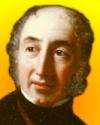
Born 6 Jul 1785; died 12 Aug 1865 at age 80.
English botanist who was the first director (1841) of the Royal Botanic Gardens at Kew, near London. In 1804, at age 19, he discovered a new moss and became a botanical book illustrator for Dawson Turner. In 1809, Sir Joseph Banks recruited Hooker for a mission to Iceland, though he lost his specimens, and almost his life, when the ship caught fire on the return voyage. After other expeditions, he beame a popular lecturer (1820) at Glasgow University where he established the Royal Botanical Institution of Glasgow. He was knighted in 1836. As director at Kew, from 1841, he expanded it from 11 to 300 acres, amassed specimens from the British Empire, added the Palm House (1848) and established Kew as a national botanic garden given to the nation. He was the father of Joseph Dalton Hooker.«
English botanist who was the first director (1841) of the Royal Botanic Gardens at Kew, near London. In 1804, at age 19, he discovered a new moss and became a botanical book illustrator for Dawson Turner. In 1809, Sir Joseph Banks recruited Hooker for a mission to Iceland, though he lost his specimens, and almost his life, when the ship caught fire on the return voyage. After other expeditions, he beame a popular lecturer (1820) at Glasgow University where he established the Royal Botanical Institution of Glasgow. He was knighted in 1836. As director at Kew, from 1841, he expanded it from 11 to 300 acres, amassed specimens from the British Empire, added the Palm House (1848) and established Kew as a national botanic garden given to the nation. He was the father of Joseph Dalton Hooker.«
A Sketch of the Life and Labours of Sir William Jackson Hooker, by Joseph Dalton Hooker. - book suggestion.
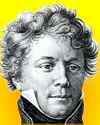
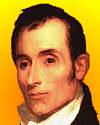
Born 6 Jul 1766; died 23 Aug 1813 at age 47. quotes
Scottish-American ornithologist and poet who left his homeland in 1794, aged 27, in search of a better life in America. Naturalist William Bartram sparked his interest in birds. By 1802, Wilson had resolved to author a book illustrating every North American bird. He travelled extensively to make paintings of the birds he observed. This pioneering work on North American birds grew to nine volumes of American Ornithology, (1808-1814), with illustrations of 268 species, of which 26 were new. As a founder of American ornithology he became one of the leading naturalists who also made the first census of breeding birds, corrected errors of taxonomy, and may have inspired Audubon’s later work when they met in 1810.« more
Scottish-American ornithologist and poet who left his homeland in 1794, aged 27, in search of a better life in America. Naturalist William Bartram sparked his interest in birds. By 1802, Wilson had resolved to author a book illustrating every North American bird. He travelled extensively to make paintings of the birds he observed. This pioneering work on North American birds grew to nine volumes of American Ornithology, (1808-1814), with illustrations of 268 species, of which 26 were new. As a founder of American ornithology he became one of the leading naturalists who also made the first census of breeding birds, corrected errors of taxonomy, and may have inspired Audubon’s later work when they met in 1810.« more
Alexander Wilson: Naturalist and Pioneer,: A biography, by Robert Cantwell. - book suggestion.
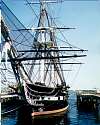
Born 6 Jul 1748; died 3 Feb 1824 at age 75.
American soldier and ship-builder during the Revolutionary War. His most notable vessel was the USS Constitution, one of several 44-gun frigates authorized by Congress in 1794 to protect commerce at sea. He served in the Revolutionary War, rising from first lieutenant to the rank of colonel, then became a well-known ship-builder at New Bedford, Mass. He built the whaler Rebecca there, launched in Mar 1785. It is said to be the first American whaler to round Cape Horn and return with a cargo of sperm oil from the Pacific. In 1794, he moved to Boston to build the USS Constitution ("Old Ironsides"). Its difficult launch began on 20 Sep 1797, but it was not afloat until 21 Oct. It remains the oldest commissioned warship afloat in the world.«
American soldier and ship-builder during the Revolutionary War. His most notable vessel was the USS Constitution, one of several 44-gun frigates authorized by Congress in 1794 to protect commerce at sea. He served in the Revolutionary War, rising from first lieutenant to the rank of colonel, then became a well-known ship-builder at New Bedford, Mass. He built the whaler Rebecca there, launched in Mar 1785. It is said to be the first American whaler to round Cape Horn and return with a cargo of sperm oil from the Pacific. In 1794, he moved to Boston to build the USS Constitution ("Old Ironsides"). Its difficult launch began on 20 Sep 1797, but it was not afloat until 21 Oct. It remains the oldest commissioned warship afloat in the world.«
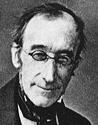

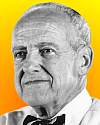

PET bottles
Nathaniel Convers Wyeth was an American chemist and inventor who created the PET plastic beverage bottle. His patent was asssigned to Du Pont for the “Biaxially Oriented Poly(Ethylene Terephthalate) Bottle” and described these bottles as “useful in bottling liquids under pressure such as ... carbonated beverages” which had “excellent strength properties, are impact resistant, and are capable of holding liquids under pressures as high as about 100 p.s.i.g.” (U.S. No. 3,733,309, issued 15 May 1973). It was the first plastic suitable to hold carbonated beverages that was safe enough to satisfy the food safety requirements. His other career contributions include development of polymer processing equipment, synthetic textile fibres, and other plastic products. Andrew Wyeth, distinguished American painter, was his brother.
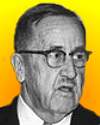
Died 6 Jul 1971 at age 82 (born 2 Jan 1889). quotes
American organic chemist who joined the faculty at the University of Illinois at Urbana in 1916, which he converted into the leading centre of organic chemistry in the U.S. and forged links with industry, notably with Du Pont. Adams worked out the chemical composition of various natural substances, including chaulmoogra oil (which is used in treating leprosy), gossypol (a toxic cottonseed pigment), marijuana, and many alkaloids. He also worked in stereochemistry and with platinum catalysts and the synthesis of medicinal compounds. His name is associated with chemical warfare agent Adamsite (diphenylamine chloroarsine) and the Adams catalyst (platinum oxide or palladium oxide, used for the hydrogenation of carbon-carbon double bonds).
American organic chemist who joined the faculty at the University of Illinois at Urbana in 1916, which he converted into the leading centre of organic chemistry in the U.S. and forged links with industry, notably with Du Pont. Adams worked out the chemical composition of various natural substances, including chaulmoogra oil (which is used in treating leprosy), gossypol (a toxic cottonseed pigment), marijuana, and many alkaloids. He also worked in stereochemistry and with platinum catalysts and the synthesis of medicinal compounds. His name is associated with chemical warfare agent Adamsite (diphenylamine chloroarsine) and the Adams catalyst (platinum oxide or palladium oxide, used for the hydrogenation of carbon-carbon double bonds).
Roger Adams: Scientist and Statesman, by D. Stanley Tarbell, Ann Tracy Tarbell. - book suggestion.
Died 6 Jul 1966 at age 65 (born 16 Feb 1901).
English chemist and inventor who (assisted by James Tennant Dickson) invented a new polyester, polyethylene terephthalate, (1941) from the the condensation reaction of ethylene glycol with terephthalic acid. They were chemists employed by the Calico Printer's Association of Manchester. The patent they filed for in Jul 1941 was delayed by WW II, but eventually registered in 1946. As a textile fibre, it was given the trade name Terylene when marketed in Britain (1947) by Imperial Chemical Industries (ICI), which bought the rights, and for whom Whinfield worked from 1947. When the U.S. rights were purchased and developed by Dupont in America it was known as Dacron. The material remains popular for wash and wear clothing.
English chemist and inventor who (assisted by James Tennant Dickson) invented a new polyester, polyethylene terephthalate, (1941) from the the condensation reaction of ethylene glycol with terephthalic acid. They were chemists employed by the Calico Printer's Association of Manchester. The patent they filed for in Jul 1941 was delayed by WW II, but eventually registered in 1946. As a textile fibre, it was given the trade name Terylene when marketed in Britain (1947) by Imperial Chemical Industries (ICI), which bought the rights, and for whom Whinfield worked from 1947. When the U.S. rights were purchased and developed by Dupont in America it was known as Dacron. The material remains popular for wash and wear clothing.
Died 6 Jul 1940 at age 60 (born 29 Jan 1880). quotes
Alexander (Alexandrovich) Goldenweiser was an Russian-American anthropologist whose analyses of cultural questions ranged widely, encompassing intellectual movements in psychology and psychoanalysis. In particular, he suggested that cultural diffusion is not a mechanical process but, rather, depends in part on the receptiveness of cultures to proffered traits. Goldenweiser did very little field work in anthropology - less than ten months on six trips to the Iroquois on the Grand River reservation in Ontario (1911-13) - and is said to have disliked it. He was, however, a stimulating and versatile popular lecturer. Theory and methodology were his major concern, with folk psychology, religion and magic, and social organization in the forefront of his topical interests.
Alexander (Alexandrovich) Goldenweiser was an Russian-American anthropologist whose analyses of cultural questions ranged widely, encompassing intellectual movements in psychology and psychoanalysis. In particular, he suggested that cultural diffusion is not a mechanical process but, rather, depends in part on the receptiveness of cultures to proffered traits. Goldenweiser did very little field work in anthropology - less than ten months on six trips to the Iroquois on the Grand River reservation in Ontario (1911-13) - and is said to have disliked it. He was, however, a stimulating and versatile popular lecturer. Theory and methodology were his major concern, with folk psychology, religion and magic, and social organization in the forefront of his topical interests.
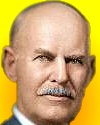
Died 6 Jul 1931 at age 75 (born 9 Mar 1856).
American inventor who discovered the abrasive carborundum, the second hardest substance (next to diamonds) and later perfected a method for making graphite. In his early career, he had worked at Thomas Edison’s Menlo Park (1880-84), but left to become an independent inventor. In 1891, he was experimenting with an electric furnace, trying to make diamonds from a molten mixture of powdered coke and clay. Instead of diamonds, he found he had made small, gritty, hard crystals almost as hard as diamonds. He determined that this crystalline substance was silicon carbide. It was very effective as an abrasive, which Acheson patented (28 Feb 1892) and called “carborundum.” He established the Carborundum Company (1894), to make grinding wheels, whetstones, and powdered abrasives.« more
American inventor who discovered the abrasive carborundum, the second hardest substance (next to diamonds) and later perfected a method for making graphite. In his early career, he had worked at Thomas Edison’s Menlo Park (1880-84), but left to become an independent inventor. In 1891, he was experimenting with an electric furnace, trying to make diamonds from a molten mixture of powdered coke and clay. Instead of diamonds, he found he had made small, gritty, hard crystals almost as hard as diamonds. He determined that this crystalline substance was silicon carbide. It was very effective as an abrasive, which Acheson patented (28 Feb 1892) and called “carborundum.” He established the Carborundum Company (1894), to make grinding wheels, whetstones, and powdered abrasives.« more
Edward Goodrich Acheson: inventor, scientist, industrialist; A biography, by Raymond Szymanowitz. - book suggestion.
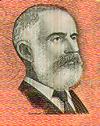
Died 6 Jul 1915 at age 65 (born 29 Jan 1850). quotes
Australian aeronaut and inventor best known for his invention of the box kite. Hargrave “flew” on 12 Nov 1894, by attaching himself to a huge four kite construction attached to the ground by piano wire. Due to their abilities to carry heavy payloads, steady flight, and capacity for high altitude flight, these kites have had many industrial and military uses in the past. Box kites were used until the 1930s to carry meteorological equipment for high altitude weather studies and by the Royal Air Force as sea rescue equipment to deliver radio aerials. Hargrave also made important studies of wing surfaces and worked with rotary engines and gliders. more
Australian aeronaut and inventor best known for his invention of the box kite. Hargrave “flew” on 12 Nov 1894, by attaching himself to a huge four kite construction attached to the ground by piano wire. Due to their abilities to carry heavy payloads, steady flight, and capacity for high altitude flight, these kites have had many industrial and military uses in the past. Box kites were used until the 1930s to carry meteorological equipment for high altitude weather studies and by the Royal Air Force as sea rescue equipment to deliver radio aerials. Hargrave also made important studies of wing surfaces and worked with rotary engines and gliders. more
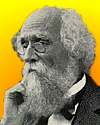
Died 6 Jul 1901 at age 78 (born 26 Feb 1823). quotes
American geologist who was a universalist in the scope of his scientific writings. As a founding member of John Muir's Sierra Club, he spoke fervently for broad preservation of California forests by government and wise use of timberlands in private enterprise. He was one of the earliest advocates of contractional theory of mountain formation. LeConte accepted the theory of evolution about 1874, becoming one of its leading proponents and a writer able to reconciler the idea with religious thought. His Sight: An Exposition of the Principles of Monocular and Binocular Vision (1881) was the first treatise on physiological optics written in the U.S. He was an ardent camper, and his death occurred during a trip in the Yosemite Valley. He was the younger brother of John LeConte.
American geologist who was a universalist in the scope of his scientific writings. As a founding member of John Muir's Sierra Club, he spoke fervently for broad preservation of California forests by government and wise use of timberlands in private enterprise. He was one of the earliest advocates of contractional theory of mountain formation. LeConte accepted the theory of evolution about 1874, becoming one of its leading proponents and a writer able to reconciler the idea with religious thought. His Sight: An Exposition of the Principles of Monocular and Binocular Vision (1881) was the first treatise on physiological optics written in the U.S. He was an ardent camper, and his death occurred during a trip in the Yosemite Valley. He was the younger brother of John LeConte.
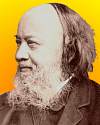
Died 6 Jul 1890 at age 90 (born 24 Jan 1800).
English physician and social reformer who devoted his life to sanitary reform in Britain. By 1848 Chadwick had become Sanitary Commissioner of London, and was very influential in the city's approach towards cholera. He believed that filth in rivers was less dangerous than filth in sewers. As Commissioner, he had the power to have sewers regularly flushed into the River Thames. This policy inadvertently contributed to the spread of cholera by water purveyors which had their intakes in the polluted areas of the river. Contrary to Dr. John Snow, he was a strong believer in the theory that epidemics were generated spontaneously from dirt, and that basic sanitation rather than specific avoidance of cholera germs would control the disease.
English physician and social reformer who devoted his life to sanitary reform in Britain. By 1848 Chadwick had become Sanitary Commissioner of London, and was very influential in the city's approach towards cholera. He believed that filth in rivers was less dangerous than filth in sewers. As Commissioner, he had the power to have sewers regularly flushed into the River Thames. This policy inadvertently contributed to the spread of cholera by water purveyors which had their intakes in the polluted areas of the river. Contrary to Dr. John Snow, he was a strong believer in the theory that epidemics were generated spontaneously from dirt, and that basic sanitation rather than specific avoidance of cholera germs would control the disease.
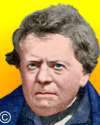
Died 6 Jul 1854 at age 65 (born 16 Mar 1789). quotes
German physicist who showed by experiment (1825) that there are no “perfect” electrical conductors. All conductors have some resistance. He stated the famous Ohm's law (1826), now written as: “If the given temperature remains constant, the current flowing through certain conductors is proportional to the potential difference (voltage) across it.” or V=iR. more
German physicist who showed by experiment (1825) that there are no “perfect” electrical conductors. All conductors have some resistance. He stated the famous Ohm's law (1826), now written as: “If the given temperature remains constant, the current flowing through certain conductors is proportional to the potential difference (voltage) across it.” or V=iR. more

Died 6 Jul 1851 at age 48 (born 9 Jul 1802). quotes
American inventor of what was probably the first commercially successful electric motor, which he used with great ingenuity to power a number of established inventions. Though several other inventors had experimented with motors, Davenport was the first to secure a US patent (No. 132 on 25 Feb 1837) for his direct current motor. He incorporated the concept of the electromagnet invented by Joseph Henry in a way that produced a rotary motion using his own idea of a commutator and brushes to control the direction of current flow. He used a motor he built to power shop machinery, and also built the first electric model railroad car.
American inventor of what was probably the first commercially successful electric motor, which he used with great ingenuity to power a number of established inventions. Though several other inventors had experimented with motors, Davenport was the first to secure a US patent (No. 132 on 25 Feb 1837) for his direct current motor. He incorporated the concept of the electromagnet invented by Joseph Henry in a way that produced a rotary motion using his own idea of a commutator and brushes to control the direction of current flow. He used a motor he built to power shop machinery, and also built the first electric model railroad car.
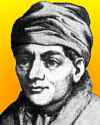
Died 6 Jul 1476 at age 40 (born 6 Jun 1436).
German astronomer and mathematician who was chiefly responsible for the revival and advancement of trigonometry in Europe. His book De triangulis omnimodis (1464) is a systematic account of methods for solving triangles. In Jan 1472 he made observations of a comet which were accurate enough to allow it to be identified with Halley's comet 210 years later (being three returns of the 70 year period comet). He also observed several eclipses of the Moon. His interest in the motion of the Moon led him to make the important observation that the method of lunar distances could be used to determine longitude at sea. However, instruments of the time lacked the necessary accuracy to use the method at sea.
German astronomer and mathematician who was chiefly responsible for the revival and advancement of trigonometry in Europe. His book De triangulis omnimodis (1464) is a systematic account of methods for solving triangles. In Jan 1472 he made observations of a comet which were accurate enough to allow it to be identified with Halley's comet 210 years later (being three returns of the 70 year period comet). He also observed several eclipses of the Moon. His interest in the motion of the Moon led him to make the important observation that the method of lunar distances could be used to determine longitude at sea. However, instruments of the time lacked the necessary accuracy to use the method at sea.
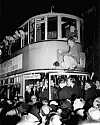
In 1952, the last London tram, No. 1951, ceased operation when it arrived outside New Cross depot after a 5-mile midnight run on route 40 from Woolwich. Large crowds witnessed its travel along the route. Electric trams had operated in London since the early 1900s. By 1931, they came to be regarded as too noisy and dangerous, and they were to be replaced by electric trolleybuses which did not need tracks.«
In 1920, a radio compass was used for first time for aircraft navigation. In a test of the radio compass as an aid to navigation, an F5L left Hampton Roads and flew directly to the battleship Ohio (BB 12), 94 miles at sea in a position unknown to the pilot. Without landing, the plane made the return trip to Hampton Roads, this time navigating by signals from Norfolk.
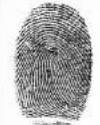
In 1905, John Walker’s fingerprints were the first ones to be exchanged by police officials in Europe and America. Law enforcement units in London and St. Louis, MO. completed the exchange.
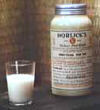
In 1886, Horlick's of Wisconsin offered the first malted milk to the public.
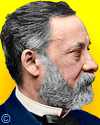
In 1885, French scientist Louis Pasteur and his colleagues injected the first of 14 daily doses of rabbit spinal cord suspensions containing progressively inactivated rabies virus into 9-year-old Joseph Meister, who had been severely bitten by a rabid dog 2 days before. The immunization was successful. This was the beginning of the modern era of immunization, which had been presaged by Edward Jenner nearly 100 years earlier. Pasteur's rabies immunization procedure was rapidly adopted throughout the world. The boy grew up and became caretaker of the Pasteur Institute until age 64.
more
The Private Science of Louis Pasteur, by Gerald L. Geison. - book suggestion.

In 1858, an Abington, Mass., shoemaker named Lyman Blake patented the first shoe-sole machine. His invention revolutionized the shoe industry and helped establish Plymouth County as the nation's shoe manufacturing capital. Factories were built in Brockton, Rockland, Abington and Hanover. During the Civil War, the area grew rich shodding the Union Army. (Born 28 Aug 1809, Chicester?)




