
Born 28 Nov 1950.
Russell Alan Hulse is an American physicist who was awarded the 1993 Nobel Prize in Physics (with Joseph H. Taylor Jr.) for their discovery (1974) of the first binary pulsar, PSR B1913+16. In this system, a pulsar and a companion star orbit each other, apart by only a few times the Earth-Moon distance. Their observations provided the first indirect evidence for gravitational waves, confirming a key prediction of Albert Einstein’s general theory of relativity. The pulsar system’s orbital decay matched theoretical predictions for energy loss via gravitational radiation, a landmark in astrophysics. Their work established pulsars as precise cosmic laboratories for testing fundamental physics and deepened understanding of neutron stars and gravitational interactions in extreme conditions.«
Russell Alan Hulse is an American physicist who was awarded the 1993 Nobel Prize in Physics (with Joseph H. Taylor Jr.) for their discovery (1974) of the first binary pulsar, PSR B1913+16. In this system, a pulsar and a companion star orbit each other, apart by only a few times the Earth-Moon distance. Their observations provided the first indirect evidence for gravitational waves, confirming a key prediction of Albert Einstein’s general theory of relativity. The pulsar system’s orbital decay matched theoretical predictions for energy loss via gravitational radiation, a landmark in astrophysics. Their work established pulsars as precise cosmic laboratories for testing fundamental physics and deepened understanding of neutron stars and gravitational interactions in extreme conditions.«
Pulsars, by R.N. Manchester. - book suggestion.

Born 28 Nov 1936.
American psychologist who is Harvard's first professor in Gender Studies (1997). Her research questions that most traditional theories of human psychological development studied boys and men. She developed a theory based on the experiences of girls and women. In psychological tests of moral judgment, for example, girls were often graded as deficient. But Gilligan demonstrated in her landmark 1982 book, In a Different Voice, was that was beacause girls place more emphasis on feelings and relationships than on objective standards of justice, and boys tend to do the opposite. Before she published her studies, researchers sometimes dropped women from their samples because the women's different responses complicated the research.
American psychologist who is Harvard's first professor in Gender Studies (1997). Her research questions that most traditional theories of human psychological development studied boys and men. She developed a theory based on the experiences of girls and women. In psychological tests of moral judgment, for example, girls were often graded as deficient. But Gilligan demonstrated in her landmark 1982 book, In a Different Voice, was that was beacause girls place more emphasis on feelings and relationships than on objective standards of justice, and boys tend to do the opposite. Before she published her studies, researchers sometimes dropped women from their samples because the women's different responses complicated the research.
(EB)
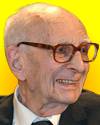
Born 28 Nov 1908; died 30 Oct 2009 at age 100. quotes
French social anthropologist and leading exponent of structuralism, a name applied to the analysis of cultural systems (e.g., kinship and mythical systems) in terms of the structural relations among their elements. Lévi-Strauss regarded language as an essential common denominator underlying cultural phenomena, a view that forms the basis for his theories concerning the relationships of such societal elements as religion, myth, and kinship. His books include the two-volume Structural Anthropology (1958; 1973). Structuralism has influenced not only 20th-century social science but also the study of philosophy, comparative religion, literature, and film.
French social anthropologist and leading exponent of structuralism, a name applied to the analysis of cultural systems (e.g., kinship and mythical systems) in terms of the structural relations among their elements. Lévi-Strauss regarded language as an essential common denominator underlying cultural phenomena, a view that forms the basis for his theories concerning the relationships of such societal elements as religion, myth, and kinship. His books include the two-volume Structural Anthropology (1958; 1973). Structuralism has influenced not only 20th-century social science but also the study of philosophy, comparative religion, literature, and film.
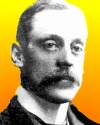
Born 28 Nov 1858; died 30 Sep 1940 at age 81.
English metallurgist (Baronet) who developed manganese steel, an alloy of exceptional durability that found uses in the construction of railroad rails and rock-crushing machinery. Hadfield discovered manganese steel in 1882. It was hardened by quenching it in water from a temperature of a thousand degrees centigrade. The hard steel was to be used in the manufacture of tram wheels. He patented his work in 1883-4 but continued to carry out further experiments before publicising his findings in 1888, which were supported by a lecture tour. The first World War provided new markets for manganese steel: spur armour plate and shells, tank treads and soldier's helmets. By 1919, Hadfields Steel Foundry Co. Ltd. were Sheffield's biggest employers.[DSB and EB give birth date as 28 Nov 1858. Current Bio. gives 29 Nov 1858.]
English metallurgist (Baronet) who developed manganese steel, an alloy of exceptional durability that found uses in the construction of railroad rails and rock-crushing machinery. Hadfield discovered manganese steel in 1882. It was hardened by quenching it in water from a temperature of a thousand degrees centigrade. The hard steel was to be used in the manufacture of tram wheels. He patented his work in 1883-4 but continued to carry out further experiments before publicising his findings in 1888, which were supported by a lecture tour. The first World War provided new markets for manganese steel: spur armour plate and shells, tank treads and soldier's helmets. By 1919, Hadfields Steel Foundry Co. Ltd. were Sheffield's biggest employers.[DSB and EB give birth date as 28 Nov 1858. Current Bio. gives 29 Nov 1858.]

Born 28 Nov 1854; died 30 Jan 1945 at age 90.
Austrian botanist, pioneer in the development of physiological plant anatomy, and the first person to study plant tissue culture (1921). In Physiologische Pflanzenanatomie (1884; "Physiological Plant Anatomy") he distinguished 12 tissue systems based on function (mechanical, absorptive, photosynthetic, etc.) Although his system was not accepted by other botanists, the analysis of the relations between structure and environment has been useful in the study of plant adaptations to different habitats. In 1902, he released the hypothesis of "totipotency" - that even the smallest unit of a cell is capable of forming a complete plant in the future. In 1913, Haberlandt discovered that a compound found in phloem had the ability to stimulate cell division.
Austrian botanist, pioneer in the development of physiological plant anatomy, and the first person to study plant tissue culture (1921). In Physiologische Pflanzenanatomie (1884; "Physiological Plant Anatomy") he distinguished 12 tissue systems based on function (mechanical, absorptive, photosynthetic, etc.) Although his system was not accepted by other botanists, the analysis of the relations between structure and environment has been useful in the study of plant adaptations to different habitats. In 1902, he released the hypothesis of "totipotency" - that even the smallest unit of a cell is capable of forming a complete plant in the future. In 1913, Haberlandt discovered that a compound found in phloem had the ability to stimulate cell division.
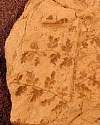
Born 28 Nov 1854; died 29 Jan 1934 at age 79.
English paleobotanist and leading authority of his time on the structure of fossil plants, one of those who laid the foundations of paleobotany. After studying for his PhD (1882) under German botanist Julius Von Sachs at the University Würzburg, he returned to England and took up teaching. He conducted experiments in the Jodrell Laboratory in Kew Gardens, where he became its honorary keeper (1892-1906). In collaboration with W.C. Williamson, he wrote three papers on fossil-plant morphology (1894-95). Scott continued writing papers after Williamson's death and in which he described many otherwise unknown fossil plants. He wrote the classic Studies in Fossil Botany, which greatly popularized the subject.[Image: Lyginopteris bermudensiformis]
English paleobotanist and leading authority of his time on the structure of fossil plants, one of those who laid the foundations of paleobotany. After studying for his PhD (1882) under German botanist Julius Von Sachs at the University Würzburg, he returned to England and took up teaching. He conducted experiments in the Jodrell Laboratory in Kew Gardens, where he became its honorary keeper (1892-1906). In collaboration with W.C. Williamson, he wrote three papers on fossil-plant morphology (1894-95). Scott continued writing papers after Williamson's death and in which he described many otherwise unknown fossil plants. He wrote the classic Studies in Fossil Botany, which greatly popularized the subject.[Image: Lyginopteris bermudensiformis]
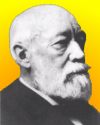
Born 28 Nov 1837; died 10 May 1920 at age 82.
American inventor and manufacturer who was a pioneer of the plastics industry. He discovered the process for making celluloid. His other inventions included a water-purification system, a sugar-cane mill, a machine for straightening steel rods, a multi-stitch sewing-machine, and a widely used roller bearing. In the 1860s he became interested in finding a substitute for the ivory used to make billiard balls. With his brother Isaac, he improved the techniques of molding pyroxylin (a partially nitrated cellulose) with camphor by dissolving in an alcohol and ether mixture to make it softer and more malleable. This he called "Celluloid," a name trademarked on 14 Jan 1873. It was the first synthetic plastic, for which he took out a patent in 1870. Later in life he had over 200 patents.
American inventor and manufacturer who was a pioneer of the plastics industry. He discovered the process for making celluloid. His other inventions included a water-purification system, a sugar-cane mill, a machine for straightening steel rods, a multi-stitch sewing-machine, and a widely used roller bearing. In the 1860s he became interested in finding a substitute for the ivory used to make billiard balls. With his brother Isaac, he improved the techniques of molding pyroxylin (a partially nitrated cellulose) with camphor by dissolving in an alcohol and ether mixture to make it softer and more malleable. This he called "Celluloid," a name trademarked on 14 Jan 1873. It was the first synthetic plastic, for which he took out a patent in 1870. Later in life he had over 200 patents.
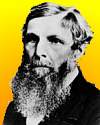
Born 28 Nov 1810; died 4 May 1879 at age 68.
English engineer and naval architect who influenced ship design by developing a method of studying scale models propelled through water and applying the information thus obtained to full-size ships. His first job was as a civil engineer, working for the British railway system. It was not until a few years later that Froude became a naval engineer. He discovered the laws by which the performance of a model in a towing-tank could be extrapolated to the full-size ship when both have the same geometrical shape. This laboratory work was of great concern to the British navy, to maximize the speed and efficiency of their ships. He developed the bilge keel and developed the Froude number as a measure of the effect of gravity on fluid motion.
English engineer and naval architect who influenced ship design by developing a method of studying scale models propelled through water and applying the information thus obtained to full-size ships. His first job was as a civil engineer, working for the British railway system. It was not until a few years later that Froude became a naval engineer. He discovered the laws by which the performance of a model in a towing-tank could be extrapolated to the full-size ship when both have the same geometrical shape. This laboratory work was of great concern to the British navy, to maximize the speed and efficiency of their ships. He developed the bilge keel and developed the Froude number as a measure of the effect of gravity on fluid motion.
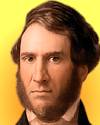
Born 28 Nov 1805; died 12 Oct 1852 at age 46.
American traveller and archaeologist whose expeditions to Maya ruins in Central America and Mexico (1839–40; 1841–42) helped create the archaeology of Middle America. In 1839, while officially traveling as a lawyer on a U.S. State Department mission, he set out to investigate the little-known remnants of the ancient Maya. With architect Frederick Catherwood—whose precise drawings enriched Stephens’s books—he explored sites across the region. In Incidents of Travel in Central America, Chiapas, and Yucatán, he recounted discovering the ruined city of Copán. It captivated him so deeply that he purchased the site, which is now under Honduran government stewardship.«
American traveller and archaeologist whose expeditions to Maya ruins in Central America and Mexico (1839–40; 1841–42) helped create the archaeology of Middle America. In 1839, while officially traveling as a lawyer on a U.S. State Department mission, he set out to investigate the little-known remnants of the ancient Maya. With architect Frederick Catherwood—whose precise drawings enriched Stephens’s books—he explored sites across the region. In Incidents of Travel in Central America, Chiapas, and Yucatán, he recounted discovering the ruined city of Copán. It captivated him so deeply that he purchased the site, which is now under Honduran government stewardship.«
Jungle of Stone: The Extraordinary Journey of John L. Stephens and Frederick Catherwood, and the Discovery of the Lost Civilization of the Maya, by William Carls. - book suggestion.
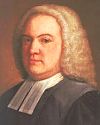
Born 28 Nov 1700; died 2 Sep 1764 at age 63.
English mathematician and astronomer who was Britain’s fourth Astronomer Royal (A.R.), though for only two years before his death. From 1736, Bliss was rector of St Ebbe’s, Oxford, and in 1742 succeeded Edmond Halley as Savilian Professor of Geometry. Bliss sometimes assisted James Bradley, the third A.R., and in 1761 observed the transit of Venus while Bradley was ill. Succeeding him in 1762, Bliss published observations of the annular eclipse of 1 Apr 1764. He shared a strong interest in improving precision clocks, with London clockmakers George Graham and John Ellicott. Bliss collaborated on astronomical problems with the Earl of Macclesfield, including meridian observations, at Shirburn Castle and Greenwich, of a comet approaching the Sun around 1744.«
English mathematician and astronomer who was Britain’s fourth Astronomer Royal (A.R.), though for only two years before his death. From 1736, Bliss was rector of St Ebbe’s, Oxford, and in 1742 succeeded Edmond Halley as Savilian Professor of Geometry. Bliss sometimes assisted James Bradley, the third A.R., and in 1761 observed the transit of Venus while Bradley was ill. Succeeding him in 1762, Bliss published observations of the annular eclipse of 1 Apr 1764. He shared a strong interest in improving precision clocks, with London clockmakers George Graham and John Ellicott. Bliss collaborated on astronomical problems with the Earl of Macclesfield, including meridian observations, at Shirburn Castle and Greenwich, of a comet approaching the Sun around 1744.«

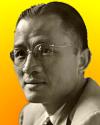
Died 28 Nov 1987 at age 74 (born 21 Apr 1913).
Chinese-American biochemist and experimental endocrinologist who with his co-workers isolated in pure form six of the eight hormones known to be secreted by the anterior pituitary gland. Located at the base of the brain, its homones govern reproduction, growth, maturation, and metabolism. Among the hormones Li isolated are ACTH (the adrenocorticotropic hormone and adrenal booster, used in the treatment of arthritis) and HGH (the human growth hormone or somatotropin, which is vital for human growth). He also discovered ß-endorphin, a naturally secreted painkiller (1976) and was first to synthesize the insulin-like growth factor 1, which promotes the growth of cartilage and bones. He was the first to synthesize HGH, in 1970.
Chinese-American biochemist and experimental endocrinologist who with his co-workers isolated in pure form six of the eight hormones known to be secreted by the anterior pituitary gland. Located at the base of the brain, its homones govern reproduction, growth, maturation, and metabolism. Among the hormones Li isolated are ACTH (the adrenocorticotropic hormone and adrenal booster, used in the treatment of arthritis) and HGH (the human growth hormone or somatotropin, which is vital for human growth). He also discovered ß-endorphin, a naturally secreted painkiller (1976) and was first to synthesize the insulin-like growth factor 1, which promotes the growth of cartilage and bones. He was the first to synthesize HGH, in 1970.
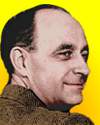
Died 28 Nov 1954 at age 53 (born 29 Sep 1901). quotes
Italian-American physicist who was awarded the Nobel Prize for physics in 1938 as one of the chief architects of the nuclear age. He was the last of the double-threat physicists: a genius at creating both esoteric theories and elegant experiments. In 1933, he developed the theory of beta decay, postulating that the newly-discovered neutron decaying to a proton emits an electron and a particle he called a neutrino. Developing theory to explain this decay later resulted in finding the weak interaction force. He developed the mathematical statistics required to clarify a large class of subatomic phenomena, discovered neutron-induced radioactivity, and directed the first controlled chain reaction involving nuclear fission.
Italian-American physicist who was awarded the Nobel Prize for physics in 1938 as one of the chief architects of the nuclear age. He was the last of the double-threat physicists: a genius at creating both esoteric theories and elegant experiments. In 1933, he developed the theory of beta decay, postulating that the newly-discovered neutron decaying to a proton emits an electron and a particle he called a neutrino. Developing theory to explain this decay later resulted in finding the weak interaction force. He developed the mathematical statistics required to clarify a large class of subatomic phenomena, discovered neutron-induced radioactivity, and directed the first controlled chain reaction involving nuclear fission.
Enrico Fermi, Physicist, by Emilio Segre. - book suggestion.
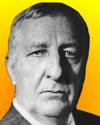
Died 28 Nov 1938 at age 67 (born 22 Jun 1871). quotes
British-born U.S. psychologist influential in establishing experimental and physiological psychology. As one of the foremost psychologists of all English-speaking countries, he did much to stimulate widespread study of the basis of social behaviour. He contributed significantly to more branches and departments of psychology than anyone else writing in English. He was the exponent of hormic psychology, the central idea being that there is an end or purpose which goads us to action, without any real knowledge of its nature, and often without benefit or even thought of pleasure. Human progress can only be determined in terms of "horme" or "drive". He theorized that human behavior is determined by both instinctive and intentional strivings.
British-born U.S. psychologist influential in establishing experimental and physiological psychology. As one of the foremost psychologists of all English-speaking countries, he did much to stimulate widespread study of the basis of social behaviour. He contributed significantly to more branches and departments of psychology than anyone else writing in English. He was the exponent of hormic psychology, the central idea being that there is an end or purpose which goads us to action, without any real knowledge of its nature, and often without benefit or even thought of pleasure. Human progress can only be determined in terms of "horme" or "drive". He theorized that human behavior is determined by both instinctive and intentional strivings.
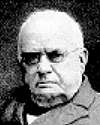
Died 28 Nov 1914 at age 90 (born 27 Mar 1824).
German physicist who was a pioneer in electrochemical research. His early investigations were on the allotropes (different physical forms) of phosphorus and selenium. He was the first to compute the electricity- carrying capacity of charged atoms and molecules (ions), an important factor in understanding electrochemical reactions. He investigated the migration of ions during electrolysis (1853-59), developed expressions for and measured transport numbers. In 1869, he published his laws governing the migration of ions. For his studies of electrical phenomena in rarefied gases, the Hittorf tube has been named for him. Hittorf determined a number of properties of cathode rays, including (before Crookes) the deflection of the rays by a magnet.
German physicist who was a pioneer in electrochemical research. His early investigations were on the allotropes (different physical forms) of phosphorus and selenium. He was the first to compute the electricity- carrying capacity of charged atoms and molecules (ions), an important factor in understanding electrochemical reactions. He investigated the migration of ions during electrolysis (1853-59), developed expressions for and measured transport numbers. In 1869, he published his laws governing the migration of ions. For his studies of electrical phenomena in rarefied gases, the Hittorf tube has been named for him. Hittorf determined a number of properties of cathode rays, including (before Crookes) the deflection of the rays by a magnet.
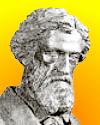
Died 28 Nov 1894 at age 78 (born 16 Sep 1816). quotes
British archaeologist who excavated sites in southwestern Turkey and disinterred the remains of one of the seven wonders of the ancient world, the Mausoleum of Halicarnassus (at present-day Bodrum, Turkey). Newton joined staff of British Museum in 1840. He helped to establish systematic methods for archaeology. As the first keeper (curator) of Greek and Roman antiquities at the British Museum (1861-85), London, he greatly enriched its collection by making outstanding acquisitions. Along with the chief remains from Halicarnassus, he brought to the museum the bronze Delphian serpent from Istanbul, a sculpture of the Greek goddess Demeter, the colossal lion from Cnidus, and statues from the road to Didyma (Branchidae).
British archaeologist who excavated sites in southwestern Turkey and disinterred the remains of one of the seven wonders of the ancient world, the Mausoleum of Halicarnassus (at present-day Bodrum, Turkey). Newton joined staff of British Museum in 1840. He helped to establish systematic methods for archaeology. As the first keeper (curator) of Greek and Roman antiquities at the British Museum (1861-85), London, he greatly enriched its collection by making outstanding acquisitions. Along with the chief remains from Halicarnassus, he brought to the museum the bronze Delphian serpent from Istanbul, a sculpture of the Greek goddess Demeter, the colossal lion from Cnidus, and statues from the road to Didyma (Branchidae).
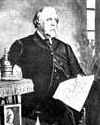
Died 28 Nov 1893 at age 79 (born 23 Jan 1814).
British army officer and archaeologist who excavated many sites in India, including Sarnath and Sanchi. He retired (1861) as a major general after 30 years of service with the Bengal engineers and then was the first director (1861–65, 1870–85) of the Indian Archaeological Survey. In the 13th century, India's flourishing network of temples and monasteries was wiped out by invading armies, overgrown by forests, buried in humus, and forgotten. When Cunningham made it his mission to locate and dig them up again, in many cases all he had to go on were the accounts written by Fa Hien and Huien Tsiang and the occasional tip of an Ashokan pillar protruding from the earth. He wrote about the tradition of Kangra plastic surgery operations.
British army officer and archaeologist who excavated many sites in India, including Sarnath and Sanchi. He retired (1861) as a major general after 30 years of service with the Bengal engineers and then was the first director (1861–65, 1870–85) of the Indian Archaeological Survey. In the 13th century, India's flourishing network of temples and monasteries was wiped out by invading armies, overgrown by forests, buried in humus, and forgotten. When Cunningham made it his mission to locate and dig them up again, in many cases all he had to go on were the accounts written by Fa Hien and Huien Tsiang and the occasional tip of an Ashokan pillar protruding from the earth. He wrote about the tradition of Kangra plastic surgery operations.
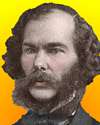
Died 28 Nov 1878 at age 61 (born 18 Apr 1817). quotes
English philosopher and naturalist who is most remembered for his literary work contributing articles to reviews (1840-49) and for a couple of years was editor of the Fortnightly Review. Although without formal training, he later took an interest in science, especially physiology and pyschology, which he popularized through his books, including Physiology of Common Life. He separated from his wife in 1854, to live with Mary Ann Evans (pen-name George Eliot) as her common-law (unmarried) husband.«
English philosopher and naturalist who is most remembered for his literary work contributing articles to reviews (1840-49) and for a couple of years was editor of the Fortnightly Review. Although without formal training, he later took an interest in science, especially physiology and pyschology, which he popularized through his books, including Physiology of Common Life. He separated from his wife in 1854, to live with Mary Ann Evans (pen-name George Eliot) as her common-law (unmarried) husband.«
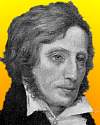
Died 28 Nov 1876 at age 84 (born 28 Feb 1792). quotes
Karl Ernst Ritter von Baer, Edler von Huthorn was a German-Russian embryologist who discovered the mammalian egg (1827) and the notochord. He established the new science of comparative embryology alongside comparative anatomy with the publication of two landmark volumes (in 1828 and 1837) covering the range of existing knowledge of the prebirth developments of vertebrates. He showed that mammalian eggs were not the follicles of the ovary but microscopic particles inside the follicles. He described the development of the embryo from layers of tissue, which he called germ layers, and demonstrated similarities in the embryos of different species of vertebrates. He was also a pioneer in geography, ethnology, and physical anthropology.EB gives b. 29 Feb 1792. O.S. dates 17 Feb 1792 – 16 Nov 1876. (a.k.a. Charles de Baer)
Karl Ernst Ritter von Baer, Edler von Huthorn was a German-Russian embryologist who discovered the mammalian egg (1827) and the notochord. He established the new science of comparative embryology alongside comparative anatomy with the publication of two landmark volumes (in 1828 and 1837) covering the range of existing knowledge of the prebirth developments of vertebrates. He showed that mammalian eggs were not the follicles of the ovary but microscopic particles inside the follicles. He described the development of the embryo from layers of tissue, which he called germ layers, and demonstrated similarities in the embryos of different species of vertebrates. He was also a pioneer in geography, ethnology, and physical anthropology.EB gives b. 29 Feb 1792. O.S. dates 17 Feb 1792 – 16 Nov 1876. (a.k.a. Charles de Baer)
Autobiography of Dr Karl Ernest Von Baer, by Karl Ernst von Baer. - book suggestion.
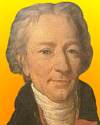
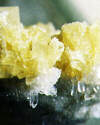
(also called Déodat De Gratet De Dolomieu) was a French geologist and mineralogist after whom the mineral dolomite was named. A member of the order of Malta since infancy, at age 19 he was sentenced to death for killing a brother knight in a duel, but was pardoned. Following a study of the Alps (1789–90), he described dolomite (1791) The rock, which gave its name to the Dolomite Mountains where it was found, has crystals of calcium and magnesium carbonate, generally white or pinks. As a member of Napoleon's expedition to Egypt (1798), Dolomieu was captured on the way home and imprisoned at Messina. During his imprisonment he wrote his main treatise on minerals (1801), on the margins of a Bible.[Image right: dolomite][DSB gives date of death as 28 (16? 29?) Nov 1801. EB gives 26 Nov 1801.]
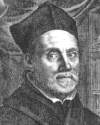
Died 28 Nov 1680 at age 79 (born 2 May 1601).
German Jesuit priest and scholar, sometimes called the last Renaissance man. Kircher's prodigious research activity spanned a variety of disciplines including geography, astronomy, physics, mathematics, language, medicine, and music. He made an early, though unsuccessful attempt to decipher hieroglyphics of the Coptic language. During the pursuit of experimental knowledge, he once had himself lowered into the crater of Vesuvius to observe its features soon after an eruption. He made one of the first natural history collections. Kircher studied animal luminescence, writing two chapters of his book Ars Magna Lucis et Umbrae to bioluminescence, and debunked the idea that that an extract made from fireflies could be used to light houses.[DSB gives date of death 28 Nov 1680. EB gives 27 Nov 1680.]
German Jesuit priest and scholar, sometimes called the last Renaissance man. Kircher's prodigious research activity spanned a variety of disciplines including geography, astronomy, physics, mathematics, language, medicine, and music. He made an early, though unsuccessful attempt to decipher hieroglyphics of the Coptic language. During the pursuit of experimental knowledge, he once had himself lowered into the crater of Vesuvius to observe its features soon after an eruption. He made one of the first natural history collections. Kircher studied animal luminescence, writing two chapters of his book Ars Magna Lucis et Umbrae to bioluminescence, and debunked the idea that that an extract made from fireflies could be used to light houses.[DSB gives date of death 28 Nov 1680. EB gives 27 Nov 1680.]
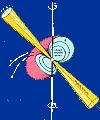
In 1967, the first pulsating radio source (pulsar) was detected by an alert graduate student, Jocelyn Bell, then working under the direction of Prof. Anthony Hewish at the Mullard Radio Astronomy Observatory, Cambridge, England. A special radio telescope was used, with 2,048 antennae arrayed across 4.4 acres. By 13 Nov 1998, one thousand had been found. The pulsing of the radiation has clock-like precision , up to 1,000 times per second. A pulsar is believed to be a neutron star with exceedingly rapid spin. Rotational periods range from 1.57 milliseconds to 5.1 sec. Pulsars prompted studies of quantum-degenerate fluids, relativistic gravity and interstellar magnetic fields. Similar behaviour of a star flashing in the optical spectrum was detected on 18 Jan 1968.Optical pulsars remain very rare.«

(NASA)
In 1964, Mariner 4 was launched from Cape Kennedy, Florida. Making its Mars fly-by on 14 Jul 1965, this was the first satellite to transmit a close-up photograph of Mars. Flying as close as 9,846 km (6,118 miles), Mariner 4 revealed Mars to have a cratered, rust-colored surface, with signs on some parts of the planet that liquid water had once etched its way into the soil. It had various field and particle sensors and detectors, and a television camera, which took 22 television pictures covering about 1% of the planet. Initially stored on a 4-track tape recorder, these pictures took four days to transmit to Earth, showing the geologic and atmospheric processes at work on the planet over the eons. It continued in solar orbit for about 3 years.
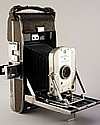
In 1948, the Polaroid Land Camera first went on sale, at a Boston department store. The 40 series, model 95 roll film camera went on sale for $89.75. This first model was sold through 1953, and was the first commercially successful self-deleveloping camera system. A sepia-coloured photograph took about one minute to produce. Edwin H. Land had previously demonstrated his invention of instant photography at a meeting of the Optical Society of America on 2 Feb 1947. His first commercial success came in 1939 with his invention of Polaroid filters for lenses in products such as ski goggles, sunglasses and slip-on sunglasses for optical glasses.
Insisting On The Impossible: The Life Of Edwin Land, by Victor K. McElheny. - book suggestion.
In 1930, after a sandstorm in Morocco, a mud rain fell in Paris and all over northern France. Yellow sand fell in Spain.

In 1922, the first skywriting in the U.S. was demonstrated over Times Square, New York City, by Capt. Cyril Turner of the Royal Air Force. Flying at an altitude of 10,000 feet, he wrote letters in white smoke a half-mile high. The smoke was formed by oil, controlled by levers, dropped on the plane's hot exhaust pipe. The message in the sky was, Hello, U.S.A. Call Vanderbilt 7200. (Turner first used skywriting for advertising for a newspaper's name, Daily Mail,over England in May 1922.) In New York, Major Jack Savage was trying to sell this advertising idea to a skeptical George W. Hill, head of the American Tobacco Co. Savage had invited Hill to the Vanderbilt Hotel. Hill was convinced by the 47,000 telephone calls in less than 3 hours.
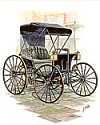
1893 Duryea
In 1895, Frank Duryea won the first American Automobile Race in Chicago, sponsored by the Chicago Times-Herald. With his brother Charles, Duryea invented the first automobile that was actually built and operated in the United States. On the day of the race, at 8:55 a.m., six “motocycles” left Chicago's Jackson Park for a 54 mile race to Evanston, Illinois and back through the snow. Duryea's Number 5 won the race in just over 10 hours averaging about 7.3 mph and was awarded a prize of $2,000. Following their victory in the race, the Duryeas manufactured thirteen copies of the Chicago car, and J. Frank Duryea developed the "Stevens-Duryea," an expensive limousine, which remained in production into the 1920s.
more
Carriages Without Horses: J. Frank Duryea and the Birth of the American Automobile Industry, by Richard P. Scharchburg. - book suggestion.
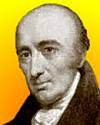
In 1828, the Bakerian Lecture at the Royal Society in London, was presented by William Hyde Wollaston wherein he described the method of powder metallurgy he had devised in 1805 to produce platinum from its ore. This provided the means to produce the metal in a malleable and ductile form, though he had kept the process a commercial secret, and had made a comfortable living providing the metal in a useful form. He took a uniform powder after carefully removing impurities, compressed it in a powerful toggle press, dried it, and forged it at high heat. Now in ill-health, he ceased business operations and was making the process public. His paper won him the Royal Medal of the Society. He died the following month, on 22 Dec 1828.«
In 1666, Robert Hooke invented the spirit level, according to Sir David Brewster in the 1832 Edinburgh Encyclopedia. It was likely a variation on the spirit level, or “artificial horizon,” which he may have used while employed as City Surveyor of London after the Great Fire. The original concept was due to Melchisédech Thévenot, sometime before 2 Feb 1661, the date of his letter about it to Christiaan Huygens. In the 1670s, Hooke added a spirit level to his quadrant.«
In 1660, a meeting of a dozen scientists in Gresham College, London, constituted the Society for the Promoting of Physico-Mathematical Experimental Learning to promote experimental philosophy. Robert Hooke's first publication was a pamphlet on capillary action, which he read here to the Society on 10 Apr 1661. The Society subsequently petitioned King Charles II to recognise it and to make a royal grant of incorporation. The Royal Charter, which was passed by the Great Seal on 15 Jul 1662, created the Royal Society of London. Gresham College is named after Sir Thomas Gresham (son of Sir Richard Gresham, Lord Mayor 1537/38) who conceived the idea of building an Exchange modelled on the Antwerp Bourse.«
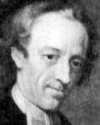
In 2348 BC, a supposed comet under divine guidance passed near Earth, causing the Great Flood, in the opinion of Anglican priest and mathematician, William Whiston. In his time, the water composition of comets was known. He said the forty days of rain resulted from the Earth's travel through the comet's tail. The body's gravity stretched and cracked the earth's brittle crust, and waters arose from the “fountains of the great deep.” He explained this in his popular treatise New Theory of the Earth (1696), describing the Book of Genesis in terms of physics based on the Principia written by his mentor, Isaac Newton. Whiston succeeded Newton and became the third Lucasian Professor of Mathematics at Cambridge University (May 1702).«
William Whiston: Honest Newtonian, by James E. Force. - book suggestion.




