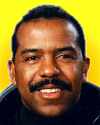
Born 26 Jun 1956.
Bernard Anthony Harris Jr. is an American doctor and astronaut who became the first African-American to walk in space in 1995, during his second spaceflight mission. After completing residency training in 1985 at the Mayo Clinic, Harris researched space adaptation physiology for NASA. He was selected in Jan 1990 to be an astronaut, and became a mission specialist on Spacelab (26 Apr-6 May 1993). Aboard Spacelab, he conducted various experiments in physical and life sciences. On the second of his two spaceflights, he flew 2-11 Feb 1995 as Payload Commander on the Space Shuttle Columbia, This first flight of the joint Russian-American Space Program included a rendezvous with Russian Space Station Mir and a space walk by Harris.«
Bernard Anthony Harris Jr. is an American doctor and astronaut who became the first African-American to walk in space in 1995, during his second spaceflight mission. After completing residency training in 1985 at the Mayo Clinic, Harris researched space adaptation physiology for NASA. He was selected in Jan 1990 to be an astronaut, and became a mission specialist on Spacelab (26 Apr-6 May 1993). Aboard Spacelab, he conducted various experiments in physical and life sciences. On the second of his two spaceflights, he flew 2-11 Feb 1995 as Payload Commander on the Space Shuttle Columbia, This first flight of the joint Russian-American Space Program included a rendezvous with Russian Space Station Mir and a space walk by Harris.«

Born 26 Jun 1937; died 19 Feb 2013 at age 75.
Robert Coleman Richardson was an American physicist who (with Douglas Osheroff and David Lee) was awarded the 1996 Nobel Prize for Physics for their discovery of superfluidity in the isotope helium-3. As helium is reduced in temperature toward almost absolute zero, a strange phase transition occurs, and the helium takes on the form of a superfluid. The atoms had until that point had moved with random speeds and directions. But as a superfluid, the atoms then move in a co-ordinated manner! more
Robert Coleman Richardson was an American physicist who (with Douglas Osheroff and David Lee) was awarded the 1996 Nobel Prize for Physics for their discovery of superfluidity in the isotope helium-3. As helium is reduced in temperature toward almost absolute zero, a strange phase transition occurs, and the helium takes on the form of a superfluid. The atoms had until that point had moved with random speeds and directions. But as a superfluid, the atoms then move in a co-ordinated manner! more
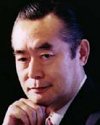
Born 26 Jun 1928. quotes
Japanese inventor who has been called “Japan’s Edison” because his over 3,000 patents make him the world’s most prolific inventor. (Thomas Alva Edison is a distant second with 1,093). NakaMats invented the floppy disk in 1950 at the Imperial University in Tokyo. After six of Japan's leading corporations turned him down, he granted the sales license for the disk to IBM. Dr. NakaMats interests are wide as reflected in his patents, which also include a digital display watch. Other patents range from a “Putting training device for golfers” to an “Apparatus for converting radiant energy such as light or heat directly into turning force” or an “Energy system for applying mixed hydrogen and gasoline to an engine.”
Japanese inventor who has been called “Japan’s Edison” because his over 3,000 patents make him the world’s most prolific inventor. (Thomas Alva Edison is a distant second with 1,093). NakaMats invented the floppy disk in 1950 at the Imperial University in Tokyo. After six of Japan's leading corporations turned him down, he granted the sales license for the disk to IBM. Dr. NakaMats interests are wide as reflected in his patents, which also include a digital display watch. Other patents range from a “Putting training device for golfers” to an “Apparatus for converting radiant energy such as light or heat directly into turning force” or an “Energy system for applying mixed hydrogen and gasoline to an engine.”
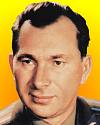
Born 26 Jun 1925; died 10 Jan 1970 at age 44.
Russian cosmonaut who was pilot of the historic Voskhod 2 space mission, launched on 18 Mar 1965. While the flight was in orbit, the co-pilot. Aleksey Leonov, became the first man to walk in space. The flight only lasted a day due to a failure of the automatic guidance system. Belyayev was selected for the space programme in 1960 he had nearly 15 years experience as a military pilot. He was originally scheduled to fly on the Vostok 8 mission into the Earth's van Allen radiation belt, but this was cancelled. When Belyayev died after a long stomach illness, periotonitis that resulted from an operation on a stomach ulcer, he became the first spaceman to die of natural causes.
Russian cosmonaut who was pilot of the historic Voskhod 2 space mission, launched on 18 Mar 1965. While the flight was in orbit, the co-pilot. Aleksey Leonov, became the first man to walk in space. The flight only lasted a day due to a failure of the automatic guidance system. Belyayev was selected for the space programme in 1960 he had nearly 15 years experience as a military pilot. He was originally scheduled to fly on the Vostok 8 mission into the Earth's van Allen radiation belt, but this was cancelled. When Belyayev died after a long stomach illness, periotonitis that resulted from an operation on a stomach ulcer, he became the first spaceman to die of natural causes.
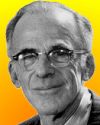
Born 26 Jun 1914; died 31 Mar 1997 at age 82. quotes
American astrophysicist who advanced knowledge of physical processes in interstellar space and pioneered efforts to harness nuclear fusion as a clean energy source. He made major contributions in stellar dynamics and plasma physics. He founded study of the interstellar medium (gas and dust between stars from which new stars are formed). Spitzer studied in detail interstellar dust grains and magnetic fields as well as the motions of star clusters and their evolution. He studied regions of star formation and was among the first to suggest that bright stars in spiral galaxies formed recently. Spitzer was the first person to propose the idea of placing a large telescope in space and was the driving force behind the development of the Hubble Space Telescope.
American astrophysicist who advanced knowledge of physical processes in interstellar space and pioneered efforts to harness nuclear fusion as a clean energy source. He made major contributions in stellar dynamics and plasma physics. He founded study of the interstellar medium (gas and dust between stars from which new stars are formed). Spitzer studied in detail interstellar dust grains and magnetic fields as well as the motions of star clusters and their evolution. He studied regions of star formation and was among the first to suggest that bright stars in spiral galaxies formed recently. Spitzer was the first person to propose the idea of placing a large telescope in space and was the driving force behind the development of the Hubble Space Telescope.
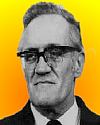
Born 26 Jun 1911; died 11 Aug 1977 at age 66.
British electrical and electronics engineer who, with Tom Kilburn, invented the Williams tube, a cathode-ray tube using the persistence of the image on the phosphor screen for data storage. This made possible the random access memory that launched the digital computer age. As the Chair in Electrotechnics at Manchester University, he incorporated this invention into the Mark I computer, the world's first stored-program digital electronic computer to be commercially produced during the early 1950's. more
British electrical and electronics engineer who, with Tom Kilburn, invented the Williams tube, a cathode-ray tube using the persistence of the image on the phosphor screen for data storage. This made possible the random access memory that launched the digital computer age. As the Chair in Electrotechnics at Manchester University, he incorporated this invention into the Mark I computer, the world's first stored-program digital electronic computer to be commercially produced during the early 1950's. more
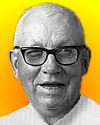
Born 26 Jun 1910; died 12 May 1994 at age 83.
American chemist and inventor of Teflon (the DuPont trademark name for Polytetrafluoroethylene or PTFE). His discovery, while working for DuPont, was accidental. On 6 Apr 1938, Plunkett found that a tank of gaseous tetrafluoroethylene (CF2CF2) had polymerized to a white powder. It was patented on 4 Feb 1941. During WW II this new polymer was applied as a corrosion-resistant coating to protect metal equipment used in the production of radioactive material. DuPont released its trademarked Teflon coated nonstick cookware in 1960.
American chemist and inventor of Teflon (the DuPont trademark name for Polytetrafluoroethylene or PTFE). His discovery, while working for DuPont, was accidental. On 6 Apr 1938, Plunkett found that a tank of gaseous tetrafluoroethylene (CF2CF2) had polymerized to a white powder. It was patented on 4 Feb 1941. During WW II this new polymer was applied as a corrosion-resistant coating to protect metal equipment used in the production of radioactive material. DuPont released its trademarked Teflon coated nonstick cookware in 1960.
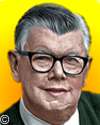
Lear in 1952
Born 26 Jun 1902; died 14 May 1978 at age 75. quotes
American aeronautical engineer, electrical engineer and inventor who taught himself electrical engineering and is best known for the Lear Jet Corporation he founded, the world's first mass-producer of business jet aircraft. Beginning in 1930, over a 20 year period, he secured more than 100 patents for aircraft radios, communications and navigation equipment. Lear's other inventions include the miniature automatic pilot for aircraft, the first commercial automobile radio, and the eight-track stereo tape player. more
American aeronautical engineer, electrical engineer and inventor who taught himself electrical engineering and is best known for the Lear Jet Corporation he founded, the world's first mass-producer of business jet aircraft. Beginning in 1930, over a 20 year period, he secured more than 100 patents for aircraft radios, communications and navigation equipment. Lear's other inventions include the miniature automatic pilot for aircraft, the first commercial automobile radio, and the eight-track stereo tape player. more
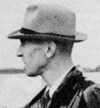
Born 26 Jun 1898; died 15 Sep 1978 at age 80.
German aircraft engineer and designer, born Frankfurt-am-Main. Messerschmitt. He studied at the Munich Institute of Technology, and in 1926 joined the Bayerische Flugzeugwerke as its chief designer and engineer. In 1938 the company became the Messerschmitt-Aitken-Gesellschaft, producing military aircraft. His Me109 set a world speed record in 1939, and during World War 2 he supplied the Luftwaffe with its foremost types of combat aircraft. In 1944 he produced the Me262 fighter, the first jet plane flown in combat. more
German aircraft engineer and designer, born Frankfurt-am-Main. Messerschmitt. He studied at the Munich Institute of Technology, and in 1926 joined the Bayerische Flugzeugwerke as its chief designer and engineer. In 1938 the company became the Messerschmitt-Aitken-Gesellschaft, producing military aircraft. His Me109 set a world speed record in 1939, and during World War 2 he supplied the Luftwaffe with its foremost types of combat aircraft. In 1944 he produced the Me262 fighter, the first jet plane flown in combat. more
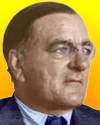
Born 26 Jun 1888; died 13 Jan 1953 at age 64.
Swiss mineralogist who originated the idea of a systematic deduction of the patterns in the internal structure of crystals by means of X-ray data. He supplied a complete outline of methods that have since been used to determine these patterns. There are 230 possible different internal patterns for different crystals. Because the patterns describe a three-dimensional arrangement, they are known as space groups. Niggli also developed a notation that described the individual space groups, and co-authored a definitive set of tables describing them. more
Swiss mineralogist who originated the idea of a systematic deduction of the patterns in the internal structure of crystals by means of X-ray data. He supplied a complete outline of methods that have since been used to determine these patterns. There are 230 possible different internal patterns for different crystals. Because the patterns describe a three-dimensional arrangement, they are known as space groups. Niggli also developed a notation that described the individual space groups, and co-authored a definitive set of tables describing them. more
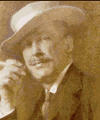
Born 26 Jun 1866; died 5 Apr 1923 at age 56. quotes
The 5th Earl of Carnarvon (George Edward Stanhope Molyneux Herbert) was a British egyptologist. He first dabbled in archaeology as a small boy, digging in the park at his ancestral home, Highclere Castle. Sent to Egypt for health reasons, he found a new fascination in the relics of the past. He funded and participated in excavations from 1907, until his association with Howard Carter and the discovery of King Tutankhamun's tomb on 27 Nov 1922. more
The 5th Earl of Carnarvon (George Edward Stanhope Molyneux Herbert) was a British egyptologist. He first dabbled in archaeology as a small boy, digging in the park at his ancestral home, Highclere Castle. Sent to Egypt for health reasons, he found a new fascination in the relics of the past. He funded and participated in excavations from 1907, until his association with Howard Carter and the discovery of King Tutankhamun's tomb on 27 Nov 1922. more
The Tomb of Tut.Ankh.Amen, by Howard Carter. - book suggestion.
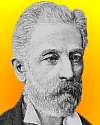
Born 26 Jun 1826; died 2 Feb 1905 at age 78. quotes
German ethnologist and world traveller who theorized that there is a general psychic unity of humankind that is responsible for certain elementary ideas common to all peoples (Elementargedanken). Bastian proposed, on the other hand, that cultural traits, folklore, myths, and beliefs of various ethnic groups originate within each group according to laws of cultural evolution (Volkergedanken). He was the first director of the Berlin Ethnological Museum and established the Berlin Anthropology Society. more
German ethnologist and world traveller who theorized that there is a general psychic unity of humankind that is responsible for certain elementary ideas common to all peoples (Elementargedanken). Bastian proposed, on the other hand, that cultural traits, folklore, myths, and beliefs of various ethnic groups originate within each group according to laws of cultural evolution (Volkergedanken). He was the first director of the Berlin Ethnological Museum and established the Berlin Anthropology Society. more
Adolf Bastian and the Psychic Unity of Man, by Klaus-Peter Köpping. - book suggestion.
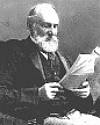
Born 26 Jun 1824; died 17 Dec 1907 at age 83. quotes
Irish physicist, mathematician and engineer who became an influential physicist, who has been described as the Newton of his era. Born as William Thomson in Ireland. At Glasgow University, Scotland, he was a professor for over half a century. The name he made for himself was more than just a temperature scale. His activities ranged from being the brains behind the laying of a transatlantic telephone cable, to attempting to calculate the age of the earth from its rate of cooling. In 1892, when raised to the peerage as Baron Kelvin of Largs, he had chosen the name from the Kelvin River, near Glasgow. He is often described as a Scottish scientist because of his life career spent in Glasgow, but late in life, in a lecture in 1883, he referred to himself as an Irishman. more
Irish physicist, mathematician and engineer who became an influential physicist, who has been described as the Newton of his era. Born as William Thomson in Ireland. At Glasgow University, Scotland, he was a professor for over half a century. The name he made for himself was more than just a temperature scale. His activities ranged from being the brains behind the laying of a transatlantic telephone cable, to attempting to calculate the age of the earth from its rate of cooling. In 1892, when raised to the peerage as Baron Kelvin of Largs, he had chosen the name from the Kelvin River, near Glasgow. He is often described as a Scottish scientist because of his life career spent in Glasgow, but late in life, in a lecture in 1883, he referred to himself as an Irishman. more
Degrees Kelvin: A Tale of Genius, Invention, and Tragedy, by David Lindley. - book suggestion.
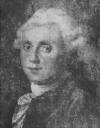
Born 26 Jun 1730; died 12 Apr 1817 at age 86. quotes
French astronomer who discovered 15 comets. He was the first to compile a systematic catalog of "M objects." The Messier Catalogue (1784), containing 103 star clusters, nebulae, and galaxies. (In Messier's time a nebula was a term used to denote any blurry celestial light source.) He established alphanumeric names for the objects (M1, M2, etc.), which notation continues to be used in astronomy today.[DSB gives date of death as 11 or 12 Apr 1817. EB gives 12 Apr 1817.] more
French astronomer who discovered 15 comets. He was the first to compile a systematic catalog of "M objects." The Messier Catalogue (1784), containing 103 star clusters, nebulae, and galaxies. (In Messier's time a nebula was a term used to denote any blurry celestial light source.) He established alphanumeric names for the objects (M1, M2, etc.), which notation continues to be used in astronomy today.[DSB gives date of death as 11 or 12 Apr 1817. EB gives 12 Apr 1817.] more


Died 26 Jun 1995 at age 93 (born 15 Apr 1902).
Samuel Kurtz Hoffman was an American engineer who led the development of the liquid fuel rocket engines used in America's early space programs. His career began as an aeronautical-design engineer (1932-45) and then he spent four years teaching in that field. By 1949, he joined the Propulsion Section of North American Aviation which he later headed as its president (1960-70). (That division, renamed Rocketdyne, later became part of Rockwell International Corp.) He supervised the development of the first-stage Redstone propulsion system, which launched Explorer I, America's first satellite (31 Jan 1958). His work continued with the high-thrust engines used for the Mercury rockets that propelled the first U.S. astronauts into space, and the F-1 rocket engines used in the first stage of the Saturn V rockets of the Apollo moonshot program.«
Samuel Kurtz Hoffman was an American engineer who led the development of the liquid fuel rocket engines used in America's early space programs. His career began as an aeronautical-design engineer (1932-45) and then he spent four years teaching in that field. By 1949, he joined the Propulsion Section of North American Aviation which he later headed as its president (1960-70). (That division, renamed Rocketdyne, later became part of Rockwell International Corp.) He supervised the development of the first-stage Redstone propulsion system, which launched Explorer I, America's first satellite (31 Jan 1958). His work continued with the high-thrust engines used for the Mercury rockets that propelled the first U.S. astronauts into space, and the F-1 rocket engines used in the first stage of the Saturn V rockets of the Apollo moonshot program.«
Rocketdyne: Powering Humans Into Space, by Robert S Kraemer. - book suggestion.
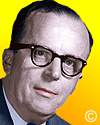
Died 26 Jun 1990 at age 75 (born 11 Mar 1915). quotes
Joseph Carl Robnett “Lick” Licklider was an American computer scientist who created the idea of a universal computer network to easily transfer and retrieve information which his successors developed into the internet. In 1959, in his first book, Libraries of the Future, Licklider expanded Vannevar Bush's idea of an automated library system to describe how computers could distribute library resources from a single database to multiple remote users. In 1962, while director of the Information Processing Techniques Office of the U.S. Dept. of Defense Advanced Research Projects Agency (DARPA), he sent a memo to colleagues envisioning a time-sharing network of computers. Subsequently ARPANET was built, which became the model for the Internet. He also was a visionary for human-computer interaction, remembered for his 1960 paper, 'Man-Computer Symbiosis.'«
Joseph Carl Robnett “Lick” Licklider was an American computer scientist who created the idea of a universal computer network to easily transfer and retrieve information which his successors developed into the internet. In 1959, in his first book, Libraries of the Future, Licklider expanded Vannevar Bush's idea of an automated library system to describe how computers could distribute library resources from a single database to multiple remote users. In 1962, while director of the Information Processing Techniques Office of the U.S. Dept. of Defense Advanced Research Projects Agency (DARPA), he sent a memo to colleagues envisioning a time-sharing network of computers. Subsequently ARPANET was built, which became the model for the Internet. He also was a visionary for human-computer interaction, remembered for his 1960 paper, 'Man-Computer Symbiosis.'«
The Dream Machine: J. C. R. Licklider and the Revolution That Made Computing Personal, by Waldrop M. Mitchell. - book suggestion.
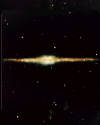
Died 26 Jun 1965 at age 69 (born 26 Nov 1895).
Swedish astronomer who contributed greatly to the theory of galactic structure and motion and to the methods of determining the absolute magnitude (true brightness, disregarding distance) of distant stars. He theorized that the areas around the center of a galaxy revolve and this is why it was flattened. Oort later proved that does indeed happen. He studied the structure and dynamics of star clusters, estimated the Milky Way's galactic mass, the period of our Sun's orbit, confirmed Harlow Shapley's direction and approximate distance to the center of the Galaxy, and developed spectroscopic means of distinguishing between giant and main sequence stars.
Swedish astronomer who contributed greatly to the theory of galactic structure and motion and to the methods of determining the absolute magnitude (true brightness, disregarding distance) of distant stars. He theorized that the areas around the center of a galaxy revolve and this is why it was flattened. Oort later proved that does indeed happen. He studied the structure and dynamics of star clusters, estimated the Milky Way's galactic mass, the period of our Sun's orbit, confirmed Harlow Shapley's direction and approximate distance to the center of the Galaxy, and developed spectroscopic means of distinguishing between giant and main sequence stars.
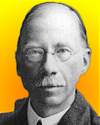
Died 26 Jun 1951 at age 80 (born 18 Feb 1871). quotes
George Udny Yule was a Scottish statistician who, with Karl Pearson, studied the statistics of regression and correlation, especially as applied in 2x2 contingency tables, time series, Mendelian genetics and epidemiology. His name is remembered in the Yule distribution (a discrete power law). Yule’s first paper on statistics, On the Correlation of Total Pauperism with Proportion of Out-relief (1895) reflects his early interest in statistics applied to social problems. As one of the pioneers of modern statistics, he laid a foundation on which others later built further. Yule also made some pioneer statements concerning mental tests, how to reduce the error of measurement and thereby improve validity. Developed from his prior series of lectures, he wrote a widely-used textbook, Introduction to Statistics (1911), which went through 14 editions.«
George Udny Yule was a Scottish statistician who, with Karl Pearson, studied the statistics of regression and correlation, especially as applied in 2x2 contingency tables, time series, Mendelian genetics and epidemiology. His name is remembered in the Yule distribution (a discrete power law). Yule’s first paper on statistics, On the Correlation of Total Pauperism with Proportion of Out-relief (1895) reflects his early interest in statistics applied to social problems. As one of the pioneers of modern statistics, he laid a foundation on which others later built further. Yule also made some pioneer statements concerning mental tests, how to reduce the error of measurement and thereby improve validity. Developed from his prior series of lectures, he wrote a widely-used textbook, Introduction to Statistics (1911), which went through 14 editions.«
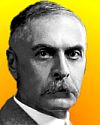
Died 26 Jun 1943 at age 75 (born 14 Jun 1868). quotes
Austrian-American physician, immunologist and pathologist who received the 1930 Nobel Prize for Physiology or Medicine for his discovery of the major blood groups and development of the ABO system of blood typing that much reduced risk and made blood transfusion a routine medical practice. Such blood type analysis proved useful also in genetic and legal applications. He first reported that blood had types in 1901. The basis of these types are specific proteins called antigens that are found on the surface of the red blood cells and anti-bodies found in the plasma. He also discovered the Rh factor which explained some complications of pregnancy and birth when the Rh factor of the mother and baby do not match.
Austrian-American physician, immunologist and pathologist who received the 1930 Nobel Prize for Physiology or Medicine for his discovery of the major blood groups and development of the ABO system of blood typing that much reduced risk and made blood transfusion a routine medical practice. Such blood type analysis proved useful also in genetic and legal applications. He first reported that blood had types in 1901. The basis of these types are specific proteins called antigens that are found on the surface of the red blood cells and anti-bodies found in the plasma. He also discovered the Rh factor which explained some complications of pregnancy and birth when the Rh factor of the mother and baby do not match.
The Specificity of Serological Reactions, by Karl Landsteiner. - book suggestion.
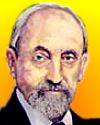
Died 26 Jun 1940 at age 79 (born 27 Jan 1861).
Polish-American bridge designer and bridge builder who was outstanding for the number, variety, and innovative character of his projects. His first major commission was the design and construction of a seven-span bridge with railway and highway over the Mississippi River, at Rock Island, Illinois. Later, he developed a set of standard bridges designs for the Northern Pacific Railroad. He remains outstanding for the large number, variety and innovation of America's finest major bridges for which he was chief or consulting engineer. The longest cantilevered bridge in the world, the Quebec City Bridge, was completed when he took over its re-design following a 1907 failure that killed 75 workers. He was chief engineer of the San Francisco-Oakland Bay Bridge.«
Polish-American bridge designer and bridge builder who was outstanding for the number, variety, and innovative character of his projects. His first major commission was the design and construction of a seven-span bridge with railway and highway over the Mississippi River, at Rock Island, Illinois. Later, he developed a set of standard bridges designs for the Northern Pacific Railroad. He remains outstanding for the large number, variety and innovation of America's finest major bridges for which he was chief or consulting engineer. The longest cantilevered bridge in the world, the Quebec City Bridge, was completed when he took over its re-design following a 1907 failure that killed 75 workers. He was chief engineer of the San Francisco-Oakland Bay Bridge.«
A Man Who Spanned Two Eras: The Story of Bridge Engineer Ralph Modjeski, by Jozef Glomb. - book suggestion.
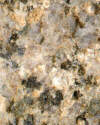
Granite
Died 26 Jun 1934 at age 70 (born 20 Jul 1863).
Jakob Johannes Sederholm was a Finnish geologist who pioneered the study of the Precambrian rocks of Finland. He was appointed geologist to the Geological Commission of Finland in 1888, where later he became its director (1893 to 1933). The Precambrian period ran from 3.96 billion to 570 million years ago. Precambrian rocks, called sheilds can only be found today in Africa, Europe, and North America. Not much of these rocks can be found, but the ones that are display evidence of having been altered by intense metamorphosism. The minerals that the sheilds are made of are generally granite, schist, or gneiss.
Jakob Johannes Sederholm was a Finnish geologist who pioneered the study of the Precambrian rocks of Finland. He was appointed geologist to the Geological Commission of Finland in 1888, where later he became its director (1893 to 1933). The Precambrian period ran from 3.96 billion to 570 million years ago. Precambrian rocks, called sheilds can only be found today in Africa, Europe, and North America. Not much of these rocks can be found, but the ones that are display evidence of having been altered by intense metamorphosism. The minerals that the sheilds are made of are generally granite, schist, or gneiss.
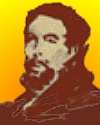
Died 26 Jun 1919 at age 47 (born 14 May 1872).
Russian botanist, the “father of chromatography,” who developed and named the adsorption chromatography technique of separating plant pigments by extracting them from leaves with ether and alcohol and percolating the solution through a column of calcium carbonate. The components of the mixture moved at different rates, producing a series of bands. He is known in particular for his study of the chlorophylls and the carotenoids. However, in Tswett's own lifetime, chromatography remained virtually unrecognized as a scientific tool. In the 1930s, it was rediscovered and then spread worldwide. The chromatography technique he invented is now widely used to separate substances from mixtures. (Also spelled Tsvet.)
Russian botanist, the “father of chromatography,” who developed and named the adsorption chromatography technique of separating plant pigments by extracting them from leaves with ether and alcohol and percolating the solution through a column of calcium carbonate. The components of the mixture moved at different rates, producing a series of bands. He is known in particular for his study of the chlorophylls and the carotenoids. However, in Tswett's own lifetime, chromatography remained virtually unrecognized as a scientific tool. In the 1930s, it was rediscovered and then spread worldwide. The chromatography technique he invented is now widely used to separate substances from mixtures. (Also spelled Tsvet.)
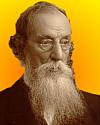
Died 26 Jun 1913 at age 84 (born 23 Jul 1828).
English surgeon and pathologist who made a lifelong study of congenital syphilis. He was surgeon at the London hospital (1859-83) and professor of surgery at the Royal College of Surgeons (1879-83). He recorded observations made during his vast clinical experience in over 1,200 medical articles. His name remains associated with a number of medical terms, including Hutchinson's triad (the three symptoms of congenital syphilis which he first described.) He was first to identify a certain inflammatory disease, then known as "Hutchinson's disease"), but now known as sarcoidosis, as named by the Norwegian dermatologist Cæsar Peter Møller Boeck (1845-1917). Hutchinson was knighted in 1908.«
English surgeon and pathologist who made a lifelong study of congenital syphilis. He was surgeon at the London hospital (1859-83) and professor of surgery at the Royal College of Surgeons (1879-83). He recorded observations made during his vast clinical experience in over 1,200 medical articles. His name remains associated with a number of medical terms, including Hutchinson's triad (the three symptoms of congenital syphilis which he first described.) He was first to identify a certain inflammatory disease, then known as "Hutchinson's disease"), but now known as sarcoidosis, as named by the Norwegian dermatologist Cæsar Peter Møller Boeck (1845-1917). Hutchinson was knighted in 1908.«
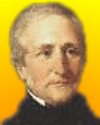

Irish-English physicist, astronomer and explorer who studied the shape of the Earth and its magnetic field. He was commissioned in the Royal Artillery, and reached the rank of major-general before retiring in 1877. As an explorer, the party's astronomer, he joined the expedition of John Ross to find the Northwest Passage (1818). He also went with Parry on an Arctic expedition (1819-20). Through experiments using a pendulum at different global locations, he determined the shape of the Earth (1821-3). Sabine also studied the earth's magnetic field, and on 6 Apr 1852 announced the link between sunspots and irregular geomagnetic variations. more
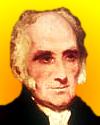
Died 26 Jun 1834 at age 84 (born 29 Aug 1749). quotes
Scottish physician who, when head of the Navy Medical Board, required (1795) a diet including lemon juice on navy vessels, which virtually eliminated scurvy and its significant lost manpower due to sickness of sailors. The value of citrus juice had been established by James Lind, with his Treatice on Scurvy (1754). Blane also improved sanitary conditions in the Navy by providing supplies of soap and medicines, and was involved with designing rules that were precursors to modern quarantine conditions. He required every surgeon in the service to make regular returns or journals of the state of health and disease onboard their ship. In 1829, he established a prize medal as an incentive for the surgeon producing the best journal.«
Scottish physician who, when head of the Navy Medical Board, required (1795) a diet including lemon juice on navy vessels, which virtually eliminated scurvy and its significant lost manpower due to sickness of sailors. The value of citrus juice had been established by James Lind, with his Treatice on Scurvy (1754). Blane also improved sanitary conditions in the Navy by providing supplies of soap and medicines, and was involved with designing rules that were precursors to modern quarantine conditions. He required every surgeon in the service to make regular returns or journals of the state of health and disease onboard their ship. In 1829, he established a prize medal as an incentive for the surgeon producing the best journal.«
Scurvy: How a Surgeon, a Mariner, and a Gentlemen Solved..., by Stephen Bown. - book suggestion.
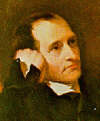
Died 26 Jun 1827 at age 73 (born 3 Dec 1753). quotes
British inventor who in 1779, during the Industrial Revolution, created the “spinning mule.” The continuous, strong, fine yarn it was able to spin was a boon for the manufacturers of cotton cloth. It was called a “mule” because it was a hybrid of the ideas of Richard Arkwright and James Hargreaves. Spinning had come of age from a home occupation to factory production. more
British inventor who in 1779, during the Industrial Revolution, created the “spinning mule.” The continuous, strong, fine yarn it was able to spin was a boon for the manufacturers of cotton cloth. It was called a “mule” because it was a hybrid of the ideas of Richard Arkwright and James Hargreaves. Spinning had come of age from a home occupation to factory production. more
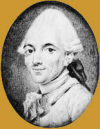
Died 26 Jun 1810 at age 69 (born 26 Aug 1740). quotes
French inventor and balloonist who with his younger brother, Étienne conducted an initial experiment with a balloon of taffeta filled with hot smoke was given a public demonstration on 5 Jun 1783. This pioneering work was followed by a flight carrying three animals as passengers on 19 Sep 1783, shown in Paris and witnessed by King Louis XVI. On 21 Nov 1783, their balloon carried the first two men on an untethered flight. In the span of one year after releasing their test balloon, the Montgolfier brothers had enabled the first manned balloon flight in the world.[DSB gives that he was baptised Michel Joseph, but was generally known as Joseph Michel.] more
French inventor and balloonist who with his younger brother, Étienne conducted an initial experiment with a balloon of taffeta filled with hot smoke was given a public demonstration on 5 Jun 1783. This pioneering work was followed by a flight carrying three animals as passengers on 19 Sep 1783, shown in Paris and witnessed by King Louis XVI. On 21 Nov 1783, their balloon carried the first two men on an untethered flight. In the span of one year after releasing their test balloon, the Montgolfier brothers had enabled the first manned balloon flight in the world.[DSB gives that he was baptised Michel Joseph, but was generally known as Joseph Michel.] more
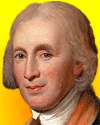
Died 26 Jun 1796 at age 64 (born 8 Apr 1732). quotes
American astronomer, instrument maker, surveyor, mathematician and astronomer who was an early observer of the atmosphere of Venus. For observations for the transit of Venus on 3 Jun 1769, he constructed a high precision pendulum clock, an astronomical quadrant, an equal altitude instrument, and an astronomical transit. He was the first one in America to put spider web as cross-hairs in the focus of his telescope. He is generally credited with inventing the vernier compass and possibly the automatic needle lifter. He was professor of astronomy at the University of Pennsylvania. Benjamin Franklin consulted him on various occasions. For Thomas Jefferson he standardized the foot by pendulum measurements in a project to establish a decimal system of weights and measures. more
American astronomer, instrument maker, surveyor, mathematician and astronomer who was an early observer of the atmosphere of Venus. For observations for the transit of Venus on 3 Jun 1769, he constructed a high precision pendulum clock, an astronomical quadrant, an equal altitude instrument, and an astronomical transit. He was the first one in America to put spider web as cross-hairs in the focus of his telescope. He is generally credited with inventing the vernier compass and possibly the automatic needle lifter. He was professor of astronomy at the University of Pennsylvania. Benjamin Franklin consulted him on various occasions. For Thomas Jefferson he standardized the foot by pendulum measurements in a project to establish a decimal system of weights and measures. more
David Rittenhouse, by Brooke Hindle. - book suggestion.

Harvest mouse
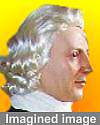
English clergyman and naturalist known as the “father of English natural history.” Over the course of 20 years of his observations and two colleagues' letters, he studied a wide range of flora and fauna seen around his hometown of Selborne, Hampshire. Among other careful observations, he was the first to accurately describe the harvest mouse. In 1789, he published this studious work. The text of his book The Natural History and Antiquities of Selborne is the collection of his letters to friends describing his local observations. The book is a classic work of natural history, has been in print continuously since 1789, and is one of the most published books in the English language.[Image shows mannequin representing White in a Gilbert White’s House display. No authentic picture of White is known, although there are portraits of his father and grandfather.] more
The Natural History of Selborne, by Gilbert White. - book suggestion.
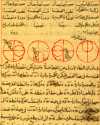
Died 26 Jun 1274 at age 73 (born 18 Feb 1201).
Muhammad ibn Muhammad ibn al-Hasan al-Tusi was a Persian philosopher, scientist, mathematician and astronomer who made outstanding contributions in his era. When The Mongol invasion, started by Genghis Khan, reached him in 1256, he escaped likely death by joining the victorious Mongols as a scientific advisor. He used an observatory built at Maragheh (finished 1262), assisted by Chinese astronomers. It had various instruments such as a 4 metre wall quadrant made from copper and an azimuth quadrant which was Tusi's own invention. Using accurately plotted planetary movements, he modified Ptolemy's model of the planetary system based on mechanical principles. The observatory and its library became a centre for a wide range of work in science, mathematics and philosophy. He was known by the title Tusi from his place of birth (Tus).
Muhammad ibn Muhammad ibn al-Hasan al-Tusi was a Persian philosopher, scientist, mathematician and astronomer who made outstanding contributions in his era. When The Mongol invasion, started by Genghis Khan, reached him in 1256, he escaped likely death by joining the victorious Mongols as a scientific advisor. He used an observatory built at Maragheh (finished 1262), assisted by Chinese astronomers. It had various instruments such as a 4 metre wall quadrant made from copper and an azimuth quadrant which was Tusi's own invention. Using accurately plotted planetary movements, he modified Ptolemy's model of the planetary system based on mechanical principles. The observatory and its library became a centre for a wide range of work in science, mathematics and philosophy. He was known by the title Tusi from his place of birth (Tus).
In 2016, the new locks expanding the Panama Canal served the first ship. Celebrated with fireworks, a Chinese vessel carrying 9,000 containers entered the locks at Agua Clara that will double the capacity of the Panama Canal. The Cosco Shipping Panama represented the new class of mega-vessels that are newly able to use the canal which were previous too large, and had to take the long route around Cape Horn. The ship was 158 ft wide by 984ft long ( 48.2m by 300m), and could instead transit more directly across the Isthmuth of Panama in Cental America from the Atlantic to the Pacific Ocean because of the improvement project which had cost $5.25 billion.«
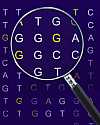
In 2000, the completion of a working draft reference DNA sequence of the human genome was announced at the White House by President Bill Clinton, and representatives from the Human Genome Project (HGP) and the private company Celera Genomics. Clinton stated that even greater discoveries would follow from the working draft. As a draft, it contained some gaps and errors, but represented about 95% of all genes. HGP expected to use it as a scaffold for generating the high-quality reference genome sequence within three years. This provides knowledge to link genes with particular diseases, of the influence of genetics and to help discover new treatments.

In 1976, the CN tower in Toronto, Canada, the world’s tallest self-supporting structure, opened to the public. At a height of 1815 feet 5 inches it is the tallest free-standing structure in the world. The tower construction began 6 Feb 1973 and was completed 40 months later in 1976. The three legs and central core were built hollow to ensure flexibility in winds, using reinforced concrete and post-tensioned steel. In 1995, the CN Tower was classified as one of the Seven Wonders of the Modern World by the American Society of Civil Engineers.
more
In 1974, at 8:01 a.m., a package of Wrigley’s chewing gum with a bar code printed on it passed over a scanner at the Marsh Supermarket, Troy, Ohio, and became the first product ever logged under the new Universal Product Code (UPC) computerized recognition system. Invented by IBM, and approved for use in 1973, the UPC is a 12-number bar code representing the manufacturer's identity and an assigned product number. Within nanoseconds, this information is read with a laser beam moving at around 10,000 inches per second and transfers it to the store’s database computer for price lookup and inventory management.
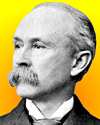
Sternberg
In 1900, Surgeon-General George M. Sternberg formed a commission to fight against the cause and spread of the deadly yellow fever disease. Dr. Walter Reed was appointed officer-in-charge. Reed had previously investigated malaria and typhoid outbreaks. At the time, many scientists including Sternberg believed that yellow fever spread by direct contact with an infected person or with infected objects like clothing, However, the culprit was found by the commission's research to be a mosquito-borne agent, that it was sub-microscopic, and too small to isolate. Yellow fever is now known to be caused by a virus.
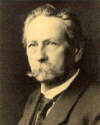
Karl Benz
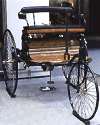
The Invention of the Automobile (Karl Benz and Gottlieb Daimler), by St. John C Nixon. - book suggestion.
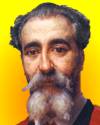
Moissan
In 1886, Henri Moissan isolated the element fluorine for the first time, after many unsuccessful attempts. His work had been interrupted four times by serious poisoning. His apparatus consisted of two platinum-iridium electrodes sealed into a platinum U-tube containing an electrolyte solution of dry potassium acid fluoride in anhydrous hydrofluoric acid chilled with methylene chloride to a temperature of -23º. The ends were closed with fluorspar screw caps covered with a layer of gum lac. Electrolysis produced a gas at the anode. When Moissan tested it with silicon, it immediately burst into flame, which he regarded as a test for fluorine gas. Two days later, his discovery was announced at the Academy of Science, Paris.*

In 1819, The first US patent for a velocipede, a predecessor of the bicycle, was issued to William K. Clarkson Jr. of New York. Little information remains available, however, because a fire at the Patent Office in 1836 destroyed the patent record, and it was not restored. The photo shows the Draisine design of the period (Europe, 1816). Bicycles were introduced to the US also in 1819 and were manufactured by David and Rogers in Troy, NY.
more
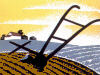
In 1797, Charles Newbold, born Chesterfield, NJ (1780), was issued the first US patent for a cast-iron plow, at a time when the cast iron plow of James Small had to be imported from Scotland. On Newbold's plow the share, landslide and moldboard were cast in one piece, then wooden handles and beam added. Local farmers, though, rejected its use, fearing the iron might poison the soil! Eventually it was the improvements made by others that brought successful cast iron then steel plows to market.
more

In 1721, the first smallpox inoculations in America were given in Boston by Dr. Zabdiel Boylston when a smallpox epidemic struck Boston, Mass. Reverend Cotton Mather, who lived in Boston, had previously heard from a slave of the practice being used in Africa. Of all the doctors Mather had urged to try it, Zabdiel Boylston, was the first doctor courageous enough to use the procedure.
more
In 1498, the bristle toothbrush was invented in China. Coarse hairs taken from the back of a hog's neck were used for the bristles, attached at right angles to a bone or bamboo handle (similar to the modern type). The best bristles came from hogs raised in the colder climates of China and Siberia, where the animals grew stouter and firmer hair. Since 3000 BC, ancient civilizations had been cleaning teeth with a "chew-stick" by using a thin twig with a frayed end.[Note: A 17th century Chinese encyclopedia (source) claims that the year was 1498 for the invention of the toothbrush but the date 26 June needs a confirming source.]




