Born 13 Sep 1920. quotes
British physicist and mathematician.
British physicist and mathematician.
Born 13 Sep 1912; died 29 Aug 2003 at age 90.
Horace Welcome was an American astronomer, son of Harold Babcock. Working together, they were the first to measure the distribution of magnetic fields over the surface of the Sun. Horace invented and built many astronomical instruments, including a ruling engine which produced excellent diffraction gratings, the solar magnetograph, and microphotometers, automatic guiders, and exposure meters for the 100 and 200-inch telescopes. By combining his polarizing analyzer with the spectrograph he discovered magnetic fields in other stars. He developed important models of sunspots and their magnetism, and was the first to propose adaptive optics (1953).
Horace Welcome was an American astronomer, son of Harold Babcock. Working together, they were the first to measure the distribution of magnetic fields over the surface of the Sun. Horace invented and built many astronomical instruments, including a ruling engine which produced excellent diffraction gratings, the solar magnetograph, and microphotometers, automatic guiders, and exposure meters for the 100 and 200-inch telescopes. By combining his polarizing analyzer with the spectrograph he discovered magnetic fields in other stars. He developed important models of sunspots and their magnetism, and was the first to propose adaptive optics (1953).
Born 13 Sep 1887; died 26 Sep 1976 at age 89.
Croatian-Swiss chemist.
Croatian-Swiss chemist.
Born 13 Sep 1886; died 8 Feb 1975 at age 88. quotes
English chemist who received the 1947 Nobel Prize for Chemistry for his research on a wide range of organic compounds, notably alkaloids (complex, naturally occurring, nitrogen-containing organic compounds that can have profound effects on living things). In his early research, he studied plant pigments and synthesized anthocyanins and flavones. Later, working with alkaloids, he discovered the structures of morphine (1925) and strychnine (1946).
English chemist who received the 1947 Nobel Prize for Chemistry for his research on a wide range of organic compounds, notably alkaloids (complex, naturally occurring, nitrogen-containing organic compounds that can have profound effects on living things). In his early research, he studied plant pigments and synthesized anthocyanins and flavones. Later, working with alkaloids, he discovered the structures of morphine (1925) and strychnine (1946).
Robert Robinson: Scientist Extraordinary, by Trevor I. Williams. - book suggestion.
Born 13 Sep 1885; died 17 Mar 1962 at age 76.
German mathematician whose major contributions to geometry concerned kinematics and differential geometry. Kinetic mapping (important later in the axiomatic foundations of various geometries) he both discovered and established it as a tool in kinematics. He also initiated topological differential geometry (the study of invariant differentiable mappings).
German mathematician whose major contributions to geometry concerned kinematics and differential geometry. Kinetic mapping (important later in the axiomatic foundations of various geometries) he both discovered and established it as a tool in kinematics. He also initiated topological differential geometry (the study of invariant differentiable mappings).
Born 13 Sep 1877; died 7 May 1957 at age 79.
German scientist and explorer who led the German Antarctic expedition of 1911-12. In Tibet (1926-28) he conducted cartographic surveys and magnetic observations. He also made a magnetic survey of Nepal (1939-40)
German scientist and explorer who led the German Antarctic expedition of 1911-12. In Tibet (1926-28) he conducted cartographic surveys and magnetic observations. He also made a magnetic survey of Nepal (1939-40)
Born 13 Sep 1873; died 2 Feb 1950 at age 76.
German mathematician of Greek origin who made important contributions to the theory of real functions and to the theory of point-set measure. He demonstrated that the calculus of variations (the theory of maxima and minima in curves) could be applied not just to smooth curves, but also those with corners. He also contributed to thermodynamics and helped develop Einstein's special theory of relativity.
German mathematician of Greek origin who made important contributions to the theory of real functions and to the theory of point-set measure. He demonstrated that the calculus of variations (the theory of maxima and minima in curves) could be applied not just to smooth curves, but also those with corners. He also contributed to thermodynamics and helped develop Einstein's special theory of relativity.
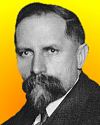
Born 13 Sep 1866; died 17 Mar 1950 at age 83.
Swiss-American psychiatrist (1900-40), whose teaching and influential work has become a part of psychiatric theory and practice in English-speaking countries. Already trained in neuroanatomy and neurophysiology when he emigrated to the U.S. (1892), from working at mental institutions, he began to attribute the disorder in mental illness not to brain pathology, but to a personality dysfunction. He recognized social environment as an influence in mental disorders. Throughout his years at Johns Hopkins University as professor of psychiatry (1910-41), he taught that in the diagnosis and treatment of mental illness, the patient must be evaluated as a whole person.
Swiss-American psychiatrist (1900-40), whose teaching and influential work has become a part of psychiatric theory and practice in English-speaking countries. Already trained in neuroanatomy and neurophysiology when he emigrated to the U.S. (1892), from working at mental institutions, he began to attribute the disorder in mental illness not to brain pathology, but to a personality dysfunction. He recognized social environment as an influence in mental disorders. Throughout his years at Johns Hopkins University as professor of psychiatry (1910-41), he taught that in the diagnosis and treatment of mental illness, the patient must be evaluated as a whole person.
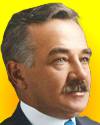
Born 13 Sep 1857; died 13 Oct 1945 at age 88.
Milton Snavely Hershey was an American manufacturer who transformed the chocolate industry, turning milk chocolate from a luxury, to a mass-produced commodity. He apprenticed in confectionery until 1876, then opened a candy shop in Philadelphia, with little success. He pivoted to making caramels, and next founded the Hershey Chocolate Co. (1894) using machinery he saw at the 1893 World’s Columbian Exposition. He innovated to consistently blend milk, sugar, and cocoa, overcoming the challenges of milk’s variability. By continually refining processes, he supplied an affordable product of consistent quality. In 1903, he established a factory at Hershey, Pennsylvania, that became the world’s largest. He applied his fortune philanthropically.«
Milton Snavely Hershey was an American manufacturer who transformed the chocolate industry, turning milk chocolate from a luxury, to a mass-produced commodity. He apprenticed in confectionery until 1876, then opened a candy shop in Philadelphia, with little success. He pivoted to making caramels, and next founded the Hershey Chocolate Co. (1894) using machinery he saw at the 1893 World’s Columbian Exposition. He innovated to consistently blend milk, sugar, and cocoa, overcoming the challenges of milk’s variability. By continually refining processes, he supplied an affordable product of consistent quality. In 1903, he established a factory at Hershey, Pennsylvania, that became the world’s largest. He applied his fortune philanthropically.«
Hershey: Milton S. Hershey’s Extraordinary Life of Wealth, Empire, and Utopian Dreams, by Michael D'Antonio. - book suggestion.
Born 13 Sep 1853; died 14 Nov 1938 at age 85.
Danish pharmacologist and pathologist, who invented the Gram stain, the best known and most widely used bacteriological staining method that is almost always the first test performed for the identification of bacteria..
Danish pharmacologist and pathologist, who invented the Gram stain, the best known and most widely used bacteriological staining method that is almost always the first test performed for the identification of bacteria..
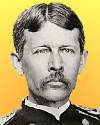
Born 13 Sep 1851; died 23 Nov 1902 at age 51.
US Army pathologist and bacteriologist who led the experiments in Cuba (1900) that proved that yellow fever is transmitted by the bite of a mosquito. Thereafter sanitary efforts to eradicate mosquitos, and protection from their bite, eliminated epidemics of yellow fever in Cuba and the U.S. The Walter Reed Hospital in Washington, D.C., was named in his honour.[DSB gives date of death 23 Nov 1902. EB gives 22 Nov 1902.] more
US Army pathologist and bacteriologist who led the experiments in Cuba (1900) that proved that yellow fever is transmitted by the bite of a mosquito. Thereafter sanitary efforts to eradicate mosquitos, and protection from their bite, eliminated epidemics of yellow fever in Cuba and the U.S. The Walter Reed Hospital in Washington, D.C., was named in his honour.[DSB gives date of death 23 Nov 1902. EB gives 22 Nov 1902.] more
Born 13 Sep 1831; died 22 Oct 1915 at age 84.
(Baronet) Scottish physicist and gunnery expert, known as a founder of the science of ballistics. He invented the chronoscope, a device for measuring very small time intervals, and in about 1862, he used it to measure the velocity of shot in gun barrels. His investigations in ballistics led to the redesign of guns, new methods of loading, and development of new types of gunpowder.
(Baronet) Scottish physicist and gunnery expert, known as a founder of the science of ballistics. He invented the chronoscope, a device for measuring very small time intervals, and in about 1862, he used it to measure the velocity of shot in gun barrels. His investigations in ballistics led to the redesign of guns, new methods of loading, and development of new types of gunpowder.
Born 13 Sep 1761; died 22 Jan 1818 at age 56.
American physician and anatomist who studied anatomy in England under John Hunter, and was later affiliated with the Pennsylvania Hospital (1793-1810). In 1809, he founded a vaccine society, which within its first year had vaccinated over a thousand people. As a lecturer, he introduced the instructional use of large scale models of the smaller parts of the human body. His sole original contribution to anatomy was related to the spenoid sinuses (1814). Later in life, he published papers describing paleontological finds at Big bone Lick, Kentucky. He was active as an Abolitionist, as he held a belief from a young age against slavery. The wisteria flowering shrub was named for him by his friend, Thomas Nutall.«
American physician and anatomist who studied anatomy in England under John Hunter, and was later affiliated with the Pennsylvania Hospital (1793-1810). In 1809, he founded a vaccine society, which within its first year had vaccinated over a thousand people. As a lecturer, he introduced the instructional use of large scale models of the smaller parts of the human body. His sole original contribution to anatomy was related to the spenoid sinuses (1814). Later in life, he published papers describing paleontological finds at Big bone Lick, Kentucky. He was active as an Abolitionist, as he held a belief from a young age against slavery. The wisteria flowering shrub was named for him by his friend, Thomas Nutall.«
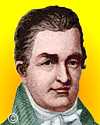
Born 13 Sep 1755; died 15 Apr 1819 at age 63. quotes
American millwright and inventor who designed the first automatic corn mill (patented 18 Dec 1790), pioneered the high-pressure steam engine, and created the first continuous production line (1784). By about age 19, he invented a machine for bending and cutting off the wires in textile carding combs. His ideas for an automatic corn mill began in 1782, but the invention’s development was not completed until 1790. The ingenious mill used bucket elevators to raise the grain, conveying devices including a horizontal screw conveyor, and a “hopper boy” to cool and dry the meal before gathering it into a hopper feeding the bolting cylinder. Together, this took incoming wheat and delivered flour packed in barrels. more
American millwright and inventor who designed the first automatic corn mill (patented 18 Dec 1790), pioneered the high-pressure steam engine, and created the first continuous production line (1784). By about age 19, he invented a machine for bending and cutting off the wires in textile carding combs. His ideas for an automatic corn mill began in 1782, but the invention’s development was not completed until 1790. The ingenious mill used bucket elevators to raise the grain, conveying devices including a horizontal screw conveyor, and a “hopper boy” to cool and dry the meal before gathering it into a hopper feeding the bolting cylinder. Together, this took incoming wheat and delivered flour packed in barrels. more

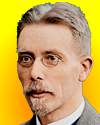
Died 13 Sep 1949 at age 74 (born 15 Nov 1874). quotes
Schack August Steenberg Krogh was a Danish physiologist and zoologist who received the Nobel Prize for Physiology or Medicine in 1920 for his discovery of the motor-regulating mechanism of capillaries (small blood vessels). Working with frogs, which he injected with Indian ink shortly before killing, he showed that in sample areas of resting muscle the number of visible (stained) capillaries was about 5 per square millimeter; in stimulated muscle, however, the number was increased to 190 per square millimeter. From this he concluded that there must be a physiological mechanism to control the action of the capillaries in response to the needs of the body (not just flow due to heart beating). Krogh’s research linked exercise physiology with nutrition and metabolism.
Schack August Steenberg Krogh was a Danish physiologist and zoologist who received the Nobel Prize for Physiology or Medicine in 1920 for his discovery of the motor-regulating mechanism of capillaries (small blood vessels). Working with frogs, which he injected with Indian ink shortly before killing, he showed that in sample areas of resting muscle the number of visible (stained) capillaries was about 5 per square millimeter; in stimulated muscle, however, the number was increased to 190 per square millimeter. From this he concluded that there must be a physiological mechanism to control the action of the capillaries in response to the needs of the body (not just flow due to heart beating). Krogh’s research linked exercise physiology with nutrition and metabolism.
August and Marie Krogh: Lives in Science, by Bodil Schmidt-Nielsen. - book suggestion.
Died 13 Sep 1936 at age 71 (born 11 Jan 1865).
German astronomer.
German astronomer.
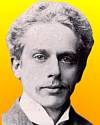
Died 13 Sep 1914 at age 55 (born 9 Feb 1859).
British-American organ builder whose innovations created the theatre organ and its orchestral sounds. In his early career, in England, as chief electrician with the Lancashire and Cheshire Telephone Company he gained experience with low voltage electrical circuits which led him to their application to the church organ. As an organ-builder, his many inventions included the Diaphone, (GB patent 21,414 in 1894, improved as GB patent 21,558 in 1895). In 1897, he patented a foghorn (No. 21,389) for use in lighthouses and still used today. He emigrated to the U.S. in 1903, where he eventually sold his patents to the Wurlitzer company, N. Tonawanda, NY. Despite his productive years contributing to organ devices and pipes, he died prematurely by suicide.«
British-American organ builder whose innovations created the theatre organ and its orchestral sounds. In his early career, in England, as chief electrician with the Lancashire and Cheshire Telephone Company he gained experience with low voltage electrical circuits which led him to their application to the church organ. As an organ-builder, his many inventions included the Diaphone, (GB patent 21,414 in 1894, improved as GB patent 21,558 in 1895). In 1897, he patented a foghorn (No. 21,389) for use in lighthouses and still used today. He emigrated to the U.S. in 1903, where he eventually sold his patents to the Wurlitzer company, N. Tonawanda, NY. Despite his productive years contributing to organ devices and pipes, he died prematurely by suicide.«
Robert Hope-Jones, by David H. Fox. - book suggestion.
Thm.jpg "Enterprise second free flight test")
In 1977, the Shuttle Enterprise successfully made its second of five free flights as part of the Shuttle Approach and Landing Tests, at NASA's Dryden Flight Research Facility, California. As during its first free flight test on 12 Aug 1977, it was launched mounted atop a Boeing 747 carrier, and separated from it in flight. Then it freely glided, on its own, in flight within the Earth's atmosphere. It touched down, landing like an airplane, on a dry lake bed in the Mojave Desert. Designated Orbiter Vehicle OV-101, it was a prototype built only for testing; it was never equipped for space flight. Its first inactive (no crew) captive flight test (18 Feb 1977) without separating from the carrier 747, was followed by five more inert captive flight tests, and three more active captive flight tests with crew aboard.«
In 1956, full production of taconite began at a the first U.S. plant established for large-scale commercial production. Taconite is a hard ore containing 25 to 30% iron. The rock was crushed, ground and magnetically separated to yield small pellets containing about 62% iron, with an annual prodction of 3,750,000 tons. Preliminary operations had begun in the fall of 1955. The plant, known as the E.W. Davis Works at Silver Bay, Minn., was built by the Reserve Mining Company (Duluth, Minn.) and jointly owned by the Armco Steel and Republican Steel corporations.
In 1928, a rail detector car was demonstrated near Poughkeepsie, N.Y. to representatives of the American Railway Association and of various railroads. Invented by Dr. Elmer Ambrose Sperry, it was designed to enable locating internal flaws in existing railroad tracks. This first car, car No. 101, was capable of travelling at 10 mph while examining one rail at a time. It had been previously field-tested 13 Jun 1928.
In 1922, 136.4 °F (58 °C), the world's highest shade temperature was—purportedly—recorded at the African village of Al Aziziyah, a trade center, about 25 miles (40 km) south of Tripoli, Libya. Although for 90 years the iconic record remained accepted, in Jan 2012, after scrutiny of the original data logs, the World Meteorological Organization (WMO) decided it was, in fact, clearly invalid. Modern improvements in analysis found the data inconsistent with other regional measurements. Also, the log showed a change of observer from 11 Sep 1922, who, by inexperience of the specific model of thermometer used had likely read the wrong end of the indicator slide, resulting in a difference of 7ºC. The accepted record is now 134 ºF (56.7 ºC) on 10 Jul 1913 at Greenland Ranch in Death Valley, California.«
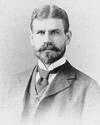
In 1900, physician Jesse Lazear, at age 34, was bitten by a mosquito carrying yellow-fever while conducting experiments in Quemados, Cuba, to investigate the transmission of that disease. His death, two weeks later, proved that the mosquito was the carrier of yellow-fever.
In 1899, the first American automobile fatality resulted when Henry H. Bliss was run over as he alighted from a streetcar at Central Park West and 74th Street in New York City. He stepped into the path of an approaching horseless carriage driven by Arthur Smith. Bliss, 68, was taken to hospital, where he died of the injuries he sustained. The driver, Arthur Smith was arrested and held on $1,000 bail. The first pedestrian in the world to die after being struck by a car was Bridget Driscoll, on 17 Aug 1896, on the grounds of Crystal Palace, London. She was struck by a car giving demonstration rides, and died minutes later of head injuries. On 12 Feb1898, the first car-driver crash fatality was businessman Henry Lindfield whose speeding car ran into a tree at Purley, Surrey.«
In 1898, Reverend Hannibal Williston Goodwin was issued a U.S. patent for his invention of "nitro cellulose transparent flexible photographic film pellicles." (No. 610,861). He made a sale of one roll at $2.50 to Thomas Alva Edison on 2 Sep 1889.
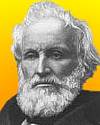
Tudor
In 1833, a the first imported shipment of ice arrived in Calcutta, India, from Boston, Mass., U.S. in the specially insulated hold of the Clipper Tuscany, which had loaded and sailed on 6 - 7 May 1833 with 180 tons of ice. The ice, in 2 - 3 cu.ft. blocks, had been cut from local lakes in winter, and stored since then. The entrepeneur was Fredric Tudor, an ice merchant of Boston. During the over four month voyage, about 80 tons was lost, but in the Indian unit of weight, the amount that arrived was about 3,000 maund (1 maund = 82.6 pounds). It was priced at four annas per seer (about 2-lbs). At first sales were disappointing, until the local residents became accustomed to this novelty for cooling drinks. India became a profitable export market for Tudor for over two decades.«
more
The Frozen Water Trade, by Gavin Weightman. - book suggestion.
In 1826, the first rhinoceros to be exhibited in the U.S. was shown at Peale’s Museum and gallery of the Fine Arts in New York City. An advertisement described, “its body and limbs are covered with a skin so hard and impervious that he fears neither the claws of the tiger nor the proboscis of the elephant. It will turn the edge of a scimitar and even resist the force of a musket ball.”




