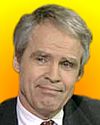
Born 6 Apr 1949.
German-American physicist who shared (with Daniel C. Tsui and Robert B. Laughlin) the 1998 Nobel Prize in Physics for the discovery “of a new form of quantum fluid with fractionally charged excitations.” By experiment using extremely powerful magnetic fields and low temperatures, in 1982, Störmer and Tsui found that electrons acting together in strong magnetic fields can form new types of “particles”, with charges that are fractions of electron charges. Within a year, Laughlin made a theoretical analysis explaining their result.«
German-American physicist who shared (with Daniel C. Tsui and Robert B. Laughlin) the 1998 Nobel Prize in Physics for the discovery “of a new form of quantum fluid with fractionally charged excitations.” By experiment using extremely powerful magnetic fields and low temperatures, in 1982, Störmer and Tsui found that electrons acting together in strong magnetic fields can form new types of “particles”, with charges that are fractions of electron charges. Within a year, Laughlin made a theoretical analysis explaining their result.«
Video: How We Discovered DNA Structure (click on image)
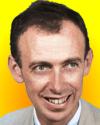
James Dewey Watson is an American biochemist and geneticist who shared the 1962 Nobel Prize for Physiology or Medicine (with Francis Crick and Maurice Wilkins) for the discovery of “the molecular structure of nucleic acids and its significance for information transfer in living material.” Deoxyribonucleic acid (DNA) is the substance contained in cells that controls heredity. Crick and Watson began their collaboration in 1951, and published their paper on the double helix structure on 2 Apr 1953 in Nature. This accomplishment became a cornerstone of genetics and was widely regarded as one of the most important discoveries of 20th-century biology.« more
DNA: The Secret of Life, by James D. Watson, Andrew Berry. - book suggestion.
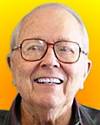
Born 6 Apr 1920; died 7 Feb 2009 at age 88.
John Higson (Jack) Cover Jr. was an American inventor and aerospace engineer who invented the Taser stun gun weapon from an inspiration after reading of a man briefly immobilized by an electric fence. He worked in his garage and by the late 1960s had created a device resembling a flashlight that used gunpowder to fire darts able to deliver an electric shock to a target within 15 feet. He named it with the acronym Taser from the initials of the words in Thomas A. Swift Electric Rifle adapted from a favorite science fiction book from his childhood, Tom Swift and His Electric Rifle. He started the company Taser Systems Inc. in 1970. It was classified as a firearm because of its use of powder, but a revised design, offered to Cover in 1993 by Rick and Tom Smith, that used compressed gas to project the dart removed that restriction. The Los Angeles Police Department was an early adopter in 1980.«
John Higson (Jack) Cover Jr. was an American inventor and aerospace engineer who invented the Taser stun gun weapon from an inspiration after reading of a man briefly immobilized by an electric fence. He worked in his garage and by the late 1960s had created a device resembling a flashlight that used gunpowder to fire darts able to deliver an electric shock to a target within 15 feet. He named it with the acronym Taser from the initials of the words in Thomas A. Swift Electric Rifle adapted from a favorite science fiction book from his childhood, Tom Swift and His Electric Rifle. He started the company Taser Systems Inc. in 1970. It was classified as a firearm because of its use of powder, but a revised design, offered to Cover in 1993 by Rick and Tom Smith, that used compressed gas to project the dart removed that restriction. The Los Angeles Police Department was an early adopter in 1980.«
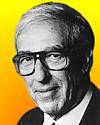
Born 6 Apr 1920; died 27 Aug 2021 at age 101.
American biochemist who shared (with Edwin G. Krebs) the 1992 Nobel Prize for Physiology or Medicine for the discovery of “reversible protein phosphorylation as a biological regulatory mechanism” which governs the activities of proteins in cells. They purified and characterized the first enzyme of this type. Their discovery was a key to unlocking how glycogen in the body breaks down into glucose. It fostered techniques that prevent the body from rejecting transplanted organs. Their breakthrough also opened new doors for research into cancer, blood pressure, inflammatory reactions and brain signals.«
American biochemist who shared (with Edwin G. Krebs) the 1992 Nobel Prize for Physiology or Medicine for the discovery of “reversible protein phosphorylation as a biological regulatory mechanism” which governs the activities of proteins in cells. They purified and characterized the first enzyme of this type. Their discovery was a key to unlocking how glycogen in the body breaks down into glucose. It fostered techniques that prevent the body from rejecting transplanted organs. Their breakthrough also opened new doors for research into cancer, blood pressure, inflammatory reactions and brain signals.«
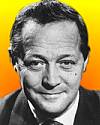
Born 6 Apr 1911; died 6 Aug 1979 at age 68.
German biochemist who shared (with Konrad Bloch) the 1964 Nobel Prize for Physiology or Medicine for his research “concerning the mechanism and regulation of the cholesterol and fatty acid metabolism.” These processes comprise series of reactions with a great number of individual steps. Providing this detailed knowledge of the mechanisms of lipid metabolism makes possible addressing medical problems related to them.«
German biochemist who shared (with Konrad Bloch) the 1964 Nobel Prize for Physiology or Medicine for his research “concerning the mechanism and regulation of the cholesterol and fatty acid metabolism.” These processes comprise series of reactions with a great number of individual steps. Providing this detailed knowledge of the mechanisms of lipid metabolism makes possible addressing medical problems related to them.«
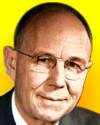

Video: How Edgerton froze time in his pictures (click on image)
Harold Eugene Edgerton was an American engineer and ultra-high-speed photographer who, as a graduate at the Massachusetts Institute of Technology (1926), used a strobe light in his studies, which,. by 1931, he applied the strobe to ultra-high-speed photography. He formed a company (1947) to specialize in electronic technology, which led to inventing the Rapatronic camera, capable of photographing US nuclear bomb test explosions from a distance of 7 miles. Throughout his career he applied high-speed photography as a tool in various scientific applications. He also developed sonar to study the ocean floor. Using side-scan sonar, in 1973, he helped locate the sunken Civil War battleship USS Monitor, lost since 1862, off Cape Hatteras, NC.« more
Stopping Time: The Photographs of Harold Edgerton, by Gus Kayafas, Estelle Jussim. - book suggestion.
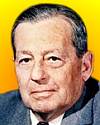
Born 6 Apr 1892; died 1 Feb 1981 at age 88.
Donald Wills Douglas was an American aircraft designer whose Douglas Aircraft Company produced military and civil aircraft. He graduating from the Massachusetts Institute of Technology as its first aeronautics student (1914), then consulted and designed for others until he founded his own business (1920). Over the years his company set the industry standard for reliability and safety. The DC series of commercial passenger planes, beginning with the DC-1 (which entered service in 1933) led to the DC-8, the first commercial jet airliner in 1958. In addition to military aircraft, the company also produced military missiles and spacecraft. The business merged with McDonnell Aircraft Company in 1967, and after his death, with Boeing in 1997.«
Donald Wills Douglas was an American aircraft designer whose Douglas Aircraft Company produced military and civil aircraft. He graduating from the Massachusetts Institute of Technology as its first aeronautics student (1914), then consulted and designed for others until he founded his own business (1920). Over the years his company set the industry standard for reliability and safety. The DC series of commercial passenger planes, beginning with the DC-1 (which entered service in 1933) led to the DC-8, the first commercial jet airliner in 1958. In addition to military aircraft, the company also produced military missiles and spacecraft. The business merged with McDonnell Aircraft Company in 1967, and after his death, with Boeing in 1997.«
Donald W. Douglas: A Heart With Wings, by Wilbur H. Morrison. - book suggestion.
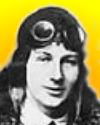
Born 6 Apr 1890; died 23 Dec 1939 at age 49.
Dutch-American airman and pioneer aircraft manufacturer who, having seen an airplane flight at age 16, was inspired to build his first airplane by age 20. This was a braced monoplane, the Spider he put assembled in an empty Zeppelin hangar in Baden-Baden, and flying it gained his pilot's licence. His first factory built many of Germany's WW I pursuit aircraft, and gained recognition, but at the end of the war was put out of business there by the treaty of Versailles. On 21 Jul 1919, he established a company for civil aircraft, in the Netherlands and subsequently started manufacturing in the U.S. He continued to influence airplane construction techniques, and adopted welded-steel tubing fusulage construction.«
Dutch-American airman and pioneer aircraft manufacturer who, having seen an airplane flight at age 16, was inspired to build his first airplane by age 20. This was a braced monoplane, the Spider he put assembled in an empty Zeppelin hangar in Baden-Baden, and flying it gained his pilot's licence. His first factory built many of Germany's WW I pursuit aircraft, and gained recognition, but at the end of the war was put out of business there by the treaty of Versailles. On 21 Jul 1919, he established a company for civil aircraft, in the Netherlands and subsequently started manufacturing in the U.S. He continued to influence airplane construction techniques, and adopted welded-steel tubing fusulage construction.«
Fokker Dr.I Triplane: A World War One Legend, by Paul Leaman. - book suggestion.

Born 6 Apr 1890; died 21 Apr 1967 at age 77.
French astronomer who devised a now standard five-point scale for rating the darkness and colour of a total lunar eclipse, which is known as the Danjon Luminosity Scale. He studied Earth's rotation, and developed astronomical instruments, including a photometer to measure Earthshine - the brightness of a dark moon due to light reflected from Earth. It consisted of a telescope in which a prism split the Moon's image into two identical side-by-side images. By adjusting a diaphragm to dim one of the images until the sunlit portion had the same apparent brightness as the earthlit portion on the unadjusted image, he could quantify the diaphragm adjustment, and thus had a real measurement for the brightness of Earthshine.«
French astronomer who devised a now standard five-point scale for rating the darkness and colour of a total lunar eclipse, which is known as the Danjon Luminosity Scale. He studied Earth's rotation, and developed astronomical instruments, including a photometer to measure Earthshine - the brightness of a dark moon due to light reflected from Earth. It consisted of a telescope in which a prism split the Moon's image into two identical side-by-side images. By adjusting a diaphragm to dim one of the images until the sunlit portion had the same apparent brightness as the earthlit portion on the unadjusted image, he could quantify the diaphragm adjustment, and thus had a real measurement for the brightness of Earthshine.«
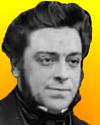
Born 6 Apr 1810; died 23 Aug 1888 at age 78. quotes
English naturalist and science writer who wrote books illustrating such topics as Jamaican wildlife and marine zoology. Stephen Jay Gould called Gosse the “ David Attenborough of his day.” However, he did not accept the theory of evolution, and in his best-known book, Omphalos, he attempted to apply biblical literalism in a way still consistent with uniformitarianism. His premise in the book was criticized by both sides of the debate. He invented the institutional aquarium when on 21 May 1853, he opened the Aquatic Vivarium, the world's first public aquarium in Regent's Park, London.*
English naturalist and science writer who wrote books illustrating such topics as Jamaican wildlife and marine zoology. Stephen Jay Gould called Gosse the “ David Attenborough of his day.” However, he did not accept the theory of evolution, and in his best-known book, Omphalos, he attempted to apply biblical literalism in a way still consistent with uniformitarianism. His premise in the book was criticized by both sides of the debate. He invented the institutional aquarium when on 21 May 1853, he opened the Aquatic Vivarium, the world's first public aquarium in Regent's Park, London.*
Glimpses of the Wonderful: The Life of Philip Henry Gosse, by Ann Thwaite. - book suggestion.
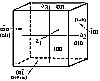
Born 6 Apr 1801; died 20 May 1880 at age 79.
Welsh mineralogist known for his Millerian indices built on his system of reference axes for crystals by which the different systems of crystal forms can be designated using a a set of three integers for each crystal face. When he published this scheme in A Treatise on Crystallography (1839), he provided an alternative to the existing confusion due to the many different descriptive systems previously in use. In his early career he published successful textbooks for hydrostatics and hydrodynamics (1831) and differential calculus (1833). Miller also prepared new standards in 1843 to replace the National Standards of weight and length that had been lost in the 1834 fire that destroyed the Parliament buildings.«
Welsh mineralogist known for his Millerian indices built on his system of reference axes for crystals by which the different systems of crystal forms can be designated using a a set of three integers for each crystal face. When he published this scheme in A Treatise on Crystallography (1839), he provided an alternative to the existing confusion due to the many different descriptive systems previously in use. In his early career he published successful textbooks for hydrostatics and hydrodynamics (1831) and differential calculus (1833). Miller also prepared new standards in 1843 to replace the National Standards of weight and length that had been lost in the 1834 fire that destroyed the Parliament buildings.«
Born 6 Apr 1732; died 11 Sep 1808 at age 76.
José Celestino Bruno Mutis was a Spanish botanist and astronomer with medical training, who left Spain in 1760 to live in South America where he engaged in botanical exploration. He pursued how the plants wood, dyes, waxes, rubbers available there could provide economic and agricultural benefits for Spain. He also modernized mining methods, and examined the medical properties of quinine. Over the years, as government funding improved, he supervised a staff of artists, zoologists, and botanists, to produce thousands of drawings, maintain a botanical garden, make a collection of bird and animal skins, and assembled an herbarium containing more than 24,000 plants.«
José Celestino Bruno Mutis was a Spanish botanist and astronomer with medical training, who left Spain in 1760 to live in South America where he engaged in botanical exploration. He pursued how the plants wood, dyes, waxes, rubbers available there could provide economic and agricultural benefits for Spain. He also modernized mining methods, and examined the medical properties of quinine. Over the years, as government funding improved, he supervised a staff of artists, zoologists, and botanists, to produce thousands of drawings, maintain a botanical garden, make a collection of bird and animal skins, and assembled an herbarium containing more than 24,000 plants.«

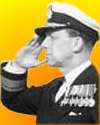
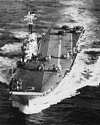
Rear-Admiral Dennis Cambell was an English naval aviator, test pilot and inventor of the angled flight deck, with axis rotated ten degrees to port from the centre-line of an aircraft carrier. This outstandingly simple idea gave pilots a second chance when landing. It allowed overshooting off the port bow, reapplying throttle and staying airborne. Previously, a bad landing on a straight deck could mean crashing into the barrier and aircraft parked at the far end. Campbell’s idea saved many lives and millions in costs. The U.S. Navy first tried the idea and made structural alterations to the carrier Antietam. The British Admiralty, impressed by U.S. test results, then converted their new large carrier Ark Royal. Cambell was appointed as Captain.«
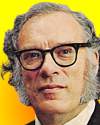
Died 6 Apr 1992 at age 72 (born 2 Jan 1920). quotes
Russian-American writer and biochemist who was a prolific writer of science fiction and of science books for the layperson. At age 3, he emigrated with his family from Russia to New York City. He began at Columbia University at the age of 15. Asimov sold his first story to Amazing Stories at the age of 18. After earning a Ph.D., he taught biochemistry at Boston University School of Medicine after 1949. By 18 Mar 1941, Asimov had already written 31 stories, sold 17, and 14 had been published. As an author, lecturer, and broadcaster of astonishing range, he is most admired as a popularizer of science for the layman, (ex. The Collapsing Universe, 1977) and as a science fiction writer (ex. I, Robot, 1950). He coined the term “robotics.” Asimov had a remarkable output, publishing about 500 titles.
Russian-American writer and biochemist who was a prolific writer of science fiction and of science books for the layperson. At age 3, he emigrated with his family from Russia to New York City. He began at Columbia University at the age of 15. Asimov sold his first story to Amazing Stories at the age of 18. After earning a Ph.D., he taught biochemistry at Boston University School of Medicine after 1949. By 18 Mar 1941, Asimov had already written 31 stories, sold 17, and 14 had been published. As an author, lecturer, and broadcaster of astonishing range, he is most admired as a popularizer of science for the layman, (ex. The Collapsing Universe, 1977) and as a science fiction writer (ex. I, Robot, 1950). He coined the term “robotics.” Asimov had a remarkable output, publishing about 500 titles.
Asimov's Chronology of Science and Discovery, by Isaac Asimov. - book suggestion.
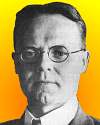
Died 6 Apr 1963 at age 65 (born 12 Aug 1897). quotes
Russian-American astronomer who was a fourth generation astronomer, the great-grandson of Friedrich Struve. He made detailed spectroscopic investigations of stars, especially close binaries and peculiar stars, the interstellar medium (where he discovered H II regions), and gaseous nebulae. He contributed to the understanding of the broadening of spectral lines due to stellar rotation, electric fields, and turbulence and worked to separate these effects from each other and from chemical abundances. He was a pioneer in the study of mass transfer in closely interacting binary stars. Struve emigrated to the USA (1921) and joined the Yerkes Observatory, Wisconsin, becoming its director in 1932.«
Russian-American astronomer who was a fourth generation astronomer, the great-grandson of Friedrich Struve. He made detailed spectroscopic investigations of stars, especially close binaries and peculiar stars, the interstellar medium (where he discovered H II regions), and gaseous nebulae. He contributed to the understanding of the broadening of spectral lines due to stellar rotation, electric fields, and turbulence and worked to separate these effects from each other and from chemical abundances. He was a pioneer in the study of mass transfer in closely interacting binary stars. Struve emigrated to the USA (1921) and joined the Yerkes Observatory, Wisconsin, becoming its director in 1932.«
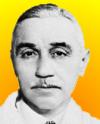
(EB)
Died 6 Apr 1961 at age 90 (born 13 Jun 1870). quotes
Jules Jean Baptiste Vincent Bordet was a Belgian bacteriologist and immunologist who discovered (1895) the complement, a complex of proteins in the blood that causes the destruction of foreign cells in an immune response. In 1906, he isolated the bacterium responsible for whooping cough, which is named after him - Bordetella (Haemophilus) pertussis - for which he developed a vaccine. He also isolated a number of other pathogenic bacteria. For his discovery of immunity factors in blood serum, he received the Nobel Prize for Physiology or Medicine in 1919. This development was vital to the diagnosis and treatment of many dangerous contagious bacterial diseases. For example, it is the basis of the Wassermann test for syphilis.
Jules Jean Baptiste Vincent Bordet was a Belgian bacteriologist and immunologist who discovered (1895) the complement, a complex of proteins in the blood that causes the destruction of foreign cells in an immune response. In 1906, he isolated the bacterium responsible for whooping cough, which is named after him - Bordetella (Haemophilus) pertussis - for which he developed a vaccine. He also isolated a number of other pathogenic bacteria. For his discovery of immunity factors in blood serum, he received the Nobel Prize for Physiology or Medicine in 1919. This development was vital to the diagnosis and treatment of many dangerous contagious bacterial diseases. For example, it is the basis of the Wassermann test for syphilis.
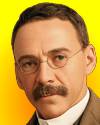
Died 6 Apr 1951 at age 84 (born 30 Nov 1866). quotes
Scottish-South African paleontologist, the world’s chief authority on South African palaeontology. His skill in associating embryology with paleontology made him foremost in his time for interpreting the origins of mammals, whether from reptiles or amphibians. Broom wrote three books on human evolution. In particular, from remains he found, he gathered information on Australopithecus. He described a vast number of fossils, and from his research clarified the taxonomic relationships of the extinct reptiles. By studying skull structure, he interpreted the evolution from reptiles to mammals. He did important comparative research on his almost unequaled private collection of South African Permian reptiles and the American Museum’s large Permian collections from North America.«
Scottish-South African paleontologist, the world’s chief authority on South African palaeontology. His skill in associating embryology with paleontology made him foremost in his time for interpreting the origins of mammals, whether from reptiles or amphibians. Broom wrote three books on human evolution. In particular, from remains he found, he gathered information on Australopithecus. He described a vast number of fossils, and from his research clarified the taxonomic relationships of the extinct reptiles. By studying skull structure, he interpreted the evolution from reptiles to mammals. He did important comparative research on his almost unequaled private collection of South African Permian reptiles and the American Museum’s large Permian collections from North America.«
Finding the Missing Link: An Account of Recent Discoveries Throwing New Light on the Origin of Man, by Robert Broom. - book suggestion.
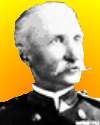
1912 (EB)
Died 6 Apr 1942 at age 87 (born 13 Jun 1854).
U.S. naval officer and inventor whose new instruments greatly improved the efficiency and effectiveness of late 19th-century warships. In 1898, while the navigator of the gunboat Petrel during the Battle of Manila Bay, he determined the ranges of enemy ships for use by the gunners by using his own invention, a stadimeter range finder. Fiske's prolific activity as an inventor began in the mid-1870s with some applications in each World War. His major inventions in electrical and gun-control systems included range finding, ammunition hoists and gun-turret motors and torpedo radio control.
U.S. naval officer and inventor whose new instruments greatly improved the efficiency and effectiveness of late 19th-century warships. In 1898, while the navigator of the gunboat Petrel during the Battle of Manila Bay, he determined the ranges of enemy ships for use by the gunners by using his own invention, a stadimeter range finder. Fiske's prolific activity as an inventor began in the mid-1870s with some applications in each World War. His major inventions in electrical and gun-control systems included range finding, ammunition hoists and gun-turret motors and torpedo radio control.
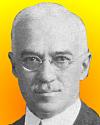
Died 6 Apr 1939 at age 75 (born 30 Dec 1863).
William Hallock Park was an American physician and bacteriologist who pioneered in the application of bacteriology to the diagnosis, prevention and treatment of the common infectious diseases. He was an authority on public health dealing with diphtheria, pneumonia, tuberculosis and poliomyelitis. Park began his career as a nose and throat specialist. He shortly became interested in the emerging science of bacteriology. In 1894, at the urging of Dr Hermann Biggs of the New York City Health Department, Park was given charge of a diagnostic laboratory for diphtheria. He developed a diphtheria antitoxin. At the turn of the 20th century, Park wrote a landmark paper The Great Bacterial Contamination of the Milk of Cities (1901), showing his concern to improve milk purity, with sanitary farm procedures, pasteurization and keeping the milk cool.«
William Hallock Park was an American physician and bacteriologist who pioneered in the application of bacteriology to the diagnosis, prevention and treatment of the common infectious diseases. He was an authority on public health dealing with diphtheria, pneumonia, tuberculosis and poliomyelitis. Park began his career as a nose and throat specialist. He shortly became interested in the emerging science of bacteriology. In 1894, at the urging of Dr Hermann Biggs of the New York City Health Department, Park was given charge of a diagnostic laboratory for diphtheria. He developed a diphtheria antitoxin. At the turn of the 20th century, Park wrote a landmark paper The Great Bacterial Contamination of the Milk of Cities (1901), showing his concern to improve milk purity, with sanitary farm procedures, pasteurization and keeping the milk cool.«
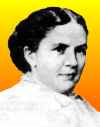
Died 6 Apr 1923 at age 85 (born 15 Mar 1838). quotes
American anthropologist who made pioneer studies of Native American Indian life. Her early interests began in archaeology, but evolved into ethnology. Fletcher was one of the first to live among the people whom she studied, the Omaha, after she met (1880) the children of Omaha chief Joseph La Flesche on their tour. During her lifelong interest in Native American music, customs, and language, she collaborated in transcribing hundreds of songs of the Plains Indians. Fletcher became well-known on the public lecture circuit. She helped write and get passed the well-meaning, but tragically flawed, Dawes Act (1887). It gave each Indian legal title to a plot of land and also granted them citizenship. The resulting deterioration of traditional Indian life was wholly unanticipated.«
American anthropologist who made pioneer studies of Native American Indian life. Her early interests began in archaeology, but evolved into ethnology. Fletcher was one of the first to live among the people whom she studied, the Omaha, after she met (1880) the children of Omaha chief Joseph La Flesche on their tour. During her lifelong interest in Native American music, customs, and language, she collaborated in transcribing hundreds of songs of the Plains Indians. Fletcher became well-known on the public lecture circuit. She helped write and get passed the well-meaning, but tragically flawed, Dawes Act (1887). It gave each Indian legal title to a plot of land and also granted them citizenship. The resulting deterioration of traditional Indian life was wholly unanticipated.«
A Stranger in Her Native Land: Alice Fletcher and the American Indians, by Joan T. Mark. - book suggestion.
Died 6 Apr 1920 at age 65 (born 24 Dec 1854).
Johann Philipp Ludwig Julius Elster was a German physicist who had a very productive collaboration with Hans Geitel, and have been called the “Castor and Pollux” of physics. They constructed the first photelectric cell, and photelectric photometer as part of their study of the photoelectric effect and thermal electron emission. They declined to patent these inventions, preferring to share the benefits. From 1884, they researched electrical phenomena in gases, atmospheric electricity, measured the electrical field of the Earth, and in 1899 were the first to determine the charge on falling raindrops from thunderclouds. When they investigated radioactivity, they regarded it as due to a spontaneous release of energy by the atoms. They showed that lead is not in itself radioactive, and that conductivity of the atmosphere was due to ionization from radioactive substances.«
Johann Philipp Ludwig Julius Elster was a German physicist who had a very productive collaboration with Hans Geitel, and have been called the “Castor and Pollux” of physics. They constructed the first photelectric cell, and photelectric photometer as part of their study of the photoelectric effect and thermal electron emission. They declined to patent these inventions, preferring to share the benefits. From 1884, they researched electrical phenomena in gases, atmospheric electricity, measured the electrical field of the Earth, and in 1899 were the first to determine the charge on falling raindrops from thunderclouds. When they investigated radioactivity, they regarded it as due to a spontaneous release of energy by the atoms. They showed that lead is not in itself radioactive, and that conductivity of the atmosphere was due to ionization from radioactive substances.«
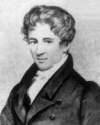
Died 6 Apr 1829 at age 26 (born 5 Aug 1802). quotes
Norwegian mathematician who developed several branches of modern mathematics. After a slow start in school, he began to show mathematical genius by the age of 15. In 1823 proved that there was no algebraic formula for the solution of a general polynomial equation of the fifth degree. He developed the concept of elliptic functions independently of Carl Gustav Jacobi, and the theory of Abelian integrals and functions became a central theme of later 19th-century analysis. He had difficulty finding an academic position and was troubled by poverty. He died in poverty at age 26, just two days before his talent was recognized and he was to be offered a professorship in Berlin.
Norwegian mathematician who developed several branches of modern mathematics. After a slow start in school, he began to show mathematical genius by the age of 15. In 1823 proved that there was no algebraic formula for the solution of a general polynomial equation of the fifth degree. He developed the concept of elliptic functions independently of Carl Gustav Jacobi, and the theory of Abelian integrals and functions became a central theme of later 19th-century analysis. He had difficulty finding an academic position and was troubled by poverty. He died in poverty at age 26, just two days before his talent was recognized and he was to be offered a professorship in Berlin.
Niels Henrik Abel and his Times, by Arild Stubhaug and Richard R. Daly. - book suggestion.
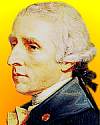
Died 6 Apr 1803 at age 72 (born 13 Dec 1730). quotes
English diplomat, archaeologist and geologist who spent his years as British envoy to the court of Naples (1764-1800) also conducting archaeological investigations and collecting antiquities. He took a particular interest in the volcanic remains around Vesuvius (Italy) and Etna (Sicily) and published several studies (1772-83) on earthquakes and volcanoes. His excavations included Herculaneum and Pompeii, the towns buried by the eruption of Vesuvius in A.D. 79, where he collected lava samples, ashes and minerals. In 1767, he designed an apparatus to depict an eruption of Vesuvius using a combination of clockwork-driven moving pictures, light and sound effects - the first example of an animated picture with sound.«
English diplomat, archaeologist and geologist who spent his years as British envoy to the court of Naples (1764-1800) also conducting archaeological investigations and collecting antiquities. He took a particular interest in the volcanic remains around Vesuvius (Italy) and Etna (Sicily) and published several studies (1772-83) on earthquakes and volcanoes. His excavations included Herculaneum and Pompeii, the towns buried by the eruption of Vesuvius in A.D. 79, where he collected lava samples, ashes and minerals. In 1767, he designed an apparatus to depict an eruption of Vesuvius using a combination of clockwork-driven moving pictures, light and sound effects - the first example of an animated picture with sound.«
Died 6 Apr 1528 at age 56 (born 21 May 1471). quotes
German artist who published a book on geometric constructions (1535) using a straight-edge and compass. Although designed to enable artists better represent a natural three-dimensional scene on a canvas, Dürer included careful proofs to establish the validity of the constructions. In this respect, it could be regarded as the oldest surviving text on applied mathematics. He also wrote on the proportions of the human body.
German artist who published a book on geometric constructions (1535) using a straight-edge and compass. Although designed to enable artists better represent a natural three-dimensional scene on a canvas, Dürer included careful proofs to establish the validity of the constructions. In this respect, it could be regarded as the oldest surviving text on applied mathematics. He also wrote on the proportions of the human body.
In 1993, in Russia, a huge radioactive cloud was released from an explosion of a tank of radioactive waste at the secret military facility at Tomsk 7. Located in the Russian wilderness, 1700 miles east of Moscow, it was the worse nuclear accident, thought not the only one, since the incident at Chernobyl on 26 Apr 1986. A week later, delegates at a meeting in Tokyo from the world's richest nations, agreed to give urgent help to Russia for problems with nuclear waste, obsolete nuclear missile warheads, and aging nuclear reactors.
In 1973, Pioneer 11 was launched to Jupiter and Saturn.
In 1965, the United States launched the “Early Bird” Intelsat 1, the first commercial geosynchronous communications satellite. It followed the Russian's earlier launch of the “WORM” test satellite
In 1957, trolley cars in New York City completed their final runs on this day.
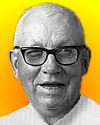
In 1930, Hostess Twinkies snack cakes were invented by James “Jimmy” A. Dewar, plant manager at Continental Baking Company, Chicago as an inexpensive product at the time of the Great Depression. He realized the factory had baking pans for sponge cakes used only during the summer strawberry season, and that they could be made useful year-round for a new product: sponge cakes injected with a banana creme filling. They originally sold at two for a nickel. Vanilla creme was substitued during the WW II banana shortage. The name is said to have come to him based on a billboard he saw for “Twinkle Toe” shoes. (Dewar retired in 1972, and died 30 Jun 1985 at age 88.)«
In 1912, the electric starter first appeared in cars.
In 1908, a new powderless electric gun was reported in Le Journal, France. It was described as the invention of M. Alfred Pouteaux, a young engineer from Dijon. Details were “secret,” but Pouteaux said he utilized polyphase currents of high frequency. A rapid stream of projectiles could be shot out of a tube about 4½-ft long x 2½-in diam. without explosives. Presumably, it used a series of short electrical coils around the tube, each causing induced magnetism in the bullet, which by resulting sequential repulsion was accelerated until forcefully ejected from the gun barrel. However, that idea had originated years earlier, with earlier newspaper reports, for example, about inventors L.S. Gardner, New Orleans, U.S.A. (1900), and Norwegian K. Birkeland (1902). The modern railgun uses the same principles.«
In 1889, the Kodak Camera was placed on sale by George Eastman.
In 1869, the American Museum of Natural History in New York City was officially created with the signing of a bill by the Governor of New York, John Thompson Hoffman. The museum began from the efforts of Albert Smith Bickmore, one-time student of Harvard zoologist Louis Agassiz, who was successful in his proposal to create a natural history museum in Central Park, New York City, with the support of William E. Dodge, Jr., Theodore Roosevelt, Sr., Joseph Choate, and J. Pierpont Morgan. It opened to the public 27 Apr 1871. With a series of exhibits, the Museum's collection went on view for the first time in the Central Park Arsenal, the Museum's original home, on the eastern side of Central Park.
In 1869, celluloid was the first thermoplastic to be patented, as an “Improved Method of Coating Billiard-Balls, &c.” by dipping the item into a solution of collodion, by John Wesley Hyatt (U.S. No. 88,634). Two months later, on 15 Jun 1869, John Wesley Hyatt and his brother Isiah Smith Hyatt were issued a patent on an “Improved Method of Making Solid Collodion” (No. 91,341). The material was named celluloid, meaning “like cellulose” from which it was derived.«
In 1869, Isaac Hodgson received a U.S. patent No. 88,711 for his “roller-skate,” with a padded shoe attached to the skate frame. The earliest known type, using two large wheels on each skate was invented by a Belgian, Joseph Merlin, in 1759. In England, Robert John Tyers, a Picadilly fruiterer, on 22 Apr 1823 patented his Volitos, an “apparatus to be attached to boots ... for the purpose of travelling or pleasure,” which used five small wheels in a single line. Somewhat similar skates with rollers were used to simulate ice skating in a scene of Meyerbeer's opera Prophète, Paris, 16 Apr 1849.* Another American inventor, James L. Plimpton of New York, had a patent for four-wheeled roller skates from 1863, whose right was affirmed at a trial for infringement, 28 Jan 1876.*
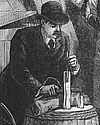
In 1859, the first legislation in the U.S. for official inspection of milk was passed in Massachusetts, enabling cities to appoint inspectors. The city of Boston appointed the first full-time Inspector of Milk on 10 Aug 1859. An earlier state law prohibiting the adulteration of milk, signed by the Governor on 30 May 1856, had been ineffective. The 1959 law further cracked down on fraud, and added ten dollar fines for the sale of “swill milk,” the poor, thin output of cows kept in unsanitary conditions and fed on distillery refuse. Contaminated milk was a serious public health hazard, sometimes deadly to infants. A milk inspector was authorized to enter the premises of milk handlers, and to take specimens for analysis, the results of which could then be held as evidence for prosecution. Milk vendors had to register at his office.«[Image: A New York City inspector at a grocery testing milk with a lactometer, c.1887] more
The Untold Story of Milk: The History, Politics and Science, by Ron Schmid. - book suggestion.
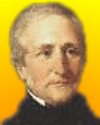
In 1852, Edward Sabine announced that the 11 year sunspot cycle was “absolutely identical” with the geomagnetic cycle. Later, using a larger dataset, Rudolf Wolf confirmed this fact. Since Isaac Newton's explanation of the effect of the sun's gravity on earth, this was the first new phenomenon of the sun interacting with the earth. Thus began continuing studies of the solar-terrestrial activity. Sabine was an Irish geophysicist, astronomer, and explorer, who made extensive pendulum measurements to determine the shape of the earth, and established magnetic observatories to relate sunspot activity with disturbances in terrestrial magnetism. Sabine was knighted in 1869.
more
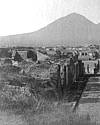
In 1748, official excavations began at Pompeii, a Greco-Roman city, by order of King Charles VII of Naples, a zealous collector. The Mt. Vesuvius eruption in 79 AD, had buried the city under volcanic ash. Earlier work done at nearby Herculaneum was difficult, digging through meters of solidified pyroclastic layers. Pompeii, however, was under shallower deposits of lighter pumice, so the focus of excavation shifted there, searching for a treasure trove of antiquities for the king. The excavations, that began at Torre Annunziata, first discovered a painting 11-ft long and 4½-ft tall. It was to be cut out for the king. Knowledge of the ruins, or the history and lifestyle of the people, was not his goal.«
more
The Complete Pompeii, by Joanne Berry. - book suggestion.
In 648, B.C., the earliest total solar eclipse chronicled by Greeks was observed.




