
Born 15 Jan 1908; died 9 Sep 2003 at age 95. quotes
Hungarian-American nuclear physicist who participated in the production of the first atomic bomb (1945) and who led the development of the world's first thermonuclear weapon, the hydrogen bomb. After studying in Germany he left in 1933, going first to London and then to Washington, DC. He worked on the first atomic reactor, and later working on the first fission bombs during WW II at Los Alamos. Subsequently, he made a significant contribution to the development of the fusion bomb. His work led to the detonation of the first hydrogen bomb (1952). He is sometimes known as “the father of the H-bomb.” Teller's unfavourable evidence in the Robert Oppenheimer security-clearance hearing lost him some respect amongst scientists.
Hungarian-American nuclear physicist who participated in the production of the first atomic bomb (1945) and who led the development of the world's first thermonuclear weapon, the hydrogen bomb. After studying in Germany he left in 1933, going first to London and then to Washington, DC. He worked on the first atomic reactor, and later working on the first fission bombs during WW II at Los Alamos. Subsequently, he made a significant contribution to the development of the fusion bomb. His work led to the detonation of the first hydrogen bomb (1952). He is sometimes known as “the father of the H-bomb.” Teller's unfavourable evidence in the Robert Oppenheimer security-clearance hearing lost him some respect amongst scientists.
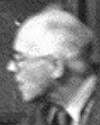
Born 15 Jan 1900; died 21 Apr 1990 at age 90. quotes
Richard Bevan Braithwaite was an English philosopher who trained in physics and mathematics, but turned to the philosophy of science. He examined the logical features common to all the sciences. Each science proceeds by inventing general principles from which are deduced the consequences to be tested by observation and experiment. Braithwaite was concerned with the impact of science on our beliefs about the world and the responses appropriate to that. He wrote on the statistical sciences, theories of belief and of probability, decision theory and games theory. He was interested in particular with the laws of probability as they apply to the physical and biological sciences.«
Richard Bevan Braithwaite was an English philosopher who trained in physics and mathematics, but turned to the philosophy of science. He examined the logical features common to all the sciences. Each science proceeds by inventing general principles from which are deduced the consequences to be tested by observation and experiment. Braithwaite was concerned with the impact of science on our beliefs about the world and the responses appropriate to that. He wrote on the statistical sciences, theories of belief and of probability, decision theory and games theory. He was interested in particular with the laws of probability as they apply to the physical and biological sciences.«
Scientific Explanation: A Study of the Function of Theory, Probability and Law in Science, by R.B. Braithwaite. - book suggestion.
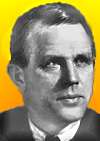
Born 15 Jan 1895; died 11 Nov 1973 at age 78.
Finnish biochemist whose investigations directed toward improving the production and storage of protein-rich green fodder, vitally important to regions characterized by long, severe winters, brought him the Nobel Prize for Chemistry in 1945. The AIV method, named for his initials, was storing green fodder in an acid medium to prevent spoilage and retain nutritious nitrogenous material. He found that a mixture of hydrochloric and sulfuric acid was adequate as long as its strength was kept within certain precise limits (a pH of about four). In 1929, he found that cows fed such silage gave milk indistinguishable in taste from that of cows fed on normal fodder, while as rich in vitamins A and C.
Finnish biochemist whose investigations directed toward improving the production and storage of protein-rich green fodder, vitally important to regions characterized by long, severe winters, brought him the Nobel Prize for Chemistry in 1945. The AIV method, named for his initials, was storing green fodder in an acid medium to prevent spoilage and retain nutritious nitrogenous material. He found that a mixture of hydrochloric and sulfuric acid was adequate as long as its strength was kept within certain precise limits (a pH of about four). In 1929, he found that cows fed such silage gave milk indistinguishable in taste from that of cows fed on normal fodder, while as rich in vitamins A and C.
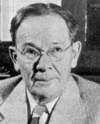
Born 15 Jan 1877; died 21 Dec 1956 at age 79. quotes
Lewis M(adison) Terman was a U.S. psychologist who pioneered individual intelligence tests. During WW I, he was involved in mass testing of intelligence for the U.S. army. He expanded an English version of the French Binet-Simon intelligence test with which he introduced the IQ (Intelligence Quotient), being a ratio of chronological age to mental age times 100. (Thus an average child has an IQ of 100). He wrote about this metric in The Measurement of Intelligence (1916). He made a long-term study of gifted children (with IQ above 140) examining mental and physical aspect of their lives reported in the multi-volume Genetic Studies of Genius (1926-59).«
Lewis M(adison) Terman was a U.S. psychologist who pioneered individual intelligence tests. During WW I, he was involved in mass testing of intelligence for the U.S. army. He expanded an English version of the French Binet-Simon intelligence test with which he introduced the IQ (Intelligence Quotient), being a ratio of chronological age to mental age times 100. (Thus an average child has an IQ of 100). He wrote about this metric in The Measurement of Intelligence (1916). He made a long-term study of gifted children (with IQ above 140) examining mental and physical aspect of their lives reported in the multi-volume Genetic Studies of Genius (1926-59).«
Lewis M. Terman: Pioneer in Psychological Testing, by Henry L. Minton. - book suggestion.
Born 15 Jan 1861; died 31 Jan 1940 at age 79.
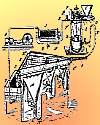
British metallurgist, one of the originators of the froth flotation process for concentrating ores preliminary to the extraction of metal (with H.F.K. Picard, U.S. patent No. 835120, 6 Nov 1906). In this latter method, crude ore is ground to a fine powder and mixed with water, frothing reagents, and collecting reagents. These reagents, such as oil or fatty acids, are chosen for a preferential affinity for metalliferous matter over the waste material (gangue). When air is blown through the mixture, mineral particles cling to the bubbles, which rise to form a froth on the surface, whereas gangue settles to the bottom. The froth is skimmed off, and processed. Sulman had previously worked on several methods for the extraction of gold, including treatment with cyanogen bromide.
British metallurgist, one of the originators of the froth flotation process for concentrating ores preliminary to the extraction of metal (with H.F.K. Picard, U.S. patent No. 835120, 6 Nov 1906). In this latter method, crude ore is ground to a fine powder and mixed with water, frothing reagents, and collecting reagents. These reagents, such as oil or fatty acids, are chosen for a preferential affinity for metalliferous matter over the waste material (gangue). When air is blown through the mixture, mineral particles cling to the bubbles, which rise to form a froth on the surface, whereas gangue settles to the bottom. The froth is skimmed off, and processed. Sulman had previously worked on several methods for the extraction of gold, including treatment with cyanogen bromide.
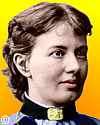
Born 15 Jan 1850; died 10 Feb 1891 at age 41. quotes
Russian mathematician and novelist who was the first major female Russian educated in the subject. She wrote that she was immersed from an early age: while just age 11, the walls of her nursery were papered with pages of calculus lecture notes, (said to be due to a shortage of wallpaper) from which she learned For university studies, she could only attend lectures unofficially, since women were not allowed to matriculate at Heidelberg. Nevertheless, by 1889, she became the first female full professor in Europe. She made valuable contributions to the theory of differential equations. At the early age of 41, while still at the peak of her mathematical ability and renown, Kovalevskaya died of influenza complicated by pneumonia.«a.k.a. Sofya, Sonya or Sophie, and as Kovalevsky.
Russian mathematician and novelist who was the first major female Russian educated in the subject. She wrote that she was immersed from an early age: while just age 11, the walls of her nursery were papered with pages of calculus lecture notes, (said to be due to a shortage of wallpaper) from which she learned For university studies, she could only attend lectures unofficially, since women were not allowed to matriculate at Heidelberg. Nevertheless, by 1889, she became the first female full professor in Europe. She made valuable contributions to the theory of differential equations. At the early age of 41, while still at the peak of her mathematical ability and renown, Kovalevskaya died of influenza complicated by pneumonia.«a.k.a. Sofya, Sonya or Sophie, and as Kovalevsky.
Beyond the Limit: The Dream of Sofya Kovalevskaya, by Joan Spicci. - book suggestion.
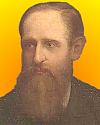
Born 15 Jan 1842; died 20 Jun 1925 at age 83.
Austrian physician whose cathartic method was acknowledged by Sigmund Freud and others as the principal forerunner of psychoanalysis. Breuer found (1880) that he had relieved symptoms of hysteria in a patient, Bertha Pappenheim, (called Anna O. in his case study), after he had induced her to recall past unpleasant experiences under hypnosis. By describing her traumatic experiences and feelings about them to Breuer she seemed to get some relief from debilitating symptoms such as partial paralysis and hallucinations. Although Breuer's treatment was not nearly as successful as he and Freud claimed, she eventually overcame her symptoms to become an innovative social worker and a leader of the women's movement in Germany.
Austrian physician whose cathartic method was acknowledged by Sigmund Freud and others as the principal forerunner of psychoanalysis. Breuer found (1880) that he had relieved symptoms of hysteria in a patient, Bertha Pappenheim, (called Anna O. in his case study), after he had induced her to recall past unpleasant experiences under hypnosis. By describing her traumatic experiences and feelings about them to Breuer she seemed to get some relief from debilitating symptoms such as partial paralysis and hallucinations. Although Breuer's treatment was not nearly as successful as he and Freud claimed, she eventually overcame her symptoms to become an innovative social worker and a leader of the women's movement in Germany.
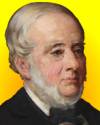
Born 15 Jan 1815; died 19 Apr 1889 at age 74.
English inventor, printer and astronomer who began as a printer in the de la Rue family. He pioneered applying photography to astronomical observations—the method still used today. Inspired by James Nasmyth’s drawings of the moon, de la Rue set up an observatory with a 13-in reflecting telescope (1850). His drawings had improved accuracy and details of the sun, moon and planets. He progressed into photography, including stereoscopic plates to view the topography of the moon and sun. De la Rue devised the photoheliograph to study the sun’s surface and also invented one of the first electric light bulbs (1840)—a coiled platinum filament in a vacuum. In 1856-62, he published various chemistry papers.«
English inventor, printer and astronomer who began as a printer in the de la Rue family. He pioneered applying photography to astronomical observations—the method still used today. Inspired by James Nasmyth’s drawings of the moon, de la Rue set up an observatory with a 13-in reflecting telescope (1850). His drawings had improved accuracy and details of the sun, moon and planets. He progressed into photography, including stereoscopic plates to view the topography of the moon and sun. De la Rue devised the photoheliograph to study the sun’s surface and also invented one of the first electric light bulbs (1840)—a coiled platinum filament in a vacuum. In 1856-62, he published various chemistry papers.«
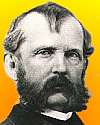
Born 15 Jan 1803; died 30 Apr 1873 at age 70.
American botanist who was the foremost U.S. bryologist in his time. Sullivant graduated in the same year his father died, and took over his surveying business. He began studying and the plant life of central Ohio and published A Catalogue of Plants, Native and Naturalized, in the Vicinity of Columbus, Ohio (1840). When he expanded his interest to the bryophytes (mosses and liverworts), he cataloged not only specimens from the U.S., but also Central America, South America, and various Pacific Ocean islands. He was elected to the National Academy of Sciences in 1872. The moss Sullivantia Ohioensis was named in his honour.«
American botanist who was the foremost U.S. bryologist in his time. Sullivant graduated in the same year his father died, and took over his surveying business. He began studying and the plant life of central Ohio and published A Catalogue of Plants, Native and Naturalized, in the Vicinity of Columbus, Ohio (1840). When he expanded his interest to the bryophytes (mosses and liverworts), he cataloged not only specimens from the U.S., but also Central America, South America, and various Pacific Ocean islands. He was elected to the National Academy of Sciences in 1872. The moss Sullivantia Ohioensis was named in his honour.«
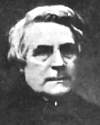
c. 1850
Born 15 Jan 1803; died 20 Dec 1877 at age 74.
German mechanic, instrument maker and inventor who devised the Ruhmkorff coil, his version of the induction coil (after Nicholas Joseph Callan's earlier invention of 1836). Ruhmkorff's induction coil could produce sparks over 1 ft (30 cm) in length, and became popular for energizing discharge tubes, especially those for generating X-rays (discovered by Wilhelm Röntgen, on 8 Nov 1895). The device uses a primary coil and iron core concentric with a secondary coil with a large number of turns. By using a contact breaker giving abrupt and rapid interruptions in the primary coil current, a concentrated, changing magnetic field produced a high voltage in the secondary coil. He also invented a thermo-electric battery in 1844.«
German mechanic, instrument maker and inventor who devised the Ruhmkorff coil, his version of the induction coil (after Nicholas Joseph Callan's earlier invention of 1836). Ruhmkorff's induction coil could produce sparks over 1 ft (30 cm) in length, and became popular for energizing discharge tubes, especially those for generating X-rays (discovered by Wilhelm Röntgen, on 8 Nov 1895). The device uses a primary coil and iron core concentric with a secondary coil with a large number of turns. By using a contact breaker giving abrupt and rapid interruptions in the primary coil current, a concentrated, changing magnetic field produced a high voltage in the secondary coil. He also invented a thermo-electric battery in 1844.«
Born 15 Jan 1785; died 9 Apr 1850 at age 65. quotes
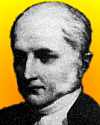
English biochemist and physiologist who is noted for his discoveries concerning digestion, metabolic chemistry, and atomic weights. He is best known for formulating Prout's hypothesis (1815) which states that the atomic weights of all elements are exact multiples of the atomic weight of hydrogen. At that time the atomic weight of hydrogen was taken to be 1.0, the hypothesis implied that all atomic weights would be whole numbers. In 1818, he isolated urea and uric acid for the first time. Six years later, he found hydrochloric acid in the digestive juices of the stomach. He was the first scientist (1827) to classify the components of food into the three main divisions of carbohydrates, fats and proteins. In 1920, Ernest Rutherford named the proton after Prout.
English biochemist and physiologist who is noted for his discoveries concerning digestion, metabolic chemistry, and atomic weights. He is best known for formulating Prout's hypothesis (1815) which states that the atomic weights of all elements are exact multiples of the atomic weight of hydrogen. At that time the atomic weight of hydrogen was taken to be 1.0, the hypothesis implied that all atomic weights would be whole numbers. In 1818, he isolated urea and uric acid for the first time. Six years later, he found hydrochloric acid in the digestive juices of the stomach. He was the first scientist (1827) to classify the components of food into the three main divisions of carbohydrates, fats and proteins. In 1920, Ernest Rutherford named the proton after Prout.
From Protyle to Proton: William Prout and the Nature of Matter, 1785-1985, by W.H. Brock. - book suggestion.

Died 15 Jan 2010 at age 82 (born 10 Apr 1927).
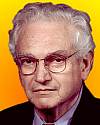
Marshall Warren Nirenberg was an American biochemist who shared with (Robert William Holley and Har Gobind Khorana) the 1968 Nobel Prize for Physiology or Medicine. He was noted for his role in deciphering the genetic code. He demonstrated that, with the exception of “nonsense codons,” each possible triplet (called a codon) of four different kinds of nitrogen-containing bases found in deoxyribonucleic acid (DNA) and, in some viruses, in ribonucleic acid (RNA) ultimately causes the incorporation of a specific amino acid into a cell protein.
Marshall Warren Nirenberg was an American biochemist who shared with (Robert William Holley and Har Gobind Khorana) the 1968 Nobel Prize for Physiology or Medicine. He was noted for his role in deciphering the genetic code. He demonstrated that, with the exception of “nonsense codons,” each possible triplet (called a codon) of four different kinds of nitrogen-containing bases found in deoxyribonucleic acid (DNA) and, in some viruses, in ribonucleic acid (RNA) ultimately causes the incorporation of a specific amino acid into a cell protein.
Died 15 Jan 2007 at age 91 (born 22 Aug 1915).
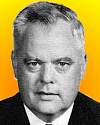
Canadian-American physicist who was a pioneering researcher for the electron microscope. With Albert Prebus, he built the first successful electron microscope in North America (1939-40) The 41 patents he held included innovations in electron diffraction, ultra-thin sectioning and bacteriological techniques. To image such materials as blood cells or bacteria without destroying them with the electron beam, Hillier and others developed methods of preparation using a colloid film to protect samples. He worked for RCA from 1940 for 37 years. He continued to improve the design, and marketed the electron microscope to research institutions worldwide. In 1958, he became the director of the company's research laboratories at Princeton. By the 1960s, when RCA ended its manufacture of electron microscopes, about 2,000 had been sold.«
Canadian-American physicist who was a pioneering researcher for the electron microscope. With Albert Prebus, he built the first successful electron microscope in North America (1939-40) The 41 patents he held included innovations in electron diffraction, ultra-thin sectioning and bacteriological techniques. To image such materials as blood cells or bacteria without destroying them with the electron beam, Hillier and others developed methods of preparation using a colloid film to protect samples. He worked for RCA from 1940 for 37 years. He continued to improve the design, and marketed the electron microscope to research institutions worldwide. In 1958, he became the director of the company's research laboratories at Princeton. By the 1960s, when RCA ended its manufacture of electron microscopes, about 2,000 had been sold.«
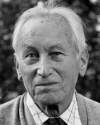
Died 15 Jan 1997 at age 92 (born 5 Aug 1904).
English-American plant physiologist, who pioneered in the field of plant physiology, especially hormones that control the development of plants. In particular, he identified auxin, a growth hormone, and revealed its chemical structure (very important to agriculture and horticulture industries). He also researched the biosynthesis of pigments responsible for the colors of flowers and fruits, and the action of various zones of the light spectrum on photosynthesis. Later he studied the factors controlling the mechanisms of plant senescence, especially the aging of leaves.
English-American plant physiologist, who pioneered in the field of plant physiology, especially hormones that control the development of plants. In particular, he identified auxin, a growth hormone, and revealed its chemical structure (very important to agriculture and horticulture industries). He also researched the biosynthesis of pigments responsible for the colors of flowers and fruits, and the action of various zones of the light spectrum on photosynthesis. Later he studied the factors controlling the mechanisms of plant senescence, especially the aging of leaves.
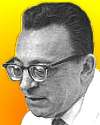
Died 15 Jan 1997 at age 92 (born 1 Jan 1905).
American pathologist whose diligent research produced the first evidence in human lung tissue of a causal connection between cigarette smoking and cancer. His results of microscopic examination of thousands of lung tissue slides were prominently cited in the Surgeon General's 1964 landmark report on the dangers of smoking to health. Statistical results had earlier found that the more people smoked, the greater the likelihood of cancer. Instead of statistical analysis of large groups of people, Auerbach directly demonstrated, one patient at a time, that lung tissue samples from smokers showed damage to the tissues. Furthermore, the heavier smokers had greater lung damage. He also studied the effect of passive smoking, and found that breathing in a smoky environment also showed a degree of lung damage.«
American pathologist whose diligent research produced the first evidence in human lung tissue of a causal connection between cigarette smoking and cancer. His results of microscopic examination of thousands of lung tissue slides were prominently cited in the Surgeon General's 1964 landmark report on the dangers of smoking to health. Statistical results had earlier found that the more people smoked, the greater the likelihood of cancer. Instead of statistical analysis of large groups of people, Auerbach directly demonstrated, one patient at a time, that lung tissue samples from smokers showed damage to the tissues. Furthermore, the heavier smokers had greater lung damage. He also studied the effect of passive smoking, and found that breathing in a smoky environment also showed a degree of lung damage.«
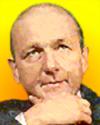
Died 15 Jan 1981 at age 81 (born 8 Jul 1899). quotes
David Eli Lilienthal was an American government administrator and author who was the first Chairman of the U.S. Atomic Energy Commission. He served from 1 Nov 1946 until he resigned on 15 Feb 1950. His career began as a lawyer, with an interest in labor law, and from 1926 in public utility law, which led to being a member of Wisconsin's Public Service Commission. When the Tennessee Valley Authority was established to bring inexpensive hydroelectric power to rural areas, he became a co-director in 1931, and its Chairman (1933-1941). He was asked by U.S. Under Secretary of State, Dean Acheson, in Jan 1946 to chair a committee to advise President Truman. The panel produced the 60-page Acheson-Dean Report (Report on the International Control of Atomic Energy). Subsequently, he chaired the AEC to pioneer civilian control of American atomic energy.«
David Eli Lilienthal was an American government administrator and author who was the first Chairman of the U.S. Atomic Energy Commission. He served from 1 Nov 1946 until he resigned on 15 Feb 1950. His career began as a lawyer, with an interest in labor law, and from 1926 in public utility law, which led to being a member of Wisconsin's Public Service Commission. When the Tennessee Valley Authority was established to bring inexpensive hydroelectric power to rural areas, he became a co-director in 1931, and its Chairman (1933-1941). He was asked by U.S. Under Secretary of State, Dean Acheson, in Jan 1946 to chair a committee to advise President Truman. The panel produced the 60-page Acheson-Dean Report (Report on the International Control of Atomic Energy). Subsequently, he chaired the AEC to pioneer civilian control of American atomic energy.«
Died 15 Jan 1970 at age 89 (born 8 Jan 1881). quotes
American manufacturer of small aircraft, best known for the Piper Cub, a two-seater that became the most popular family aircraft. He earned the sobriquet "the Henry Ford of Aviation" for his efforts to popularize air travel. In WW II, Piper delivered more than 5,600 Piper Cubs, long popular as a training plane, to the U.S. government for use as special personnel planes, for photoreconnaissance, and as artillery spotters. Because of their low landing speed, 20 mph (32 kph) and high maneuverability, the Pipers easily eluded enemy fighters. In addition to the Piper Cub, the company manufactured light to medium-sized aircraft for use as business planes.
American manufacturer of small aircraft, best known for the Piper Cub, a two-seater that became the most popular family aircraft. He earned the sobriquet "the Henry Ford of Aviation" for his efforts to popularize air travel. In WW II, Piper delivered more than 5,600 Piper Cubs, long popular as a training plane, to the U.S. government for use as special personnel planes, for photoreconnaissance, and as artillery spotters. Because of their low landing speed, 20 mph (32 kph) and high maneuverability, the Pipers easily eluded enemy fighters. In addition to the Piper Cub, the company manufactured light to medium-sized aircraft for use as business planes.

Died 15 Jan 1948 at age 94 (born 24 Jul 1853).
French astrophysicist who invented a spectroheliograph (1894) to photograph the Sun in monochromatic light (about a year after George E. Hale in the U.S.) and made extensive studies of the solar chromosphere and solar activity. He worked at the Paris and Meudon Observatories. His investigation of molecular spectra produced empirical laws presaging those of quantum mechanics. He observed spectra of planets and stars and measured their radial velocities of, and he determined the rotation rates of Uranus, Jupiter and Saturn (shortly after James E. Keeler).
French astrophysicist who invented a spectroheliograph (1894) to photograph the Sun in monochromatic light (about a year after George E. Hale in the U.S.) and made extensive studies of the solar chromosphere and solar activity. He worked at the Paris and Meudon Observatories. His investigation of molecular spectra produced empirical laws presaging those of quantum mechanics. He observed spectra of planets and stars and measured their radial velocities of, and he determined the rotation rates of Uranus, Jupiter and Saturn (shortly after James E. Keeler).
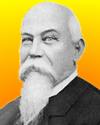
Died 15 Jan 1902 at age 63 (born 5 Apr 1838).
U.S. zoologist and paleontologist who studied invertebrate fossil records, the evolution of the cephalopods (a class of mollusks including squids and octopuses) and the development of primitive organisms. Along with E. Cope, he was the most prominent American neo-Lamarckian. Based on the analogy of ontogeny with phylogeny, Hyatt claimed that lineages, like individuals, had cycles of youth, old age, and death (extinction). Decline was programmed in. As maturity leads to old age, the best individuals die, leaving the worst to see the end. This idea became the bulwark of orthogenetic theories in the U.S. Hyatt was the founder and first editor of the American Naturalist, and first president of Woods Hole laboratory.
U.S. zoologist and paleontologist who studied invertebrate fossil records, the evolution of the cephalopods (a class of mollusks including squids and octopuses) and the development of primitive organisms. Along with E. Cope, he was the most prominent American neo-Lamarckian. Based on the analogy of ontogeny with phylogeny, Hyatt claimed that lineages, like individuals, had cycles of youth, old age, and death (extinction). Decline was programmed in. As maturity leads to old age, the best individuals die, leaving the worst to see the end. This idea became the bulwark of orthogenetic theories in the U.S. Hyatt was the founder and first editor of the American Naturalist, and first president of Woods Hole laboratory.
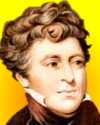
Died 15 Jan 1878 at age 87 (born 27 Dec 1790).
English obstetrician and medical researcher who researched in the technique of blood transfusion, and was the first in Great Bitain to perform the procedure using human blood (rather than animal blood) on 26 Sep 1818 at Guy's Hospital, London. He used an apparatus of his his own design to collect and transfer the blood. His patient, who had an incurable disease, was anxious to try a blood transfusion from human donors. Although there seemed initial signs of benefit, he survived only another 56 hours. In the years that followed, his technique eventually led to saving lives, despite failures until the significance of matching blood types known after 1900.« more
English obstetrician and medical researcher who researched in the technique of blood transfusion, and was the first in Great Bitain to perform the procedure using human blood (rather than animal blood) on 26 Sep 1818 at Guy's Hospital, London. He used an apparatus of his his own design to collect and transfer the blood. His patient, who had an incurable disease, was anxious to try a blood transfusion from human donors. Although there seemed initial signs of benefit, he survived only another 56 hours. In the years that followed, his technique eventually led to saving lives, despite failures until the significance of matching blood types known after 1900.« more
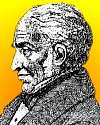
Died 15 Jan 1875 at age 91 (born 16 Feb 1783).
Belgian geologist who was an early proponent of evolution. From his youth he pursued geological researches. He was one of the pioneers of modern geology who determined the stratigraphy of the Carboniferous and other rocks in Belgium and the Rhine provinces, and also made detailed studies of the Tertiary deposits of the Paris Basin. As noted by Charles Darwin in the preface of Origin of the Species: "In 1846 the veteran geologist ... Halloy published ... his opinion that it is more probable that new species have been produced by descent with modification than that they have been separately created: the author first promulgated this opinion in 1831." Even in his ninety-first year Halloy made a scientific expedition alone, which exertion contributed to his death.
Belgian geologist who was an early proponent of evolution. From his youth he pursued geological researches. He was one of the pioneers of modern geology who determined the stratigraphy of the Carboniferous and other rocks in Belgium and the Rhine provinces, and also made detailed studies of the Tertiary deposits of the Paris Basin. As noted by Charles Darwin in the preface of Origin of the Species: "In 1846 the veteran geologist ... Halloy published ... his opinion that it is more probable that new species have been produced by descent with modification than that they have been separately created: the author first promulgated this opinion in 1831." Even in his ninety-first year Halloy made a scientific expedition alone, which exertion contributed to his death.
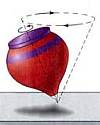
Died 15 Jan 1790 at age 70 (born 23 Jan 1719).
British mathematician who made important contributions on elliptic integrals. As a trained surveyor and land agent (1762-88), Landen's interest in mathematics was for leisure. He sent his results on making the differential calculus into a purely algebraic theory to the Royal Society, and also wrote on dynamics, and summation of series. Landen devised an important transformation, known by his name, giving a relation between elliptic functions which expresses a hyperbolic arc in terms of two elliptic ones. He also solved the problem of the spinning top and explained Newton's error in calculating the precession. Landen was elected a Fellow of the Royal Society in 1766. He corrected Stewart's result on the Sun-Earth distance (1771).
British mathematician who made important contributions on elliptic integrals. As a trained surveyor and land agent (1762-88), Landen's interest in mathematics was for leisure. He sent his results on making the differential calculus into a purely algebraic theory to the Royal Society, and also wrote on dynamics, and summation of series. Landen devised an important transformation, known by his name, giving a relation between elliptic functions which expresses a hyperbolic arc in terms of two elliptic ones. He also solved the problem of the spinning top and explained Newton's error in calculating the precession. Landen was elected a Fellow of the Royal Society in 1766. He corrected Stewart's result on the Sun-Earth distance (1771).
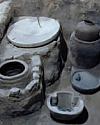
In 1970, the first evidence was uncovered of the razing by fire of Jerusalem by Roman troops led by General Titus in 70 A.D. upon orders from Caesar. Israeli archaeologist Prof. Nahumn Avigad excavated ruins in the Jewish Quarter of Old Jerusalem, a few hundred yards from the Wailing Wall. Three meters (10 feet) under the earth, he found two rooms with evidence of intense heat and ashes. One was apparently a pharmacy, with beautifully carved stone jars, stone weights, and measuring cups. The second was perhaps a woodworking shop. Coins were found which helped precisely date the event. Despite the destruction, the site was valuable because the objects were found buried there as they had been used.«*
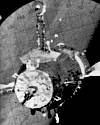
In 1969, the first docking of two manned spacecraft took place between the Soviet Soyuz 4 and Soyuz 5. The spacecraft formed what was termed “the world's first space station” with a crew of four aboard. They remained docked for four and a half hours—three orbits of the Earth. During that time, two cosmonauts “space walked” from Soyuz 4 to Soyuz 5, becoming the first spacefarers to return to Earth in a different spacecraft from the one in which they went into space. The docking manoeuvre had been practised twice before (in 1967 and 1968) when Soyuz craft had docked together under fully automatic control.[Image: Soyuz 4 from an on-board video camera on Soyuz 5.]
In 1955, the first U.S. house to be both solar-heated and radiation-cooled started its system. It was built in Tucson, Arizona by solar physicist Raymond W. Bliss, Jr. (6 Oct 1915 - 7 Nov 2004). The system was built at a cost of nearly $4,000 for labour and materials. It was made using a large slanted slab of steel and glass that converted sunlight into heat, which was ducted into the house. Summer cooling used the same ducts and associated fans and controls. The first U.S. house to be completely solar heated was occupied in Dover, Mass. on 24 Dec 1948. That heating system was designed by Dr. Maria Telkes from the MIT Solar Laboratory, used black sheet metal collectors to capture solar energy, stored by the phase-change of sodium sulphate decahydrate in “heat bins.”
In 1936, the first, all glass, windowless building in the U.S. was completed in Toledo, Ohio as the home of the Owens-Illinois Glass Company Laboratory. It was built using 80,000 translucent water-clear hollow glass blocks, weighing about 150 tons. The two stories contained 39 rooms with an aggregate floor area of about 20,000 sq.ft. The glass blocks which were manufactured at the company's plant in Muncie, Indiana, were a structural part of the building.
In 1919, in a Boston molasses processing plant, an immense vat burst, flooding its contents into the street with a heavy wave of molasses moving at a speed of an estimated 35 mph. The disaster killed 21 and injured 150 people. (Compare the tragedy at the Horseshoe brewery, London, when on the night of 17 Oct 1814, the metal bands of an immense beer brewing vessel snapped releasing a tidal wave of 3,555 barrel of Porter beer, which swept away the brewery walls, flooded nearby basements, collapsed several tenements and resulted in eight deaths.«
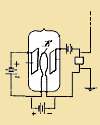
In 1907, the three-element vacuum tube was issued a U.S. patent to its inventor, Dr Lee de Forest as a “device for amplifying feeble electric currents - such, for example, as telephone currents” (No. 841,387). The tube was evacuated, with some remaining conducting gas molecules, and it was suggested using for the heated electrode such material as platinum, tantalum or carbon. He had made a public annoucement of his device a few months earlier, on 20 Oct 1906 at a meeting of the American Institute of Electrical Engineers held in New York City. On 18 Feb 1908, he received another patent for the grid electrode tube (No. 879,532).
In 1907, gold dental inlays were first described in the U.S. by H. William Taggart, a Chicago dentist, at the New York Odontological Society. His invention of a method for casting gold inlays by the inverted pattern procedure used the ancient principle of the "disappearing core." The use of gold for the filling of dental cavities was first described a half century earlier, in Oct 1854.
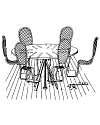
In 1889, the idea of a "Rotary Dining Table" was issued a U.S. patent to a Black American inventor, Daniel Johnson of Kansas City, Kansas. His idea was to combine a "rotary table and adjustable chair adapted for saloons of sea-going vessels and of other descriptions, in which the occupants of the chairs may be served in rotation from one stationary base of supply without the danger and inconvenience incident to the person making the circuit of the table when the vessel is upon the seas, and also enabling the persons seated at the table to be served with dispatch." The entire table with its attached chairs was supported on one central rotating shaft - making the seated persons part of a human "Lazy Susan" type of turntable! (No. 396,089)
The Inventive Spirit of African Americans: Patented Ingenuity, by Patricia Carter Sluby. - book suggestion.
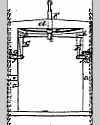
In 1861, the safety elevator was patented as a “Hoisting Apparatus” by the American inventor, Elisha G. Otis, of Yonkers, New York. (No. 31,128). His invention was designed to arrest a fall in case of the lifting rope breaking. It used spring-loaded pawls that would release and engage in a mortised track in the walls of the shaft. In 1853, Otis had demonstrated a freight elevator equipped with a safety device to prevent falling in case a supporting cable should break. This increased public confidence and Otis established a company for manufacturing elevators. The first elevator for public use was a steam driven type installed by Otis Brothers (1857) in the five story Broadway department store of E.W Haughtwhat & Co.
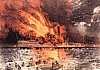
In 1840, the Steamboat Lexington burnt in Long Island Sound with loss of over 100 lives. Three days later, there appeared in New York what was the first use of a line diagram to illustrate a current event in a U.S. newspaper. The Extra Sun was published with a finely drawn and violently realistic picture of the flaming vessel. Figures are seen lining the rails fore and aft and leaping into the water while a starboard lifeboat spills its occupants into the sea after a clumsy launching, In the foreground, frenzied women and men in stovepipe hats take a precarious refuge on the cotton bales that were the ship's cargo and cling desperately to bits of debris. This best-selling lithograph by Nathaniel Currier launched the future work of Currier and Ives illustrating events.

In 1797, according to a likely merely apocryphal story, the top hat was first worn in England by James Heatherington, a Strand haberdasher in London. Allegedly,* The Times of that period recorded that when he left his shop with his extraordinary headwear, a crowd of onlookers assembled, which degenerated into a shoving match. Consequently, Heatherington was summoned to appear in court before the Lord Mayor and fined £50 for going about in a manner “calculated to frighten timid people.” Within a month, he was overwhelmed with orders for the new top hats. In France, a painting by Charles Vernet (1758-1836) titled Un Incroyable de 1796 depicts a dandy of his time wearing a stovepipe hat, which might be interpreted as an earlier appearance of the top hat.* [p.159, with name revised from John Etherington based on email of 5 Feb 2005 from descendant.] Webmaster’s search of The Times archive did not locate such article or quote, so on 7 May 2021, this entry was amended to apocryphal. Other internet sources state date of 5 Jan 1797.
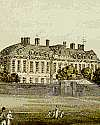
In 1759, the British Museum, in Bloomsbury, London, the world's oldest public national museum, opened to the public who were admitted in small groups, by ticket obtained in advance, for a conducted tour. It was established on 7 Jun 1753 when King George II gave his royal assent to an Act of Parliament on 5 Apr 1753 to acquire the collection of Sir Hans Sloane. In his will, he had offered the nation his lifetime collection of 71,000 objects, mostly plant and animal specimens. In return, he requested £20,000 for his heirs (which today would be over £2,000,000). The present museum buildings date from the mid-19th century. Its natural history collection moved to its own museum in 1881. The British Museum set up a laboratory in 1920 for its scientific studies.[Image: Montagu House, a 17th century mansion, first home of the British Museum.] more




