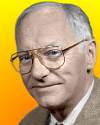
Born 13 Feb 1923; died 17 Dec 1998 at age 75.
Alfred Peter Wolf was an American nuclear and organic chemist. As a senior chemist at the U.S. Brookhaven National Laboratory, he made pioneering contributions over nearly 50 years in the field of organic radiochemistry. By the mid-1960's, his fundamental studies in the synthesis of small, radiolabeled compounds grew into a new interest in developing radiotracers labeled with short-lived positron emitting isotopes like carbon-11 so that the tracer method could be applied to visualize biochemical transformations in living systems. His discoveries led to advances in medical imaging, especially the development of positron emission tomography, or PET, a tool now used worldwide to diagnose disease and study the brain's inner workings.
Alfred Peter Wolf was an American nuclear and organic chemist. As a senior chemist at the U.S. Brookhaven National Laboratory, he made pioneering contributions over nearly 50 years in the field of organic radiochemistry. By the mid-1960's, his fundamental studies in the synthesis of small, radiolabeled compounds grew into a new interest in developing radiotracers labeled with short-lived positron emitting isotopes like carbon-11 so that the tracer method could be applied to visualize biochemical transformations in living systems. His discoveries led to advances in medical imaging, especially the development of positron emission tomography, or PET, a tool now used worldwide to diagnose disease and study the brain's inner workings.
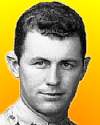
Born 13 Feb 1923; died 7 Dec 2020 at age 97. quotes
Charles Elwood “Chuck” Yeager was an American pilot who returned from WW II as a decorated fighter pilot, and began testing new technology aircraft using jet power and rocker power. He achieved numerous speed records. His most famous is his 1947 flight faster than sound. The Bell X-1 was a built as a research aircraft to reach extreme speeds and alititudes. On 14 Oct 1947 in the X-1 was piggy-backed on a B-29 and was carried up to 21,000 ft (6,400 m). He detached, firing four liquid-fuel rockets, which took him at up to a supersonic speed of Mach 1.06 and a maximum altitude of 45,000 ft (13,700 m). He served for decades, training test pilots and with other research program until retiring in 1976.«
Charles Elwood “Chuck” Yeager was an American pilot who returned from WW II as a decorated fighter pilot, and began testing new technology aircraft using jet power and rocker power. He achieved numerous speed records. His most famous is his 1947 flight faster than sound. The Bell X-1 was a built as a research aircraft to reach extreme speeds and alititudes. On 14 Oct 1947 in the X-1 was piggy-backed on a B-29 and was carried up to 21,000 ft (6,400 m). He detached, firing four liquid-fuel rockets, which took him at up to a supersonic speed of Mach 1.06 and a maximum altitude of 45,000 ft (13,700 m). He served for decades, training test pilots and with other research program until retiring in 1976.«
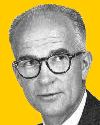
1958
Born 13 Feb 1910; died 12 Aug 1989 at age 79. quotes
William Bradford Shockley was an English-American physicist and engineer who shared (with John Bardeen and Walter H. Brattain) the 1956 Nobel Prize for Physics for their development of the transistor, a device that largely replaced the bulkier and less-efficient vacuum tube and ushered in the age of microminiature electronics.
William Bradford Shockley was an English-American physicist and engineer who shared (with John Bardeen and Walter H. Brattain) the 1956 Nobel Prize for Physics for their development of the transistor, a device that largely replaced the bulkier and less-efficient vacuum tube and ushered in the age of microminiature electronics.
Broken Genius: Rise and Fall of William Shockley, Creator of the Electronic Age, by Joel N. Shurkin. - book suggestion.
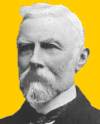
Born 13 Feb 1852; died 14 Sep 1926 at age 74.
Danish astronomer who compiled the New General Catalogue of Nebulae and Clusters of Stars, (NGC) in 1888. When he became Director of the Armagh Observatory in 1882, financially it was destitute, with no prospect of replacing its aging instruments. Though Dreyer obtained a new 10-inch refractor by Grubb, the lack of funding for an assistant, precluded him from a continuation of traditional positional astronomy. Instead he concentrated on the compilation of observations made earlier. The NGC he listed 7840 objects and in its supplements (1895, 1908) he added a further 5386 objects. It still remains one of the standard reference catalogs.
Danish astronomer who compiled the New General Catalogue of Nebulae and Clusters of Stars, (NGC) in 1888. When he became Director of the Armagh Observatory in 1882, financially it was destitute, with no prospect of replacing its aging instruments. Though Dreyer obtained a new 10-inch refractor by Grubb, the lack of funding for an assistant, precluded him from a continuation of traditional positional astronomy. Instead he concentrated on the compilation of observations made earlier. The NGC he listed 7840 objects and in its supplements (1895, 1908) he added a further 5386 objects. It still remains one of the standard reference catalogs.
Born 13 Feb 1851; died 6 Sep 1896 at age 45.
G(eorge) Brown Goode was an American zoologist who directed the scientific reorganization and recataloging of the collection at the National Museum of Natural History, Washington, D.C. During the 1880's he edited two volumes of atlases of illustrations of "The Fisheries and Fisheries Industries of the United States" while Deputy Commissioner of the United States Commission of Fish and Fisheries. The study captured the state of the American fisheries at that time. They describe a significant part of the marine environment with 532 etchings of marine mammals, fish, and shellfish and also illustrated the state of fishing vessels, gear, methods, and processing.
G(eorge) Brown Goode was an American zoologist who directed the scientific reorganization and recataloging of the collection at the National Museum of Natural History, Washington, D.C. During the 1880's he edited two volumes of atlases of illustrations of "The Fisheries and Fisheries Industries of the United States" while Deputy Commissioner of the United States Commission of Fish and Fisheries. The study captured the state of the American fisheries at that time. They describe a significant part of the marine environment with 532 etchings of marine mammals, fish, and shellfish and also illustrated the state of fishing vessels, gear, methods, and processing.
Born 13 Feb 1834; died 11 Oct 1910 at age 76.
German chemist who invented new industrial chemical processes that enabled the German company BASF (Badische Anilin und Soda Fabrik) to become the leading manufacturer of synthetic dyestuffs for two decades from 1869. Before joining them (1866), he benefitted from time he spent in England, working on mauveine (the first synthetic dye) and learning about the new synthetic dyes William Perkins had developed. Caro improved upon those methods of synthesis. Caro propelled the rise of the German dye industry, which led to Germany’s wider dominance in industrial chemistry, and the emergence of the industrial research laboratory. He helped synthesize artificial alizarin (a natural dye), discovered methylene blue (1877), the first acidic azo dye (1878), and the powerful oxidizing agent, Caro's acid, H2SO5 (1898).«
German chemist who invented new industrial chemical processes that enabled the German company BASF (Badische Anilin und Soda Fabrik) to become the leading manufacturer of synthetic dyestuffs for two decades from 1869. Before joining them (1866), he benefitted from time he spent in England, working on mauveine (the first synthetic dye) and learning about the new synthetic dyes William Perkins had developed. Caro improved upon those methods of synthesis. Caro propelled the rise of the German dye industry, which led to Germany’s wider dominance in industrial chemistry, and the emergence of the industrial research laboratory. He helped synthesize artificial alizarin (a natural dye), discovered methylene blue (1877), the first acidic azo dye (1878), and the powerful oxidizing agent, Caro's acid, H2SO5 (1898).«
Heinrich Caro and the Creation of Modern Chemical Industry, by Carsten Reinhardt and Anthony S. Travis. - book suggestion.
Born 13 Feb 1805; died 5 May 1859 at age 54. quotes
German mathematician who made valuable contributions contributions to number theory, analysis, and mechanics. Dirichlet is best known for his papers on conditions for the convergence of trigonometric series and the use of the series to represent arbitrary functions. He also proposed in 1837 the modern definition of a function. In mechanics he investigated the equilibrium of systems and potential theory. This led him to the Dirichlet problem concerning harmonic functions with given boundary conditions. Dirichlet is considered the founder of the theory of Fourier series, having corrected the earlier mistakes of other workers on Fourier's writings. One of his students was Riemann. In 1855, he succeeded Carl Friedrich Gauss at the University of Göttingen.
German mathematician who made valuable contributions contributions to number theory, analysis, and mechanics. Dirichlet is best known for his papers on conditions for the convergence of trigonometric series and the use of the series to represent arbitrary functions. He also proposed in 1837 the modern definition of a function. In mechanics he investigated the equilibrium of systems and potential theory. This led him to the Dirichlet problem concerning harmonic functions with given boundary conditions. Dirichlet is considered the founder of the theory of Fourier series, having corrected the earlier mistakes of other workers on Fourier's writings. One of his students was Riemann. In 1855, he succeeded Carl Friedrich Gauss at the University of Göttingen.
Born 13 Feb 1766; died 23 Dec 1834 at age 68. quotes
English economist and demographer who can be regarded as a pioneer sociologist. He was one of the first to systematically analyze human society when he published his theories in An Essay on the Principle of Population. Malthus predicted population would always outrun the food supply and that would result in famine, disease or war to reduce the number of people. As Malthus observed the Industrial Revolution was causing a rapid increase in population, he indicated keeping improved social conditions would require imposing strict limits on reproduction. Reading the book inspired Charles Darwin to reflect upon the survival of the fittest individuals in the process of natural selection in evolving populations of any organism. Alfred Russell Wallace likewise acknowledged his theory was stimulated by the book by Malthus. (NPR audio).«[DSB gives birth date 13 Feb 1766. EB gives the range 14/17 Feb 1766.]
English economist and demographer who can be regarded as a pioneer sociologist. He was one of the first to systematically analyze human society when he published his theories in An Essay on the Principle of Population. Malthus predicted population would always outrun the food supply and that would result in famine, disease or war to reduce the number of people. As Malthus observed the Industrial Revolution was causing a rapid increase in population, he indicated keeping improved social conditions would require imposing strict limits on reproduction. Reading the book inspired Charles Darwin to reflect upon the survival of the fittest individuals in the process of natural selection in evolving populations of any organism. Alfred Russell Wallace likewise acknowledged his theory was stimulated by the book by Malthus. (NPR audio).«[DSB gives birth date 13 Feb 1766. EB gives the range 14/17 Feb 1766.]
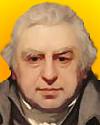
Born 13 Feb 1743; died 19 Jun 1820 at age 77. quotes
Sir Joseph Banks (Baronet) was an English botanist and explorer who was president of the Royal Society for over 40 years, and known for his promotion of science. As an independent naturalist, Banks participated in a voyage to Newfoundland and Labrador in 1767. He successfully lobbied the Royal Society to be included on what was to be James Cook’s first great voyage of discovery, on board the Endeavour (1768-71). King George III appointed Banks adviser to the Royal Botanic Gardens at Kew. Banks established his London home as a scientific base (1776) with natural history collections he made freely available to researchers. In 1819, he was Chairman of committees established by the House of Commons, one to enquire into prevention of banknote forgery, the other to consider systems of weights and measures. more
Sir Joseph Banks (Baronet) was an English botanist and explorer who was president of the Royal Society for over 40 years, and known for his promotion of science. As an independent naturalist, Banks participated in a voyage to Newfoundland and Labrador in 1767. He successfully lobbied the Royal Society to be included on what was to be James Cook’s first great voyage of discovery, on board the Endeavour (1768-71). King George III appointed Banks adviser to the Royal Botanic Gardens at Kew. Banks established his London home as a scientific base (1776) with natural history collections he made freely available to researchers. In 1819, he was Chairman of committees established by the House of Commons, one to enquire into prevention of banknote forgery, the other to consider systems of weights and measures. more
Joseph Banks: a Life, by Patrick O'Brian. - book suggestion.
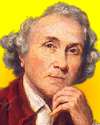
Born 13 Feb 1728; died 16 Oct 1793 at age 65. quotes
Scottish anatomist, surgeon and pathologist who was an early advocate of investigation and experimentation, and a founder of pathological anatomy in England. He made many important studies in comparative aspects of biology, anatomy, physiology, and pathology. Hunter's broad interests included the advancement of dentistry, observations on inflammation, treatment of gun-wounds and some work on venereal diseases. In 1764, he set up his own anatomy school in London, and was elected a fellow of the Royal Society (5 Feb 1767). Following his appointment as surgeon to King George III (1776) he became deputy surgeon to the British Army (1786) and was made Surgeon General in (1789). He was a younger brother of William Hunter, the anatomist.«
Scottish anatomist, surgeon and pathologist who was an early advocate of investigation and experimentation, and a founder of pathological anatomy in England. He made many important studies in comparative aspects of biology, anatomy, physiology, and pathology. Hunter's broad interests included the advancement of dentistry, observations on inflammation, treatment of gun-wounds and some work on venereal diseases. In 1764, he set up his own anatomy school in London, and was elected a fellow of the Royal Society (5 Feb 1767). Following his appointment as surgeon to King George III (1776) he became deputy surgeon to the British Army (1786) and was made Surgeon General in (1789). He was a younger brother of William Hunter, the anatomist.«
The Knife Man: Blood, Body Snatching, and the Birth of Modern Surgery, by Wendy Moore . - book suggestion.
Born 13 Feb 1672; died 6 Jan 1731 at age 58.
French chemist, who was the first to recognize the relative fixed affinities of reagents for one another. He composed tables (1718) listing the relative affinities of different reagents for particular substances, showing how one acid displaces another acid of weaker affinity for a specific base in the salt of that base. (These tables stood for most of the 18th century, until Claude-Louis Berthollet demonstrated that reactions instead depend upon the initial relative quantities of the reactants and physical conditions during the reaction.) Geoffroy considered the quest for the philosopher's stone (a substance capable of transforming base metals into gold) a delusion, but he believed that iron could be formed during the combustion of vegetable matter.
French chemist, who was the first to recognize the relative fixed affinities of reagents for one another. He composed tables (1718) listing the relative affinities of different reagents for particular substances, showing how one acid displaces another acid of weaker affinity for a specific base in the salt of that base. (These tables stood for most of the 18th century, until Claude-Louis Berthollet demonstrated that reactions instead depend upon the initial relative quantities of the reactants and physical conditions during the reaction.) Geoffroy considered the quest for the philosopher's stone (a substance capable of transforming base metals into gold) a delusion, but he believed that iron could be formed during the combustion of vegetable matter.

Died 13 Feb 1914 at age 60 (born 23 Apr 1853).
French criminologist who was chief of criminal identification for the Paris police from 1880. He developed an identification system known as anthropometry, or the Bertillon system, that came into wide use in France and other countries. The system records physical characteristics (eye colour, scars, deformities, etc.) and specified measurements (height, fingertip reach, head length and width, ear, foot, arm and finger length, etc) These are recorded on cards and classified according to the length of the head. After two decades this system was replaced by fingerprinting in the early 1900s because Bertillon measurements were difficult to take with uniform exactness, and could change later due to growth or surgery.
French criminologist who was chief of criminal identification for the Paris police from 1880. He developed an identification system known as anthropometry, or the Bertillon system, that came into wide use in France and other countries. The system records physical characteristics (eye colour, scars, deformities, etc.) and specified measurements (height, fingertip reach, head length and width, ear, foot, arm and finger length, etc) These are recorded on cards and classified according to the length of the head. After two decades this system was replaced by fingerprinting in the early 1900s because Bertillon measurements were difficult to take with uniform exactness, and could change later due to growth or surgery.
Died 13 Feb 1909 at age 82 (born 16 Feb 1826).
(Hans Peter Jörgen) Julius Thomsen was a Danish chemist who tabulated the amount of heat released or absorbed in 3,500 chemical reactions. He originated the term acidity and prepared the first table of the relative strengths of acids. He became wealthy from his process (patented in 1853) for the fabrication of soda from the mineral cryolite. In 1878, Thomsen (and independently by Marcellin Berthelot) proposed that every chemical change proceeds in such a direction that it will produce the most heat. However, this statement is incorrect, for many exceptions are known in which chemical reactions are spontaneous even though they absorb heat. Thomsen designed the modern format of groups and periods on the long form of the Periodic Table of the Elements (1895).« more
(Hans Peter Jörgen) Julius Thomsen was a Danish chemist who tabulated the amount of heat released or absorbed in 3,500 chemical reactions. He originated the term acidity and prepared the first table of the relative strengths of acids. He became wealthy from his process (patented in 1853) for the fabrication of soda from the mineral cryolite. In 1878, Thomsen (and independently by Marcellin Berthelot) proposed that every chemical change proceeds in such a direction that it will produce the most heat. However, this statement is incorrect, for many exceptions are known in which chemical reactions are spontaneous even though they absorb heat. Thomsen designed the modern format of groups and periods on the long form of the Periodic Table of the Elements (1895).« more
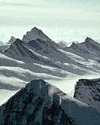
French geologist who was the first to propose the overthrust structure of the Alps, and certain other mountains, such as the Pyranees and Provence. He analyzed lateral crustal compression producing upward displacement and folding of the Earth’s crust. For his work he was awarded (1890) the Prix Vaillant of the Académie des Sciences. (The essay was published postumously in 1908). He developed a theory of orogenic waves resulting in successive periods of massive folding of the Earth’s crust. (The process of folding is named orogeny.) He identified consecutive periods divided as the Caledonian, Hercynian and Alpine periods of orogeny that built up the European mountain system north to south. He was the son of the famous mathematician, Joseph Bertrand.«
Died 13 Feb 1845 at age 71 (born 2 May 1773).
Philosopher and physicist, who combined scientific ideas with German Idealist metaphysics. He was a professor of mineralogy at Halle in 1804 and professor of physics at Breslau in 1811. Though Steffens did much sound scientific work as a physicist, he had the fondness ofs a philosopher for using scientific fact as a basis for the construction of fanciful analogies and quite arbitrary metaphysical conclusions. His exposition of a philosophy of nature in Grundzüge der philosophischen Naturwissenschaft (1806; "Philosophical Characteristics of Natural Science") showed a typical combination of profound scientific knowledge and Schellingian speculation.
Philosopher and physicist, who combined scientific ideas with German Idealist metaphysics. He was a professor of mineralogy at Halle in 1804 and professor of physics at Breslau in 1811. Though Steffens did much sound scientific work as a physicist, he had the fondness ofs a philosopher for using scientific fact as a basis for the construction of fanciful analogies and quite arbitrary metaphysical conclusions. His exposition of a philosophy of nature in Grundzüge der philosophischen Naturwissenschaft (1806; "Philosophical Characteristics of Natural Science") showed a typical combination of profound scientific knowledge and Schellingian speculation.
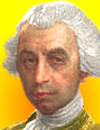
Died 13 Feb 1787 at age 75 (born 18 May 1711). quotes
Serbo-Croatian astronomer and mathematician who gave the first geometric procedure for determining the equator of a rotating planet from three observations of a surface feature and for computing the orbit of a planet from three observations of its position. Boscovich was one of the first in continental Europe to accept Newton's gravitational theories and he wrote 70 papers on optics, astronomy, gravitation, meteorology and trigonometry. Boscovich also showed much ability in dealing with practical problems. He suggested and directed the draining of the Pontine marshes near Rome, and recommended the use of iron bands to control the spread of cracks in the dome of St. Peter's basilica.Name in native language is Ruđer Josip Bošković.
Serbo-Croatian astronomer and mathematician who gave the first geometric procedure for determining the equator of a rotating planet from three observations of a surface feature and for computing the orbit of a planet from three observations of its position. Boscovich was one of the first in continental Europe to accept Newton's gravitational theories and he wrote 70 papers on optics, astronomy, gravitation, meteorology and trigonometry. Boscovich also showed much ability in dealing with practical problems. He suggested and directed the draining of the Pontine marshes near Rome, and recommended the use of iron bands to control the spread of cracks in the dome of St. Peter's basilica.Name in native language is Ruđer Josip Bošković.

In 2012, the first World Radio Day was celebrated, an event decided upon for this day each year by unanimous proclamation of all Member States of UNESCO on 3 Nov 2011. The action had been prompted by a request from the Spanish Radio Academy. Following the proclamation, the day was to be celebrated by all UN agencies and their partners. The chosen date of 13 Feb is the anniversary of the day in 1946 that United Nations Radio was established. The celebration of World Radio Day recognizes that radio is the most widely consumed medium, a powerful communication tool while being a low cost medium. Radio has potential to shape a society’s experience of diversity.«
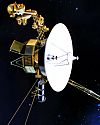
In 1990, the U.S. space probe Voyager I , while heading out to the edge of the Solar System, at 5:12pm PST began a four-hour series of photographs in a look backward which captured the Sun and six planets. An elongated large mozaic was later made by combining about 60 images. In this first “Family Portrait of the Planets”, the Sun appeared almost star-like and the planets were mere dots. Mercury was too close to the sun to photograph. Mars and Pluto, were too small to resolve. This first record of the Solar System from space may remain the only one for decades to follow. Voyager I had a unique lofty perspective, looking down on the plane in which the planets orbit. It had been steadily climbing since it passed Saturn in 1980, and reached an angle of 32 degrees high above the plane of the solar system.«

In 1960, France detonated their first plutonium bomb from a 330-foot tower at the Reggane base in the Sahara in what was then French Algeria. On 18 Oct 1945, the Atomic Energy Commission (Commissariat à l'Énergie Atomique; CEA) had been established by General Charles de Gaulle with the objective of exploiting the scientific, industrial, and military potential of atomic energy. On 22 Jul 1958, de Gaulle, having resumed power as prime minister, had set the date for the first atomic explosion to occur within the first three months of 1960. His goal was to assert France's independence and its role on the world stage. Thus he set about building the country's nuclear capacity acquiring also nuclear-armed aircraft, missiles and submarines.
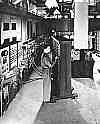
ENIAC
In 1946, the world's first electronic digital computer, ENIAC (the Electronic Numerical Integrator and Calculator) was first demonstrated at the Moore School of Electrical Engineering at the University of Pennsylvania, by the late John W. Mauchly and J. Presper Eckert. The ENIAC machine occupied a room 30 by 50 feet. Its birth lay in WW II as a classified military project known only as Project PX. The ENIAC is historic because it laid the foundations for the modern electronic computing industry. The ENIAC demonstrated that high-speed digital computing was possible using the vacuum tube technology then available. Built out of some 17,468 electronic vacuum tubes, ENIAC was in its time the largest single electronic apparatus in the world.
ENIAC: The Triumphs and Tragedies of the World's First Computer, by Scott McCartney. - book suggestion.
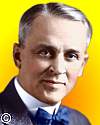
Millikan
In 1912, Robert Millikan began collecting data from his famous oil drop experiment. On this day he gathered observations on the first of the 58 drops he ultimately published. Millikan used his measurements of the motion of oil drops within an electric field to estimate the fundamental unit of charge. He earned the Nobel Prize for Physics in 1923 for his pioneering measurements of the charge on the electron.
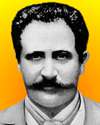
In 1906, a U.S. patent (No. 812,554) was issued to Alfred Einhorn for synthesis of procaine, which was given the tradename of Novocain, for use as a local anaesthetic. It was titled “Alkamin esters of para-aminobenzoic Acid,” and assigned to the German manufacturer, Farbwerke Vorm. Meister Lucius & Brüning, of Höchst-on-the-Main. Einhorn described these alkamin esters as “colorless compounds, little soluble in water, of a low melting-point, readily soluble in alcohol, ether, and benzene, and of alkaline reaction to litmus. The said esters form salts readily soluble in water to a neutral solution. On heating with acids or alkalies the alkamin esters of para-aminobenzoic acid are decomposed with formation of para-aminobenzoic aicd and an alkamin. These esters have the property of producing local anæsthesia.”«
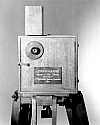
In 1895, a French patent was issued for the Cinématographe, a combined motion-picture camera and projector (No. 245,032). Although the key principle of operation - intermittent feed - was invented by Louis Lumière, it was taken out jointly with his brother Auguste (as was their custom). The patent describes, "The basic property of this appliance's mechanism is to act intermittently on a regularly perforated strip to transmit successive displacements to it separated by stationary periods, during which photographic images are either exposed or viewed." It is said Louis was inspired by the motion of cloth under the needle of a sewing machine. It was demonstrated to a private audience showing the first motion picture on a screen on 22 Mar 1895. The first public presentation of their films was in Paris on 28th Dec 1895.«
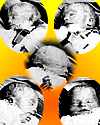
In 1875, the first well-documented U.S. birth of quintuplets was five boys born at Watertown, Wisconsin, to Mrs Edna Beecham Kanouse and her husband Edward. Though the babies appeared normally developed, one was stillborn, three died within minutes of delivery, and the remaining one survived only a few hours. Their total birth weight was 10-lb 2-oz. The doctor, and the father who fetched him arrived after the birth, delayed by heavy snow. The mother had another child several years later, and died a few months thereafter from a contagious disease contracted while caring for a sick friend. Until the 28 May 1934 birth of the famous healthy Dionne quintuplets in Canada, the longest known survival of a quint was 55 days, born in Lisbon, Portugal (1866).«[Image: from post-mortem photo taken shortly before burial and kept secret for decades.]

In 1822, a U.S. patent was issued for the first practical grass mowing machine to Jeremiah Bailey of Chester county, Pennsylvania, said to mow ten acres a day. It was horse-drawn, and the movement of one of its wheels turned gears to spin a vertical shaft with six scythes laid horizontally above the ground in the form of a complete circle. During the rotation, the scythes passed under a whetstone. The cutting apparatus adjusted to the variations in ground surface or grass to stay at the proper distance above the ground. The machine was known both in the U.S. and in Britain, where it was described and illustrated in the Mechanic's Magazine (1823). The first, though unsuccessful, U.S. patent was issued 4 Dec 1811 to Peter Gaillard.«
more
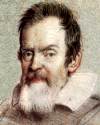
Galileo
In 1633, Italian astronomer Galileo Galilei arrived in Rome for his trial before the Inquisition for professing the belief that the earth revolves around the sun. Enemies of Galileo had convinced Pope Urban VIII that the character Simplicio in the Dialogue ineptly defending the Ptolemaic system, was a thinly veiled caricature of himself. A document was produced alleging that Bellarmine in 1616 forbade Galileo to discuss Copernican ideas in any way. (Modern scholars determined this document is a forgery). He faced two charges: disobeying Bellarmine's order and misleading censors who published his book. Humiliated and threatened with torture, Galileo had no choice but to admit guilt, and “abjure, curse and detest the aforesaid errors and heresies...”
Galileo: A Life, by James Reston. - book suggestion.
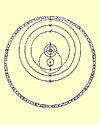
In 1588, Tycho Brahe first outlines his "Tychonic system" idea of the structure of the solar system. The Tychonic system was a hybrid, sharing both the basic idea of the geocentric system of Ptolemy, and the heliocentric idea of Nicholas Copernicus. In his De mundi aethorei recentioribus phaenomenis, Brahe's proposal, retaining Aristotelian physics, kept the the Sun and Moon revolving about Earth in the center of the universe and, at a great distance, the shell of the fixed stars was centered on the Earth. But like Copernicus, he agreed that Mercury, Venus, Mars, Jupiter, and Saturn revolved about the Sun. Thus he could explain the motions of the heavens without "crystal spheres" carrying the planets through complex Ptolemaic epicycles.




