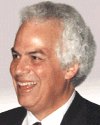
Born 28 May 1942.
Stanley Ben Prusiner is an American neurologist whose discovery (1982) of the prions as a new biological principle of infection won him the 1997 Nobel Prize for Physiology or Medicine. Prions are novel infectious agents differing from all other known pathogenic agents. They are simple proteins that are much smaller than viruses. They are unique since they lack a genome. All other known infectious agents contain genetic material.
Stanley Ben Prusiner is an American neurologist whose discovery (1982) of the prions as a new biological principle of infection won him the 1997 Nobel Prize for Physiology or Medicine. Prions are novel infectious agents differing from all other known pathogenic agents. They are simple proteins that are much smaller than viruses. They are unique since they lack a genome. All other known infectious agents contain genetic material.
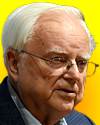
Born 28 May 1930; died 2 Sep 2022 at age 92. quotes
Frank Donald Drake was an American astronomer and astrophysicist who formulated the Drake Equation (1961) to estimate the number of technological civilizations that may exist in the Milky Way galaxy, N = R* × fp × ne× fl × fi × fc × L. Using plausible guesses for the parameters, Drake concluded perhaps 10 planets in our galaxy may have life originating detectable signals. In 1960, Drake led the first search, the two-month Project Ozma to listen for patterns in radio waves with a complex, ordered pattern that might be assumed to represent messages from some extraterrestrial intelligence. Carl Sagan and Drake designed the plaques on Pioneer 10 and Pioneer 11 for the purpose of greeting and informing any extraterrestrial life that might find the vessels after they left the solar system.
Frank Donald Drake was an American astronomer and astrophysicist who formulated the Drake Equation (1961) to estimate the number of technological civilizations that may exist in the Milky Way galaxy, N = R* × fp × ne× fl × fi × fc × L. Using plausible guesses for the parameters, Drake concluded perhaps 10 planets in our galaxy may have life originating detectable signals. In 1960, Drake led the first search, the two-month Project Ozma to listen for patterns in radio waves with a complex, ordered pattern that might be assumed to represent messages from some extraterrestrial intelligence. Carl Sagan and Drake designed the plaques on Pioneer 10 and Pioneer 11 for the purpose of greeting and informing any extraterrestrial life that might find the vessels after they left the solar system.
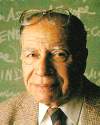
Born 28 May 1915; died 7 May 2001 at age 85.
Joseph Harold Greenberg was an American anthropologist and linguist who specialized in African culture and in language universals. Greenberg's classification of African languages, published in papers 1949-1954, was reprinted as a book in 1955, revised in 1963 and retitled, Languages of Africa (1963). He postulated four families: Niger-Kordofanian, Afroasiatic, Nilo-Saharan, and Khoisan. In his highly controversial “Greenberg Theory,” he suggested that the first Americans arrived from Asia in at least three separate waves, each wave giving rise to one of three linguistic groups (Amerind, Eskimo-Aleut, and Na-Dene). Greenberg stated there was genetic evidence in dental records of Native Americans, which most linguists disregard as speculative.«
Joseph Harold Greenberg was an American anthropologist and linguist who specialized in African culture and in language universals. Greenberg's classification of African languages, published in papers 1949-1954, was reprinted as a book in 1955, revised in 1963 and retitled, Languages of Africa (1963). He postulated four families: Niger-Kordofanian, Afroasiatic, Nilo-Saharan, and Khoisan. In his highly controversial “Greenberg Theory,” he suggested that the first Americans arrived from Asia in at least three separate waves, each wave giving rise to one of three linguistic groups (Amerind, Eskimo-Aleut, and Na-Dene). Greenberg stated there was genetic evidence in dental records of Native Americans, which most linguists disregard as speculative.«
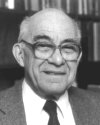
Born 28 May 1911; died 16 May 1994 at age 82.
Alfred Otto Carl Nier was an American physicist who refined the mass spectrometric process to distinguish isotopes. In 1934, with Lyman T. Aldrich he applied the decay of potassium-40 to argon-40 to measure the age of geological materials. He discovered (1936-38) a number of new isotopes of such low abundance they had not been previously detected, including S36, Ca46, Ca48, and Os186. Nier showed how the ratio of radioactive isotopes of uranium and its decay products was a second method to estimate the age of rocks. During WW-II, with others, he showed (1940) that the rarer uranium-235 undergoes fission, not common U-238. Thereafter, Nier was active in the separaton of these two isotopes, important in developing atomic bombs.
Alfred Otto Carl Nier was an American physicist who refined the mass spectrometric process to distinguish isotopes. In 1934, with Lyman T. Aldrich he applied the decay of potassium-40 to argon-40 to measure the age of geological materials. He discovered (1936-38) a number of new isotopes of such low abundance they had not been previously detected, including S36, Ca46, Ca48, and Os186. Nier showed how the ratio of radioactive isotopes of uranium and its decay products was a second method to estimate the age of rocks. During WW-II, with others, he showed (1940) that the rarer uranium-235 undergoes fission, not common U-238. Thereafter, Nier was active in the separaton of these two isotopes, important in developing atomic bombs.
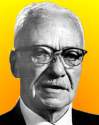
Born 28 May 1895; died 4 Jan 1976 at age 80.
German astronomer who studied spectra, distributions, and motions of planetary nebulae and more than doubled the number known. He investigated novae and supernovae and their remnants, especially the the physics and expansion of the Crab Nebula (a pulsar remnant). With Walter Baade, Minkowski divided supernovae into Types I and II on the basis of spectral characteristics and they identified optical counterparts of many of the early radio sources, including Cygnus A, Virgo A (M87), Perseus A (NGC 1275), and Centaurus A (NGC 5128). Just before retirement he found what was for years the largest known redshift in a galaxy. He was awarded the Bruce Medal in 1961 for distinguished services to astronomy.
German astronomer who studied spectra, distributions, and motions of planetary nebulae and more than doubled the number known. He investigated novae and supernovae and their remnants, especially the the physics and expansion of the Crab Nebula (a pulsar remnant). With Walter Baade, Minkowski divided supernovae into Types I and II on the basis of spectral characteristics and they identified optical counterparts of many of the early radio sources, including Cygnus A, Virgo A (M87), Perseus A (NGC 1275), and Centaurus A (NGC 5128). Just before retirement he found what was for years the largest known redshift in a galaxy. He was awarded the Bruce Medal in 1961 for distinguished services to astronomy.
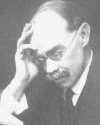
Born 28 May 1861; died 5 Apr 1950 at age 88.
British geographer and meteorologist who exercised a great influence in the reform of geography teaching and on the development of meteorology as a science. As Royal Geographic Librarian he had a great influence on Robert Falcon Scott and Ernest Shackleton and was involved with the exploration of the Antarctic, around 1901. He redefined geography, tracing its history from Aristotle and Ptolemy into the Middle Ages, the reawakening in the 16th century, the Oxford geographers, then Varenius and Isaac Newton and Immanuel Kant to modern times. He lectured on geography as a science and its mathematical principles, descriptive surveys and the importance of cartography.
British geographer and meteorologist who exercised a great influence in the reform of geography teaching and on the development of meteorology as a science. As Royal Geographic Librarian he had a great influence on Robert Falcon Scott and Ernest Shackleton and was involved with the exploration of the Antarctic, around 1901. He redefined geography, tracing its history from Aristotle and Ptolemy into the Middle Ages, the reawakening in the 16th century, the Oxford geographers, then Varenius and Isaac Newton and Immanuel Kant to modern times. He lectured on geography as a science and its mathematical principles, descriptive surveys and the importance of cartography.
Shackleton: The Polar Journeys, by Ernest Henry Shackleton, with Introduction. - book suggestion.
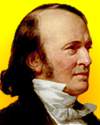
Born 28 May 1807; died 14 Dec 1873 at age 66. quotes
Jean Louis Rodolphe Agassiz was a Swiss-American naturalist and geologist who made revolutionary contributions to the study of natural science with landmark work on glacier activity and extinct fishes. Agassiz began his work in Europe, having studied at the University of Munich and then as chair in natural history in Neuchatel in Switzerland. While there he published his landmark multi-volume description and classification of fossil fish. He remained as a staunch creationist, and opposed Darwin’s theory of evolution. In 1846 Agassiz came to the U.S. to lecture before Boston’s Lowell Institute. Offered a professorship of Zoology and Geology at Harvard in 1848, he decided to stay, becoming a citizen in 1861. His innovative teaching methods altered the character of natural science education in the U.S.
Jean Louis Rodolphe Agassiz was a Swiss-American naturalist and geologist who made revolutionary contributions to the study of natural science with landmark work on glacier activity and extinct fishes. Agassiz began his work in Europe, having studied at the University of Munich and then as chair in natural history in Neuchatel in Switzerland. While there he published his landmark multi-volume description and classification of fossil fish. He remained as a staunch creationist, and opposed Darwin’s theory of evolution. In 1846 Agassiz came to the U.S. to lecture before Boston’s Lowell Institute. Offered a professorship of Zoology and Geology at Harvard in 1848, he decided to stay, becoming a citizen in 1861. His innovative teaching methods altered the character of natural science education in the U.S.
Louis Agassiz: A Life in Science, by Edward Lurie. - book suggestion.
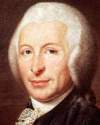
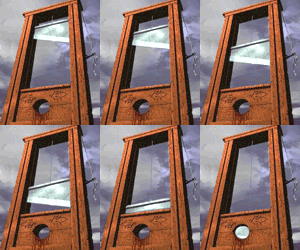
French physician who promoted a law requiring the use of a “machine that beheads painlessly” as a humane mode for all executions, for commoners or nobles alike. Without any further specifications from Guillotin, others actually designed and built the machine (following an example from earlier in history), and yet, it still became known by his name—the guillotine. After experiments on cadavers taken from a public hospital, the first such machine was erected in the Place de Grève in Paris (4 Apr 1792), and first used to execute a highwayman (25 Apr 1792). It was widely used during the French Revolution. Known first as the “machine”, after the beheading of Louis XVI it became known also as “la louisette” or “le louison,” but the name “la guillotine” prevailed. It was used in many countries.« more

Died 28 May 2003 at age 86 (born 25 Jan 1917). quotes
Russian-born Belgian physical chemist who received the Nobel Prize for Chemistry in 1977 for contributions to nonequilibrium thermodynamics, or how life could continue indefinitely in apparent defiance of the classical laws of physics. The main theme of Prigogine's work was the search for a better understanding of the role of time in the physical sciences and in biology. He attempted to reconcile a tendency in nature for disorder to increase (for statues to crumble or ice cubes to melt, as described in the second law of thermodynamics) with so-called "self-organisation", a countervailing tendency to create order from disorder (as seen in, for example, the formation of the complex proteins in a living creature from a mixture of simple molecules).
Russian-born Belgian physical chemist who received the Nobel Prize for Chemistry in 1977 for contributions to nonequilibrium thermodynamics, or how life could continue indefinitely in apparent defiance of the classical laws of physics. The main theme of Prigogine's work was the search for a better understanding of the role of time in the physical sciences and in biology. He attempted to reconcile a tendency in nature for disorder to increase (for statues to crumble or ice cubes to melt, as described in the second law of thermodynamics) with so-called "self-organisation", a countervailing tendency to create order from disorder (as seen in, for example, the formation of the complex proteins in a living creature from a mixture of simple molecules).
The End of Certainty, by Ilya Prigogine. - book suggestion.
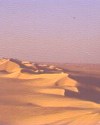
English geologist who was a leading authority on the mechanics of sediment transport and on eolian (wind-effect) processes. While a career soldier, serving in Egypt prior to WW II, he first studied sand dune formation and movement. After retiring from the army (1935), he continued his research and wrote the book Physics of Blown Sand and Desert Dunes, investigating the physics of particles moving through the atmosphere and deposited by wind. He recognized two basic dune types, the crescentic dune, which he called "barchan," and the linear dune, which he called longitudinal or "sief" (Arabic for "sword"). During WW II, his avocational interest in vehicle performance on blowing sand aided the Allies in North Africa.[Image right source ]
Physics of Blown Sand and Desert Dunes, by Ralph A. Bagnold. - book suggestion.
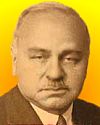
Died 28 May 1937 at age 67 (born 7 Feb 1870). quotes
Austrian psychiatrist and ophthalmologist who founded the school of individual psychology. Adler began his medical career as an ophthalmologist, but later turned to mental disease and became a prominent member of the psychoanalytical group which formed around Sigmund Freud in 1900. Adler developed a theory of organic inferiority and compensation (inferiority complex). In 1911 he broke with Freud and investigated the psychology of the individual person considered to be different from others. His therapeutic methods were supportive, designed to avoid blame or a superior attitude by the practitioner, to reduce resistance and raise awareness of individual behaviour. He moved to the USA to teach in 1932.«[Image from Adler's U.S. immigration card, which gave date admitted as 24 Sep1933.]
Austrian psychiatrist and ophthalmologist who founded the school of individual psychology. Adler began his medical career as an ophthalmologist, but later turned to mental disease and became a prominent member of the psychoanalytical group which formed around Sigmund Freud in 1900. Adler developed a theory of organic inferiority and compensation (inferiority complex). In 1911 he broke with Freud and investigated the psychology of the individual person considered to be different from others. His therapeutic methods were supportive, designed to avoid blame or a superior attitude by the practitioner, to reduce resistance and raise awareness of individual behaviour. He moved to the USA to teach in 1932.«[Image from Adler's U.S. immigration card, which gave date admitted as 24 Sep1933.]
Understanding Human Nature, by Alfred Adler, Colin Brett. - book suggestion.
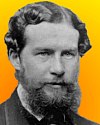
Died 28 May 1913 at age 79 (born 30 Apr 1834). quotes
English banker, politician, naturalist and archaeologist who coined the terms Neolithic and Paleolithic. Like his father, astronomer Sir John William Lubbock, his scientific work was an avocation. Lubbock was a friend and advocate of Charles Darwin. He discovered the first fossil remains of musk-ox in England (1855), and undertook archaeological work identifying prehistoric cultures. As a naturalist, he studied insect vision and colour sense. He published a number of books on natural history and primitive man. In 1870, he became a member of Parliament. The legislation he initiated included the Bank Holidays Act (1871) and the Ancient Monuments Act (1882) and the Shop Hours Act (1886). He became 1st Baron Avebury when he was made a peer in 1900.«
English banker, politician, naturalist and archaeologist who coined the terms Neolithic and Paleolithic. Like his father, astronomer Sir John William Lubbock, his scientific work was an avocation. Lubbock was a friend and advocate of Charles Darwin. He discovered the first fossil remains of musk-ox in England (1855), and undertook archaeological work identifying prehistoric cultures. As a naturalist, he studied insect vision and colour sense. He published a number of books on natural history and primitive man. In 1870, he became a member of Parliament. The legislation he initiated included the Bank Holidays Act (1871) and the Ancient Monuments Act (1882) and the Shop Hours Act (1886). He became 1st Baron Avebury when he was made a peer in 1900.«
Ants, Bees, and Wasps: A Record of Observations, by John Lubbock. - book suggestion.
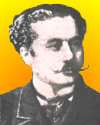
Died 28 May 1912 at age 74 (born 18 Apr 1838).
French chemist who developed improved spectroscopic methods which had recently been developed by Kirchhoff. In 1859, he set out to scan minerals for unknown spectral lines. Fifteen years of persistence paid off when he discovered the elements gallium (1875), samarium (1880), and dysprosium (1886). He ranks with Robert Bunsen, Gustav Kirchhoff and William Crookes as one of the founders of the science of spectroscopy. Guided by the general arrangement of spectral lines for elements in the same family, he believed the element he called gallium (in honour of France) was the eka-aluminium predicted by Mendeleev between aluminium and indium. Since it is liquid between about 30 - 1700 deg C, a gallium in quartz thermometer can measure high temperatures.
French chemist who developed improved spectroscopic methods which had recently been developed by Kirchhoff. In 1859, he set out to scan minerals for unknown spectral lines. Fifteen years of persistence paid off when he discovered the elements gallium (1875), samarium (1880), and dysprosium (1886). He ranks with Robert Bunsen, Gustav Kirchhoff and William Crookes as one of the founders of the science of spectroscopy. Guided by the general arrangement of spectral lines for elements in the same family, he believed the element he called gallium (in honour of France) was the eka-aluminium predicted by Mendeleev between aluminium and indium. Since it is liquid between about 30 - 1700 deg C, a gallium in quartz thermometer can measure high temperatures.
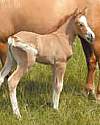
In 2003, the first cloned horse was born in a natural delivery. It is also the first cloned mammal born to its genetic mother. The foal, called Prometea, was created in the lab by fusing an adult skin cell and an empty egg then returning the resulting embryo to the female's womb after a few days. The cloning was accomplished by Prof Cesare Galli, of the Laboratory of Reproductive Technologies, Cremona, Italy. It was the only successful one of 328 reconstructed embryos. DNA tests confirmed that she is genetically identical to her mother and twin. Although clones are currently banned from racing, tissue from many top animals has been stored for cloning. The birth was announced in Nature on 7 Aug 2003.
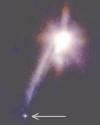
In 1998, NASA released a picture of what California astronomer Susan Terebey said may be the first extrasolar planet ever seen, dubbed TMR-1C. Digitized pictures taken by the Hubbell Space Telescope seemed to show an image of a planet apparently flung from a pair of young stars in the constellation Taurus, 450 light years from Earth. Located at one end of a bright trail that led from the newborn stars, the faint object appeared as if it was their offspring, a planet a few times as massive as Jupiter that had been expelled from its birthplace. However, by the following year, scrutiny of its spectrum suggested to other astronomers that it could be merely a background star. Telescopic tracking for several years should resolve the answer.

A.Q. Khan
In 1998, Pakistan made its first public underground nuclear test, codenamed Chagai-I, exploding five nuclear devices, becoming the seventh nuclear power. This came after years of development led by Abdul Kadeer Khan. Shortly after the Indo-Pakistan War in 1971, following its defeat and break-up, Pakistan began a nuclear weapons program, and had its own clandestine facility for uranium enrichment from the mid 1980s. Their tests were conducted in the Baluchistan region near the border with Afghanistan. They came as a direct response to India's second nuclear tests just days earlier (11 and 13 May).«
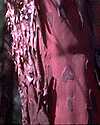
In 1991, a patent was issued for the “Production of taxol or taxol-like compounds in cell culture” (No. 5,019,504). This miracle drug was an important break-through in cancer treatment. However, it only existed naturally in the bark of the Pacific Yew, Taxus Brevifolia, found solely in the Pacific Northwest, where the number of trees is limited. Further, a vast number of trees must be felled in order to collect the large amount of bark necessary for commercial drug production. Thus, clinical trials were limited by an extremely small supply of taxol. Alternatives, such as extracting taxol from yew needles, or to produce taxol synthetically, are source in the following years. Inventors Christen, Gibson and Bland assigned the patent the U.S. Dept of Agriculture.
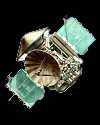
In 1971, the U.S.S.R. Mars 3 was launched. It arrived at Mars on December 2, 1971. The lander was released from the Mars 3 orbiter and became the first spacecraft to land successfully on Mars. It failed after relaying 20 seconds of video data to the orbiter. The Mars 3 orbiter returned data until Aug 1972, sending measurements of surface temperature and atmospheric composition. The first USSR Mars probe was launched 10 Oct 1960, but it failed to reach earth orbit. The next four USSR probes, including Mars 1, also failed. The USA Mariner 3 Mars Flyby attempt in 1964 failed when its solar panels did not open. USA's Mariners 4, 6, and 7 successfully returned Mars photos. Also in 1971, the USSR Mars 2 lander crashed.
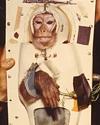
Able, preflight
In 1959, rhesus monkey Able and squirrel monkey Baker, both female, were launched for a brief suborbital space flight in the nose cone of Jupiter Missile AM-18. They reached 300 miles altitude, and travelled 1500 miles at speeds over 10,000 mph. Heart rate and sounds, body temperature, blood pressure and radiation were monitored, plus muscle performance by electromyogram. The monkeys survived the flight and splashdown, and became the first living beings successfully recovered alive after spaceflight. Able died shortly afterwards, caused by the anesthesia, as doctors prepared to remove an electrode from under her skin. Baker lived to age 27, and died of kidney failure in 1984.«
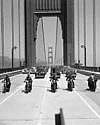
In 1937, the Golden Gate Bridge, San Francisco was ceremonially opened to vehicles by President Franklin Delano Roosevelt who pressed a telegraph key in the White House. Within the first hour after the toll gates opened, 1,800 cars crossed the bridge. By day's end, 32,300 vehicles and 19,350 pedestrians had paid to pass over the bridge. A firework display that night celebrated the opening of the bridge. The previous day, 27 May 1937, a Pedestrian Day had been held which first opened the bridge for public use. The building and design of the bridge had been supervised by chief engineer Joseph B. Strauss. Construction had started on 5 Jan 1933. It was the first bridge to span the mouth of a major U.S. ocean harbour.«
The Gate: The True Story of the Design and Construction of the Golden Gate Bridge, by John Van Der Zee. - book suggestion.
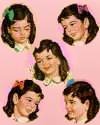
In 1934, the Dionne quintuplets were born to Elzire Dionne at the family farm near Callender, Ontario. All five babies survive infancy. They were named Marie, Cecile, Yvonne, Émilie and Annette. When they were just 4 months old, the government removed the girls from their parents, saying it feared American promoters would exploit them. Instead, the infants were put into a nearby hospital where they were paraded, sometimes up to four times a day, before paying spectators for a decade. Their faces were plastered on soap and milk cartons and they became the grist for a series of movies and radio specials. They grew up as prize exhibits, a tragic exploitation of a family.[Émilie died, age 20, from an epileptic seizure (6 Aug 1954); Marie died, age 35, from a blood clot (27 Feb 1970); Yvonne died of cancer, age 67 (23 Jun 2001).]
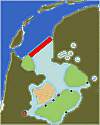
In 1932, the last opening was sealed completing the 20-mile- (32-km-) long Barrier Dam (Afsluitdijk) in Holland to seal off the Zuyder Zee, a shallow inlet of the North Sea. Work had begun in 1927 on the dam, which was built from the tip of North Holland to the Frisian mainland. It was prompted by disastrous floods in 1916. The work was commissioned by Cornelis Lely (1854-1929), later Minister of Water Management. The dam was built with a width of 300-ft (90 m), at an initial height of 24-ft (7.25 m) above sea-level using primarily boulder clay simply dredged from the bottom of the Zuiderzee. Later, large parts of the Zuyder Zee—renamed Lake IJsselmee—were drained to create 640 sq miles (1650 km²) of new land from two huge polders: the Noordoostpolder and Flevoland.«[Image: The red line is the 20-mile (32 km) dam separating the North Sea (above, dark blue) from the Zuyder Zee (below, light blue and light green). Within the Zuyder Zee are the polders of drained, reclaimed land (light green) the freshwater Lake IJsselmee (light blue). The orange area was proposed as a polder, but was not reclaimed.]

In 1928, the Dodge Brothers, Inc. and the Chrysler Corporation merged. Both Dodge brothers died in 1920. Walter P. Chrysler created Chrysler Corporation on 6 Jun 1924. Dodge Brothers, Inc., was sold to a New York banking firm for $146 million in 1925. Chrysler Corporation purchased the company for $170 million in 1928. Dodge became a Chrysler division. Said Walter P. Chrysler: “Buying Dodge was one of the soundest acts of my life. I say sincerely that nothing we have done for the organization compares with that transaction.” By 1929, Chrysler Corporation was one of the “Big Three” of the auto industry, alongside General Motors and Ford. The Chrysler Building in N.Y.C. opened in 1930 as the world's tallest building.
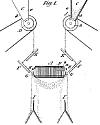
In 1901, Thomas A. Edison was issued patents for a “Magnetic Separator” and an “Apparatus for Screening Pulverized Material” (U.S. Nos. 675,056 and -7), two of several patents for which he applied in mid-1897 concerned with “a Method of breaking rock”, rolls, a conveyor, drying apparatus, mixer, and “Lubricating Journal-Bearings.” The patent diagram (left) shows a magnet at the centre separating falling streams of magnetic and non-magnetic materials.

In 1897, Jell-o was introduced, 52 years after Peter Cooper (inventor of the Tom Thumb engine) held the first U.S. patent for a gelatine dessert. Pearl B. Wait, a carpenter and cough medicine manufacturer from LeRoy, N.Y., produced varieties in strawberry, raspberry, orange and lemon fruit flavours, named Jell-O by his wife, May Davis Wait. Sales were poor; Wait sold the Jell-O business for $450 to his neighbor, Orator F.Woodward, who had founded the Genesee Pure Food Co. two years earlier. Success came slowly, but with Woodward's creative sales and sampling strategies, Jell-O began to catch on. In 1902, when he launched his first advertising campaign in Ladies' Home Journal, sales eventually reached $250,000.

In 1892, the Sierra Club was organized in a meeting at Warren Olney's office in San Francisco. The Sierra Club was incorporated “to explore, enjoy, and render accessible the mountain regions of the Pacific Coast; to publish authentic information concerning them,” and “to enlist the support and cooperation of the people and government in preserving the forests and other natural features of the Sierra Nevada.” John Muir was elected president. The 182 men and women charter members shared a passion for wild places. In its first conservation effort, the Sierra Club led a campaign to defeat a proposed reduction in the boundaries of Yosemite National Park. The Sierra Club helped translate concern into concrete, effective action.




