German mathematician who shared the 1994 Nobel Prize for Economics with John F. Nash and John C. Harsanyi for their development of game theory, a branch of mathematics that examines rivalries among competitors with mixed interests. Selten achieved a decisive breakthrough in game theory: The introduction of the concepts of sub-game perfect and perfect equillibria reduced the set of Nash equillibria drastically by excluding threats that are not credible. Thus, more precise and sensible predictions can be made for many games, e.g. markets. Additionally, game theory has found applications in all of social sciences and even in biology.
Pavel Romanovich Popovich was a Soviet cosmonaut who piloted the Vostok 4 spacecraft, launched 12 Aug 1962. He and Andriyan G. Nikolayev, who was launched a day earlier in Vostok 3, became the first two men to be in space simultaneously. He collected experimental data on the possibility of establishing a direct link between two space ships; coordination of astronauts' operations; and the effects of identical spaceflight conditions on the human organism. Problems with his life support system dropped the cabin temperature to 10 degrees Centigrade. He still managed to conduct experiments,and take colour motion pictures of the terminator between night and day. He subsequently commanded the flight of Soyouz 14 launched 3 Jul 1974 which docked with the Salyut 3 space station.
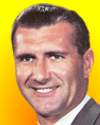
Richard Francis (“Dick”) Gordon, Jr. is an American astronaut and pilot who was picked by NASA in Oct 1963 as one of the third group of astronauts. On 12 Sep 1966, he piloted the three-day Gemini XI mission, executed docking maneuvers with the previously launched Agena, and performed two periods of extravehicular activity. His total space walk time was 2-hr 44-min during which he attached a tether to the Agena, and retrieving a nuclear emulsion experiment package. He launched into space again on 14 Nov 1969 on Apollo XII, the second moon landing mission. He piloted the command module which remained in lunar orbit while Charles Conrad and Alan L. Bean spent 31-hrs on the lunar surface. Gordon retired from NASA in Jan 1972.«
English geologist who won a worldwide reputation for his contributions to petrology and was one of the few scientists outside America to be invited by NASA to work on the samples of lunar rock brought back by the Apollo 11 mission. From 1979 to 1985, he was Director of the Institute of Geological Sciences (which name Brown changed to the British Geological Survey in 1984).
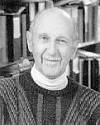
French-Canadian plant ecologist who was a pioneer in the study of the dynamics of forests. As his ideas in ecological concepts evolved, he become the first to treat urban and human ecology, in the modern human environment. He introduced perspectives on ecodevelopment, environmental sociology and ecosociology. He maintained these in focus throughout his career. He wrote many books on ecology and the urban environment. To replace the classic food chain pyramid, he suggested a “ball-of-arrows” in six trophic levels: minerotrophic, phytotrophic, herbivore zootrophic, carnivore zootrophic, investment and control, shown as a sphere with arrows pointing in all directions.«
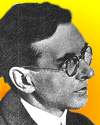
Dutch physicist who (working with Georg von Hevesy) discovered the element hafnium by skillfully applying Henry Moseley's method of X-ray analysis to distinguish the spectral lines of hafnium, despite the distraction of some extraneous lines. Niels Bohr had suggested they look closely at an ore of zirconium, a homologue, for the new element. Bohr heard by telephone of their success on the day of his Nobel Prize lecture (11 Dec 1922), in which he then announced their discovery. The element, at. no.72, was named for Hafnia, the old Roman name for Copenhagen. Earlier, working at Bohr's laboratory in Copenhagen, Coster had used X-rays to provide experimental data to support Bohr's theory of atomic structure and the periodic table. He died from a spinal disease which progressively totally paralysed him.«
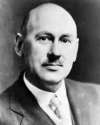
Robert Hutchings Goddard was an American physicist, rocket engineer and inventor known as the “father of modern rocketry.” From age 17, Goddard was interested in rockets (1899) and by 1908 he conducted static tests with small solid-fuel rockets. He developed mathematical theory for rocket propulsion (1912) and proved that rockets would function in a vacuum for space flight (1915). During WW I, Goddard developed rocket weapons. He wrote A Method of Reaching Extreme Altitudes, in 1919. Goddard tested his first liquid-fuel rocket on 16 Mar 1926. Over the following two decades he produced a number of larger rockets at his shop and rocket range at Roswell, N.M. During WW II he developed rocket-assisted takeoff of Navy carrier planes and variable-thrust liquid-fuel rocket motors. At the time of his death Goddard held 214 patents in rocketry. On 1 May 1959, NASA named the Goddard Space Flight Center in Greenbelt, Maryland, in his memory.«
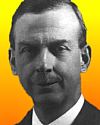
Italian astronomer known for his studies of the sun at the University of Padua where was director at the Arcetri Observatory (1921-52), taking over from his father who also held the post (1894-1921). In 1913, Giorgio Abetti took part, as a geodetic and geophysical astronomer, in the De Filippi expedition in Karakorum, Himalaya and Turkestan. He went on expeditions to observe eclipses of the sun, including one to Siberia to observe the total eclipse on 19 Jun 1936 and in 1952 to Sudan. With the advice of George Hale, he built a solar tower at the observatory (opened 1925). He wrote a popular text on the sun, a handbook of astrophysics (1936) and a popular history of astronomy (1963).
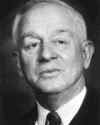
{np] whose discovery of cancer-inducing viruses earned him a share of the Nobel Prize for Physiology or Medicine in 1966. Rous joined the Rockefeller Institute in New York as a pathologist in 1909. The same year, a local farmer brought a chicken with a tumour for testing. Having determined it to be a sarcoma, Rous discovered that it could be "transferred" into a healthy chicken by grafting tumour cells. Surprisingly, injecting cell-free filtrates from the tumour also led to sarcomas in healthy chickens. By 1914, his laboratory had discovered three distinct types of avian sarcomas. Although he did not isolate specific agents, Rous postulated that chicken tumours were due to "filterable agents"-eventually identified as Rous sarcoma virus.
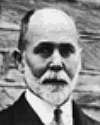
American botanist noted for his comprehensive study of the flora of the northeastern United States. In Feb 1891, Fernald was offered a position at the Gray Herbarium of Harvard University that would allow him to work and study part-time at Harvard. He remained at the Gray Herbarium in one capacity or another for the rest of his life, beginning as an assistant, going on to be a professor, eventually as curator of the Gray Herbarium, 1935-37, and director, 1937-1947. Fernald is known for his work on phytogeography. He combined extensive field work with his herbarium work, concentrating on the flora of eastern North America. He did much exploring in Quebec in his younger years; when older, he worked in Virginia.
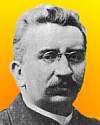
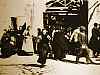
Louis Jean Lumiere was a French inventor, who worked with his brother Auguste, to make pioneering motion-picture equipment. Louis invented the 25-lb “Cinématographe” twin-function projector and camera, which improved on Thomas Edison's Kinetoscope by adding a intermittent film motion mechanism (based on the sewing machine). On 13 Feb 1895, they jointly patented the device (as was their custom). It was first demonstrated to an invited audience on 22 Mar 1895, showing their first film to an invited audience who viewed La Sortie des ouvriers de l'usine Lumière showing workers leaving the Lumière factory. The hugely successful first public screening on 28 Dec 1895 of their films in Paris was the “birth” of the cinema.«[Image right: Frame from La Sortie des ouviers film.]
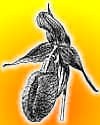
American illustrator, author and naturalist who began sketching flowers and insects when he was only eight years old. In addition to his interest in botany and entomology, Gibson was skilled in making wax flowers. His work appeared in various periodicals, including a popular, long series of nature articles in Harper's Weekly, Scribner's Monthly, and Century. Gibson’s technical drawings first appeared in 1870. They seemed to approach photographic quality in accuracy with almost microscopic detail. In fact, he was also an expert photographer. For his ability to vividly capture nature from the field and forest, his biographer listed him as part of a great trio of “nature-prohets” with Henry Thoreau and John Burroughs.«[Image right: Pink Lady's Slipper illustration by Gibson.]
U.S. inventor who developed the rifled cannon known as the Parrott gun, the most formidable cannon of its time. He graduated from West Point Military Academy (1824), and spent 12 years with the Army, gaining ordinance experience. He was the army's inspector of ordinance at the private firm, West Point Foundry at Cold Spring when he retired from the army to become its civilian superintendent (31 Oct 1836) for 41 years. He perfected and manufactured a 10 pounder rifled cannon. It used a projectile with an encircling brass ring that expanded upon firing to fit the rifling grooves of the barrel. He patented both in 1861. Production of 20- and 30-pounder designs followed. During the Civil War years, he developed the Parrott sight and fuze.
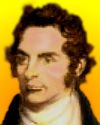
English scientist, explorer and clergyman, who made early scientific studies of the Arctic. On Sir Joseph Banks’ advice, since existing information was sparse, he recorded the natural phenomena he saw on his Arctic voyages. He proved the polar ocean has a warmer temperature at considerable depths than on the surface. He sketched and painted whaling incidents, animals and plants never before seen by Europeans. He drew the hexagonal shapes of snowflakes from microscope observation. Scoresby realized that the colours of the Arctic Sea were due to plankton. He investigated terrestrial magnetism. Eventually all Admiralty ships used Scoresby’s improved compasses. He was quoted by Herman Melville in his novel, Moby Dick.«
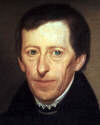
Czech mathematician and theologian who made significant contributions to both mathematics and the theory of knowledge. He provided a more detailed proof for the binomial theorem in 1816 and suggested the means of distinguishing between finite and infinite classes. Bolzano helped to establish the foundations of analysis (for example, the Bolzano-Weierstrass theorem), attempted to elaborate mathematical method, and anticipated some basic ideas of Cantor's set theory. His major work, Wissenschaftslehre (1837), contains various contributions to logic and semantics concerning the relations of compatibility, derivability, and consequence, the deduction theorem, and the logic of classes, entailment, and probability.Name also spelled Bernard.
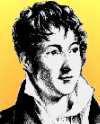
French librarian and paleographer remembered for his own writings and for editing several works of his younger brother, Jean-François Champollion, the brilliant Egyptologist who deciphered Egyptian hieroglyphics.
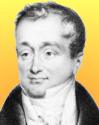
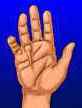
French surgeon and pathologist, noted as diagnostician, lecturer, and surgeon; best known for his development of surgical procedures for alleviating "Dupuytren's contracture" (1832), in which fibrosis of deep tissues of the palm causes permanent retraction of one or more fingers. He wrote about congenital dislocation of the hip, the nature of callus formation, subungal exostosis, the Trendelenburg sign, tenotomy in torticollis, differentiated osteosarcoma from "spina ventosa", and a treatise on gunshot wounds. Dupuytren was not an original investigator in surgical subjects, but he was an excellent observer and a great worker, who knew how to adopt and adapt others' ideas very practically. He founded the chair of pathological anatomy at the Univ. of Paris.

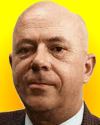
Anthony Francis Clarke Wallace was a Canadian-American psychological anthropologist and historian who analyzed the processes of social and cultural change. He was also interested in the cognitive process involved in technological creativity and the transfer of technological information. His particular interests included the effects on individual communities of the Industrial Revolution of the eighteenth and nineteenth centuries. He also wrote ethnohistorical accounts of native American lives. His list of books has been called “a primer for practitioners of the ethnohistorical craft.” It includes The Social Context of Innovation (1982) and the Bancroft Prize-winning Rockdale: The Growth of an American Village in the Early Industrial Revolution (2005). He retired Prof. Emeritus of Anthropology at UPenn.«
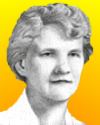
Ruth Rogan Benerito was an American chemist who was a pioneer in the development of wash-and-wear fabrics. Earlier, she investigated fat emulsions and transport of fat in animals. For the Office of the Surgeon General, she developed an intravenous fat emulsion for intravenous feeding to help supply necessary calories for long term patients. Benerito also investigated the reaction epoxies. Her findings have been used not only in the textile industry but also to paper, film, and epoxy plastic manufacturers, and they have been applied in the use of epoxy compounds to preserve wood. Benerito has been granted over 50 patents. Her research has resulted in the development of cotton fabrics that are comfortable, wrinkle-free, stain resistant, “drip-dry” and better able to retard flames.
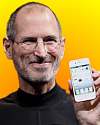
Steven Paul Jobs was an American inventor and entrepreneur who, in 1976, co-founded Apple Inc. with Steve Wozniak to manufacture personal computers. During his life he was issued or applied for 338 patents as either inventor or co-inventor of not only applications in computers, portable electronic devices and user interfaces, but also a number of others in a range of technologies. From the outset, he was active in all aspects of the Apple company, designing, developing and marketing. After the initial success of the Apple II series of personal computers, the Macintosh superseded it with a mouse-driven graphical interface. Jobs kept Apple at the forefront of innovative, functional, user-friendly designs with new products including the iPad tablet and iPhone. Jobs was also involved with computer graphics movies through his purchase (1986) of the company that became Pixar.«
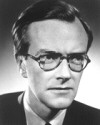
Maurice Hugh Frederick Wilkins was a New Zealand-born British biophysicist, whose X-ray diffraction studies of deoxyribonucleic acid (DNA) were significant in the determination of the molecular structure of DNA accomplished by James Watson and Sir Francis Crick. For this work the three scientists shared the 1962 Nobel Prize for Physiology or Medicine.«
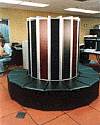
Seymour Roger Cray was an American electronics engineer who is called “the father of supercomputing” as the preeminent designer of large, high-speed computers. In 1957, he helped start Control Data Corporation (CDC), where he built the then fastest scientific computer, the CDC 1604, the first fully transistorized commercial computer. Cray produced successively faster computers to run business and government information networks. In 1972, he founded Cray Research Inc. By 1976, his signature Cray-1 vector supercomputer established a world standard in supercomputing. Using integrated circuits, its processing speed was over 18 times more than the CDC 1604. He died at age 71, from injuries suffered in a car accident.«
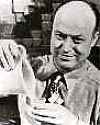
Earl Silas Tupper was an American inventor and manufacturer who introduced Tupperware. In the 1930s, Tupper invented a flexible, lightweight material that was used to make plastic gas masks during World War II. From working at DuPont (1937-38), he gained experience in plastics design and struck out on his own. In the '40s, plastic products had a reputation for being brittle, greasy, smelly and generally unreliable. Tupper's contributions were twofold. First, he developed a method for purifying black polyethylene slag, a waste product produced in oil refinement, into a substance that was flexible, tough, non-porous, non-greasy and translucent. Second, he developed the Tupper seal, an airtight, watertight lid modeled on the lid for paint containers. Together, these innovations laid the foundations for the future success of Tupperware as a consumer product. His company had great success by marketing through Brownie Wise's idea of Tupperware parties.

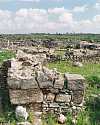
French archaeologist who was the first excavator at Ras Shamra in Syria. The site, Ugarit, dates back to the sixth or seventh millennium B.C. nestled in the shadow of the Jebel al-Aqra (Mount Sanpanu) by the Mediterranean Sea, 10-km north of present-day Syrian port, Latakia. It was discovered accidentally (1928) when a peasant's plow hit the stones of a vaulted tomb. In 1929, Schaeffer began a lifetime excavating there. His stratographic soundings revealed five separate archaeological levels. The uppermost dates from the Late Bronze Age, 1600-1200 B.C., and the time of Ugarit's demise. The deeper levels date from the Middle Bronze Age, Early Bronze Age, Chalcolithic age of stone and copper, and the Neolithic.«[Image: view of a small section of the ruins at Ugarit.]
Norwegian-born American chemist whose development of a general theory of irreversible chemical processes gained him the 1968 Nobel Prize for Chemistry. These Onsager reciprocal relations have importance in a wide range of applications. Throughout his career, he studied the thermodynamics and kinetics of electrolytes. In 1944 he derived the exact solution of the two-dimensional Ising model, a model of a ferromagnet. This virtuosic mathematical feat led to a deeper understanding of phase transitions and critical points. From about 1940 Onsager investigated low-temperature physics. He suggested the quantization of vortices in liquid helium, and in 1952 extracted information about the distribution of electrons from the de Haas-van Alphen effect.
Alfred Louis Kroeber was an American anthropologist who was influential in the first half of the 20th century. His primary concern was to understand the nature of culture and its processes. He graduated from Columbia University in 1896, and received a Ph.D. under Franz Boas there in 1901, then moved west to found the anthropology department at the University of California at Berkeley where he remained until 1946. His chief scholarly interest was California Indians. He developed the concept of cultures as patterned wholes, each with its own style, and each undergoing a growth process analogous to that of a biological organism. Kroeber also made valuable contributions to the archaeology of New Mexico, Mexico, and Peru.
Alfred M(arston) Tozzer was a U.S. anthropologist and archaeologist who was an authority on the culture and language of the Maya Indians of Mexico and Central America. He conducted his initial anthropological fieldwork in California and New Mexico among the Wintun and Navajo nations during his undergraduate summers in 1900 and 1901, focusing on linguistics. He led (1909-10) an expedition to Guatemala, finding ruins at Holmul. His most important works on the Maya include Maya Grammar (1921) and Chichen Itza and its Center of Sacrifice (1957), a major synthesis of American prehistory. He earned his undergraduate and graduate degrees from Harvard, where he taught for over 40 years (1905-47).
American inventor who devised a sewing machine for sewing the soles of shoes to the uppers.
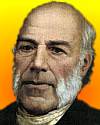
French geologist and paleontologist. He settled in Prague (1832), at first as an engineer. While surveying the proposed route for a horse-drawn railway, he became interested in the local fossil-bearing rocks there. From 1840, he turned to the study of these fossils in the strata of the central Bohemian basin. In his lifetime, he gathered some 3500 species of graptolites, brachiopoda, mollusca, trilobites and fishes, showing a wide variety of life forms in the Early Paleozoic era. (The Paleozoic era spanned 540-245 million years ago.) He meticulously recorded his findings in Système silurien du centre de la Bohême, which remains a fine reference work. The first volume was published in 1852, and was followed by 20 more in his lifetime. He opposed Darwin's theory of evolution, instead advocating the theory of catastrophes.«
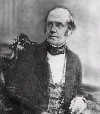
English astronomer who was an amateur with enough wealth to set up an observatory at Starfield, near Liverpool. England, He built his own 24" diameter telescope, and devised steam-driven equipment for grinding an polishing the speculum metal mirror. This telescope was the first of its size to be mounted “equitorially” to allow easy tracking of the stars. He discovered Triton, a moon of Neptune, and Ariel and Umbriel, satellites of Uranus. Later, Lassell built a 48" diameter telescope with the same design and took it to Malta for observations with clearer skies. more
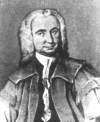
German physicist and mathematician who recognized the surface tension of liquids. He discovered that every solid body has 3 axes of symmetry. He used Daniel Bernoulli's theoretical work on the “reaction effect” to produce a horizontal waterwheel the same principle which drives a modern lawn sprinkler, which influenced Euler to work on turbines. In 1751 Segner introduced the concept of the surface tension of liquids, likening it to a stretched membrane. His view that minute and imperceptible attractive forces maintain surface tension laid the foundation for the subsequent development of surface tension theory. He made an unsuccessful attempt to give a mathematical description of capillary action.
Italian mathematician who was the first to find an algebraic solution to the biquadratic, or quartic, equation (an algebraic equation that contains the fourth power of the unknown quantity but no higher power).