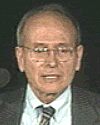
Born 4 Dec 1924. quotes
American geophysicist known for his investigations of the structure of the Earth's crust and mantle and the mechanics of earthquakes. Press pioneered the use of seismic waves to explore subsurface geological structures and for his pioneering use of waves to explore Earth's deep interior. In 1950, with William Maurice Ewing, a major innovator in modern geology at Columbia University, he invented an improved seismograph,and they published a landmark paper recognized as beginning a new era in structural seismology. While at Caltech (1955-65) and later MIT, Press became known in public policy circles for his work on seismic detection of underground nuclear tests and for advocacating a national program for earthquake prediction capabilities.
American geophysicist known for his investigations of the structure of the Earth's crust and mantle and the mechanics of earthquakes. Press pioneered the use of seismic waves to explore subsurface geological structures and for his pioneering use of waves to explore Earth's deep interior. In 1950, with William Maurice Ewing, a major innovator in modern geology at Columbia University, he invented an improved seismograph,and they published a landmark paper recognized as beginning a new era in structural seismology. While at Caltech (1955-65) and later MIT, Press became known in public policy circles for his work on seismic detection of underground nuclear tests and for advocacating a national program for earthquake prediction capabilities.
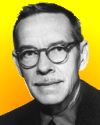
Born 4 Dec 1908; died 22 May 1997 at age 88. quotes
American biologist who, along with Max Delbrück and Salvador Luria, won the Nobel Prize for Physiology or Medicine in 1969. The prize was given for research done on bacteriophages (viruses that infect bacteria). This was the famous “blender experiment” (1956). Hershey used an isotope- labeled phage to to infect a bacterial colony and begin to inject their genetic material into the host cells. Then he whirred them in a Waring Blendor to tear the phage particles from the bacterial walls without rupturing the bacteria. Upon examining the bacteria, Hershey found that only phage DNA, but no detectable protein, had been inserted into them. This showed that the DNA was sufficient to transfer to the bacteria all the genetic information needed to produce more phage.
American biologist who, along with Max Delbrück and Salvador Luria, won the Nobel Prize for Physiology or Medicine in 1969. The prize was given for research done on bacteriophages (viruses that infect bacteria). This was the famous “blender experiment” (1956). Hershey used an isotope- labeled phage to to infect a bacterial colony and begin to inject their genetic material into the host cells. Then he whirred them in a Waring Blendor to tear the phage particles from the bacterial walls without rupturing the bacteria. Upon examining the bacteria, Hershey found that only phage DNA, but no detectable protein, had been inserted into them. This showed that the DNA was sufficient to transfer to the bacteria all the genetic information needed to produce more phage.
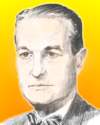
Born 4 Dec 1906.
American physician who made many contributions in the research of hypertension and cardiovascular disease. He is best known for his introduction into the U.S. of a drug derived from the root of an Indian shrub. It had been used in India in the treatment of high blood pressure. In 1950, Wilkins first used it in the U.S. for the same purpose. By 1952, he reported also on its sedative and traquilizing effects. It was named as reserpine, and was the first of the tranquilizers. This improved upon earlier sedatives, like barbiturates, in that tranquilizers produce a calming effect without diminishing alertness or bringing on sleep. He was the president of the American Heart Association in 1957 and was elected to the American Academy of Arts and Sciences in the same year.
American physician who made many contributions in the research of hypertension and cardiovascular disease. He is best known for his introduction into the U.S. of a drug derived from the root of an Indian shrub. It had been used in India in the treatment of high blood pressure. In 1950, Wilkins first used it in the U.S. for the same purpose. By 1952, he reported also on its sedative and traquilizing effects. It was named as reserpine, and was the first of the tranquilizers. This improved upon earlier sedatives, like barbiturates, in that tranquilizers produce a calming effect without diminishing alertness or bringing on sleep. He was the president of the American Heart Association in 1957 and was elected to the American Academy of Arts and Sciences in the same year.
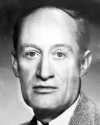
Born 4 Dec 1897; died 16 Oct 1958 at age 60.
U.S. pioneer of urban anthropology. From his studies of Mexican communities, Redfield developed a theory (1956) of a folk-urban continuum, to account for the differences between folk society and urban society. A folk society was small in size, isolated, homogeneous, preliterate with a social and cultural life linked to kinship and sacred beliefs. Urban society had opposite of all these features. He believed that any community had a place on this continuum from folk to urban. This scale implied that simpler or folk forms of society would evolve to complex social forms with time. Anthropologists now consider the way folk and urban societies are part of a larger social, political and economic environment, rather than considered as separate poles on a continuum.
U.S. pioneer of urban anthropology. From his studies of Mexican communities, Redfield developed a theory (1956) of a folk-urban continuum, to account for the differences between folk society and urban society. A folk society was small in size, isolated, homogeneous, preliterate with a social and cultural life linked to kinship and sacred beliefs. Urban society had opposite of all these features. He believed that any community had a place on this continuum from folk to urban. This scale implied that simpler or folk forms of society would evolve to complex social forms with time. Anthropologists now consider the way folk and urban societies are part of a larger social, political and economic environment, rather than considered as separate poles on a continuum.
Born 4 Dec 1877; died 23 Oct 1971 at age 93.
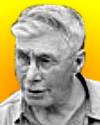
English-born Canadian farmer, mammalogist, and plant breeder who kept meticulous field notes of mammal (and bird) life. He carried out many breeding experiments with sunflowers, corn, and lilies and had a new variety of lily named after him. He was a charter member of the American Society of Mammalogists. Although he had no formal schooling, he was awarded an honorary D.Sc. at the first convocation of Brandon University in 1968. His older brother Norman Criddle was known as the "dean of entomology" in western Canada, and is recognized for his development of the "Criddle mixture" for grasshopper control and for his early application of biological observations to insect control. Stuart immigrated into Canada as a boy with his family in 1882.
English-born Canadian farmer, mammalogist, and plant breeder who kept meticulous field notes of mammal (and bird) life. He carried out many breeding experiments with sunflowers, corn, and lilies and had a new variety of lily named after him. He was a charter member of the American Society of Mammalogists. Although he had no formal schooling, he was awarded an honorary D.Sc. at the first convocation of Brandon University in 1968. His older brother Norman Criddle was known as the "dean of entomology" in western Canada, and is recognized for his development of the "Criddle mixture" for grasshopper control and for his early application of biological observations to insect control. Stuart immigrated into Canada as a boy with his family in 1882.
Born 4 Dec 1858; died 5 Jul 1937 at age 78.
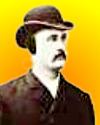
American inventor and manufacturer of earmuffs, which, while a teenager, he designed and patented (U.S. No.188,292 issued 13 Mar 1877). He had experienced very uncomfortable cold ears while skating in winter, and solved his problem with beaver fur pads on a wire frame. By his mid-twenties, he had a factory and 11 workers producing Greenwood Champion Ear Protectors in his hometown of Farmington producing 50,000 earmuffs yearly. Distribution grew to 400,000 pairs by the year he died. He patented many other inventions. In 1977, the Maine state legislature officially declared 21 Dec, the first day of winter, as the annual Chester Greenwood Day. His hometown celebrates with a parade in early December.«[Image: Greenwood wearing the earmuffs from a promotional photo.] more
American inventor and manufacturer of earmuffs, which, while a teenager, he designed and patented (U.S. No.188,292 issued 13 Mar 1877). He had experienced very uncomfortable cold ears while skating in winter, and solved his problem with beaver fur pads on a wire frame. By his mid-twenties, he had a factory and 11 workers producing Greenwood Champion Ear Protectors in his hometown of Farmington producing 50,000 earmuffs yearly. Distribution grew to 400,000 pairs by the year he died. He patented many other inventions. In 1977, the Maine state legislature officially declared 21 Dec, the first day of winter, as the annual Chester Greenwood Day. His hometown celebrates with a parade in early December.«[Image: Greenwood wearing the earmuffs from a promotional photo.] more
Born 4 Dec 1818; died 29 Apr 1891 at age 72.
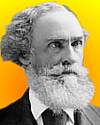
American physicist who promoted the use of statistics in medical research, and discovered the sensitive flame (1858). He wrote on a diverse scientific topics. He was the elder brother of Joseph LeConte.«
American physicist who promoted the use of statistics in medical research, and discovered the sensitive flame (1858). He wrote on a diverse scientific topics. He was the elder brother of Joseph LeConte.«
Born 4 Dec 1816; died 14 Jan 1885 at age 68. quotes
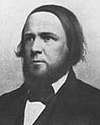
American chemist whose report on the potential uses of crude-oil products gave impetus to plans for drilling the first producing oil well, near Titusville, Pa. Silliman separated the crude oil into its component parts, or its fractions, and observed the characteristics of each fraction. He determined by use of a photometer that distilled petroleum burned much brighter than all but the most expensive and least efficient fuels. He also noted its potential use as a lubricant; he found it capable of withstanding extremely high and low temperatures and able to keep its form after long use. Silliman concluded petroleum was “a raw material from which...they may manufacture a very valuable product.” His report marked petroleum as the answer to the illumination fuel crisis.
American chemist whose report on the potential uses of crude-oil products gave impetus to plans for drilling the first producing oil well, near Titusville, Pa. Silliman separated the crude oil into its component parts, or its fractions, and observed the characteristics of each fraction. He determined by use of a photometer that distilled petroleum burned much brighter than all but the most expensive and least efficient fuels. He also noted its potential use as a lubricant; he found it capable of withstanding extremely high and low temperatures and able to keep its form after long use. Silliman concluded petroleum was “a raw material from which...they may manufacture a very valuable product.” His report marked petroleum as the answer to the illumination fuel crisis.

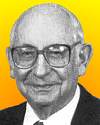
Died 4 Dec 1997 at age 82 (born 20 Apr 1915).
South African-born American psychotherapist who helped usher in cognitive behavioral therapy during the 1960s; he devised a treatment to help desensitize patients with phobias by exposing them to their fears incrementally. He worked on systematic desensitization with a methodology designed to treat people with extreme anxiety about specific events, situations, things, or people. His approach involved developing a hierarchy of anxiety-provoking situations, learning relaxation techniques, then associating these situations with relaxation, beginning at the bottom, or least anxiety-provoking, part of the hierarchy. He founded the Association for Advancement of Behaviour Therapy and the Journal of Behavior Therapy.
South African-born American psychotherapist who helped usher in cognitive behavioral therapy during the 1960s; he devised a treatment to help desensitize patients with phobias by exposing them to their fears incrementally. He worked on systematic desensitization with a methodology designed to treat people with extreme anxiety about specific events, situations, things, or people. His approach involved developing a hierarchy of anxiety-provoking situations, learning relaxation techniques, then associating these situations with relaxation, beginning at the bottom, or least anxiety-provoking, part of the hierarchy. He founded the Association for Advancement of Behaviour Therapy and the Journal of Behavior Therapy.
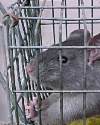
Died 4 Dec 1987 at age 84 (born 22 Jan 1903).
American zoologist and mammalogist who studied various aspects of mammalogy, including home range, territoriality, morphology, behavior, and evolution. The regions he studied in particular include Michigan (1940-48), the Great Lakes (1956), Sonora (1938-41) and El Salvador (1961). He also examined the effects of the new Mexican volcano Paricutin on the vertebrates in its vicinity (1961). His interest in mammals developed early, from observing activities of prairie dogs on the family farm. As early as 1927, he wrote about A Simple Live Trap for Small Mammals in early article, in the Journal of Mammalogy. This led to development of the live trap, now widely used by mammalogists worldwide. Of his several books, his book, Field Guide to the Mammals (first published 1952), has popularized mammal observation by the layman.
American zoologist and mammalogist who studied various aspects of mammalogy, including home range, territoriality, morphology, behavior, and evolution. The regions he studied in particular include Michigan (1940-48), the Great Lakes (1956), Sonora (1938-41) and El Salvador (1961). He also examined the effects of the new Mexican volcano Paricutin on the vertebrates in its vicinity (1961). His interest in mammals developed early, from observing activities of prairie dogs on the family farm. As early as 1927, he wrote about A Simple Live Trap for Small Mammals in early article, in the Journal of Mammalogy. This led to development of the live trap, now widely used by mammalogists worldwide. Of his several books, his book, Field Guide to the Mammals (first published 1952), has popularized mammal observation by the layman.
A Field Guide to Mammals: North America north of Mexico, by William Henry Burt. - book suggestion.
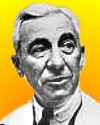
Died 4 Dec 1984 at age 94 (born 24 Mar 1890).
John Charles Rock was an American obstetrician and gynaecologist who was an expert in human fertility, the first to fertilize a human egg in the laboratory, who co-developed the birth control pill. On 6 Feb 1944, with Harvard scientist Miriam F. Menkin, Rock produced the first laboratory-fertilized, two-cell human egg in a test-tube. He is also credited with the first recorded recovery of human embryos 2-17 days after fertilization, as well as establishing the fact that ovulation occurs fourteen days before menstruation. Through collaborative activities of philanthropist Catherine Dexter McCormick, researcher and biologist Gregory Pinkus, Rock, and other scientists, the birth control pill was developed, and it was approved by the Food and Drug Administration (1957) for marketing to “treat gynecologic disorders.” Rock was best known for this contribution to the development and government approval of the oral contraceptive, and also popularizing and selling it to a skeptical world.
John Charles Rock was an American obstetrician and gynaecologist who was an expert in human fertility, the first to fertilize a human egg in the laboratory, who co-developed the birth control pill. On 6 Feb 1944, with Harvard scientist Miriam F. Menkin, Rock produced the first laboratory-fertilized, two-cell human egg in a test-tube. He is also credited with the first recorded recovery of human embryos 2-17 days after fertilization, as well as establishing the fact that ovulation occurs fourteen days before menstruation. Through collaborative activities of philanthropist Catherine Dexter McCormick, researcher and biologist Gregory Pinkus, Rock, and other scientists, the birth control pill was developed, and it was approved by the Food and Drug Administration (1957) for marketing to “treat gynecologic disorders.” Rock was best known for this contribution to the development and government approval of the oral contraceptive, and also popularizing and selling it to a skeptical world.
The Fertility Doctor: John Rock and the Reproductive Revolution, by Margaret Marsh and Wanda Ronner. - book suggestion.
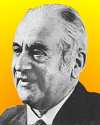
Died 4 Dec 1978 at age 76 (born 11 Jul 1902).
Dutch-born U.S. physicist who, with George E. Uhlenbeck, a fellow graduate student at the University of Leiden, Neth., formulated (1925) the concept of electron spin. It led to recognition that spin was a property of protons, neutrons, and most elementary particles and to a fundamental change in the mathematical structure of quantum mechanics. Goudsmit also made the first measurement of nuclear spin and its Zeeman effect with Ernst Back (1926-27), developed a theory of hyperfine structure of spectral lines, made the first spectroscopic determination of nuclear magnetic moments (1931-33), contributed to the theory of complex atoms and the theory of multiple scattering of electrons, and invented the magnetic time-of-flight mass spectrometer (1948).
Dutch-born U.S. physicist who, with George E. Uhlenbeck, a fellow graduate student at the University of Leiden, Neth., formulated (1925) the concept of electron spin. It led to recognition that spin was a property of protons, neutrons, and most elementary particles and to a fundamental change in the mathematical structure of quantum mechanics. Goudsmit also made the first measurement of nuclear spin and its Zeeman effect with Ernst Back (1926-27), developed a theory of hyperfine structure of spectral lines, made the first spectroscopic determination of nuclear magnetic moments (1931-33), contributed to the theory of complex atoms and the theory of multiple scattering of electrons, and invented the magnetic time-of-flight mass spectrometer (1948).
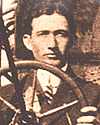
Died 4 Dec 1955 at age 69 (born 17 Jan 1886).
Glenn Luther Martin was an American aeronaut and inventor whose bombers and flying boats played important roles in WW II. His first planes were built in collaboration with mechanics from his auto shop, working in a disused church building that Martin rented. In 1909, Martin made his first successful flight; by 1911 he numbered among the most famous of the “pioneer birdmen.” He incorporated the Glenn L. Martin Aircraft Company in 1912 as a manufacturer, and remained for forty years the senior aircraft manufacturer in the U.S. The vast majority of the more than 11,000 planes built by the company before it ceased producing aircraft in 1960, Martin Bombers pioneered the doctrine of airpower in the 1920's to 1930's and served in all theaters in World War II.
Glenn Luther Martin was an American aeronaut and inventor whose bombers and flying boats played important roles in WW II. His first planes were built in collaboration with mechanics from his auto shop, working in a disused church building that Martin rented. In 1909, Martin made his first successful flight; by 1911 he numbered among the most famous of the “pioneer birdmen.” He incorporated the Glenn L. Martin Aircraft Company in 1912 as a manufacturer, and remained for forty years the senior aircraft manufacturer in the U.S. The vast majority of the more than 11,000 planes built by the company before it ceased producing aircraft in 1960, Martin Bombers pioneered the doctrine of airpower in the 1920's to 1930's and served in all theaters in World War II.
To Ride the Wind: A Biography of Glenn L. Martin, by Henry Still. - book suggestion.
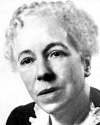
Died 4 Dec 1952 at age 67 (born 16 Sep 1885). quotes
(née Danielsen) German-born American psychoanalyst who departed from some of the basic principles of Sigmund Freud, suggesting that environmental and social conditions, rather than biological drives, determine much of individual personality and are the chief causes of neuroses and personality disorders. While she recognized the importance of early childhood experiences in determining neurotic conflicts, she contended that the analyst must also be aware of current fears and impulses. She also stressed the necessity of understanding the environmental context in which neurotic conflicts are expressed. Her view of human beings allowed much more scope for development and rational adaptation than Freudian determinism permitted.
(née Danielsen) German-born American psychoanalyst who departed from some of the basic principles of Sigmund Freud, suggesting that environmental and social conditions, rather than biological drives, determine much of individual personality and are the chief causes of neuroses and personality disorders. While she recognized the importance of early childhood experiences in determining neurotic conflicts, she contended that the analyst must also be aware of current fears and impulses. She also stressed the necessity of understanding the environmental context in which neurotic conflicts are expressed. Her view of human beings allowed much more scope for development and rational adaptation than Freudian determinism permitted.
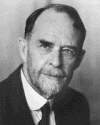
Died 4 Dec 1945 at age 79 (born 25 Sep 1866). quotes
American geneticist and zoologist famous for his experimental research with the fruit fly by which he established the chromosome theory of heredity. He discovered that a number of genetic variations were inherited together and that this was because their controlling genes occurred on the same chromosome. At Columbia University (1904-28), he began his revolutionary genetic investigations of the fruit fly Drosophila melanogaster (1908). Initially skeptical of Gregor Mendel'sresearch, Morgan performed rigorous experiments which demonstrated that genes were linked in a series on chromosomes and are responsible for identifiable, hereditary traits. In 1910 he discovered sex-linkage in Drosophila, and postulated a connection between eye color in fruit flies and human color blindness. His study of the characteristics inherited by mutants ultimately enabled him to determine the precise behaviour and exact localization of genes. Morgan and his "fly room" colleagues, mapped the relative positions of genes on Drosophila chromosomes. Morgan published his seminal book, The Mechanisms of Mendelian Heredity in 1915. Though this work was not widely accepted initially, Morgan was awarded a Nobel Prize for physiology or medicine in 1933.
American geneticist and zoologist famous for his experimental research with the fruit fly by which he established the chromosome theory of heredity. He discovered that a number of genetic variations were inherited together and that this was because their controlling genes occurred on the same chromosome. At Columbia University (1904-28), he began his revolutionary genetic investigations of the fruit fly Drosophila melanogaster (1908). Initially skeptical of Gregor Mendel'sresearch, Morgan performed rigorous experiments which demonstrated that genes were linked in a series on chromosomes and are responsible for identifiable, hereditary traits. In 1910 he discovered sex-linkage in Drosophila, and postulated a connection between eye color in fruit flies and human color blindness. His study of the characteristics inherited by mutants ultimately enabled him to determine the precise behaviour and exact localization of genes. Morgan and his "fly room" colleagues, mapped the relative positions of genes on Drosophila chromosomes. Morgan published his seminal book, The Mechanisms of Mendelian Heredity in 1915. Though this work was not widely accepted initially, Morgan was awarded a Nobel Prize for physiology or medicine in 1933.
Thomas Hunt Morgan: The Man and His Science, by Garland E. Allen. - book suggestion.
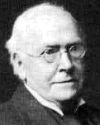
Died 4 Dec 1934 at age 85 (born 27 Nov 1849). quotes
English mathematician who contributed to the field of mathematical physics. Topics he worked on include wave propagation, electrical induction, earthquakes, and the theory of tides. He wrote important papers on the oscillations of a viscous spheroid, the vibrations of elastic spheres, waves in elastic solids, electric waves and the absorption of light. In a famous paper in the Proceedings of the London Mathematical Society he showed how Rayleigh's results on the vibrations of thin plates fitted with the general equations of the theory. Another paper reported on his study of the propagation of waves on the surface of an elastic solid where he tried to understand the way that earthquake tremors are transmitted around the surface of the Earth.
English mathematician who contributed to the field of mathematical physics. Topics he worked on include wave propagation, electrical induction, earthquakes, and the theory of tides. He wrote important papers on the oscillations of a viscous spheroid, the vibrations of elastic spheres, waves in elastic solids, electric waves and the absorption of light. In a famous paper in the Proceedings of the London Mathematical Society he showed how Rayleigh's results on the vibrations of thin plates fitted with the general equations of the theory. Another paper reported on his study of the propagation of waves on the surface of an elastic solid where he tried to understand the way that earthquake tremors are transmitted around the surface of the Earth.
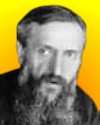
Died 4 Dec 1933 at age 74 (born 12 Feb 1859).
Polish-French chemist and philosopher who studied scientific theories, both old and new, to determine the nature of scientific thought. He identified two principles of psychological reasoning by which the scientist understands phenomena: realism and causalism. Applying the first principle, a scientist's mind expects that within diverse physical behaviours, a certain degree of regularity is held to - a lawfulness - such as established by laws of conservation of energy, or the law of inertia. The second principle describes how the scientist seeks to describe a change by the identification of antecedent and consequent of the change. Meyerson's ideas were popular among scientific theorists in the 1930s.«
Polish-French chemist and philosopher who studied scientific theories, both old and new, to determine the nature of scientific thought. He identified two principles of psychological reasoning by which the scientist understands phenomena: realism and causalism. Applying the first principle, a scientist's mind expects that within diverse physical behaviours, a certain degree of regularity is held to - a lawfulness - such as established by laws of conservation of energy, or the law of inertia. The second principle describes how the scientist seeks to describe a change by the identification of antecedent and consequent of the change. Meyerson's ideas were popular among scientific theorists in the 1930s.«
Identity and Reality, by Emile Meyerson. - book suggestion.
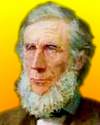
Died 4 Dec 1893 at age 73 (born 2 Aug 1820). quotes
Irish physicist who demonstrated why the sky is blue. He became known to the scientific world in 1848 as the author of a substantial work on Crystals. In 1856 he traveled with Professor Huxley to Switzerland, after which he co-authored On the Structure and Motion of Glaciers. He also published Heat as a Mode of Motion (1863), On Radiation (1865), followed by Sound, then in 1870 he published Light. Included in these works were studies of acoustic properties of the atmosphere and the blue colour of the sky, which he suggested was due to the scattering of light by small particles of water. His initial scientific reputation was based on a study of diamagnetism. He carried out research on radiant heat, studied spontaneous generation and the germ theory of disease, glacier motion, sound, the diffusion of light in the atmosphere and a host of related topics. He showed that ozone was an oxygen cluster rather than a hydrogen compound, and invented the firemans respirator and made other less well-known inventions including better fog-horns. One of his most important inventions, the light pipe, has led to the development of fibre optics. The modern light instrument is known as the gastroscope, which enables internal observations of a patient's stomach without surgery. Tyndall was a very popular lecturer. more
Irish physicist who demonstrated why the sky is blue. He became known to the scientific world in 1848 as the author of a substantial work on Crystals. In 1856 he traveled with Professor Huxley to Switzerland, after which he co-authored On the Structure and Motion of Glaciers. He also published Heat as a Mode of Motion (1863), On Radiation (1865), followed by Sound, then in 1870 he published Light. Included in these works were studies of acoustic properties of the atmosphere and the blue colour of the sky, which he suggested was due to the scattering of light by small particles of water. His initial scientific reputation was based on a study of diamagnetism. He carried out research on radiant heat, studied spontaneous generation and the germ theory of disease, glacier motion, sound, the diffusion of light in the atmosphere and a host of related topics. He showed that ozone was an oxygen cluster rather than a hydrogen compound, and invented the firemans respirator and made other less well-known inventions including better fog-horns. One of his most important inventions, the light pipe, has led to the development of fibre optics. The modern light instrument is known as the gastroscope, which enables internal observations of a patient's stomach without surgery. Tyndall was a very popular lecturer. more
A Vision of Modern Science: John Tyndall and the Role of the Scientist in Victorian Culture, by Ursula DeYoung. - book suggestion.
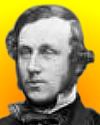
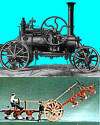
English engineer who helped to develop the steam-hauled plough. He began his career in the grain trade but later trained as an engineer. In 1850 he joined Albert Fry in Bristol to found a works to produce steam-hauled implements. During a business trip to Ireland, he witnessed the famine which followed the failure of two years of potato crops. This aroused his Quaker conscience and changed his life. He returned to England determined to mechanise land drainage by the use of steam. The result was his Mole Drainage Plough shown at the great exhibition of 1851, and built for him by Ransomes. In 1858 Fowler was awarded a £500 prize for his balance plough. He died of tetanus following an injury received after being thrown by a horse.[Image right: (top) detail of steam engine from catalog printed 1861; (bottom)balance plough model] more
The Story of the Steam Plough Works: Fowlers of Leeds, by Michael R. Lane. - book suggestion.
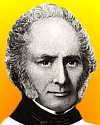
Died 4 Dec 1850 at age 67 (born 22 May 1783).
English electrical engineer who devised the first electromagnet capable of supporting more than its own weight (1825). The 7-oz (200-g) magnet supported 9-lb (4-kg) of iron with a single cell's current. He built an electric motor (1832) and invented the commutator, now part of most modern electric motors. In 1836, he invented the first suspended coil galvanometer, a device for measuring current. Sturgeon also worked on improving the voltaic battery, developing a theory of thermoelectricity, and even atmospheric charge conditions. From 500 kite flights made in calm weather, he found the atmosphere is consistently charged positively with respect to the Earth, and increasingly so at increased height.«
English electrical engineer who devised the first electromagnet capable of supporting more than its own weight (1825). The 7-oz (200-g) magnet supported 9-lb (4-kg) of iron with a single cell's current. He built an electric motor (1832) and invented the commutator, now part of most modern electric motors. In 1836, he invented the first suspended coil galvanometer, a device for measuring current. Sturgeon also worked on improving the voltaic battery, developing a theory of thermoelectricity, and even atmospheric charge conditions. From 500 kite flights made in calm weather, he found the atmosphere is consistently charged positively with respect to the Earth, and increasingly so at increased height.«
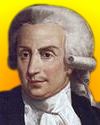
Died 4 Dec 1798 at age 61 (born 9 Sep 1737). quotes
Italian physician and physicist studied the structure of organs and the physiology of tissues who is best known for his investigation of the nature and effects of what he conceived to be electricity in animal tissue. He observed how frog muscles twitched when they were touched by metal contacts but he wrongly attributed this to innate "animal electricity" (the current was actually produced by the metal contacts). This was disputed by Alessandro Volta who, in the course of this argument, invented his electrochemical cell. The current produced by this device was for many years called galvanic electricity. The galvanometer was named after him.
Italian physician and physicist studied the structure of organs and the physiology of tissues who is best known for his investigation of the nature and effects of what he conceived to be electricity in animal tissue. He observed how frog muscles twitched when they were touched by metal contacts but he wrongly attributed this to innate "animal electricity" (the current was actually produced by the metal contacts). This was disputed by Alessandro Volta who, in the course of this argument, invented his electrochemical cell. The current produced by this device was for many years called galvanic electricity. The galvanometer was named after him.
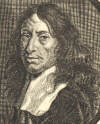
Died 4 Dec 1680 at age 64 (born 20 Oct 1616).
Danish anatomist and mathematician who was first to describe fully the entire human lymphatic system (1652) and an early defender of Harvey's discovery of the circulation of blood. He joined the mathematical faculty (1647-49), then was anatomy professor (1649-61) at the University of Copenhagen. He published many works on anatomy, physiology and medicine, (1645-74) and a general work on pharmacology (1658). In 1654, Bartholin and his university's medical faculty published advice on how people could care for themselves during the plague. After an estate Bartholin bought (1663) was destroyed by fire in 1670, King Christian V paid him an annual salary as his personal physician, although his services were rarely needed.
Danish anatomist and mathematician who was first to describe fully the entire human lymphatic system (1652) and an early defender of Harvey's discovery of the circulation of blood. He joined the mathematical faculty (1647-49), then was anatomy professor (1649-61) at the University of Copenhagen. He published many works on anatomy, physiology and medicine, (1645-74) and a general work on pharmacology (1658). In 1654, Bartholin and his university's medical faculty published advice on how people could care for themselves during the plague. After an estate Bartholin bought (1663) was destroyed by fire in 1670, King Christian V paid him an annual salary as his personal physician, although his services were rarely needed.
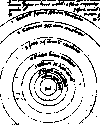
Died 4 Dec 1576 at age 62 (born 16 Feb 1514). quotes
German astronomer and mathematician who was among the first to adopt and spread the heliocentric theory of Nicolaus Copernicus. He was first taught by his father, a physician, who was beheaded for sorcery (1528) while Rheticus was still a teenager. He is best known as the first disciple of Copernicus. In 1540, Rheticus published the first account of the heliocentric hypothesis which had been elaborated by Copernicus, entitled Narratio prima, which was explicitly authorised by Copernicus, who also asked for his friend's aid in editing the edition of his De revolutionibus orbium coelestium (“On the revolutions of the heavenly spheres”). Rheticus was the first mathematician to regard the trigonometric functions in terms of angles rather than arcs of a circle.[DSB gives death date 4 Dec 1574. EB gives 5 Dec 1576.]
German astronomer and mathematician who was among the first to adopt and spread the heliocentric theory of Nicolaus Copernicus. He was first taught by his father, a physician, who was beheaded for sorcery (1528) while Rheticus was still a teenager. He is best known as the first disciple of Copernicus. In 1540, Rheticus published the first account of the heliocentric hypothesis which had been elaborated by Copernicus, entitled Narratio prima, which was explicitly authorised by Copernicus, who also asked for his friend's aid in editing the edition of his De revolutionibus orbium coelestium (“On the revolutions of the heavenly spheres”). Rheticus was the first mathematician to regard the trigonometric functions in terms of angles rather than arcs of a circle.[DSB gives death date 4 Dec 1574. EB gives 5 Dec 1576.]
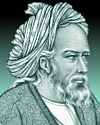
Died c. 4 Dec 1131 (born c. 15 May 1048). quotes
Persian poet, mathematician, and astronomer. Khayyam, who was born at Nishapur (now in Iran), produced a work on algebra that was used as a textbook in Persia until this century. In geometry, he studied generalities of Euclid and contributed to the theory of parallel lines. Around 1074, he set up an observatory and led work on compiling astronomical tables, and also contributed to the reform of the Persian calendar. His contributions to other fields of science included developing methods for the accurate determination of specific gravity. He is known to English-speaking readers for his "quatrains" as The Rubáiyát of Omar Khayyám, published in 1859 by Edward Fitzgerald, though it is now regarded as an anthology of which little or nothing may be by Omar.Birth date: DSB gives 15 May 1048; Enc. Brit. gives 18 May 1048.
Persian poet, mathematician, and astronomer. Khayyam, who was born at Nishapur (now in Iran), produced a work on algebra that was used as a textbook in Persia until this century. In geometry, he studied generalities of Euclid and contributed to the theory of parallel lines. Around 1074, he set up an observatory and led work on compiling astronomical tables, and also contributed to the reform of the Persian calendar. His contributions to other fields of science included developing methods for the accurate determination of specific gravity. He is known to English-speaking readers for his "quatrains" as The Rubáiyát of Omar Khayyám, published in 1859 by Edward Fitzgerald, though it is now regarded as an anthology of which little or nothing may be by Omar.Birth date: DSB gives 15 May 1048; Enc. Brit. gives 18 May 1048.
In 1998, the space shuttle Endeavour and a crew of six blasted off on the first mission to begin assembling the international space station.
In 1996, the Mars Pathfinder was launched on a Delta II rocket. Pathfinder carried a robot rover, named Sojourner, after U.S. civil rights crusader, Sojourner Truth. They reached the thin Martian atmosphere on 4 Jul 1997, then descended assisted by a parachute and landed using giant airbags to cushion the impact. After touchdown, the instrumented lander was named the Carl Sagan Memorial Station. It outlived its design life by nearly three times, while the free-ranging rover went twelve times its expected life, returning an unprecedented amount of data and images. The rover accomplished more than 15 chemical analyses of the rocks and soil. It also measured wind and surface conditions.«
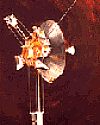
(NASA)
In 1973, Pioneer 10 reached Jupiter.
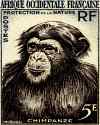
In 1923, the Associated Press reported that the governor of French West Africa had banned the capture, keeping, sale or exportation of chimpanzees from that colony to protect the chimpanzees from further exploitation. Irresponsible hunters wanted skins for clothing or glands for human rejuvenation.. Permits, restricted in time and number, would be limited to scientific and medical investigators. The chimpanzees had to be netted or trapped without wounding them. As the animal closest to human physiology, they were still being used for such experiments as grafting, or tuberculosis research. Over three decades later, on 2 May 1955, French West Africa issued a 5-franc stamp showing a chimpanzee, titled “Protection de la Nature” as conservation continued.«[Image right: height shrunk to fit space.]
In 1894, George Parker was issued a U.S. patent for a fountain pen design that became the Parker Pen Company's first major success. The Lucky Curve was designed to solve the problem that previous pens, while carried in a pocket, retained ink in the feed tube. Warmed by body temperature, the ink expanded forcing ink from the pen point into the cap and onto the barrel, causing soiled fingers on next use. The Lucky Curve design used capillary attraction to completely drain ink from the feed tube. Parker held several earlier fountain pen patents since his first on 10 Dec 1889. In Feb 1892, with partner W.E Palmer, he incorporated the Parker Pen Company to market his pens, and he continued to focus on making design improvements.
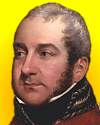
Congreve
In 1819, a triple paper was patented in Britain by Sir William Congreve that could incorporate a colored watermark, visible when the paper was held up to the light, to make currency harder to counterfeit. His invention was to overlay a very thin couched sheet of white paper on each side of a layer of colored pulp containing a design, which would then be pressed together and dried. He made a proposal to the Commission of the Bank of England on 30 Oct 1818, but his process was not adopted due to resistance from the Portals firm which had manufactured the Bank of England's currency paper since 1725. Congreve is best known for his invention of military rockets, first used militarily, against the French, on 8 Oct 1806.«
Papermaking: The History and Technique of an Ancient Craft, by Dard Hunter. - book suggestion.
In 1812, the first U.S. patent for a horse-drawn mowing machine was given to Peter Gaillard of Lancaster, Pennsylvania. It was granted before patents were numbered, and lost in the Patent Office fire (1836). Except for its entry in a summary list of patent dates, it remains unknown and likely unsuccessful. Other U.S. patents listed as for "cutting grain and grass" or "reaping grain" are listed for 17 May 1803, 28 Dec 1805 and 26 Feb 1811. Another patent for "mowing grass" was issued to Peter Baker on 19 Feb 1814. The next was to Jeremiah Bailey (13 Feb 1822), a rotary mowing machine which received much attention, both in the U.S. and in the British Mechanic's Magazine.«* more





