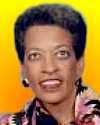
Born 19 Oct 1936.
Anthropologist and educator who was the first African-American woman president of Spelman College, in Atlanta, the oldest, private, liberal arts college for black women in the U.S. (1988). While president of Spelman, she taught one course per term in addition to her other academic responsibilities. Her interest in anthropology was sparked in part because it was new and unfamiliar, and a most unusual professional aspiration for an African-American woman during the 1950s. In 1960-62, she worked together with her new husband in Liberia, where they worked together on research for their respective dissertations. He conducted economic surveys and she engaged in fieldwork in the villages and towns of that West African nation.
Anthropologist and educator who was the first African-American woman president of Spelman College, in Atlanta, the oldest, private, liberal arts college for black women in the U.S. (1988). While president of Spelman, she taught one course per term in addition to her other academic responsibilities. Her interest in anthropology was sparked in part because it was new and unfamiliar, and a most unusual professional aspiration for an African-American woman during the 1950s. In 1960-62, she worked together with her new husband in Liberia, where they worked together on research for their respective dissertations. He conducted economic surveys and she engaged in fieldwork in the villages and towns of that West African nation.
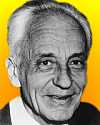
Born 19 Oct 1916.
French hematologist and immunologist whose studies of the genetic basis of the immunological reaction earned him a share (with George Snell and Baruj Benacerraf) of the 1980 Nobel Prize for Physiology or Medicine. In 1952, he discovered that people who receive repeated blood transfusions can develop antibodies to the blood. Dausset correctly hypothesized that a specific genetic variation among people accounted for the different levels of reaction. This discovery led to the use of simple blood tests to determine whether a prospective donor and patient are a good match for an organ transplant. Since that time, he has retained a constant interest in the immunogenetics of blood cells.
French hematologist and immunologist whose studies of the genetic basis of the immunological reaction earned him a share (with George Snell and Baruj Benacerraf) of the 1980 Nobel Prize for Physiology or Medicine. In 1952, he discovered that people who receive repeated blood transfusions can develop antibodies to the blood. Dausset correctly hypothesized that a specific genetic variation among people accounted for the different levels of reaction. This discovery led to the use of simple blood tests to determine whether a prospective donor and patient are a good match for an organ transplant. Since that time, he has retained a constant interest in the immunogenetics of blood cells.
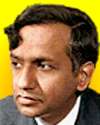
Born 19 Oct 1910; died 21 Aug 1995 at age 84. quotes
Indian-American astronomer and astrophysicist who shared (with William A.Fowler) the 1983 Nobel Prize for Physics for formulating the currently accepted theory on the later evolutionary stages of massive stars (which has led to the discovery of black holes and neutron stars). He was one of the first scientists to combine the disciplines of physics and astronomy. At age 19, he demonstrated that there is an upper limit, now called the Chandrasekhar limit, to the mass of a white dwarf star. (A white dwarf is the last stage in the evolution of a star such as the Sun, which ends with collapse when the nuclear energy source in its centre has become exhausted.) Further, it shows that stars much more massive than the Sun must either explode or form black holes.
Indian-American astronomer and astrophysicist who shared (with William A.Fowler) the 1983 Nobel Prize for Physics for formulating the currently accepted theory on the later evolutionary stages of massive stars (which has led to the discovery of black holes and neutron stars). He was one of the first scientists to combine the disciplines of physics and astronomy. At age 19, he demonstrated that there is an upper limit, now called the Chandrasekhar limit, to the mass of a white dwarf star. (A white dwarf is the last stage in the evolution of a star such as the Sun, which ends with collapse when the nuclear energy source in its centre has become exhausted.) Further, it shows that stars much more massive than the Sun must either explode or form black holes.
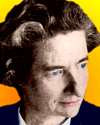
Born 19 Oct 1909; died 13 May 1975 at age 65.
Marguerite Catherine Perey was a French chemist who identified francium, element 87, the last naturally occurring element to be discovered (7 Jan 1939). She joined the Institut du Radium in 1929 as a technician to be the personal assistant of Marie Curie. Perey focussed on actinium for many years because it was considered a possible source of francium by alpha decay. However, the necessary purification of actinium and concentration required dozens of difficult and painstaking procedures. After submitting a thesis concerning her work on element 87, in 1946 she received a doctorate degree in physics. From 1949, she held the chair of a new nuclear chemistry department at the University of Strasbourg. In 1962, she became the first woman member of the French Academy of Sciences. She retired as her health declined from cancer caused by radiation.«
Marguerite Catherine Perey was a French chemist who identified francium, element 87, the last naturally occurring element to be discovered (7 Jan 1939). She joined the Institut du Radium in 1929 as a technician to be the personal assistant of Marie Curie. Perey focussed on actinium for many years because it was considered a possible source of francium by alpha decay. However, the necessary purification of actinium and concentration required dozens of difficult and painstaking procedures. After submitting a thesis concerning her work on element 87, in 1946 she received a doctorate degree in physics. From 1949, she held the chair of a new nuclear chemistry department at the University of Strasbourg. In 1962, she became the first woman member of the French Academy of Sciences. She retired as her health declined from cancer caused by radiation.«
Born 19 Oct 1895; died 26 Jan 1990 at age 94. quotes
American architectural critic, urban planner and historian who wrote about the effects of architecture and technology on human societies throughout history. He also covered topics in literary criticism, regional planning, environmentalism, history of cities, and their role in civilization. Called “the last of the great humanists” by Malcolm Cowley, Mumford gained international recognition. His publishing career began with American studies books in the 1920s and progressed through sixty years broadening with wide-ranging themes until his final work, his autobiography, Sketches From My Life (1982). For 30 years he contributed to The New Yorker magazine as architectural critic.«
American architectural critic, urban planner and historian who wrote about the effects of architecture and technology on human societies throughout history. He also covered topics in literary criticism, regional planning, environmentalism, history of cities, and their role in civilization. Called “the last of the great humanists” by Malcolm Cowley, Mumford gained international recognition. His publishing career began with American studies books in the 1920s and progressed through sixty years broadening with wide-ranging themes until his final work, his autobiography, Sketches From My Life (1982). For 30 years he contributed to The New Yorker magazine as architectural critic.«
Born 19 Oct 1881; died 20 Oct 1955 at age 74.
French geologist who investigated the stratigraphy of the late Pliocene and Quaternary deposits of the Mediterranean (about 5 million years ago to the present) and studied the structure of the Alps. He experimented with fold models to support his work. His interest in useful applications for his science was shown in his geological research concerning the effect on large alpine valleys used for hydroelectricity, especially the Génissiat Dam on the Rhone. His publications include Stratigraphic Geology (1936), which by the fourth edition was translated into English, Polish and Russian; and Géologie des barrages (Geology of Dams, 1955).«
French geologist who investigated the stratigraphy of the late Pliocene and Quaternary deposits of the Mediterranean (about 5 million years ago to the present) and studied the structure of the Alps. He experimented with fold models to support his work. His interest in useful applications for his science was shown in his geological research concerning the effect on large alpine valleys used for hydroelectricity, especially the Génissiat Dam on the Rhone. His publications include Stratigraphic Geology (1936), which by the fourth edition was translated into English, Polish and Russian; and Géologie des barrages (Geology of Dams, 1955).«
Stratigraphic Geology, by Maurice Gignoux. - book suggestion.
Born 19 Oct 1871; died 1 Oct 1945 at age 73. quotes
American physiologist and neurologist who was the first to use X-rays in physiological studies. These led to his publication of The Mechanical Factors of Digestion (1911). He investigated hemorrhagic and traumatic shock during WW I. He devised the term homeostasis (1930) for how the body maintains its temperature. He worked on methods of blood storage and discovered sympathin (1931), an adrenaline-like substance that is liberated at the tips of certain nerve cells. He died from leukemia - probably a legacy from his early work with X rays. He was nominated for a Nobel Prize in 1920 for his work on digestion, but his claim was ruled out as "too old." In 1934, 1935, and 1936 he was adjudged “prizeworthy” by the appropriate Nobel jurors but was not given a prize.
American physiologist and neurologist who was the first to use X-rays in physiological studies. These led to his publication of The Mechanical Factors of Digestion (1911). He investigated hemorrhagic and traumatic shock during WW I. He devised the term homeostasis (1930) for how the body maintains its temperature. He worked on methods of blood storage and discovered sympathin (1931), an adrenaline-like substance that is liberated at the tips of certain nerve cells. He died from leukemia - probably a legacy from his early work with X rays. He was nominated for a Nobel Prize in 1920 for his work on digestion, but his claim was ruled out as "too old." In 1934, 1935, and 1936 he was adjudged “prizeworthy” by the appropriate Nobel jurors but was not given a prize.
The Mechanical Factors of Digestion, by Walter Bradford Cannon. - book suggestion.
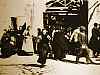
Frenchman who, with his brother Louis, invented and pioneered the manufacturing of photographic equipment. They devised an early motion-picture camera and projector called the Cinématographe (“cinema” is derived from this name). Their film La Sortie des ouvriers de l'usine Lumière (“Workers Leaving the Lumière Factory”), is considered the first motion picture. On 22 Mar 1895, an invited audience at 44 Rue de Rennes in Paris, France, viewed the film they shot specially for the occasion showing workers leaving the Lumières' own factory in Lyon, which made all kinds of photographic products. The workers streamed out, most to foot, some with their bicycles, then followed by those with cars.Image right: frames from La Sortie des ouvriers film.]
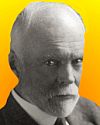
Born 19 Oct 1856; died 3 Mar 1939 at age 82. quotes
American biologist known for his researches in embryology and cytology. His first experimental studies, in embryology, led him to investigations at the cellular level. His principal work was on the function of the cell in heredity and showed the chromosomal basis of sex determination in the embryo (1905). Wilson concluded that females have XX chromosomes, while males possess XY chromosomes. Following the process of meiosis, all eggs are left with an X chromosome, but sperm can have either X or Y. If an X chromosome sperm fertilizes an egg, the result is a female. If a Y chromosome sperm fertilizes and egg, the result is a male. He was the first scientist to publish photographs illustrating how a cell divides.
American biologist known for his researches in embryology and cytology. His first experimental studies, in embryology, led him to investigations at the cellular level. His principal work was on the function of the cell in heredity and showed the chromosomal basis of sex determination in the embryo (1905). Wilson concluded that females have XX chromosomes, while males possess XY chromosomes. Following the process of meiosis, all eggs are left with an X chromosome, but sperm can have either X or Y. If an X chromosome sperm fertilizes an egg, the result is a female. If a Y chromosome sperm fertilizes and egg, the result is a male. He was the first scientist to publish photographs illustrating how a cell divides.
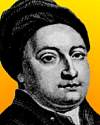
Born 19 Oct 1688; died 10 Apr 1752 at age 63.
English surgeon and teacher of anatomy and surgery, who was instrumental in raising surgery to a profession. He began lecturing on anatomy at age 22. Three years after that, he published Anatomy of the Human Body, (1713) written in English instead of the Latin, which remained in print as a text for anatomy students for almost a century. He was the first to perform operations for iridectomy, the removal of part of the iris to treat blindness (1728) and lateral lithotomy (1727). In the latter operation, he was quick and precise surgeon, able to remove bladder stones in about one minute. He described the role of saliva in digestion, as opposed to the general belief that digestion resulted from the mechanical actions of the abdominal muscles on the stomach.
English surgeon and teacher of anatomy and surgery, who was instrumental in raising surgery to a profession. He began lecturing on anatomy at age 22. Three years after that, he published Anatomy of the Human Body, (1713) written in English instead of the Latin, which remained in print as a text for anatomy students for almost a century. He was the first to perform operations for iridectomy, the removal of part of the iris to treat blindness (1728) and lateral lithotomy (1727). In the latter operation, he was quick and precise surgeon, able to remove bladder stones in about one minute. He described the role of saliva in digestion, as opposed to the general belief that digestion resulted from the mechanical actions of the abdominal muscles on the stomach.
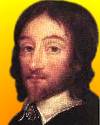
Born 19 Oct 1605; died 19 Oct 1682 at age 77. quotes
Physician and writer, born London. He is best known for his book of reflections, Religio Medici. At his Norwich house - which he called his "elaboratory"- he performed his chemical experiments and studies in natural history. It contained his notable collection of bird eggs, maps and medals and housed his library of around 2,000 volumes. Browne was attracted to anything of antiquity as well as being an accomplished naturalist. He died on his birthday.
Physician and writer, born London. He is best known for his book of reflections, Religio Medici. At his Norwich house - which he called his "elaboratory"- he performed his chemical experiments and studies in natural history. It contained his notable collection of bird eggs, maps and medals and housed his library of around 2,000 volumes. Browne was attracted to anything of antiquity as well as being an accomplished naturalist. He died on his birthday.

Died 19 Oct 2004 at age 77 (born 29 Jan 1927).
Lewis Frederick Urry was a Canadian-American chemical engineer who invented the ubiquitous alkaline batteries and, later, lithium batteries. After a few years working in Canada for the company that made Eveready batteries, he was transferred in 1955 to its Cleveland, Ohio, laboratory where he began work on a new battery with better life-span than the carbon-zinc type of the time. He succeeded by using manganese dioxide, an alkaline electrolyte and powdered zinc (which he realized had greater surface area than solid zinc). A patent was filed 9 Oct 1957, issued 15 Nov 1960, No. 2,960,558. Production began in 1959. Alkaline batteries are estimated to be 80% of all dry cell batteries now sold in the world. The Smithsonian Institution displays his prototype alkaline battery. Urry held over 50 patents.«
Lewis Frederick Urry was a Canadian-American chemical engineer who invented the ubiquitous alkaline batteries and, later, lithium batteries. After a few years working in Canada for the company that made Eveready batteries, he was transferred in 1955 to its Cleveland, Ohio, laboratory where he began work on a new battery with better life-span than the carbon-zinc type of the time. He succeeded by using manganese dioxide, an alkaline electrolyte and powdered zinc (which he realized had greater surface area than solid zinc). A patent was filed 9 Oct 1957, issued 15 Nov 1960, No. 2,960,558. Production began in 1959. Alkaline batteries are estimated to be 80% of all dry cell batteries now sold in the world. The Smithsonian Institution displays his prototype alkaline battery. Urry held over 50 patents.«
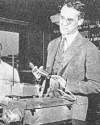
American engineer whose invention of the Iron Lung was a negative pressure ventilator that provided external respiration support. From its first use on 12 Oct 1928 to the 1950's, the iron lung was a vital technology to maintain life especially in cases of muscle paralysis caused by the poliomyelitis disease that was prevalent in that era. Victims of polio partially or totally lost their ability to breathe for themselves. A polio patient's entire body below the neck lay sealed in a metal chamber wherein pressure was increased and decreased by an air pump. Its cycle caused the lungs to expel and inhale air and mimic a normal breathing rate.«[Image right: Philip Drinker experimenting with a cat in a test iron lung, 1928.]
Died 19 Oct 1937 at age 66 (born 30 Aug 1871). quotes
(1st Baron Rutherford of Nelson) Sir Ernest Rutherford was a New Zealand-English physicist who laid the groundwork for the development of nuclear physics. He worked under Sir J. J. Thomson at Cambridge University (1895-98). Then he collaborated with Frederick Soddy in studying radioactivity. On 1 Sep 1898 he dated a paper naming alpha particles and beta particles (Gamma radiation was discovered in 1900 by Paul Villard.) the following year. In 1905, with Soddy, he announced that radioactive decay involves a series of transformations. In 1907, with Hans Geiger and Ernest Marsden, he devised the alpha-particle scattering experiment that led in 1911 to the discovery of the atomic nucleus. In 1919 he achieved the artificial splitting of light atoms. In 1908 he was awarded the Nobel Prize for Chemistry.
(1st Baron Rutherford of Nelson) Sir Ernest Rutherford was a New Zealand-English physicist who laid the groundwork for the development of nuclear physics. He worked under Sir J. J. Thomson at Cambridge University (1895-98). Then he collaborated with Frederick Soddy in studying radioactivity. On 1 Sep 1898 he dated a paper naming alpha particles and beta particles (Gamma radiation was discovered in 1900 by Paul Villard.) the following year. In 1905, with Soddy, he announced that radioactive decay involves a series of transformations. In 1907, with Hans Geiger and Ernest Marsden, he devised the alpha-particle scattering experiment that led in 1911 to the discovery of the atomic nucleus. In 1919 he achieved the artificial splitting of light atoms. In 1908 he was awarded the Nobel Prize for Chemistry.
A Force of Nature: The Frontier Genius of Ernest Rutherford, by Richard Reeves. - book suggestion.
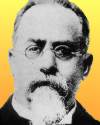
Died 19 Oct 1909 at age 73 (born 6 Nov 1835).
Italian physician, psychiatrist and pioneer criminologist, who employed Darwinian ideas of evolution to account for criminal behaviour. Measuring heads of criminals against skulls of apes and prehistoric humans, he concluded that criminals were in fact hereditary victims of atavism - a reversion to evolutionarily primitive traits including those related to survival. In prehistoric times, a strong desire to kill, for example, would have made them good hunters and desirable mates, but criminals in urban environments. Lombroso believed this theory of atavistic criminality should influence punishment of crime. In many circles, his ideas met with concerted opposition. Later, Lombroso gradually included social factors as significant in disposing people to criminal behaviour.
Italian physician, psychiatrist and pioneer criminologist, who employed Darwinian ideas of evolution to account for criminal behaviour. Measuring heads of criminals against skulls of apes and prehistoric humans, he concluded that criminals were in fact hereditary victims of atavism - a reversion to evolutionarily primitive traits including those related to survival. In prehistoric times, a strong desire to kill, for example, would have made them good hunters and desirable mates, but criminals in urban environments. Lombroso believed this theory of atavistic criminality should influence punishment of crime. In many circles, his ideas met with concerted opposition. Later, Lombroso gradually included social factors as significant in disposing people to criminal behaviour.
Died 19 Oct 1897 at age 66 (born 3 Mar 1831).
George Mortimer Pullman was an American inventor and industrialist who revolutionized train travel with his innovation, the Pullman sleeping car, introduced in Aug 1859. Born in New York, Pullman began his career constructing buildings and later moved into improving railroad sleeping accommodations, which were uncomfortable at the time. In 1867, he founded the Pullman Palace Car Company, producing luxury sleeping cars that transformed long-distance rail travel. His success led to the creation of the company town, Pullman, Chicago. However, in 1894, worker protests against wage cuts led to the violent Pullman Strike. Although his innovations were pioneering, Pullman’s legacy is also tied to the labor controversies of his era.«
George Mortimer Pullman was an American inventor and industrialist who revolutionized train travel with his innovation, the Pullman sleeping car, introduced in Aug 1859. Born in New York, Pullman began his career constructing buildings and later moved into improving railroad sleeping accommodations, which were uncomfortable at the time. In 1867, he founded the Pullman Palace Car Company, producing luxury sleeping cars that transformed long-distance rail travel. His success led to the creation of the company town, Pullman, Chicago. However, in 1894, worker protests against wage cuts led to the violent Pullman Strike. Although his innovations were pioneering, Pullman’s legacy is also tied to the labor controversies of his era.«
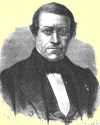
Died 19 Oct 1875 at age 73 (born 6 Feb 1802).
English physicist who popularized the Wheatstone bridge, a device that accurately measured electrical resistance and became widely used in laboratories. He didn't actually invent the “Wheatstone Bridge”. His contemporary, Samuel Hunter Christie, came up with the idea of the bridge circuit, but Wheatstone set the precedent for using it in the way in which it has been most commonly used. Over time, the device became associated with him and took on his name. He did, however, invent the concertina (1829), the stereoscope (1838), and an early form of the telegraph. He also developed a chronoscope (1842) to determine the velocity of projectiles at an English gunnery.
English physicist who popularized the Wheatstone bridge, a device that accurately measured electrical resistance and became widely used in laboratories. He didn't actually invent the “Wheatstone Bridge”. His contemporary, Samuel Hunter Christie, came up with the idea of the bridge circuit, but Wheatstone set the precedent for using it in the way in which it has been most commonly used. Over time, the device became associated with him and took on his name. He did, however, invent the concertina (1829), the stereoscope (1838), and an early form of the telegraph. He also developed a chronoscope (1842) to determine the velocity of projectiles at an English gunnery.
Sir Charles Wheatstone, by Margaret Wilson and Brian Bowers (Ed.). - book suggestion.
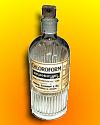
Died 19 Oct 1848 (born 1782).
American chemist and physician who first discovered chloroform. He also invented the percussion priming powder for firearms, which superseded flints. He performed experiments in a laboratory near his house, and had a mill about a mile away for manufacturing large quantities of this powder and other explosives (e.g., potassium chlorate and mercury fulminate). In 1830 he devised a process that rapidly converted potato starch into molasses. He made chloroform in 1831 by distilling chloride of lime with alcohol in a copper vessel, prior to the independent discoveries of Soubeiran (France,1831) and Justus Liebig (Germany, 1832). Guthrie used chloroform during an amputation surgery in his hometown of Sackets Harbor, N.Y.«
American chemist and physician who first discovered chloroform. He also invented the percussion priming powder for firearms, which superseded flints. He performed experiments in a laboratory near his house, and had a mill about a mile away for manufacturing large quantities of this powder and other explosives (e.g., potassium chlorate and mercury fulminate). In 1830 he devised a process that rapidly converted potato starch into molasses. He made chloroform in 1831 by distilling chloride of lime with alcohol in a copper vessel, prior to the independent discoveries of Soubeiran (France,1831) and Justus Liebig (Germany, 1832). Guthrie used chloroform during an amputation surgery in his hometown of Sackets Harbor, N.Y.«
Died 19 Oct 1682 at age 77 (born 19 Oct 1605). quotes
Physician and writer, born London. He is best known for his book of reflections, Religio Medici. At his Norwich house - which he called his "elaboratory"- he performed his chemical experiments and studies in natural history. It contained his notable collection of bird eggs, maps and medals and housed his library of around 2,000 volumes. Browne was attracted to anything of antiquity as well as being an accomplished naturalist. He died on his birthday.
Physician and writer, born London. He is best known for his book of reflections, Religio Medici. At his Norwich house - which he called his "elaboratory"- he performed his chemical experiments and studies in natural history. It contained his notable collection of bird eggs, maps and medals and housed his library of around 2,000 volumes. Browne was attracted to anything of antiquity as well as being an accomplished naturalist. He died on his birthday.
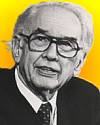
Atanasoff
In 1973, a US Federal Judge signed his decision following a lengthy court trial which declared the ENIAC patent invalid and belatedly credited physicist John Atanasoff with developing the first electronic digital computer, the Atanasoff- Berry Computer or the ABC. Built in 1937-42 at Iowa State University by Atanadoff and a graduate student, Clifford Berry, it introduced the ideas of binary arithmetic, regenerative memory, and logic circuits. These ideas were communicated from Atanasoff to John Mauchly, who used them in the design of the better-known ENIAC built and patented several years later.
The First Electronic Computer: The Atanasoff Story, by Alice R. Burks, Arthur W. Burks. - book suggestion.

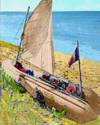
l'Hérétique boat

The Voyage of the Heretique, by Alain Bombard. - book suggestion.
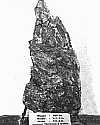
In 1872, a slab of slate in New South Wales, Australia, was found containing 82.11 kg of gold. Known as Holtermann's Nugget, it was largest mass of reef gold ever found. More correctly, it was not a nugget, but a specimen also known as a matrix. The slab weighed 286kg and measured 150cm by 66cm with an average thickness of 10cm.It was found at the Bald Hill Mine at Hill End Gold Mine, 275 km NW of Sydney. It was crushed and the gold content recovered. Alluvial gold had been discovered at Hill End (then known as Bald Hill) in 1851 and there were were 150 miners on the site within a month. In 1967, Hill End was proclaimed an historic site and placed under the care of the National Parks and Wildlife Service.
In 1860, the Società Anonima del nuova motore Barsante e Matteucci (Anonymous Society of the New Barsanti and Matteucci Engine) was formed in Florence, Italy, to manufacture internal combustion engines. On 5 Jun 1853, Father Eugenio Barsante and engineer Felice Matteucci were the first to record having designed a three-stroke gas engine that was to be commercially developed. They deposited a sealed envelope at the secretariat of the Georgofili Academy of Florence outlining their work to that date. They also held British patents. The first engine in actual operation was installed in 1856 at the Maria Antonia Railway Station in Florence. A piston was moved by atmospheric pressure after a vacuum was produced by the explosion of flammable gas inside it using an electric spark from a Rumkoff coil.«




