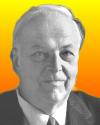
Born 22 Mar 1931; died 18 Jul 2018 at age 87.
American physicist who shared (with independent researcher Samuel C. C. Ting) the 1976 Nobel Prize for Physics for the discovery (10 Nov 1974) of a new subatomic particle, the J/psi meson. It is a composite particle, made of more elementary particles—a bound state of one charm quark and one anticharm quark. That firmly established the quark model. Richter became a full professor at Stanford in 1967. There, he designed, arranged financing, and built a high-energy particle accelerator, which with an advanced particle detector, enabled the discovery of the new particle. Richter was director of the Department of Energy’s SLAC National Accelerator Laboratory at Stanford from 1984 to 1999.«
American physicist who shared (with independent researcher Samuel C. C. Ting) the 1976 Nobel Prize for Physics for the discovery (10 Nov 1974) of a new subatomic particle, the J/psi meson. It is a composite particle, made of more elementary particles—a bound state of one charm quark and one anticharm quark. That firmly established the quark model. Richter became a full professor at Stanford in 1967. There, he designed, arranged financing, and built a high-energy particle accelerator, which with an advanced particle detector, enabled the discovery of the new particle. Richter was director of the Department of Energy’s SLAC National Accelerator Laboratory at Stanford from 1984 to 1999.«
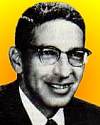
Born 22 Mar 1916; died 11 Feb 1983 at age 66.
Nathan Schellenberg Kline was an American psychiatrist who is credited with founding the field of psychopharmacology. In 1953, he began investigating the use of a new drug, reserpine, to treat schizophrenia. He continued to pioneer in the biochemical treatment of mentally ill patients by introducing the use of such drugs as the antidepressants lithium and iproniazid and the tranquilizer resperine. Because these drugs so successfully drugs treated two of the major categories of psychiatric illness, thousands of patients - formerly considered untreatable - were able to leave institutions and to rejoin society. By 1957, iproniazid, first in the class of monoamine oxidase (MAO) inhibitors, was treating an estimated 400,000 people in the U.S.«
Nathan Schellenberg Kline was an American psychiatrist who is credited with founding the field of psychopharmacology. In 1953, he began investigating the use of a new drug, reserpine, to treat schizophrenia. He continued to pioneer in the biochemical treatment of mentally ill patients by introducing the use of such drugs as the antidepressants lithium and iproniazid and the tranquilizer resperine. Because these drugs so successfully drugs treated two of the major categories of psychiatric illness, thousands of patients - formerly considered untreatable - were able to leave institutions and to rejoin society. By 1957, iproniazid, first in the class of monoamine oxidase (MAO) inhibitors, was treating an estimated 400,000 people in the U.S.«
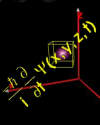
Born 22 Mar 1909; died 18 Dec 1995 at age 86.
American-Israeli theoretical physicist who in 1935 collaborated with Albert Einstein and Boris Podolsky on a much-debated refutation of the theory of quantum mechanics; he later came to accept the theory. The famous Einstein-Podolsky-Rosen critique of quantum mechanics was published in the 1935 Physical Review. (A New York Times obituary described The Physical Review as “one of the most impenetrable periodicals in the English language.”) Rosen founded the Institute of Physics at Technion in Haifa.
American-Israeli theoretical physicist who in 1935 collaborated with Albert Einstein and Boris Podolsky on a much-debated refutation of the theory of quantum mechanics; he later came to accept the theory. The famous Einstein-Podolsky-Rosen critique of quantum mechanics was published in the 1935 Physical Review. (A New York Times obituary described The Physical Review as “one of the most impenetrable periodicals in the English language.”) Rosen founded the Institute of Physics at Technion in Haifa.
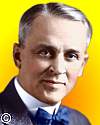
Born 22 Mar 1868; died 19 Dec 1953 at age 85. quotes
American physicist who was awarded the 1923 Nobel Prize for Physics for “his work on the elementary charge of electricity and on the photoelectric effect.” Millikan's famous oil-drop experiment (1911) was far superior to previous determinations of the charge of an electron, and further showed that the electron was a fundamental, discrete particle. When its value was substituted in Niels Bohr's theoretical formula for the hydrogen spectrum, that theory was validated by the experimental results. Thus Millikan's work also convincingly provided the first proof of Bohr's quantum theory of the atom. In later work, Millikan coined the term “cosmic rays” in 1925 during his study of the radiation from outer space.«
American physicist who was awarded the 1923 Nobel Prize for Physics for “his work on the elementary charge of electricity and on the photoelectric effect.” Millikan's famous oil-drop experiment (1911) was far superior to previous determinations of the charge of an electron, and further showed that the electron was a fundamental, discrete particle. When its value was substituted in Niels Bohr's theoretical formula for the hydrogen spectrum, that theory was validated by the experimental results. Thus Millikan's work also convincingly provided the first proof of Bohr's quantum theory of the atom. In later work, Millikan coined the term “cosmic rays” in 1925 during his study of the radiation from outer space.«
The electron: Its isolation and measurement and the determination of some of its properties, by Robert Andrews Millikan. - book suggestion.
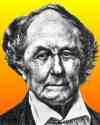
Born 22 Mar 1799; died 17 Feb 1875 at age 75.
German astronomer who established the study of variable stars as an independent branch of astronomy and is renowned for his great catalog listing the positions and brightness of 324,188 stars of the northern hemisphere above the ninth magnitude. He studied at the University of Königsberg, Prussia, where he was a pupil and later the successor of Friedrich Wilhelm Bessel. In 1837, Argelander published the first major investigation of the Sun's motion through space. In 1844 he began studies of variable stars.
German astronomer who established the study of variable stars as an independent branch of astronomy and is renowned for his great catalog listing the positions and brightness of 324,188 stars of the northern hemisphere above the ninth magnitude. He studied at the University of Königsberg, Prussia, where he was a pupil and later the successor of Friedrich Wilhelm Bessel. In 1837, Argelander published the first major investigation of the Sun's motion through space. In 1844 he began studies of variable stars.
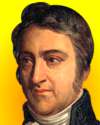
Born 22 Mar 1788; died 19 Jul 1842 at age 54. quotes
French chemist who is known for his research in partnership with Joseph-Bienaimé Caventou into vegetable bases and the resulting contributions of alkaloid chemistry to the field of medicine. They helped found the chemistry of vegetable alkaloids. They isolated chlorophyll (1817), for which they coined the French name chlorophyle in Ann. de Chimie(1818), IX, 195. Their alkaloid discoveries included strychnine (1818), brucine (1819), quinine (1820), caffeine (1821), and cinchonine. In 1823, using elementary closed-tube analyses in which the alkaloids were combusted, they discovered nitrogen was present in the compounds. Alkaloids are organic compounds which form water-soluble salts that perform various functions in medicine, including analgesics (pain-killers), and respiratory stimulants.
French chemist who is known for his research in partnership with Joseph-Bienaimé Caventou into vegetable bases and the resulting contributions of alkaloid chemistry to the field of medicine. They helped found the chemistry of vegetable alkaloids. They isolated chlorophyll (1817), for which they coined the French name chlorophyle in Ann. de Chimie(1818), IX, 195. Their alkaloid discoveries included strychnine (1818), brucine (1819), quinine (1820), caffeine (1821), and cinchonine. In 1823, using elementary closed-tube analyses in which the alkaloids were combusted, they discovered nitrogen was present in the compounds. Alkaloids are organic compounds which form water-soluble salts that perform various functions in medicine, including analgesics (pain-killers), and respiratory stimulants.
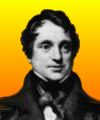
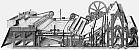
Donkin/Fourdrinier paper-making machine (1820)
English mechanical engineer and inventor. After the Fourdrinier brothers imported from France a prototype machine for making paper in continuous lengths (1802), Donkin assisted with design improvements and to establish a factory. By 1808, Donkin acquired the works and a license to manufacture the paper-making machines. He also developed printing machinery and invented the composition roller used in printing. Donkin held other patents on gearing, steel pens, paper-making and railway wheels. He also worked on the preservation of food in airtight containers (1813), revolution counters and improved accurate screw threads for graduating mathematical scales. Three more generations of his family included engineers.« more
Born 22 Mar 1394; died 27 Oct 1449 at age 55.
Mongol astronomer and mathematician who, although the only important Mongol scientist, was the greatest astronomer of his time. Pursuing this interest he built an observatory (begun in 1428) at Samarkand. In his observations he discovered a number of errors in the computations of the 2nd-century Alexandrian astronomer Ptolemy, whose figures were still being used. His star map of 994 stars was the first new one since Hipparchus. After Ulugh Beg was assassinated by his son, the observatory fell to ruins by 1500, rediscovered only in 1908. Written in Arabic, his work went unread by the world's next generation of astronomers. When his tables were translated into Latin in 1665, telescopic observations had surpassed them.
Mongol astronomer and mathematician who, although the only important Mongol scientist, was the greatest astronomer of his time. Pursuing this interest he built an observatory (begun in 1428) at Samarkand. In his observations he discovered a number of errors in the computations of the 2nd-century Alexandrian astronomer Ptolemy, whose figures were still being used. His star map of 994 stars was the first new one since Hipparchus. After Ulugh Beg was assassinated by his son, the observatory fell to ruins by 1500, rediscovered only in 1908. Written in Arabic, his work went unread by the world's next generation of astronomers. When his tables were translated into Latin in 1665, telescopic observations had surpassed them.

Died 22 Mar 2010 at age 85 (born 14 Jun 1924). quotes
Sir James Whyte Black was a Scottish pharmacologist who (along with George H. Hitchings and Gertrude B. Elion) received the Nobel Prize for Physiology or Medicine in 1988 for his development of two important drugs, propranolol and cimetidine. Propranolol was the first clinically useful beta-receptorblocking drug (1964). This type of drug is now being used in the treatment of coronary heart disease (angina pectoris, myocardial infarction) and hypertension. In 1972 Black characterized a new group of histamine receptors, H2-receptors, and subsequently developed the first clinically useful H2-receptorantagonist, cimetidine (Tagamet). This introduced a new principle in the treatment of peptic ulcer.
Sir James Whyte Black was a Scottish pharmacologist who (along with George H. Hitchings and Gertrude B. Elion) received the Nobel Prize for Physiology or Medicine in 1988 for his development of two important drugs, propranolol and cimetidine. Propranolol was the first clinically useful beta-receptorblocking drug (1964). This type of drug is now being used in the treatment of coronary heart disease (angina pectoris, myocardial infarction) and hypertension. In 1972 Black characterized a new group of histamine receptors, H2-receptors, and subsequently developed the first clinically useful H2-receptorantagonist, cimetidine (Tagamet). This introduced a new principle in the treatment of peptic ulcer.
Died 22 Mar 1960 at age 81 (born 23 Feb 1879).
British botanist (née Robertson) noted chiefly for her studies in comparative anatomy of plants, especially monocotyledons. Her interest in botany began in her schooldays in London. Her first book, Herbals: Their Origin and Evolution, published in 1912 and rewritten in 1938, became a standard textbook of the period. She was the first woman botanist to be made a fellow of the Royal Society, Britain's oldest and most important scientific society. Her later works were Water Plants: A Study of Aquatic Angiosperms (1920), Monocotyledons (1925), and The Gramineae: A Study of Cereal, Bamboo and Grass (1934). Arber also wrote, between 1902 and 1957, numerous articles on comparative anatomy.
British botanist (née Robertson) noted chiefly for her studies in comparative anatomy of plants, especially monocotyledons. Her interest in botany began in her schooldays in London. Her first book, Herbals: Their Origin and Evolution, published in 1912 and rewritten in 1938, became a standard textbook of the period. She was the first woman botanist to be made a fellow of the Royal Society, Britain's oldest and most important scientific society. Her later works were Water Plants: A Study of Aquatic Angiosperms (1920), Monocotyledons (1925), and The Gramineae: A Study of Cereal, Bamboo and Grass (1934). Arber also wrote, between 1902 and 1957, numerous articles on comparative anatomy.
Died 22 Mar 1956 at age 71 (born 31 Aug 1884). quotes
George Alfred Léon Sarton was a Belgian-American science historian who established the discipline of the History of Science in the U.S. Studying at Ghent University in Belgium, he first received a degree in Chemistry, followed in 1911 by a Ph.D. in Mathematics. In 1912, he founded Isis as a quarterly journal to publish articles on the history of science. To escape from WW I, he emigrated first to England, and then to the U.S., where he remained. He gave lectures at Harvard University from 1916, and eventually became a professor there, for the history of science (1940-51). His major work was the several volumes of his encyclopedic Introduction to the History of Science (1927-47). His name is honored with the prestigious George Sarton Medal, awarded by the History of Science Society.«
George Alfred Léon Sarton was a Belgian-American science historian who established the discipline of the History of Science in the U.S. Studying at Ghent University in Belgium, he first received a degree in Chemistry, followed in 1911 by a Ph.D. in Mathematics. In 1912, he founded Isis as a quarterly journal to publish articles on the history of science. To escape from WW I, he emigrated first to England, and then to the U.S., where he remained. He gave lectures at Harvard University from 1916, and eventually became a professor there, for the history of science (1940-51). His major work was the several volumes of his encyclopedic Introduction to the History of Science (1927-47). His name is honored with the prestigious George Sarton Medal, awarded by the History of Science Society.«
The Study of the History of Mathematics & the Study of the History of Science, by George Sarton. - book suggestion.
Died 22 Mar 1832 at age 82 (born 28 Aug 1749). quotes
German poet, zoologist, botanist and geologist who was both famous in world literature and an intellectual with an interest in science. He coined the term morphology to describe the systematic study of the structure of living things. He wrote ably, though mostly wrongly, on matters of science. His Zur Farbenlehre (On the Theory of Colour, 1810), parted radically from Newton’s interpretation of white light as a mixture of colours. Goethe took the position of a neptunist in geology. In biology, he saw all plant structures as modifications of leaf forms. However, he agreed with evolution whereby he viewed the origin of plants and animals as having followed specialization and differentiation throughout time to their present forms.«
German poet, zoologist, botanist and geologist who was both famous in world literature and an intellectual with an interest in science. He coined the term morphology to describe the systematic study of the structure of living things. He wrote ably, though mostly wrongly, on matters of science. His Zur Farbenlehre (On the Theory of Colour, 1810), parted radically from Newton’s interpretation of white light as a mixture of colours. Goethe took the position of a neptunist in geology. In biology, he saw all plant structures as modifications of leaf forms. However, he agreed with evolution whereby he viewed the origin of plants and animals as having followed specialization and differentiation throughout time to their present forms.«
Goethe's Way of Science, by David Seamon. - book suggestion.
Died 22 Mar 1831 (born Oct 1763).
British mining engineer who developed (1801) a successful steam-driven paddle wheel and used it the following year to propel one of the first practical steamboats, the Charlotte Dundas, commissioned by Lord Dundas and designed for the Forth and Clyde canal. Symington used a piston rod coupled to a crankshaft by a connecting rod, a design that was to become standard for steam ships. The 56-ft craft successfully underwent trials on the canal proving herself capable of towing two barges of 70 tons along a 19.5 mile stretch in 1801. The boat was abandoned shortly thereafter at the canal company's Tophill depot at Camelon near Falkirk, because of concern that the wake from her stern paddle wheel would damage the banks.
British mining engineer who developed (1801) a successful steam-driven paddle wheel and used it the following year to propel one of the first practical steamboats, the Charlotte Dundas, commissioned by Lord Dundas and designed for the Forth and Clyde canal. Symington used a piston rod coupled to a crankshaft by a connecting rod, a design that was to become standard for steam ships. The 56-ft craft successfully underwent trials on the canal proving herself capable of towing two barges of 70 tons along a 19.5 mile stretch in 1801. The boat was abandoned shortly thereafter at the canal company's Tophill depot at Camelon near Falkirk, because of concern that the wake from her stern paddle wheel would damage the banks.
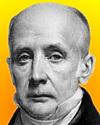
British physicist and teacher, who educated himself about science, and for developing a new method of preparing artificial magnets, won election to the Royal Society (1749). In July 1752, he was the first Englishman to repeat French experiments verifying Franklin's hypothesis that lightning was just a huge electric spark, (as seen from charged Leyden jars). Following this, he studied the polarity of the charge on a cloud. He invented a portable electroscope to detect charge present in a system, and he remains well-known for electrostatic induction experiments. Canton proved that water is slightly compressible (1762). Noting compass needle irregularities during a prominent aurora borealis he made the first observations of magnetic storms (1756-9).
In 1985, the Vienna Convention for the Protection of the Ozone Layer was adopted and opened for signature. It entered into force on 22 Sep 1988 and established that secretariat functions would be carried out by the United Nations Environment Programme. Control of ozone-depleting substances was needed because ecological and health damage results from a depleted ozone layer due to more UV-B radiation reaching the Earth's surface. Results include increased rates of skin cancers and eye cataracts, reduced plant and fishing yields from adverse effects on terrestrial and ocean ecosystems, weakened immune systems, and more damage to plastics. The subsequent Montreal Protocol established specific limits to production «[Image: the largest ozone hole ever recorded, Sep 2000, exposed all the Antarctic and reached the southern tip of Argentina.]

RCA model SFT100
In 1981, RCA first put on sale the SelectaVision VideoDisc, exactly 10 years after RCA applied for the first patents. Based on electronic capacitance technology, RCA VideoDiscs contained a groove of varying depth which was played with a stylus sensitive to the depth of the groove immediately underneath it. The system emerged as a marvel of mass-production research and development, able to play a two-hour movie on a twelve-inch, fifteen-dollar record on a $500 player. However, SelectaVision failed in the marketplace, since VCR's had dropped in price during its development phase, and the VideoDisc arrived on the market too late to compete. Manufacturing was abandoned in April 1984.
USPTO
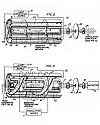
In 1960, the first laser was patented (U.S. No. 2,929,922) by Arthur Schawlow and Charles Hard Townes under the title “Masers and Maser Communications System.” What distinguished this invention as the first laser is that it was the first to operate in the visible light spectrum. The patent was assigned to the Bell Telephone Laboratories, where they had done the research.
In 1946, the first rocket built in the United States left the Earth's atmosphere, whereas Germany had launched a rocket the year before. The U.S. rocket was launched from White Sands, New Mexico, and attained an altitude of 50 miles.
In 1935, television broadcasts begin in Berlin, Germany, with a low definition, 180 lines system.
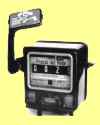
In 1907, the first internal combustion-powered cabs in London with taximeters began operating. The taximeter gave the cab its modern name. Its purpose was to indicate to both driver and passenger the distance travelled and so avoid arguments about payment due. The word derives from French (taxe = price) and Greek (metron = measure). The taximeter was invented by Wilhelm Bruhn in 1891.
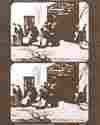
In 1895, the first motion picture shown on a screen was presented by Auguste and Louis Lumière. An invited audience at 44 Rue de Rennes in Paris, France, viewed the film La Sortie des ouvriers de l'usine Lumière. The film they shot specially for the occasion shows workers leaving the Lumières' own factory in Lyon, which made all kinds of photographic products. The workers streamed out, most on foot and some on bicycles. Several more such screenings followed before the first public performance, at the Salon Indien of the Grand Café, 14 Boulevard des Capucines in Paris on 28th Dec 1895. The Lumières soon began opening cinemas in London, Brussels, Berlin and New York.«
In 1857, the first department store elevator for passengers was installed at E.V. Haughwout & Co. in New York City. Elisha Graves Otis was the inventor, who had sold his first safety elevator machine for freight only four years earlier, on 20 Sep 1853, the year in which he started in that business. Shortly thereafter, in May 1954, at the Crystal Palace in New York City, he created public interest with a daring demonstration. He was hoisted high in the air on a platform fitted with his safety feature. When he called for the rope to be cut, the safety device stopped his fall. As he continued to collect orders, he continued to invent ways to improve the elevators he manufactured. By 1889 he used the electric motor to power elevators.«




