Born 6 Feb 1927; died 27 Apr 1992 at age 65.
Gerard Kitchen O'Neill was an American physicist who invented the colliding-beam storage ring which increased the energy output of particle accelerators by utilizing beams of particles moving through a ring-shaped chamber in opposite directions. He constructed two storage rings at Stanford in 1959, and the technique soon was adopted for numerous high-energy installations. As a leading advocate of space colonization, he wrote in his book The High Frontier (1978), that space colonies could be the ultimate solution to such terrestrial problems as pollution, overpopulation, and the energy shortage. He designed a 1-km long sealed cylindrical space station to be built primarily of processed lunar materials and using solar energy. It would be capable of sustaining a human colony indefinitely in space between the Earth and the Moon.
Gerard Kitchen O'Neill was an American physicist who invented the colliding-beam storage ring which increased the energy output of particle accelerators by utilizing beams of particles moving through a ring-shaped chamber in opposite directions. He constructed two storage rings at Stanford in 1959, and the technique soon was adopted for numerous high-energy installations. As a leading advocate of space colonization, he wrote in his book The High Frontier (1978), that space colonies could be the ultimate solution to such terrestrial problems as pollution, overpopulation, and the energy shortage. He designed a 1-km long sealed cylindrical space station to be built primarily of processed lunar materials and using solar energy. It would be capable of sustaining a human colony indefinitely in space between the Earth and the Moon.
Born 6 Feb 1913; died 9 Dec 1996 at age 83. quotes
English archaeologist and paleoanthropologist (née Nicol) who made several of the most important fossil finds subsequently interpreted and publicized by her husband, the noted anthropologist Louis Leakey. For every vivid claim made by Louis about the origins of man, the supporting evidence tended to come from Mary's scrupulous scientific approach. As “the woman who found our ancestors”, Mary's work in East Africa shed new light on human evolution. After Louis' death in 1972, she enjoyed her most spectacular find: three trails of fossilised hominid footprints 3.6 million years old, which she discovered at Laetoli in Tanzania (1978-9) showing man's ancestors were walking upright at a much earlier period than previously believed.
English archaeologist and paleoanthropologist (née Nicol) who made several of the most important fossil finds subsequently interpreted and publicized by her husband, the noted anthropologist Louis Leakey. For every vivid claim made by Louis about the origins of man, the supporting evidence tended to come from Mary's scrupulous scientific approach. As “the woman who found our ancestors”, Mary's work in East Africa shed new light on human evolution. After Louis' death in 1972, she enjoyed her most spectacular find: three trails of fossilised hominid footprints 3.6 million years old, which she discovered at Laetoli in Tanzania (1978-9) showing man's ancestors were walking upright at a much earlier period than previously believed.
Ancestral Passions: The Leakey Family and the Quest for Humankind's Beginnings, by Virginia Morell. - book suggestion.
Born 6 Feb 1892; died 9 Oct 1987 at age 95.
American physician who with George R. Minot in 1926 reported success in the treatment of pernicious anemia with a liver diet. The two men shared the Nobel Prize for Physiology or Medicine in 1934 with George H. Whipple, whose research they had built upon. Anaemia is seen as a loss of red blood corpuscles, effectively a dilution of the blood. With the liver diet, it became clear that anemia was not (as then supposed) due to the presence of a supposed poisonous substance, but rather to the absence of a substance needed to produce red blood corpuscles. Such a substance must be present in liver, since the patient's condition became normal when liver was supplied as a food. Thus these researchers had discovered a new function of the liver.
American physician who with George R. Minot in 1926 reported success in the treatment of pernicious anemia with a liver diet. The two men shared the Nobel Prize for Physiology or Medicine in 1934 with George H. Whipple, whose research they had built upon. Anaemia is seen as a loss of red blood corpuscles, effectively a dilution of the blood. With the liver diet, it became clear that anemia was not (as then supposed) due to the presence of a supposed poisonous substance, but rather to the absence of a substance needed to produce red blood corpuscles. Such a substance must be present in liver, since the patient's condition became normal when liver was supplied as a food. Thus these researchers had discovered a new function of the liver.
Born 6 Feb 1872; died 5 Apr 1940 at age 68.
Swiss bridge engineer whose radical use of reinforced concrete revolutionized masonry arch bridge design. Maillart utilized the structural strength and expressive potential of reinforced concrete to generate a modern form for his bridges. To avoid structural beams and arches, he established a structural form based on both flat and curved concrete slabs reinforced with steel. Using very simple construction concepts, Maillart produced major new forms, fundamentally radical ideas, such as: the open three-hinged, hollow-box arch, the mushroom slab, and the deck-stiffened arch.
Swiss bridge engineer whose radical use of reinforced concrete revolutionized masonry arch bridge design. Maillart utilized the structural strength and expressive potential of reinforced concrete to generate a modern form for his bridges. To avoid structural beams and arches, he established a structural form based on both flat and curved concrete slabs reinforced with steel. Using very simple construction concepts, Maillart produced major new forms, fundamentally radical ideas, such as: the open three-hinged, hollow-box arch, the mushroom slab, and the deck-stiffened arch.
Robert Maillart: Builder, Designer, and Artist, by David P. Billington. - book suggestion.
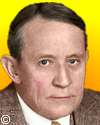
Born 6 Feb 1868; died 29 Mar 1931 at age 63. quotes
George Amos Dorsey was an American anthropologist and ethnographer whose research about North American Indians, especially the Mandan tribe, was among the earliest ethnographic studies done on them. He engaged in extensive field work, particularly among the Plains Indians, and published extensively. Between 1891-92 he conducted anthropological investigations in Peru, Ecuador, Chili and Bolivia for the World's Columbian Exposition. His positions included being a professor of anthropology, professor of comparative anatomy, Curator of the Field Museum of Natural History. On15 Sep 1897, Dorsey began testifying at the murder trial of Adolph Luetgert, probably the first anthropologist to testify in an American criminal trial. After WW I, he wrote works popularizing the science of anthropology.«
George Amos Dorsey was an American anthropologist and ethnographer whose research about North American Indians, especially the Mandan tribe, was among the earliest ethnographic studies done on them. He engaged in extensive field work, particularly among the Plains Indians, and published extensively. Between 1891-92 he conducted anthropological investigations in Peru, Ecuador, Chili and Bolivia for the World's Columbian Exposition. His positions included being a professor of anthropology, professor of comparative anatomy, Curator of the Field Museum of Natural History. On15 Sep 1897, Dorsey began testifying at the murder trial of Adolph Luetgert, probably the first anthropologist to testify in an American criminal trial. After WW I, he wrote works popularizing the science of anthropology.«
The Story of Civilization: Man's Own Show, by George Amos Dorsey. - book suggestion.
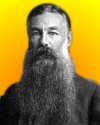
Born 6 Feb 1852; died 6 Mar 1936 at age 84.
C(onwy) Lloyd Morgan was a British zoologist and psychologist, best remembered for coining Morgan's Canon expressing that the interpretation of animal behavior should be described in the simplest possible terms: "In no case may we interpret an action as the outcome of the exercise of a higher psychical faculty, if it can be interpreted as the outcome of one which stands lower in the psychological scale." (In 1947, Philip L. Harriman stated that Morgan's Canon was simply a specialised form of Occam's razor applied to animal psychology.) For his work, Morgan is sometimes called the founder of comparative, or animal, psychology. His Canon was significant in developing concepts of behaviorism in twentieth century academic psychology.«
C(onwy) Lloyd Morgan was a British zoologist and psychologist, best remembered for coining Morgan's Canon expressing that the interpretation of animal behavior should be described in the simplest possible terms: "In no case may we interpret an action as the outcome of the exercise of a higher psychical faculty, if it can be interpreted as the outcome of one which stands lower in the psychological scale." (In 1947, Philip L. Harriman stated that Morgan's Canon was simply a specialised form of Occam's razor applied to animal psychology.) For his work, Morgan is sometimes called the founder of comparative, or animal, psychology. His Canon was significant in developing concepts of behaviorism in twentieth century academic psychology.«
Habit and Instinct, by C. Lloyd Morgan. - book suggestion.
Born 6 Feb 1838; died 20 Aug 1907 at age 69.
German physiologist and psychiatrist and psychiatrist who contributed to the field of brain science. His seminal work with Gustav Fritsch led to the discovery of the motor cortex in the brain. In an 1870 experiment on dogs, Hitzig and Fritsch applied electrical currents to different parts of the cerebral cortex, demonstrating that specific regions controlled distinct muscle groups—localization of brain functions. Their findings sparked interest from others in cortical localization, important in the development of brain surgery techniques, including treatments for conditions like epilepsy. However, his personality has been described as stern, rigid, emotionless, even disagreeable to the point of being abrupt and caustic to others.«
German physiologist and psychiatrist and psychiatrist who contributed to the field of brain science. His seminal work with Gustav Fritsch led to the discovery of the motor cortex in the brain. In an 1870 experiment on dogs, Hitzig and Fritsch applied electrical currents to different parts of the cerebral cortex, demonstrating that specific regions controlled distinct muscle groups—localization of brain functions. Their findings sparked interest from others in cortical localization, important in the development of brain surgery techniques, including treatments for conditions like epilepsy. However, his personality has been described as stern, rigid, emotionless, even disagreeable to the point of being abrupt and caustic to others.«
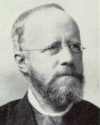
Born 6 Feb 1834; died 23 Oct 1913 at age 79.
Theodor Albrecht Edwin Klebs was a German physician and bacteriologist who was noted for his work on the bacterial theory of infection. Klebs' first success was the invention of the paraffin wax embedding of sections of tissue for histological investigation With Friedrich August Johannes Löffler in 1884, he discovered the diphtheria bacillus, known as the Klebs-Löffler bacillus. He died, as so many physicians of his time, of tuberculosis.
Theodor Albrecht Edwin Klebs was a German physician and bacteriologist who was noted for his work on the bacterial theory of infection. Klebs' first success was the invention of the paraffin wax embedding of sections of tissue for histological investigation With Friedrich August Johannes Löffler in 1884, he discovered the diphtheria bacillus, known as the Klebs-Löffler bacillus. He died, as so many physicians of his time, of tuberculosis.
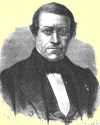
Born 6 Feb 1802; died 19 Oct 1875 at age 73.
English physicist who popularized the Wheatstone bridge, a device that accurately measured electrical resistance and became widely used in laboratories. He didn't actually invent the “Wheatstone Bridge”. His contemporary, Samuel Hunter Christie, came up with the idea of the bridge circuit, but Wheatstone set the precedent for using it in the way in which it has been most commonly used. Over time, the device became associated with him and took on his name. He did, however, invent the concertina (1829), the stereoscope (1838), and an early form of the telegraph. He also developed a chronoscope (1842) to determine the velocity of projectiles at an English gunnery.
English physicist who popularized the Wheatstone bridge, a device that accurately measured electrical resistance and became widely used in laboratories. He didn't actually invent the “Wheatstone Bridge”. His contemporary, Samuel Hunter Christie, came up with the idea of the bridge circuit, but Wheatstone set the precedent for using it in the way in which it has been most commonly used. Over time, the device became associated with him and took on his name. He did, however, invent the concertina (1829), the stereoscope (1838), and an early form of the telegraph. He also developed a chronoscope (1842) to determine the velocity of projectiles at an English gunnery.
Sir Charles Wheatstone, by Margaret Wilson and Brian Bowers (Ed.). - book suggestion.
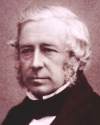
Born 6 Feb 1796; died 16 May 1861 at age 65. quotes
English clergyman, botanist and geologist who mentored Charles Darwin. Henslow popularized botany at the University of Cambridge by introducing new methods of teaching the subject. He fostered independent discovery and utilized unusual field trips for his students. In order to persuade farmers to apply scientific methods to their operations, Henslow gave public lectures on the fermentation of manure and wrote newsletters for publication in local newspapers. During the potato famine (1845-46) in Ireland, he showed stricken farmers how to extract starch from rotten potatoes.
English clergyman, botanist and geologist who mentored Charles Darwin. Henslow popularized botany at the University of Cambridge by introducing new methods of teaching the subject. He fostered independent discovery and utilized unusual field trips for his students. In order to persuade farmers to apply scientific methods to their operations, Henslow gave public lectures on the fermentation of manure and wrote newsletters for publication in local newspapers. During the potato famine (1845-46) in Ireland, he showed stricken farmers how to extract starch from rotten potatoes.

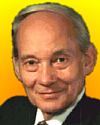
Died 6 Feb 2019 at age 91 (born 9 May 1927). quotes
German physicist and biochemist who shared (with Ronald Norrish and George Porter) the 1967 Nobel Prize in Chemistry “for their studies of extremely fast chemical reactions, effected by disturbing the equlibrium by means of very short pulses of energy.” In 1954, Eigen introduced the relaxation techniques for the study of extremely fast chemical reactions (those taking less than a millisecond). His general method was to take a solution in equilibrium for a given temperature and pressure. If a short disturbance was applied to the solution the equilibrium would be very briefly destroyed and a new equilibrium quickly reached. Eigen studied exactly what happened in this very short time by means of absorption spectroscopy.
German physicist and biochemist who shared (with Ronald Norrish and George Porter) the 1967 Nobel Prize in Chemistry “for their studies of extremely fast chemical reactions, effected by disturbing the equlibrium by means of very short pulses of energy.” In 1954, Eigen introduced the relaxation techniques for the study of extremely fast chemical reactions (those taking less than a millisecond). His general method was to take a solution in equilibrium for a given temperature and pressure. If a short disturbance was applied to the solution the equilibrium would be very briefly destroyed and a new equilibrium quickly reached. Eigen studied exactly what happened in this very short time by means of absorption spectroscopy.
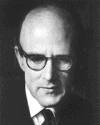
Died 6 Feb 2002 at age 87 (born 19 May 1914). quotes
Austrian-British biochemist who shared the 1962 Nobel Prize for Chemistry for his X-ray diffraction analysis of the structure of haemoglobin, the protein that transports oxygen from the lungs to the tissues via blood cells. He identified that haemoglobin is constructed of four protein chains wound together, and that the molecule changes shape when oxygen is added. Perutz was also interested in studying glaciers, making measurements which were the first to show different rates of flow in different parts of the same glacier.
Austrian-British biochemist who shared the 1962 Nobel Prize for Chemistry for his X-ray diffraction analysis of the structure of haemoglobin, the protein that transports oxygen from the lungs to the tissues via blood cells. He identified that haemoglobin is constructed of four protein chains wound together, and that the molecule changes shape when oxygen is added. Perutz was also interested in studying glaciers, making measurements which were the first to show different rates of flow in different parts of the same glacier.
Science Is Not a Quiet Life: Unravelling the Atomic Mechanism of Haemoglobin, by Max F. Perutz. - book suggestion.
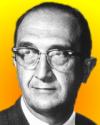
Died 6 Feb 1991 at age 78 (born 13 Aug 1912). quotes
Salvador Edward Luria was an Italian-American microbiologist who (with Max Delbrück and Alfred Day Hershey) was awarded the Nobel Prize for Physiology or Medicine in 1969 for their discoveries concerning “the replication mechanism and the genetic structure of viruses.” From around 1940, they had investigated bacteriophages, a type of virus that infects bacteria, rather than ordinary cells. These offered as simple a living system as possible to research fundamental life processes, especially self-replication. Eventually, they demonstrated the role of nucleic acid as the carrier of the genetic information of the virus. Because of the short reproduction time, further information came from bacteriophages more quickly than work with other virus material.«
Salvador Edward Luria was an Italian-American microbiologist who (with Max Delbrück and Alfred Day Hershey) was awarded the Nobel Prize for Physiology or Medicine in 1969 for their discoveries concerning “the replication mechanism and the genetic structure of viruses.” From around 1940, they had investigated bacteriophages, a type of virus that infects bacteria, rather than ordinary cells. These offered as simple a living system as possible to research fundamental life processes, especially self-replication. Eventually, they demonstrated the role of nucleic acid as the carrier of the genetic information of the virus. Because of the short reproduction time, further information came from bacteriophages more quickly than work with other virus material.«
A Slot Machine, a Broken Test Tube: an Autobiography, by Salvador Edward Luria. - book suggestion.
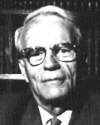
1984
Died 6 Feb 1973 at age 74 (born 21 Dec 1898).
Ira Sprague Bowen was an American astrophysicist whose investigation of the ultraviolet spectra of highly ionized atoms led to his explanation of the unidentified strong green spectral lines of gaseous nebulae (clouds of rarefied gas) as forbidden lines of ionized oxygen and nitrogen. This emission, appearing to match no known element, had formerly been suggested to be due to a hypothetical element, “nebulium.” Bowen was able to show, that in reality, the emission lines exactly matched those calculated to be the “forbidden lines” of ionized oxygen and nitrogen under extremely low pressure. This made a major advance in the knowledge of celestial composition. He was director of the Mt. Wilson and Palomar Observatories from 1948-64.«
Ira Sprague Bowen was an American astrophysicist whose investigation of the ultraviolet spectra of highly ionized atoms led to his explanation of the unidentified strong green spectral lines of gaseous nebulae (clouds of rarefied gas) as forbidden lines of ionized oxygen and nitrogen. This emission, appearing to match no known element, had formerly been suggested to be due to a hypothetical element, “nebulium.” Bowen was able to show, that in reality, the emission lines exactly matched those calculated to be the “forbidden lines” of ionized oxygen and nitrogen under extremely low pressure. This made a major advance in the knowledge of celestial composition. He was director of the Mt. Wilson and Palomar Observatories from 1948-64.«
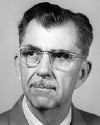
Died 6 Feb 1972 at age 70 (born 31 Jan 1902).
Julian Haynes Steward was an American anthropologist best known as one of the leading neoevolutionists of the mid-20th century and as the founder of the theory of cultural ecology. He also did studies of the social organization of peasant villages, conducted ethnographic research among the North American Shoshoni Indians and various South American Indians. Steward acquired a lifelong interest and attachment to the Shoshoni and Northern Paiute Indians. He held an intense drive to salvage and preserve as much information as possible on native North American Indians before all of the information and culture was lost.
Julian Haynes Steward was an American anthropologist best known as one of the leading neoevolutionists of the mid-20th century and as the founder of the theory of cultural ecology. He also did studies of the social organization of peasant villages, conducted ethnographic research among the North American Shoshoni Indians and various South American Indians. Steward acquired a lifelong interest and attachment to the Shoshoni and Northern Paiute Indians. He held an intense drive to salvage and preserve as much information as possible on native North American Indians before all of the information and culture was lost.
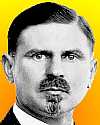
Died 6 Feb 1960 at age 80 (born 6 Jul 1879).
German engineer who designed engines, following in the footsteps of his father, Wilhelm Maybach (partner of Gottlieb Daimler). In 1909, he co-founded Luftfahrzeug-Motorenbau, with his father and Count Ferdinand von Zeppelin. Karl designed engines, not only for Zeppelin airships, but also supercharged engines for aircraft. For ground and ocean transport, his diesel engines powered rail, ships, submarines and tanks. In the interwar years, 1921-1941, he produced six models of luxury automobiles, with a variety of exclusive body styles crafted by the finest coachbuilders. In May 1933, when the high-speed, streamlined rail travel was introduced in Germany, the Fliegender Hamburger (Hamburg Flier) train was powered by two Maybach engines. Its speed record between Hamburg and Berlin was unbroken for 64 years.«
German engineer who designed engines, following in the footsteps of his father, Wilhelm Maybach (partner of Gottlieb Daimler). In 1909, he co-founded Luftfahrzeug-Motorenbau, with his father and Count Ferdinand von Zeppelin. Karl designed engines, not only for Zeppelin airships, but also supercharged engines for aircraft. For ground and ocean transport, his diesel engines powered rail, ships, submarines and tanks. In the interwar years, 1921-1941, he produced six models of luxury automobiles, with a variety of exclusive body styles crafted by the finest coachbuilders. In May 1933, when the high-speed, streamlined rail travel was introduced in Germany, the Fliegender Hamburger (Hamburg Flier) train was powered by two Maybach engines. Its speed record between Hamburg and Berlin was unbroken for 64 years.«
Karl Maybach: His Engines And Automobiles, by Harry Niemann. - book suggestion.
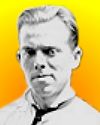
Died 6 Feb 1950 at age 68 (born 8 Nov 1881).
American anthropologist and ethnographer of the Eastern Woodland Indians, who chose to study and preserve knowledge of their culture. As a boy, he lived with Fidelia Fielding, a Native American, and the last speaker of her tribal language, from whom he learned the Mohegan language and literature. With this rich background, at university he began study of anthropological linguistics, encouraged by anthropologist Franz Boas. Speck spent his career in extensive fieldwork. By staying with the Indian comunities he earned the trust of the tribes. He reconstructed scattered remnants of ritual and lore into an extensive record. He collected arts and crafts as artifacts of the material culture, and was a pioneer in ethnoscience and ethnomusicology.«
American anthropologist and ethnographer of the Eastern Woodland Indians, who chose to study and preserve knowledge of their culture. As a boy, he lived with Fidelia Fielding, a Native American, and the last speaker of her tribal language, from whom he learned the Mohegan language and literature. With this rich background, at university he began study of anthropological linguistics, encouraged by anthropologist Franz Boas. Speck spent his career in extensive fieldwork. By staying with the Indian comunities he earned the trust of the tribes. He reconstructed scattered remnants of ritual and lore into an extensive record. He collected arts and crafts as artifacts of the material culture, and was a pioneer in ethnoscience and ethnomusicology.«
Naskapi: The Savage Hunters of the Labrador Peninsula, by Frank G. Speck. - book suggestion.
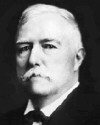
Died 6 Feb 1923 at age 65 (born 16 Dec 1857).
American astronomer who pioneered in celestial photography, specializing in wide-field photography. From the time he began observing in 1881, his skill and keen eyesight combined to make him one of the greatest observers. Barnard came to prominence as an astronomer through the discovery of numerous comets. In the 1880s, a patron of astronomy in Rochester, N.Y. awarded $200 per new comet was found. Barnard discovered eight - enough to build a “comet house” for his bride. At Lick Observatory (1888-95) he made the first photographic discovery of a comet; photographed the Milky Way; and discovered the fifth moon of Jupiter. Then he joined Yerkes Observatory, making his Photographic Atlas of Selected Regions of the Milky Way. more
American astronomer who pioneered in celestial photography, specializing in wide-field photography. From the time he began observing in 1881, his skill and keen eyesight combined to make him one of the greatest observers. Barnard came to prominence as an astronomer through the discovery of numerous comets. In the 1880s, a patron of astronomy in Rochester, N.Y. awarded $200 per new comet was found. Barnard discovered eight - enough to build a “comet house” for his bride. At Lick Observatory (1888-95) he made the first photographic discovery of a comet; photographed the Milky Way; and discovered the fifth moon of Jupiter. Then he joined Yerkes Observatory, making his Photographic Atlas of Selected Regions of the Milky Way. more
The Immortal Fire Within: The Life and Work of Edward Emerson Barnard, by William Sheehan. - book suggestion.
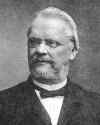
Died 6 Feb 1898 at age 75 (born 7 Oct 1822). quotes
Rudolf (Karl Georg Friedrich) Leuckart was a German zoologist and teacher who initiated the modern science of parasitology. As a youth, he showed an early interest in zoology and in insects in particular. While attending medical school at the University of Gottingen, he studied under the renowned zoologist, Rudolph Wagner, who encouraged him to research in this branch of science. In 1847, he was appointed a zoology lecturer. He made an expedition to the North Sea for the study of marine invertebrates. Leuckart also described the complicated life histories of various parasites, including tapeworms and the liver fluke, and demonstrated that some human diseases, such as trichinosis, are caused by multicellular animals of the various wormlike phyla.
Rudolf (Karl Georg Friedrich) Leuckart was a German zoologist and teacher who initiated the modern science of parasitology. As a youth, he showed an early interest in zoology and in insects in particular. While attending medical school at the University of Gottingen, he studied under the renowned zoologist, Rudolph Wagner, who encouraged him to research in this branch of science. In 1847, he was appointed a zoology lecturer. He made an expedition to the North Sea for the study of marine invertebrates. Leuckart also described the complicated life histories of various parasites, including tapeworms and the liver fluke, and demonstrated that some human diseases, such as trichinosis, are caused by multicellular animals of the various wormlike phyla.
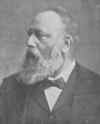
Died 6 Feb 1894 at age 64 (born 26 Apr 1829). quotes
Christian Albert Theodor Billroth was a German surgeon, generally considered to be the founder of modern abdominal surgery. He was a friend and colleague of Halsted. Billroth was a pioneer abdominal surgeon, and perfected many procedures, including gastric resections still used daily in general surgery. He helped establish the foundations of academic training and university direction of surgical sciences.
Christian Albert Theodor Billroth was a German surgeon, generally considered to be the founder of modern abdominal surgery. He was a friend and colleague of Halsted. Billroth was a pioneer abdominal surgeon, and perfected many procedures, including gastric resections still used daily in general surgery. He helped establish the foundations of academic training and university direction of surgical sciences.
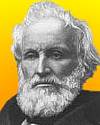
Died 6 Feb 1864 at age 80 (born 4 Sep 1783).
American businessman who, long before the availability of electric refrigerators, created an export trade in block ice harvested from frozen fresh-water ponds in New England during Winter, and shipped to India, Europe and the Carribbean in insulated cargo holds, and stored in insulated warehouses. His first vessel left on 10 Feb 1806 to deliver ice from Boston to Martinique. In the following years, he improved methods of insulation during transport, experimented with exporting fruit preserved in the low temperature on top the ice in the ship's hold. His first cargo to Calcutta, India, arrived 13 Sep 1833. At times, he experienced huge debts. However, he managed eventually to pay off his debts and expand his ice business to produce comfortable profits.« more
American businessman who, long before the availability of electric refrigerators, created an export trade in block ice harvested from frozen fresh-water ponds in New England during Winter, and shipped to India, Europe and the Carribbean in insulated cargo holds, and stored in insulated warehouses. His first vessel left on 10 Feb 1806 to deliver ice from Boston to Martinique. In the following years, he improved methods of insulation during transport, experimented with exporting fruit preserved in the low temperature on top the ice in the ship's hold. His first cargo to Calcutta, India, arrived 13 Sep 1833. At times, he experienced huge debts. However, he managed eventually to pay off his debts and expand his ice business to produce comfortable profits.« more
The Ice King: Frederic Tudor and His Circle, by Carl Seaburg. - book suggestion.
Died 6 Feb 1856 at age 82 (born 25 Sep 1773). quotes
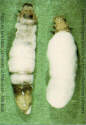
Agostino Marla Bassi de Lodi was an Italian entomologist, botanist and bacteriologist kown as the “Father of Insect Pathology” for his pioneering work investigating the cause of transmission of disease in animals. Ten years before Louis Pasteur found disease-causing microorganisms. Bassi showed (1835-6) that a silk worm disease was contagious and could be transmitted naturally by direct contact or infected food, or experimentally by means of a pin previously sterilized in a flame. The causative agent was later shown to be a fungus that multiplied in and on the body of the insect. This was the first microorganism to be recognized as a contagious agent of animal disease. Thus, the first animal pathogen to be understood was of insects, not humans. In 1844, he believed that “contagion by living organisms” also infected humans with measles, syphilis, and the plague.Image: B.bassiana fungus on soybean loopers. [Day of death from DSB 6 Feb 1856. EB gives died 8 Feb 1856.]
Agostino Marla Bassi de Lodi was an Italian entomologist, botanist and bacteriologist kown as the “Father of Insect Pathology” for his pioneering work investigating the cause of transmission of disease in animals. Ten years before Louis Pasteur found disease-causing microorganisms. Bassi showed (1835-6) that a silk worm disease was contagious and could be transmitted naturally by direct contact or infected food, or experimentally by means of a pin previously sterilized in a flame. The causative agent was later shown to be a fungus that multiplied in and on the body of the insect. This was the first microorganism to be recognized as a contagious agent of animal disease. Thus, the first animal pathogen to be understood was of insects, not humans. In 1844, he believed that “contagion by living organisms” also infected humans with measles, syphilis, and the plague.Image: B.bassiana fungus on soybean loopers. [Day of death from DSB 6 Feb 1856. EB gives died 8 Feb 1856.]
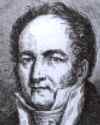
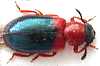
French zoologist and clergyman (ordained a Roman catholic priest in 1786) who became the father of modern entomology. During the French Revolution he was imprisoned in Bordeaux. He made the acquaintance of a physician, a fellow-prisoner, who had obtained a specimen of the rare beetle, Necrobia ruficollis. It was through this discovery that Latreille became acquainted with the naturalist, Bory de Saint-Vincent, who obtained his release. He did not share Lamarck's evolutionary views, although he worked under him from 1805 at the Muséum d'Histoire Naturelle. Latreille made the first detailed classification of crustaceans and insects. He used a “natural method” of classification combining the approaches of Linnaeus and Fabricius.[Image top right: Necrobia ruficollis]
Died 6 Feb 1804 at age 70 (born 13 Mar 1733). quotes
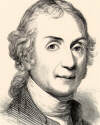
English chemist, clergyman and political theorist who discovered the element oxygen. His early scientific interest was electricity, but he is remembered for his later work in chemistry, especially gases. He investigated the “fixed air” (carbon dioxide) found in a layer above the liquid in beer brewery fermentation vats. Although known by different names at the time, he also discovered sulphur dioxide, ammonia, nitrogen oxides, carbon monoxide and silicon fluoride. Priestley is remembered for his invention of a way of making soda-water (1772), the pneumatic trough, and recognising that green plants in light released oxygen. His political opinions and support of the French Revolution, were unpopular. After his home and laboratory were set afire (1791), he sailed for America, arriving at New York on 4 Jun 1794.« more
English chemist, clergyman and political theorist who discovered the element oxygen. His early scientific interest was electricity, but he is remembered for his later work in chemistry, especially gases. He investigated the “fixed air” (carbon dioxide) found in a layer above the liquid in beer brewery fermentation vats. Although known by different names at the time, he also discovered sulphur dioxide, ammonia, nitrogen oxides, carbon monoxide and silicon fluoride. Priestley is remembered for his invention of a way of making soda-water (1772), the pneumatic trough, and recognising that green plants in light released oxygen. His political opinions and support of the French Revolution, were unpopular. After his home and laboratory were set afire (1791), he sailed for America, arriving at New York on 4 Jun 1794.« more
Joseph Priestley: Adventurer in Science and Champion of Truth, by F W. Gibbs. - book suggestion.
Died 6 Feb 1612 (born 1537).
German astronomer.
German astronomer.
Died 6 Feb 1515 (born c. 1452).
Aldus Pius Manutius was an Italian printer and publisher who founded the Aldine Press at Venice. In the books he published, he introduced a standardized system of punctuation and use of the semicolon. He designed many fonts, and created italic type (which he named from Italy).
Aldus Pius Manutius was an Italian printer and publisher who founded the Aldine Press at Venice. In the books he published, he introduced a standardized system of punctuation and use of the semicolon. He designed many fonts, and created italic type (which he named from Italy).
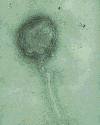
In 1976, swine flu claimed the life of 19-year-old Pvt. David Lewis. On the previous afternoon, this Army recruit told his drill instructor at Fort Dix, N.J. that he felt tired and weak but not sick enough to see military medics or skip a big training hike. Yet, he died within 24 hours, killed by an influenza not seen since the Spanish flu of 1918-19 which took 500,000 American lives and 20 million worldwide. On 24 Mar 1976, following advice from medical experts, President Ford called for the U.S. to give swine flu vaccinations, a $135 million program of mass inoculation of the entire population. No comparable vaccination effort had ever been attempted in the U.S. before. Afterwards, research showed it would probably have been much less deadly than the Spanish flu.[Image: swine Influenza virus electron microscope view]
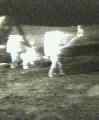
In 1971, Apollo 14 astronaut Alan Shepard took a few shots at some golf balls while on the moon. Near the end of the second moonwalk, just before entering the lunar module for the last time, Shepard (an avid golfer) attached a 6-iron golf club to the end of a sample collecting tool. Despite thick gloves and a stiff suit that forced him to swing the club with one hand only, he hit two golf balls. The first landed in a nearby crater. The second was hit squarely, and in the one-sixth gravity of the moon, Shepard said it traveled “miles and miles and miles.” Then the astronauts prepared to head back to Earth after a 33-hour stay of the third manned landing on the moon. The golf club is on display at the U.S. Golf Association headquarters in N.J.

In 1959, the United States successfully test-fired for the first time a Titan intercontinental ballistic missile from Cape Canaveral. Eighteen Titan I launch complexes (for 54 missiles, each carrying a 4.5 megaton warhead) were built in California, Colorado, Idaho, South Dakota, and Washington state at an average cost of $44.4 million apiece (in constant 1996 dollars). The first silo launching of an ICBM, a USAF Titan at Vandenberg Air Force Base occurred on 3 May 1961. Titan I missiles were only on alert from 1962 to 1965.
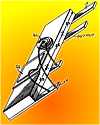
Engineering The World: Stories From The First 75 Years Of Texas Instruments, by Caleb Pirtle III. - book suggestion.
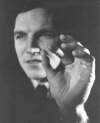
In 1957, the cryotron, a superconductive computer switch was announced in a press release by the Massachusetts Institute of Technology. Developed by Dudley A Buck, the cryotron was the first practical use of superconductivity—the ability of some metals to conduct current with no resistance at a temperature of a few degrees above absolute zero. A fine hair-thickness wire is coiled around a straight wire cooled by liquid helium. Current passes in the straight wire unless halted by the effect of a magnetic field when a current flows in the coil, thus acting like a switch. The cryotron was hailed as a revolutionary device for miniaturizing the room-sized computers of the 1950s. Buck's invention was first recorded in his lab notebook on 15 Dec 1953, and he coined the term “cryotron” in his an entry in Feb 1954.«[Image: in the hand of its inventor, the cryotron, so incredibly small 100 cryotrons could fit in a thimble.]
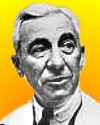
In 1944, American obstetrician and gynecologist Dr John Rock (1890-1984) with Miriam F. Menkin fertilized the first human egg in a test tube. After hundreds of efforts, they had produced the first laboratory- fertilized, two-cell human egg. The embryo was not returned to the womb, For some 15 years after 1938, Rock and Dr. Arthur Hertig sought to retrieve early fertilized human eggs from discarded hysterectomy tissue. Over that time they found thirty-four fertilized eggs, providing new knowledge about human conception. Aiding them in the search was Harvard physiologist Gregory Pincus. In 1938, Rock hired technician Miriam Menkin to try to extract and fertilize human eggs in his laboratory. Rock is best known as a developer of the birth control pill.*
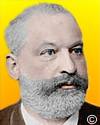
In 1886, German chemist, Clement Winkler discovered the element germanium. He had a background in managing a cobalt glassworks and then on the faculty of the Freiberg School of Mining, when he discovered germanium in the mineral argyrodite. Analyzing the silver sulphide ore, he found that all the known elements it contained amounted to only 93 per cent of its weight. Tracking down the remaining 7 per cent, he found the new element he called germanium (for Germany). This turned out to be the eka-silicon predicted by Dmitry I. Mendeleyev in 1871.
more





