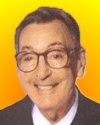
Born 4 Jun 1916; died 19 May 2009 at age 92.
Robert Francis Furchgott was an American pharmacologist who shared (with Louis J. Ignarro and Ferid Murad) the 1998 Nobel Prize in Physiology or Medicine for the discovery that nitric oxide (NO) acts as a signaling molecule in the cardiovascular system. Their combined work uncovered an entirely new mechanism by which blood vessels in the body relax and widen. Nitric oxide (NO), produced by one cell, acts by penetrating membranes and regulating the function of another cell. Nerves and hormones are well known as signal carriers, but this discovery was a totally new signaling principle in a biological system.
Robert Francis Furchgott was an American pharmacologist who shared (with Louis J. Ignarro and Ferid Murad) the 1998 Nobel Prize in Physiology or Medicine for the discovery that nitric oxide (NO) acts as a signaling molecule in the cardiovascular system. Their combined work uncovered an entirely new mechanism by which blood vessels in the body relax and widen. Nitric oxide (NO), produced by one cell, acts by penetrating membranes and regulating the function of another cell. Nerves and hormones are well known as signal carriers, but this discovery was a totally new signaling principle in a biological system.
Nitric Oxide: Basic Research and Clinical Applications, by Ryszard Gryglewski. - book suggestion.
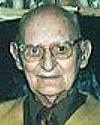
Born 4 Jun 1910; died 1 Jun 1999 at age 88. quotes
English inventor of the hovercraft. He was an electronics engineer with the Marconi Company (1935-50) where he worked on airborne navigational equipment and on radar. Then he began a boat-hire business. Considering the water drag on the hull of a boat, he had the idea of raising the boat on a cushion of air. In 1954, he performed a crucial experiment using kitchen scales, tin cans, and a vacuum cleaner to show that a stream of air could produce the required lift. The next year he built a working balsa wood model with a model-aircraft engine. The first full-scale prototype, SR-N1, weighed 7 tons and was capable of 60 knots. It crossed the English Channel in 1959 (with Cockerell aboard). Hovercraft entered regular cross-channel service in 1968.
English inventor of the hovercraft. He was an electronics engineer with the Marconi Company (1935-50) where he worked on airborne navigational equipment and on radar. Then he began a boat-hire business. Considering the water drag on the hull of a boat, he had the idea of raising the boat on a cushion of air. In 1954, he performed a crucial experiment using kitchen scales, tin cans, and a vacuum cleaner to show that a stream of air could produce the required lift. The next year he built a working balsa wood model with a model-aircraft engine. The first full-scale prototype, SR-N1, weighed 7 tons and was capable of 60 knots. It crossed the English Channel in 1959 (with Cockerell aboard). Hovercraft entered regular cross-channel service in 1968.
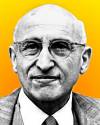
Born 4 Jun 1889; died 25 Jan 1960 at age 70. quotes
American seismologist noted for his analyses of earthquake waves and the information they furnish about the physical properties of the Earth's interior. With Charles Richter, he developed a method of determining the intensity of earthquakes. Calculating the energy released by present-day shallow earthquakes, they showed that three-quarters of that energy occurs in the Circum-Pacific belt.
American seismologist noted for his analyses of earthquake waves and the information they furnish about the physical properties of the Earth's interior. With Charles Richter, he developed a method of determining the intensity of earthquakes. Calculating the energy released by present-day shallow earthquakes, they showed that three-quarters of that energy occurs in the Circum-Pacific belt.
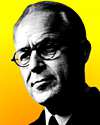
Born 4 Jun 1880; died 14 Jan 1969 at age 88. quotes
American geologist who contributed much to the field of geomorphology, especially on the origin and evolution of desert landscapes and mountain glaciation research in the Rocky Mountains, Sierra Nevada and in China. In his early career, at the University of Wisconsin, he taught the first course in sedimentation in the U.S. (1912-13). He investigated the site and surrounding area proposed for the Hoover Dam. Blackwelder was an early proponent of the theory that it was indeed an impact origin for Meteor Crater in Arizona. After shorter times spent at other universities, he became professor of geology at Stanford University until his retirement (1922-45). Among the offices he held with various associations, he served a term as president of the Geological Society of America. He is the father of zoologist, Richard E. Blackwelder.«
American geologist who contributed much to the field of geomorphology, especially on the origin and evolution of desert landscapes and mountain glaciation research in the Rocky Mountains, Sierra Nevada and in China. In his early career, at the University of Wisconsin, he taught the first course in sedimentation in the U.S. (1912-13). He investigated the site and surrounding area proposed for the Hoover Dam. Blackwelder was an early proponent of the theory that it was indeed an impact origin for Meteor Crater in Arizona. After shorter times spent at other universities, he became professor of geology at Stanford University until his retirement (1922-45). Among the offices he held with various associations, he served a term as president of the Geological Society of America. He is the father of zoologist, Richard E. Blackwelder.«
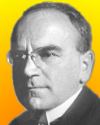
Born 4 Jun 1877; died 5 Aug 1957 at age 80.
German chemist, winner of the 1927 Nobel Prize for Chemistry for his studies of steroid chemistry in which he determined the molecular structure of bile acids. He is also noted for studying the conversion of food into energy. In 1912, he began work on bile acids, secretions of the liver known for the best part of a century to consist of a large number of substances. He studied three of them: cholic acid, deoxycholic acid, and lithocholic acid, finding that they were all steroids, very similar to each other, and all convertible into cholanic acid. After 1921, he studied some curious alkaloids including toxiferin (curare's active ingredient), bufotalin (in venom from toads), and phalloidine and amatine (poisonous ingredients in the deadly amanita mushroom).
German chemist, winner of the 1927 Nobel Prize for Chemistry for his studies of steroid chemistry in which he determined the molecular structure of bile acids. He is also noted for studying the conversion of food into energy. In 1912, he began work on bile acids, secretions of the liver known for the best part of a century to consist of a large number of substances. He studied three of them: cholic acid, deoxycholic acid, and lithocholic acid, finding that they were all steroids, very similar to each other, and all convertible into cholanic acid. After 1921, he studied some curious alkaloids including toxiferin (curare's active ingredient), bufotalin (in venom from toads), and phalloidine and amatine (poisonous ingredients in the deadly amanita mushroom).
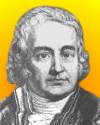
Born 4 Jun 1756; died 30 Jul 1832 at age 76.
French chemist who authored the first book on industrial chemistry. He also coined the name “nitrogen.” His technical activity covered a wide field, such as improvements in the manufacture of sulphuric acid, saltpetre for gunpowder, beet-root sugar, wine, dyeing, bleaching and other things. He was the first to produce sulphuric acid commercially in France at his factory at Montpellier. His career covered the stormy period of the French Revolution. He was arrested, but more fortunate than the brilliant Antoine Lavoisier (who was guillotined), then released to manage the saltpeter works at Grenelle. He also helped to organize the introduction of the metric system.
French chemist who authored the first book on industrial chemistry. He also coined the name “nitrogen.” His technical activity covered a wide field, such as improvements in the manufacture of sulphuric acid, saltpetre for gunpowder, beet-root sugar, wine, dyeing, bleaching and other things. He was the first to produce sulphuric acid commercially in France at his factory at Montpellier. His career covered the stormy period of the French Revolution. He was arrested, but more fortunate than the brilliant Antoine Lavoisier (who was guillotined), then released to manage the saltpeter works at Grenelle. He also helped to organize the introduction of the metric system.
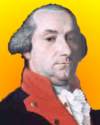
Born 4 Jun 1754; died 2 Sep 1832 at age 78.
(baron) German-Hungarian astronomer patronized by Duke Ernst of Saxe-Gotha-Altenburg. Director of observatory near Gotha (1787-1806). There he organized in 1798 the first congress of astronomers with Josef Lalande (1732-1807) as celebrated guest. In last years of the 18th century he formed a group of 24 astronomers chosen from throughout Europe to track down a "missing" planet between the orbits of Mars and Jupiter, where they instead discovered the asteroids. His greatest contribution was in the organizational area, for he maintained an enormous correspondence with all the astronomers of his time, and edited 28 volumes of Monatliche Korrespondenz zur Beforderung der Erd- und Himmelskunde (1800-13).
(baron) German-Hungarian astronomer patronized by Duke Ernst of Saxe-Gotha-Altenburg. Director of observatory near Gotha (1787-1806). There he organized in 1798 the first congress of astronomers with Josef Lalande (1732-1807) as celebrated guest. In last years of the 18th century he formed a group of 24 astronomers chosen from throughout Europe to track down a "missing" planet between the orbits of Mars and Jupiter, where they instead discovered the asteroids. His greatest contribution was in the organizational area, for he maintained an enormous correspondence with all the astronomers of his time, and edited 28 volumes of Monatliche Korrespondenz zur Beforderung der Erd- und Himmelskunde (1800-13).
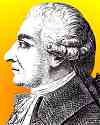
Born 4 Jun 1739; died 3 Feb 1811 at age 71. quotes
German chemist and economist who established the science of agriculture. He published a prominent textbook (1769) which laid a scientific foundation for practical agriculture, involving natural history, mineralogy, physics, chemistry and mathematics. By 1769, he was using the word “technology,” which he coined for the science of trades. From an educational trip (1765-66), by inspecting factories, mines and foundries he had a good background in the manufacture of natural products and the mining of metals. He published the first advanced textbook (1777) with a systematic approach describing the processing of raw materials in different trades. With his influence, secondary schools introduced a technology curriculum. By researching primary sources, he was also a reliable historian of inventions.«
German chemist and economist who established the science of agriculture. He published a prominent textbook (1769) which laid a scientific foundation for practical agriculture, involving natural history, mineralogy, physics, chemistry and mathematics. By 1769, he was using the word “technology,” which he coined for the science of trades. From an educational trip (1765-66), by inspecting factories, mines and foundries he had a good background in the manufacture of natural products and the mining of metals. He published the first advanced textbook (1777) with a systematic approach describing the processing of raw materials in different trades. With his influence, secondary schools introduced a technology curriculum. By researching primary sources, he was also a reliable historian of inventions.«
Born 4 Jun 1704; died 20 Jun 1776 at age 72.
English inventor whose invention of the crucible method of producing fine or tool steel (c.1740) enabled production of steel on a commercial scale, with uniform composition. This solved the problems of irregular quality of imported blister steel. Huntsman’s steel had extreme hardness, combined with great toughness and ductility. He developed the crucial fire-resisting clay necessaryfor his crucibles. The location he chose for his factory was the city of Sheffield, now known for centuries as a great manufacturing centre of steel products. The first crucible steel was made for smaller items, including parts used in his clock-making business, which need inspired his invention. His clockmaking continued to 1751, when he began full-time steel production.«
English inventor whose invention of the crucible method of producing fine or tool steel (c.1740) enabled production of steel on a commercial scale, with uniform composition. This solved the problems of irregular quality of imported blister steel. Huntsman’s steel had extreme hardness, combined with great toughness and ductility. He developed the crucial fire-resisting clay necessaryfor his crucibles. The location he chose for his factory was the city of Sheffield, now known for centuries as a great manufacturing centre of steel products. The first crucible steel was made for smaller items, including parts used in his clock-making business, which need inspired his invention. His clockmaking continued to 1751, when he began full-time steel production.«

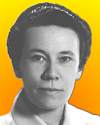
c.1930
Died 4 Jun 1997 at age 99 (born 3 Apr 1898).
Russian-born American botanist who did groundbreaking work in the structure and workings of plants. She is best known for her research into the effects of viruses upon plant tissues, and her studies of plant tissue structures and physiology. Her research into plant viruses focused on how viruses effect the structure and development of a plant's phloem (its food-conducting tissue). This research enabled her to distinguish between primary and secondary viral symptoms, allowing studies of viral damage to specific plant tissues to be conducted. In addition, she clarified the development phases of plant tissues, particularly the sieve tubes which serve to move solutes throughout a plant. Her definitive work Plant Anatomy (1953, rev.1965) is a classic.
Russian-born American botanist who did groundbreaking work in the structure and workings of plants. She is best known for her research into the effects of viruses upon plant tissues, and her studies of plant tissue structures and physiology. Her research into plant viruses focused on how viruses effect the structure and development of a plant's phloem (its food-conducting tissue). This research enabled her to distinguish between primary and secondary viral symptoms, allowing studies of viral damage to specific plant tissues to be conducted. In addition, she clarified the development phases of plant tissues, particularly the sieve tubes which serve to move solutes throughout a plant. Her definitive work Plant Anatomy (1953, rev.1965) is a classic.
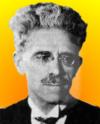
Died 4 Jun 1973 at age 94 (born 2 Sep 1878).
French mathematician who is known chiefly for his contribution to real analysis. He is credited with being the founder of the theory of abstract spaces, which generalized the traditional mathematical definition of space as a locus for the comparison of figures; in Fréchet's terms, space is defined as a set of points and the set of relations. In his dissertation of 1906, he investigated functionals on a metric space and formulated the abstract notion of compactness. In 1907, he discovered an integral representation theorem for functionals on the space of quadratic Lebesgue integrable functions. He also made important contributions to statistics, probability and calculus.
French mathematician who is known chiefly for his contribution to real analysis. He is credited with being the founder of the theory of abstract spaces, which generalized the traditional mathematical definition of space as a locus for the comparison of figures; in Fréchet's terms, space is defined as a set of points and the set of relations. In his dissertation of 1906, he investigated functionals on a metric space and formulated the abstract notion of compactness. In 1907, he discovered an integral representation theorem for functionals on the space of quadratic Lebesgue integrable functions. He also made important contributions to statistics, probability and calculus.
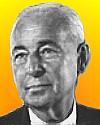
Died 4 Jun 1967 at age 62 (born 1 Feb 1905).
American physicist and engineer who first measured the extent, including height and density, of the ionosphere (ionized layers of the Earth's atmosphere), leading to a complete understanding of radio wave propagation and he helped develop radar systems, especially the Distant Early Warning system. He later investigated the origin and development of the Earth’s atmosphere. Early in his career, he worked on radio navigation beacons for the Airways division of the Bureau of Lighthouses (1927-28), as radio engineer on the Byrd Antarctic expedition (1928-30). Returning to the U.S. Bureau of Standards (1930-33) he studied the ionosphere using radio-pulse transmissions, then terrestrial magnetism with the Carnegie Institution (1933-51).
American physicist and engineer who first measured the extent, including height and density, of the ionosphere (ionized layers of the Earth's atmosphere), leading to a complete understanding of radio wave propagation and he helped develop radar systems, especially the Distant Early Warning system. He later investigated the origin and development of the Earth’s atmosphere. Early in his career, he worked on radio navigation beacons for the Airways division of the Bureau of Lighthouses (1927-28), as radio engineer on the Byrd Antarctic expedition (1928-30). Returning to the U.S. Bureau of Standards (1930-33) he studied the ionosphere using radio-pulse transmissions, then terrestrial magnetism with the Carnegie Institution (1933-51).
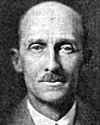
Died 4 Jun 1962 at age 84 (born 29 Jul 1877). quotes
Charles William Beebe was an American biologist, explorer and writer on natural history who combined careful biological research with a rare literary skill. As director of tropical research for the New York Zoological Society from 1919, he led scientific expeditions to many parts of the world. Theodore Roosevelt took his advice on the conservation of species and environment. He was the coinventor of the bathysphere, a spherical diving-vessel for use in underwater observations. In 1934, with Otis Barton, he descended in his bathysphere to a then record depth of 3,028 feet (923 metres) in Bermuda waters on 15 Aug 1934. Later dives reached depths of around 1.5 km (nearly 1 mile). He was a mentor to Rachel Carson.
Charles William Beebe was an American biologist, explorer and writer on natural history who combined careful biological research with a rare literary skill. As director of tropical research for the New York Zoological Society from 1919, he led scientific expeditions to many parts of the world. Theodore Roosevelt took his advice on the conservation of species and environment. He was the coinventor of the bathysphere, a spherical diving-vessel for use in underwater observations. In 1934, with Otis Barton, he descended in his bathysphere to a then record depth of 3,028 feet (923 metres) in Bermuda waters on 15 Aug 1934. Later dives reached depths of around 1.5 km (nearly 1 mile). He was a mentor to Rachel Carson.
The Remarkable Life of William Beebe: Explorer and Naturalist, by Carol Grant Gould. - book suggestion.
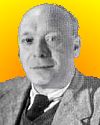
Died 4 Jun 1961 at age 63 (born 25 Feb 1898). quotes
English physical biochemist who was the first to make use of X-ray diffraction patterns to study the structure of nucleic acids (1937). Astbury researched the method under Bragg for seven years, then investigated the structure of wool in both the stretched and unstretched forms. From the difference in the diffraction patterns, he began to try to work ot the structure of protein molecules. His preliminary determination of the structure of nucleic acids were, in fact, wrong - but it gave impetus to Pauling's work with proteins, and to Crick and Watson's study of DNA structure. His work, slowly decoding the nature of molecular structure of virtually the largest organic materials, fibrous and globular proteins, was valuable to both science and industry.
English physical biochemist who was the first to make use of X-ray diffraction patterns to study the structure of nucleic acids (1937). Astbury researched the method under Bragg for seven years, then investigated the structure of wool in both the stretched and unstretched forms. From the difference in the diffraction patterns, he began to try to work ot the structure of protein molecules. His preliminary determination of the structure of nucleic acids were, in fact, wrong - but it gave impetus to Pauling's work with proteins, and to Crick and Watson's study of DNA structure. His work, slowly decoding the nature of molecular structure of virtually the largest organic materials, fibrous and globular proteins, was valuable to both science and industry.
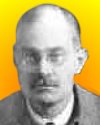
Died 4 Jun 1922 at age 58 (born 12 Mar 1864). quotes
William Halse Rivers Rivers was an English medical psychologist and anthropologist who originally trained as a doctor, then did work as a pioneering psychologist in the First World War. This background enabled Rivers to bring a scientific approach to anthropology and to set the trend for anthropologists to go and visit the cultures they are studying rather than stay at home and theorize. Rivers did his major field work with Torres Strait Australian aborigines and with a hill tribe in Southern India, the Todas. He is known principally for The Todas (1906), a model of precise documentation of a people, and the important History of Melanesian Society, 2 vol. (1914).
William Halse Rivers Rivers was an English medical psychologist and anthropologist who originally trained as a doctor, then did work as a pioneering psychologist in the First World War. This background enabled Rivers to bring a scientific approach to anthropology and to set the trend for anthropologists to go and visit the cultures they are studying rather than stay at home and theorize. Rivers did his major field work with Torres Strait Australian aborigines and with a hill tribe in Southern India, the Todas. He is known principally for The Todas (1906), a model of precise documentation of a people, and the important History of Melanesian Society, 2 vol. (1914).
Medicine, Magic and Religion, by W.H.R. Rivers. - book suggestion.
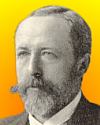
Died 4 Jun 1905 at age 55 (born 16 May 1850).
Polish surgeon whose innovations in operative technique for a wide variety of diseases helped develop modern surgery. He contributed prodigiously to cancer surgery, especially on organs of the digestive system. He was first to suture a perforated gastric ulcer (1885), surgically restore part of the oesophagus (1886), remove a malignant part of the colon (1903), and describe what is now known as Mikulicz' disease. In 1881 he developed improved models of the oesophagoscope and gastroscope. As an ardent advocate of antiseptics he did much to popularize Joseph Lister's antiseptic methods. He used a gauze mask and was one of the first to use gloves during surgery.
Polish surgeon whose innovations in operative technique for a wide variety of diseases helped develop modern surgery. He contributed prodigiously to cancer surgery, especially on organs of the digestive system. He was first to suture a perforated gastric ulcer (1885), surgically restore part of the oesophagus (1886), remove a malignant part of the colon (1903), and describe what is now known as Mikulicz' disease. In 1881 he developed improved models of the oesophagoscope and gastroscope. As an ardent advocate of antiseptics he did much to popularize Joseph Lister's antiseptic methods. He used a gauze mask and was one of the first to use gloves during surgery.
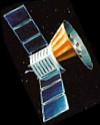
In 2000, the Cosmic Background Explorer (COBE) satellite was officially deorbited. Mission ended, it burned up in Earth’s atmosphere. COBE was launched on 18 Nov 1989, with a planned lifetime of two years. A Differential Microwave Radiometer (DMR) collected cosmic microwave background data, in minute detail, for four years. Science operations concluded on 23 Dec 1993. Another two instruments collected different data for about 10 months after launch until their liquid helium coolant ran out. Nobel Prizes were won for interpreting the data by George F. Smoot and John C. Mather, who showed how it supported the Big Bang theory. They devised and had COBE build to do that.«
Wrinkles in Time: Witness to the Birth of the Universe, by George Smoot. - book suggestion.
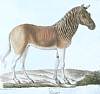
In 1984, the cloning of DNA sequences from an extinct animal was reported from the quagga (a brown, horselike beast with zebra stripes on the front of its body, which inhabited South Africa until it was exterminated by hunters in the early 19th century). Using samples from an over 140-yr-old quagga skin in a German museum, three Berkeley scientists managed to extract enough DNA from the animal's flesh to determine some of its sequences of “base pairs,” the molecular rungs that link the two spiral halves of a DNA molecule. Technical problems make the study of ancient DNA difficult, since these molecules are often greatly fragmented. The scientists could show the quagga DNA was more closely related to the zebra than the horse.Ref.: Russell Higuchi et al., "DNA Sequences from Quagga, an Extinct Member of the Horse Family," Nature 312 (1984): 282–4.
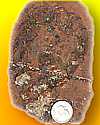
In 1975, the discovery of the oldest animal fossils in the U.S., imprints of large narrow marine worms in rock radiometrically dated as 620 million years old, was reported in the New York Times. They were claimed to be early examples of Pre-Cambrian polychaete annelids—tube building, toothless, soft-bodied marine worms up to a foot long. The trace fossils formed as imprints the worm left in mud eventually became rock. They were found on the Little River, north of Durham, North Carolina in 1974 by Virginia Polytechnic Institute geology professor Dr. Lynn Glover with graduate student James E. Wright. A large slab containing the fossils was excavated in late May 1975, displayed at the U.S. Geological Survey headquarters in Reston, Virginia and later transferred to the Smithsonian Institution.«Regional newspapers reported the discovery a few days earlier, for example, The News and Courier (Charleston, S.C.) on 29 May 1975. A few paleontologists have proposed the markings are merely pebble scratches created during tectonic folding of rock layers. Even older fossils of other organisms have since been reported elsewhere in the U.S. and the world.
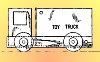
(USPTO)
In 1963, six-year-old Robert Patch received a U.S. patent for a “Toy Truck” (No. 3,091,888). The toy separated into a chassis, driver's cab, truck body, wheels and four axles so it could be reassembled in either a closed van body or dump truck form. When the wheel axles were put into place, they also held the also cab and body to the chassis. The truck body can be turned upside down and end for end in order to mount as either a van body, or a dump truck body with a swinging back end. As a dump truck, the body pivots on the wheel axles to tip its load, and the back wall swings open on its own pivots at the top of the wall.

In 1962, the first electricity from nuclear fission in Canada was generated at the Nuclear Power Demonstration reactor (NPD), 3 km east of Rolphton, Ontario, along the Ottawa River's south shore. It supplied to the Ontario power grid. This was the prototype CANDU reactor (CANada Deuterium Uranium pressurized heavy water reactor), fuelled with natural uranium and using heavy water as the moderator and coolant. Its design and development was done by Atomic Energy of Canada Limited (AECL), a federal crown corporation established in 1952. Critically was first attained earlier on 11 Apr 1962, and the first full power was on 28 Jun 1962. It was shut down for economic reasons on 5 May 1987.«[Image: NPD aerial view taken in its later years.]
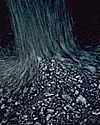
In 1957, the first U.S. commercial long-distance coal slurry pipeline, 108 miles long, began delivery from a coal mine (Georgetown Preparation Plant of the Hanna Coal Company, near Cadiz, Ohio) to a power station (Cleveland Illuminating Company, in Eastlake, Ohio). Completed on 12 Sep 1956, the 10-3/4 inch diameter pipeline could transport over a million tons of coal per year. Mixed with an equal amount of water, it delivered 150 tons of coal per hour. The coal slurry was then processed to remove the water, and made ready for burning. Slurry pipelines now exist transporting over twenty types of minerals, including iron-ore concentrate, copper ore, phosphate rock concentrate, limestone, clay and mineral sands. Pipelines can be built to the mouth of mines at lower cost than railroads.«
1940
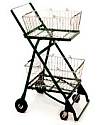
In 1937, the first shopping carts were introduced at the Humpty Dumpty supermarket in Oklahoma City, invented by the store owner Sylvan Goldman. With the aid of a mechanic, Fred Young, Goldman designed the first shopping cart based on the folding chair. Wheels were placed where the bottoms of the chair legs were. In place of the chair seat, Young and Goldman, stacked two metal baskets on top of each other. This cart could be stored by folding it up like a folding chair. In 1947, Goldman made a big improvement in the design of his shopping cart with carts that could be stored by simply nesting one cart into another by pushing the front of each cart into the folding back of the one in front of it. This basic design is still in use today.
In 1929, George Eastman demonstrated the first Technicolor movie (Rochester, NY).

(USPTO)
In 1907, Thomas A. Edison was issued a patent for a “Diaphragm for Talking-Machines” (U.S. No. 855,562) that "will be readily responsive to vibrations of comparatively great amplitude." The invention comprised a duplex diaphragm made of at least two disks, each of which is radially slotted so that each disk constitutes a series of reeds. By staggering the slots of the disks, a continuous surface is presented for actuating the sound waves. The disks, made of mica about one-thousandth of an inch thick, are cemented together with an elastic cement, such as a solution of gum rubber.
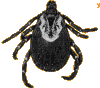
In 1906, pathologist Howard T. Ricketts discovered Rocky Mountain Spotted Fever is caused by an unusual microbe spread by ticks. Its symptoms are similar to typhus except rash starts at extremities and moves to trunk. The disease causes high morbidity with about 70% of cases requiring hospitalization, without which, the untreated mortality rate is about 7% of cases.
more
/MaskelyneNeville(1863–1924)Thm.jpg "Early radio demonstration hacked")
Maskelyne
In 1903, a demonstration of the Marconi radio communications system at the Royal Institution, London, was hacked by Nevil Maskelyne. Physicist John Ambrose Fleming was lecturing to give the public their first demonstration of wireless communication. Italian radio pioneer Guglielmo Marconi was at his clifftop radio station in Poldhu, Cornwall, 300 miles away, preparing to send a Morse code signal. Though the audience was unaware of it, the assistant tending the receiving apparatus found it was already tapping out the word “Rats,” repeatedly. Then it mocked, “There was a young fellow of Italy, who diddled the public quite prettily...” and more. An adversary, music hall magician Neville Maskelyne was interrupting using a transmitter in a nearby hall, to make the point of security flaws in radio messaging.«[Ref: Paul Marks, 'Dot-Dash-Diss', New Scientist, 27 Dec 2011.]
Wireless: From Marconi's Black-box to the Audion, by Sungook Hong. - book suggestion.
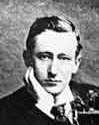
In 1901, Guglielmo Marconi received a reissued patent (Re. 11,913) for "Wireless Telegraphy."
Ford
My Life and Work, by Henry Ford. - book suggestion.
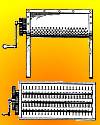
(USPTO)
In 1895, black American inventor Joseph Lee was issued a patent for a "Bread Crumbing Machine" (U.S. No. 540,553). The invention was intended "for use in hotels or restaurants, where a large quantity of bread crumbs are used in cooking." A series of rotating combs of crumbling or tearing fingers on several axles are driven by pinions from a handle. The enclosure has a perforated bottom to collect the crumbs in a trough below. The patent suggested the use to crush and crumb the scraps and crusts of bread which come from the table, "effecting a great saving" in bread waste. Fresh bread, also, could be readily crumbed and reduced to proper fineness. The previous year he received a patent for a "Kneading Machine."
The Inventive Spirit of African Americans: Patented Ingenuity, by Patricia Carter Sluby. - book suggestion.
In 1887, the Pasteur Institute was founded in Paris, France. It was inaugurated on 14 Nov 1888.
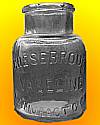
In 1872, a process for making vaseline was patented by Robert Chesebrough of New York City (U.S. No. 127,568). He was an English-born chemist who emigrated to the U.S., and had worked in the oil-fields of Pennsylvania. The vaseline is a product from petroleum, made from the residue of petroleum distillation left in the still after all oil has been vaporized. Distillation by heat under vacuum involves less heating than without the vacuum, and yields a better quality of vaseline. It is then filtered through bone-black. the patents claims its uses include currying, stuffing and oiling all kinds of leather. The finest grade of vaseline is also adapted to use as a pomade for the hair. It is also an excellent substance for glycerine cream for chapped hands.
In 1845, Hatch's sowing machine was first demonstrated (sowed wheat, oats and other grasses).
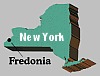
In 1825, the first time natural gas was used for illumination was in Fredonia, in western N.Y. A pipeline was laid from a well to a residence where a reception was held for General Lafayette. The house was brightly illuminated by natural gas, using about 30 burners. This was regarded as a great curiosity. Fredonia residents had seen bubbles of gas rising from a creek in 1821. When a gunsmith, William Hart ("father of natural gas") heard reports of this "creek that burned," he dug the first U.S. natural gas well on the bank of the creek, and covered it to accumulate the gas. A 1825 newspaper article reported that natural gas from this well was being used to light the lamps of two stores, two shops and a grist mill near the creek.
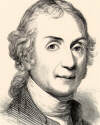
In 1794, Joseph Priestley (1733-1804), chemist and natural philosopher, arrived at New York in the United States, having emigrated from England. Soon thereafter, he settled at Northumberland, Pennsylvania. Although now remembered for his scientific work (including the discovery of oxygen on 1 Aug 1774, and other gases), in his time he became unpopular in England for his political opinions and support of the French Revolution. His home and laboratory were set on fire on 14 Jul 1791, and by 1794 he decided to leave his home country and pursue his scientific studies in America.«
Joseph Priestley: Adventurer in Science and Champion of Truth, by F W. Gibbs. - book suggestion.

In 780 BC, the first total solar eclipse reliably recorded by the Chinese was noted. A clay tablet retrieved from the ancient city of Ugarit, Syria (as it is now) gives the oldest eclipse record, with two interpretations of the date being regarded as plausible. The date most favoured by recent authors on the subject is 5 Mar 1223, although alternatively 3 May 1375 has also been proposed as plausible.«[Image: a modern photograph of a total solar eclipse.]




